
Chettinad Heritage Villages
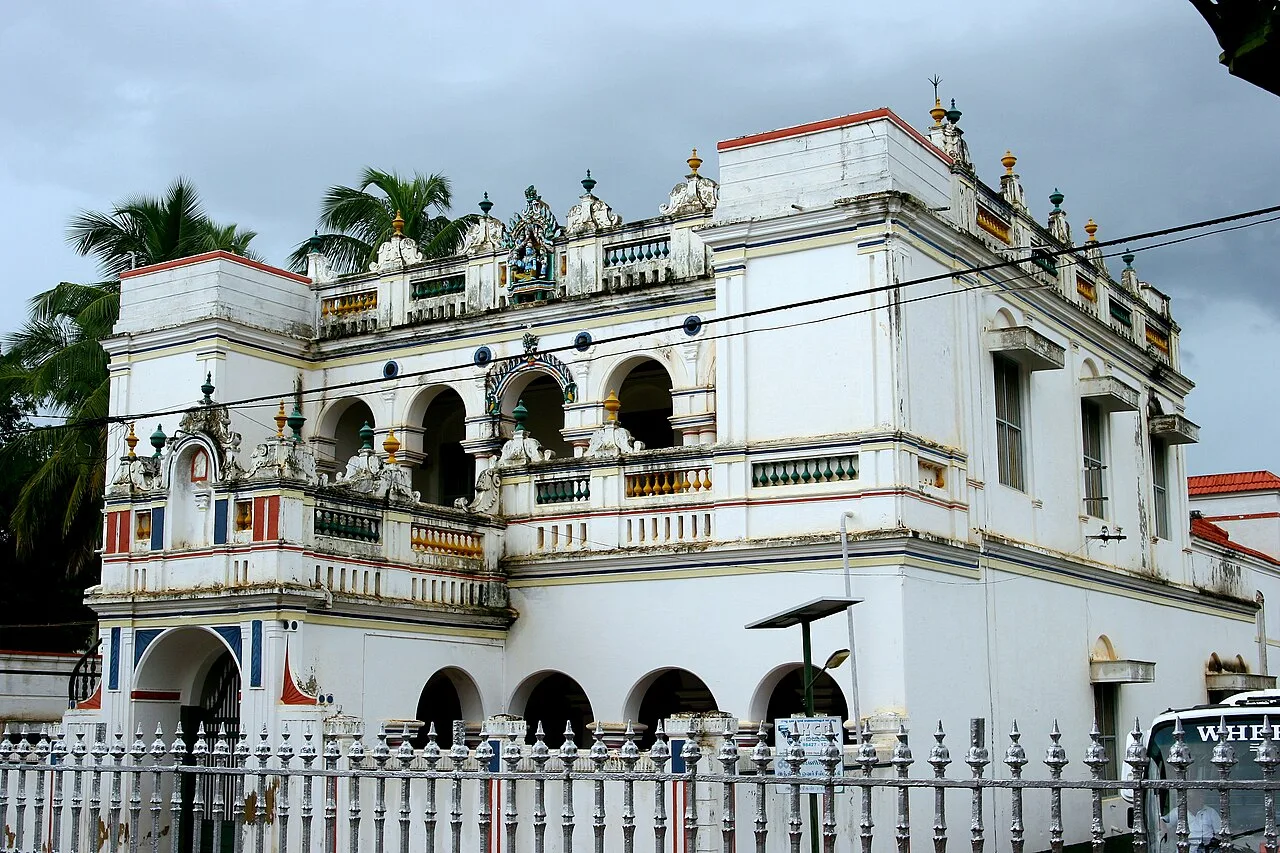
Chettinad Heritage Villages are settlements within the Chettinad region of Tamil Nadu. Visitors come to explore the villages and learn about the area’s historical connection with the Ramnad kingdom.
Key facts · verified by Ghumoopedia editors
- Type of place
- Heritage monument
- Best time to visit
- November to February; April to June for the hill stations
- Nearest railway station
- Pudukkottai · about 35 km (straight line)
- Nearest airport
- Tiruchirappalli International Airport · about 77 km (straight line)
- Verified
- 21 Nov 2026
Plan a trip from Chettinad Heritage Villages — a day-by-day route through places nearby.
Chettinad Heritage Villages are located in Sivaganga district and form part of a wider region in Tamil Nadu known as Chettinad or Chettinadu. The region includes 56 villages in Sivaganga and a further 20 in Pudukkottai. The area was historically governed by the Ramnad kingdom of Pandya Nadu. Most of Chettinad lies within Sivaganga district, while a smaller section extends into Pudukkottai district. Karaikudi is the principal city and acts as the urban hub for Chettinadu’s villages. The settlements draw visitors interested in the region’s heritage and history. Tamil Nadu is the land of great living temples — Madurai's Meenakshi, Thanjavur's Brihadeeswara, Srirangam, Chidambaram and Rameswaram — along with the Pallava shore monuments of Mamallapuram, the Chettinad mansions, the hill stations of Ooty and Kodaikanal and the meeting of three seas at Kanyakumari. The state is hot from March to June, gets light southwest-monsoon rain from June to September, and receives its main rainfall from the northeast monsoon between October and December. January to March is the most comfortable season; the Nilgiri and Kodaikanal hills are cool year-round. The usual best time to visit is November to February; April to June for the hill stations. Timings, fees and access arrangements must be confirmed locally. For official information, see Tamil Nadu Tourism at https://www.tamilnadutourism.tn.gov.in.
Why it matters
Chettinad is a cultural landscape rather than one single monument: it includes villages in Sivaganga and Pudukkottai districts, with Karaikudi serving as a major urban centre. Its best-known heritage is the residential architecture and mercantile history of the Nattukottai Chettiar, or Nagarathar, community. Large family houses, temple connections and distinctive local crafts reflect the community’s regional and overseas trading networks. The villages are an important part of Tamil Nadu’s architectural and social history, and they continue to be lived-in places, not simply an open-air museum. The heritage villages as a whole are not a single UNESCO World Heritage property or one ASI-managed monument; access and any protection status can differ from one building to another.
Chettinad’s history is closely tied to the Nagarathar, also known as Nattukottai Chettiar, community, whose members developed networks of trade, finance and philanthropy in South India and overseas. The community’s settlements grew across villages in what are now Sivaganga and Pudukkottai districts. Family histories and community tradition describe earlier movement from coastal Tamil regions, but accounts differ and should not be treated as a single settled chronology. From the nineteenth century into the early twentieth century, prosperous merchant families built or expanded substantial homes in their ancestral villages. Their wealth was connected to commerce and financial activity across parts of South and Southeast Asia. The houses combined Tamil domestic planning with materials and decorative elements obtained through trade. Family temples, community institutions and charitable endowments also shaped village life. Economic and social changes, including shifts in overseas trade and migration, led many families to spend more time elsewhere. Some mansions remain occupied; others are maintained, adapted for visitors or left in varying states of repair. Conservation is uneven and often depends on owners and local initiatives. The villages are still inhabited, so a visit should respect private homes and community spaces.
Origin stories & folklore
According to Nagarathar community tradition, ancestors once lived at Kaveripoompattinam, an important ancient port, and moved inland after the settlement was lost to the sea. Versions of this account differ, and it is best understood as a community origin tradition rather than a fully verified historical event. Other oral histories describe the formation of distinct Nagarathar settlements and the importance of their temples in sustaining community identity. These stories are part of how residents explain the region’s shared heritage; they do not establish the age or ownership history of any particular mansion. Visitors may hear local guides and families tell different versions, each reflecting its own lineage and village memory.
Architecture & design
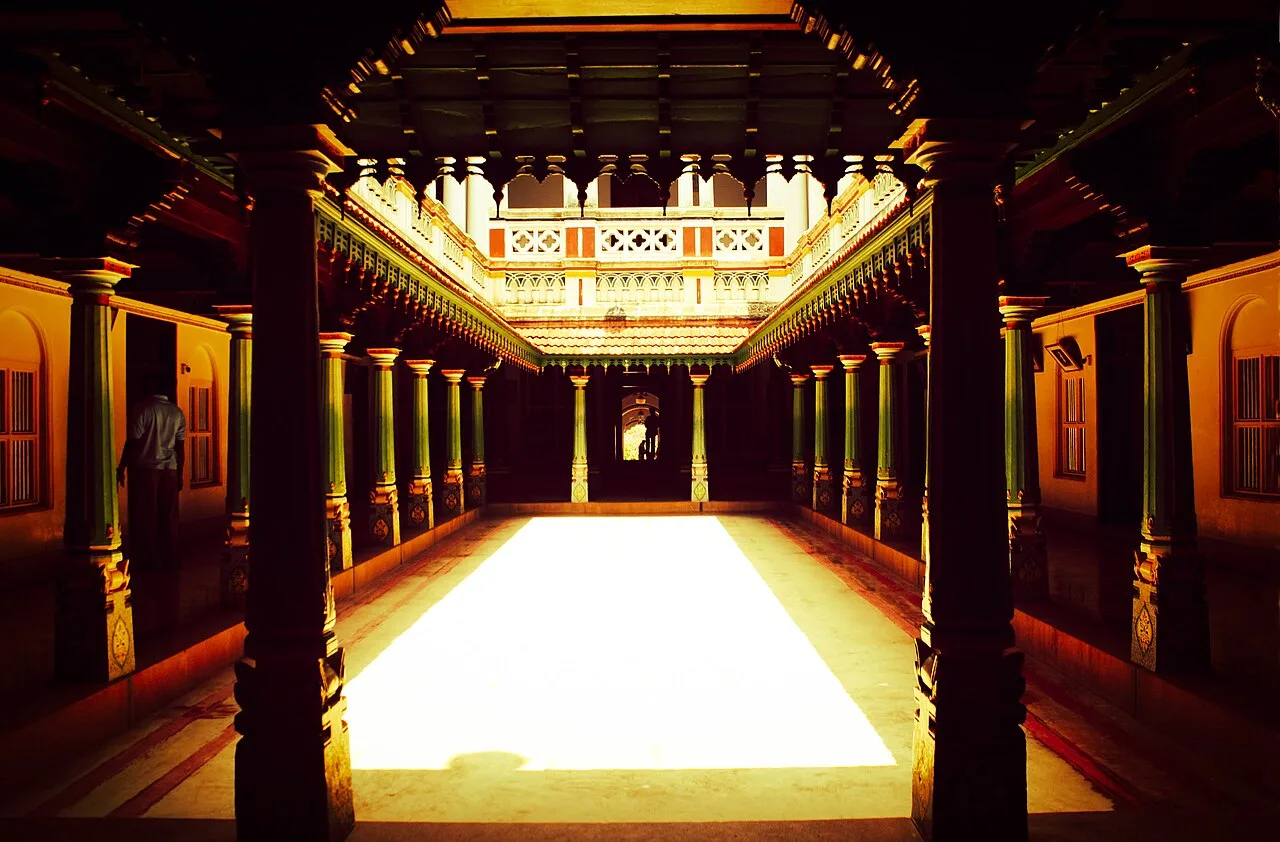
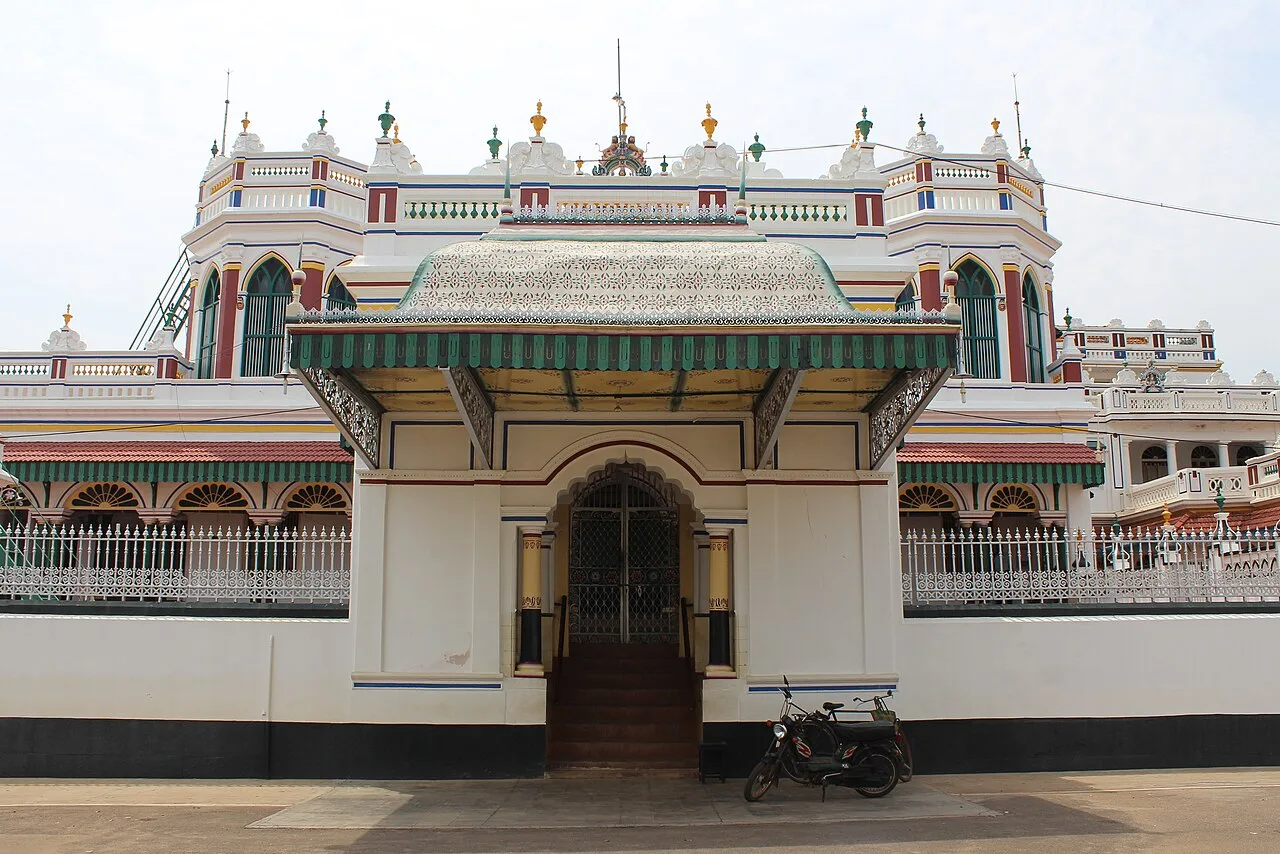
Chettinad houses are known for their deep, often inward-facing plans, organised around one or more open courtyards. These spaces bring daylight and air into the house and help separate public reception areas from family rooms and service spaces. Large façades may have broad verandas, substantial timber doors, carved posts and ornamental plasterwork. Inside, visitors may see stone or timber columns, patterned floors, decorative ceilings and elaborate joinery. Materials reflect both local building practice and the trading connections of wealthy owners. Athangudi is associated with handmade cement tiles; some mansions also incorporate imported timber, marble, glass or other finishes. The precise combination varies between houses and periods. Thick walls, shaded verandas and courtyards provide some relief from the hot climate. These are working or privately owned properties as well as heritage buildings, so not every architectural feature is open to visitors or maintained in the same condition.
Important objects & sculptures
In houses that permit entry, look for carved entrance doors, timber columns, ceiling details, patterned floor tiles and decorative metal fittings. Courtyard edges and reception halls may preserve family emblems or ornamental motifs. Some homes contain household objects, portraits, furniture or religious items associated with their former residents, but displays vary and should not be assumed to be part of a public collection. Village temples may have their own sculptures, inscriptions and ritual objects; these belong to active places of worship and should be viewed respectfully. Do not touch fragile surfaces or photograph objects where the owner, caretaker or temple rules prohibit it.
Explore Chettinad Heritage Villages slowly and read the interpretation boards, use the official audio guide where available or hire an authorised guide to understand its history. Check opening days, ticket counters and camera rules in advance; many monuments and museums close on one weekday and on some public holidays. Early morning gives softer light, cooler air and smaller crowds. A comfortable itinerary is one main visit in the morning, a local meal at midday and a short nearby stop before an afternoon return. Use the district list on this site to find other places in Sivaganga, but check the route and its condition before combining stops. If a festival is on — such as Pongal in January, the Madurai Chithirai festival, the Mahamaham at Kumbakonam or the Chennai music season in December — roads and stays can be busy, and the experience can be unforgettable. Leave no litter: many sites are protected by the communities around them.
Suggested itineraries
Half day: Spend 1–2 hours walking through one village, then visit a mansion or heritage property that has confirmed visitor access; allow time for a local meal. Full day: Begin with a guided village walk, visit an accessible heritage house, have lunch in Karaikudi or nearby, then stop at an Athangudi tile workshop or a nearby temple; confirm access in advance. Gentler option: Choose one accessible property with vehicle drop-off, keep the walk to a short village lane, and take a longer seated break for lunch.
Tamil is the principal language heard across the villages, and local customs remain closely connected to family, temple and community life. Nagarathar heritage is expressed through ancestral homes, religious patronage, kinship networks and distinctive food traditions. Chettinad cooking is widely recognised for its use of spices, though recipes and levels of heat vary between households and eateries. Music and dance may feature at temple events and family celebrations, but performances are not a daily visitor attraction. Dress is generally contemporary, with traditional clothing more visible during ceremonies. Ask before entering a private courtyard, photographing residents or observing a household or religious occasion.
Festivals & events
Pongal, usually celebrated in January, is an important harvest festival across Tamil Nadu and may bring family gatherings and village activity. Individual villages also hold temple festivals at different points in the year; processions, music and ritual observances vary by temple and local calendar. Deepavali is widely observed, while other events may be specific to a community or shrine. Festival dates change from year to year, so check locally before planning. Streets and accommodation can be busier during major celebrations, and some areas may be reserved for worship or processions. Visitors should follow local directions and avoid obstructing rituals.
Local food in Tamil Nadu includes idli, dosa and filter coffee, Chettinad chicken and pepper curries, Madurai's kari dosa and jigarthanda, Thanjavur's banana-leaf vegetarian meals, Kanyakumari's seafood, and sweets such as Mysore pak, adhirasam and Tirunelveli halwa. Ask what is fresh that day; many small eateries cook a limited daily menu. Tamil Nadu is a paradise for vegetarian meals served on banana leaf; Chettinad and Madurai are the centres for meat and spice lovers. Filter coffee is a ritual — have it at a local 'hotel' (eatery). Remote sites may have no restaurant at all. Carry water and snacks, eat a proper breakfast before long drives, and ask your accommodation for a packed lunch if you are heading out early. Try a home-cooked or local thali meal when you can — it is often the best food on the route. Choose busy, clean places, drink sealed or filtered water, and carry your packaging back with you.
Shopping & local experiences
Look for Athangudi handmade tiles, locally made household items and regional food products, but buy directly from a workshop or seller where possible and ask before photographing production. Karaikudi has shops and markets for everyday goods and locally associated products. Chettinad meals and spice mixes are popular food experiences; ingredients and recipes differ by producer, so check labels and suitability before buying. Souvenirs are not available at every heritage property, and private homes are not shops. Support local craftspeople respectfully and avoid purchasing antiques or architectural fragments whose provenance is unclear.
November to February; April to June for the hill stations
The nearest principal railway station by straight-line distance is Pudukkottai, roughly 35 km away. The nearest operating airport by straight-line distance is Tiruchirappalli International Airport, roughly 77 km away. These figures are calculated from map coordinates — actual road distance is longer. Chennai is the main gateway; Coimbatore serves the west and Mettupalayam is the railhead for the Ooty toy train; Madurai and Tiruchirappalli serve the south and centre; Rameswaram and Kanniyakumari have their own rail termini. For the final leg, TNSTC and SETC buses reach nearly every town, with private sleeper coaches between cities and app cabs in Chennai, Coimbatore and Madurai link district towns. A private taxi gives more flexibility for remote sites such as hill stations, forest gates and coastal temples. When comparing train, bus and flight, count the complete door-to-door time: a flight saves the most time only if the onward road transfer is short, while an overnight train can save a hotel night. Book your return before you leave, because seats fill quickly on weekends, festivals and holidays. Current train numbers, timings, return services and fares are not listed here; check IRCTC and NTES for trains and the airline's own schedule for flights. No permit is needed to visit Tamil Nadu. The Nilgiri Mountain Railway toy train to Ooty must be booked well in advance on IRCTC — seats are few and sell out weeks ahead. Major temples such as Madurai Meenakshi and Srirangam have darshan queues and some enforce a dress code (dhoti or formal trousers for men, saree or salwar for women); phones and cameras are not allowed inside several temple sanctums. Boating to the Vivekananda Rock at Kanyakumari depends on sea conditions.
Confirm onward and return timings on IRCTC / NTES, the state bus operator or your airline before travel. A dash means current timings or fares have not been verified.
Getting around
Karaikudi is a useful base for reaching the surrounding villages. Local buses connect towns and larger settlements, while auto-rickshaws and taxis can help with shorter or less frequent connections. For a day covering several villages, arranging a private vehicle locally can make the route easier; agree the itinerary and waiting arrangements before setting out. Village streets are often best explored on foot, but distances between settlements can make walking the whole area impractical. Check where parking is permitted, especially near temples and narrow residential lanes, and avoid blocking entrances.
Hours, tickets & permissions
There is no single entrance or shared timetable for the Chettinad villages. Streets and public areas can be explored, but many mansions are private homes; some open to visitors by arrangement, while others may be closed or charge separately. Museums, temples and workshops have their own entry conditions. Ticketing, photography rules, permitted areas and any identification requirements can vary. Confirm current hours, fees and access arrangements with the individual property or managing authority before travelling. Do not enter a house or courtyard without clear permission.
Facilities
Facilities vary because the heritage area is spread across several villages and does not have one central visitor centre. Karaikudi usually offers a wider choice of food, accommodation, shops and cash services. In villages, small eateries and drinking water may be available, but visitors should check locally and carry water. Toilets, parking and seating are not guaranteed at every mansion or temple. Guides may be available by prior arrangement or through local operators; confirm that a guide is authorised by the property. Keep some cash for small local purchases, as card acceptance can vary.
Accessibility
The village streets can be uneven, narrow or surfaced differently, and heritage houses may have raised thresholds, steps, long corridors and internal courtyards. Walking distances depend on which villages and properties are included. Shade is available in some verandas and courtyards, but outdoor lanes can be exposed to heat. Wheelchair and stroller access should not be assumed, and many older houses may be difficult to enter without assistance. Older visitors may prefer a vehicle between villages, short visits and frequent rests. Contact each property beforehand to ask about step-free entry, seating and accessible toilets.
No permit is needed to visit Tamil Nadu. The Nilgiri Mountain Railway toy train to Ooty must be booked well in advance on IRCTC — seats are few and sell out weeks ahead. Major temples such as Madurai Meenakshi and Srirangam have darshan queues and some enforce a dress code (dhoti or formal trousers for men, saree or salwar for women); phones and cameras are not allowed inside several temple sanctums. Boating to the Vivekananda Rock at Kanyakumari depends on sea conditions. Carry a photo ID at all times and save the emergency number 112 and your accommodation's contact offline. Heat in summer and heavy rain in the monsoon are the main weather risks; carry water, avoid midday sun and allow extra time when roads flood. Watch your belongings in crowds and on public transport, and follow posted instructions.
Photography
Early morning or late afternoon usually gives softer light for façades and village streets; courtyards can be bright while interiors remain dim. Photograph only areas the owner or caretaker has opened to visitors. Rules differ between private houses, museums and temples, and flash or indoor photography may be restricted. Ask residents before taking portraits, and never interrupt worship for a photograph. Drone use may require permissions and can intrude on homes or temple activity, so do not fly without checking applicable rules and obtaining consent. Avoid blocking lanes while taking pictures.
Choose a stay by the full journey to Chettinad Heritage Villages, not just the district name. Chennai, Coimbatore, Madurai and Tiruchirappalli offer the widest choice; Ooty and Kodaikanal have everything from heritage hotels to cottages — book far ahead for the April–June school holidays and the Pongal weekend. In summer, check air-conditioning; in the monsoon, check that the property is accessible if roads flood. Book in advance for weekends, festivals and the peak season (November to February; April to June for the hill stations). Confirm the exact location, meals included, check-in time and cancellation terms in writing. Avoid sending money to unverified contacts or touts at stations. Carry some cash, as card and digital payments can be unreliable in remote areas.
Karaikudi is the main urban centre for exploring the region and has local food and services. Kanadukathan is known for its grand Chettinad houses, though access to individual properties varies. Athangudi is associated with traditional handmade tiles and workshops; ask before entering a work area. Pillayarpatti is known for the Karpaga Vinayagar Temple, and Kundrakudi for its hilltop Murugan temple. These places can be combined with a village visit if opening arrangements and road conditions suit the day. Treat active temples as places of worship and follow their entry and photography rules.
For couples, Chettinad Heritage Villages rewards a slow pace: arrive early for soft light and fewer crowds, share a local meal and keep the evening free. Sunrise at Kanyakumari, a boat ride on Kodaikanal lake or an evening stroll through Mamallapuram's shore monuments makes the trip memorable. Public displays of affection can be frowned upon in conservative communities and at religious sites, so be discreet. Keep a buffer in your itinerary, because weather and road conditions can delay plans.
Q: How much time should I allow for a visit? A: A half day can cover one village and a property with confirmed access. Allow a full day to include more than one village, a meal and a nearby stop. Q: What is the best season to visit? A: November to February is generally more comfortable for travel in Tamil Nadu. Check the local forecast and festival calendar before setting out. Q: Is there one ticket for the heritage villages? A: No single ticket covers the whole region. Entry rules and any fees depend on the individual house, museum, temple or workshop. Q: Can children and elderly visitors visit? A: Yes, but plan for heat, uneven lanes and steps inside older houses. Keep walks short and confirm access and seating with each property. Q: Where should I stay nearby? A: Karaikudi is a practical base with a wider choice of services and accommodation. Confirm availability and transport arrangements before your trip.
Be the first to share photos, stories, advice or a helpful contact for Chettinad Heritage Villages.
Loading…