
District · Tamil Nadu
Sivaganga
Sivaganga is an inland district in southern Tamil Nadu, between the Madurai region and the Chettinad country that extends into neighbouring Pudukkottai district.
Sivaganga district in southern Tamil Nadu combines dry inland plains, cultivated fields and village tanks with a rich architectural and political heritage. Its Chettinad villages form part of a cultural region that also extends into neighbouring Pudukkottai district. Around Karaikudi, substantial courtyard houses reflect the overseas trading connections and patronage of the Nattukottai Chettiar community. Kanadukathan and Athangudi offer introductions to this built heritage, though access to individual properties varies. The district also carries the legacy of the Sivaganga kingdom, Queen Velu Nachiyar and the Marudhu brothers. At Pillayarpatti, the rock-cut Karpaga Vinayagar shrine preserves an older religious tradition. Together, temples, mansion-lined streets and working villages give the district a character best appreciated at an unhurried pace.
Sivaganga is an inland district in southern Tamil Nadu, between the Madurai region and the Chettinad country that extends into neighbouring Pudukkottai district. It is best known for Chettinad’s mansion-lined villages, the trading heritage of the Nattukottai Chettiars and the rock-cut Karpaga Vinayagar shrine at Pillayarpatti. The district also preserves the history of the Sivaganga kingdom, Queen Velu Nachiyar and the Marudhu brothers. Travellers can combine architecture and temple visits with glimpses of working towns, cultivated fields and village tanks. The sights are spread out, so a relaxed road journey works better than trying to cover everything in a day.
The area has been shaped by successive South Indian powers, including the Pandyas, whose influence is reflected in the region’s temple traditions. In the early modern period, much of the area was associated with the Ramnad kingdom and its Sethupathi rulers. Sivaganga emerged as a separate principality in the eighteenth century. Queen Velu Nachiyar, aided by the Marudhu brothers, became a prominent figure in resistance to the East India Company; the brothers later led a revolt against British rule and were executed in 1801. British authority subsequently consolidated across the region. From the nineteenth century into the early twentieth, Nattukottai Chettiar merchants built substantial homes in Chettinad, drawing on commercial networks that reached across South and Southeast Asia. Their patronage shaped the mansions, temples and crafts for which the region is known. After Indian independence, the area was administered within the larger Ramanathapuram district. Sivaganga district was formed in 1985 when Ramanathapuram district was divided.
4 destination guides · 3 on the map
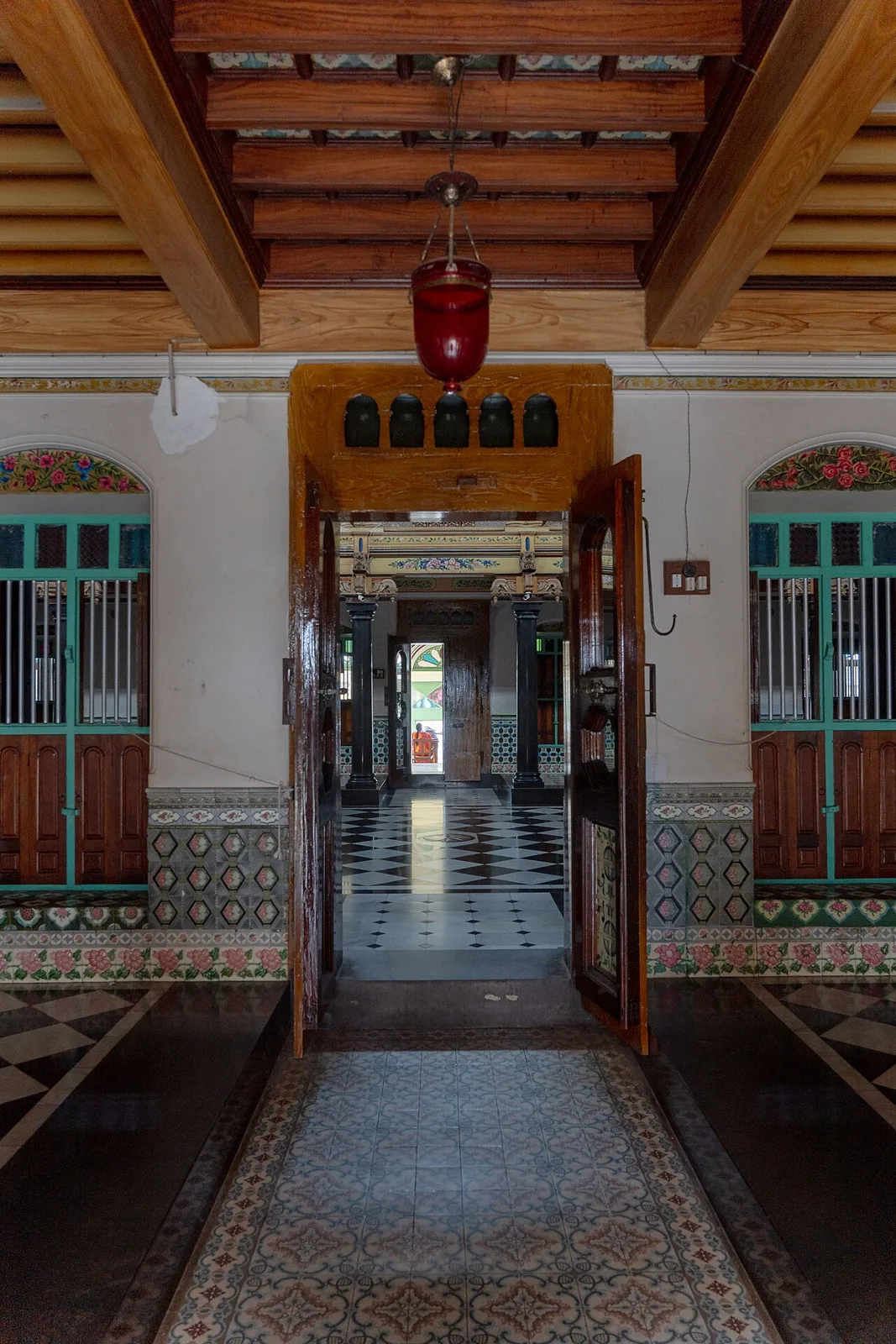
Athangudi Palace and Tiles
Athangudi is a village in Tamil Nadu’s Sivaganga district, known for its handmade patterned floor tiles. Visitors also find connections to Chettinad furniture and local foods.
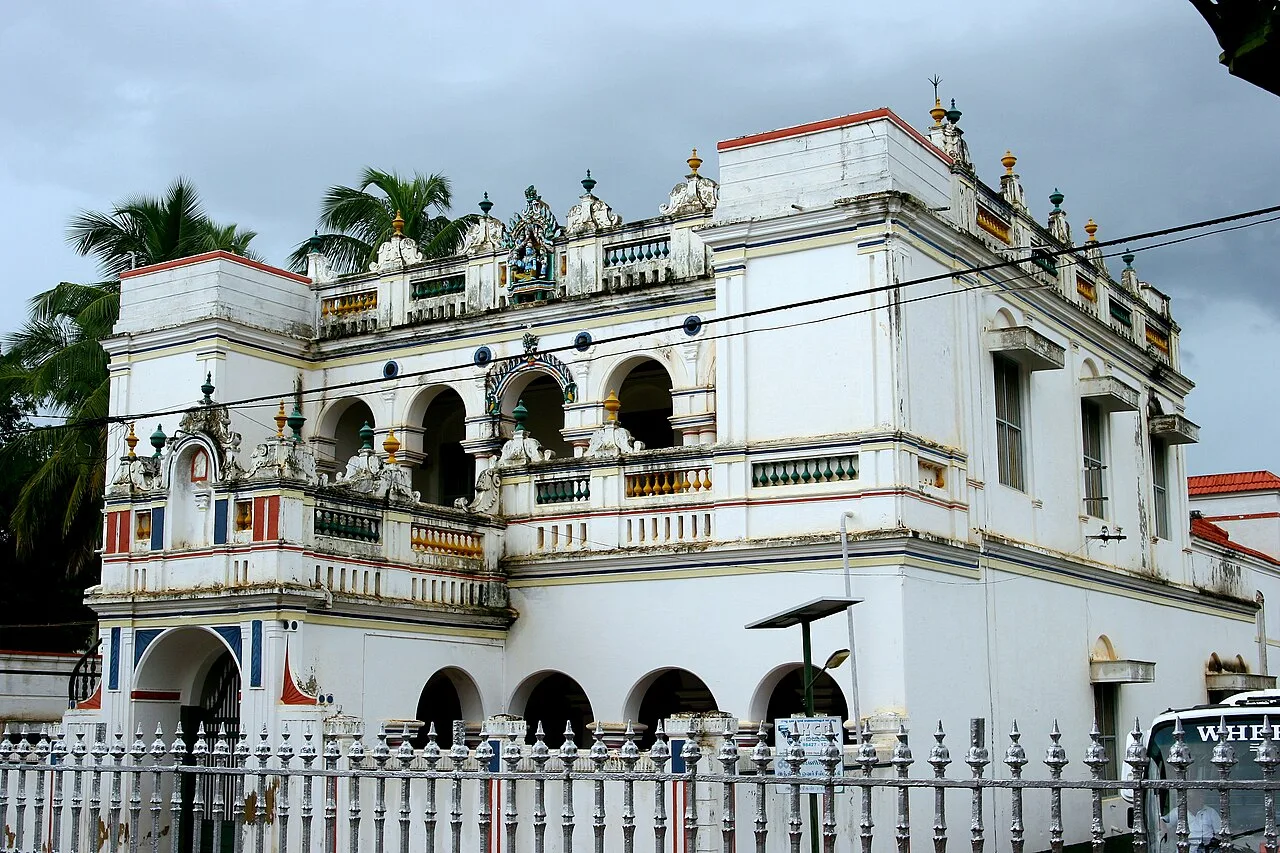
Chettinad Heritage Villages
Chettinad Heritage Villages are settlements within the Chettinad region of Tamil Nadu. Visitors come to explore the villages and learn about the area’s historical connection with the Ramnad kingdom.
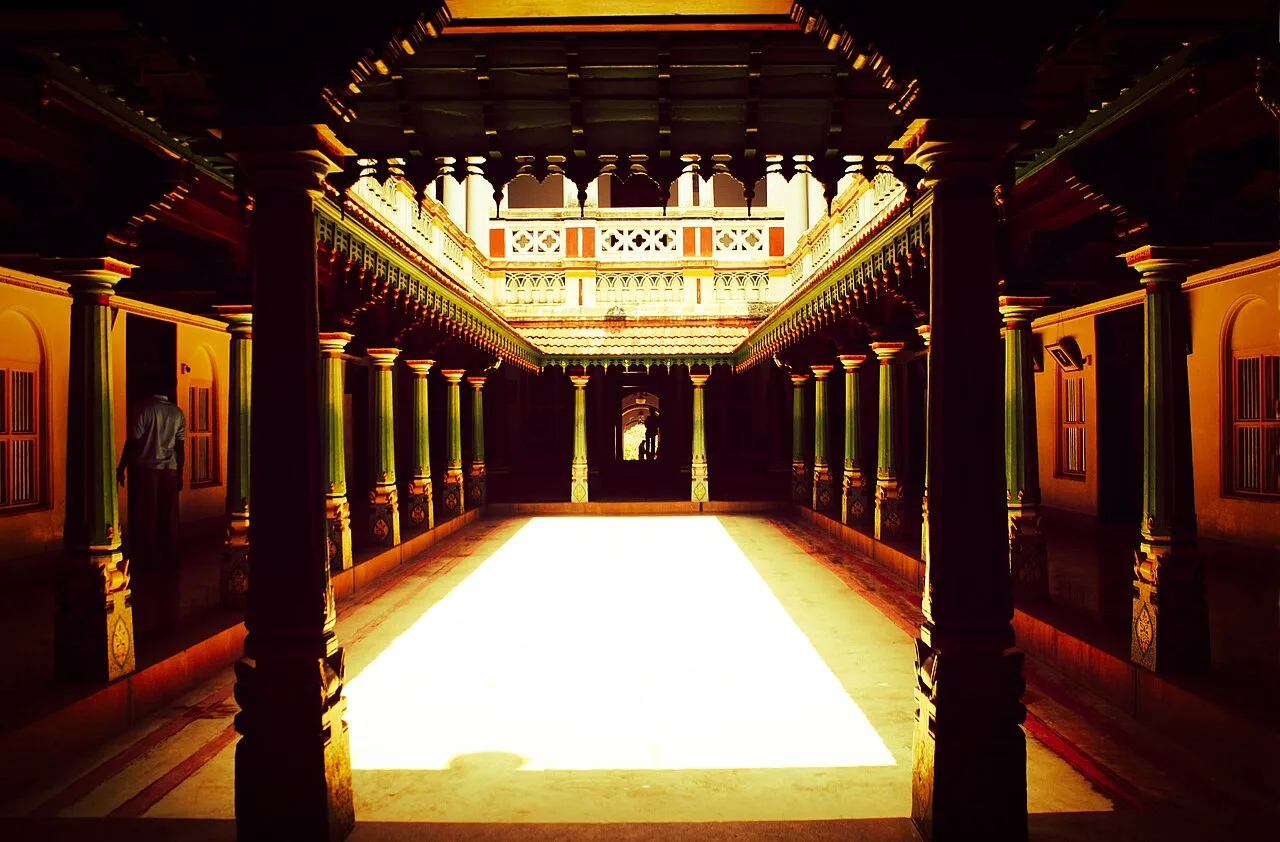
Kanadukathan Palace
Kanadukathan Palace is located in Sivaganga district, Tamil Nadu. Visitors come to see the palace in Kanadukathan, a town within Karaikudi taluk.
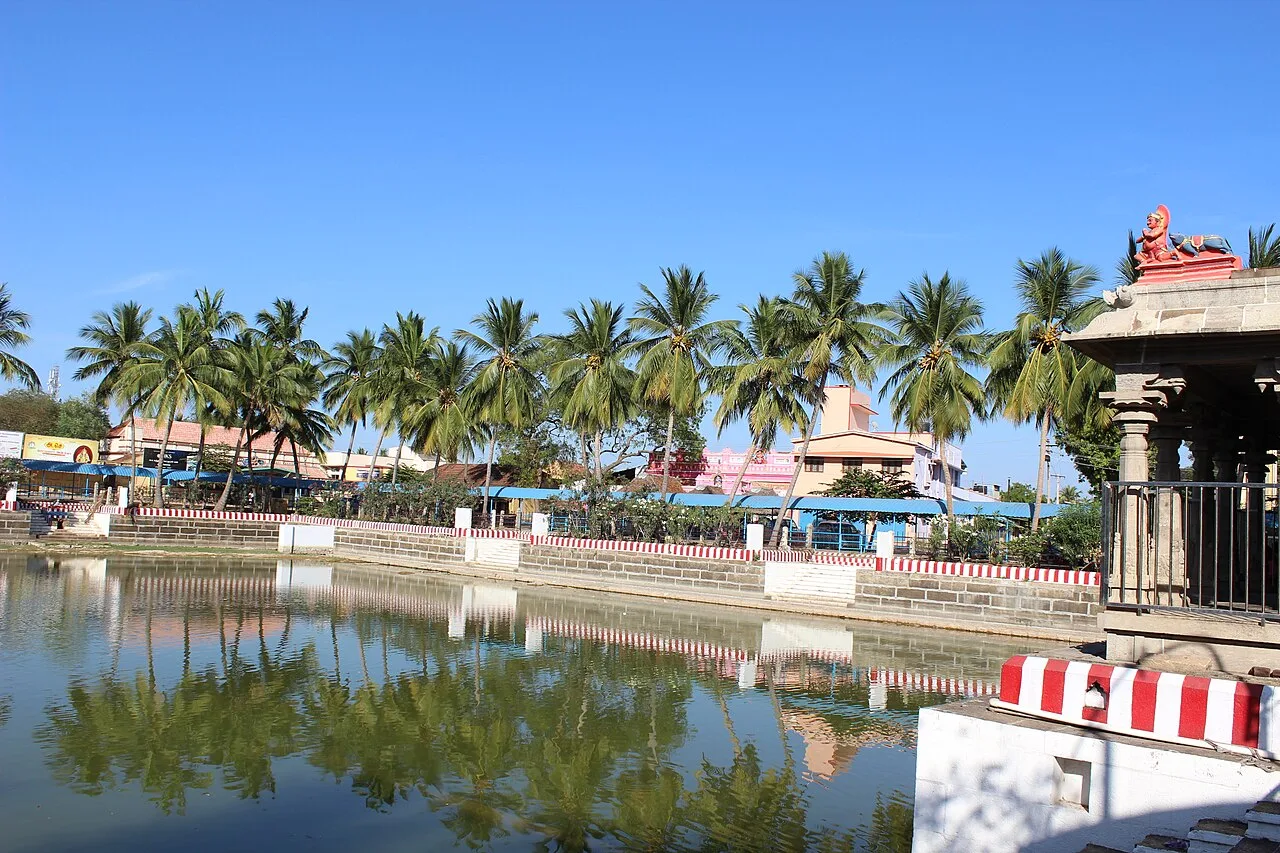
Pillayarpatti Karpaga Vinayagar Temple
Pillayarpatti Karpaga Vinayagar Temple is a cave shrine dedicated to Ganesha, enlarged over many centuries. Visitors come to see its distinctive rock carvings, historic inscriptions and later temple buildings.
Chettinad cooking is a major part of Sivaganga's food identity, with aromatic spice blends, pepper-led gravies and both vegetarian and meat dishes. Chicken preparations are well known, but a meal need not centre on meat: rice, vegetable dishes, lentils, kuzhambu and accompaniments offer considerable variety. Banana-leaf meals, idli, dosa and filter coffee belong to the wider Tamil food tradition and are familiar choices here too. Kuzhi paniyaram and adhirasam are worth looking for, depending on the kitchen and occasion. Ask small eateries what has been prepared that day; menus may be limited, and particular dishes are not always available.
Athangudi is associated with handmade patterned cement tiles, widely used in Chettinad interiors. Coloured mixtures are worked against glass to produce decorative surfaces, often featuring geometric or floral designs. Where workshops welcome visitors, watching the process adds context to the floors seen in heritage houses. Karaikudi is also associated with Kandangi cotton sarees, known for bold checks, contrasting colours and substantial borders. Chettinad's carved wooden doors, pillars and ornamental interiors reveal a broader regional tradition of architectural craftsmanship. Ask permission before entering workshops or photographing artisans, and confirm whether items offered for sale are locally made.
Pongal, celebrated in January, is observed across the district, while local temple festivals take place at different times of year. Pillayarpatti’s Vinayagar Chaturthi celebrations, usually in August or September, draw devotees to the Karpaga Vinayagar shrine. Village festivals linked to guardian and family deities are also important; their seasons vary by locality and may include processions and temporary fairs. Chithirai and other Tamil calendar months bring further temple observances in the wider region. Crowds can increase around major festival days, so reserve accommodation ahead where possible and allow extra time for local travel.
Elsewhere in Tamil Nadu
Sivaganga is largely dry inland country, with gently undulating plains, cultivated fields and settlements linked by roads. Village tanks and other water bodies are important features of the landscape and support agriculture, though their levels vary with the monsoon. There is no coastline within the district and no prominent hill range; the scenery is more agricultural and architectural than dramatic. Towns and heritage villages are spread across the district, so journeys often pass through open countryside and small settlements. Tank bunds and village lanes can be pleasant places to explore, but are not always suited to larger vehicles.
The district has a hot climate for much of the year. Summer, roughly March to May, can make outdoor sightseeing uncomfortable in the middle of the day; carry water, sun protection and light clothing. The northeast monsoon, generally from October into December, brings much of the region’s rain and can affect road conditions. The southwest monsoon may bring showers but is less dependable here. The cooler, drier months from November to February are usually the most comfortable for village walks and temple visits. Pack breathable clothes, a hat and sturdy walking footwear; during the rainy season, include a light rain layer and check local conditions before setting out.
Madurai Airport and Tiruchirappalli International Airport are useful gateways; the better choice depends on which part of Sivaganga district you plan to visit. Karaikkudi Junction is a practical rail gateway for the Chettinad circuit, while Sivaganga railway station serves the district headquarters. Road connections link the district with Madurai, Tiruchirappalli and Pudukkottai, with state-run and private buses serving major towns. Local buses connect many settlements, but a hired car or taxi can simplify visits to scattered heritage villages. Autorickshaws are useful for shorter journeys. Confirm access to private heritage properties before arranging a village circuit, and check current services locally.
Sivaganga, Karaikudi and other towns are linked by roads, with buses serving major routes and many settlements. Local buses are useful for reaching larger villages, though connections may require changes and may not suit a tightly planned heritage circuit. Autorickshaws work well for short trips within towns; shared vehicles may serve some local routes. A hired car or taxi is often the most convenient way to link the dispersed Chettinad villages and temples, particularly for return journeys. Narrow village streets can be difficult for larger vehicles, so ask the driver about suitable drop-off points and confirm access to private properties before visiting.
Karaikudi is the most practical base for the Chettinad villages, with hotels, guesthouses and some heritage-style stays. Homestays and heritage accommodation in the surrounding villages can offer a closer look at local architecture, but availability and access vary, so arrange them in advance. Sivaganga town is useful for visits focused on the district headquarters and nearby routes. Government accommodation or dharamshalas may be limited or subject to local arrangements; confirm availability before relying on them. For a multi-day circuit, staying in Karaikudi and making day trips keeps transfers manageable.
Heat can be tiring, especially during summer; carry drinking water, use sun protection and plan outdoor visits for cooler parts of the day. Drink treated or sealed water if unsure about local supplies. Roads between towns are generally the main links, but village lanes may be narrow, uneven or poorly lit, so take care after dark and allow for slower travel. Mobile coverage can vary in rural areas. Expect crowds around major temple festivals and follow local instructions at shrines. There are no routine protected-area permits for the destinations listed here, but access to private mansions or properties may require permission; confirm arrangements with owners or local authorities before visiting.
- Pudukkottaiabout 27 km
- Maduraiabout 75 km
- Tiruchirappalliabout 81 km
- Thanjavurabout 101 km
- Ramanathapuramabout 111 km
- Tiruvarurabout 119 km
- Nagapattinamabout 134 km
- Namakkalabout 140 km
Straight-line distance between the centres of each district's destinations; road distance is longer.
All districts of Tamil Nadu
- Ariyalur
- Chengalpattu
- Chennai
- Coimbatore
- Cuddalore
- Dharmapuri
- Dindigul
- Erode
- Kallakurichi
- Kancheepuram
- Kanniyakumari
- Madurai
- Mayiladuthurai
- Nagapattinam
- Namakkal
- Nilgiris
- Pudukkottai
- Ramanathapuram
- Salem
- Tenkasi
- Thanjavur
- Theni
- Thoothukudi
- Tiruchirappalli
- Tirunelveli
- Tiruvallur
- Tiruvannamalai
- Tiruvarur
- Vellore
- Villupuram
- Virudhunagar
Q: How many days should I spend in Sivaganga? A: Two days can cover a short Chettinad visit; allow three or four days to include the temples and travel between villages. Q: When is the best time to visit? A: November to February is generally more comfortable for sightseeing, while monsoon showers are more likely later in the year. Q: What is the best base for the Chettinad circuit? A: Karaikudi is a practical base for the heritage villages and nearby sights. Q: How do I get to Sivaganga district? A: Madurai and Tiruchirappalli airports are possible gateways; Karaikkudi Junction and Sivaganga station provide rail access, with road connections onward. Q: Is the district suitable for families or elderly travellers? A: Yes, with a flexible itinerary; plan for heat, uneven lanes and some walking, and arrange a car if bus connections or mobility are concerns.
This page draws on our 4 destination guides for Sivaganga and is updated as our team checks it.
Be the first to share photos, stories, advice or a helpful contact for Sivaganga.
Loading…