
District · Tamil Nadu
Mayiladuthurai
Mayiladuthurai offers a close look at the Kaveri delta, a region central to Tamil Nadu’s agricultural life and long associated with Chola history.
Mayiladuthurai district lies in the fertile Kaveri delta of eastern Tamil Nadu, where river-fed farmland meets the Bay of Bengal. Its landscape includes paddy fields, waterways, coastal settlements and temple towns. The district has a long history shaped by the Kaveri’s agricultural wealth and the region’s religious and trading connections. Poompuhar, also known as Kaveripoompattinam, is associated with the ancient Chola port and maritime past. Vaitheeswaran Koil is an important pilgrimage centre, while Mayiladuthurai serves as a regional hub. The district’s character blends everyday delta life, historic temples and a coastline best explored at an unhurried pace.
Mayiladuthurai offers a close look at the Kaveri delta, a region central to Tamil Nadu’s agricultural life and long associated with Chola history. The district is best known for its temple towns, including Vaitheeswaran Koil, and for Poompuhar, linked with the ancient port of Kaveripoompattinam. Mayiladuthurai town makes a practical base for exploring these places and the surrounding farmland and coast. Travellers can combine pilgrimage and heritage visits with a slower journey through river-fed settlements and coastal landscapes. It suits visitors interested in Tamil religious traditions, delta life and the history of the eastern Tamil coast.
The district lies in the Kaveri delta, a fertile region that supported settled agriculture and flourishing towns from early periods. Poompuhar, also called Kaveripoompattinam, is associated in literary and historical traditions with the early Chola kingdom and its maritime trade. The wider delta later formed part of the Chola heartland, and its temples reflect centuries of religious patronage and changing political powers. The region passed through periods of Chola, Pandya, Vijayanagara and Nayak influence, followed by Maratha rule in parts of the delta. Under British administration, it became part of the Madras Presidency. The area’s waterways, farming and temple networks continued to shape local life through these political changes. In 1991, the area became part of Nagapattinam district when that district was formed from Thanjavur district. Mayiladuthurai district was created in 2020 from the northern part of Nagapattinam district, with Mayiladuthurai as its administrative centre. Its modern boundaries bring together inland temple towns, delta farmland and a stretch of coast.
2 destination guides
Poompuhar (Kaveripoompattinam)
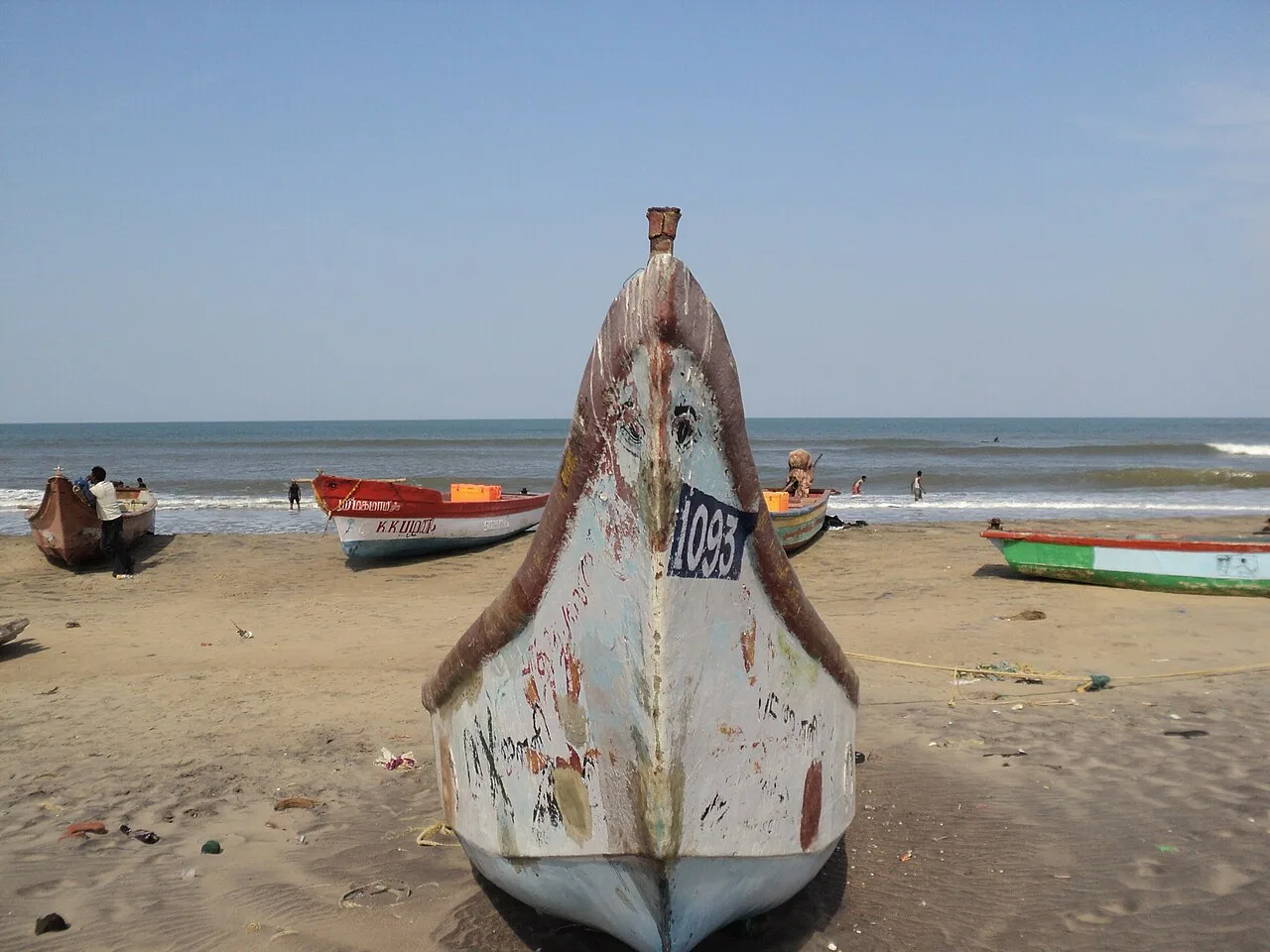
Poompuhar, also called Kaveripoompattinam, is a coastal town in Tamil Nadu’s Mayiladuthurai district. Visitors come to explore its importance as an ancient port and the archaeological evidence of its submerged past.
Vaitheeswaran Koil
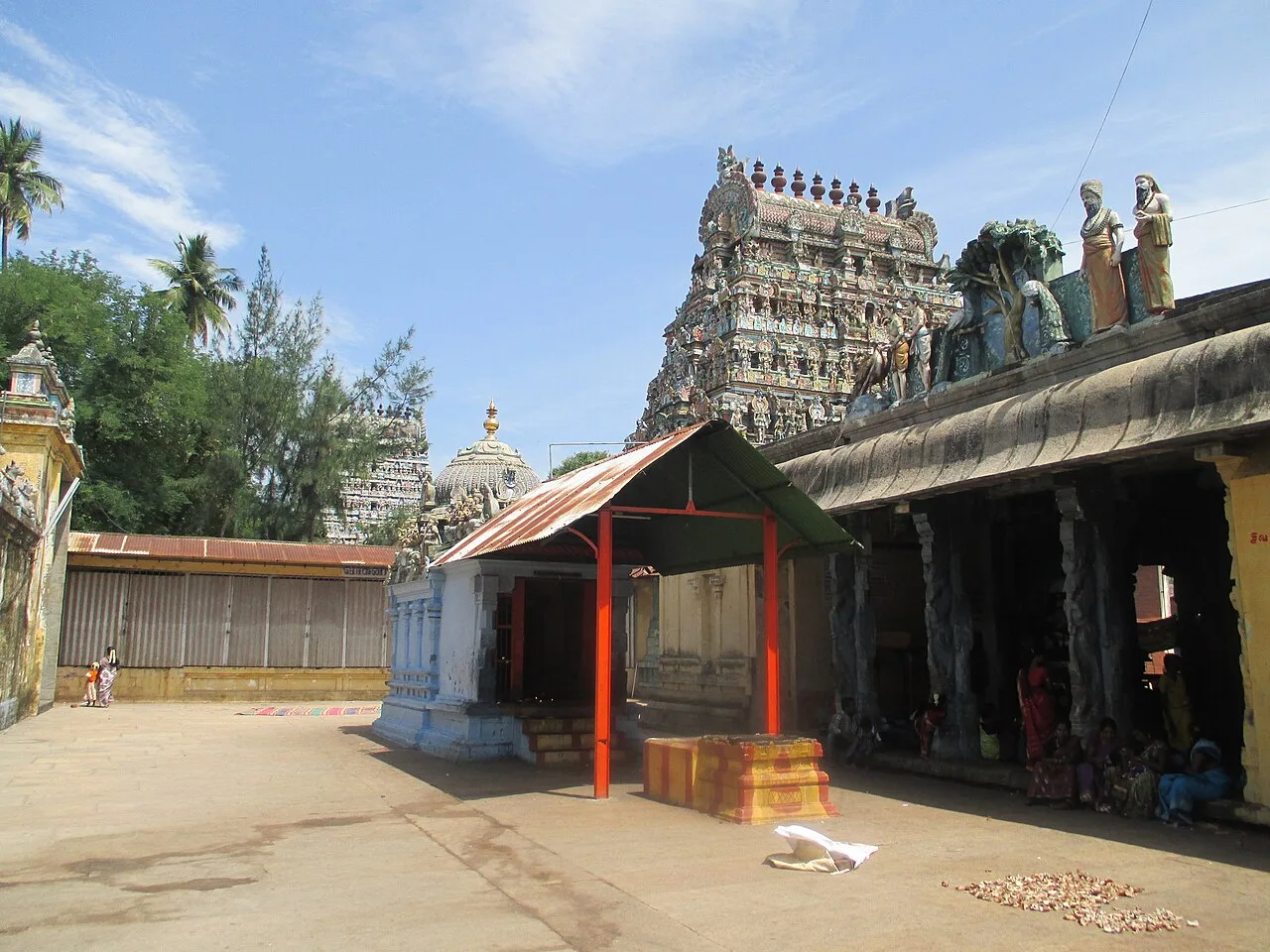
Vaitheeswaran Koil is a Shiva temple in Tamil Nadu, known for its healing associations and link with Mars. People also visit the shrine’s sacred tank and the locality associated with Naadi astrology.
Rice is central to meals across the Kaveri delta, often served with vegetable curries, lentils, pickles and other accompaniments. In Mayiladuthurai and nearby towns, visitors can look for Tamil Nadu staples such as idli, dosa and filter coffee, as well as vegetarian meals served on banana leaves. Coastal eateries around Poompuhar may offer fish and other seafood, though availability varies with the day’s catch. Food traditions differ between towns and households, so ask what has been freshly prepared. Many small eateries serve a limited daily menu.
Handloom weaving is part of the district’s cultural landscape; Koorainadu sarees and fabrics are associated with Mayiladuthurai town. Their designs and materials reflect a local weaving tradition, though offerings and production may vary. Across the wider Kaveri delta, temple culture has also supported traditions of bronze icon-making and devotional art. Thanjavur painting is another notable art form of the broader region, rather than a craft specific to Mayiladuthurai district. Visitors may find locally made textiles and craftwork in town markets, but availability is not guaranteed.
Temple festivals are an important part of the district’s calendar. Vaitheeswaran Koil draws pilgrims throughout the year, with larger gatherings during its annual temple celebrations and major Hindu festivals. Pongal, celebrated in January, is especially visible in this agricultural region, while Tamil New Year and Deepavali are observed across towns and villages. Festival dates follow religious calendars and vary from year to year. Processions and pilgrimage seasons can make temple areas busier and accommodation harder to find, particularly in and around Vaitheeswaran Koil and Mayiladuthurai. Check local schedules and arrange rooms ahead during major celebrations.
Elsewhere in Tamil Nadu
The district occupies the eastern Kaveri delta, where fertile, low-lying farmland is crossed by river channels and irrigation waterways. Paddy fields and villages dominate much of the inland landscape, while the coast includes settlements and beaches along the Bay of Bengal. There are no major hill ranges or extensive forests within the district. The flat terrain makes most journeys straightforward, though smaller roads can be affected by rain or agricultural activity. Coastal visits are exposed to wind and changing sea conditions, so allow time for travel and follow local advice near the shore.
Mayiladuthurai has a tropical climate, with a hot summer generally lasting from March to May. The northeast monsoon, usually most influential from October into December, can bring heavy rain and disrupt local road travel. The southwest monsoon may also bring spells of rain, though it is less dominant here. December to February is generally milder and is often the most comfortable period for temple visits and exploring the coast; November can be pleasant but may still be wet. Carry light, breathable clothing, sun protection and water in hot months, and a compact rain layer during the monsoon season. Check local weather and coastal conditions before travelling.
Mayiladuthurai Junction is the district’s principal railway station and a useful base for visiting nearby towns and temples. Tiruchirappalli International Airport is a regional air gateway; Chennai is another major option for flights, with onward travel by road or rail. Road connections link Mayiladuthurai with places such as Kumbakonam and the coastal settlements, and buses serve the district and wider Tamil Nadu. Within the district, local buses, auto-rickshaws and hired cars can help reach smaller towns and attractions. Check current transport services locally before setting out.
Mayiladuthurai town is the main local transport hub, with road links to Vaitheeswaran Koil, Poompuhar and other towns in the delta. Local and inter-town buses connect many settlements, though services to smaller places may be less frequent. Auto-rickshaws are useful for short journeys; hired cars or taxis offer more flexibility for visiting several sights in a day. Ask locally about return transport before travelling to coastal areas. Boats are not a routine way to get between the district’s sights, and visitors should not assume that a water route is available.
2 days: Vaitheeswaran Koil → Poompuhar; sleep in Mayiladuthurai both nights. 3 days: Poompuhar → Vaitheeswaran Koil; sleep in Mayiladuthurai each night, allowing an extra day for a slower visit.
Mayiladuthurai is the most practical base for both listed destinations, with a wider choice of hotels and access to local transport. Vaitheeswaran Koil can suit pilgrims who prefer to stay close to the temple; basic guesthouses and religious accommodation may be available, but options can be limited during festivals. Poompuhar is better treated as a day visit unless you have confirmed a suitable room nearby. Homestays and government lodges may be found in the wider region, but availability varies, so check arrangements in advance.
The district is mostly flat, but monsoon rain can leave rural roads wet or locally difficult to use. Coastal weather and sea conditions can change; keep away from rough water and follow local instructions. Use safe drinking water and take precautions against heat and sun, especially during summer. Roads may be busy around towns, temples and festival processions, so allow extra time and take care when crossing. Mobile connectivity is generally more dependable in towns than in some smaller settlements. There are no routine special permits for the listed sights; confirm any current local access requirements with official authorities before travel.
- Karaikal · Puducherryabout 28 km
- Cuddaloreabout 28 km
- Ariyalurabout 37 km
- Tiruvarurabout 47 km
- Nagapattinamabout 55 km
- Thanjavurabout 63 km
- Puducherry · Puducherryabout 85 km
- Tiruchirappalliabout 124 km
Straight-line distance between the centres of each district's destinations; road distance is longer.
All districts of Tamil Nadu
- Ariyalur
- Chengalpattu
- Chennai
- Coimbatore
- Cuddalore
- Dharmapuri
- Dindigul
- Erode
- Kallakurichi
- Kancheepuram
- Kanniyakumari
- Madurai
- Nagapattinam
- Namakkal
- Nilgiris
- Pudukkottai
- Ramanathapuram
- Salem
- Sivaganga
- Tenkasi
- Thanjavur
- Theni
- Thoothukudi
- Tiruchirappalli
- Tirunelveli
- Tiruvallur
- Tiruvannamalai
- Tiruvarur
- Vellore
- Villupuram
- Virudhunagar
Q: How many days should I spend in Mayiladuthurai district? A: Two days can cover the listed destinations at a steady pace; three days allow more time for travel and a slower visit. Q: When is the best time to visit? A: December to February is generally comfortable. October to December can be rainy, so check conditions before travelling. Q: What is the best base for exploring? A: Mayiladuthurai town is the most practical base for both Vaitheeswaran Koil and Poompuhar. Q: How do I get to the district? A: Mayiladuthurai Junction is the main rail hub. Visitors can also travel by road, or use Tiruchirappalli or Chennai as an air gateway and continue by road or rail. Q: Is the district suitable for families or elderly travellers? A: Yes, many visits are manageable with planning. Choose transport suited to your needs, allow rest time, and check access and walking conditions at temples.
This page draws on our 2 destination guides for Mayiladuthurai and is updated as our team checks it.
Be the first to share photos, stories, advice or a helpful contact for Mayiladuthurai.
Loading…