
District · Tamil Nadu
Thanjavur
Thanjavur lies in the fertile Cauvery delta of central Tamil Nadu, a region shaped by farming, temple towns and waterways.
Thanjavur district lies in Tamil Nadu’s fertile Cauvery delta, where paddy fields, irrigation channels and closely settled towns shape the landscape. Its character combines agricultural life with a rich tradition of temple building, scholarship and the arts. Thanjavur was an important Chola capital, and Brihadisvara Temple remains its great architectural landmark. At Darasuram, near Kumbakonam, Airavatesvara Temple offers another outstanding expression of Chola craftsmanship. Later Nayak and Maratha patronage added further layers to the district’s cultural life, represented by Thanjavur Palace and Saraswathi Mahal Library. Kumbakonam, with Adi Kumbeswarar Temple and the Mahamaham Tank, is another major centre of pilgrimage. Together, these places make the district as rewarding for understanding living religious traditions as for exploring historic monuments.
Thanjavur lies in the fertile Cauvery delta of central Tamil Nadu, a region shaped by farming, temple towns and waterways. It is best known for the Chola-era Brihadisvara Temple, the finely carved Airavatesvara Temple at Darasuram, and a long tradition of scholarship, music and the arts. Thanjavur Palace and Saraswathi Mahal Library reflect later Nayak and Maratha patronage, while Kumbakonam remains an important centre of worship, with Adi Kumbeswarar Temple and Mahamaham Tank. Visitors can combine major monuments with living religious traditions and a sense of the agricultural landscape that has sustained the region.
The Cauvery delta supported settled agriculture and powerful kingdoms from early times. Thanjavur rose to prominence under the Cholas, especially from the ninth century, and became a major centre of their rule. Rajaraja I commissioned Brihadisvara Temple, completed in the early eleventh century; Chola patronage also produced Airavatesvara Temple at Darasuram. The region later passed through the hands of Pandyas and Vijayanagara authorities. Nayak rulers governed Thanjavur from the sixteenth century, followed by the Maratha Bhonsle dynasty from the seventeenth century. Their legacy includes the palace and the growth of courtly and scholarly institutions. British influence expanded in the eighteenth century, and Thanjavur became part of the Madras Presidency. The princely kingdom ended in the nineteenth century, after which colonial district administration developed across the delta. Following Indian independence, the area remained within Madras State, renamed Tamil Nadu in 1969. Later administrative reorganisations divided the older, larger Thanjavur district; the present district is one part of that historic delta region.
8 destination guides
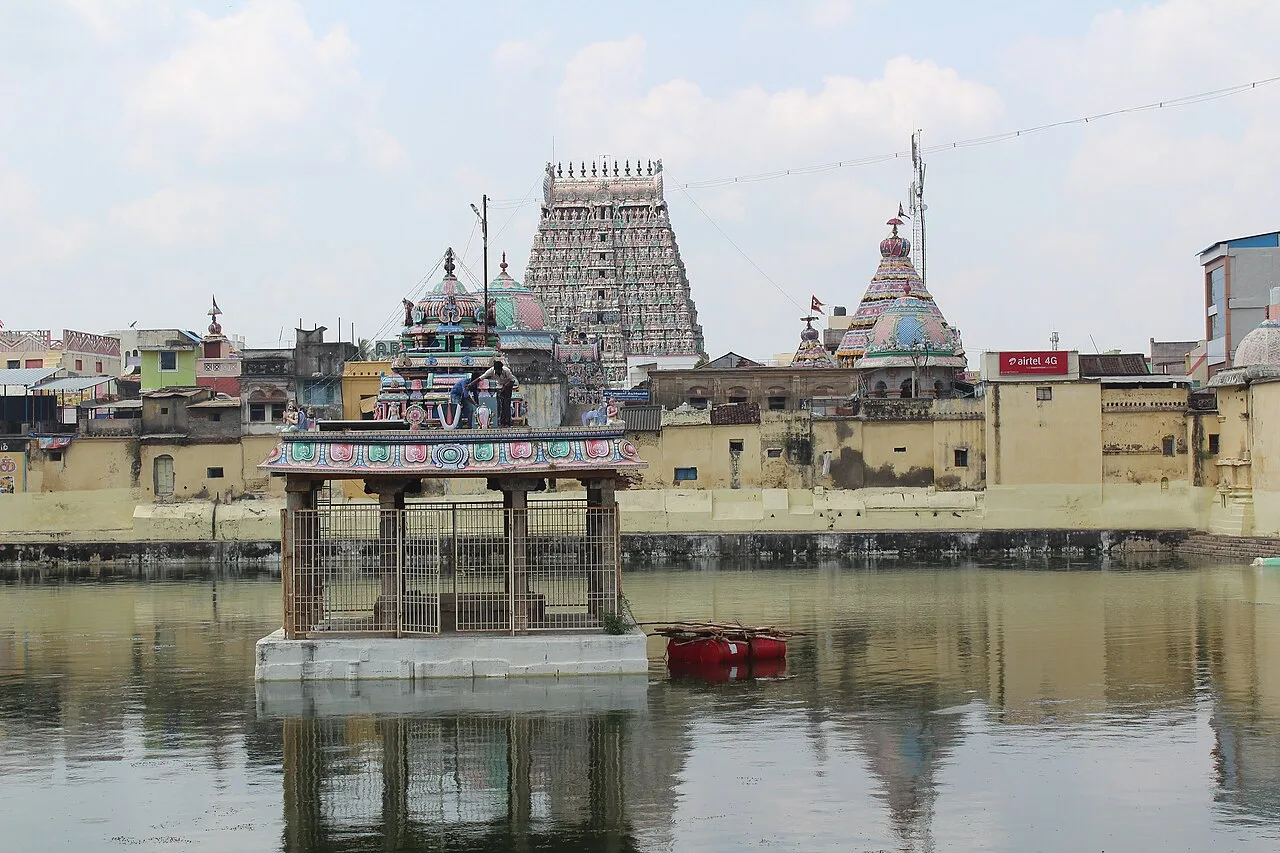
Adi Kumbeswarar Temple
Visitors come to worship Shiva and Parvati and view a complex recognised for its Tevaram association, its four gopurams and a sculpted Vijayanagara-period hall.
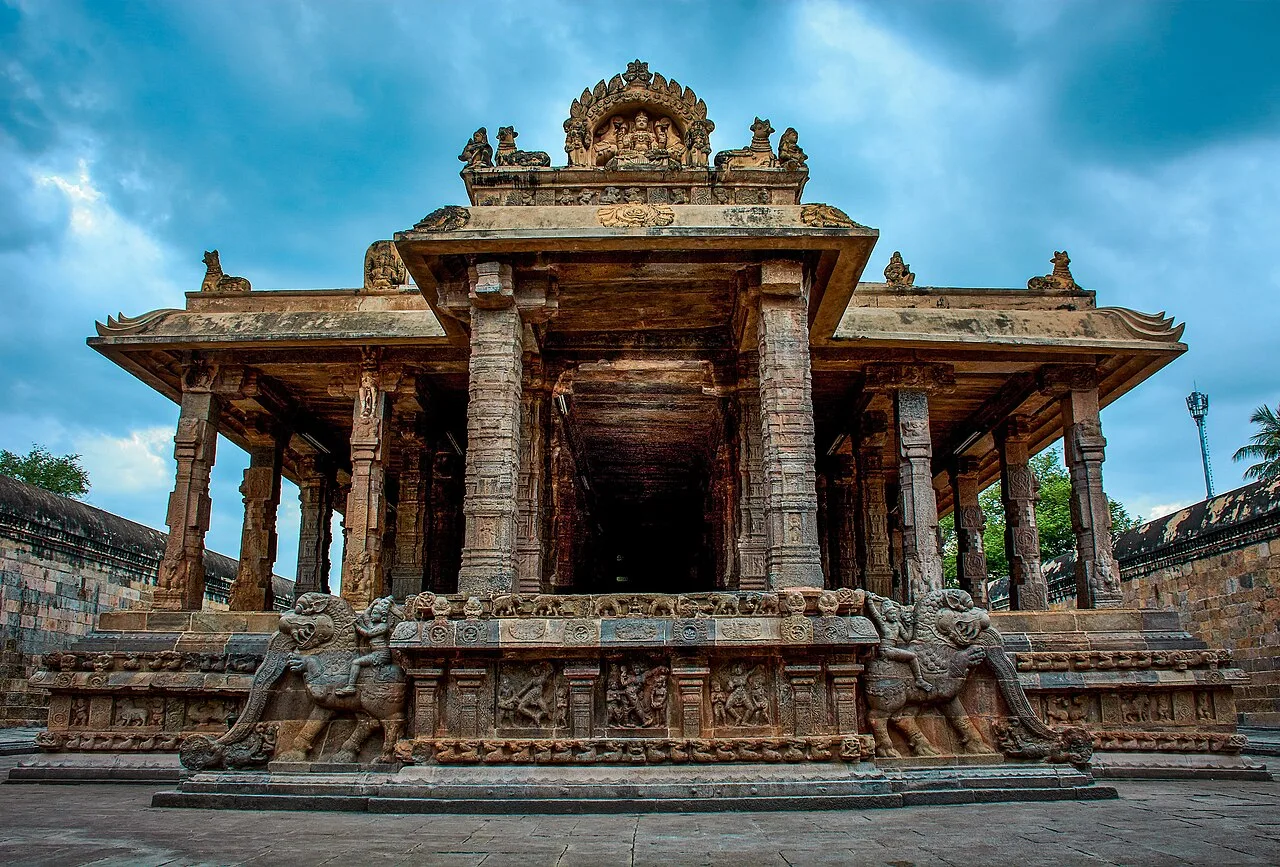
Airavatesvara Temple, Darasuram
A Chola-era Shiva temple in Darasuram, near Kumbakonam, Airavatesvara draws visitors for its architecture, sacred imagery and annual Magha observances.
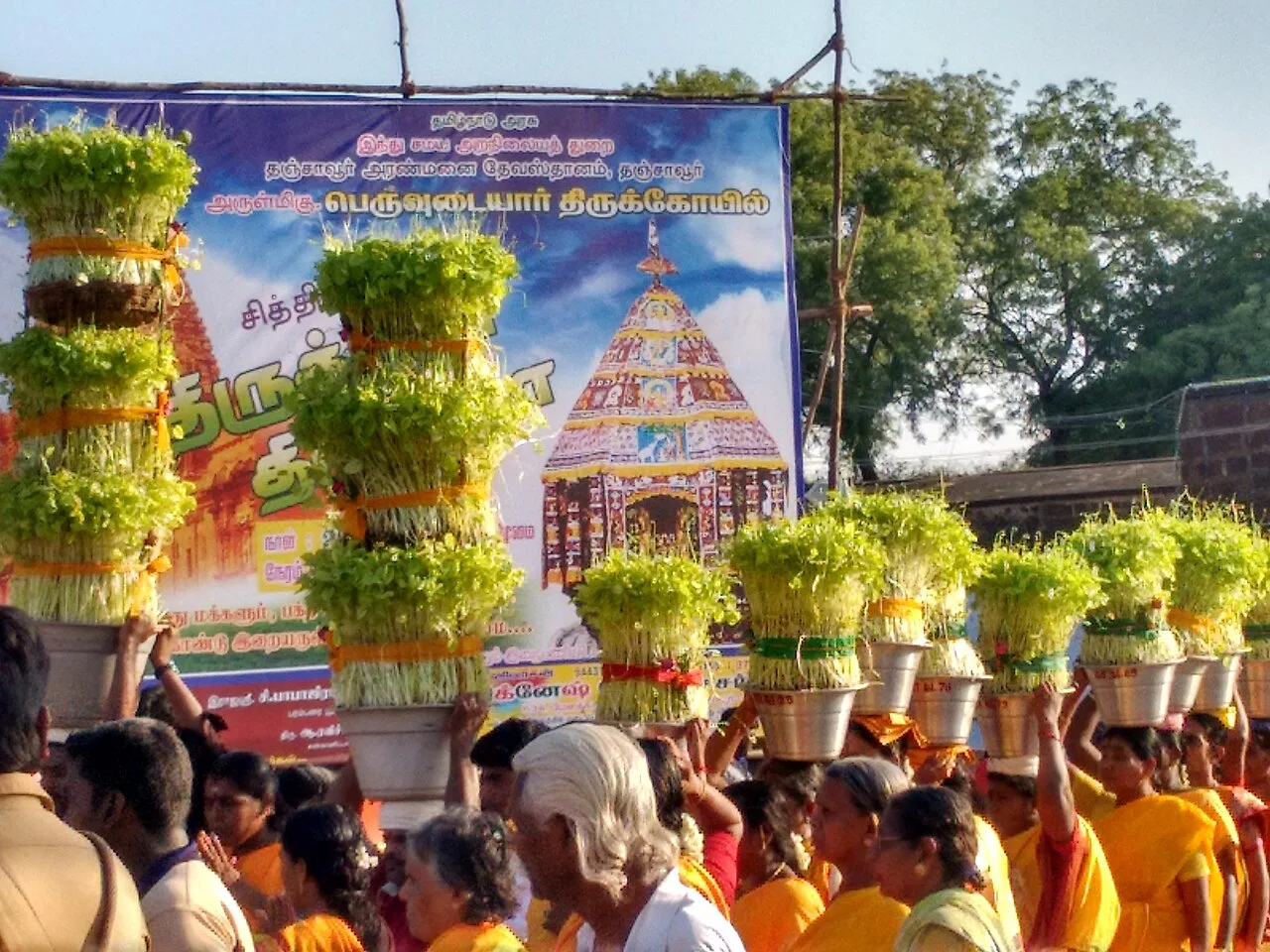
Brihadisvara Temple
This major Shaivite temple in Thanjavur is a celebrated Chola-era monument, noted for its granite vimana, sculpture and place within the Great Living Chola Temples.
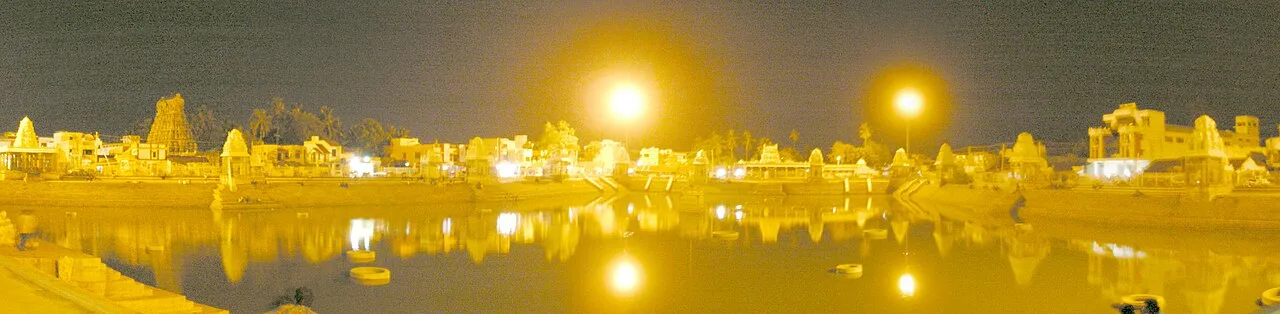
Mahamaham Tank, Kumbakonam
Mahamaham Tank is a large temple reservoir in Kumbakonam, Tamil Nadu, visited for the Masimaham celebration and the Mahamaham festival, which occurs every twelve years.
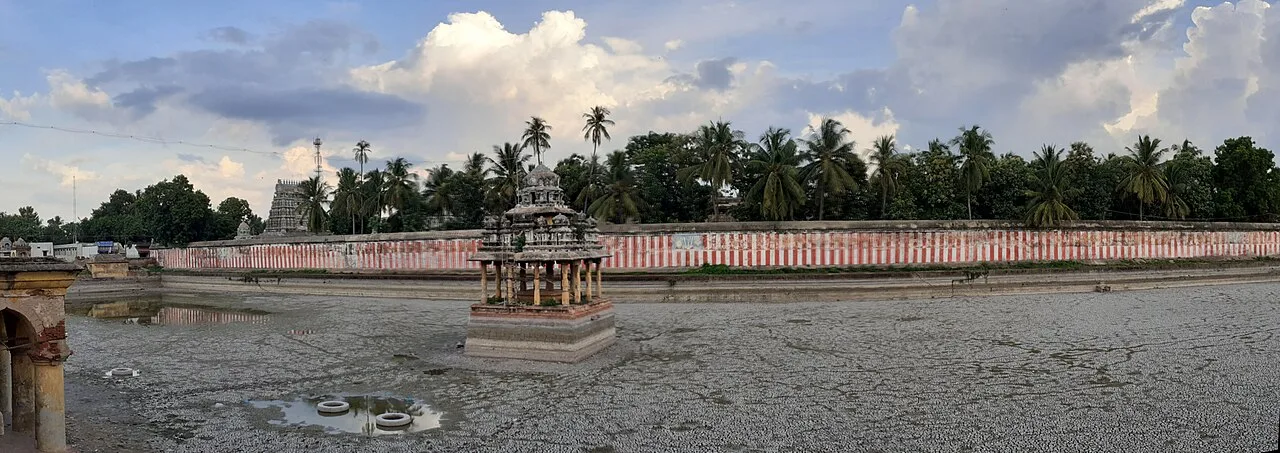
Nachiyarkoil
Nachiyarkoil is a village in Tamil Nadu’s Thanjavur district, within Kumbakonam taluk. Visitors may come to see its locally produced brass lamps, the settlement’s distinctive craft.
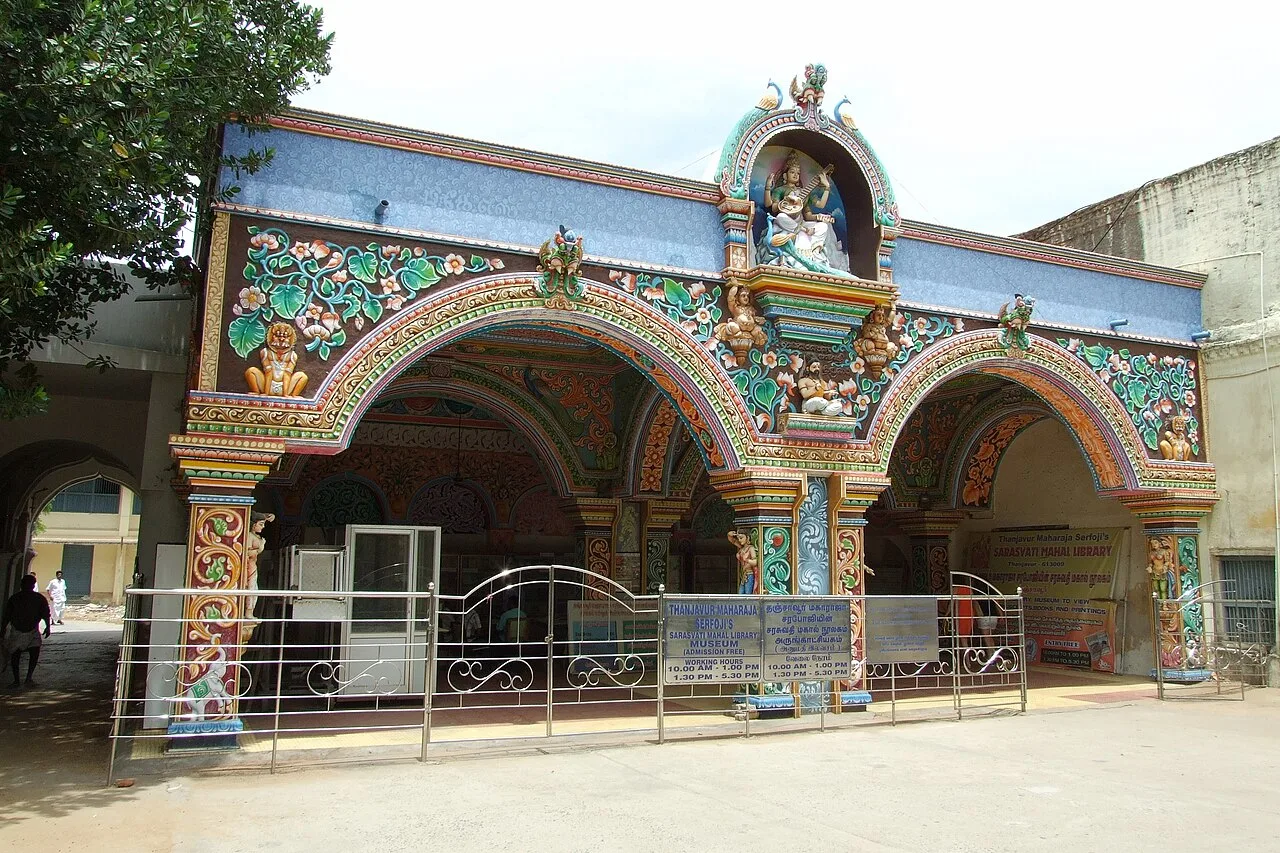
Saraswathi Mahal Library
Saraswathi Mahal Library is a historic collection in Thanjavur, Tamil Nadu, known for its extensive manuscripts and printed works in Tamil, Sanskrit and other Indian languages.
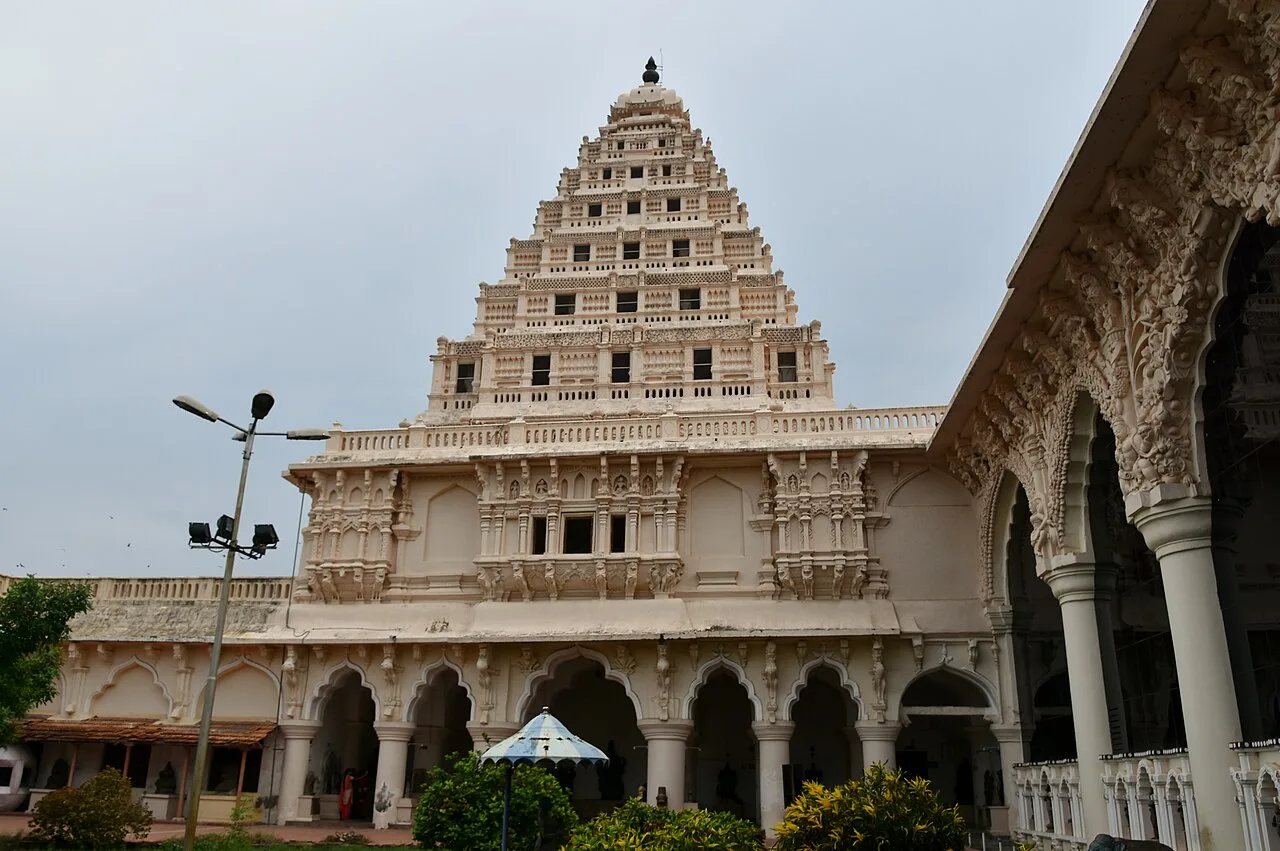
Thanjavur Palace
Thanjavur Palace is a royal residence in Tamil Nadu, associated with the Bhonsle family and the kingdom’s earlier rulers. Visitors come to learn about its place in Thanjavur’s royal history.
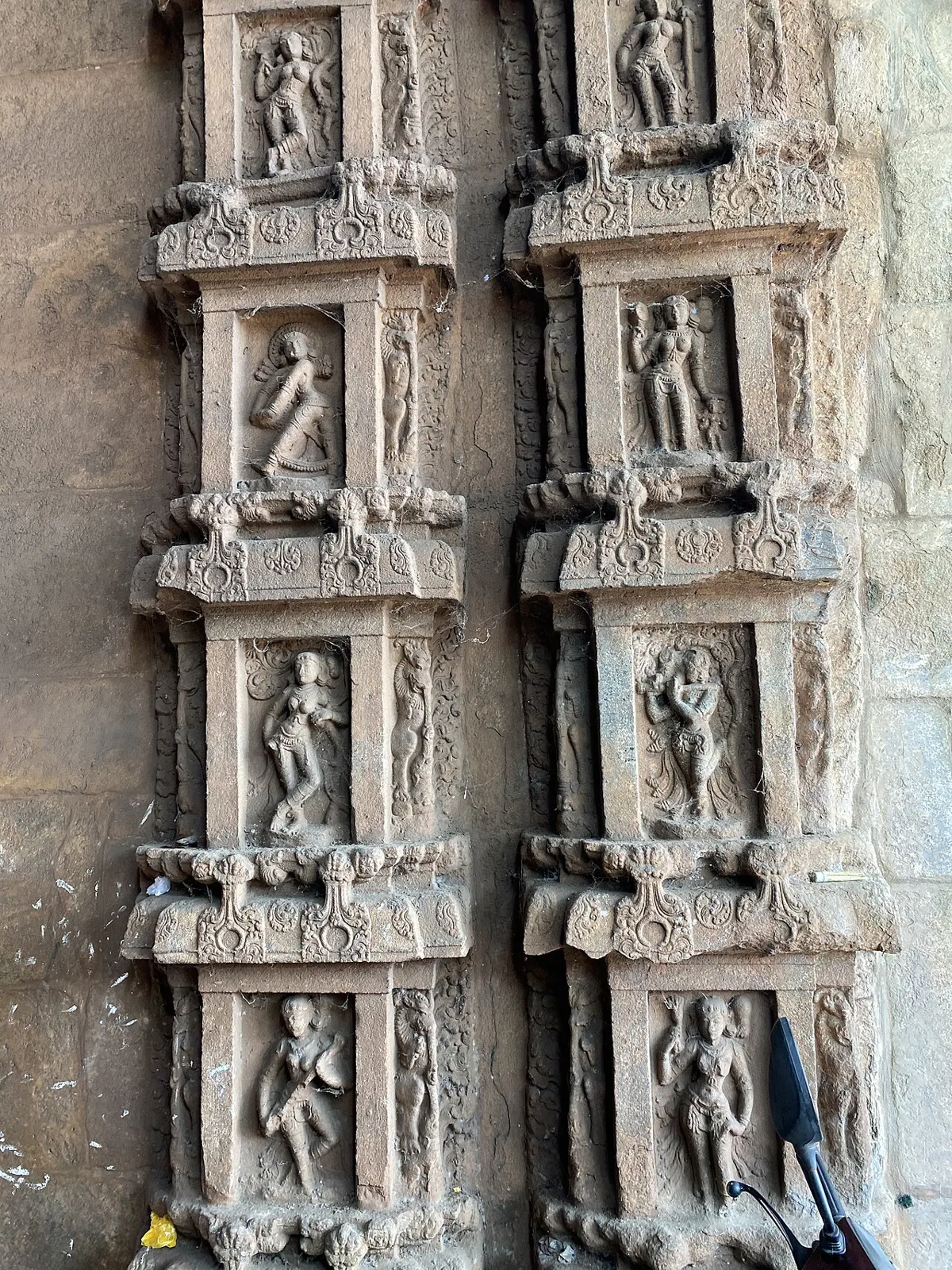
Thirubuvanam
Thirubuvanam is a panchayat town in Tamil Nadu’s Thanjavur district. Visitors chiefly associate it with the Kampaheswarar Temple.
Rice anchors everyday cooking in Thanjavur’s delta landscape. Banana-leaf vegetarian meals are a good introduction, usually bringing rice together with sambar, rasam, vegetable preparations, curd and accompaniments. Idli, dosa and filter coffee belong to the wider Tamil food tradition and are familiar choices here. Kumbakonam is particularly associated with degree coffee, a local coffee identity rather than a separate cuisine. Sweets such as adhirasam also feature in the region’s festive cooking. Small eateries may prepare only a limited daily selection, so ask what is freshly available. Meat and fish dishes are part of local eating too; temple-town vegetarian dining is only one aspect of the district’s food culture.
Thanjavur painting is the district’s best-known art tradition, recognised for devotional subjects, rich colour, raised ornament and gold foil. Thanjavur dolls, including rounded, gently swaying figures, are another familiar local craft. The district is also associated with veena making, linking skilled woodworking to its musical heritage. Around Kumbakonam, Swamimalai is renowned for bronze icons made through the lost-wax casting process, continuing a tradition closely connected with temple worship. Silk weaving at Thirubuvanam adds a handloom dimension. When buying, ask about materials, production methods and the maker; handmade work and inexpensive decorative reproductions can differ substantially.
Pongal, the harvest festival celebrated in January, is widely observed across the delta, with family gatherings and local festivities. Temples hold annual processions and observances through the year; Kumbakonam is especially associated with Mahamaham, a major bathing festival traditionally held once in twelve years, usually in the Tamil month of Masi. The festival draws large crowds to the town and can make accommodation and local travel busy. Navaratri and other temple celebrations also bring visitors, so it is wise to check local festival calendars and arrange rooms ahead during major events.
In this district
Thanjavur is largely low-lying delta country, with paddy fields, irrigation channels and settlements linked by roads. The Cauvery and its distributaries have shaped the agricultural landscape, although water levels and channel conditions vary by season. The district extends eastward to a stretch of coast, but its principal heritage circuit is inland. There are no major hill ranges in the district. Travel between Thanjavur, Kumbakonam and Darasuram is generally through settled plains; rural roads may pass through busy villages and narrow areas alongside fields and canals.
The district is warm for much of the year. March to May is generally the hottest period, so sightseeing is more comfortable early or later in the day, with shade and water breaks. The southwest monsoon can bring rain, while the northeast monsoon, usually from October into December, is an important rainy season and may affect roads or outdoor plans. November to February is often a more comfortable period to visit, though rain can still occur. Pack light, breathable clothing, sun protection and comfortable walking footwear; carry a rain layer or umbrella during the monsoon seasons.
Tiruchirappalli International Airport is the nearest major airport for the district’s principal visitor centres. Thanjavur Junction and Kumbakonam railway station are useful rail gateways; choose according to whether you plan to begin in Thanjavur or around Kumbakonam and Darasuram. Road links connect these towns with Tiruchirappalli and other centres across Tamil Nadu, with buses providing intercity and local connections. Within towns, auto-rickshaws and taxis are practical for reaching temples, the palace and accommodation. A hired car can simplify a day covering several scattered sites, while some central sights can be combined on foot. Check current services locally.
Roads connect Thanjavur and Kumbakonam with other towns in the delta and with Tiruchirappalli. Local and intercity buses serve the main towns, while auto-rickshaws are useful for shorter trips within them. Taxis or a hired car make it easier to combine sites across Thanjavur, Kumbakonam and Darasuram in one day. Some central sights in Thanjavur can be visited on foot, but distances between the two main town clusters make walking impractical for the whole circuit. Rural buses may be less frequent than services between larger towns; confirm current options locally.
2 days: Brihadisvara Temple, Thanjavur Palace, Saraswathi Mahal Library; sleep in Thanjavur. Adi Kumbeswarar Temple, Mahamaham Tank, Kumbakonam; Airavatesvara Temple, Darasuram; sleep in Kumbakonam. 3 days: Brihadisvara Temple, Thanjavur Palace, Saraswathi Mahal Library; sleep in Thanjavur. Adi Kumbeswarar Temple, Mahamaham Tank, Kumbakonam; sleep in Kumbakonam. Airavatesvara Temple, Darasuram; sleep in Kumbakonam. 4 days: Brihadisvara Temple, Thanjavur Palace; sleep in Thanjavur. Saraswathi Mahal Library; sleep in Thanjavur. Adi Kumbeswarar Temple, Mahamaham Tank, Kumbakonam; sleep in Kumbakonam. Airavatesvara Temple, Darasuram; sleep in Kumbakonam.
Thanjavur is the practical base for Brihadisvara Temple, the palace and Saraswathi Mahal Library, with a range of hotels and some simpler guesthouses. Kumbakonam suits visits to Adi Kumbeswarar Temple, Mahamaham Tank and Darasuram, and offers hotels, homestays and religious guest accommodation. Government lodges and dharamshalas may be available in the wider region, but facilities and booking arrangements vary. For a short visit, staying in both towns reduces backtracking; for a slower trip, choose one base and allow extra time for road travel.
Plan outdoor visits around the heat, carry drinking water and use sun protection. Choose treated or sealed drinking water, and take care with food in hot weather. Monsoon rain can leave roads wet or locally waterlogged; check conditions before travelling. Traffic in towns and on rural roads can be busy, and some smaller roads are narrow, so use care when walking or travelling after dark. Crowds increase during temple festivals; keep valuables secure and follow local temple rules, including footwear arrangements. Mobile connectivity is generally available in towns but may be less reliable in rural areas. No special visitor permit is normally required for the listed sights.
- Tiruvarurabout 37 km
- Ariyalurabout 42 km
- Karaikal · Puducherryabout 58 km
- Mayiladuthuraiabout 63 km
- Nagapattinamabout 63 km
- Tiruchirappalliabout 66 km
- Cuddaloreabout 78 km
- Pudukkottaiabout 83 km
Straight-line distance between the centres of each district's destinations; road distance is longer.
All districts of Tamil Nadu
- Ariyalur
- Chengalpattu
- Chennai
- Coimbatore
- Cuddalore
- Dharmapuri
- Dindigul
- Erode
- Kallakurichi
- Kancheepuram
- Kanniyakumari
- Madurai
- Mayiladuthurai
- Nagapattinam
- Namakkal
- Nilgiris
- Pudukkottai
- Ramanathapuram
- Salem
- Sivaganga
- Tenkasi
- Theni
- Thoothukudi
- Tiruchirappalli
- Tirunelveli
- Tiruvallur
- Tiruvannamalai
- Tiruvarur
- Vellore
- Villupuram
- Virudhunagar
Q: How many days should I spend in Thanjavur district? A: Two days can cover the main listed sights, while three or four days allow a more relaxed visit. Q: When is the best time to visit? A: November to February is often more comfortable for sightseeing, though monsoon rain may affect plans. Q: What is the best base for visiting the district? A: Thanjavur suits its palace, library and Brihadisvara Temple; Kumbakonam is convenient for its temples and Darasuram. Q: How do I get to Thanjavur district? A: Tiruchirappalli International Airport is the nearest major airport; Thanjavur and Kumbakonam are useful rail gateways, with road and bus connections between towns. Q: Is the district suitable for families or elderly travellers? A: Yes, with planning for heat, temple steps and walking distances; taxis or a hired car can reduce the amount of walking.
This page draws on our 8 destination guides for Thanjavur and is updated as our team checks it.
Be the first to share photos, stories, advice or a helpful contact for Thanjavur.
Loading…