
District · Tamil Nadu
Ariyalur
Ariyalur offers a quieter inland journey through central Tamil Nadu, with cultivated plains, small towns and a remarkable record of both human and geological history.
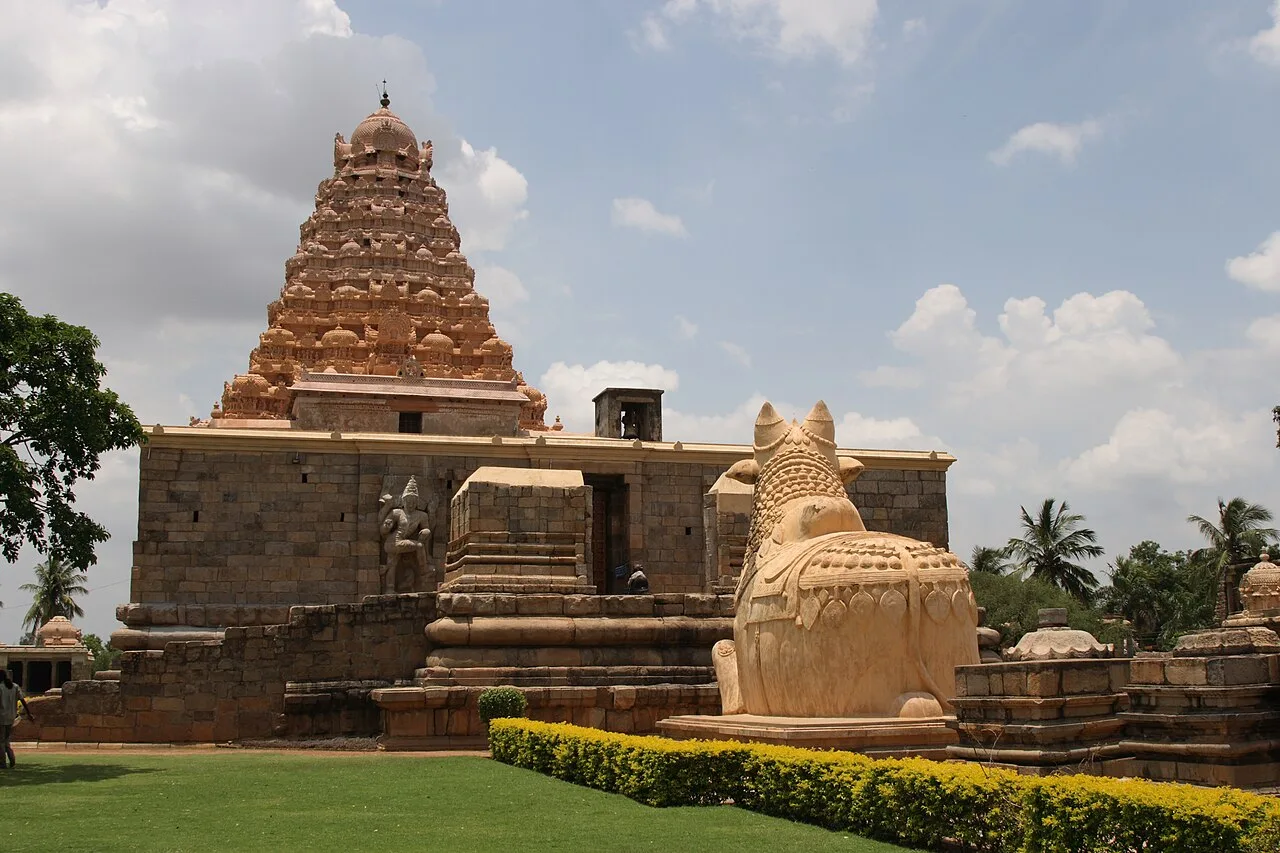
Ariyalur district lies in central Tamil Nadu, where agricultural plains, villages and limestone-rich terrain shape a largely rural landscape. Its geological heritage includes fossil-bearing deposits that recall a much older marine environment, while limestone also supports a substantial cement industry. The district’s best-known monument is the temple at Gangaikonda Cholapuram, near Jayankondam. Built under Rajendra Chola I in the eleventh century, it belongs to the UNESCO-listed Great Living Chola Temples and preserves the grandeur of a former Chola capital. Beyond this celebrated site, Ariyalur’s character is quieter: cultivated fields, small market towns and village shrines offer a setting for exploring the history and everyday life of inland Tamil Nadu.
Ariyalur offers a quieter inland journey through central Tamil Nadu, with cultivated plains, small towns and a remarkable record of both human and geological history. Its best-known destination is Gangaikonda Cholapuram Temple, built under Chola ruler Rajendra I in the eleventh century and included in the UNESCO-listed Great Living Chola Temples. The surrounding region was once associated with a Chola capital, while fossil-bearing sedimentary deposits preserve evidence of an ancient marine environment. Limestone has also shaped the district’s economy and supports cement production. Ariyalur suits travellers interested in Chola architecture, rural Tamil Nadu and geology, especially as part of a wider circuit with nearby towns.
Ariyalur’s most prominent historical association is with the Chola dynasty. In the eleventh century, Rajendra Chola I established Gangaikonda Cholapuram as a capital after his northern campaign; its great Shiva temple remains a major expression of Chola architecture. The wider Kaveri-region history also includes the influence of earlier and later South Indian powers, including the Pallavas, Pandyas and Vijayanagara rulers, though the surviving landmark here is especially associated with the Cholas. In the colonial period, the area came under British administration as part of the Madras Presidency, whose boundaries and administrative units changed over time. After Indian independence, the region was administered within Tamil Nadu’s district structure. Ariyalur district was created in 2001, merged with Perambalur district in 2002, and re-established as a separate district in 2007. Its limestone and fossil-bearing strata have added a significant geological dimension to its identity, alongside agriculture and its medieval monuments.
Food in Ariyalur is best understood within the wider traditions of central Tamil Nadu rather than as a separate district cuisine. Idli and dosa are familiar breakfast choices, often accompanied by chutney, sambar and filter coffee. For lunch, look for rice-based vegetarian meals with vegetable preparations, sambar, rasam and curd; banana-leaf service is a well-established regional tradition. Some eateries also serve chicken or mutton gravies, though menus vary. Adhirasam is among the traditional Tamil sweets you may encounter. Small establishments often prepare only a few dishes each day, so asking what is freshly cooked is a useful approach.
Ariyalur’s most visible artistic heritage is the stone architecture and sculpture of Gangaikonda Cholapuram, where carved figures and architectural details demonstrate Chola craftsmanship. These historic works should not be confused with evidence of a large present-day craft market in the district. For wider regional context, the neighbouring Thanjavur region is associated with Thanjavur painting and the lost-wax bronze casting practised at Swamimalai. Such traditions belong to the broader cultural landscape of the Chola heartland, rather than being exclusive to Ariyalur. Ask about an object’s maker and place of production when buying.
Pongal, the harvest festival observed across Tamil Nadu in January, is celebrated in Ariyalur’s towns and villages with family gatherings and community customs. Temple festivals are held at different times of year; observances in the Tamil months of Aadi and Panguni are common in the wider region, but local schedules vary by temple. Shivaratri may draw worshippers to Shiva temples, including Gangaikonda Cholapuram. These events can bring larger local crowds and busier roads, while rooms in nearby towns may be more sought after. Check with local sources for current festival schedules before planning around a particular temple event.
Elsewhere in Tamil Nadu
Ariyalur is largely an inland plain of agricultural fields, villages and low, gently varied terrain, rather than a district of high hills or coastline. Seasonal streams and river-fed areas contribute to cultivation, while limestone and other sedimentary formations are visible in parts of the district. Fossil-bearing deposits reflect a much older marine setting. Towns and monuments are connected across a broad rural area, so journeys are mainly by road and can take longer where routes pass through villages. The landscape is open and exposed in many places, making shade and water useful during daytime visits.
Ariyalur is generally hot for much of the year. Summer, roughly from March into June, can make midday sightseeing tiring, so plan outdoor visits for cooler parts of the day and carry water and sun protection. The northeast monsoon, usually from October into December, brings much of the region’s rain and can affect road conditions or disrupt outdoor plans. The period from November to February is often more comfortable for exploring, though conditions vary from year to year. Pack light, breathable clothing, a sun hat and comfortable walking shoes; carry a light rain layer during the monsoon season.
Tiruchirappalli International Airport is a practical air gateway for Ariyalur district, with onward travel by road. Ariyalur railway station provides rail access to the district headquarters; the most convenient station for a particular village or monument depends on your itinerary. Road connections link the district with Tiruchirappalli, Thanjavur and surrounding towns. For Gangaikonda Cholapuram, plan your approach around Jayankondam and confirm the onward connection before setting out. Buses serve major towns and many villages, while auto-rickshaws and hired cars can help with local journeys and temple visits. Check current services locally.
Road travel is the practical way to move between Ariyalur, Jayankondam and the district’s villages. Local and regional buses connect the main towns, while service frequency and onward connections to smaller places can vary. For Gangaikonda Cholapuram Temple, use Jayankondam as a practical approach point and confirm the local connection before setting out. Auto-rickshaws can help with shorter journeys, and a hired car offers greater flexibility for temple visits and rural routes. Rail access is available at Ariyalur railway station, but it may not be the most convenient station for every itinerary. There are no routine visitor boat journeys to plan around.
2 days: Gangaikonda Cholapuram Temple; sleep in Jayankondam both nights. 3 days: Gangaikonda Cholapuram Temple, with a slower visit and time to explore the surrounding area; sleep in Ariyalur on the first night and Jayankondam on the second.
Jayankondam is a practical base for visiting Gangaikonda Cholapuram Temple, while Ariyalur town suits travellers using the railway station or continuing across the district. Accommodation is generally more limited than in larger regional cities; visitors may find simple hotels and lodges in the main towns, with fewer options in villages. Homestays or religious guest accommodation may be available locally, but availability and visitor facilities vary. For a rural itinerary or travel during a temple festival, arrange a suitable base ahead of time and confirm the location’s access and amenities.
Plan for heat and limited shade: carry drinking water, use sun protection and avoid prolonged midday walking in summer. Use sealed or reliably treated water, particularly in rural areas. Roads range from busier inter-town routes to narrower village roads; take care around traffic, and allow extra time during heavy monsoon rain. Connectivity can be patchy outside towns, so save directions and essential details in advance. Limestone quarries and fossil-bearing ground are not visitor sites by default; do not enter active work areas or collect fossils without permission. No special visitor permit is generally required for the listed temple, but confirm access arrangements officially if visiting other managed sites.
- Mayiladuthuraiabout 37 km
- Cuddaloreabout 39 km
- Thanjavurabout 42 km
- Karaikal · Puducherryabout 52 km
- Tiruvarurabout 52 km
- Nagapattinamabout 74 km
- Puducherry · Puducherryabout 91 km
- Tiruchirappalliabout 91 km
Straight-line distance between the centres of each district's destinations; road distance is longer.
All districts of Tamil Nadu
- Chengalpattu
- Chennai
- Coimbatore
- Cuddalore
- Dharmapuri
- Dindigul
- Erode
- Kallakurichi
- Kancheepuram
- Kanniyakumari
- Madurai
- Mayiladuthurai
- Nagapattinam
- Namakkal
- Nilgiris
- Pudukkottai
- Ramanathapuram
- Salem
- Sivaganga
- Tenkasi
- Thanjavur
- Theni
- Thoothukudi
- Tiruchirappalli
- Tirunelveli
- Tiruvallur
- Tiruvannamalai
- Tiruvarur
- Vellore
- Villupuram
- Virudhunagar
Q: How many days should I spend in Ariyalur? A: Two days can cover Gangaikonda Cholapuram Temple at an unhurried pace; allow a third day for a slower rural itinerary or onward travel. Q: When is the best time to visit? A: November to February is often more comfortable for sightseeing. Summer is hot, and monsoon rain can affect road travel. Q: What is the best base for visiting the temple? A: Jayankondam is a practical base for Gangaikonda Cholapuram Temple; Ariyalur town is useful for rail access and wider travel. Q: How do I get to Ariyalur? A: Ariyalur has a railway station and road connections to nearby towns. Tiruchirappalli International Airport is a practical air gateway, followed by onward road travel. Q: Is Ariyalur suitable for families or elderly travellers? A: Yes, with planning. The temple visit involves walking and exposure to sun, so consider mobility needs, shade, hydration and transport arrangements.
This page draws on our 1 destination guides for Ariyalur and is updated as our team checks it.
Be the first to share photos, stories, advice or a helpful contact for Ariyalur.
Loading…