
District · Tamil Nadu
Namakkal
Namakkal offers a compact view of western Tamil Nadu, where the Kongu region’s farming and transport economy meets the hill country of Kolli Malai.
Namakkal district in western Tamil Nadu brings together rocky plains, agricultural settlements and the wooded slopes of Kolli Hills. Namakkal town is distinguished by its imposing rock and historic fort, which give the district headquarters a strong visual identity. Rock-cut temples around the hill add a religious dimension to its built heritage. Farming, textile production and transport-related businesses help shape the district’s everyday character. A visit can therefore combine fort and temple heritage with quieter hill-country exploration, rather than focusing on a single monument or resort.
Namakkal offers a compact view of western Tamil Nadu, where the Kongu region’s farming and transport economy meets the hill country of Kolli Malai. The district is best known for Namakkal Fort and the striking rocky hill at the town centre, as well as Kolli Hills’ forested slopes and winding roads. Travellers can pair historic and religious heritage around Namakkal town with a change of pace in the hills. The district is also a useful stop between larger regional centres such as Salem, Karur and Tiruchirappalli, though travel within it requires planning for the distance and road conditions between plains and hills.
The Namakkal region formed part of Kongu Nadu, a historic area of western Tamil Nadu, and its settlements were shaped over time by regional powers including the Cheras, Cholas and Pandyas. Kolli Hills are associated with the Sangam-era chieftain Valvil Ori, remembered in Tamil tradition. Namakkal’s prominent rock and fort reflect the strategic value of the town and its routes across the region. The fort is associated with the Nayak period and later came under the influence of Mysore rulers; control of the area shifted during the conflicts between Mysore and the British. Under British rule, the region was administered as part of the Madras Presidency. After Indian independence, Namakkal remained within the state of Madras, renamed Tamil Nadu in 1969. The present district was formed in 1997, when it was separated from Salem district. Its later development has been shaped by agriculture, textile activity and transport businesses, alongside the growth of Namakkal town as an administrative and commercial centre.
2 destination guides
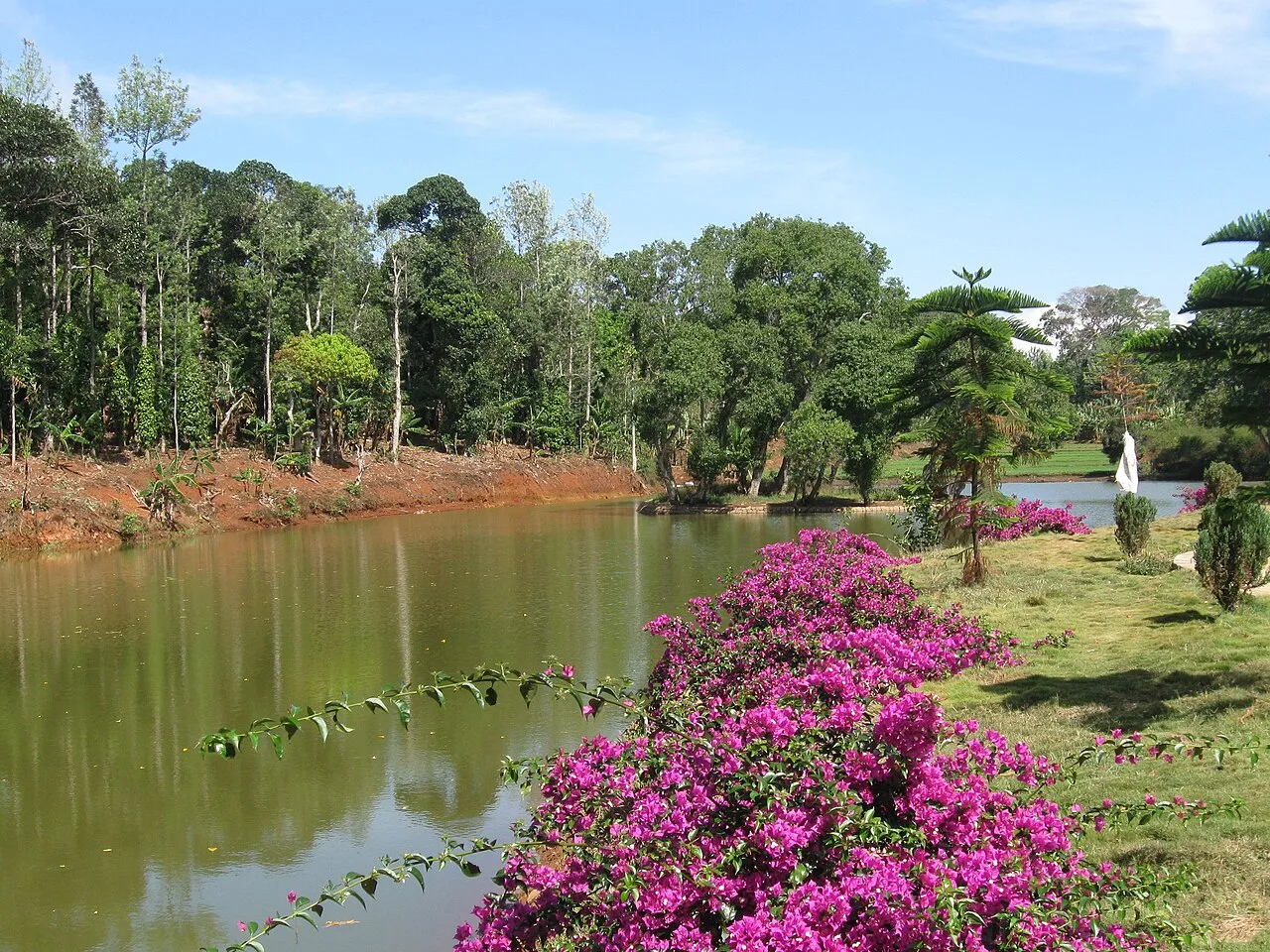
Kolli Hills
Kolli Malai, also called Kolli Hills, is a hill station and taluk within Tamil Nadu’s Namakkal district. Visitors come to the area in its capacity as a hill-station destination.
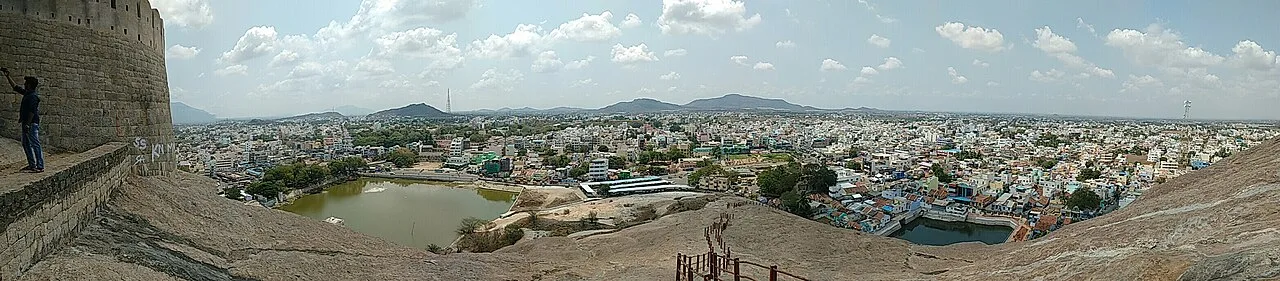
Namakkal Fort
Rising above Namakkal, this seventeenth-century fort occupies a hillock of solid rock and contains a temple and mosque. Visitors come to see these sites and explore its history.
Food in Namakkal belongs broadly to western Tamil Nadu’s Kongu regional tradition, alongside familiar Tamil staples such as idli, dosa, sambar and filter coffee. Rice-based vegetarian meals, often served on banana leaves, are a dependable choice for lunch. Millet preparations also form part of the wider region’s food traditions, though availability varies between eateries. Pallipalayam chicken, associated with Pallipalayam in the district, is a well-known preparation using dried chillies and coconut. For everyday eating, ask small restaurants what has been cooked fresh; their daily selection may be more useful than a long menu.
Textiles are the clearest link to Namakkal’s making traditions. Kumarapalayam and Pallipalayam are established textile centres, where weaving and related production contribute substantially to local livelihoods. Much of this activity is commercial and powerloom-based, so it should not all be described as handmade craft. For handloom purchases, look for clearly identified weaver outlets or cooperative shops and ask about the fabric’s origin and method of production. Tamil Nadu’s broader traditions of cotton weaving and temple-related arts provide regional context, rather than crafts unique to Namakkal.
Pongal, the January harvest festival, is widely celebrated in the district, with family gatherings and village observances. Temple festivals, including those dedicated to Mariamman and other local deities, take place at different times of the Tamil calendar and can bring busy streets and larger local crowds. Kolli Hills also hosts cultural observances associated with Valvil Ori, generally around August. Festival dates vary by temple and year, so check locally. Accommodation is more limited in the hills than in Namakkal town; reserve ahead if travelling during a major local event.
Elsewhere in Tamil Nadu
Namakkal district spans dry and cultivated plains, rocky outcrops and the higher, wooded terrain of Kolli Hills. Farms and settlements are prominent across the lowlands, while the hill slopes have cultivated patches interspersed with forest. The district has no coastline; the Cauvery is an important river in the wider southern part of the region. Rain or mist can make hill journeys slower and reduce visibility.
The lowlands are generally hot, particularly in the summer months, while Kolli Hills are cooler and can feel damp or misty. The southwest monsoon brings some rain, and the northeast monsoon later in the year can also affect travel and road conditions. October to February is often a comfortable period for visiting, though hill weather can change quickly. Summer visits are possible with sun protection and water, but plan outdoor activities for cooler parts of the day. Pack light clothing for the plains, a warmer layer and rain protection for the hills, and shoes suitable for uneven ground.
Salem Airport is a nearby air gateway for Namakkal town and Kolli Hills, but confirm available flights before planning around it. Namakkal has its own railway station; Salem Junction and Karur Junction are additional rail gateways, depending on your route and destination within the district. Road connections link Namakkal with Salem, Karur and Tiruchirappalli. Intercity buses serve the main towns, while local buses, auto-rickshaws and hired cars cover onward journeys. Check current services locally.
Roads connect Namakkal town with Salem, Karur and other regional centres, and buses serve the main towns and many local settlements. Local buses can be useful, but services for hill villages may be less frequent; confirm onward connections locally. Auto-rickshaws are practical for short trips in town, while a hired car or taxi offers more flexibility for combining Namakkal Fort with Kolli Hills. Shared vehicles may operate on some local routes but should not be relied on without checking. Allow extra time for the winding uphill journey to Kolli Hills.
2 days: Namakkal Fort → Kolli Hills; sleep in Namakkal on night 1. 3 days: Namakkal Fort → Kolli Hills; sleep in Namakkal on night 1 and Kolli Hills on night 2.
Namakkal town is the most practical base for visiting Namakkal Fort and for road or rail connections across the district. It has a broader choice of ordinary hotels and guesthouses. For a hill-focused visit, stay in or near Kolli Hills, where accommodation options are more limited and may include small lodges, homestays and government-run accommodation. Availability and facilities vary, so confirm directly before travelling, especially during festival periods.
Check road conditions locally before setting out. Forested areas may have wildlife, so keep to established routes and follow local guidance; do not approach or feed animals. Carry drinking water and use treated or sealed water if unsure. Mobile coverage can be patchy in hill areas. Older visitors should consider the road journey and uneven terrain when planning activities. Confirm any current forest-access restrictions or permit requirements with official local authorities before entering restricted areas.
- Salemabout 64 km
- Tiruchirappalliabout 67 km
- Kallakurichiabout 74 km
- Erodeabout 88 km
- Dharmapuriabout 108 km
- Pudukkottaiabout 115 km
- Thanjavurabout 122 km
- Ariyalurabout 128 km
Straight-line distance between the centres of each district's destinations; road distance is longer.
All districts of Tamil Nadu
- Ariyalur
- Chengalpattu
- Chennai
- Coimbatore
- Cuddalore
- Dharmapuri
- Dindigul
- Erode
- Kallakurichi
- Kancheepuram
- Kanniyakumari
- Madurai
- Mayiladuthurai
- Nagapattinam
- Nilgiris
- Pudukkottai
- Ramanathapuram
- Salem
- Sivaganga
- Tenkasi
- Thanjavur
- Theni
- Thoothukudi
- Tiruchirappalli
- Tirunelveli
- Tiruvallur
- Tiruvannamalai
- Tiruvarur
- Vellore
- Villupuram
- Virudhunagar
Q: How many days should I spend in Namakkal district? A: Two days can cover Namakkal Fort and a visit to Kolli Hills; three days allow a more relaxed stay in both places. Q: When is the best time to visit? A: October to February is often comfortable, though conditions on the hills can change quickly. Q: What is the best base for visiting? A: Namakkal town suits the fort and regional connections; stay in or near Kolli Hills for a hill-focused trip. Q: How do I get to the district? A: Reach Namakkal by road or rail; Salem Airport is a nearby air gateway, but confirm flight availability before planning around it. Q: Is the district suitable for families or elderly travellers? A: Yes, with planning. The town is comparatively straightforward to visit, while Kolli Hills’ winding road and uneven terrain may require extra care.
This page draws on our 2 destination guides for Namakkal and is updated as our team checks it.
Be the first to share photos, stories, advice or a helpful contact for Namakkal.
Loading…