
District · Tamil Nadu
Erode
Erode lies in western Tamil Nadu, in the historic Kongu Nadu region, where river-fed farmland meets the foothills and forests of the Western Ghats.
Erode district lies in western Tamil Nadu, in the historic Kongu Nadu region. Its landscape ranges from the fertile river plains around the Cauvery and Bhavani to the forested hills of the Sathyamangalam area and the foothills of the Western Ghats. Farming and trade shape much of its character: turmeric, cotton and sugarcane are important crops, and Erode is a major centre for turmeric commerce and textiles. The Bhavani Sangameswarar Temple stands at the meeting of the Bhavani and Cauvery rivers, while Kodiveri Dam is a well-known riverside destination. The district combines busy market towns and industrial centres with agricultural villages, temples and scenic countryside.
Erode lies in western Tamil Nadu, in the historic Kongu Nadu region, where river-fed farmland meets the foothills and forests of the Western Ghats. It is best known for turmeric trading and textile production, alongside agriculture centred on crops such as cotton and sugarcane. Travellers can combine the riverside setting of Bhavani Sangameswarar Temple, at the meeting of the Bhavani and Cauvery rivers, with a visit to Kodiveri Dam on the Bhavani. The district also offers a view of working market towns and rural Kongu life, making it a useful stop between larger western Tamil Nadu centres.
Erode forms part of Kongu Nadu, a historic region of western Tamil Nadu. Over the centuries, Kongu territories came under the influence or rule of several powers, including the Cheras, Kongu Cholas, Pandyas and Vijayanagara rulers, followed in later periods by local Nayak authorities and the Mysore kingdom. The region’s temples and inscriptions reflect this changing political landscape, while agriculture and inland trade remained important. After the Mysore Wars, the British took control of the area from Mysore in 1799. Erode was administered within the wider Coimbatore region under British rule; Coimbatore district was established in the early nineteenth century. After Indian independence, Erode remained part of Coimbatore district until it was formed as a separate district in 1979, initially under the name Periyar district. It was renamed Erode district in 1996. The district’s modern identity continues to be shaped by farming, textile activity and its role in regional trade.
2 destination guides
Bhavani Sangameswarar Temple
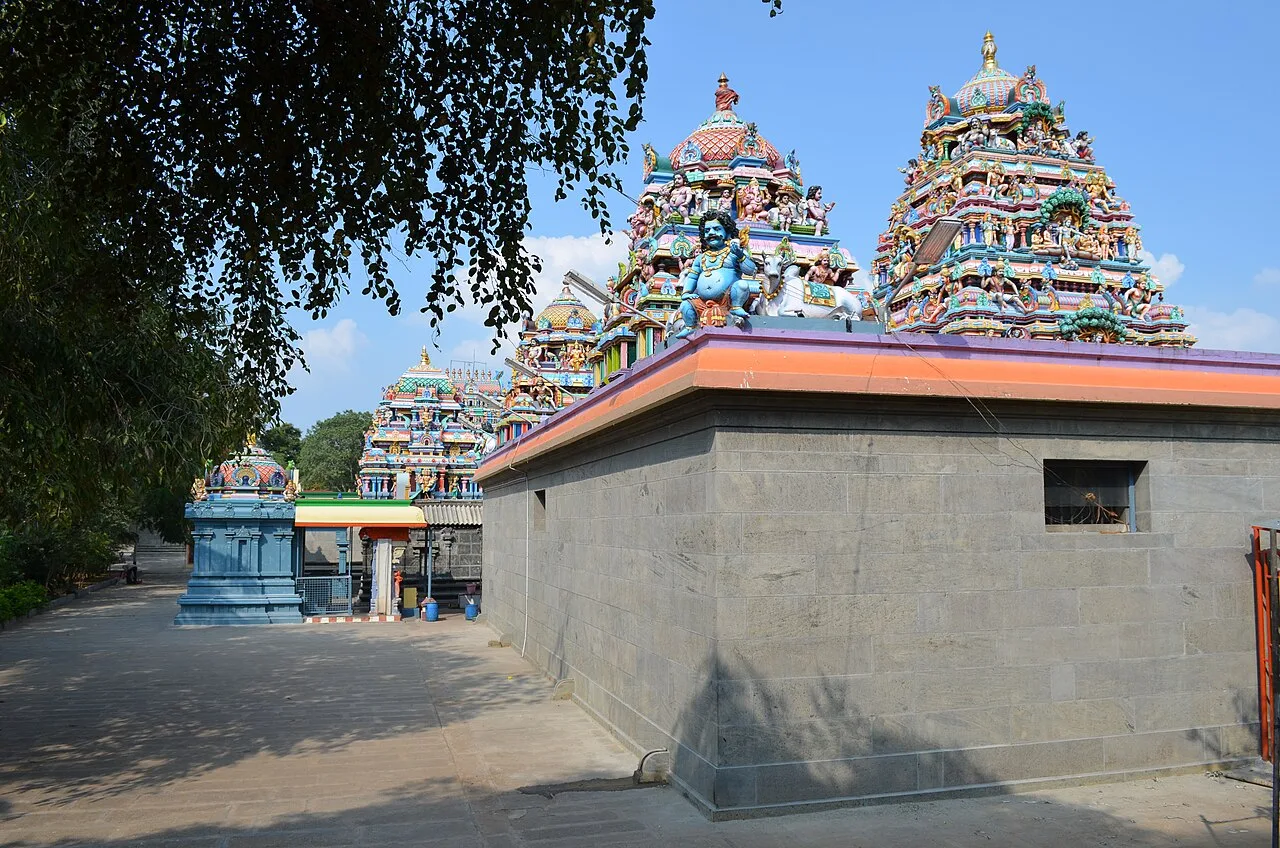
Bhavani Sangameswarar Temple is a Shiva shrine in Bhavani, Tamil Nadu, at the meeting of the Kaveri, Bhavani and mystical Amutha rivers. Visitors worship here and perform rites for their ancestors.
Kodiveri Dam
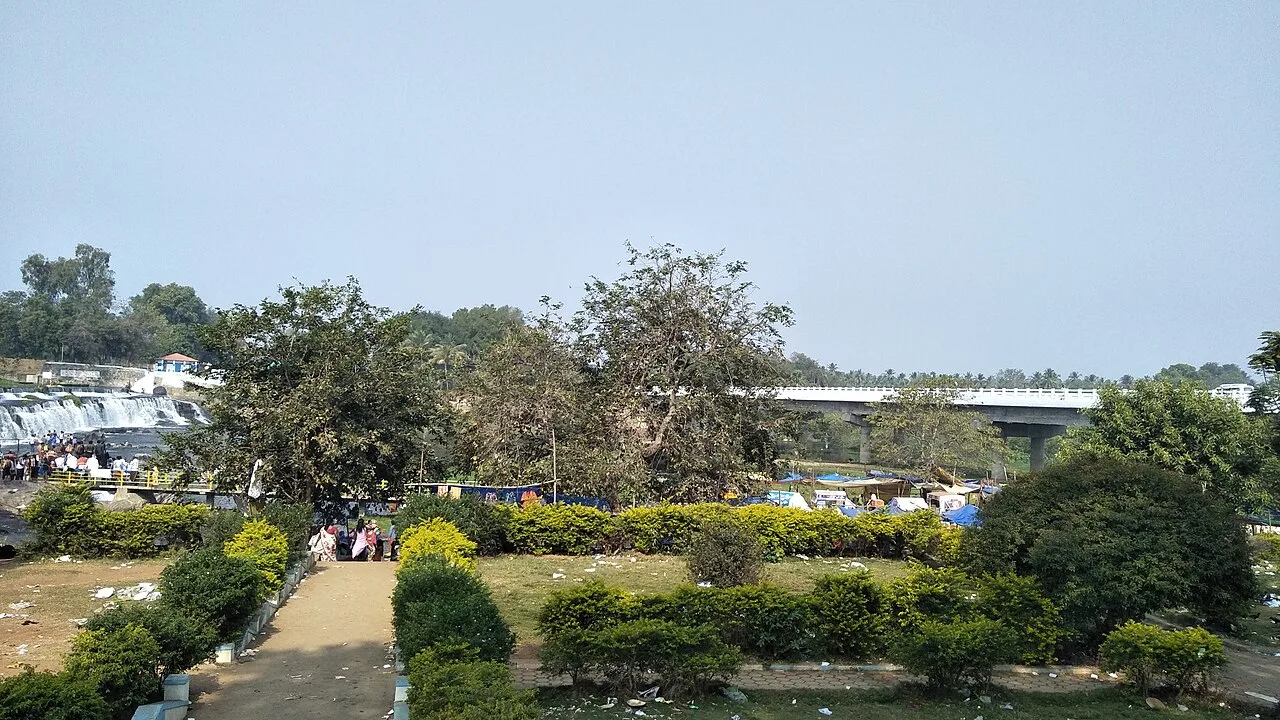
On the Bhavani River in Tamil Nadu, Kodiveri Dam is a masonry structure that visitors come to see in the Erode district, near Gobichettipalayam.
Erode’s food reflects the wider Kongu region of western Tamil Nadu, where rice, lentils, millets and seasonal vegetables feature in everyday meals. Try arisi paruppu sadam, a comforting rice-and-lentil preparation associated with Kongu cooking, alongside idli, dosa and other familiar Tamil dishes. Small eateries may offer vegetarian meals on banana leaves, while some serve chicken or mutton curries; recipes and availability vary by place. Erode’s association with turmeric is especially visible in local markets, though it is a seasoning rather than a distinct local dish. Filter coffee is common across the region, and asking what has been prepared fresh is a good way to find a simple meal.
Bhavani is known for Bhavani Jamakkalam, a traditional handwoven cotton floor covering recognised with a Geographical Indication. Weavers make these sturdy, often colourful rugs in different patterns and sizes, and the craft is closely associated with the town. Erode and nearby parts of the Kongu region also have a long textile tradition, including cotton weaving and textile processing. Markets may sell fabrics and woven goods, but the range and source can vary; visitors interested in a particular product can ask whether it was made locally and how it was woven.
Pongal, the Tamil harvest festival celebrated in January, is observed across the district, with household and village traditions linked to farming. Temple festivals take place at different times of year; Bhavani draws worshippers for observances at Sangameswarar Temple, and Aadi Perukku in the monsoon season is associated regionally with reverence for rivers. Local Mariamman festivals and village fairs can also bring processions and busy streets. Crowds and demand for rooms may rise around major temple events and Pongal, so booking ahead is sensible when travelling during these periods.
Elsewhere in Tamil Nadu
The district’s eastern and southern areas include fertile plains and river corridors associated with the Cauvery and Bhavani, while the west rises towards the Western Ghats. Sathyamangalam’s forested hills contrast with cultivated land and busy towns. Rivers support farming and shape riverside sites such as Bhavani and Kodiveri Dam. Most town-to-town travel is by road across the plains; reaching hill and forest areas can involve slower, winding routes, and access may be affected by weather or local forest rules.
Erode is generally hot and relatively dry compared with parts of the nearby Western Ghats. Summer, roughly from March to May, can bring strong heat, so plan outdoor visits for cooler parts of the day and carry water and sun protection. The southwest monsoon, from around June to September, brings some rain; the northeast monsoon, usually from October into December, can also affect travel. Winter, from December to February, is generally more comfortable for sightseeing. November to February is often a convenient period to visit. Pack breathable clothing, a hat and sunscreen, with a light rain layer in the monsoon; bring an extra layer for cooler hill areas.
Erode Junction is the district’s principal railway station, with rail connections to major cities in Tamil Nadu and beyond. Coimbatore International Airport is a practical air gateway; onward travel to Erode is by road or rail. The district is connected by highways to Coimbatore, Salem, Tiruppur and other regional centres, with buses and taxis available for intercity journeys. State and private buses serve many towns, while auto-rickshaws and local taxis are useful for shorter trips. For places such as Kodiveri Dam or smaller rural sites, arranging a taxi or private vehicle can make the visit easier. Check current services locally before travelling.
Erode city is the main transport hub, with road connections to Bhavani, Gobichettipalayam and other district towns. Local and intercity buses serve many of these routes, though reaching smaller rural sites may require a change or a walk from the nearest stop. Autos are useful for short journeys within towns. Taxis or a hired private vehicle offer more flexibility for combining Bhavani Sangameswarar Temple with Kodiveri Dam, particularly where bus connections are less convenient. Roads towards hill and forest areas may be slower; check current local conditions before setting out.
2 days: Bhavani Sangameswarar Temple → Kodiveri Dam; sleep night 1 in Erode or Gobichettipalayam. 3 days: Bhavani Sangameswarar Temple → Kodiveri Dam; sleep night 1 in Erode and night 2 in Gobichettipalayam.
Erode is the most practical base for rail connections, town facilities and a visit to Bhavani Sangameswarar Temple. Bhavani suits travellers who want to stay near the temple and river confluence, while Gobichettipalayam is convenient for Kodiveri Dam and nearby countryside. Accommodation is generally easiest to find in the larger towns and includes hotels and simpler guesthouses; smaller places may have fewer choices. Homestays or government lodges may be available in some areas, but availability varies. Check locally and reserve ahead during festival periods.
Carry drinking water and sun protection, especially during hot weather, and use caution on wet or uneven ground near rivers and the dam. Follow local guidance around water; currents and water levels can change, and swimming may not be safe. Roads to rural and hill areas can be narrow or slow, so avoid rushing and check conditions during monsoon weather. Forest areas may have wildlife; keep a safe distance and follow forest-authority instructions. Mobile connectivity can be limited outside towns. For any planned entry into forest areas, confirm current access rules and any permit requirements with official authorities before travelling.
- Salemabout 67 km
- Nilgirisabout 79 km
- Dharmapuriabout 80 km
- Coimbatoreabout 82 km
- Namakkalabout 88 km
- Chamarajanagar · Karnatakaabout 98 km
- Palakkad · Keralaabout 116 km
- Mysuru · Karnatakaabout 130 km
Straight-line distance between the centres of each district's destinations; road distance is longer.
All districts of Tamil Nadu
- Ariyalur
- Chengalpattu
- Chennai
- Coimbatore
- Cuddalore
- Dharmapuri
- Dindigul
- Kallakurichi
- Kancheepuram
- Kanniyakumari
- Madurai
- Mayiladuthurai
- Nagapattinam
- Namakkal
- Nilgiris
- Pudukkottai
- Ramanathapuram
- Salem
- Sivaganga
- Tenkasi
- Thanjavur
- Theni
- Thoothukudi
- Tiruchirappalli
- Tirunelveli
- Tiruvallur
- Tiruvannamalai
- Tiruvarur
- Vellore
- Villupuram
- Virudhunagar
Q: How many days should I spend in Erode district? A: Two days can cover the two listed destinations at a relaxed pace; three days allow more time for road travel and an overnight stay in different towns. Q: What is the best time to visit? A: November to February is generally more comfortable for sightseeing, though conditions vary and monsoon rain may affect travel. Q: What is the best base for visiting the district? A: Erode is the most practical all-round base; Bhavani and Gobichettipalayam can suit stays nearer the temple and Kodiveri Dam respectively. Q: How do I get to Erode? A: Erode Junction is the main rail gateway. Coimbatore International Airport is a practical air gateway, with onward travel by road or rail. Q: Is Erode suitable for families or elderly travellers? A: Yes, the main town and temple visits can suit many families and older travellers. Plan for heat, uneven riverside surfaces and road travel to rural sites, and allow plenty of rest.
This page draws on our 2 destination guides for Erode and is updated as our team checks it.
Be the first to share photos, stories, advice or a helpful contact for Erode.
Loading…