
District · Tamil Nadu
Nagapattinam
Nagapattinam lies on Tamil Nadu’s southeastern coast, where the Cauvery delta meets the Bay of Bengal.
Nagapattinam district lies on Tamil Nadu’s southeastern coast, where the fertile Cauvery delta meets the Bay of Bengal. Its landscape combines rice-growing plains, fishing settlements, long beaches and coastal wetlands; Point Calimere is a notable wildlife refuge near the district’s southern tip. The area has a long maritime history, and Nagapattinam was an important port during the Chola period. Today, the district is known for its varied religious and cultural life, reflected in the Nagore Dargah and the Basilica of Our Lady of Good Health at Velankanni. Agriculture, fishing and pilgrimage all shape local life, alongside the rhythms of the coast and delta.
Nagapattinam lies on Tamil Nadu’s southeastern coast, where the Cauvery delta meets the Bay of Bengal. It offers a mix of coastal scenery, working fishing towns, wetlands and pilgrimage sites, making it a useful destination for travellers interested in both landscape and living religious traditions. The district is best known for Nagore Dargah and the Basilica of Our Lady of Good Health at Velankanni, which draw visitors from across India and beyond. Its maritime history reaches back to the Chola period, when Nagapattinam was an important port. Point Calimere adds a wildlife and birdwatching dimension near the district’s southern coast.
Nagapattinam’s position on the coast and within the Cauvery delta connected it to inland agriculture and maritime trade. The port was important during the Chola period, when the dynasty maintained trading and political links across the Bay of Bengal. The region also has a long record of diverse religious communities, reflected in the Buddhist, Hindu, Muslim and Christian histories associated with its towns and shrines. European powers later competed for influence along this coast: the Portuguese established a presence at Nagapattinam, the Dutch took control in the seventeenth century, and the settlement subsequently came under British rule. The district’s modern boundaries are more recent. Nagapattinam district was formed in 1991 from the erstwhile Thanjavur district. In 2020, Mayiladuthurai district was separated from Nagapattinam, changing the district’s present extent. The coast has also experienced destructive cyclones and the 2004 Indian Ocean tsunami, events that affected settlements and livelihoods and remain part of local memory.
3 destination guides
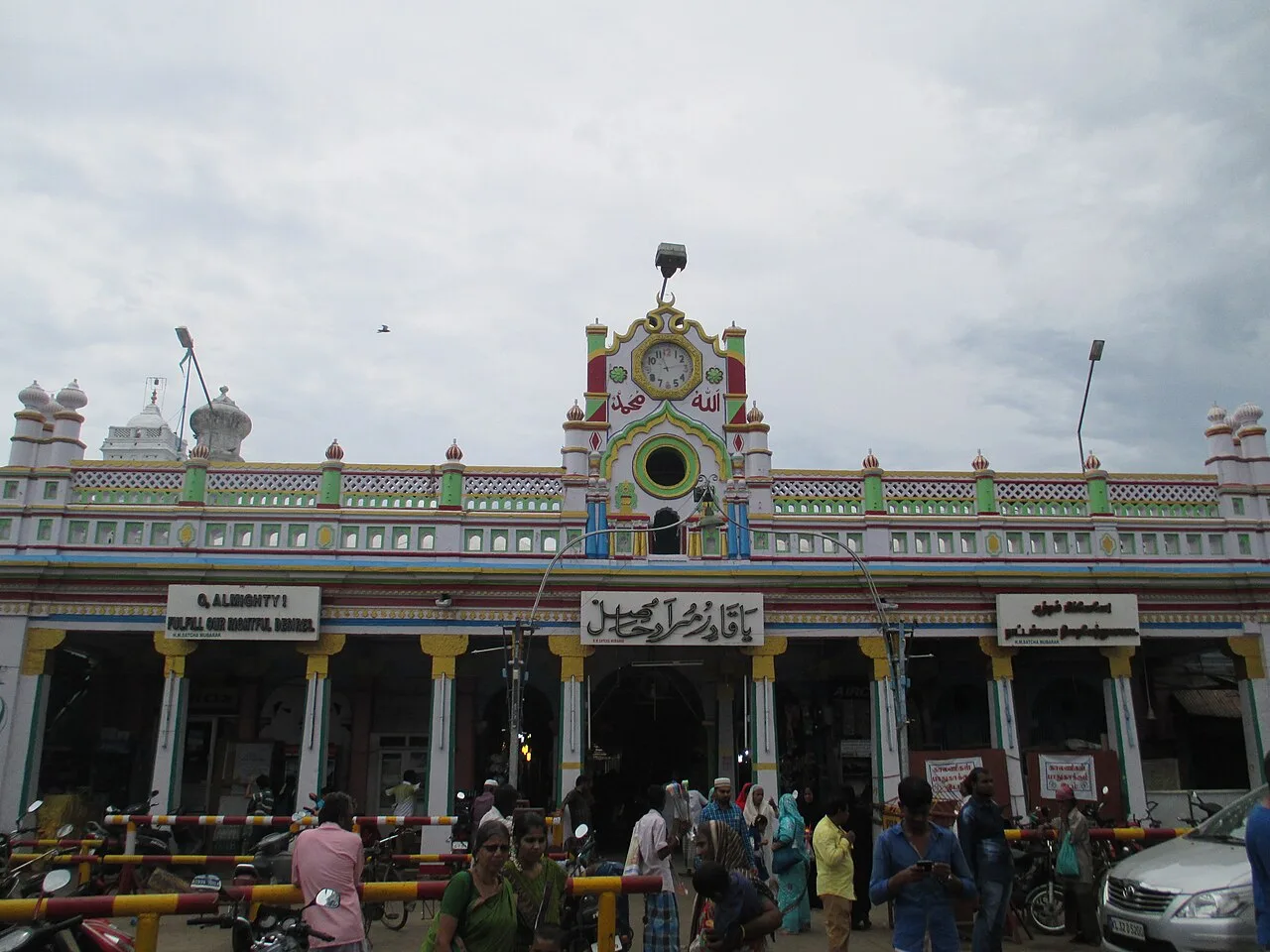
Nagore Dargah
Nagore Dargah is a shrine complex in Tamil Nadu built around the tomb of Sufi saint Shahul Hamid. Pilgrims from Muslim and Hindu communities visit, particularly for the annual Kanduri observance.
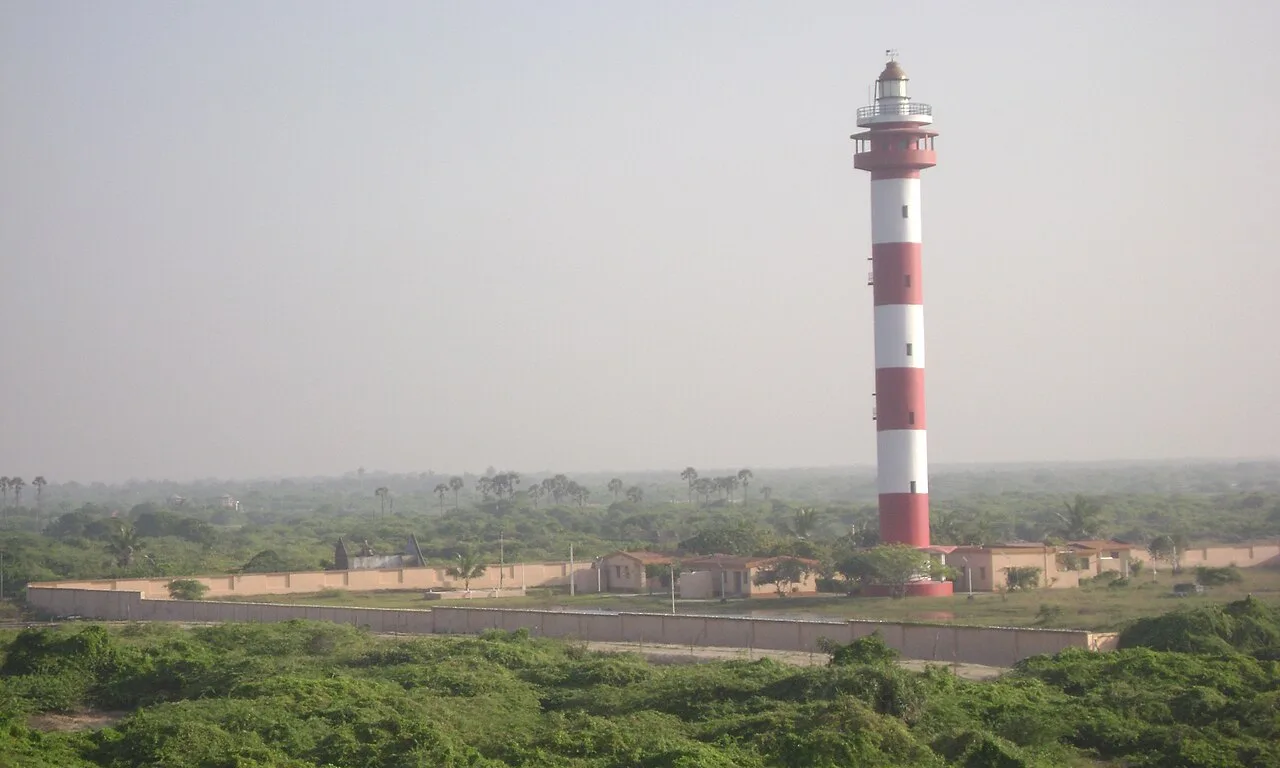
Point Calimere Wildlife and Bird Sanctuary
Point Calimere Wildlife and Bird Sanctuary is a coastal reserve in Tamil Nadu, valued for blackbuck conservation and the waterbirds, including greater flamingos, that gather there.
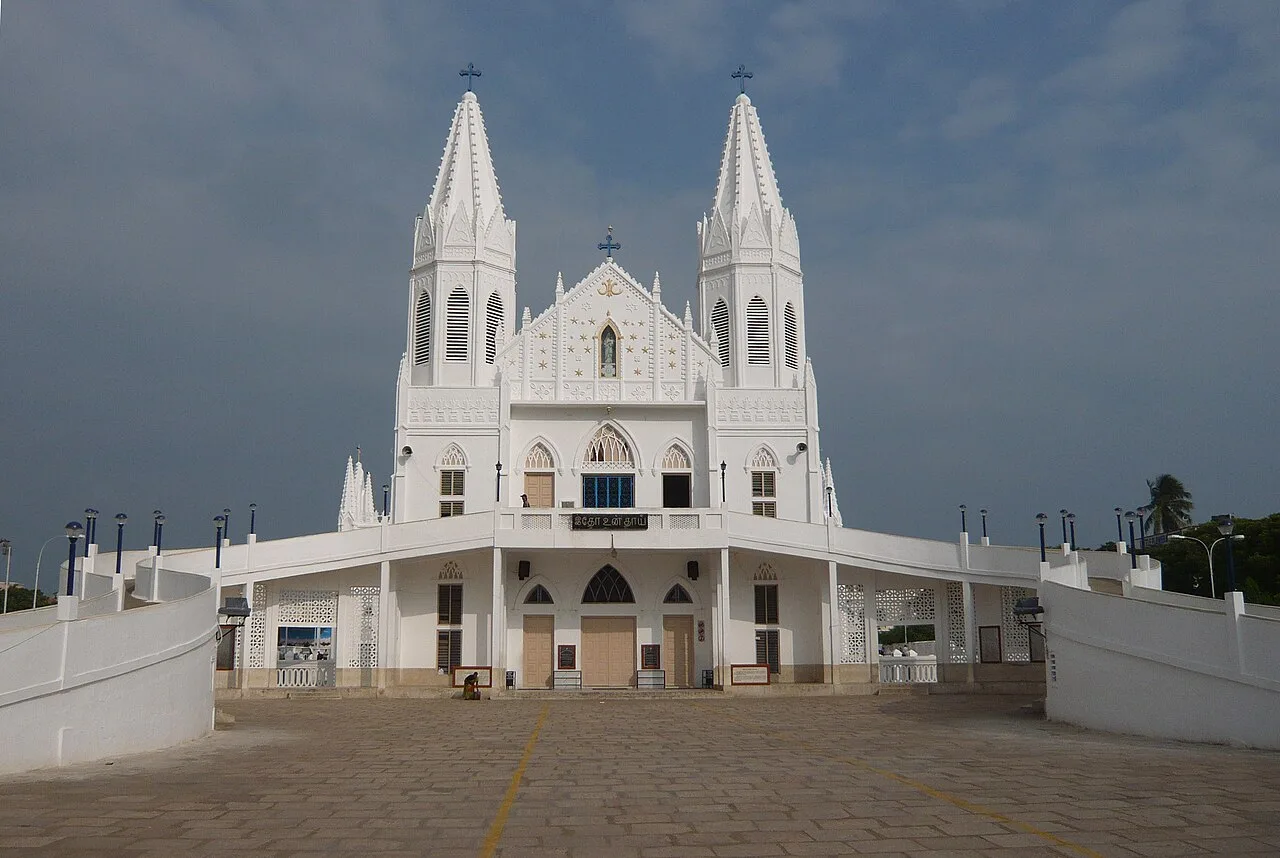
Velankanni Basilica
The Basilica of Our Lady of Good Health is a Marian shrine in Velankanni, Tamil Nadu. Pilgrims come to honour the Blessed Virgin Mary and attend its annual novena.
Rice is central to everyday meals in this part of the Cauvery delta, commonly served with sambar, vegetables and other accompaniments. Along the coast, fish and other seafood feature on many menus; what is available depends on the day and season, so ask what is fresh. Idli, dosa and filter coffee are familiar choices for breakfast, while vegetarian meals may be served on banana leaves. These foods belong to the wider Tamil culinary tradition rather than being exclusive to Nagapattinam. Small eateries may offer a limited daily selection.
Nagapattinam is not especially associated with one nationally prominent craft. In the wider Cauvery delta and Tamil Nadu, visitors may encounter handloom textiles and palm-leaf or coir goods, though their availability varies by town and market. Temple-related metalwork is another important regional tradition; bronze-icon casting is particularly associated with Swamimalai in neighbouring Thanjavur region, rather than being a craft specific to Nagapattinam. Local markets are often the best place to look for practical woven items and handmade goods, and to ask where they were made.
The annual Kanduri festival at Nagore Dargah and the feast of Our Lady of Good Health at Velankanni are major regional pilgrimages, generally held around May–June and late August–September respectively. They bring large crowds and can make nearby accommodation busy, so plan and book ahead where possible. Pongal, celebrated in January, is widely observed across the delta, with harvest customs and family gatherings. Temple festivals and local religious observances take place at different times through the year; dates can vary, so check locally before travelling.
Elsewhere in Tamil Nadu
Much of Nagapattinam is low-lying delta plain, shaped by distributaries of the Cauvery system and used for paddy cultivation. Towards the coast, fields give way to fishing settlements, beaches, tidal flats, salt pans and wetlands. Point Calimere, at the southern end of the district, includes coastal scrub and wetland habitats important to wildlife and migratory birds. There are no substantial hill ranges. Flat terrain makes road journeys between towns relatively straightforward, but narrow rural roads, wet-season flooding and exposed coastal stretches can affect travel.
Nagapattinam is generally hot and humid, with summer conditions most pronounced from March into June. The northeast monsoon, usually from October to December, brings much of the region’s rain and can cause local flooding or disrupt coastal travel; cyclonic weather is also possible. The southwest monsoon may bring some rain, but conditions vary. November to February is often the more comfortable period for sightseeing, while visitors should still check forecasts during the rainy season. Pack light, breathable clothing, sun protection and drinking water; carry a rain layer in monsoon months. Modest attire is appropriate at religious sites.
Nagapattinam district can be reached by road from Chennai and from regional hubs such as Thanjavur and Tiruchirappalli. Nagapattinam railway station serves the district; Velankanni also has a railway station. The nearest major airport is Tiruchirappalli International Airport, followed by a road journey. State and regional buses connect the main towns, while taxis and auto-rickshaws are useful for shorter trips; public transport may be less frequent in rural and coastal areas. Local travel times and service availability can vary, so check current services locally.
Nagapattinam town is the main transport hub, with road links to Velankanni, Nagore and other regional towns. Buses serve the larger settlements, while service to smaller coastal villages and rural areas may be less frequent. Auto-rickshaws are useful for short trips; taxis or a hired vehicle offer more flexibility, especially for reaching Point Calimere via the southern part of the district. Shared local vehicles may operate on some routes, but availability varies. Do not assume regular tourist boat services; check locally for current transport options and road conditions.
2 days: Nagore Dargah → Velankanni Basilica; sleep in Nagapattinam. 3 days: Nagore Dargah → Velankanni Basilica → Point Calimere Wildlife and Bird Sanctuary; sleep in Nagapattinam on night one and Vedaranyam on night two. 4 days: Point Calimere Wildlife and Bird Sanctuary → Velankanni Basilica → Nagore Dargah; sleep in Vedaranyam on night one, Velankanni on night two and Nagapattinam on night three.
Nagapattinam is a practical base for Nagore Dargah and regional road connections, while Velankanni has a wide range of visitor accommodation suited to pilgrims. Vedaranyam is useful for an early start towards Point Calimere, though choices may be more limited than in the larger towns. Hotels, guesthouses and lodges are available in the main centres; dharamshalas and other pilgrim-oriented stays can be found around major shrines. Homestays are less commonly advertised. Book ahead during major festivals, and confirm facilities directly, especially for stays outside town centres.
Coastal weather can change quickly: check forecasts during the monsoon and heed local advice during cyclone warnings or rough seas. Beaches may have strong currents, so avoid swimming where conditions are unsafe or unsupervised. Carry safe drinking water and protect yourself from heat and sun. Roads in rural areas can be narrow, poorly lit or affected by rain and flooding; allow extra care after dark. Crowds are common at major shrines during festivals. Wildlife viewing at Point Calimere requires respect for animals and site rules; confirm current access or permit requirements with official authorities before visiting. Mobile coverage may vary in remote coastal areas.
- Karaikal · Puducherryabout 27 km
- Tiruvarurabout 27 km
- Mayiladuthuraiabout 55 km
- Thanjavurabout 63 km
- Ariyalurabout 74 km
- Cuddaloreabout 83 km
- Pudukkottaiabout 127 km
- Tiruchirappalliabout 128 km
Straight-line distance between the centres of each district's destinations; road distance is longer.
All districts of Tamil Nadu
- Ariyalur
- Chengalpattu
- Chennai
- Coimbatore
- Cuddalore
- Dharmapuri
- Dindigul
- Erode
- Kallakurichi
- Kancheepuram
- Kanniyakumari
- Madurai
- Mayiladuthurai
- Namakkal
- Nilgiris
- Pudukkottai
- Ramanathapuram
- Salem
- Sivaganga
- Tenkasi
- Thanjavur
- Theni
- Thoothukudi
- Tiruchirappalli
- Tirunelveli
- Tiruvallur
- Tiruvannamalai
- Tiruvarur
- Vellore
- Villupuram
- Virudhunagar
Q: How many days should I spend in Nagapattinam district? A: Two days can cover Nagore Dargah and Velankanni Basilica; allow three or four days to include Point Calimere and travel at a more relaxed pace. Q: When is the best time to visit? A: November to February is often more comfortable for sightseeing. Check weather conditions during the monsoon season. Q: Where is the best base? A: Nagapattinam suits visits to Nagore and the wider district; Velankanni is convenient for the basilica, while Vedaranyam is useful for Point Calimere. Q: How do I get to the district? A: Nagapattinam is accessible by road and rail. Velankanni also has a railway station, and the nearest major airport is Tiruchirappalli International Airport, followed by a road journey. Q: Is the district suitable for families or elderly travellers? A: Yes, the main towns and pilgrimage sites are accessible to many visitors, but festival crowds, heat, walking distances and limited rural transport may require extra planning.
This page draws on our 3 destination guides for Nagapattinam and is updated as our team checks it.
Be the first to share photos, stories, advice or a helpful contact for Nagapattinam.
Loading…