
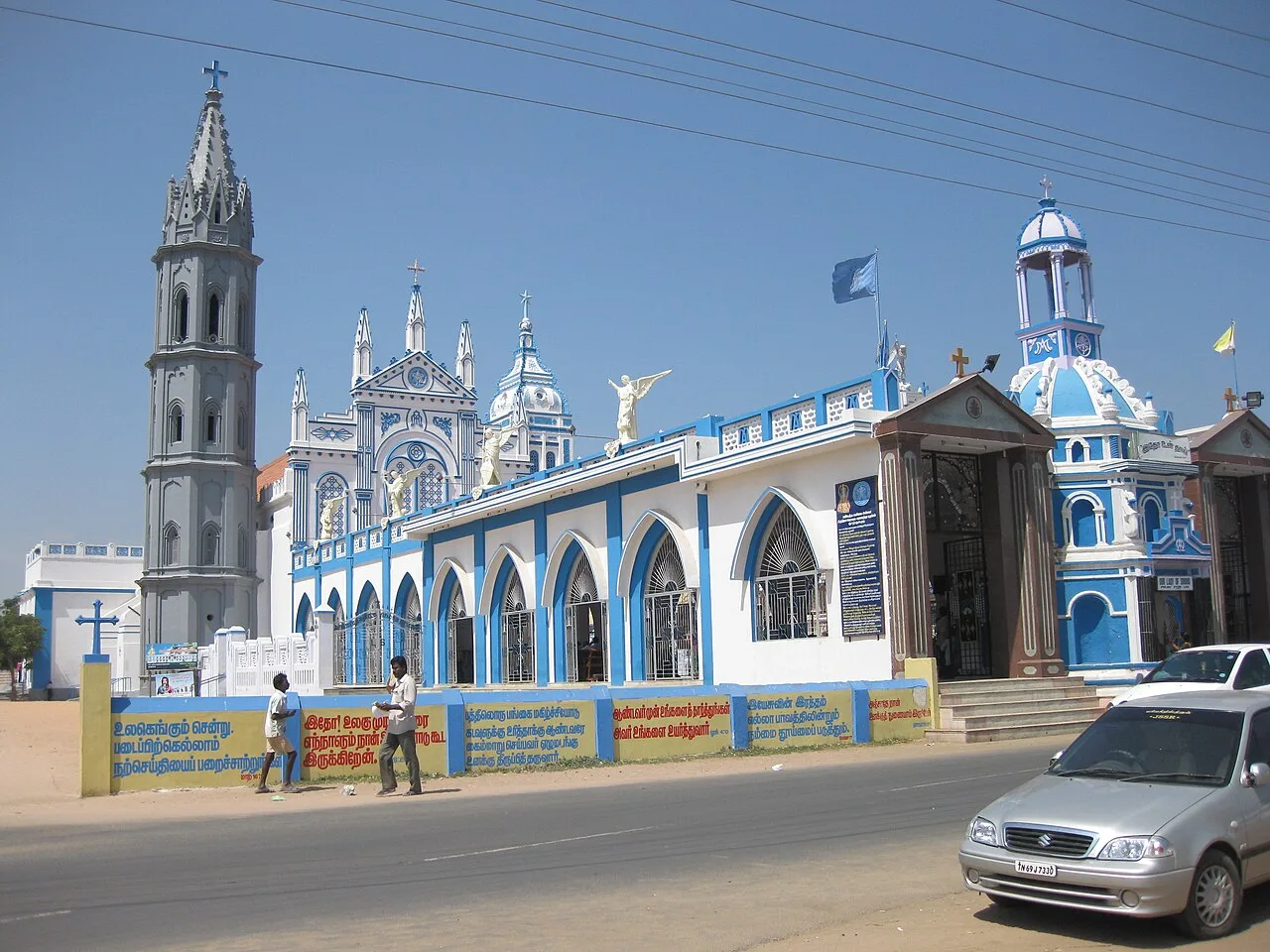
District · Tamil Nadu
Thoothukudi
Thoothukudi offers a view of Tamil Nadu’s southeastern coast, where port activity, fishing, salt production and pilgrimage meet.
Thoothukudi district stretches from the Gulf of Mannar coast into dry plains and river-fed agricultural areas around the Tamiraparani. Its shoreline, fishing harbours, salt pans and port have shaped daily life and trade for generations. The historic port city of Thoothukudi, also known as Tuticorin, was linked to maritime commerce in the Pandya period and later came under European influence. Today, the district combines busy coastal settlements with quieter inland towns and villages. Tiruchendur, an important pilgrimage centre on the coast, and the Basilica of Our Lady of Snows in Thoothukudi reflect the area’s diverse religious traditions. Fishing, salt production, farming and port-related activity all contribute to its character.
Thoothukudi offers a view of Tamil Nadu’s southeastern coast, where port activity, fishing, salt production and pilgrimage meet. The port city of Thoothukudi, also known as Tuticorin, has long been associated with maritime trade, while coastal settlements and inland farming areas give the district a varied character. Visitors come for Tiruchendur Murugan Temple, a major pilgrimage centre, and the Basilica of Our Lady of Snows in Thoothukudi. Salt pans, harbours and shorelines are part of the region’s working landscape. The district is also a useful stop for travellers exploring the Gulf of Mannar coast and the lower Tamiraparani region.
The area has long been associated with the Pandya kingdom, whose influence extended across southern Tamil Nadu and whose ports supported maritime trade. The coast was known for fishing and pearl-related activity, and Thoothukudi developed as an important harbour. From the 16th century, European powers including the Portuguese, Dutch and British became active along this coast. Their presence shaped commerce and parts of the port city’s religious and built heritage, though local communities and older regional traditions remained central to life here. British rule brought the port further into colonial commercial networks. After Indian independence, the region remained part of Madras State, later renamed Tamil Nadu. Thoothukudi district was formed in 1986, when it was separated from Tirunelveli district. Its subsequent development has been shaped by port expansion, salt production, fishing, agriculture and industry. Tiruchendur has also continued as an important centre of Murugan worship, drawing pilgrims from across Tamil Nadu and beyond.
2 destination guides
Our Lady of Snows Basilica, Tuticorin
Our Lady of Snows Basilica is a Catholic minor basilica in Tuticorin, Tamil Nadu. Pilgrims visit to honour Mary, who is venerated here as Our Lady of Snows.
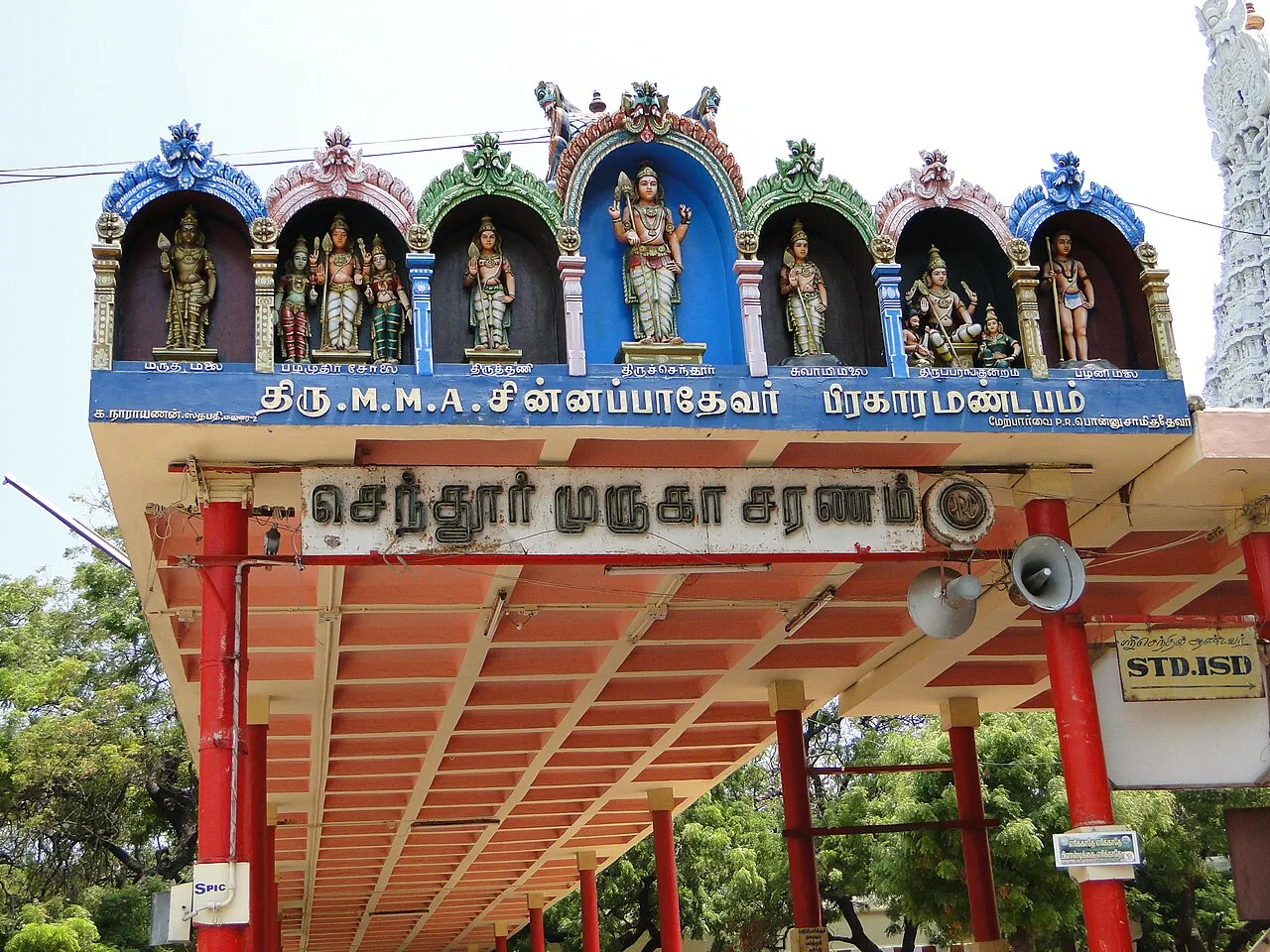
Tiruchendur Murugan Temple
Tiruchendur Murugan Temple is a shrine to Murugan in Thoothukudi district, Tamil Nadu, and one of his six sacred abodes. Visitors also come for the Surasamharam festival.
Coastal cooking is prominent in Thoothukudi, with fish, prawns and crab appearing in curries and meals when available. Rice, idli and dosa are everyday staples, while small eateries may offer a changing menu depending on the day's catch and cooking. Kovilpatti kadalai mittai, a peanut-and-jaggery sweet associated with the district, is a well-known local speciality. Filter coffee is common across Tamil Nadu. Southern Tamil Nadu favourites such as pepper-rich curries and Tirunelveli halwa can also be found in the wider region, though they are not exclusive to Thoothukudi. Ask locally what is fresh and being prepared that day.
Palmyra is an important part of life across southern Tamil Nadu, and artisans in the region make woven palm-leaf items and other products from the tree’s leaves and fibres. Fishing communities also maintain practical skills such as repairing and making nets, though these are working traditions rather than visitor-focused crafts. Cotton handloom weaving is found in the wider southern Tamil Nadu region, but its availability varies from place to place. In Thoothukudi district, craft markets and workshops may be modest; ask locally about current artisan groups and where their work can be seen or bought.
Tiruchendur Murugan Temple draws large crowds for Skanda Sashti, usually in October or November, and for other observances such as Thai Poosam in January or February. The Basilica of Our Lady of Snows in Thoothukudi holds its major annual celebration around August, attracting worshippers and visitors. These occasions bring busy roads, crowded places of worship and greater demand for rooms near the venues, so booking ahead is sensible. Dates vary by religious calendar; check locally before planning travel around a festival.
Elsewhere in Tamil Nadu
The district is largely a low-lying coastal plain, with the Gulf of Mannar shoreline, fishing settlements, harbours, salt pans and sandy or marshy stretches. Inland, drier plains give way to agricultural areas associated with the Tamiraparani river system, which reaches the coast in this region. The open, exposed terrain can make midday travel feel hot, while coastal roads connect settlements that may be some distance apart. Rural detours and smaller shore destinations can require advance planning; the landscape is not uniformly served by frequent public transport.
Thoothukudi is generally hot for much of the year. Summer, roughly from March to May, can make outdoor visits tiring, especially around exposed coastal areas. The northeast monsoon, usually from October to December, brings the district’s main rainy period and can disrupt road journeys; the southwest monsoon is generally less influential here. The cooler, drier months from November to February are often the most comfortable for sightseeing, though rain may still occur early in this period. Carry light, breathable clothing, sun protection and water, plus a light rain layer during monsoon season. Dress modestly for places of worship.
Thoothukudi Airport serves the district, and Thoothukudi railway station is the principal rail gateway for the port city. Tiruchendur also has a railway station for visitors to the temple area. Road connections link Thoothukudi with Tirunelveli and Madurai, with buses serving major towns and many smaller destinations. Within the district, local buses, auto-rickshaws and taxis are useful, although reaching some coastal or rural places may take planning. Check the route and onward transport before setting out, especially when visiting smaller settlements. Check current services locally before travelling.
Roads connect Thoothukudi with Tiruchendur, Tirunelveli and other district towns. Local and inter-town buses are useful for major routes, while auto-rickshaws serve shorter journeys within towns. Taxis can help link temple visits, the port city and less frequent rural destinations; arrange the return journey in advance where services are limited. Shared vehicles may operate on some local routes, but availability varies. Check current road and transport conditions locally, particularly during monsoon weather. Boat services should not be assumed for coastal sightseeing; confirm availability and safety with local authorities or operators.
2 days: Tiruchendur Murugan Temple → Our Lady of Snows Basilica, Tuticorin; sleep in Tiruchendur on the first night. 3 days: Our Lady of Snows Basilica, Tuticorin → Tiruchendur Murugan Temple; sleep in Thoothukudi on the first night and Tiruchendur on the second.
Thoothukudi is the most practical base for the basilica, rail connections and port-city services. Tiruchendur suits visitors whose main purpose is the temple and coastal pilgrimage area. Both towns have hotels and other basic visitor accommodation; simple lodgings and religious guest facilities may also be available, especially around pilgrimage centres. Homestays and government-run accommodation can be limited, so confirm availability directly before relying on them. For rural or coastal excursions, arrange transport and overnight stays in advance rather than assuming rooms or frequent services will be available.
Heat and strong sun can make exposed coastal and salt-pan areas tiring; carry drinking water, take breaks and avoid prolonged midday walking. Use safe drinking water and take care with food hygiene, especially in hot weather. Roads may be busy near towns and temples, while rural routes can have limited lighting or services; avoid assuming that transport will be available late in the day. Crowds increase during major festivals, so keep belongings secure and allow extra time. Mobile connectivity can be weaker in some rural areas. Follow local advice near the shore and do not enter the sea where conditions are unsafe. Check current travel guidance for any site-specific restrictions.
- Tirunelveliabout 62 km
- Tenkasiabout 92 km
- Kanniyakumariabout 93 km
- Virudhunagarabout 111 km
- Thiruvananthapuram · Keralaabout 130 km
- Maduraiabout 141 km
- Ramanathapuramabout 147 km
- Theniabout 156 km
Straight-line distance between the centres of each district's destinations; road distance is longer.
All districts of Tamil Nadu
- Ariyalur
- Chengalpattu
- Chennai
- Coimbatore
- Cuddalore
- Dharmapuri
- Dindigul
- Erode
- Kallakurichi
- Kancheepuram
- Kanniyakumari
- Madurai
- Mayiladuthurai
- Nagapattinam
- Namakkal
- Nilgiris
- Pudukkottai
- Ramanathapuram
- Salem
- Sivaganga
- Tenkasi
- Thanjavur
- Theni
- Tiruchirappalli
- Tirunelveli
- Tiruvallur
- Tiruvannamalai
- Tiruvarur
- Vellore
- Villupuram
- Virudhunagar
Q: How many days should I spend in Thoothukudi district? A: Two days can cover the district’s two listed destinations at a measured pace. Allow an extra day if you want a slower visit or more time for local travel. Q: When is the best time to visit? A: November to February is generally more comfortable for sightseeing. The northeast monsoon can bring rain from around October to December, so check conditions before travelling. Q: What is the best base for a visit? A: Thoothukudi is convenient for the basilica and transport links; Tiruchendur is a practical base for the Murugan temple. Q: How can I get to the district? A: Thoothukudi Airport and railway station serve the port city, and Tiruchendur has a railway station. Roads and buses connect the district with nearby cities and towns. Q: Is the district suitable for families or elderly travellers? A: Yes, but heat, walking distances and festival crowds can be challenging. Plan rest breaks, confirm transport in advance and check accessibility at individual sites.
This page draws on our 2 destination guides for Thoothukudi and is updated as our team checks it.
Be the first to share photos, stories, advice or a helpful contact for Thoothukudi.
Loading…