
District · Tamil Nadu
Dharmapuri
Dharmapuri offers a view of northwestern Tamil Nadu beyond its larger cities: a landscape of rocky uplands, dry farming country and mango orchards, with the Kaveri shaping its western edge.
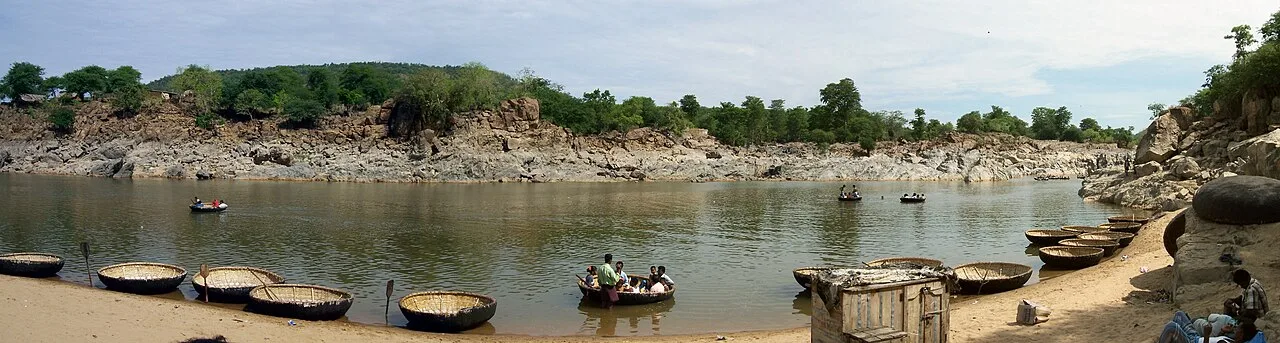
Dharmapuri district lies in northwestern Tamil Nadu, where rocky hills, dry agricultural plains and mango orchards shape the landscape. The Kaveri runs along its western side, creating the dramatic Hogenakkal Falls on the border with Karnataka. Here, cascades, rocky river channels and wooded slopes contrast with the district’s quieter inland farming country. Dharmapuri town is historically associated with Tagadur, the seat of the Adiyaman chiefs celebrated in early Tamil literature; the poet Avvaiyar is closely linked with this heritage. The modern district was formed from Salem district in 1965. Its character combines an ancient Tamil cultural background with market-town life, agriculture and river-based tourism.
Dharmapuri offers a view of northwestern Tamil Nadu beyond its larger cities: a landscape of rocky uplands, dry farming country and mango orchards, with the Kaveri shaping its western edge. Its best-known natural attraction is Hogenakkal Falls, where the river moves through rocky channels along the Karnataka border. Inland, Dharmapuri town connects visitors with a region whose history reaches back to Tagadur and the Adiyaman chiefs, remembered in early Tamil literature and associated with the poet Avvaiyar. The district suits travellers interested in river scenery, rural landscapes and Tamil heritage, and can be explored as a quieter road trip from Salem or Bengaluru.
The region around Dharmapuri is associated with Tagadur, the seat of the Adiyaman chiefs. They are remembered in early Tamil literature, particularly through accounts of Adiyaman Neduman Anji and his association with the poet Avvaiyar. Over subsequent centuries, control of this strategic inland area shifted among larger South Indian powers and regional rulers, including the Cholas, Vijayanagara authorities and the rulers of Mysore. The area later came under British administration as part of the Madras Presidency. Dharmapuri town developed as a local administrative and market centre amid a predominantly agricultural hinterland. In the modern period, the area formed part of Salem district. Dharmapuri district was created in 1965 when it was separated from Salem, establishing a distinct administration for the northwestern region. Its heritage today is reflected in its association with Tagadur and the Adiyaman chiefs, while its present-day identity is also shaped by agriculture, transport links and river tourism around Hogenakkal.
Food in Dharmapuri belongs broadly to the everyday Tamil tradition, with idli, dosa, sambar, chutneys and filter coffee common choices. Rice meals with vegetable preparations, rasam and curd are dependable lunch options, sometimes served on banana leaves. Millet-based foods also belong to the wider region’s dryland food culture, though availability varies between homes and eateries. Around Hogenakkal, freshly cooked fish is a familiar offering near the river; ask what is available that day. The district is known for mango cultivation, making seasonal mangoes worth looking for. Small establishments may prepare only a limited daily menu.
Dharmapuri is better known for its landscape and agriculture than for a single nationally recognised craft. For textile traditions, the wider Salem region provides useful context: cotton and silk weaving have an established presence there, including handloom production in nearby weaving centres. These should be understood as regional traditions rather than crafts unique to Dharmapuri. Local markets can be places to look for everyday woven textiles, pottery and practical household wares, but stock and provenance vary. Ask sellers where an item was made and whether a textile is genuinely handwoven.
Pongal, the Tamil harvest festival held in January, is widely observed across the district, with family gatherings and village celebrations. Deepavali and Tamil New Year are also marked, as are temple festivals whose timing varies by locality and temple. Along the Kaveri, Aadi Perukku in the Tamil month of Aadi, usually July or August, is a regional occasion for honouring the river; celebrations and visitor activity may be greater near accessible riverbanks. These periods can bring extra local traffic and crowds. Accommodation is generally more constrained around popular river areas and during major local temple events, so plan ahead and check conditions.
Elsewhere in Tamil Nadu
Dharmapuri is an inland district of rocky hills, dry plains, cultivated land and mango-growing areas. The Kaveri forms part of its western boundary, cutting through rocky terrain at Hogenakkal Falls. These varied settings make road travel the main way to explore: journeys between towns are generally straightforward, while access to the falls includes winding sections and can slow during busy or wet conditions. River levels and access can change with the season, so check locally before planning activities close to the water.
Summer, broadly from March to May, can be hot, especially on exposed roads and in the dry inland areas; plan outdoor visits for cooler parts of the day and carry water. The southwest monsoon brings rain, while the later northeast monsoon can also affect the district. Rain may make roads slippery and change conditions around the Kaveri and Hogenakkal. The cooler, drier months from roughly November to February are generally the most comfortable for sightseeing. Light, breathable clothing, sun protection and sturdy walking footwear are useful year-round. During rainy periods, pack a light rain layer and check river access and road conditions before setting out.
Dharmapuri town is the district’s main transport base, with Dharmapuri railway station providing rail access. Salem Airport is a nearby regional airport option, while Bengaluru’s Kempegowda International Airport offers a wider choice of flights. National Highway 44 links Dharmapuri with Bengaluru and Salem, and buses connect the town with surrounding settlements. Hogenakkal is reached by road, commonly via Pennagaram; allow for winding sections and slower travel near the falls. Buses, hired cars and auto-rickshaws cover different parts of local travel, with fewer options away from the main towns. Check current services locally.
Dharmapuri town is the main base for road travel. State and private buses connect it with nearby towns and settlements, including Pennagaram, though services may be less frequent away from main routes. Hogenakkal is commonly reached by road via Pennagaram; a hired car or taxi offers more flexibility, especially for a return journey. Auto-rickshaws are useful for shorter trips within towns, while shared vehicles may operate on some local routes. Ask locally about current services and road conditions. Boats at Hogenakkal depend on operating conditions and local rules, so confirm availability on arrival rather than building a trip around them.
2 days: Dharmapuri town → Hogenakkal Falls; sleep in Dharmapuri town on both nights. 3 days: Dharmapuri town → Hogenakkal Falls → Dharmapuri town; sleep in Dharmapuri town on both nights and Pennagaram on the third night.
Dharmapuri town is the most practical base for transport connections and a wider choice of ordinary hotels and guesthouses. Pennagaram is convenient for travellers focusing on Hogenakkal and may have simpler local accommodation, though choice can be limited. Near the falls, basic stays or government-run lodging may be available at times; confirm current availability and facilities locally. Homestays and dharamshalas may be found in the wider area, but standards and access vary. For a short visit, staying in Dharmapuri town and making a road trip to Hogenakkal is usually the simplest arrangement.
At Hogenakkal, the Kaveri has rocky channels and strong, changing currents; stay within locally permitted areas and follow advice from authorities and boat operators. Do not enter the water where access is restricted or conditions are unsafe. Monsoon rain can raise river levels, make paths slippery and affect roads, so check local conditions before travel. Use drinking water from a sealed bottle or a trusted treated source, and carry sun protection on hot days. Roads near the falls can be winding, and connectivity may be patchy outside towns. Crowds can build during holidays. Check with local authorities for temporary access restrictions or any current requirements before visiting.
- Salemabout 44 km
- Erodeabout 80 km
- Ramanagara · Karnatakaabout 94 km
- Bengaluru Urban · Karnatakaabout 97 km
- Kallakurichiabout 98 km
- Namakkalabout 108 km
- Kolar · Karnatakaabout 111 km
- Mysuru · Karnatakaabout 122 km
Straight-line distance between the centres of each district's destinations; road distance is longer.
All districts of Tamil Nadu
- Ariyalur
- Chengalpattu
- Chennai
- Coimbatore
- Cuddalore
- Dindigul
- Erode
- Kallakurichi
- Kancheepuram
- Kanniyakumari
- Madurai
- Mayiladuthurai
- Nagapattinam
- Namakkal
- Nilgiris
- Pudukkottai
- Ramanathapuram
- Salem
- Sivaganga
- Tenkasi
- Thanjavur
- Theni
- Thoothukudi
- Tiruchirappalli
- Tirunelveli
- Tiruvallur
- Tiruvannamalai
- Tiruvarur
- Vellore
- Villupuram
- Virudhunagar
Q: How many days should I spend in Dharmapuri? A: Two days can cover a visit to Hogenakkal Falls and time in Dharmapuri town; allow an extra day for a slower road trip. Q: When is the best time to visit? A: November to February is generally more comfortable for sightseeing. Check river and road conditions during the monsoon. Q: What is the best base for visiting Hogenakkal? A: Dharmapuri town is the practical transport base; Pennagaram can be convenient for a shorter journey to the falls. Q: How do I get to Dharmapuri? A: Dharmapuri has a railway station and road links, including National Highway 44. Salem and Bengaluru are airport options; check current connections. Q: Is Dharmapuri suitable for families or elderly travellers? A: Yes, with suitable road planning. Hogenakkal has uneven, rocky areas and river conditions that may not suit everyone, so choose activities according to mobility and follow local guidance.
This page draws on our 1 destination guides for Dharmapuri and is updated as our team checks it.
Be the first to share photos, stories, advice or a helpful contact for Dharmapuri.
Loading…