
District · Tamil Nadu
Kanniyakumari
Kanniyakumari occupies the southern end of Tamil Nadu, at a coastal crossroads between the state and Kerala.
Kanniyakumari district occupies Tamil Nadu’s southern tip, where the land narrows between the Arabian Sea and the waters commonly described as the meeting of the Arabian Sea, Bay of Bengal and Indian Ocean. Its landscape ranges from a long, busy coastline to green inland plains and the foothills of the Western Ghats, with rivers, paddy fields, coconut groves and plantations. The region’s history reflects its position between Tamil country and the former princely state of Travancore; Padmanabhapuram Palace recalls that royal past. Tamil is the principal language, with cultural influences from neighbouring Kerala also evident. Coastal towns, pilgrimage sites and landmarks such as Suchindram and Kanyakumari give the district a varied character.
Kanniyakumari occupies the southern end of Tamil Nadu, at a coastal crossroads between the state and Kerala. Travellers come for its seafront landmarks, including Vivekananda Rock Memorial and the Thiruvalluvar Statue, as well as the pilgrimage town of Suchindram and the historic Padmanabhapuram Palace. The district combines busy coastal settlements with paddy-growing plains, coconut groves and the foothills of the Western Ghats. Its layered Tamil and Travancore heritage is visible in its temples, palace architecture and local traditions. A visit can pair familiar seaside sights with quieter inland journeys to aqueducts, hill-country monuments and rural towns.
The southern part of today’s district was shaped by successive Tamil polities and the Ay and Venad kingdoms, before becoming part of the kingdom of Travancore. Its position between Tamil-speaking regions and Kerala’s southwest coast contributed to a mixed cultural history. Padmanabhapuram served as Travancore’s capital until the royal seat moved to Thiruvananthapuram in the late eighteenth century; the palace remains a prominent reminder of that period. European powers, including the Portuguese and Dutch, were active along the wider coast, while Travancore later came under British paramountcy as a princely state. Christian communities and missionary activity also became an important part of the region’s social history. After Indian independence, Travancore joined Travancore-Cochin. Following the States Reorganisation Act, the predominantly Tamil-speaking southern taluks were transferred to Madras State in 1956, forming Kanniyakumari district. Madras State was renamed Tamil Nadu in 1969. The district’s present identity reflects this political transition as well as older ties to both Tamil country and Travancore.
8 destination guides · 7 on the map
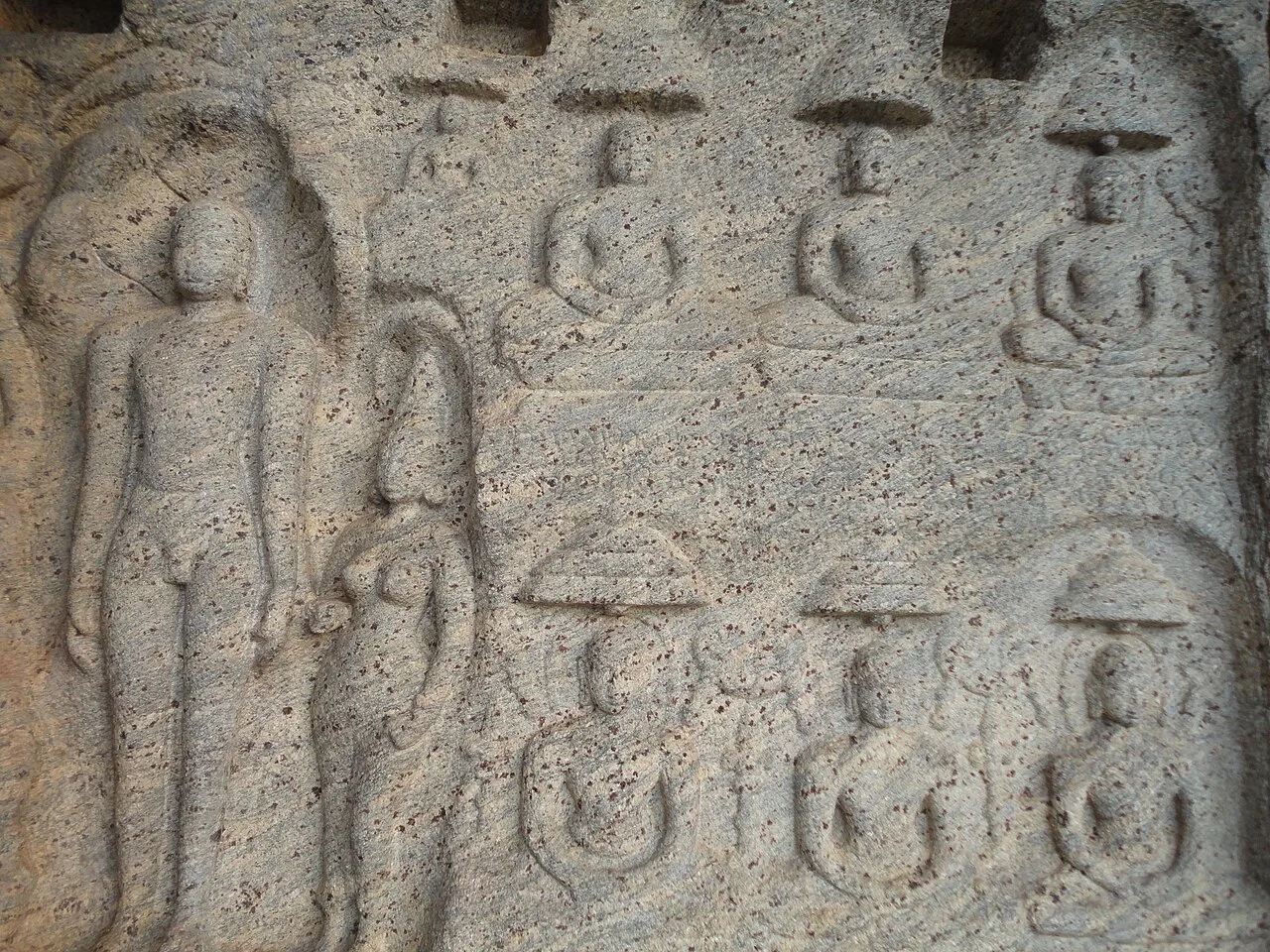
Chitharal Jain Monuments
This group of ninth-century religious remains near Chitharal village includes a Jain shrine, a Bhagavati temple and inscribed stone beds, drawing interest for its rock-cut architecture and reliefs.
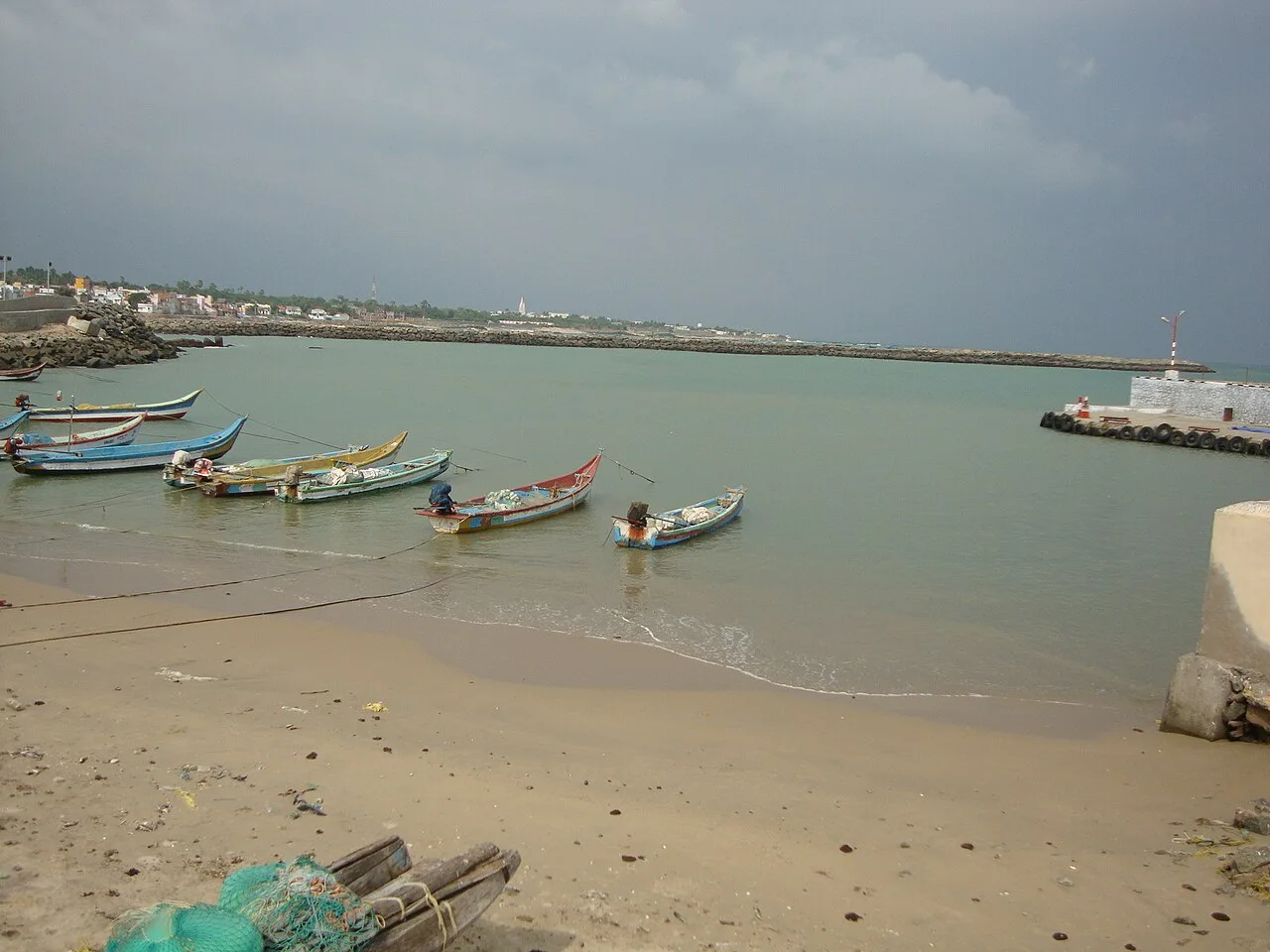
Kanyakumari Beach
Kanyakumari Beach is a beach in Kanniyakumari district, Tamil Nadu. Visitors can go there to spend time at a beach in the district.
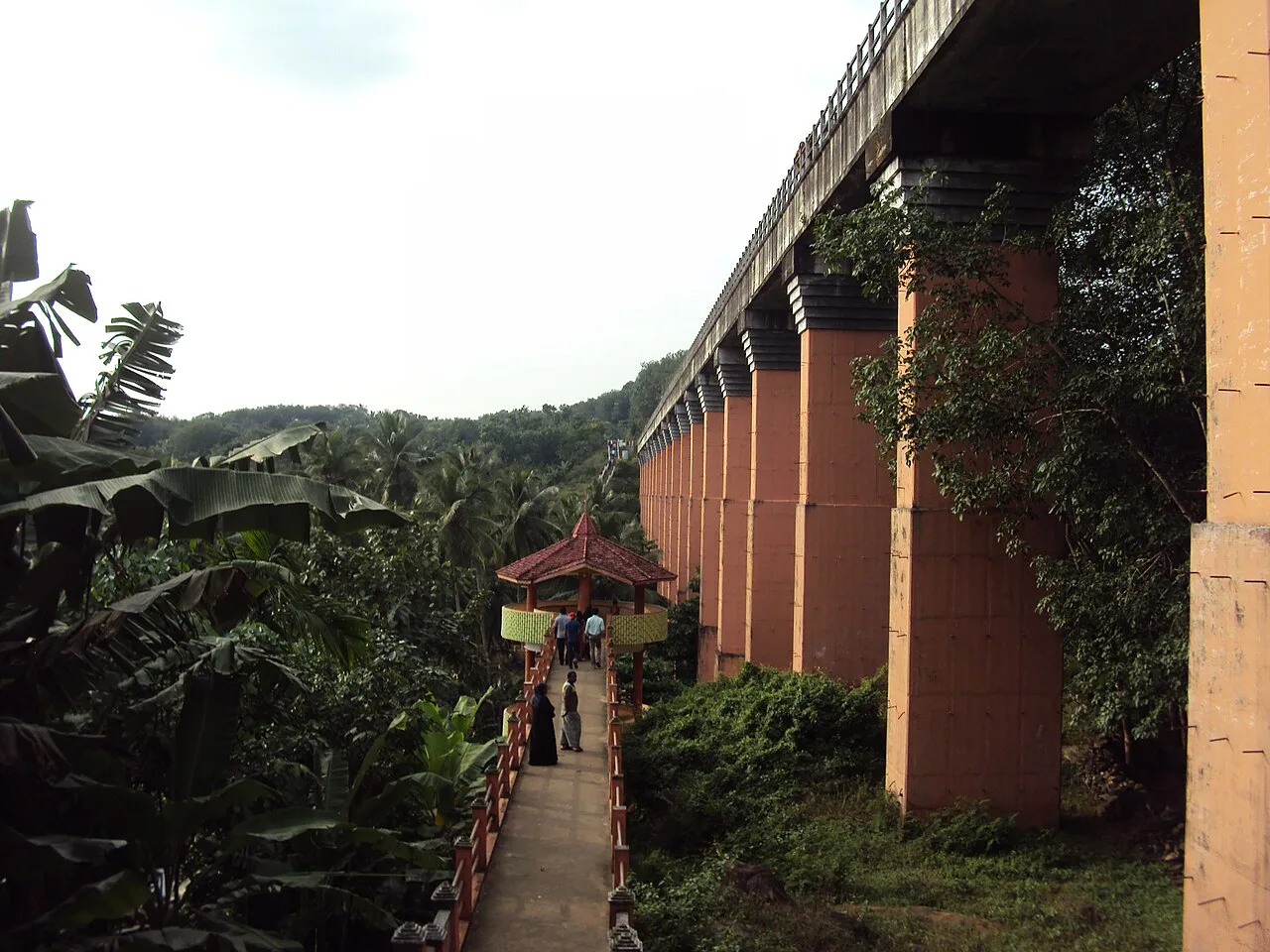
Mathur Aqueduct
Mathur Aqueduct is an aqueduct in Tamil Nadu’s Kanniyakumari district, built across the Pahrali River in 1966. Visitors come to see the structure and its setting near Mathoor hamlet.
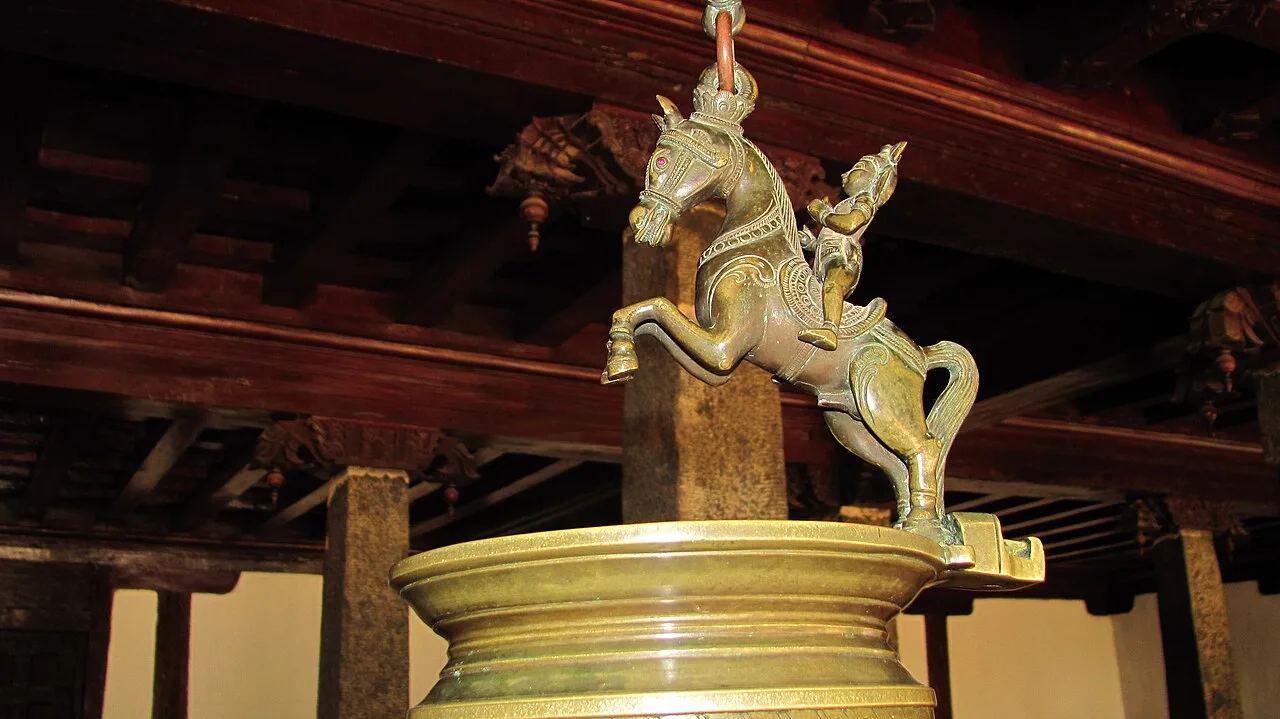
Padmanabhapuram Palace
Once a royal centre of Travancore, Padmanabhapuram Palace is a historic complex in Tamil Nadu that visitors explore for its connection to the former kingdom.
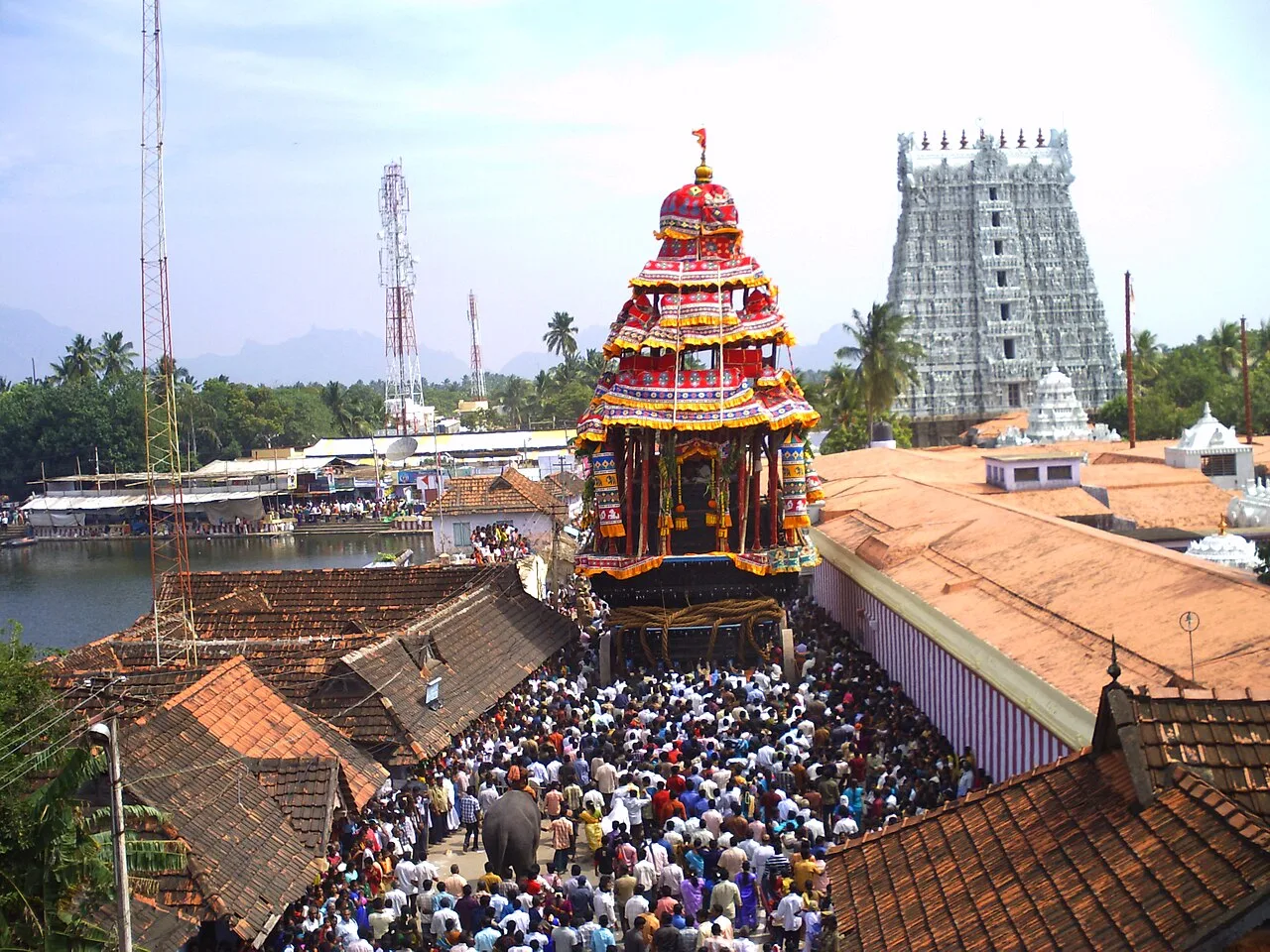
Thanumalayan Temple, Suchindram
Thanumalayan Temple, also known as Sthanumalayan Temple, is a major Hindu shrine in Suchindram. Visitors come for its significance to Shaiva and Vaishnava traditions, distinctive architecture and annual observances.
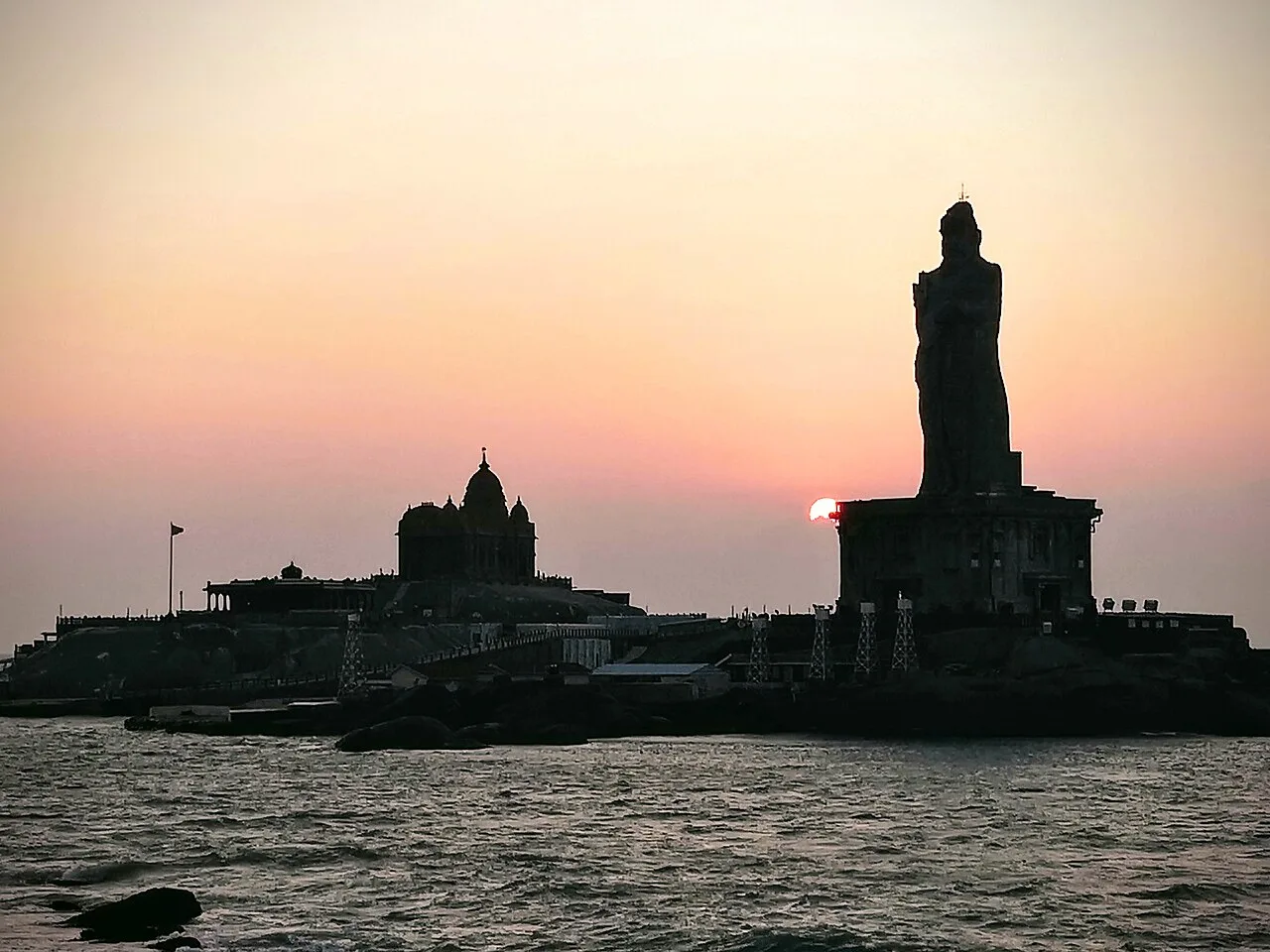
Thiruvalluvar Statue
The Thiruvalluvar Statue is a large stone likeness of the Tamil poet and philosopher who wrote the Thirukkural. Visitors come to see the monument near Kanniyakumari, where three seas meet.
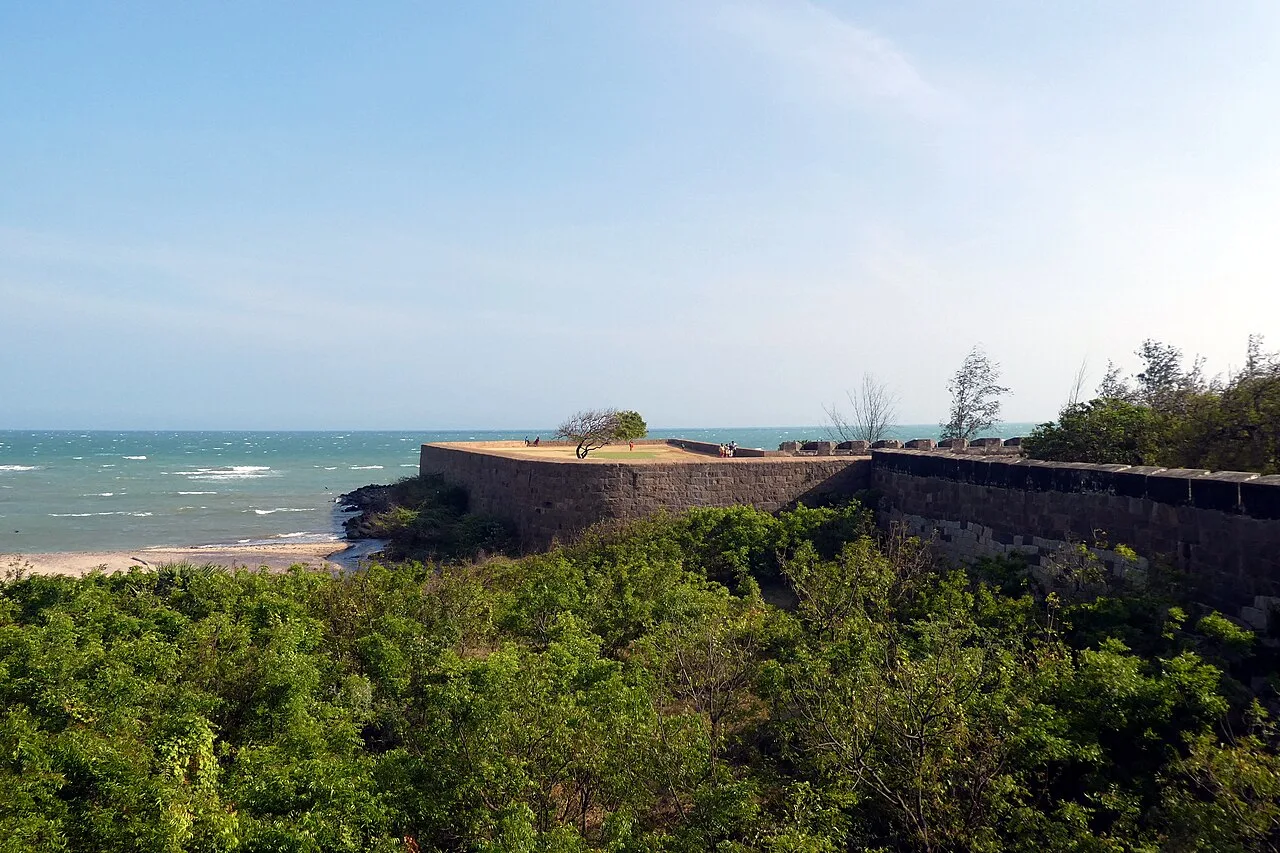
Vattakottai Fort
Vattakottai Fort is an eighteenth-century granite coastal stronghold in Kanniyakumari district, near Kanyakumari. Visitors come to explore its military history and enjoy views of the sea and Western Ghats.
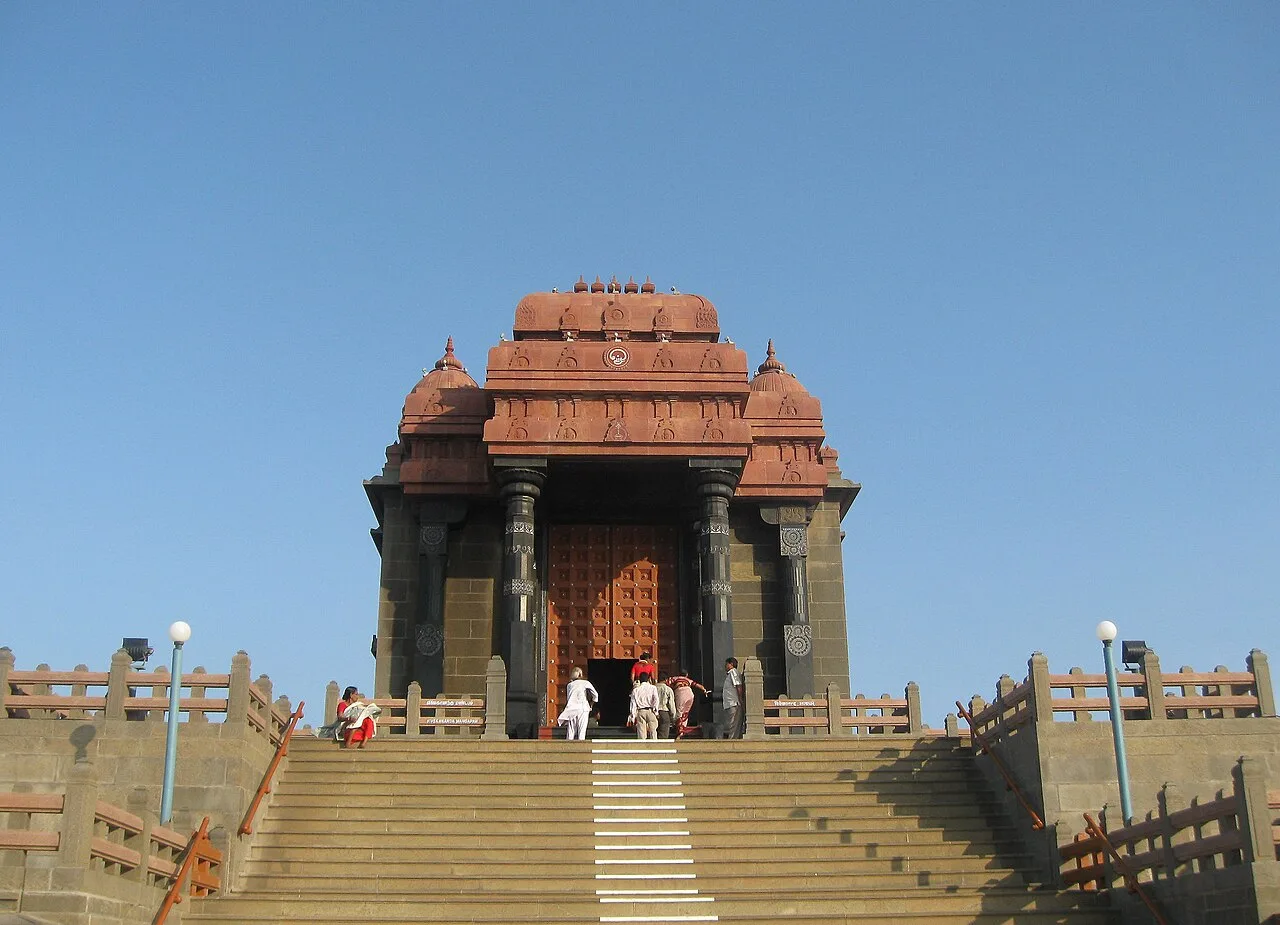
Vivekananda Rock Memorial
A memorial on a rocky outcrop off Kanyakumari, it honours Swami Vivekananda and draws visitors to its meditation hall and the site’s religious and historical associations.
Food in Kanniyakumari draws on Tamil cooking and the coastal traditions of the wider southern region. Fish and other seafood are common choices near the coast, often served with rice and spiced gravies; tapioca with fish curry is also found in parts of the region. Idli, dosa and other familiar Tamil dishes are widely available, as are vegetarian meals served on a banana leaf. Small eateries may prepare a limited menu based on what is fresh that day, so asking about local seafood or the day’s special can be useful. Filter coffee is a familiar accompaniment, while availability and recipes vary between towns.
Craft traditions in Kanniyakumari reflect its Tamil and Travancore-era heritage. The district’s historic buildings, especially Padmanabhapuram Palace, preserve notable examples of carved timber and traditional architectural detailing; these are heritage features rather than a guarantee of locally available souvenirs. Palm-leaf work and coir products are found in parts of the wider southern coastal region, though the range and availability vary by locality. Visitors interested in crafts can look for small makers and local markets, and should ask about the materials and place of origin rather than assuming an item is specific to the district.
Temple festivals draw pilgrims and visitors at different times of year. The Suchindram temple car festival is generally held in the winter festival season, while the Mandaikadu Bhagavathy Amman festival, usually around February or March, brings large crowds, particularly of women pilgrims. Navaratri, Pongal and Christmas are also widely observed, though celebrations vary between communities and towns. During major temple events, local roads and public spaces can be busy, and rooms near pilgrimage centres may fill early. Check local arrangements before travel and consider staying in a larger nearby town when accommodation is limited.
Elsewhere in Tamil Nadu
The district runs from a varied coastline into fertile plains and the southern foothills of the Western Ghats. Its shores face the Arabian Sea and the Bay of Bengal, with the waters around Kanyakumari commonly described as their meeting with the Indian Ocean. Rivers including the Kodayar and Pazhayar support fields and settlements; coconut groves and plantations are common inland. Roads cross both built-up coastal stretches and greener rural terrain, while routes toward the hills can be winding. Rain, local road conditions and the spread of sights make it useful to plan inland journeys rather than relying on short map distances.
Kanniyakumari is generally warm and humid, with coastal conditions and hill-side weather varying across the district. Summer, roughly March to May, can feel hot, especially on exposed coastal walks. The southwest monsoon usually brings rain from around June, and the northeast monsoon can bring further showers later in the year. The cooler, comparatively drier months from November to February are often the most comfortable for sightseeing, though rain can still occur. Pack light breathable clothing, sun protection and drinking water; carry a light rain layer during monsoon periods. Sturdy footwear helps on uneven steps and wet paths, and modest clothing is useful at religious sites.
Nagercoil Junction is the district’s main railway hub, while Kanniyakumari also has a rail terminus. Thiruvananthapuram International Airport and Thoothukudi Airport serve the wider region; the most convenient choice depends on the destination and available connections. National highways and state roads link the district with other parts of Tamil Nadu and Kerala, and buses connect Nagercoil, Kanyakumari and many smaller towns. Within the district, local buses, taxis and auto-rickshaws are useful for reaching individual sights; some rural attractions may need advance transport planning. Check current services locally before setting out.
Nagercoil is the main road and bus hub, with services linking it to Kanyakumari, Suchindram, Thuckalay and other towns. State and private buses serve many routes, while local buses, shared vehicles and auto-rickshaws can help with shorter journeys; services may be less frequent in rural areas. Taxis are useful for combining inland sights such as Padmanabhapuram Palace, Chitharal Jain Monuments and Mathur Aqueduct in one outing. At Kanyakumari, boats serve the island memorials when operating conditions allow; sea conditions can interrupt service. Confirm local transport and boat availability before setting out.
2 days: Kanyakumari Beach → Vivekananda Rock Memorial → Thiruvalluvar Statue → Vattakottai Fort; sleep in Kanyakumari. Next day: Thanumalayan Temple, Suchindram → Padmanabhapuram Palace; sleep in Nagercoil or depart. 3 days: Kanyakumari Beach → Vivekananda Rock Memorial → Thiruvalluvar Statue → Vattakottai Fort; sleep in Kanyakumari. Next day: Thanumalayan Temple, Suchindram → Padmanabhapuram Palace; sleep in Nagercoil. Third day: Chitharal Jain Monuments → Mathur Aqueduct; sleep in Nagercoil or continue onward. 4 days: Kanyakumari Beach → Vivekananda Rock Memorial → Thiruvalluvar Statue → Vattakottai Fort; sleep in Kanyakumari. Next day: Thanumalayan Temple, Suchindram → Padmanabhapuram Palace; sleep in Nagercoil. Third day: Chitharal Jain Monuments; sleep in Nagercoil. Fourth day: Mathur Aqueduct; sleep in Nagercoil or continue onward.
Kanyakumari is a practical base for the seafront, island memorials and Vattakottai Fort. Nagercoil has a wider choice of hotels and is convenient for bus connections and day trips across the district. For visits around Padmanabhapuram, Thuckalay and nearby rural sights, staying in or near Nagercoil can reduce backtracking; smaller towns have more limited options. Visitors may find hotels, guesthouses and some homestays, as well as pilgrimage-oriented lodgings or dharamshalas in certain places. Availability varies during festival periods, so reserve ahead when travelling then.
Coastal water can have strong currents, and boat services to the island memorials may be suspended in rough conditions; follow local warnings and use designated access points. Sun, humidity and rain can make outdoor visits tiring, so carry water, take breaks and use sun protection. Steps and paths at monuments may be uneven or slippery when wet. Drive cautiously on narrow rural roads, especially after rain, and check conditions before travelling into hill areas. Wildlife is more relevant near forested foothills; keep a respectful distance and do not feed animals. Mobile coverage can be weaker away from towns. No district-wide visitor permit requirement is generally applicable to these listed sights, but confirm any site-specific rules with official local authorities before travel.
- Tirunelveliabout 60 km
- Thiruvananthapuram · Keralaabout 67 km
- Tenkasiabout 76 km
- Thoothukudiabout 93 km
- Kollam · Keralaabout 128 km
- Pathanamthitta · Keralaabout 151 km
- Alappuzha · Keralaabout 188 km
- Kottayam · Keralaabout 198 km
Straight-line distance between the centres of each district's destinations; road distance is longer.
All districts of Tamil Nadu
- Ariyalur
- Chengalpattu
- Chennai
- Coimbatore
- Cuddalore
- Dharmapuri
- Dindigul
- Erode
- Kallakurichi
- Kancheepuram
- Madurai
- Mayiladuthurai
- Nagapattinam
- Namakkal
- Nilgiris
- Pudukkottai
- Ramanathapuram
- Salem
- Sivaganga
- Tenkasi
- Thanjavur
- Theni
- Thoothukudi
- Tiruchirappalli
- Tirunelveli
- Tiruvallur
- Tiruvannamalai
- Tiruvarur
- Vellore
- Villupuram
- Virudhunagar
Q: How many days should I spend in Kanniyakumari district? A: Two days can cover the main Kanyakumari sights and one nearby heritage stop. Three or four days allow a more relaxed visit to inland destinations. Q: When is the best time to visit? A: November to February is often the most comfortable period for sightseeing. Monsoon showers and warm, humid conditions are possible at other times. Q: Where is the best base for exploring? A: Kanyakumari suits the coastal sights, while Nagercoil is a useful central base for buses and trips across the district. Q: How do I get to the district? A: Nagercoil Junction is the main rail hub, and Kanyakumari also has a rail terminus. Thiruvananthapuram International Airport and Thoothukudi Airport serve the wider region; onward travel is by road. Q: Is the district suitable for families or elderly travellers? A: Yes, many towns and major sights are accessible by road, but island boats, steps and uneven paths may not suit everyone. Check conditions and accessibility before visiting.
This page draws on our 8 destination guides for Kanniyakumari and is updated as our team checks it.
Be the first to share photos, stories, advice or a helpful contact for Kanniyakumari.
Loading…