
District · Tamil Nadu
Tiruchirappalli
Tiruchirappalli district lies in central Tamil Nadu, around an important crossing of the Kaveri river system and a long-established transport and cultural hub.
Tiruchirappalli district lies in central Tamil Nadu, where the Kaveri and Kollidam rivers shape a landscape of river plains, cultivated fields and settlements. The district’s best-known landmarks include the rocky hill at the heart of Tiruchirappalli city, the island temple town of Srirangam and the ancient Kallanai dam across the Kaveri. The area has a long history, with enduring Chola-era sites and later contributions from other South Indian kingdoms and rulers. Today, the district combines major pilgrimage centres and historic architecture with a busy urban hub, educational institutions and agricultural communities. Its temples, river setting and transport connections make it a useful base for exploring central Tamil Nadu.
Tiruchirappalli district lies in central Tamil Nadu, around an important crossing of the Kaveri river system and a long-established transport and cultural hub. Travellers come for its major Hindu temples, the distinctive Rockfort rising above the city, and Kallanai, an ancient dam associated with Chola-era water management. Srirangam and Thiruvanaikaval offer notable examples of temple architecture and living worship traditions, while the city makes a practical base for exploring nearby sites. The district combines urban heritage with river-fed agricultural landscapes, giving visitors a view of both Tamil Nadu’s religious life and its historic relationship with the Kaveri.
The region has a long history of settlement and rule by South Indian dynasties. Uraiyur, now part of Tiruchirappalli city, is associated with the early Cholas, while the later Chola kingdom developed important centres and waterworks in the Kaveri basin. Kallanai is traditionally attributed to the Chola ruler Karikala and belongs to the early centuries CE. The temples at Srirangam and Thiruvanaikaval grew over successive periods, with substantial contributions from Chola, Pandya, Vijayanagara and Nayak rulers. Control of the area later passed among regional powers, including the Nawabs of the Carnatic. In the eighteenth century, Tiruchirappalli was strategically important during conflicts involving the Carnatic, the French and the British East India Company. Under British rule it became an administrative and military centre within the Madras Presidency. After Indian independence, the district continued as part of Madras State, renamed Tamil Nadu in 1969. Its present administrative boundaries reflect later reorganisations of the state’s districts.
4 destination guides
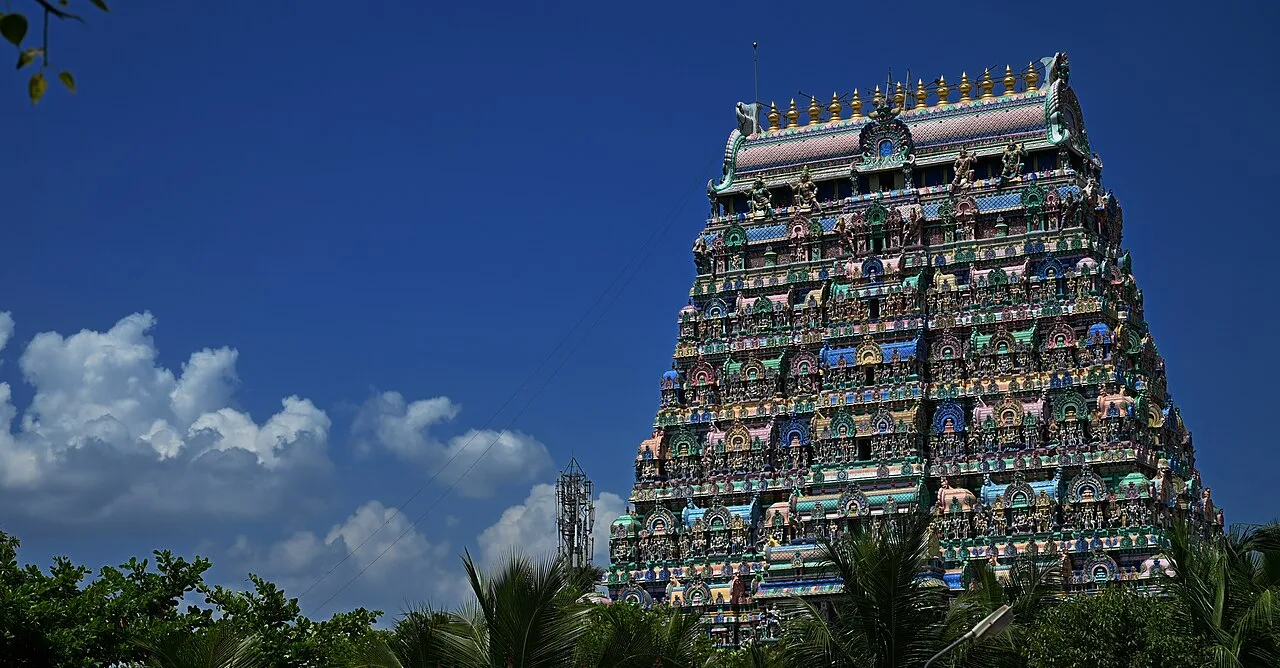
Jambukeswarar Temple, Thiruvanaikaval
Jambukeswarar Temple at Thiruvanaikaval is a Shiva shrine in Tamil Nadu associated with water. Visitors come to worship Jambukeshwarar and Akilandeswari and encounter the temple’s water-linked tradition.
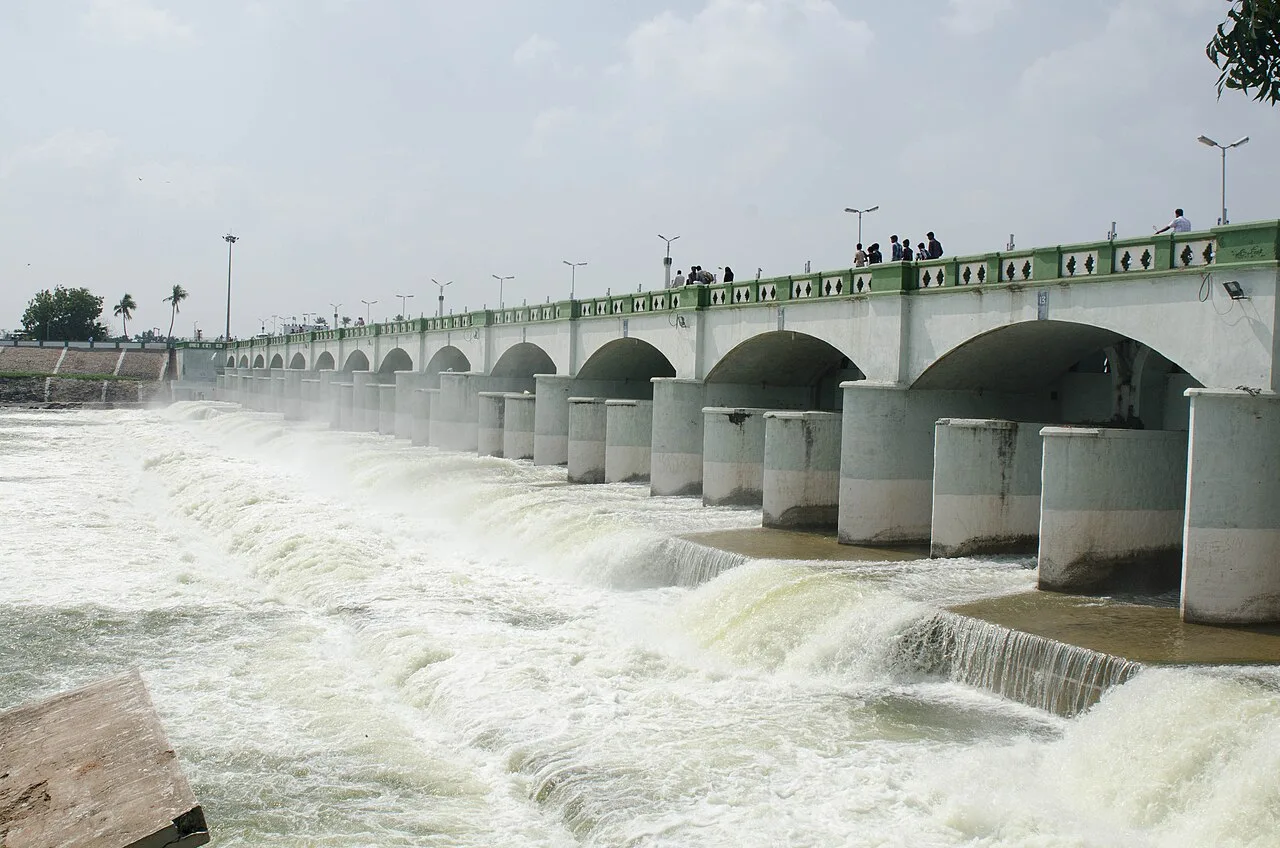
Kallanai (Grand Anicut)
Kallanai, or the Grand Anicut, is a Chola-period dam across the Kaveri in Tamil Nadu. Visitors are drawn to its ancient water-management role and its distinction as a historic structure that remains operational.
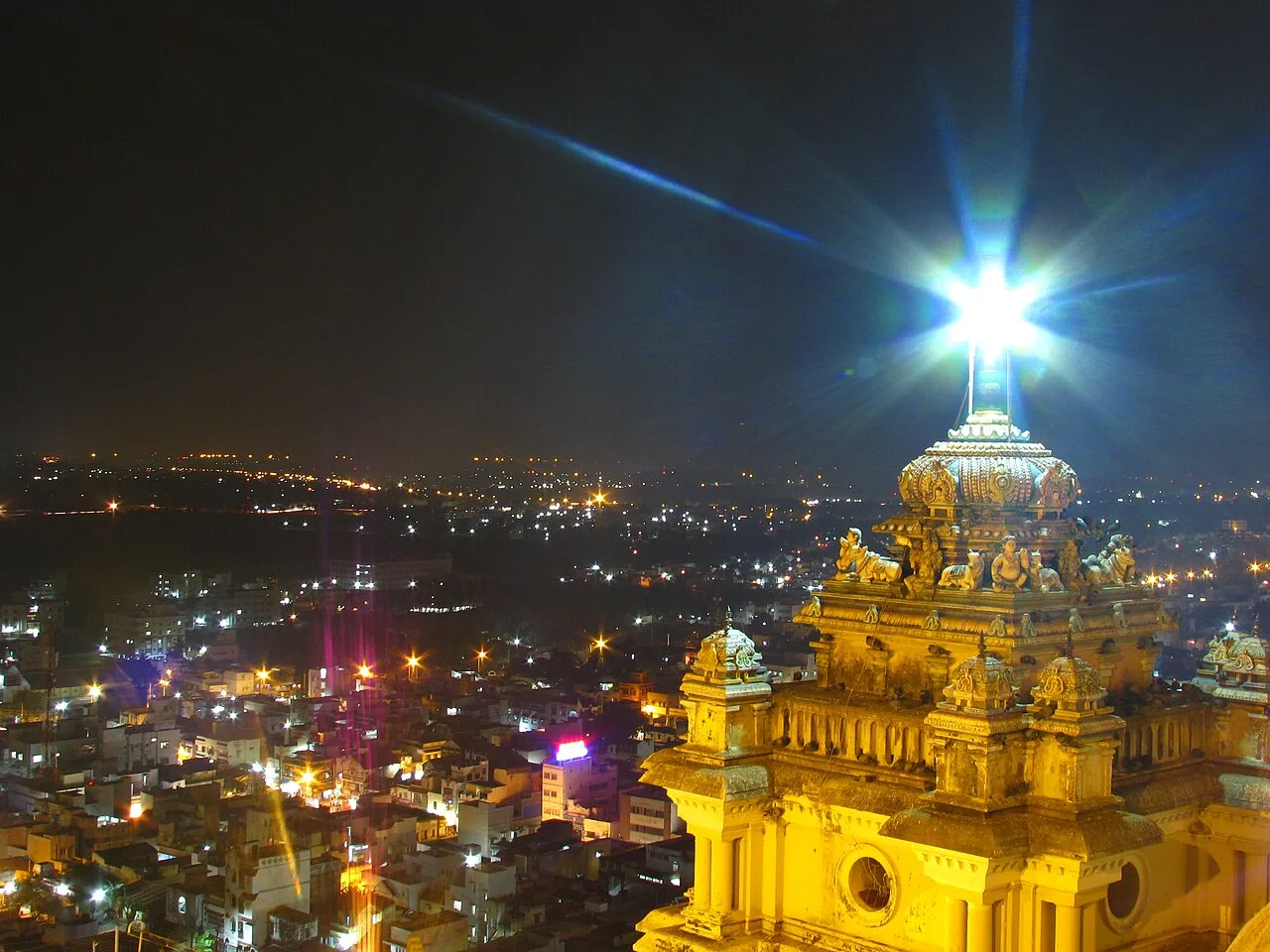
Rockfort Ucchi Pillayar Temple
Atop Rock Fort in Tiruchirappalli, Tamil Nadu, this seventh-century Hindu shrine is devoted to Ganesha. Visitors come to worship and to connect the site with a legend about Ganesha and King Vibishana.
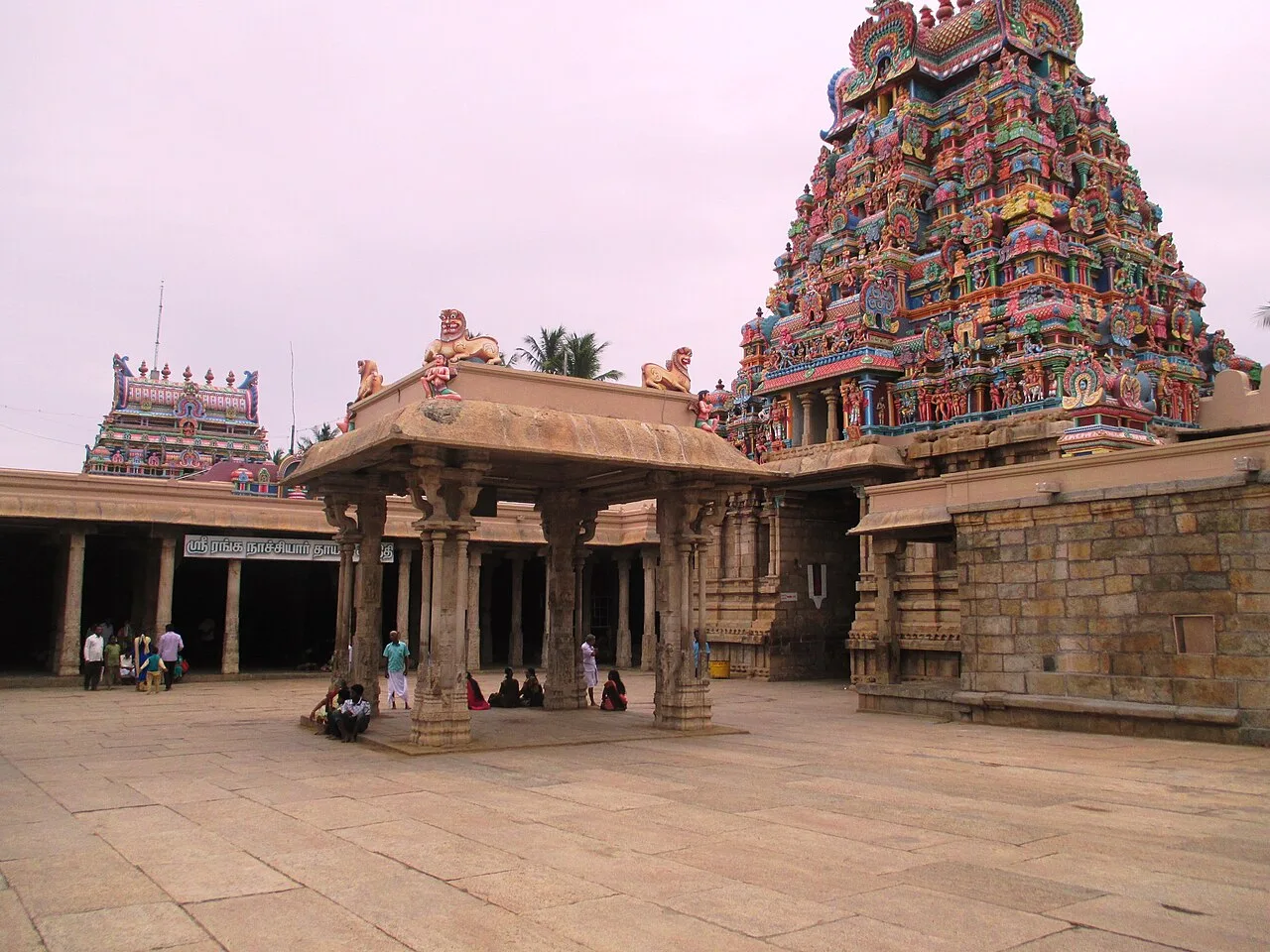
Srirangam Ranganathaswamy Temple
A major Vaishnava temple in Srirangam, this active shrine honours Vishnu and Lakshmi as Ranganathar and Ranganayaki. Visitors come for its religious significance, architecture and annual Margazhi festival.
Everyday food in Tiruchirappalli reflects wider Tamil Nadu traditions: idli, dosa and rice-based meals are common, often accompanied by sambar, rasam and vegetable preparations. Vegetarian meals served on banana leaves are part of the region’s dining culture, and filter coffee is widely enjoyed. Small eateries may offer a limited menu based on what is prepared that day, so asking about fresh dishes can be helpful. The wider region also has spicy meat curries and other non-vegetarian fare, though these are not exclusive to the district. Sweets such as adhirasam and Mysore pak are found across Tamil Nadu.
Woraiyur, now part of Tiruchirappalli city, is associated with handwoven cotton sarees. The weaving tradition is part of Tamil Nadu’s broader handloom heritage, with designs and techniques varying between makers. Visitors interested in textiles can look for handloom outlets or ask locally about current weaving and purchasing options. Temple sculpture and stonework are also prominent across the wider region, visible in historic religious architecture, but should not be treated as a craft exclusive to Tiruchirappalli district.
Vaikunta Ekadasi, usually falling in December or January, draws large numbers of worshippers to Srirangam. The temple’s annual festival season and processions can make the island town especially busy, so rooms may be harder to find nearby. Festivals at Jambukeswarar Temple and Rockfort, including major occasions in the Tamil calendar, bring local devotees and visitors into the city. Pongal in January is widely celebrated across the region. Festival dates vary by the traditional calendar; travellers seeking a quieter visit should check local schedules and arrange accommodation ahead during major observances.
Elsewhere in Tamil Nadu
The district is inland and largely composed of plains shaped by the Kaveri and its branches, including the Kollidam. Irrigated fields and settlements line parts of the river system, while the city itself is built around a prominent rocky outcrop at Rockfort. There is no coastline, and the principal listed sights are reached through towns and agricultural country rather than remote wilderness. Rivers and canals influence local roads and crossings, particularly during the monsoon. The terrain is generally accessible, though Rockfort’s steps and busy temple precincts require more effort than the surrounding plains.
Tiruchirappalli is generally hot for much of the year. Summer, especially from around April to June, can be uncomfortable for outdoor sightseeing; carry sun protection and water, and plan walking for cooler parts of the day. The northeast monsoon, usually from October into December, brings the district’s main rainy period, while the southwest monsoon can also bring showers. Winter, broadly from December to February, is usually more comfortable for visiting temples and moving around outdoors. November to February is a practical period to plan a trip, while packing a light rain layer during monsoon months and modest, breathable clothing year-round is useful.
Tiruchirappalli is served by Tiruchirappalli International Airport and Tiruchirappalli Junction railway station. Rail and air connections make the city a practical arrival point for journeys across central and southern Tamil Nadu. Road links connect it with Chennai, Madurai, Thanjavur and other regional centres; travel times vary with route and traffic. Within the district, local buses, auto-rickshaws and taxis can help visitors reach the Rockfort, Srirangam, Thiruvanaikaval and Kallanai. Check current services locally before travelling.
Tiruchirappalli city is the main base, with road connections to Srirangam, Thiruvanaikaval and Kallanai. Local buses serve major urban routes and nearby towns, while auto-rickshaws are useful for shorter journeys; taxis or a hired car can make a multi-site day more convenient. Rail and bus services connect the city with destinations elsewhere in Tamil Nadu, and the airport serves regional and other routes. Traffic can slow movement around temple entrances and during festivals. Check current local transport arrangements before setting out, particularly if crossing river channels or travelling during heavy rain.
2 days: Rockfort Ucchi Pillayar Temple → Jambukeswarar Temple, Thiruvanaikaval → Srirangam Ranganathaswamy Temple → Kallanai (Grand Anicut); sleep both nights in Tiruchirappalli. 3 days: Rockfort Ucchi Pillayar Temple → Jambukeswarar Temple, Thiruvanaikaval → Srirangam Ranganathaswamy Temple → Kallanai (Grand Anicut); sleep nights one and two in Tiruchirappalli, and night three in Tiruchirappalli or Srirangam.
Tiruchirappalli city is the most flexible base for the Rockfort, Thiruvanaikaval and Kallanai, with a broad choice of hotels and some simpler lodgings. Staying in or near Srirangam can suit visitors who want to spend more time at the Ranganathaswamy Temple or attend its festivals; accommodation options there may be more limited during busy periods. Homestays and religious guesthouses may be available in the wider area, but facilities and access rules vary. Confirm suitability and availability directly, especially for groups or travellers with mobility needs.
Heat can be tiring, so carry drinking water, use sun protection and take breaks; use sealed or otherwise reliably safe drinking water. Rockfort involves many steps and uneven surfaces, which may be challenging for visitors with limited mobility. Temple precincts can be crowded during festivals; keep valuables secure and follow local instructions and customary dress or entry rules. Take care near riverbanks and do not enter fast-flowing or unfamiliar water. Roads can be slower or affected by heavy monsoon rain, so check conditions before travelling. Mobile connectivity is generally available in towns but may vary on rural stretches. The listed sights do not ordinarily require protected-area permits; confirm any special access requirements with official local sources.
- Pudukkottaiabout 54 km
- Thanjavurabout 66 km
- Namakkalabout 67 km
- Sivagangaabout 81 km
- Ariyalurabout 91 km
- Tiruvarurabout 102 km
- Kallakurichiabout 112 km
- Maduraiabout 121 km
Straight-line distance between the centres of each district's destinations; road distance is longer.
All districts of Tamil Nadu
Q: How many days should I spend in Tiruchirappalli district? A: Two days can cover the four listed destinations at a steady pace; three days allow more time for temple visits and breaks. Q: When is the best time to visit? A: November to February is generally more comfortable for sightseeing, though festival periods can be busy. Q: Where is the best base for these sights? A: Tiruchirappalli city is the most practical all-round base; Srirangam suits visitors focusing on its temple. Q: How do I get to the district? A: Tiruchirappalli is connected by air, rail and road. From the city, local buses, autos and taxis can reach the main sights. Q: Is the district suitable for families or elderly travellers? A: Yes, the main sights are accessible by road, but Rockfort’s steps, heat and festival crowds may be difficult for some visitors.
This page draws on our 4 destination guides for Tiruchirappalli and is updated as our team checks it.
Be the first to share photos, stories, advice or a helpful contact for Tiruchirappalli.
Loading…