
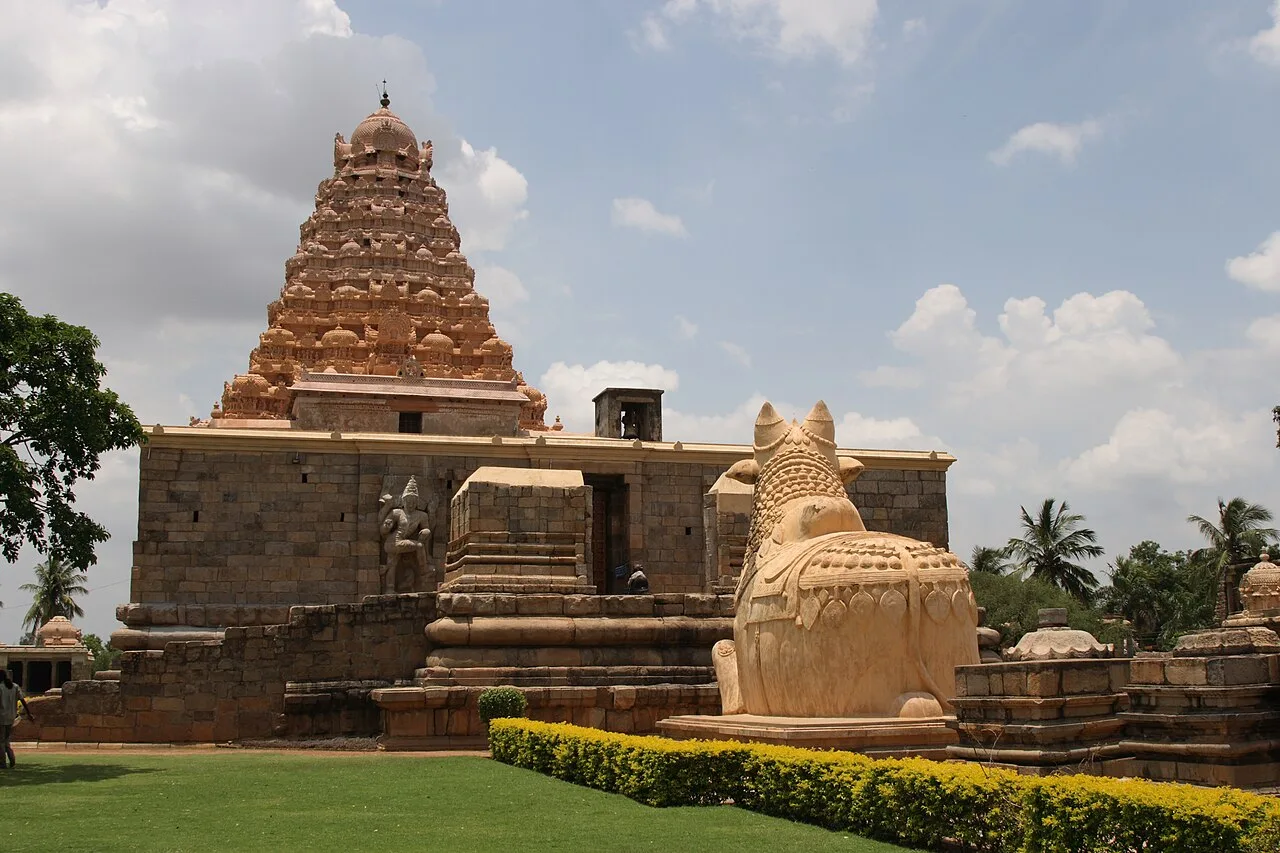
Gangaikonda Cholapuram Temple
Set in Ariyalur district, Gangaikonda Cholapuram is a former Chola capital known for its Brihadisvara Temple, whose scale, architecture and sculpture distinguish it and whose site has UNESCO World Heritage status.
Key facts · verified by Ghumoopedia editors
- Type of place
- Temple / pilgrimage site
- Best time to visit
- November to February; April to June for the hill stations
- Nearest railway station
- Mayiladuthurai Junction · about 25 km (straight line)
- Nearest airport
- Tiruchirappalli International Airport · about 94 km (straight line)
- Verified
- 21 Nov 2026
Plan a trip from Gangaikonda Cholapuram Temple — a day-by-day route through places nearby.
Near Jayankondam in Tamil Nadu’s Ariyalur district, Gangaikonda Cholapuram is a village and heritage town. Rajendra I, a Chola emperor, established it as the dynasty’s capital around 1025; it remained the capital for about 250 years. The settlement lies roughly 125 kilometres north-east of Tiruchirapalli International Airport. The Brihadisvara Temple here is second in scale only to the Brihadisvara Temple (Peruvudaiyar Kovil) at Thanjavur. Its architectural design and sculpted details have their own distinctive character. The ancient site is designated a heritage town within Ariyalur district and is included on the UNESCO World Heritage List. Tamil Nadu is the land of great living temples — Madurai's Meenakshi, Thanjavur's Brihadeeswara, Srirangam, Chidambaram and Rameswaram — along with the Pallava shore monuments of Mamallapuram, the Chettinad mansions, the hill stations of Ooty and Kodaikanal and the meeting of three seas at Kanyakumari. The state is hot from March to June, gets light southwest-monsoon rain from June to September, and receives its main rainfall from the northeast monsoon between October and December. January to March is the most comfortable season; the Nilgiri and Kodaikanal hills are cool year-round. The usual best time to visit is November to February; April to June for the hill stations. Timings, fees and access arrangements must be confirmed locally. For official information, see Tamil Nadu Tourism at https://www.tamilnadutourism.tn.gov.in.
Why it matters
Gangaikonda Cholapuram is a village near Jayankondam in Ariyalur district, best known for its Chola-period Brihadisvara Temple. Emperor Rajendra I made the settlement his capital around 1025, and it served as the Chola capital for roughly 250 years. The temple is part of UNESCO’s Great Living Chola Temples World Heritage property, which recognises important Chola-era temple architecture and continuing religious traditions. It is also protected by the Archaeological Survey of India. Its scale, sculptures and distinctive design make it an important counterpart to the Brihadisvara Temple at Thanjavur, while its location preserves the memory of a former imperial centre in Tamil Nadu.
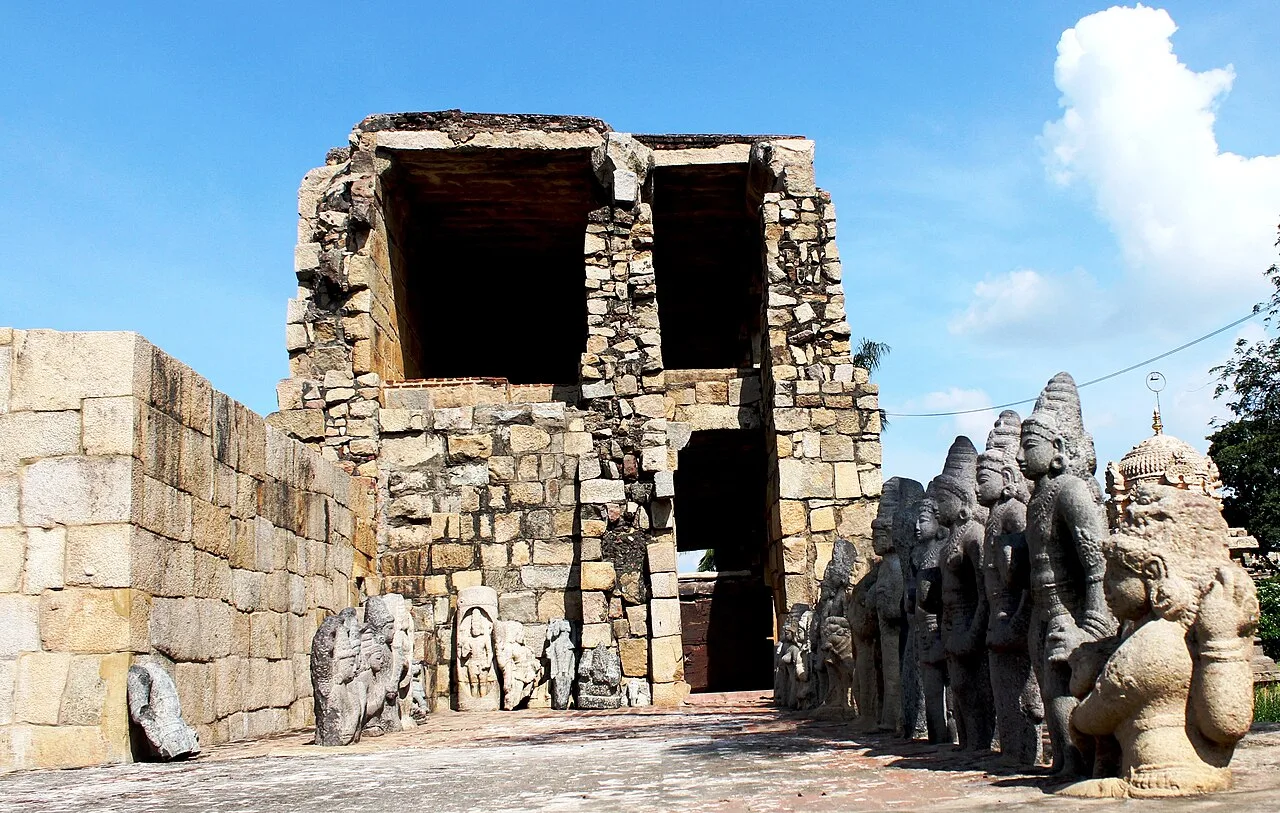
After campaigns that extended Chola influence northwards, Rajendra I established a new capital at Gangaikonda Cholapuram around 1025. The name means, in essence, “the Chola who brought the Ganges”; the king’s title commemorated his northern expedition. He is credited with building the Brihadisvara Temple, dedicated to Shiva, as a major royal and religious centre. The settlement remained the Chola capital for approximately 250 years, through a period when the dynasty held extensive influence in southern India and beyond. Its temple formed part of a wider complex of royal buildings and urban life, although much of the former city has not survived above ground. As Chola political power declined, the capital lost its former status; the temple nevertheless continued as a place of worship. The surviving shrine is maintained as a protected monument, and the Archaeological Survey of India oversees its conservation. UNESCO included it in the Great Living Chola Temples World Heritage property in 2004, extending the recognition first given to the Thanjavur temple. The monument remains both an active religious site and a record of Chola-era patronage and craftsmanship.
Origin stories & folklore
Local tradition connects the town’s name with Rajendra I’s northern campaign. It says the king brought water from the Ganges to the Chola country and commemorated the achievement by taking the title Gangaikonda Chola. Accounts also associate the water with a large royal reservoir, commonly identified with Cholagangam and known today as Ponneri. These stories express the political and sacred importance of the Ganges in the king’s southern realm; they should be understood as historical tradition rather than a visitor’s account of a surviving ceremony. The temple’s association with Shiva and Chola royal power has inspired further local storytelling, but details can vary between tellings.
Architecture & design
The Brihadisvara Temple is a major example of Chola Dravidian architecture, built principally of stone and organised around a large central Shiva shrine. Its tall, tiered vimana rises above the sanctum, but its outline is more gently curved than the tower at Thanjavur. The temple complex includes a pillared mandapa, sculpted walls and a large Nandi figure facing the shrine. Stone surfaces carry architectural mouldings and carved images, while the carefully assembled masonry demonstrates the planning and skilled labour involved in monumental Chola construction. The temple’s scale is second to the Thanjavur Brihadisvara in this comparison, yet its proportions and sculptural programme give it a distinct character. The layout directs visitors from the outer precinct towards the principal shrine; access to inner areas may be governed by worship and site rules.
Important objects & sculptures
Look for the monumental vimana and the large Nandi positioned in relation to the Shiva shrine. Carved stone images around the temple include deities and figures associated with Shaiva worship; visitors may notice representations such as Durga and other forms of Shiva, though visibility depends on the area open and lighting. The reliefs and architectural details are worth viewing slowly, since smaller figures and ornament can be easy to miss from a distance. Inscriptions at the site are significant records of royal patronage and temple history; not every inscription is easy to read without interpretation. The temple is a living place of worship, not a museum collection, so do not touch or obstruct images and ritual objects.
Religious significance
The principal deity is Shiva, worshipped here as Brihadisvara, the “Great Lord.” The temple belongs to the Shaiva tradition and remains an active place of worship as well as a historic monument. Devotees visit to offer prayers, receive darshan and take part in puja and other observances conducted according to the temple’s practice. Ritual access may differ between the sanctum and areas open to general visitors; follow the directions of temple staff and priests. For worshippers, the site carries both devotional meaning and an association with Chola kingship and the sacred history of the region. Visitors of other faiths should be attentive to local rules, since entry to some sanctums may be restricted.
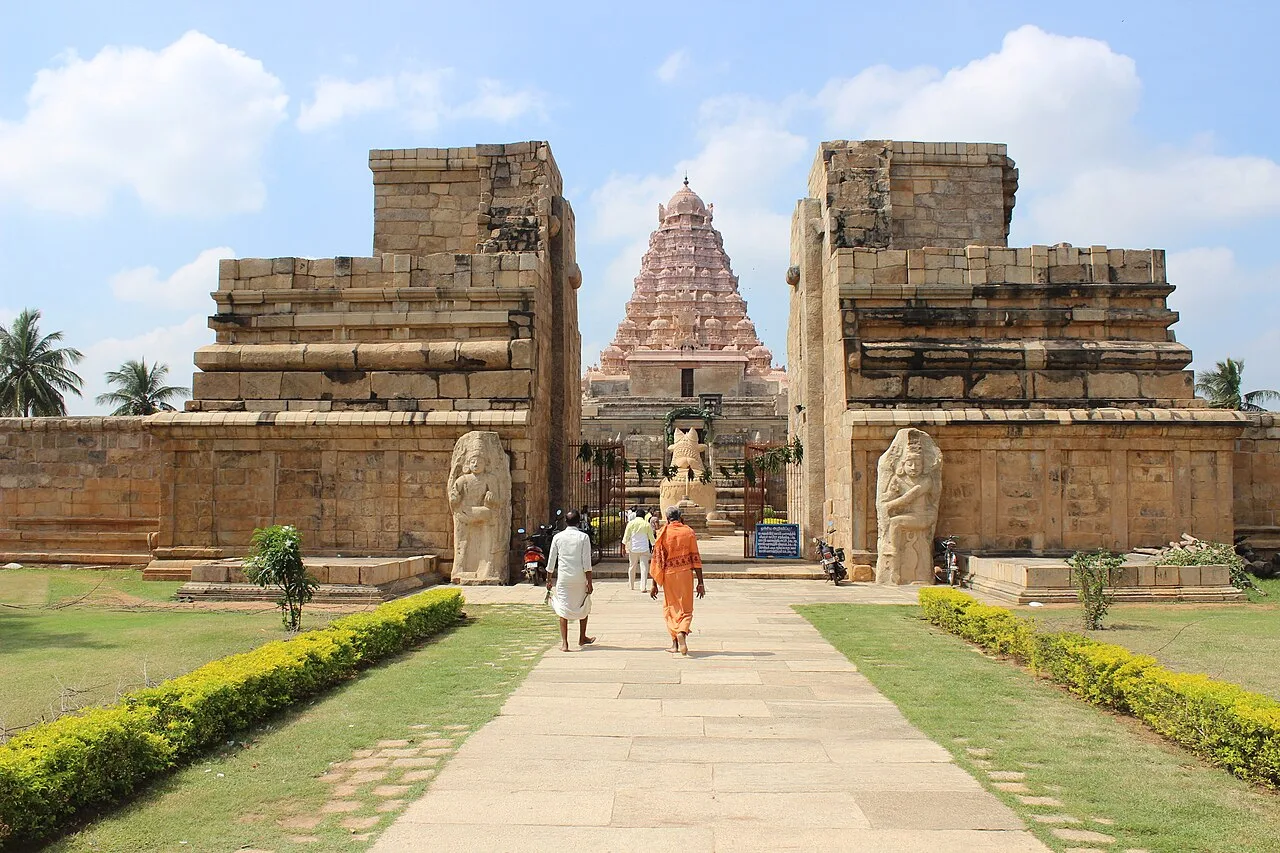
Visit Gangaikonda Cholapuram Temple with time to observe daily prayers and rituals respectfully. Follow the posted rules on footwear, photography, phones, head covering and dress — many major temples require modest clothing, prohibit leather items and phones inside, and have separate darshan queues; non-Hindus may not be admitted to some sanctums. Ask caretakers which areas are open to visitors, and beware of unofficial 'guides' or agents offering quick darshan for a fee. A comfortable itinerary is one main visit in the morning, a local meal at midday and a short nearby stop before an afternoon return. Use the district list on this site to find other places in Ariyalur, but check the route and its condition before combining stops. If a festival is on — such as Pongal in January, the Madurai Chithirai festival, the Mahamaham at Kumbakonam or the Chennai music season in December — roads and stays can be busy, and the experience can be unforgettable. Leave no litter: many sites are protected by the communities around them.
Suggested itineraries
Half day: Allow about 1–2 hours for the temple, including the main shrine, exterior sculptures and a quiet pause for prayer; take a local meal or refreshment before returning. Full day: Spend about 2–3 hours at the temple, have lunch in or near Jayankondam, then visit another confirmed nearby heritage stop such as Darasuram if your transport and route allow; leave time for the return journey. Gentler option: See the main temple at an unhurried pace, take rest breaks in permitted shaded areas and skip additional stops.
Tamil is the principal language of the area, and visitors may also encounter English in tourism settings. The temple’s daily life is shaped by worship, offerings and customary conduct, alongside its role as a heritage monument. Tamil devotional traditions are part of the broader cultural setting, though performances should not be assumed to take place during every visit. Dress modestly, speak quietly near worship and allow devotees space during rituals. The surrounding region shares Tamil Nadu’s food and social customs; a local meal or a visit to Jayankondam can offer a simple introduction to everyday life beyond the monument.
Festivals & events
Mahashivaratri is an important observance for Shiva temples and may bring additional worshippers and activity here. Other occasions on the temple’s religious calendar, including monthly or seasonal observances, can also affect how the precinct is used; arrangements vary by year and local practice. Pongal, usually celebrated in January, is a major regional harvest festival, though celebrations are not necessarily centred on this monument. During festival periods, expect busier roads and greater demand for local transport and accommodation. Confirm event details locally rather than relying on a general regional calendar.
Local food in Tamil Nadu includes idli, dosa and filter coffee, Chettinad chicken and pepper curries, Madurai's kari dosa and jigarthanda, Thanjavur's banana-leaf vegetarian meals, Kanyakumari's seafood, and sweets such as Mysore pak, adhirasam and Tirunelveli halwa. Ask what is fresh that day; many small eateries cook a limited daily menu. Tamil Nadu is a paradise for vegetarian meals served on banana leaf; Chettinad and Madurai are the centres for meat and spice lovers. Filter coffee is a ritual — have it at a local 'hotel' (eatery). Remote sites may have no restaurant at all. Carry water and snacks, eat a proper breakfast before long drives, and ask your accommodation for a packed lunch if you are heading out early. If prasad is offered, accept it according to local custom. Choose busy, clean places, drink sealed or filtered water, and carry your packaging back with you.
Shopping & local experiences
Shopping options immediately around the temple may be limited. Jayankondam is a more practical place to look for everyday goods, local snacks and small devotional items where available. Nearby markets may offer seasonal produce and ordinary household wares, but do not expect a specialised craft market at the monument. Choose locally made goods when their origin is clear, and avoid buying fragments or objects claimed to come from the protected site. A meal featuring Tamil home-style or regional dishes can be a more reliable local experience than souvenir shopping.
November to February; April to June for the hill stations
The nearest principal railway station by straight-line distance is Mayiladuthurai Junction, roughly 25 km away. The nearest operating airport by straight-line distance is Tiruchirappalli International Airport, roughly 94 km away. These figures are calculated from map coordinates — actual road distance is longer. Chennai is the main gateway; Coimbatore serves the west and Mettupalayam is the railhead for the Ooty toy train; Madurai and Tiruchirappalli serve the south and centre; Rameswaram and Kanniyakumari have their own rail termini. For the final leg, TNSTC and SETC buses reach nearly every town, with private sleeper coaches between cities and app cabs in Chennai, Coimbatore and Madurai link district towns. A private taxi gives more flexibility for remote sites such as hill stations, forest gates and coastal temples. When comparing train, bus and flight, count the complete door-to-door time: a flight saves the most time only if the onward road transfer is short, while an overnight train can save a hotel night. Book your return before you leave, because seats fill quickly on weekends, festivals and holidays. Current train numbers, timings, return services and fares are not listed here; check IRCTC and NTES for trains and the airline's own schedule for flights. No permit is needed to visit Tamil Nadu. The Nilgiri Mountain Railway toy train to Ooty must be booked well in advance on IRCTC — seats are few and sell out weeks ahead. Major temples such as Madurai Meenakshi and Srirangam have darshan queues and some enforce a dress code (dhoti or formal trousers for men, saree or salwar for women); phones and cameras are not allowed inside several temple sanctums. Boating to the Vivekananda Rock at Kanyakumari depends on sea conditions.
Confirm onward and return timings on IRCTC / NTES, the state bus operator or your airline before travel. A dash means current timings or fares have not been verified.
Getting around
Jayankondam is the nearest useful town for local connections. Buses serve towns in the district and may be useful for reaching the area, but check the route and service locally before setting out. Autos or taxis may be available around Jayankondam; availability at the temple itself can be limited, so arranging a return journey in advance is sensible. The temple precinct is best explored on foot, with care on stone surfaces and in crowded areas. Visitors arriving by private vehicle should follow local parking directions and avoid blocking access for worshippers or residents.
Hours, tickets & permissions
Entry arrangements can depend on worship, conservation work and the managing authorities. Ticketing, permits, camera permissions, identity checks and access to particular parts of the complex may change; do not assume every area is open to every visitor. Modest dress and compliance with temple-specific rules may be expected, especially near worship spaces. Confirm current opening arrangements, entry requirements and any fees with the Archaeological Survey of India or temple staff before travelling. Leave extra flexibility in your plans if a ritual or maintenance activity affects access.
Facilities
Facilities at the monument may be basic. Toilets, drinking water, shaded places to rest and parking may be available on or near the site, but provision and maintenance can vary, so check locally and carry water. Food options are more likely in nearby towns such as Jayankondam than immediately beside the temple. Do not assume an official guide, ATM or visitor centre is available at the entrance. For interpretation, consider reading about the site beforehand or asking site staff about any authorised information services.
Accessibility
Expect outdoor walking across a large temple precinct, with stone paving that may be uneven and steps or changes in level around buildings. The main approach may be manageable for some visitors, but access to inner areas can involve steps and narrow passages. Shade is not continuous, so plan rest stops and protection from heat. Wheelchair and stroller access may be limited; do not assume ramps, lifts or accessible toilets are present. Older visitors and people with reduced mobility may find a shorter visit focused on the main exterior and accessible areas more comfortable, ideally with a companion.
No permit is needed to visit Tamil Nadu. The Nilgiri Mountain Railway toy train to Ooty must be booked well in advance on IRCTC — seats are few and sell out weeks ahead. Major temples such as Madurai Meenakshi and Srirangam have darshan queues and some enforce a dress code (dhoti or formal trousers for men, saree or salwar for women); phones and cameras are not allowed inside several temple sanctums. Boating to the Vivekananda Rock at Kanyakumari depends on sea conditions. Carry a photo ID at all times and save the emergency number 112 and your accommodation's contact offline. Heat in summer and heavy rain in the monsoon are the main weather risks; carry water, avoid midday sun and allow extra time when roads flood. Watch your belongings in crowds and on public transport, and follow posted instructions.
Visitor rules
Dress modestly and follow instructions from temple staff, particularly near active worship areas. Remove footwear wherever required and keep it in the designated place. Respect barriers and do not enter restricted sanctums or touch sculptures, inscriptions or ritual objects. Photography, phone use and leather items may be restricted in parts of the complex; check posted notices before using them. Keep voices low during prayers, do not interrupt ceremonies, and take all litter with you. Avoid plastic where prohibited and do not accept unofficial offers that promise special access or quick darshan.
Photography
The temple’s stonework is often easiest to appreciate in softer morning or late-afternoon light, when details and shadows are more distinct. Check signs and ask staff before photographing inside, near the sanctum or during worship; rules can differ by area and may change. Be discreet around devotees and never obstruct a ritual for a photograph. Do not use a drone without the required permissions and confirmation that flying is allowed; protected heritage sites and religious precincts may have strict restrictions. Avoid touching carvings to steady a camera.
Choose a stay by the full journey to Gangaikonda Cholapuram Temple, not just the district name. Chennai, Coimbatore, Madurai and Tiruchirappalli offer the widest choice; Ooty and Kodaikanal have everything from heritage hotels to cottages — book far ahead for the April–June school holidays and the Pongal weekend. In summer, check air-conditioning; in the monsoon, check that the property is accessible if roads flood. Book in advance for weekends, festivals and the peak season (November to February; April to June for the hill stations). Confirm the exact location, meals included, check-in time and cancellation terms in writing. Avoid sending money to unverified contacts or touts at stations. Carry some cash, as card and digital payments can be unreliable in remote areas.
Jayankondam is the closest town for everyday services and a meal. Darasuram, near Kumbakonam, is home to the Airavatesvara Temple, another UNESCO-listed Great Living Chola Temple, and can be considered if transport and road conditions suit a longer outing. Thanjavur’s Brihadisvara Temple is another major Chola monument, but it is a separate journey rather than an immediate stop. The former capital’s wider archaeological remains are less conspicuous than the surviving temple; ask locally about access and current conditions before adding lesser-known sites. Check routes before combining destinations.
For couples, Gangaikonda Cholapuram Temple rewards a slow pace: arrive early for soft light and fewer crowds, share a local meal and keep the evening free. Sunrise at Kanyakumari, a boat ride on Kodaikanal lake or an evening stroll through Mamallapuram's shore monuments makes the trip memorable. Public displays of affection can be frowned upon in conservative communities and at religious sites, so be discreet. Keep a buffer in your itinerary, because weather and road conditions can delay plans.
Q: How much time should I allow for a visit? A: Allow around one to two hours for the temple itself, longer if you want to observe worship or examine the carvings slowly. Q: When is a comfortable season to visit? A: November to February is generally more comfortable in Tamil Nadu; carry water and sun protection in warmer months. Q: Is there an entry fee, and can everyone enter the sanctum? A: Entry rules and any fees can change. Confirm with the managing authority; access to some sanctums may be restricted. Q: Is the site suitable for children and elderly visitors? A: Families can visit, but expect outdoor walking and uneven stone surfaces. Older visitors may prefer a shorter route and rest breaks. Q: Where can I stay nearby? A: Jayankondam is a practical nearby town to check for accommodation; availability and facilities vary, so arrange lodging before travelling.
Be the first to share photos, stories, advice or a helpful contact for Gangaikonda Cholapuram Temple.
Loading…