
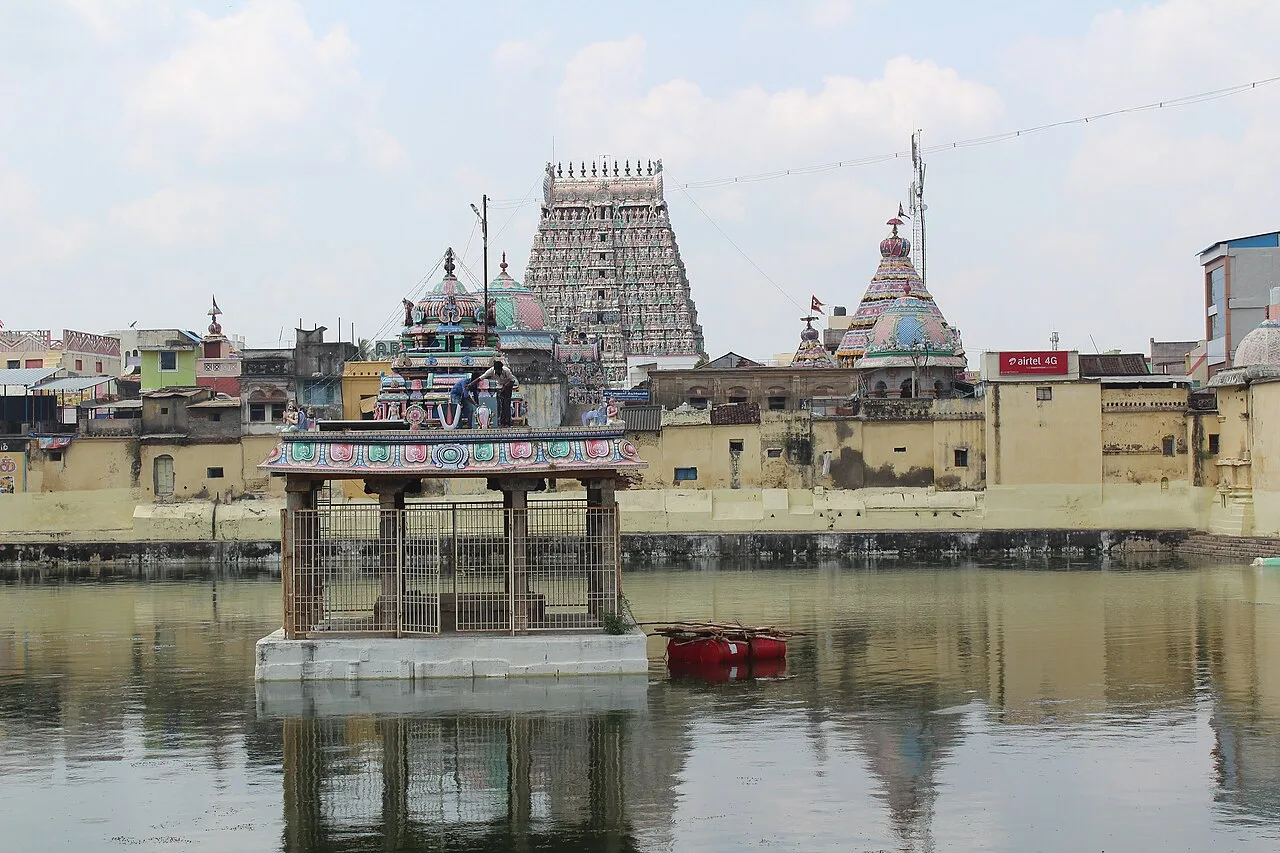
Adi Kumbeswarar Temple
Visitors come to worship Shiva and Parvati and view a complex recognised for its Tevaram association, its four gopurams and a sculpted Vijayanagara-period hall.
Key facts · verified by Ghumoopedia editors
- Type of place
- Temple / pilgrimage site
- Best time to visit
- November to February; April to June for the hill stations
- Nearest railway station
- Kumbakonam · about 1 km (straight line)
- Nearest airport
- Tiruchirappalli International Airport · about 75 km (straight line)
- Verified
- 21 Nov 2026
Plan a trip from Adi Kumbeswarar Temple — a day-by-day route through places nearby.
Situated at Kumbakonam in Tamil Nadu’s Thanjavur district, this Hindu shrine is dedicated to Shiva. The deity, known here as Adi Kumbeswarar, is worshipped in the form of a lingam; Parvati is honoured as Mangalambigai Amman. The shrine’s place in the seventh-century Tamil Saiva text Tevaram gives it the designation Paadal Petra Sthalam. The site extends across 30,181 square feet (2,803.9 square metres) and contains four entrance towers known as gopurams. The eastern gopuram rises to 128 feet (39 metres) and has eleven storeys. Numerous subsidiary shrines occupy the precinct, with those dedicated to Adi Kumbeswarar and Mangalambigai Amman among its most prominent sanctuaries. Several halls also form part of the complex. A notable hall from the Vijayanagara period has sixteen pillars, and a single stone bears carvings of all 27 nakshatras and the 12 zodiac signs. The stone-built structure dates to Chola times in the ninth century; later additions are linked to Vijayanagara rulers and the Thanjavur Nayaks in the sixteenth century. Administration is handled by Tamil Nadu’s Hindu Religious and Charitable Endowments Department. Tamil Nadu is the land of great living temples — Madurai's Meenakshi, Thanjavur's Brihadeeswara, Srirangam, Chidambaram and Rameswaram — along with the Pallava shore monuments of Mamallapuram, the Chettinad mansions, the hill stations of Ooty and Kodaikanal and the meeting of three seas at Kanyakumari. The state is hot from March to June, gets light southwest-monsoon rain from June to September, and receives its main rainfall from the northeast monsoon between October and December. January to March is the most comfortable season; the Nilgiri and Kodaikanal hills are cool year-round. The usual best time to visit is November to February; April to June for the hill stations. Timings, fees and access arrangements must be confirmed locally. For official information, see Tamil Nadu Tourism at https://www.tamilnadutourism.tn.gov.in.
Why it matters
Adi Kumbeswarar Temple is an important Shaiva pilgrimage site in Kumbakonam, in Tamil Nadu’s Thanjavur district. Shiva is worshipped here as Adi Kumbeswarar, with Parvati revered as Mangalambigai Amman. The temple is classified as a Paadal Petra Sthalam: its presiding deity is praised in the Tevaram, the Tamil Shaiva devotional canon associated with the early medieval period. This gives the site a special place in Tamil Saiva worship and literature. It is also part of Kumbakonam’s dense network of historic temples and sacred places. The temple is administered by the Tamil Nadu Hindu Religious and Charitable Endowments Department. No UNESCO status is claimed for this temple; the nearby Airavatesvara Temple at Darasuram is part of the UNESCO-listed Great Living Chola Temples.
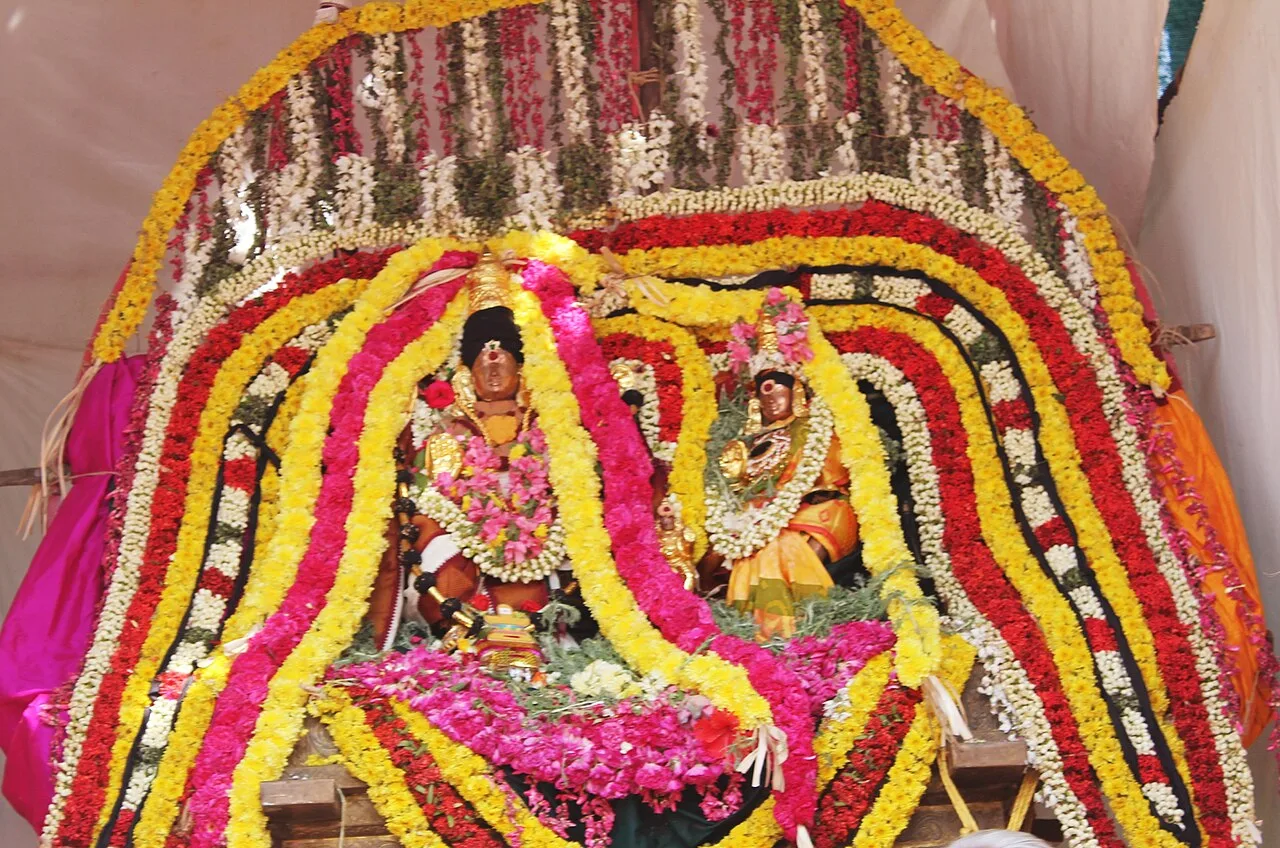
The temple’s masonry structure is generally dated to the Chola period, with its origins attributed to the ninth century. Its history is associated with Kumbakonam’s long-standing role as a centre of worship and settlement in the Kaveri region. The deity’s mention in the Tevaram connects the shrine to the early medieval Tamil Shaiva devotional tradition, though this literary reference does not by itself establish the date of every surviving building. The complex was enlarged over time. Later additions and expansions are attributed to Vijayanagara rulers and the Thanjavur Nayaks, especially during the sixteenth century. These phases contributed to the temple’s expansive layout, gateways, halls and subsidiary shrines. As at many active temples, structures and ritual spaces have continued to be maintained and adapted for worship. The temple is now administered by the Hindu Religious and Charitable Endowments Department of the Government of Tamil Nadu. For details of particular inscriptions, restoration campaigns or the dates of individual additions, visitors should consult the temple authorities or specialist architectural and epigraphic studies rather than infer dates from appearance alone.
Origin stories & folklore
According to local tradition, the temple is linked to the story of a divine pot, or kumbha, associated with the creation of the world after a great cosmic dissolution. In versions of the legend, Shiva’s actions bring the pot or its sacred contents to Kumbakonam; the name of the town is itself traditionally connected with the kumbha. The story explains the sanctity of the place and the name Adi Kumbeswarar, often understood as Shiva in connection with the primordial pot. Accounts differ in detail, and these narratives are religious traditions rather than verifiable historical events. Worshippers may also understand the lingam and the temple’s association with the town’s sacred geography through this creation story.
Architecture & design
The temple is a large, walled complex of shrines, halls and processional spaces in the Dravidian temple tradition. Its reported area is about 30,181 square feet. Four gopurams mark entrances to the complex; the eastern gateway tower is the tallest, with 11 tiers and a reported height of 128 feet. The central worship spaces include the shrines of Kumbeswarar and Mangalambigai Amman, alongside numerous subsidiary shrines. The complex’s masonry core is attributed to the Chola period, while later Vijayanagara and Thanjavur Nayak expansions shaped parts of the visible layout. A notable feature is the sixteen-pillared hall associated with the Vijayanagara period. Its sculptural programme includes the 27 nakshatras, or lunar mansions, and the 12 zodiac signs carved on a single stone. Visitors should follow marked routes, since parts of the complex are active ritual spaces.
Important objects & sculptures
Look for the principal lingam worshipped as Adi Kumbeswarar and the shrine of Mangalambigai Amman, the temple’s most prominent goddess shrine. The sixteen-pillared hall is a notable place to observe carved stonework: its zodiac signs and 27 nakshatras are described as sculpted on a single stone. The gopurams and the many subsidiary shrines also reward close attention to their carved details, though access and visibility can vary with ritual activity. The temple is a living place of worship, not a museum collection; images may be decorated, screened or difficult to view during services. Do not touch sculptures, offerings or ritual objects, and ask before approaching restricted areas.
Religious significance
The temple follows the Shaiva tradition, worshipping Shiva as Adi Kumbeswarar and Parvati as Mangalambigai Amman. The principal form of Shiva is a lingam. For devotees, the shrine is both a place for personal prayer and a link to the Tamil devotional heritage represented by the Tevaram and the Paadal Petra Sthalam tradition. Worship may include darshan, offerings and services conducted by temple priests; the sequence and access arrangements depend on the day and ritual calendar. Visitors who are unfamiliar with temple practice can observe quietly from areas open to them. Customs around entry to inner shrines can differ, so ask temple staff respectfully rather than assuming every space is open to every visitor.
Visit Adi Kumbeswarar Temple with time to observe daily prayers and rituals respectfully. Follow the posted rules on footwear, photography, phones, head covering and dress — many major temples require modest clothing, prohibit leather items and phones inside, and have separate darshan queues; non-Hindus may not be admitted to some sanctums. Ask caretakers which areas are open to visitors, and beware of unofficial 'guides' or agents offering quick darshan for a fee. A comfortable itinerary is one main visit in the morning, a local meal at midday and a short nearby stop before an afternoon return. Use the district list on this site to find other places in Thanjavur, but check the route and its condition before combining stops. If a festival is on — such as Pongal in January, the Madurai Chithirai festival, the Mahamaham at Kumbakonam or the Chennai music season in December — roads and stays can be busy, and the experience can be unforgettable. Leave no litter: many sites are protected by the communities around them.
Suggested itineraries
Half day: Spend 1–2 hours at the temple, allowing time for darshan and a respectful walk through visitor-accessible halls; have a local meal, then visit the Mahamaham tank if conditions permit. Full day: Visit Adi Kumbeswarar Temple in the morning; take a midday meal and rest; spend the afternoon at the Mahamaham tank and one or two nearby Kumbakonam temples, checking access and travel time locally. Gentler option: Visit the main shrine and one accessible hall at an unhurried pace, pause in a shaded place where permitted, and arrange an auto or taxi between nearby stops.
Tamil is the principal language of worship and everyday interaction in Kumbakonam; visitors may also encounter English or other Indian languages. The temple remains an active part of local religious life, with worship, offerings and festival observances shaping the experience. During larger celebrations, devotional music and processional traditions may be part of the public atmosphere; nadaswaram and tavil are familiar instruments in Tamil temple settings, though performances are not guaranteed on an ordinary visit. Visitors commonly remove footwear before entering designated areas and dress modestly. Observe local practice without interrupting prayers, and ask before photographing people or ceremonies. The surrounding town’s identity is closely tied to its temples, pilgrimage traditions and food culture.
Festivals & events
The temple observes Shaiva festivals and annual religious events; their schedules and public arrangements can vary, so check locally before planning around a particular celebration. Maha Shivaratri, usually in February or March, is an important observance for Shiva devotees. Kumbakonam’s Mahamaham festival, held around the Mahamaham tank in the Tamil month of Masi and traditionally once every 12 years, draws large crowds to the town and its temples. Festival periods can bring processions, busy roads, crowded accommodation and changes to access or darshan arrangements. Confirm the current calendar with the temple or local authorities, and allow extra time if visiting during a major event.
Local food in Tamil Nadu includes idli, dosa and filter coffee, Chettinad chicken and pepper curries, Madurai's kari dosa and jigarthanda, Thanjavur's banana-leaf vegetarian meals, Kanyakumari's seafood, and sweets such as Mysore pak, adhirasam and Tirunelveli halwa. Ask what is fresh that day; many small eateries cook a limited daily menu. Tamil Nadu is a paradise for vegetarian meals served on banana leaf; Chettinad and Madurai are the centres for meat and spice lovers. Filter coffee is a ritual — have it at a local 'hotel' (eatery). Remote sites may have no restaurant at all. Carry water and snacks, eat a proper breakfast before long drives, and ask your accommodation for a packed lunch if you are heading out early. If prasad is offered, accept it according to local custom. Choose busy, clean places, drink sealed or filtered water, and carry your packaging back with you.
Shopping & local experiences
Kumbakonam’s town markets are a place to look for brass and other metal household vessels, devotional items, flowers and offerings. The town is also well known for its coffee, which visitors can sample at local eateries or buy from shops. Small souvenirs may include printed devotional images or locally sold craft items; quality and provenance vary, so ask the seller what an item is made from. Buy respectfully and avoid removing anything from temple grounds. If carrying food or fragile goods onward, check packaging and transport arrangements before purchasing.
November to February; April to June for the hill stations
The nearest principal railway station by straight-line distance is Kumbakonam, roughly 1 km away. The nearest operating airport by straight-line distance is Tiruchirappalli International Airport, roughly 75 km away. These figures are calculated from map coordinates — actual road distance is longer. Chennai is the main gateway; Coimbatore serves the west and Mettupalayam is the railhead for the Ooty toy train; Madurai and Tiruchirappalli serve the south and centre; Rameswaram and Kanniyakumari have their own rail termini. For the final leg, TNSTC and SETC buses reach nearly every town, with private sleeper coaches between cities and app cabs in Chennai, Coimbatore and Madurai link district towns. A private taxi gives more flexibility for remote sites such as hill stations, forest gates and coastal temples. When comparing train, bus and flight, count the complete door-to-door time: a flight saves the most time only if the onward road transfer is short, while an overnight train can save a hotel night. Book your return before you leave, because seats fill quickly on weekends, festivals and holidays. Current train numbers, timings, return services and fares are not listed here; check IRCTC and NTES for trains and the airline's own schedule for flights. No permit is needed to visit Tamil Nadu. The Nilgiri Mountain Railway toy train to Ooty must be booked well in advance on IRCTC — seats are few and sell out weeks ahead. Major temples such as Madurai Meenakshi and Srirangam have darshan queues and some enforce a dress code (dhoti or formal trousers for men, saree or salwar for women); phones and cameras are not allowed inside several temple sanctums. Boating to the Vivekananda Rock at Kanyakumari depends on sea conditions.
Confirm onward and return timings on IRCTC / NTES, the state bus operator or your airline before travel. A dash means current timings or fares have not been verified.
Getting around
Kumbakonam is served by rail and by regional bus connections. From the railway station or bus stand, visitors can generally continue by auto-rickshaw, taxi or local transport; ask the driver to identify the temple entrance, as town streets can be busy. The central area is walkable for many visitors, but traffic, heat and uneven pavements can make short journeys tiring. Local buses are useful for reaching other parts of town, though routes and stops should be checked on arrival. Ask locally about designated parking, since space near temple entrances may be limited, particularly during festivals.
Hours, tickets & permissions
Entry arrangements may differ between the outer complex, individual shrines and ritual periods. Some areas can be restricted during worship, and customary rules may apply to entry into inner sanctums. Ticketing, donations, offerings, camera permissions and any identity or dress requirements should be confirmed with the managing authority before travel. The temple is administered by the Tamil Nadu Hindu Religious and Charitable Endowments Department. Check current opening arrangements and fees locally or through official channels; do not rely on unofficial agents promising special access.
Facilities
Facilities within the complex and around its entrances can vary. Footwear storage may be available near designated entry points; confirm the arrangement before leaving valuables. Toilets, drinking water, food stalls and small eateries are usually easier to find in the surrounding town than within the temple itself. Kumbakonam has shops, banks and ATMs, but do not assume one is immediately beside the entrance. Parking and assistance for visitors may be limited or affected by crowds. Ask temple staff about current facilities, accessible areas and any authorised guides; avoid unsolicited offers of paid fast access.
Accessibility
The complex involves walking through a large temple precinct, and stone floors, thresholds, steps or crowded passages may make movement challenging. Surfaces can be uneven, and visitors generally walk barefoot in designated areas, which may be uncomfortable when stone is hot. Shade and places to pause may be available in some parts, but should not be assumed throughout the route. Wheelchair and stroller access to every shrine or hall is not assured; check with temple staff before entering. Elderly visitors and anyone with limited mobility may find it helpful to visit at a quieter time, keep the route short and bring a companion.
No permit is needed to visit Tamil Nadu. The Nilgiri Mountain Railway toy train to Ooty must be booked well in advance on IRCTC — seats are few and sell out weeks ahead. Major temples such as Madurai Meenakshi and Srirangam have darshan queues and some enforce a dress code (dhoti or formal trousers for men, saree or salwar for women); phones and cameras are not allowed inside several temple sanctums. Boating to the Vivekananda Rock at Kanyakumari depends on sea conditions. Carry a photo ID at all times and save the emergency number 112 and your accommodation's contact offline. Heat in summer and heavy rain in the monsoon are the main weather risks; carry water, avoid midday sun and allow extra time when roads flood. Watch your belongings in crowds and on public transport, and follow posted instructions.
Visitor rules
Dress modestly and follow notices or instructions from temple staff. Remove footwear where required and place it only in designated areas. Keep voices low, do not interrupt worship, and avoid touching idols, offerings, carvings or ritual equipment. Some shrines and inner areas may have restricted access. Follow posted rules on phones, leather items and photography; do not assume that a camera or mobile phone is permitted everywhere. Use bins where provided, avoid single-use litter and respect queues. Do not pay unofficial agents who promise privileged or rapid darshan.
Photography
Photography rules can differ across the complex and may change during services, so check posted notices and ask temple staff before taking pictures. Photography inside shrines may be prohibited or restricted; never photograph worshippers or rituals without permission. If photography is allowed in exterior areas, softer morning or late-afternoon light can bring out details on the gopurams and stonework. Avoid blocking entrances or queues while composing a picture. Drone use should not be assumed to be permitted; seek all required permissions and respect aviation, security and heritage restrictions.
Choose a stay by the full journey to Adi Kumbeswarar Temple, not just the district name. Chennai, Coimbatore, Madurai and Tiruchirappalli offer the widest choice; Ooty and Kodaikanal have everything from heritage hotels to cottages — book far ahead for the April–June school holidays and the Pongal weekend. In summer, check air-conditioning; in the monsoon, check that the property is accessible if roads flood. Book in advance for weekends, festivals and the peak season (November to February; April to June for the hill stations). Confirm the exact location, meals included, check-in time and cancellation terms in writing. Avoid sending money to unverified contacts or touts at stations. Carry some cash, as card and digital payments can be unreliable in remote areas.
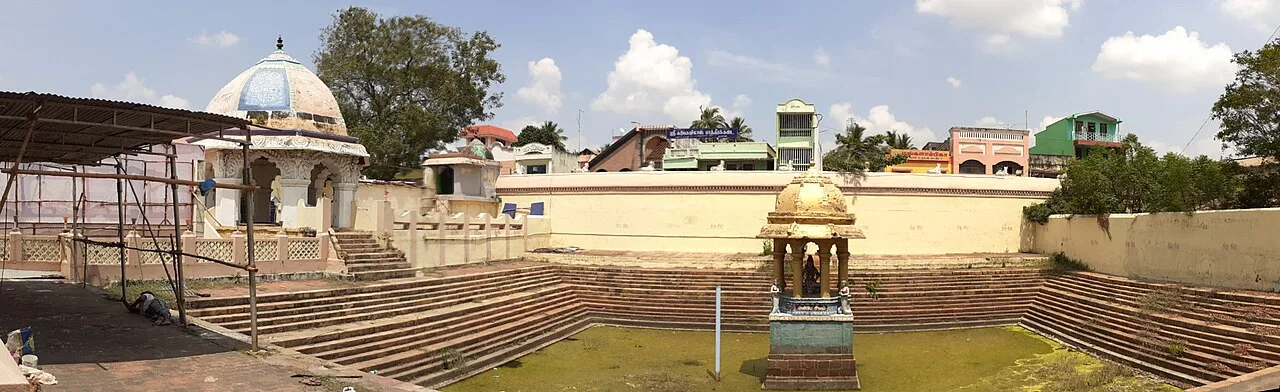
Within Kumbakonam, visitors can consider the Mahamaham tank and other prominent temples, including Sarangapani Temple, Chakrapani Temple and Ramaswamy Temple; check local access and travel conditions before combining stops. Airavatesvara Temple at Darasuram, also in Thanjavur district, is a major Chola-era monument and part of the UNESCO-listed Great Living Chola Temples. Swamimalai is another well-known temple destination in the region. Thanjavur town is home to Brihadisvara Temple, also part of the Great Living Chola Temples listing. These places make different demands on travel time, so confirm routes locally rather than relying on a tightly packed itinerary.
For couples, Adi Kumbeswarar Temple rewards a slow pace: arrive early for soft light and fewer crowds, share a local meal and keep the evening free. Sunrise at Kanyakumari, a boat ride on Kodaikanal lake or an evening stroll through Mamallapuram's shore monuments makes the trip memorable. Public displays of affection can be frowned upon in conservative communities and at religious sites, so be discreet. Keep a buffer in your itinerary, because weather and road conditions can delay plans.
Q: How much time should I allow for a visit? A: Allow a couple of hours for the temple visit, with extra time during festivals or if you plan to see nearby sites. Q: When is a comfortable season to visit? A: November to February is generally more comfortable in Tamil Nadu. Festival crowds and local weather can affect the experience, so check conditions before travelling. Q: Is there an entry fee, and can everyone enter the shrines? A: Confirm current entry and fee arrangements with the temple authority. Access to inner sanctums may follow customary restrictions. Q: Is the temple suitable for children and elderly visitors? A: Families can visit, but crowds, barefoot walking and uneven surfaces may be tiring. Keep children close and plan a shorter route for anyone with limited mobility. Q: Where can I stay nearby? A: Kumbakonam has accommodation options. Choose a stay based on current reviews and transport needs, and book ahead during major festivals.
Be the first to share photos, stories, advice or a helpful contact for Adi Kumbeswarar Temple.
Loading…