
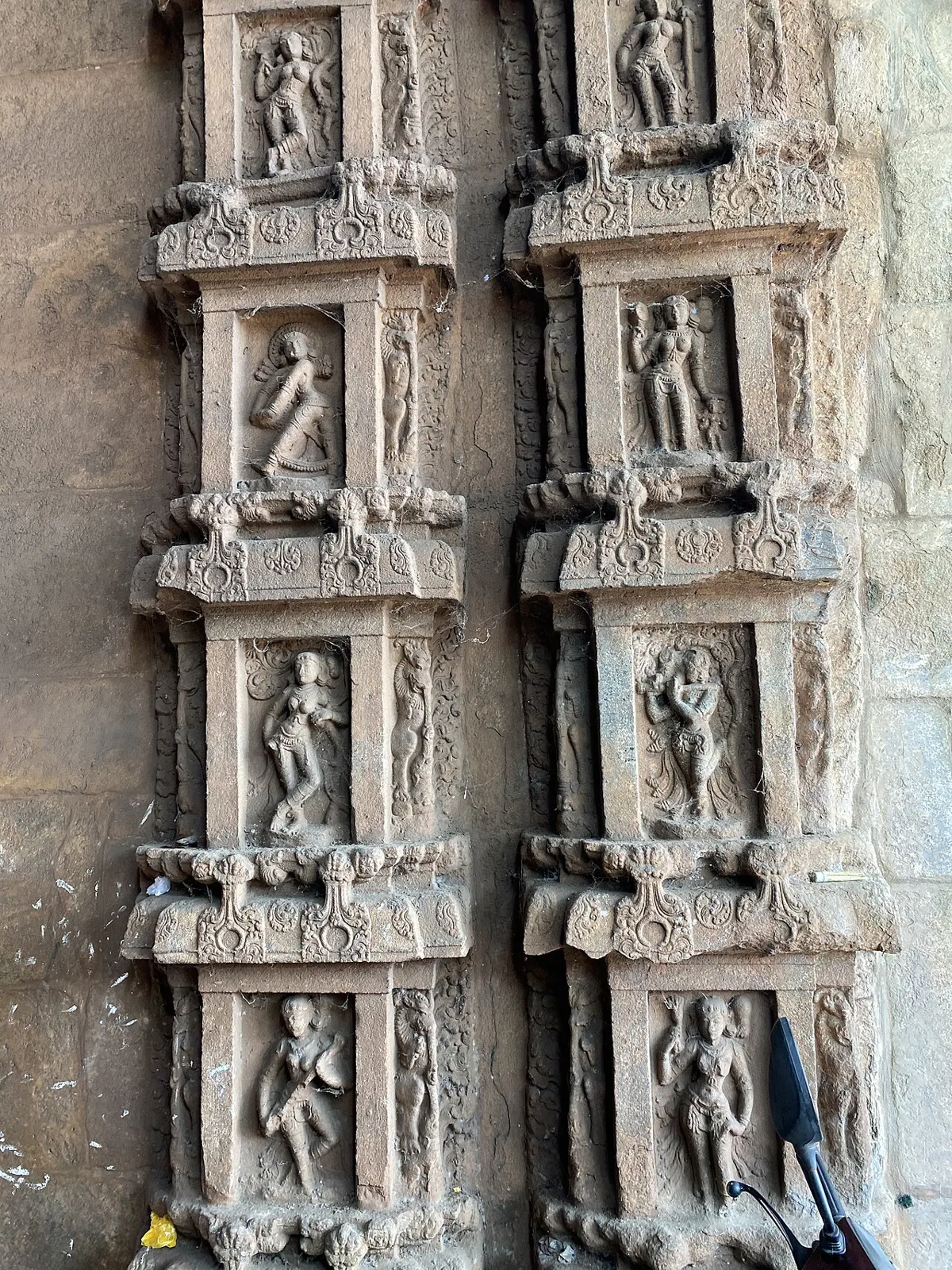
Thirubuvanam
Thirubuvanam is a panchayat town in Tamil Nadu’s Thanjavur district. Visitors chiefly associate it with the Kampaheswarar Temple.
Key facts · verified by Ghumoopedia editors
- Type of place
- Community & living culture
- Best time to visit
- November to February; April to June for the hill stations
- Nearest railway station
- Thanjavur Junction · about 25 km (straight line)
- Nearest airport
- Tiruchirappalli International Airport · about 65 km (straight line)
- Verified
- 21 Nov 2026
Plan a trip from Thirubuvanam — a day-by-day route through places nearby.
Thirubuvanam belongs to Thanjavur district, within Tamil Nadu. Its local designation is that of a panchayat town. These details describe both its administrative character and its place in the state. The Kampaheswarar Temple is the feature for which Thirubuvanam is chiefly known. It is the town’s principal point of interest for visitors. Its description thus brings together the settlement’s panchayat-town status, its district and state location, and its association with the temple. Tamil Nadu is the land of great living temples — Madurai's Meenakshi, Thanjavur's Brihadeeswara, Srirangam, Chidambaram and Rameswaram — along with the Pallava shore monuments of Mamallapuram, the Chettinad mansions, the hill stations of Ooty and Kodaikanal and the meeting of three seas at Kanyakumari. The state is hot from March to June, gets light southwest-monsoon rain from June to September, and receives its main rainfall from the northeast monsoon between October and December. January to March is the most comfortable season; the Nilgiri and Kodaikanal hills are cool year-round. The usual best time to visit is November to February; April to June for the hill stations. For official information, see Tamil Nadu Tourism at https://www.tamilnadutourism.tn.gov.in.
Why it matters
Thirubuvanam is a panchayat town in Thanjavur district known both for the Kampaheswarar Temple and for its silk-weaving tradition. The temple is an important example of late Chola-period architecture and remains a place of worship; it is not part of a UNESCO World Heritage property. Thirubuvanam silk sarees have official Geographical Indication recognition in India, reflecting the town’s association with a distinctive handloom craft. For visitors, the town offers a chance to encounter both a living temple and working weaving households or cooperatives. These are active community spaces rather than exhibits, so visits to workshops should be arranged respectfully and confirmed locally.
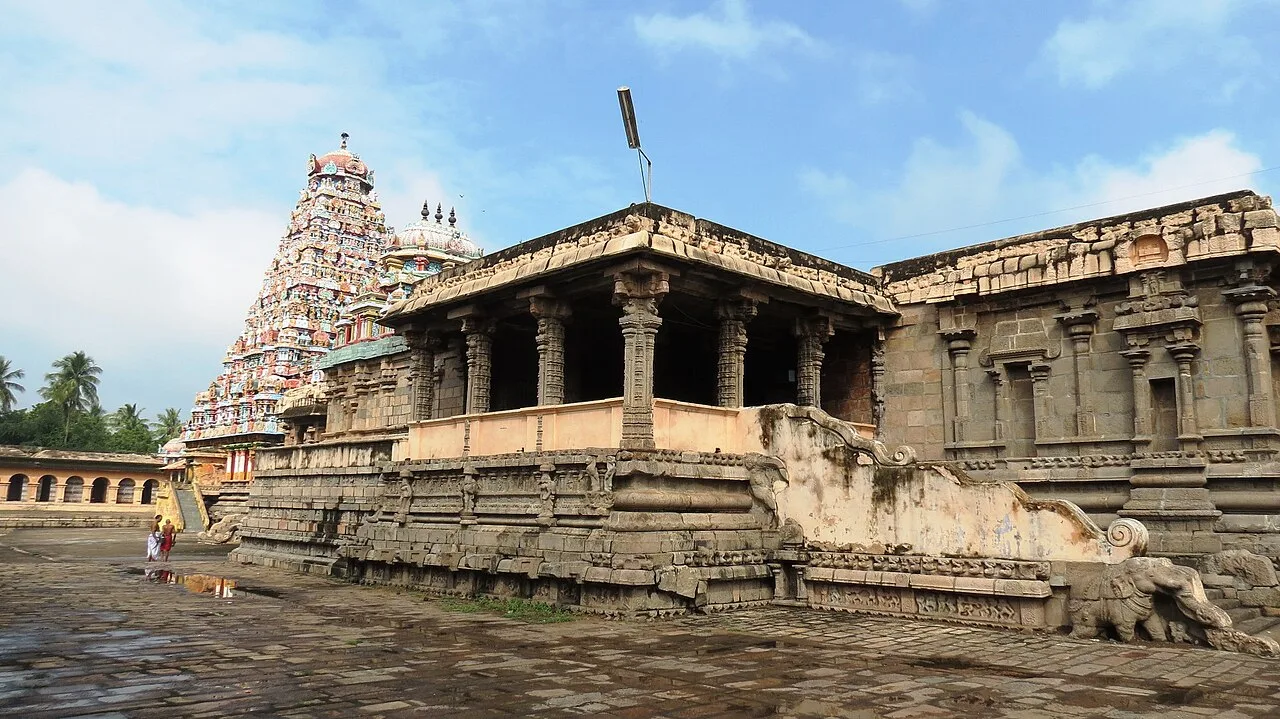
The Kampaheswarar Temple is traditionally attributed to the Chola ruler Kulothunga III and is generally dated to the late twelfth century. Its stone construction, sculptural details and substantial vimana reflect the temple-building tradition of the later Chola period. The shrine is dedicated to Shiva, worshipped here as Kampaheswarar. The temple’s continued use for worship has helped keep its rituals and local associations part of everyday religious life. Visitors should not assume that every part of the complex is open to the public. Thirubuvanam is also associated with silk weaving. The craft developed through the skills of local weaving families and has been sustained through household production, trade and cooperative activity. The exact beginnings of the town’s weaving tradition are not firmly established, so accounts of its age should be treated cautiously. Thirubuvanam silk sarees are now recognized under India’s Geographical Indications system. The town’s present identity therefore brings together a medieval temple heritage and a continuing handloom economy. For details about temple conservation or access to specific areas, consult the temple’s managing authority rather than assuming a particular restoration history.
Origin stories & folklore
According to local tradition, the name Kampaheswarar is associated with the ending of a kampam, or trembling. Stories connected with the shrine describe Shiva relieving a devotee or ruler of a troubling tremor; versions of the account may vary. The temple is also associated with the fierce protective form of Sarabha, understood in some traditions as a manifestation of Shiva. Devotees may visit seeking relief from fear or hardship, but these are matters of religious belief, not historical claims. Visitors can observe the shrine’s public devotional life while respecting worshippers and any areas set aside for ritual use.
The heart of a visit to Thirubuvanam is meeting the weavers at work. Watch the stages that come before the loom — dyeing, warping and, in ikat villages, tying and resist-dyeing the yarn so the pattern appears as it is woven — and then the steady rhythm of the loom itself. A single sari can take days or weeks. Many households and cooperative societies welcome visitors who show genuine interest, but this is a working village, not a museum: ask before entering a home or workshop, keep visits short during busy hours, and accept that some families may be away at fairs or markets. Buying directly from the maker or a registered cooperative is the best way to support the craft. Where a product carries a Geographical Indication (GI) tag or a handloom mark, ask for it; prices for handmade work reflect the time and skill involved, so bargain gently, if at all. Some workshops offer short hands-on sessions — ask locally rather than expecting a fixed schedule.
Suggested itineraries
Half day: Visit Kampaheswarar Temple (about 1–2 hours), then arrange a brief visit to a weaving household or cooperative (about 1–2 hours). Full day: Begin at Kampaheswarar Temple (about 1–2 hours), spend time with a local weaver or cooperative (about 2–3 hours, arranged in advance), take a meal break, then explore the town and browse local handloom products (about 1–2 hours). Gentler option: Visit the temple at an unhurried pace, rest between stops, and arrange a seated demonstration or short workshop visit if a local host can accommodate it.
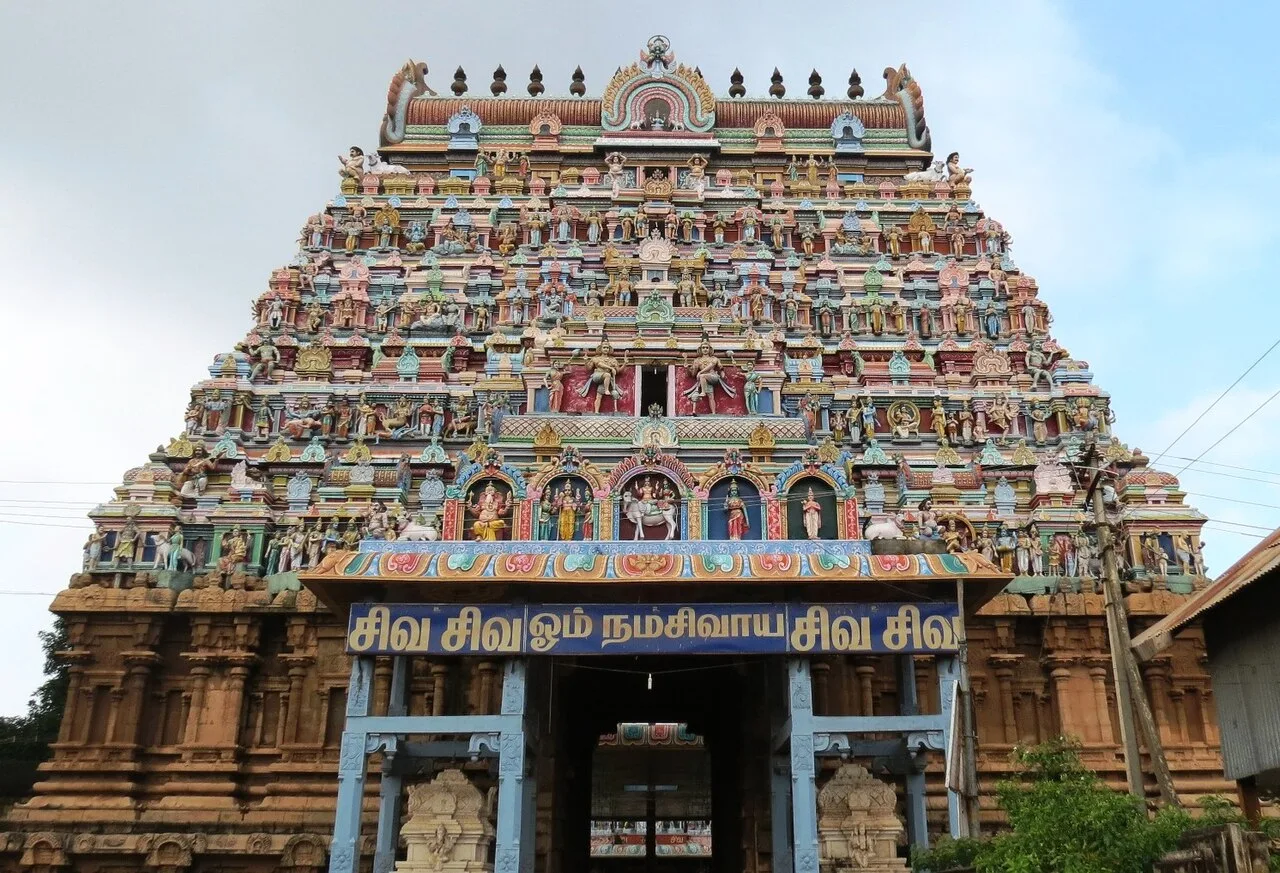
Tamil is the principal language of daily life, and the town’s rhythms reflect both temple worship and handloom work. Weaving involves skilled, repetitive tasks such as preparing yarn, setting the warp and operating the loom; household and cooperative production may follow different routines. Silk sarees are worn for weddings, festivals and other formal occasions across the region. At the temple, devotional practices include prayer, offerings and observance of Hindu customs. Music and recitation may accompany worship or festival occasions, though visitors should not expect a performance schedule. Ask before entering a home or workshop, and keep visits considerate of work and prayer.
Local communities
Thirubuvanam’s life is shaped by weaving households, handloom workers, traders, cooperative members, farmers and people employed in local services. Weavers’ specialised knowledge is passed through practice and family or workplace learning; individual households may have different methods and working arrangements. The town’s temple also serves devotees, priests and others involved in religious activities. These communities should not be treated as attractions or approached as though access is automatic. Visitors interested in the craft can ask locally about an appropriate workshop or cooperative visit, buy directly where possible, and follow the host’s guidance about photography and conversation.
Festivals & events
Maha Shivaratri, usually observed in February or March, is an important occasion at Shiva temples, including Kampaheswarar Temple. The temple may also hold annual processions or other observances according to its local calendar; details can vary, so confirm with the temple before planning around a festival. Tamil New Year in April and the harvest festival of Pongal in January are observed in the wider region, with family and community gatherings. Festival days can bring additional worshippers, road activity and limited space around the temple. Be prepared to wait, follow instructions from temple staff and avoid obstructing processions.
Village food in Tamil Nadu is home cooking: idli, dosa and filter coffee, Chettinad chicken and pepper curries, Madurai's kari dosa and jigarthanda, Thanjavur's banana-leaf vegetarian meals, Kanyakumari's seafood, and sweets such as Mysore pak, adhirasam and Tirunelveli halwa. Thirubuvanam itself may have only tea stalls and small eateries, so ask your host or guide where to eat, or arrange a home-cooked meal in advance — it is often the highlight of a village visit. Carry water and a snack if you plan to spend the whole day, and eat your main meal in the nearest town if no local option is open.
Shopping & local experiences
The principal craft to look for is Thirubuvanam silk handloom sarees. Buying directly from a weaver or a registered cooperative can support local production; ask about the maker, materials and any applicable Geographical Indication or handloom identification. Handmade pieces take time and skill, so bargain gently, if at all. Availability, designs and prices vary by seller, and not every product described as local will necessarily be handwoven in town. Local shops may also offer everyday groceries and snacks, while a broader choice of regional goods is available in larger nearby towns.
Thirubuvanam lies in the generally flat, cultivated landscape of the Cauvery delta region. The surroundings are shaped by fields, settlements and irrigation channels, with the appearance of the countryside changing with agricultural cycles and rainfall. This is a lived-in rural and small-town environment, not a forest or wildlife destination. Trees and garden plants are found around homes and public spaces, but there is no reason to expect a particular species or wildlife sighting. Birds may be seen in fields or near water, especially when conditions are suitable, but sightings are not guaranteed. The northeast monsoon, usually from October to December, brings the region’s main rainfall; visitors should check local conditions during wet periods.
November to February; April to June for the hill stations
The nearest principal railway station by straight-line distance is Thanjavur Junction, roughly 25 km away. The nearest operating airport by straight-line distance is Tiruchirappalli International Airport, roughly 65 km away. These figures are calculated from map coordinates — actual road distance is longer. Chennai is the main gateway; Coimbatore serves the west and Mettupalayam is the railhead for the Ooty toy train; Madurai and Tiruchirappalli serve the south and centre; Rameswaram and Kanniyakumari have their own rail termini. Thirubuvanam is a village, so the last stretch is by road: TNSTC and SETC buses reach nearly every town, with private sleeper coaches between cities and app cabs in Chennai, Coimbatore and Madurai reach the nearest town, and from there a shared auto, local bus or reserved taxi covers the final few kilometres. Village roads can be narrow and unpaved; a taxi hired for the day from the nearest town is the simplest way to combine Thirubuvanam with nearby sights and get back before dark. When comparing train, bus and flight, count the complete door-to-door time: a flight saves the most time only if the onward road transfer is short, while an overnight train can save a hotel night. Book your return before you leave, because seats fill quickly on weekends, festivals and holidays. Current train numbers, timings, return services and fares are not listed here; check IRCTC and NTES for trains and the airline's own schedule for flights. No permit is needed to visit Tamil Nadu. The Nilgiri Mountain Railway toy train to Ooty must be booked well in advance on IRCTC — seats are few and sell out weeks ahead. Major temples such as Madurai Meenakshi and Srirangam have darshan queues and some enforce a dress code (dhoti or formal trousers for men, saree or salwar for women); phones and cameras are not allowed inside several temple sanctums. Boating to the Vivekananda Rock at Kanyakumari depends on sea conditions.
Confirm onward and return timings on IRCTC / NTES, the state bus operator or your airline before travel. A dash means current timings or fares have not been verified.
Getting around
Thirubuvanam is best explored on foot within its central area, with an auto-rickshaw or local vehicle useful for the approach or longer local trips. Local buses connect towns in the region, but confirm the appropriate service and stop locally. Taxis can generally be arranged from larger nearby towns; app-based availability may be limited. The final approach from a bus stop or railway station may require an auto or other road transport. Parking conditions near the temple can be constrained during busy worship periods. Ask locally before leaving a vehicle in a residential lane or near a procession route.
Hours, tickets & permissions
Temple entry arrangements, access to particular shrines and any restrictions can change with worship, festivals or maintenance. Check current opening arrangements, entry requirements and any applicable fees with the temple’s managing authority before setting out. Workshop visits are arranged by households or cooperatives and should be confirmed locally; there is no fixed public visitor schedule. Ask whether footwear must be removed, whether identification is needed and which areas are open. Do not assume that every part of the temple or a private weaving workspace is accessible to visitors.
Facilities
Facilities in this small town may be limited compared with a major tourist centre. The temple may have basic visitor arrangements, but do not rely on toilets, drinking-water points, seating or step-free access without checking locally. Small eateries and shops may be available in town; choices and opening arrangements vary. Parking is usually informal and can become difficult during busy worship or festival periods. ATMs and a wider range of services are more readily found in larger nearby towns. Guides are not guaranteed, so arrange explanations or a weaving visit in advance where possible.
Accessibility
The town has ordinary streets and lanes, while the temple may have uneven stone surfaces, thresholds and steps. The amount of walking and the areas accessible can vary with worship arrangements and crowding. Shade and places to sit may be limited, particularly outdoors, so plan breaks and carry water. Wheelchair and stroller access should not be assumed, and movement inside the temple may be difficult for visitors with limited mobility. Older visitors may find a short visit to the main accessible areas more manageable than a full circuit. Contact the temple or a local host before arrival to discuss individual access needs.
No permit is needed to visit Tamil Nadu. The Nilgiri Mountain Railway toy train to Ooty must be booked well in advance on IRCTC — seats are few and sell out weeks ahead. Major temples such as Madurai Meenakshi and Srirangam have darshan queues and some enforce a dress code (dhoti or formal trousers for men, saree or salwar for women); phones and cameras are not allowed inside several temple sanctums. Boating to the Vivekananda Rock at Kanyakumari depends on sea conditions. Carry a photo ID, some cash (card and UPI acceptance varies in villages) and a charged phone with offline maps; save the emergency number 112 and your host's contact. Heat in summer and heavy rain in the monsoon are the main weather risks; carry water, avoid midday sun and allow extra time when village roads flood. Respect local customs: dress modestly, remove footwear where asked, and always ask before photographing people, homes or rituals.
Visitor rules
Dress respectfully at the temple and follow any instructions from temple staff or priests. Footwear may need to be removed in designated areas; check signs and local directions. Do not enter restricted or ritual-only spaces, touch offerings or interrupt worship. Ask permission before entering a home, workshop or cooperative work area, and respect a host’s decision if a visit is not possible. Dispose of waste responsibly and avoid single-use plastic where practical. Keep voices low, do not block pathways, and follow any rules concerning food, bags or security checks.
Photography
Ask temple staff whether photography is permitted in the areas you plan to visit; restrictions may apply inside shrines or during worship. The temple’s exterior and surrounding streets can be photographed only where local rules allow. For architecture, softer morning or late-afternoon light may be more comfortable than harsh midday sun. Always ask weavers and household members before photographing people, looms or work in progress, and accept a refusal without argument. Avoid interrupting rituals for a picture. Do not fly a drone without the required permissions and confirmation that it is allowed in the area.
Most visitors see Thirubuvanam on a day trip from the nearest town, which has the widest choice of hotels. A few villages have homestays or heritage stays; otherwise base yourself in the district town and hire a taxi for the day. Confirm the booking and the exact location before you travel, because village addresses can be hard to find.
Kumbakonam is a nearby regional town with a dense concentration of temples and local services. Darasuram, also in the wider Kumbakonam area, is known for the Airavatesvara Temple, a UNESCO World Heritage-listed Chola temple. Thanjavur is a natural extension for a visit to the Brihadisvara Temple and the city’s museums and historic centre. Thiruvidaimarudur is another established temple destination in the region. Travel arrangements and access conditions vary, so check locally before combining several places in one day, particularly during festivals or the monsoon.
For couples, Thirubuvanam is a chance to slow down: spend an unhurried morning with the makers, choose a piece together directly from the family that made it, share a home-cooked meal and keep the afternoon free. Stay in a nearby homestay or heritage property to make it a quiet overnight escape.
Q: How much time should I allow for Thirubuvanam? A: A half day can cover the temple and a pre-arranged weaving visit; allow longer if you want an unhurried craft experience. Q: When is a comfortable season to visit? A: November to February is generally more comfortable in Tamil Nadu. Expect heat in warmer months and possible rain during the northeast monsoon. Q: Is there an entry ticket for the temple? A: Entry arrangements can change. Confirm current requirements and any fees with the temple’s managing authority. Q: Is the town suitable for children and older visitors? A: It can be, with a shorter, flexible visit. Temple surfaces may be uneven, and shade, seating and step-free access are not assured. Q: Where can I stay nearby? A: Thirubuvanam has limited visitor services; a wider choice of accommodation is generally available in nearby Kumbakonam or Thanjavur. Confirm lodging before travelling.
Be the first to share photos, stories, advice or a helpful contact for Thirubuvanam.
Loading…