
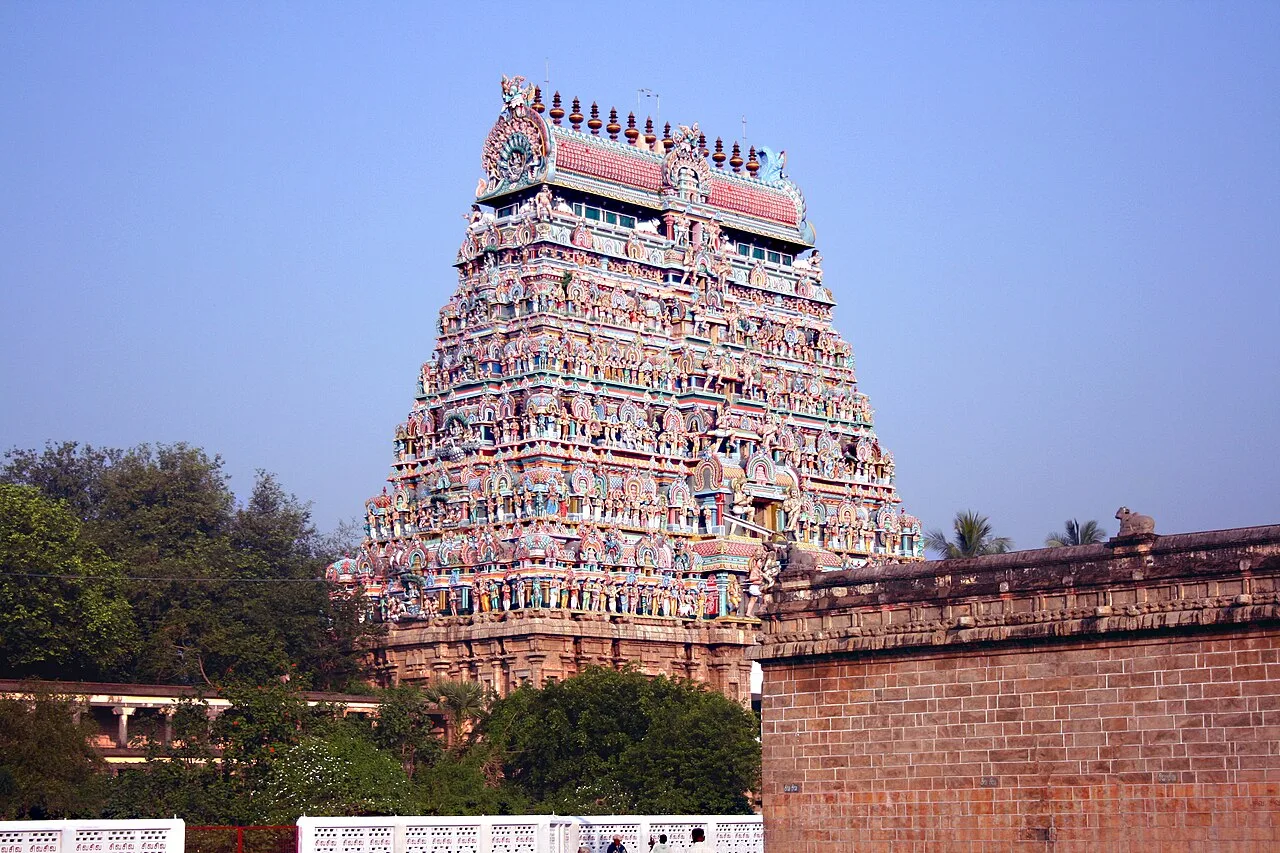
Chidambaram Nataraja Temple
Chidambaram Nataraja Temple is a historic Shaivite shrine in Tamil Nadu, dedicated to Shiva as the cosmic dancer. Visitors come for its worship, dance imagery and distinctive architectural traditions.
Key facts · verified by Ghumoopedia editors
- Type of place
- Temple / pilgrimage site
- Best time to visit
- November to February; April to June for the hill stations
- Nearest railway station
- Chidambaram · about 0 km (straight line)
- Nearest airport
- Tiruchirappalli International Airport · about 129 km (straight line)
- Verified
- 21 Nov 2026
Plan a trip from Chidambaram Nataraja Temple — a day-by-day route through places nearby.
In Chidambaram, within Tamil Nadu’s Cuddalore district, this temple honours Shiva in his Nataraja aspect, the divine dancer. Its history reaches back to a period when the settlement was called Thillai and a shrine to Shiva already stood there. The town’s name is understood as referring to a platform of consciousness. Within Tamil Shaivite usage, the complex is known simply as Kovil, meaning the temple. Its design brings together ideas of artistic practice, sacred life, creative force and divinity. The temple’s wall reliefs include the complete set of 108 karanas described in Bharata Muni’s Natya Shastra; these dance movements underpin Bharatanatyam. It is the sole Shiva temple shared by the Pancha Sabha Thalam and Pancha Bhuta Thalam groupings. The sanctuary took on its present form through rebuilding in the 10th century, when Chidambaram ranked among the Chola dynasty’s important cities. Copper-plate records from Thiruvalangadu and Thiruvilandur credit Parantaka Chola I with adding the shrine’s gold-covered roof in the 9th century CE. Hymns in the 7th-century Thevaram and Thiruvasagam refer to the temple, placing its recorded presence before the Medieval Cholas. The Chola rulers treated Nataraja as their household deity; Periyapuranam says that their kings received coronation here. Over the second millennium, the complex experienced damage followed by repairs, renewal and enlargement. Much of the surviving layout and fabric dates to the late 12th and early 13th centuries, with later work following a comparable architectural style. Nataraja remains the principal focus, while the temple also incorporates significant ideas from Shaktism, Vaishnavism and other Hindu paths. Tamil Nadu is the land of great living temples — Madurai's Meenakshi, Thanjavur's Brihadeeswara, Srirangam, Chidambaram and Rameswaram — along with the Pallava shore monuments of Mamallapuram, the Chettinad mansions, the hill stations of Ooty and Kodaikanal and the meeting of three seas at Kanyakumari. The state is hot from March to June, gets light southwest-monsoon rain from June to September, and receives its main rainfall from the northeast monsoon between October and December. January to March is the most comfortable season; the Nilgiri and Kodaikanal hills are cool year-round. The usual best time to visit is November to February; April to June for the hill stations. Timings, fees and access arrangements must be confirmed locally. For official information, see Tamil Nadu Tourism at https://www.tamilnadutourism.tn.gov.in.
Why it matters
Thillai Nataraja Temple is one of Tamil Nadu’s major living Shaiva pilgrimage centres, dedicated to Shiva as Nataraja, the cosmic dancer. Its importance is especially strong in Tamil Shaivism: the temple is praised in the devotional hymns of the seventh-century poets Appar, Sambandar and Manikkavacakar, and is often called Kovil, or simply “the Temple,” in that tradition. It is also counted among the Pancha Bhuta Sthalams, representing the element of space, and the Pancha Sabha temples associated with Shiva’s dance. The complex connects worship with music, dance and sacred architecture. These religious and cultural associations are well established; visitors should not assume that the temple has UNESCO World Heritage status.
A Shiva shrine is traditionally associated with the settlement of Thillai, named for the trees once said to grow in the area. The temple’s surviving form reflects centuries of construction and renewal rather than a single building campaign. The site is older than the medieval Chola period: its hymns appear in seventh-century Shaiva devotional literature. Chola rulers gave Nataraja particular importance, and inscriptions and later accounts connect the dynasty with the temple. Copper-plate records are traditionally cited in connection with Parantaka Chola I and the gilding of the shrine roof, generally placed in the early tenth century. The complex was developed and renovated into a substantial temple during the Chola era, when Chidambaram was an important centre. Later additions and repairs took place under succeeding South Indian rulers, including the Pandyas and Vijayanagara-era patrons. Much of the surviving plan and fabric is associated with the late twelfth and thirteenth centuries, alongside later work in related styles. The temple has been damaged, repaired and expanded over the second millennium. The hereditary Dikshitar community has a longstanding role in its worship and temple traditions.
Origin stories & folklore
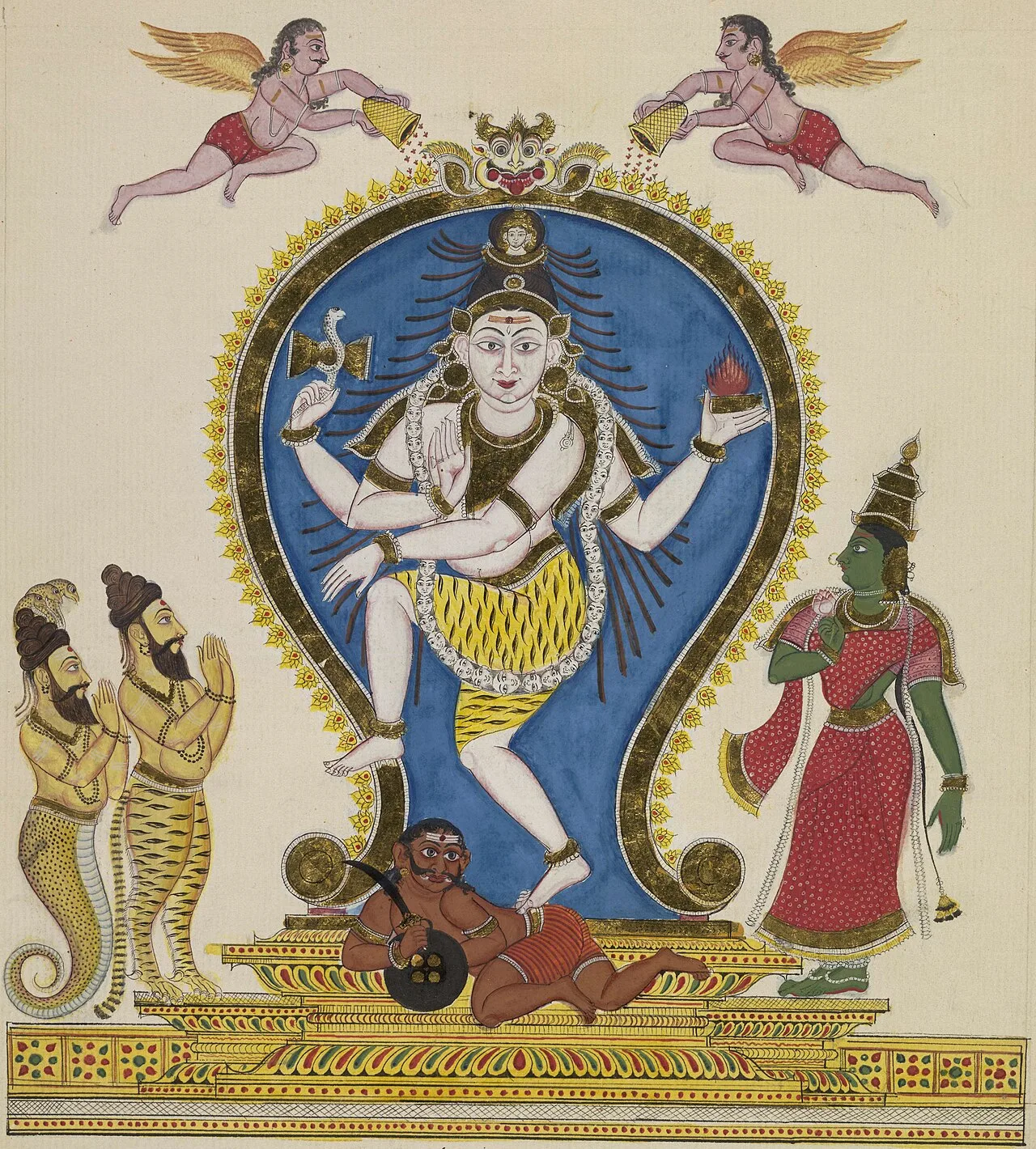
According to local tradition, Shiva appeared in the Thillai forest and danced before sages who had challenged his power. In one version, the goddess Kali also danced with him; Shiva’s raised-foot pose established his victory, and Kali came to be worshipped at a nearby shrine. Sages Patanjali and Vyaghrapada are said to have travelled here to witness the divine dance. Another important belief is the Chidambara Rahasyam, or “secret of Chidambaram”: behind a curtain in the sanctum, space is venerated as a subtle, formless presence of Shiva. These accounts are matters of religious tradition, not historical records, and are central to how many devotees understand the temple.
Architecture & design
The large temple complex combines Dravidian temple forms with spaces designed for worship, processions and performance. Four monumental gateway towers, or gopurams, mark the cardinal approaches. Their sculpted figures include the 108 karanas, dance movements described in the Natya Shastra; these are particularly notable on the eastern and western gateways. Within the enclosure are several sacred halls, including the Chit Sabha, the sanctum associated with Nataraja, and the Kanaka Sabha, with its gilded roof. The temple also has a large pillared hall traditionally known as the Raja Sabha. Granite is prominent in the foundations, pillars and carved structures, while brick, plaster and timber occur in parts of the complex. The arrangement links the sanctum, halls, courtyards and processional routes. The architecture expresses relationships between dance, cosmic order and devotion; the precise interpretation of individual features may vary by tradition.
Important objects & sculptures
Look for the Nataraja image in the principal shrine, where Shiva is shown dancing within a ring of flames, and for the sanctum’s gilded roof. The temple’s gateway towers are especially significant for their sculpted dance poses: their figures represent the 108 karanas associated with Bharata Muni’s Natya Shastra. Other carvings and images reflect Shaiva worship as well as themes from Vaishnavism and Shaktism. In the complex, visitors may also encounter shrines and halls connected with the temple’s multiple sacred traditions. Inscriptions on the temple record donations, construction and religious activity across different periods. Access to particular shrines or objects can depend on worship arrangements and temple rules, so ask staff before approaching restricted areas.
Religious significance
The principal deity is Shiva as Nataraja, the lord of dance. The temple is also revered as a Pancha Bhuta Sthalam associated with space, and as one of the sacred halls of Shiva’s dance. Worshippers come for darshan, offerings, prayers and daily rites conducted by temple priests. The Chidambara Rahasyam—the reverence of space as a subtle divine presence—is an important element of local belief. Devotees may also worship other deities and forms represented in the complex, reflecting the temple’s broad Hindu traditions. Ritual access is not identical throughout the site: some areas may be restricted or governed by specific customs. Visitors should follow instructions from temple staff and worshippers, and observe ceremonies quietly and respectfully.
Visit Chidambaram Nataraja Temple with time to observe daily prayers and rituals respectfully. Follow the posted rules on footwear, photography, phones, head covering and dress — many major temples require modest clothing, prohibit leather items and phones inside, and have separate darshan queues; non-Hindus may not be admitted to some sanctums. Ask caretakers which areas are open to visitors, and beware of unofficial 'guides' or agents offering quick darshan for a fee. A comfortable itinerary is one main visit in the morning, a local meal at midday and a short nearby stop before an afternoon return. Use the district list on this site to find other places in Cuddalore, but check the route and its condition before combining stops. If a festival is on — such as Pongal in January, the Madurai Chithirai festival, the Mahamaham at Kumbakonam or the Chennai music season in December — roads and stays can be busy, and the experience can be unforgettable. Leave no litter: many sites are protected by the communities around them.
Suggested itineraries
Half day: Allow about 2–3 hours for the temple complex, taking time for darshan, the main halls and the gateway carvings; pause for a local meal before leaving. Full day: Spend the morning at the temple, take a midday meal and rest, then visit Thillai Kali Amman Temple or travel to Pichavaram if transport and conditions allow. Gentler option: Focus on the accessible outer areas and one or two principal shrines, taking seated breaks and asking locally about the least demanding route.
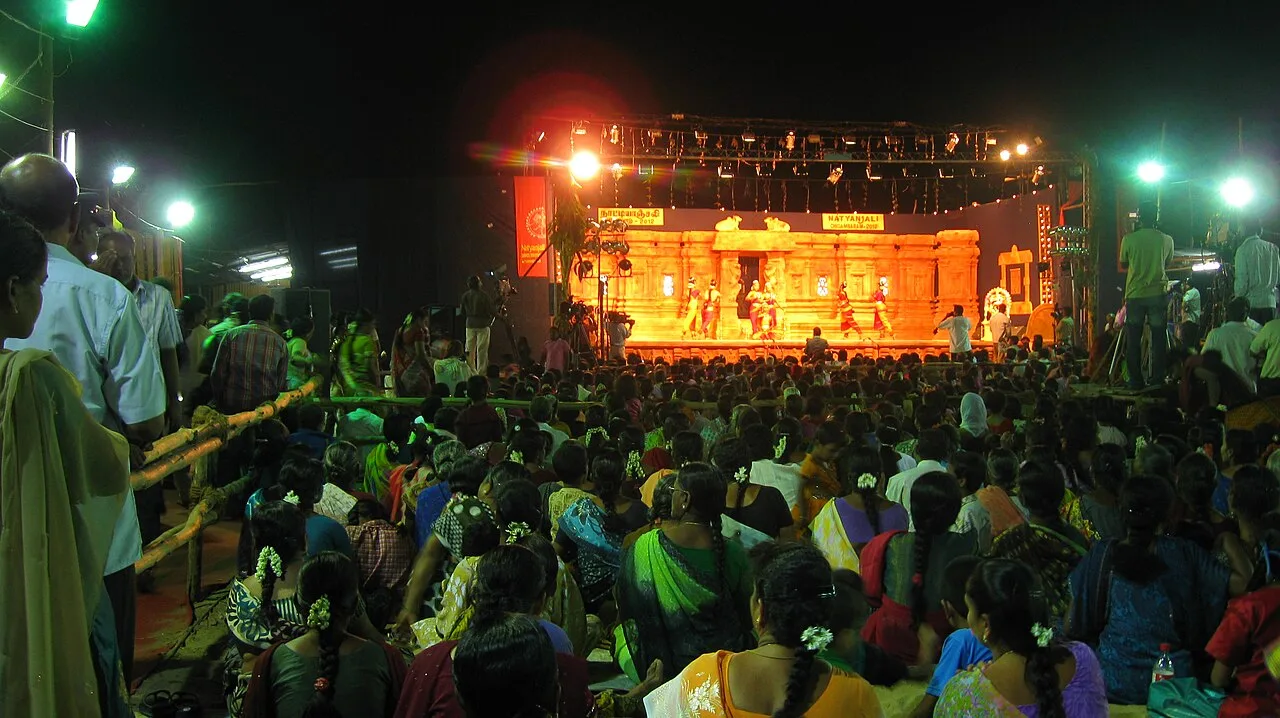
The temple remains an active centre of Tamil Shaiva worship, not simply a historic monument. Its association with Nataraja and the 108 dance poses gives it a particular place in discussions of Bharatanatyam and the relationship between performance and devotion. Tamil is widely used in local religious and everyday life; Sanskrit also features in some liturgical contexts. Worshippers commonly visit in traditional or modest dress, remove footwear where instructed and make offerings according to their own practice. Festival processions, devotional singing and temple music add to the living atmosphere, though activities vary by occasion. Visitors should avoid treating rituals as performances or interrupting worship for photographs.
Festivals & events
The best-known celebrations include Arudra Darshan, usually in the Tamil month of Margazhi during December or January, and Aani Thirumanjanam, usually around June or July. These festivals honour Nataraja and can include special worship and processions. Maha Shivaratri is also observed, generally in February or March, with devotional activity that may continue late into the night. Festival schedules follow the Tamil religious calendar and can vary from year to year. On major occasions, expect larger crowds, busier approaches and longer waits; check local arrangements before planning travel or expecting access to particular areas.
Local food in Tamil Nadu includes idli, dosa and filter coffee, Chettinad chicken and pepper curries, Madurai's kari dosa and jigarthanda, Thanjavur's banana-leaf vegetarian meals, Kanyakumari's seafood, and sweets such as Mysore pak, adhirasam and Tirunelveli halwa. Ask what is fresh that day; many small eateries cook a limited daily menu. Tamil Nadu is a paradise for vegetarian meals served on banana leaf; Chettinad and Madurai are the centres for meat and spice lovers. Filter coffee is a ritual — have it at a local 'hotel' (eatery). Remote sites may have no restaurant at all. Carry water and snacks, eat a proper breakfast before long drives, and ask your accommodation for a packed lunch if you are heading out early. If prasad is offered, accept it according to local custom. Choose busy, clean places, drink sealed or filtered water, and carry your packaging back with you.
Shopping & local experiences
Town shops and market areas commonly offer puja items, flowers, devotional images and small temple souvenirs. Visitors may also find locally made textiles and everyday household goods, though stock and craft origins vary. Look for Tamil snacks and sweets at food shops, or try a local meal during the visit. Ask sellers about materials and workmanship before buying items described as handmade or traditional. Avoid purchasing objects that appear to come from the temple grounds or that may be antiquities, and carry reusable bags to reduce plastic waste.
November to February; April to June for the hill stations
The nearest principal railway station by straight-line distance is Chidambaram, roughly 0 km away. The nearest operating airport by straight-line distance is Tiruchirappalli International Airport, roughly 129 km away. These figures are calculated from map coordinates — actual road distance is longer. Chennai is the main gateway; Coimbatore serves the west and Mettupalayam is the railhead for the Ooty toy train; Madurai and Tiruchirappalli serve the south and centre; Rameswaram and Kanniyakumari have their own rail termini. For the final leg, TNSTC and SETC buses reach nearly every town, with private sleeper coaches between cities and app cabs in Chennai, Coimbatore and Madurai link district towns. A private taxi gives more flexibility for remote sites such as hill stations, forest gates and coastal temples. When comparing train, bus and flight, count the complete door-to-door time: a flight saves the most time only if the onward road transfer is short, while an overnight train can save a hotel night. Book your return before you leave, because seats fill quickly on weekends, festivals and holidays. Current train numbers, timings, return services and fares are not listed here; check IRCTC and NTES for trains and the airline's own schedule for flights. No permit is needed to visit Tamil Nadu. The Nilgiri Mountain Railway toy train to Ooty must be booked well in advance on IRCTC — seats are few and sell out weeks ahead. Major temples such as Madurai Meenakshi and Srirangam have darshan queues and some enforce a dress code (dhoti or formal trousers for men, saree or salwar for women); phones and cameras are not allowed inside several temple sanctums. Boating to the Vivekananda Rock at Kanyakumari depends on sea conditions.
Confirm onward and return timings on IRCTC / NTES, the state bus operator or your airline before travel. A dash means current timings or fares have not been verified.
Getting around
Chidambaram railway station is in the town, and local buses connect the town with other regional centres. On arrival, auto-rickshaws and taxis can help with the last leg or with visiting nearby sites; availability may vary during festivals. The temple is within the town’s built-up area, so walking is practical for many visitors staying nearby, though streets can be busy and surfaces uneven. Check locally for designated vehicle access and parking, as the lanes around the temple may be congested or restricted. For trips beyond town, arrange onward transport in advance where convenient.
Hours, tickets & permissions
Entry arrangements can differ between the outer complex, individual shrines and ritual areas. Ticketing, if applicable, camera permissions, dress expectations and any identification requirements should be checked locally rather than assumed. Some spaces may be reserved for worshippers or subject to specific religious customs. Confirm current visiting hours, entry conditions and fees directly with the temple’s managing authority before setting out, especially during festivals or other special observances.
Facilities
Facilities within the complex and nearby town can change. Toilets and drinking-water points may be available, but check locally for their location and condition; carrying water is sensible in hot weather. Food options, small shops and basic services are available in Chidambaram, with a wider choice near the town centre. Parking arrangements may be limited close to the temple, particularly on festival days. ATMs and accommodation are usually found in town. Do not assume that an official guide service is available; ask the temple office or a trusted local source about authorised assistance.
Accessibility
The complex involves substantial walking across courtyards and stone surfaces, which may be uneven, hot or slippery. Steps and raised thresholds occur at some entrances and shrines, and crowds can make movement slower. Shade is available in some halls and covered areas but not throughout the courtyards. Wheelchair and stroller access may be difficult, and step-free entry to every shrine should not be assumed. Older visitors or anyone with limited mobility may prefer a shorter visit, take frequent rests and ask temple staff about current access routes. Visiting outside a major festival can make movement less crowded.
No permit is needed to visit Tamil Nadu. The Nilgiri Mountain Railway toy train to Ooty must be booked well in advance on IRCTC — seats are few and sell out weeks ahead. Major temples such as Madurai Meenakshi and Srirangam have darshan queues and some enforce a dress code (dhoti or formal trousers for men, saree or salwar for women); phones and cameras are not allowed inside several temple sanctums. Boating to the Vivekananda Rock at Kanyakumari depends on sea conditions. Carry a photo ID at all times and save the emergency number 112 and your accommodation's contact offline. Heat in summer and heavy rain in the monsoon are the main weather risks; carry water, avoid midday sun and allow extra time when roads flood. Watch your belongings in crowds and on public transport, and follow posted instructions.
Visitor rules
Wear modest clothing and follow any specific dress instructions displayed at the temple. Remove footwear where directed and leave it only in designated areas. Respect barriers and do not enter restricted shrines or ritual spaces without permission. Keep voices low, avoid touching sacred objects or disturbing worship, and take all litter with you. Rules on phones, leather items, head coverings and other belongings can vary by area; check posted notices and ask staff. Do not pay unofficial agents who promise special or faster access.
Photography
Photography rules can differ between the outer complex, halls and sanctums, and photography may be prohibited in particular areas. Check signs and ask temple staff before taking pictures; keep phones and cameras away during worship where requested. The gateway carvings and exterior details can be attractive subjects in soft morning or late-afternoon light, subject to access rules. Do not photograph people, priests or ceremonies without permission. Drones should not be flown over the temple or nearby crowds without the required permissions and clear local approval.
Choose a stay by the full journey to Chidambaram Nataraja Temple, not just the district name. Chennai, Coimbatore, Madurai and Tiruchirappalli offer the widest choice; Ooty and Kodaikanal have everything from heritage hotels to cottages — book far ahead for the April–June school holidays and the Pongal weekend. In summer, check air-conditioning; in the monsoon, check that the property is accessible if roads flood. Book in advance for weekends, festivals and the peak season (November to February; April to June for the hill stations). Confirm the exact location, meals included, check-in time and cancellation terms in writing. Avoid sending money to unverified contacts or touts at stations. Carry some cash, as card and digital payments can be unreliable in remote areas.
Within Chidambaram, Thillai Kali Amman Temple is a nearby religious site that visitors may consider, subject to its own customs and access rules. Pichavaram, in Cuddalore district, is known for its mangrove landscape and waterways; check current conditions and local arrangements before planning a visit. Vadalur’s Sathya Gnana Sabha is another religious destination in the district. Further around Cuddalore town, visitors can look into Fort St David and Silver Beach. These stops are not all close enough for a casual walk from the temple, so check routes and travel conditions before combining them.
For couples, Chidambaram Nataraja Temple rewards a slow pace: arrive early for soft light and fewer crowds, share a local meal and keep the evening free. Sunrise at Kanyakumari, a boat ride on Kodaikanal lake or an evening stroll through Mamallapuram's shore monuments makes the trip memorable. Public displays of affection can be frowned upon in conservative communities and at religious sites, so be discreet. Keep a buffer in your itinerary, because weather and road conditions can delay plans.
Q: How much time should I set aside for a visit? A: Allow a few hours for the temple, with extra time during festivals or if you wish to pause for worship and explore the halls. Q: When is a comfortable season to visit? A: November to March is generally more comfortable in Tamil Nadu; the northeast monsoon can bring rain from October to December, so check conditions. Q: Can everyone enter the temple and its sanctums? A: Entry rules can differ between the complex and particular shrines. Confirm current arrangements with temple staff and follow posted guidance. Q: Is the temple suitable for children and older visitors? A: Families can visit, but expect walking, crowds and uneven surfaces. Plan rests, supervise children and consider a shorter route for anyone with limited mobility. Q: Can I stay near the temple? A: Chidambaram has accommodation and food options. Check availability locally, especially around major festivals, when demand may be higher.
Be the first to share photos, stories, advice or a helpful contact for Chidambaram Nataraja Temple.
Loading…