
Unakoti
Unakoti is an ancient Shaivite rock-art site in Tripura, known for its carved divine figures and historic inscriptions. Visitors come to see its sculptures and explore its religious and artistic past.
Key facts · verified by Ghumoopedia editors
- Type of place
- Heritage monument
- Best time to visit
- October to March
- Nearest railway station
- Dharmanagar · about 10 km (straight line)
- Verified
- 21 Nov 2026
Plan a trip from Unakoti — a day-by-day route through places nearby.
Located in Tripura’s Unakoti district, this site is a major attraction in the Kailashahar subdivision. Known locally in Kokborok as Subrai Khung, and as Unakoti, it is an old Shaivite complex distinguished by rock-carved reliefs and divine figures. The name is interpreted in Hindi and Bengali as one less than a crore, also called koti. Stylistic evidence places the bas-reliefs in the seventh to ninth centuries CE, before the Manikya period. The Deva dynasty of Sribhumi in Samatata is said to have supported this rock art. On the other Chaturmukhalinga image is an inscription comprising two records in Bengali characters from the eleventh or twelfth century CE. They name Sri Jayadeva, who was probably a pilgrim. Unakoti joined UNESCO’s tentative World Heritage list in 2022, and is the leading tourist destination in Unakoti district. Tripura combines royal Manikya heritage, nineteen indigenous communities and a large Bengali-speaking population. Tripura is warm and humid for much of the year, with heavy rain from June to September and pleasant winters. The usual best time to visit is October to March. Days are short in Northeast India: the sun can set before 5 pm in winter, so plan to reach and leave Unakoti in daylight. Timings, fees and access arrangements must be confirmed locally. For official information, see Tripura Tourism at https://tripuratourism.gov.in.
Why it matters
Unakoti is a major Shaivite heritage site in Tripura’s Unakoti district, valued for its large rock-cut reliefs, sculpted figures and sacred landscape. It is an important regional pilgrimage destination as well as a place to encounter Tripura’s early artistic history. The name is commonly understood to mean “one less than a crore,” while Subrai Khung is its name in Kokborok. The carvings are stylistically attributed to the 7th–9th centuries CE, though their precise history is not fully established. Unakoti was added to UNESCO’s World Heritage tentative list in 2022; this is not the same as inscription on the World Heritage List. Visitors should check the relevant authorities for current conservation and access information.
Unakoti’s rock reliefs are generally dated on stylistic grounds to the 7th–9th centuries CE, a period before the rise of Manikya rule in Tripura. The site is associated with Shaivism and includes images of Shiva and other Hindu deities. The main body of sculptural work is often linked in historical accounts to the Deva Dynasty of Sribhumi in Samatata, although the evidence does not establish every carving’s patron or date with certainty. An inscription on another Chaturmukhalinga at the site consists of records in Bengali characters, usually assigned to the 11th–12th centuries CE. It names a person called Sri Jayadeva, who may have been a pilgrim; the inscription does not by itself explain the creation of the larger sculptural complex. Unakoti continued to hold religious importance over time, while its monumental carvings also became a focus of heritage interest. The site was included on India’s UNESCO World Heritage tentative list in 2022. Detailed accounts of specific restoration campaigns are not consistently available, so visitors should consult current information from the site’s managing authority for conservation updates.
Origin stories & folklore
According to a popular local tradition, Shiva once travelled with a gathering of deities and stopped at Unakoti for the night. He is said to have instructed the others to rise before dawn and continue the journey. When they failed to wake in time, Shiva departed alone, and the others were turned to stone. The story explains the name Unakoti as one fewer than a crore of divine figures, though it is folklore rather than a verified account of the site’s origins. Versions of the tale may differ, and the legend should be understood alongside the archaeological evidence, which points to a complex history of carving and worship.
Architecture & design
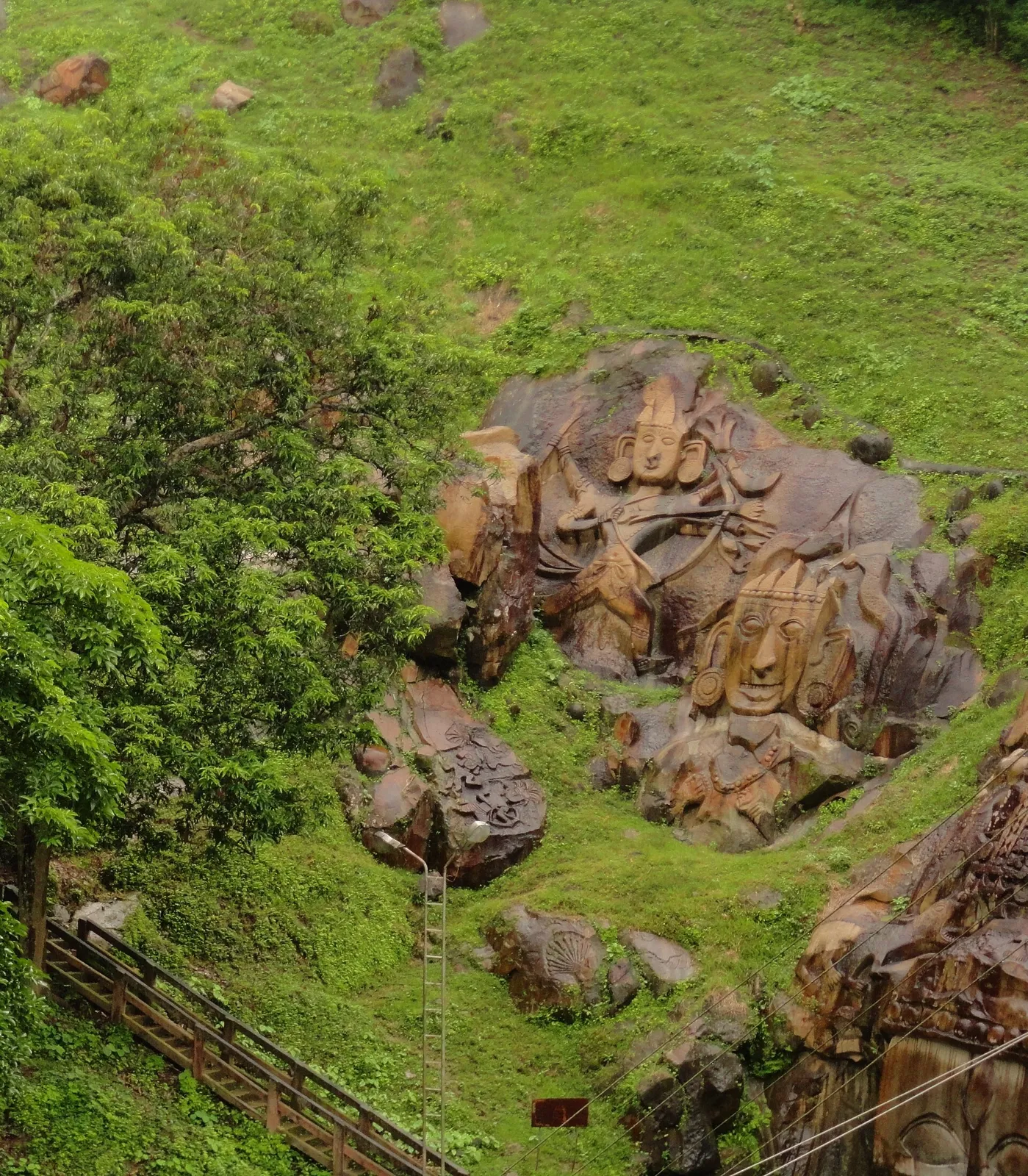
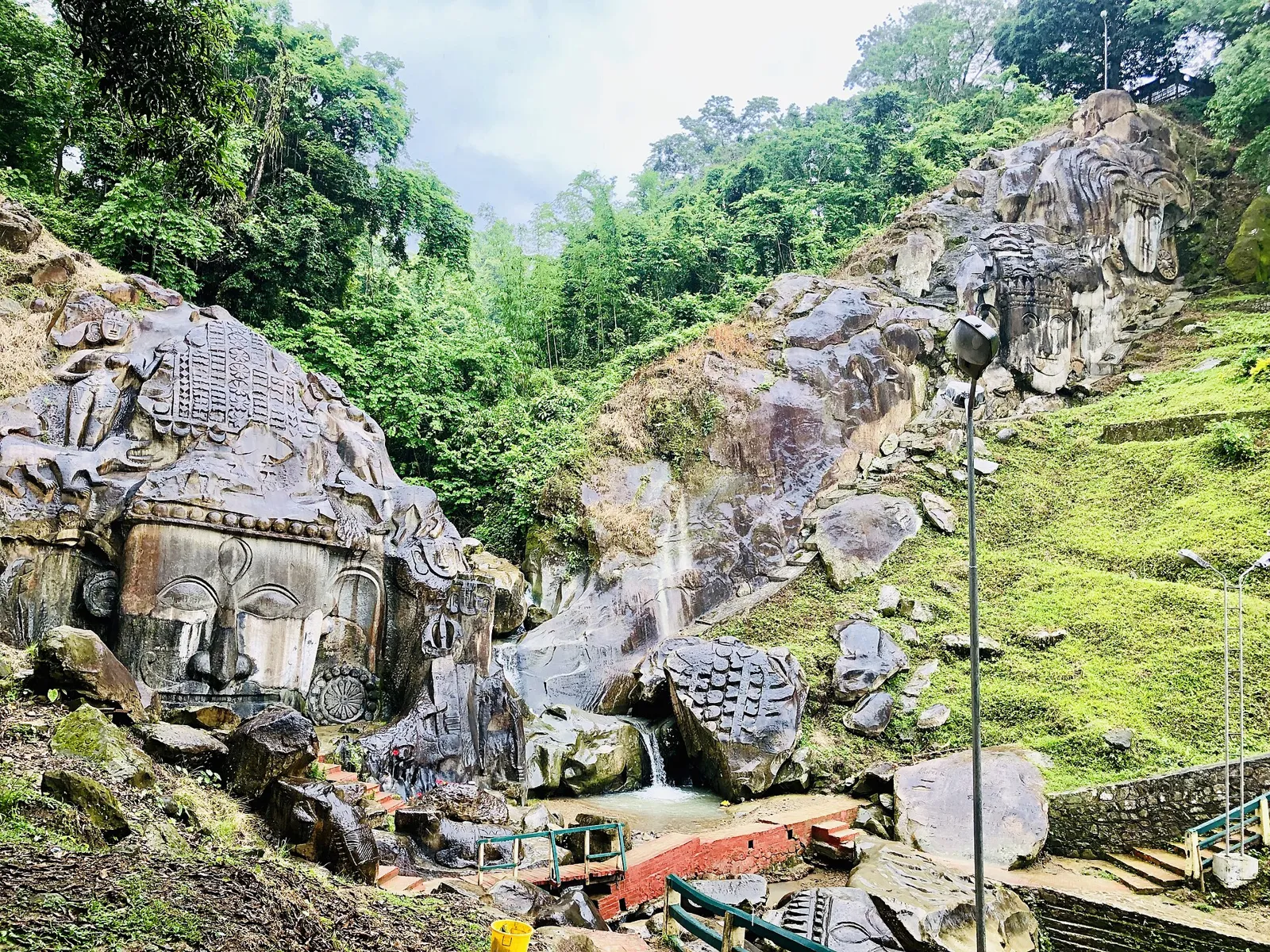
Unakoti is a sculptural landscape rather than a single enclosed temple. Its defining works are large bas-reliefs carved into exposed rock faces on a wooded hillside, accompanied by smaller figures, lingas and other images. The carvings use the natural rock as both surface and setting; weathering and the irregular terrain are part of the experience. Visitors encounter images at different levels along paths and steps, so the site is best explored at a measured pace. The sculptural style combines monumental forms with detailed ornament and recognizable Hindu iconography. Shiva-related imagery is prominent, while figures of Ganesha and other deities also appear. Chaturmukhalinga images add a distinct sculptural and devotional element. The arrangement does not follow the plan of a conventional walled temple complex, and individual reliefs can be separated by changes in slope and vegetation. The open-air setting means that rain, plants and natural erosion affect the stone; visitors should avoid touching or climbing on the carvings.
Important objects & sculptures
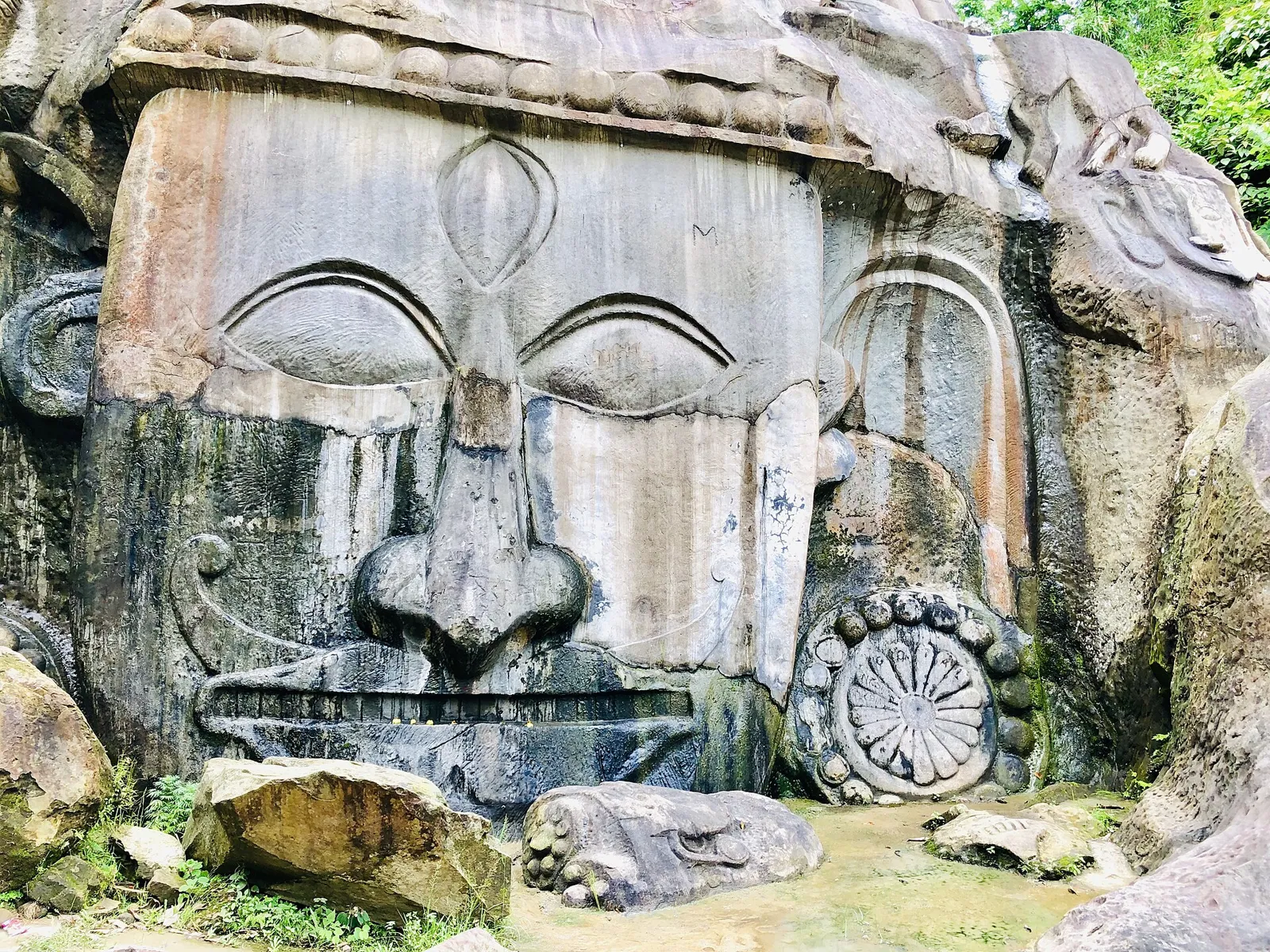
Look for the monumental rock-cut image commonly identified as Unakotiswara Kal Bhairava, a prominent Shiva form, and notice the sculpted headdress and facial details. Ganesha figures and other divine images are distributed around the hillside, while lingas mark the site’s Shaivite associations. The Chaturmukhalinga images are also important; one bears an inscription in Bengali characters generally dated to the 11th–12th centuries CE. The inscription mentions Sri Jayadeva, possibly a pilgrim. Interpretations and identifications may vary between guides and publications, so use on-site interpretation where available and avoid treating every figure as securely identified.
Explore Unakoti slowly and read the interpretation boards or hire an authorised guide to understand its history. Check opening days and ticket counters in advance, as many monuments and museums close on one weekday and on public holidays. A comfortable itinerary is one main visit in the morning, a local meal at midday and a short nearby stop before an afternoon return. Use the district list on this site to find other places in Unakoti, but check the actual road route and its condition before combining stops. If a festival is on, local roads and stays can be busy — and the experience can be unforgettable. Leave no litter: many sites in Tripura are protected by the communities who own them.
Suggested itineraries
Half day: Allow about 3–4 hours for the approach, a slow walk among the main carvings, time to read interpretation or speak with a guide, and a return to Kailashahar. Full day: Spend the morning exploring Unakoti at an unhurried pace; take a meal in Kailashahar; use the afternoon for a short town visit or, if road conditions and transport allow, a visit to Rowa Wildlife Sanctuary. Gentler option: Focus on the most accessible main carvings, take frequent rests and arrange a vehicle to wait near the site entrance; confirm the walking route and steps locally.
Unakoti remains a place of worship as well as a heritage destination. Its Shaivite associations are visible in the lingas and images, and pilgrims visit especially during religious observances. The Kokborok name Subrai Khung reflects the region’s Indigenous linguistic heritage. Tripura is home to many Indigenous communities and a large Bengali-speaking population; Kokborok and Bengali are among the languages visitors may encounter, alongside other local languages. Customs and everyday life vary across communities, so visitors should ask before photographing people, respect worship in progress and follow local guidance around sacred images.
Festivals & events
The best-known gathering associated with Unakoti is the Ashokastami fair, usually held in spring, often around April. Pilgrims and visitors come for worship and the fair atmosphere, and the site and local roads can be busier than usual. Shivaratri may also be observed by Shaivite devotees, though the scale of activities can vary by year. Festival schedules and arrangements are subject to change, so check locally before travelling. During major gatherings, allow extra time for walking and transport, and be considerate around worshippers and ceremonial activity.
Local food in Tripura includes mui borok (berma fermented fish dishes), wahan mosdeng (pork with chilli), chakhwi stew and Bengali-style fish curries. Ask what is fresh that day; many small eateries cook a limited daily menu. Pork, beef, fish and fermented ingredients are common in tribal cuisines, so vegetarian travellers should explain their needs clearly — rice, dal, vegetables and eggs are usually possible in towns. Remote sites may have no restaurant at all. Carry water and snacks, eat a proper breakfast before long drives, and ask your accommodation for a packed lunch if you are heading out early. Try a homestay-cooked meal when you can — it is often the best local food. Choose busy, clean places and carry your packaging back to town.
Shopping & local experiences
Kailashahar is the most practical place nearby to look for everyday supplies and local food. Depending on what is available, visitors may find Tripura handloom textiles, bamboo or cane work, and small locally made items in town markets; availability varies, so treat these as possibilities rather than guaranteed souvenirs. Ask sellers about the maker and materials, and buy respectfully from local businesses. Try regional dishes at an established local eatery, checking ingredients and spice levels with staff. Avoid collecting stones, plants or fragments from the heritage site.
October to March
The nearest principal railway station by straight-line distance is Dharmanagar, roughly 10 km away. The nearest operating airport by straight-line distance is Lengpui Airport, Aizawl, roughly 75 km away. These figures are calculated from map coordinates, so actual road distance and travel time are longer. Guwahati is the main rail and air hub for the region, and most long-distance journeys connect through it. For the final leg, Tripura Road Transport Corporation (TRTC) and private buses link district towns; shared taxis usually leave early in the morning and depart only when full. A private taxi gives more flexibility for remote sites. When comparing train, bus and flight, count the complete door-to-door time: a flight saves the most time only if the onward road transfer is short, while an overnight train to Guwahati plus a road journey can save a hotel night. Book your return before you leave, because seats on shared vehicles and the few daily flights fill quickly. Current train numbers, timings, return services and fares are not listed here; check IRCTC and NTES for trains and the airline’s own schedule for flights. No Inner Line Permit is needed to visit Tripura. Some sites near the international border may have restricted hours, and sanctuaries charge entry fees.
Confirm onward and return timings on IRCTC / NTES, the state bus operator or your airline before travel. A dash means current timings or fares have not been verified.
Getting around
Kailashahar is the practical town base for reaching Unakoti. On arrival, local buses or shared vehicles may serve district routes, while taxis offer greater flexibility; availability can be limited, especially later in the day. Agree on the return plan with a driver before travelling to the site. A vehicle can take visitors to the approach area, but exploring the sculptural landscape involves walking on foot. Check road conditions locally, allow daylight for the visit and avoid relying on a last-minute ride from a quieter location.
Hours, tickets & permissions
Entry arrangements, ticketing, permitted areas and any photography restrictions can change. Some heritage sites require visitors to use designated entrances or follow instructions from staff; do not assume that every path or carved surface is open for access. There may be separate rules for groups, filming or professional equipment. Confirm current hours, fees and entry requirements with the site’s managing authority or Tripura Tourism before setting out. Follow notices on site and avoid touching, climbing on or marking the carvings.
Facilities
Facilities at the site may be basic and can vary by season. Toilets, drinking water, refreshments, parking or interpretation may be available, but visitors should check locally rather than rely on every service being open. Kailashahar is the better place to plan meals, cash and other essentials. ATMs and shops are more likely to be found in town than at the monument. An authorised guide or local interpreter may be available, but availability is not guaranteed; arrange in advance if a guided visit is important.
Accessibility
Unakoti lies on a rocky, wooded hillside, and exploring the carvings involves uneven paths and steps. The walking surface may be slippery after rain, and distances between features can feel demanding. Shade is uneven, so bring water and allow time for rests. The site is not an easy choice for wheelchair users or visitors who cannot manage steps; strollers may also be difficult to use. Older visitors or anyone with limited mobility may prefer to visit only the most accessible viewing areas with a companion. Ask locally about current path conditions before entering.
No Inner Line Permit is needed to visit Tripura. Some sites near the international border may have restricted hours, and sanctuaries charge entry fees. Carry a photo ID at all times; checkpoints are common. Save the emergency number 112 and your accommodation’s contact offline. Heat, humidity and sudden downpours are the main weather risks; carry water and rain protection. Respect community rules, private property and posted instructions. Avoid long road journeys after dark and during heavy rain. Check official advisories for the region before travel, and follow local guidance if access changes.
Photography
Soft morning light can bring out the relief of the carvings, while cloud and shade create changing contrasts across the rock faces. Take photographs from established paths and viewpoints rather than climbing for a better angle. Personal photography may be allowed in many open areas, but rules can differ for particular spaces or equipment; check notices and ask staff. Drone use may require permissions and should not be assumed to be permitted. Avoid flash or intrusive photography near worship, and ask people before taking their portraits.
Choose a stay by the full journey to Unakoti, not just the district name. Main towns in Unakoti usually offer hotels, state tourism lodges and homestays with better transport, meals and medical access, while village homestays offer a closer connection to local life. In the plains and valleys, check fans or air-conditioning and mosquito nets in summer. Book in advance for weekends, festival dates and the peak season (October to March). Confirm the exact location, meals included, check-in time and cancellation terms in writing. Many homestays accept payment on arrival; avoid sending money to unverified contacts. Mobile network and digital payments can be unreliable in remote areas, so carry some cash.
Kailashahar is the nearest useful town for meals, supplies and an overnight base. Rowa Wildlife Sanctuary, in Unakoti district, may be combined with a visit if road conditions, transport and available daylight make the journey practical; check access locally before planning it. Other stops in the district can involve winding roads and longer travel than a map suggests, so avoid combining several distant places without checking the route. For a short visit, spending more time at Unakoti itself is often more practical than trying to cover multiple sites.
For couples, Unakoti rewards a slow pace: arrive early for soft light and fewer crowds, share a local meal and keep the evening free. Public displays of affection can be frowned upon in conservative communities and at religious sites, so be discreet. A homestay can make the trip memorable — confirm privacy, hot water and transport back. Keep a buffer day in your itinerary, because weather and road closures can delay plans in Tripura.
Q: How much time should I allow for Unakoti? A: Allow several hours to walk among the carvings at a comfortable pace; a half-day visit is a practical minimum for many visitors. Q: When is the best season to visit? A: October to March is generally more comfortable. The monsoon brings heavy rain, which can make paths slippery; check conditions before travelling. Q: Is there an entry fee, and what are the hours? A: Entry arrangements and hours can change. Confirm current rules and any fees with the managing authority or Tripura Tourism before your visit. Q: Is Unakoti suitable for children and elderly visitors? A: Children can enjoy the sculptures with close supervision. Uneven paths and steps may be challenging for older visitors or anyone with limited mobility. Q: Where should I stay nearby? A: Kailashahar is the practical nearby base. Check accommodation availability in advance, especially during festival periods.
Be the first to share photos, stories, advice or a helpful contact for Unakoti.
Loading…