
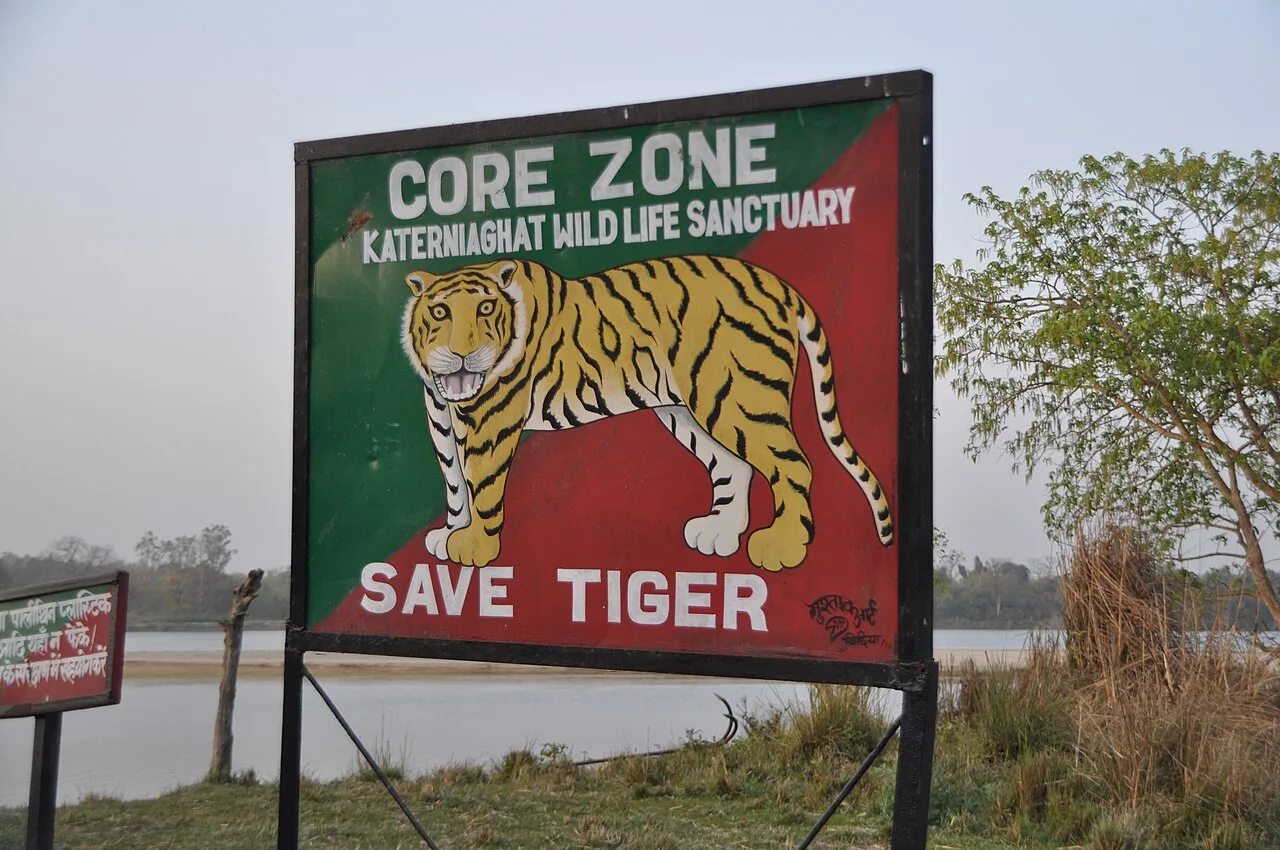
Katarniaghat Wildlife Sanctuary
Katarniaghat Wildlife Sanctuary is a protected area in Uttar Pradesh’s Bahraich district, visited by people interested in wildlife and its connection with the Dudhwa Tiger Reserve.
Key facts · verified by Ghumoopedia editors
- Type of place
- National park / sanctuary
- Best time to visit
- October to March
- Nearest railway station
- Lakhimpur · about 53 km (straight line)
- Nearest airport
- Bareilly Airport · about 164 km (straight line)
- Verified
- 21 Nov 2026
Plan a trip from Katarniaghat Wildlife Sanctuary — a day-by-day route through places nearby.
In the Terai region of Uttar Pradesh, the sanctuary occupies part of the Upper Gangetic plain. It is close to Bahraich city and covers 400.6 km² (154.7 sq mi). The sanctuary was established in 1975 and joined Project Tiger in 1987. Together with Kishanpur Wildlife Sanctuary and Dudhwa National Park, it forms the Dudhwa Tiger Reserve. Katarniaghat is also included in the Terai Elephant Reserve. Uttar Pradesh is India's great heritage heartland: the Taj Mahal, Agra Fort and Fatehpur Sikri of the Mughals; Varanasi's ghats on the Ganga; the Krishna towns of Mathura and Vrindavan; Ayodhya, Prayagraj's Triveni Sangam; the Buddhist circuit of Sarnath, Kushinagar and Shravasti; Lucknow's Nawabi monuments and food; and the terai forests of Dudhwa and Pilibhit. Summers from April to June are very hot (often 43–47°C), the monsoon from July to September is humid with heavy showers, and winter from December to January is cold, with dense morning fog that regularly delays trains and flights by hours. The usual best time to visit is October to March. Timings, fees and access arrangements must be confirmed locally. For official information, see Uttar Pradesh Tourism at https://uptourism.gov.in.
Why it matters
Katarniaghat Wildlife Sanctuary is a protected forest landscape in the Terai of Bahraich district, Uttar Pradesh, covering 400.6 square kilometres. Established as a wildlife sanctuary in 1975, it was brought under Project Tiger in 1987. Together with Kishanpur Wildlife Sanctuary and Dudhwa National Park, it forms the Dudhwa Tiger Reserve; it is also part of the Terai Elephant Reserve. These designations reflect its role in conserving wildlife and connected Terai habitats. It is important regionally for its forests and riverine ecosystems, and locally as a nature destination. It is a wildlife sanctuary, not a national park; no UNESCO or ASI recognition is known for the site.
Katarniaghat’s protected-area history is best documented from the period after Indian independence. The sanctuary was established in 1975 in the Terai of Bahraich district, a region of forests, wetlands and river channels near the Nepal border. In 1987 it was brought under the purview of Project Tiger. Along with Kishanpur Wildlife Sanctuary and Dudhwa National Park, it became part of the Dudhwa Tiger Reserve, linking its management to a wider landscape rather than treating the forest as an isolated unit. It is also included in the Terai Elephant Reserve. The area’s older history is tied to the wider agricultural and forested Terai, where rural communities have lived alongside changing river courses and seasonal wetlands. Detailed, well-sourced accounts of the sanctuary’s founding individuals, earlier boundaries or specific local events are not readily established, so these should not be inferred. Since designation, conservation management has focused on protecting wildlife and habitat while regulating visitor access. Boundaries, access arrangements and conservation priorities can change over time; visitors should rely on current guidance from the forest authorities rather than assuming that older travel descriptions remain valid.
Spend unhurried time at Katarniaghat Wildlife Sanctuary: walk the marked paths, use official viewpoints and ask locally whether a guide, entry ticket or forest permission is needed. On safari or boating trips, follow the naturalist's instructions, stay inside the vehicle or boat, wear muted colours and keep silent near animals — sightings are never guaranteed. A comfortable itinerary is one main visit in the morning, a local meal at midday and a short nearby stop before an afternoon return. Use the district list on this site to find other places in Bahraich, but check the route and its condition before combining stops. If a festival is on — such as Dev Deepawali on the Varanasi ghats, Holi in Mathura, Vrindavan and Barsana, the Magh Mela or Kumbh at Prayagraj, Deepotsav in Ayodhya or the Taj Mahotsav in Agra — roads and stays can be busy, and the experience can be unforgettable. Leave no litter: many sites are protected by the communities around them.
Suggested itineraries
Half day: Check in at the authorised gate (allow time for formalities); take one permitted safari or boat outing; pause at an official viewpoint if access is open; return for a meal in the nearby area. Full day: Begin with entry formalities; take a morning permitted safari or boat outing; have a local meal and rest; visit an approved nearby viewpoint or nature area if available; return before the afternoon journey. Gentler option: Choose one authorised vehicle-based outing, minimise walking, and arrange assistance and rest stops with the operator in advance.
The sanctuary is a conservation landscape rather than a cultural monument, but the surrounding Bahraich region has a varied living culture. Hindi and Awadhi are widely used, with Urdu and other local languages also heard; communities in the wider Terai include people with distinct Tharu traditions. Regional food, folk performance and religious observances are part of everyday life in nearby towns and villages. Visitors should ask before photographing people, homes or community events, and should dress modestly when visiting religious places. Forest visits are governed by wildlife-protection rules, so cultural curiosity should not become an excuse to enter villages, restricted forest areas or private land without permission.
Local communities
Rural communities in Bahraich district and the wider Terai are connected to the landscape through farming, livestock keeping, local trade, transport and wage work. Tharu communities are part of the broader Terai region, though visitors should not assume that a particular village or tradition is accessible as a tourist attraction. Forest-edge livelihoods and conservation rules can intersect, making respectful conduct especially important. Use authorised guides and local services where available, follow instructions about village and forest access, and do not treat residents as wildlife-tourism props. Ask permission before taking photographs or visiting community spaces.
Festivals & events
The sanctuary is not known as a venue for a major annual festival. In Bahraich and nearby towns, religious observances and local fairs take place through the year, with Eid and other Islamic festivals, Hindu festivals such as Diwali and Holi, and seasonal gatherings forming part of the regional calendar. Their dates vary, and celebrations are organised locally rather than around sanctuary access. Festival periods can make town roads, markets and accommodation busier, while the forest’s own entry rules continue to apply. Check local notices before combining a wildlife visit with a town event, and avoid expecting processions or celebrations inside protected forest areas.
Local food in Uttar Pradesh includes Lucknow's Awadhi kebabs (galouti and kakori), biryani and sheermal, Agra's petha and bedai-jalebi breakfasts, Mathura's peda and Vrindavan's rabri, Varanasi's kachori-sabzi, tamatar chaat, winter malaiyyo, thick kulhad lassi and Banarasi paan. Ask what is fresh that day; many small eateries cook a limited daily menu. Street food is excellent but rich; choose busy stalls where food is cooked fresh in front of you. In Mathura, Vrindavan and Ayodhya, meat and alcohol are not served near the temples. Remote sites may have no restaurant at all. Carry water and snacks, eat a proper breakfast before long drives, and ask your accommodation for a packed lunch if you are heading out early. Try a home-cooked or local thali meal when you can — it is often the best food on the route. Choose clean places, drink sealed or filtered water, and carry your packaging back with you.
Shopping & local experiences
There is no need to expect a large souvenir market at the sanctuary gate. In Bahraich town, look for everyday regional goods, locally made items and seasonal produce in general markets, asking vendors about the origin of crafts rather than assuming they are made nearby. Small food businesses may offer familiar Uttar Pradesh dishes and tea. Avoid buying wildlife products, animal parts, feathers, plants or anything presented as collected from the forest. If you purchase packaged goods for the journey, keep the packaging with you and dispose of it responsibly outside the protected area.
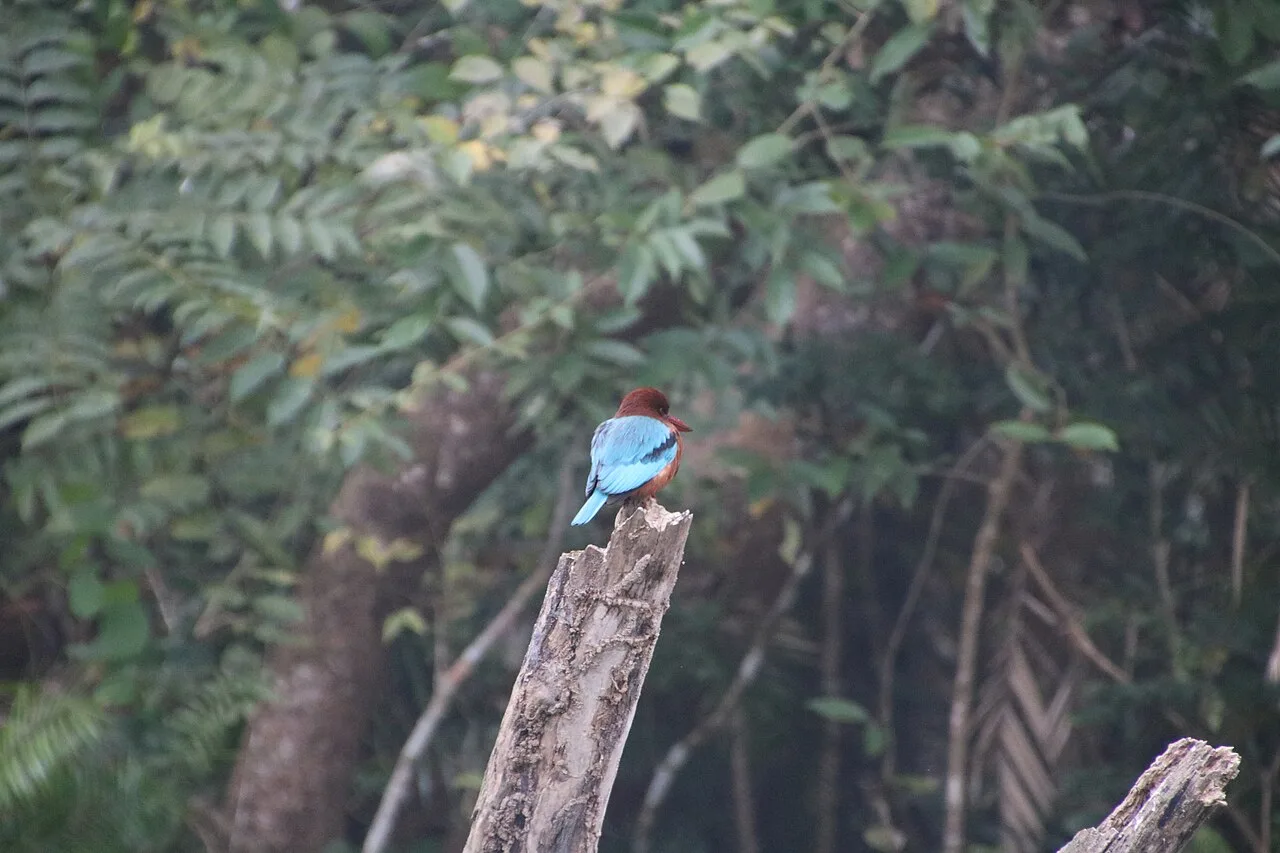
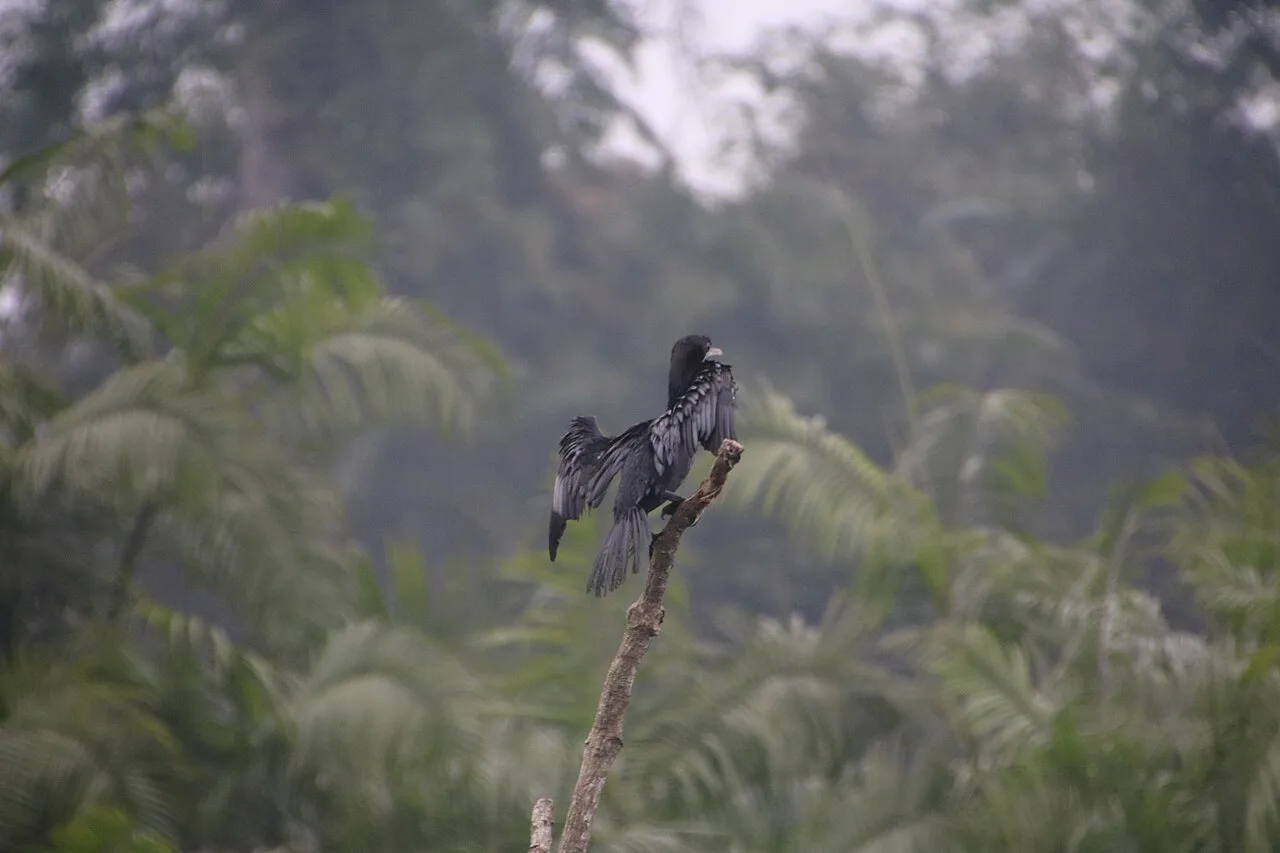
Katarniaghat lies in the Terai, where moist forests, grasslands, wetlands and riverine habitats form a varied landscape. The Girwa River is a notable waterway in the sanctuary area, and its channels and banks support aquatic and forest-edge life. The protected landscape is associated with large mammals including tiger, elephant and swamp deer, as well as gharial and the Ganges river dolphin in suitable river habitat. Birds use the forest, wetlands and river margins, but species and sightings vary with season and conditions. Sal and other Terai forest vegetation are characteristic of the wider region. Wildlife is not guaranteed; keep a distance, stay quiet and follow the naturalist’s instructions rather than approaching animals or leaving authorised routes.
October to March
The nearest principal railway station by straight-line distance is Lakhimpur, roughly 53 km away. The nearest operating airport by straight-line distance is Bareilly Airport, roughly 164 km away. These figures are calculated from map coordinates — actual road distance is longer. Agra, Mathura, Lucknow, Kanpur, Prayagraj, Varanasi, Gorakhpur and Jhansi are the main rail hubs; Lucknow and Varanasi have the busiest airports, and western UP is also served from Delhi. Safari and boating permits are issued for specific gates and time slots, so confirm which entry point your booking is for before choosing a stay; private vehicles are not allowed on most forest tracks. When comparing train, bus and flight, count the complete door-to-door time: a flight saves the most time only if the onward road transfer is short, while an overnight train can save a hotel night. In December and January, fog can delay trains and flights for hours — keep a buffer before onward connections. The Yamuna, Agra–Lucknow and Purvanchal expressways make road travel fast between the big cities. Book your return before you leave, because seats fill quickly on weekends, festivals and holidays. Current train numbers, timings, return services and fares are not listed here; check IRCTC and NTES for trains and the airline's own schedule for flights. No permit is needed to visit Uttar Pradesh. The Taj Mahal is closed to visitors every Friday, and monument tickets for the Taj, Agra Fort and Fatehpur Sikri are cheaper when bought online on the ASI portal. Jungle safaris in Dudhwa, Pilibhit and Katarniaghat must be booked through the UP forest department's official ecotourism booking, and the parks close for the monsoon, roughly mid-June to mid-November.
Confirm onward and return timings on IRCTC / NTES, the state bus operator or your airline before travel. A dash means current timings or fares have not been verified.
Getting around
Arrange onward travel from Bahraich or another nearby town using a locally hired taxi or an authorised vehicle, and confirm the correct sanctuary gate before setting out. Public transport may serve larger towns and roads, but should not be assumed to reach every entry point or operate to a visitor’s preferred schedule. Within the protected area, use only the vehicle or boat arrangements approved for your permit; private cars are not allowed on most forest tracks. Walking is appropriate only where officials allow it. Ask locally about parking, pick-up points and road conditions, and allow extra time for rural routes.
Hours, tickets & permissions
Entry is controlled by the forest authorities and may depend on the designated gate, permitted activity, season and available slots. A safari or boat outing may require a separate permit or booking, and camera rules or charges may apply. Identification or booking details may be requested, so confirm requirements before travelling. Do not assume that walking paths, river access or every part of the sanctuary is open to visitors. Confirm current opening hours, access conditions, permits and fees with the managing forest authority or an authorised booking channel; arrangements can change.
Facilities
Facilities vary by gate and season. There may be forest-authorised guides, safari vehicles or boat arrangements where these are operating, but availability should be checked before travel. Toilets, drinking water, food stalls and parking may be limited at entry points; nearby towns are more likely to have basic shops and places to eat. Do not rely on an ATM, medical service or reliable mobile signal inside the forest. Carry drinking water and essential medication, take rubbish back out, and confirm locally what is available at the specific gate on the day of your visit.
Accessibility
Access is shaped by forest tracks, uneven ground and the rules of a protected wildlife area. Paths and viewing places may be unpaved, muddy or exposed, and walking distances can vary by activity and gate. Shade and seating may be limited. Wheelchair and stroller access should not be assumed, and an accessible vehicle or toilet may not be available; contact the operator or forest office beforehand to discuss requirements. Older visitors or anyone with limited mobility may find a single vehicle-based outing more manageable than walking or combining several stops. Avoid boarding a boat unless the operator confirms it is suitable for your needs.
No permit is needed to visit Uttar Pradesh. The Taj Mahal is closed to visitors every Friday, and monument tickets for the Taj, Agra Fort and Fatehpur Sikri are cheaper when bought online on the ASI portal. Jungle safaris in Dudhwa, Pilibhit and Katarniaghat must be booked through the UP forest department's official ecotourism booking, and the parks close for the monsoon, roughly mid-June to mid-November. Carry a photo ID at all times and save the emergency number 112 and your accommodation's contact offline. Never step out of the safari vehicle, never walk in the forest without a registered guide, and keep to permitted routes; elephants, tigers and leopards live here. Stay on marked paths, keep away from cliff edges and fast water, and never approach wild animals.
Visitor rules
Follow forest staff and naturalist instructions, remain in authorised areas and stay inside the safari vehicle or boat unless officials explicitly direct otherwise. Keep voices low, do not feed, chase or call wildlife, and never block an animal’s path. Wear muted, comfortable clothing and closed footwear for permitted walking. Carry out all litter, especially plastic, and do not collect plants, stones or other natural material. Photography may be restricted in some places or activities; check before using equipment. Do not enter closed tracks, approach nests or dens, or use drones without explicit permission.
Photography
Soft morning or late-afternoon light can suit forest and river landscapes, but the best conditions depend on weather and access arrangements. Photograph only from authorised vehicles, boats and viewpoints, and keep a respectful distance from wildlife; sightings are never assured. Ask the guide about camera restrictions and any applicable requirements before the outing. Drone use should not be assumed to be permitted in a wildlife sanctuary; obtain explicit approval from the relevant authority before bringing or flying one. Ask people for consent before taking portraits, and avoid photographing restricted sites or disturbing animals for a picture.
Choose a stay by the full journey to Katarniaghat Wildlife Sanctuary, not just the district name. Forest rest houses and tourism lodges inside or near Dudhwa and Pilibhit must be booked in advance and have basic facilities. In summer, check air-conditioning and backup power; in the monsoon, check that the property is accessible if roads flood. Book in advance for weekends, festivals and the peak season (October to March). Confirm the exact location, meals included, check-in time and cancellation terms in writing. Avoid sending money to unverified contacts or touts at stations. Carry some cash, as card and digital payments can be unreliable in remote areas.
Bahraich town offers a contrast to the forest visit, including the well-known Dargah Sharif associated with Ghazi Saiyyad Salar Masud. Chittaura Jheel, in the Bahraich area, is another local place visitors may consider, subject to current access and conditions. The wider Dudhwa landscape includes Dudhwa National Park and Kishanpur Wildlife Sanctuary, but these are separate protected areas and require their own route planning and entry arrangements. Do not assume they can be combined comfortably in a single day. Check road conditions, opening arrangements and the distance from your chosen gate before planning additional stops.
For couples, Katarniaghat Wildlife Sanctuary rewards a slow pace: arrive early for soft light and fewer crowds, share a local meal and keep the evening free. Sunrise at the Taj Mahal, an evening boat during the Varanasi aarti or a Nawabi dinner in old Lucknow makes the trip memorable. Public displays of affection can be frowned upon in conservative communities and at religious sites, so be discreet. Keep a buffer in your itinerary, because weather and road conditions can delay plans.
Q: How much time should I allow for a visit? A: Allow at least half a day for travel to the gate, entry formalities and one permitted activity. A full day gives more time for breaks, but does not guarantee additional wildlife sightings. Q: When is the best season to visit? A: October to March is generally the more comfortable season for travel in Uttar Pradesh. Conditions and access vary, so check current forest guidance before setting out. Q: Do I need an entry ticket or permit? A: Entry and activities are controlled by the forest authorities. Confirm the required permits, booking details, fees and gate with an authorised source before travelling. Q: Is the sanctuary suitable for children and elderly visitors? A: A guided vehicle-based outing may suit many visitors, but tracks, boats and facilities can be uneven or limited. Discuss mobility needs with the operator beforehand and supervise children closely. Q: Where should I stay nearby? A: Check accommodation options in Bahraich and near the gate named on your booking. Confirm transport and the onward route before choosing a stay, as access points can be separated.
Be the first to share photos, stories, advice or a helpful contact for Katarniaghat Wildlife Sanctuary.
Loading…