
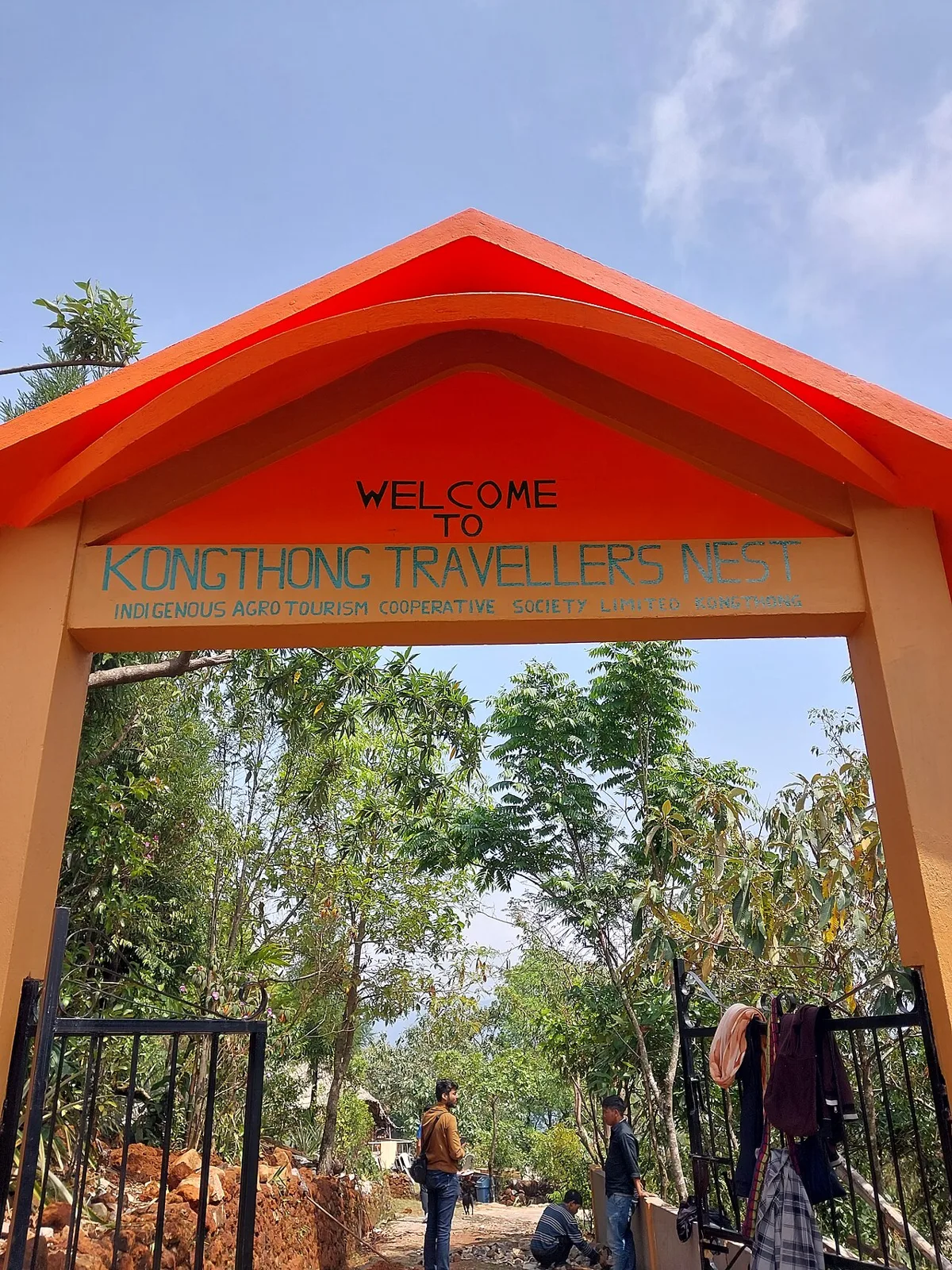
Kongthong (Whistling Village)
Kongthong is a Meghalaya village known for its whistled naming custom. Visitors and language researchers come to learn about this tradition, which has also brought the village international tourism and heritage recognition efforts.
Key facts · verified by Ghumoopedia editors
- Type of place
- Natural attraction
- Best time to visit
- October to May; the monsoon is dramatic for waterfalls but roads and treks become slippery
- Nearest railway station
- Kamakhya Junction · about 110 km (straight line)
- Nearest airport
- Shillong Airport (Umroi) · about 75 km (straight line)
- Verified
- 21 Nov 2026
Plan a trip from Kongthong (Whistling Village) — a day-by-day route through places nearby.
In Meghalaya’s East Khasi Hills, in northeastern India, Kongthong is often called the Singing Village. Its distinctive custom attracts visitors and language researchers from places including America, Germany and Japan. Each person in the village has an individual name expressed as a whistled lullaby. Residents use these tunes to call one another, rather than speaking the names aloud. Kongthong was India’s candidate for the UNWTO World’s Best Village Contest. The village is also seeking UNESCO Intangible Cultural Heritage status for its whistled naming tradition. The Khasi, Jaintia and Garo communities follow matrilineal traditions, and community councils manage much of the land visitors pass through. Meghalaya is among the wettest places on earth: Sohra and Mawsynram receive extreme monsoon rainfall. Shillong is cool all year, and fog can close viewpoints at any season. The usual best time to visit is October to May; the monsoon is dramatic for waterfalls but roads and treks become slippery. For official information, see Meghalaya Tourism at https://www.meghalayatourism.in.
Why it matters
Kongthong is a Khasi village in Meghalaya’s East Khasi Hills, widely known as the “Singing Village” for its tradition of identifying people with individual whistled melodies. The practice has drawn visitors and language researchers interested in the relationship between music, naming and everyday communication. The village has also been put forward as India’s entry for the United Nations World Tourism Organization’s Best Tourism Villages contest, according to the destination guide; this should not be confused with a claim that it won. The community has expressed interest in recognition for its living heritage through UNESCO’s Intangible Cultural Heritage programme, but Kongthong is not described here as an inscribed UNESCO site. Its importance is local and cultural, as well as part of Meghalaya’s rural tourism story.
Kongthong is a living Khasi village, rather than a monument with a documented founding date or a known individual builder. Available accounts do not establish when the settlement began, so assigning it a precise century would be misleading. Its history is carried substantially through community life and oral traditions, including the practice of giving people individual tunes used to call them. These melodies exist alongside spoken names and are part of a continuing social custom, not a staged performance created solely for visitors. The wider Khasi region has long been shaped by village-level institutions, kinship, farming and community management of land. In Khasi matrilineal tradition, descent and inheritance commonly follow the mother’s line, while local councils and customary practices influence community affairs. In more recent years, Kongthong has attracted domestic and international attention from tourists and researchers. The village’s inclusion as India’s entry for the UNWTO Best Tourism Villages contest brought additional visibility. Interest in safeguarding its whistled naming tradition has also encouraged discussion of cultural-heritage recognition.
Origin stories & folklore
The whistled names of Kongthong are often explained through a local account connecting each person’s melody with a mother’s lullaby. According to this tradition, a mother creates a tune for her child, and that melody becomes a distinctive way for people to call the person across the village. The practice is sometimes described as a “whistling language,” though it is more accurately understood as a customary system of individual calls used alongside spoken Khasi and personal names. Accounts may vary between families, and visitors should receive explanations from local hosts rather than assume there is one fixed origin story. The melodies are living personal expressions; they should not be treated as anonymous folklore or reproduced without consideration for the people associated with them.
Spend time in Kongthong at the community's pace: walk the village lanes with a local guide or host, learn about traditional houses, farming, weaving and food, and visit any community museum or heritage centre. Ask your host which places are open to visitors — some sacred groves, shrines and ceremonies are not — and follow their lead. Buying textiles, baskets or other handmade goods directly from the makers, staying in a community homestay and eating locally cooked meals are the best ways for your visit to benefit the village.
Suggested itineraries
Half day: Meet a local host or guide; walk village lanes and learn about the whistled naming tradition; pause for a locally prepared meal or tea; allow about three to four hours overall. Full day: Travel from your base; take a guided village walk; spend time learning about daily life and local crafts; have lunch with a host; enjoy a short, locally recommended nature walk before returning; allow most of the day, including road travel. Gentler option: Arrange a vehicle drop-off near your host’s home, enjoy a seated introduction and meal, and take only a short, level walk where the host confirms the path is suitable.
Kongthong’s best-known living custom is the use of individual whistled melodies as calls between people. Each person also has a spoken name, and the tune is part of everyday village communication rather than simply a tourist demonstration. Khasi is the principal community language; visitors may also encounter English or other languages through tourism and research. Khasi cultural life includes oral traditions, music, customary practices and community gatherings. Village homes, farming and locally prepared food are also part of the everyday setting. Ask before recording a person’s tune, entering a home or photographing a gathering. Dress modestly and follow a host’s guidance, especially around shrines, ceremonies or places that residents identify as private or sacred.
Local communities
Kongthong is a Khasi village, and its residents are the people most directly connected with the whistled naming tradition and the care of local community life. Khasi society is matrilineal, with descent and inheritance commonly traced through women; customary councils and community arrangements also shape the use of land. Farming, household work and local crafts form part of rural livelihoods, while some residents host visitors or provide guiding and food services. Tourism can offer additional income, but village visits should be arranged respectfully and locally. Do not assume that every household, path or cultural practice is open to visitors; ask permission and follow residents’ directions.
Festivals & events
Visitors may encounter Khasi cultural celebrations in Kongthong or elsewhere in East Khasi Hills, but local event schedules and public access vary, so confirm with residents before planning around a festival. The Shad Suk Mynsiem, generally held in spring, is a major Khasi thanksgiving dance festival associated with Shillong. The Nongkrem Dance is celebrated at Smit, usually in autumn, and draws visitors from across the region. These are community religious and cultural observances, not performances guaranteed for tourists. Festival periods can mean larger crowds, busy roads and limited accommodation around Shillong and event venues. Ask before photographing dancers, ceremonies or participants, and respect any areas or proceedings that are closed to visitors.
Village food in Meghalaya is home cooking: jadoh (rice cooked with meat), dohneiiong (pork with black sesame), tungrymbai (fermented soybean), pumaloi and Garo dishes such as kapa. Kongthong itself may have only tea stalls and small eateries, so ask your host or guide where to eat, or arrange a home-cooked meal in advance — it is often the highlight of a village visit. Carry water and a snack if you plan to spend the whole day, and eat your main meal in the nearest town if no local option is open.
Shopping & local experiences
Kongthong is a place to seek out locally made goods through direct conversation rather than expect a large souvenir market. Ask residents whether textiles, baskets or other handmade items are available and whether the maker is comfortable selling or demonstrating the work. Buying directly from craftspeople can help local livelihoods; agree on purchases respectfully and do not photograph a maker or process without permission. A homestay may offer locally cooked Khasi food, subject to advance arrangement. Carry small amounts of cash, as payment options may be limited. Avoid buying plants, wildlife products or objects presented as sacred or restricted.
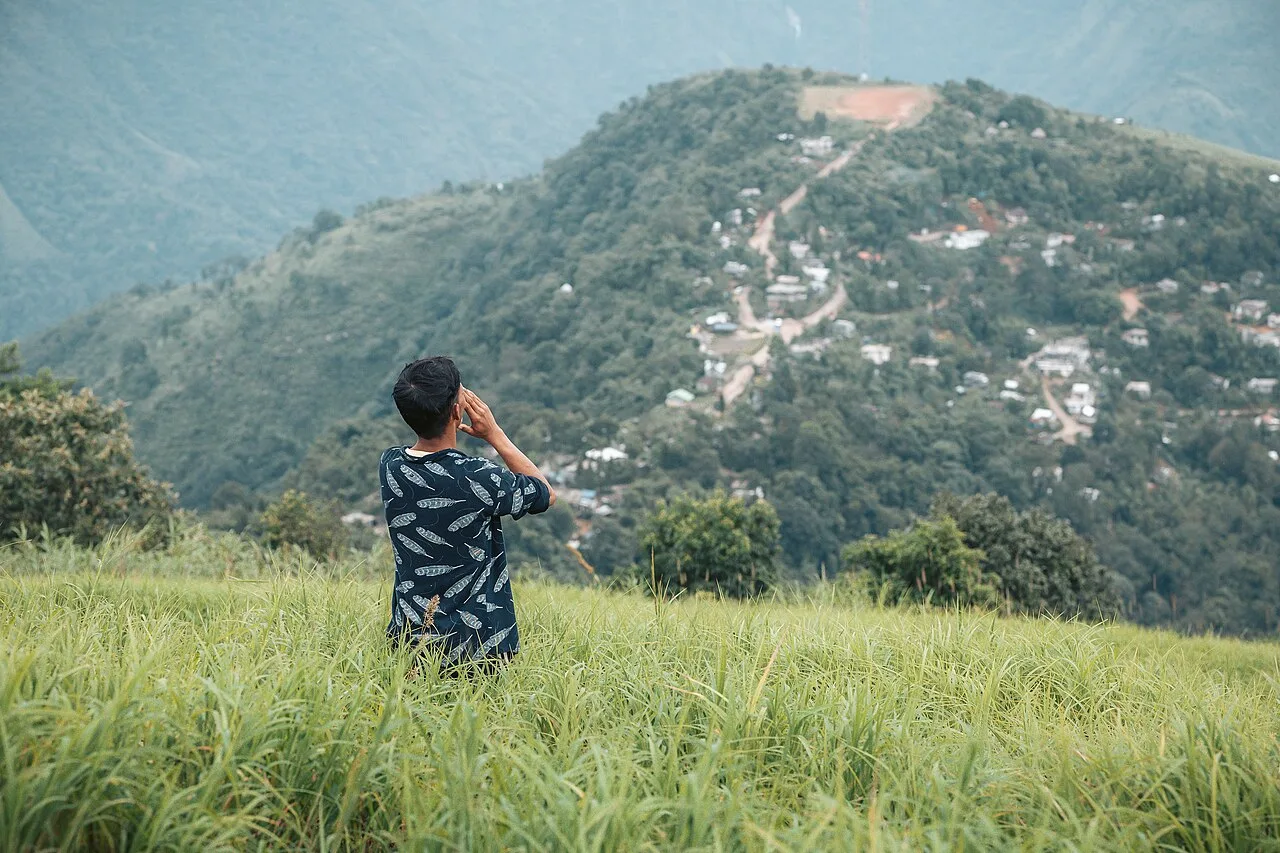
Kongthong lies in the forested, hilly landscape of East Khasi Hills, where village paths and roads pass through cultivated land and green slopes. The wider region is known for heavy monsoon rain, streams and waterfalls, with thick vegetation becoming especially vivid during and after the rains. Conditions can change quickly: fog may reduce visibility, while wet ground can make tracks slippery. The surrounding landscape supports native plants and birdlife, but sightings depend on season, weather and location; no particular species is guaranteed. Visitors should stay on paths indicated by a local host, avoid disturbing wildlife or collecting plants, and carry out litter. Forests, groves and other community-managed areas may have access restrictions.
October to May; the monsoon is dramatic for waterfalls but roads and treks become slippery
The nearest principal railway station by straight-line distance is Kamakhya Junction, roughly 110 km away. The nearest operating airport by straight-line distance is Shillong Airport (Umroi), roughly 75 km away. These figures are calculated from map coordinates — actual road distance is longer, and hill roads mean even short distances can take hours. undefined Kongthong is a village, so the last stretch is by road: Meghalaya Transport Corporation (MTC) and shared taxis from Shillong’s Police Bazaar and Anjalee terminals reach the nearest town, and from there a shared auto, local bus or reserved taxi covers the final few kilometres. Village roads can be narrow and unpaved; a taxi hired for the day from the nearest town is the simplest way to combine Kongthong with nearby sights and get back before dark. When comparing train, bus and flight, count the complete door-to-door time: a flight saves the most time only if the onward road transfer is short, while an overnight train can save a hotel night. Book your return before you leave, because seats fill quickly on weekends, festivals and holidays. Current train numbers, timings, return services and fares are not listed here; check IRCTC and NTES for trains and the airline's own schedule for flights. No Inner Line Permit is needed for Indian visitors to Meghalaya. Many villages, caves, waterfalls and living root bridges charge a small community entry or parking fee, and some sites have their own visitor rules.
Confirm onward and return timings on IRCTC / NTES, the state bus operator or your airline before travel. A dash means current timings or fares have not been verified.
Getting around
Most visitors approach Kongthong from Shillong by road, using a shared taxi, local transport or a vehicle arranged in advance. The final stretch is best discussed with a local host or driver, since services and road conditions can vary. A reserved taxi from the nearest town can make it easier to manage the last leg and combine the village with other stops. Within Kongthong, expect to explore mainly on foot along village lanes and paths; there is no need for boats. Roads may be narrow or unpaved, and parking space can be limited, so ask your driver where to stop without blocking residents’ access. Confirm your return transport before arrival.
Hours, tickets & permissions
Kongthong is an inhabited village, not a ticketed monument with a single established public timetable. There may be no formal entrance gate, but that does not mean every lane, home, grove or cultural site is open to visitors. Arrange a visit through a local host or guide and ask about any community rules, restricted areas, photography limits, entry requirements or fees before setting out. Confirm current access arrangements and any charges with the relevant local host or community representatives; conditions can change. Carry identification if requested by your transport provider or accommodation, and follow local guidance on appropriate dress and conduct.
Facilities
Facilities in the village are modest and may depend on prior arrangements. A host or homestay can usually advise about drinking water, meals, toilets and a local guide, but availability should be checked before travel. Do not assume that public toilets, shops or visitor information desks are present at every stop. Carry drinking water, essential medicines and cash, as card services and ATMs may not be available in the village. Larger selections of food, accommodation, fuel and banking services are more likely in Shillong or other towns along the route. Ask before using household facilities, and take rubbish back with you if disposal arrangements are unclear.
Accessibility
Kongthong is a rural hillside settlement, and its lanes and surrounding paths may be uneven, narrow, sloped or muddy after rain. Walking distances depend on where a vehicle can stop and which homes or sites a host visits. Shade and places to sit may be intermittent, so allow a flexible pace and bring water. Wheelchair and stroller access cannot be assumed; steps, rough surfaces and limited accessible facilities may make movement difficult. Older visitors or anyone with reduced mobility may prefer a vehicle-assisted visit with a local host and a short route selected in advance. Ask about current ground conditions and access before setting out, particularly during the monsoon.
No Inner Line Permit is needed for Indian visitors to Meghalaya. Many villages, caves, waterfalls and living root bridges charge a small community entry or parking fee, and some sites have their own visitor rules. Carry a photo ID, some cash (card and UPI acceptance varies in villages) and a charged phone with offline maps; save the emergency number 112 and your host's contact. Weather changes quickly in the hills; carry warm layers and rain gear, avoid travelling after dark on mountain roads and allow for altitude if you come from the plains. Respect local customs: dress modestly, remove footwear where asked, and always ask before photographing people, homes or rituals.
Photography
Soft morning or late-afternoon light can suit village lanes and the surrounding hills, though fog and cloud often alter visibility. Photograph the landscape from public or host-approved spots, and ask permission before taking portraits, entering homes or recording a person’s whistled call. Some ceremonies, shrines, groves or private areas may not be suitable for photography. Drone use can raise privacy, safety and local-rule concerns; do not fly one without checking applicable permissions and obtaining community consent. Avoid blocking paths or disrupting daily work while composing photographs, and follow any request to stop or delete an image.
Most visitors see Kongthong on a day trip from the nearest town, which has the widest choice of hotels. Community homestays, where available, are the best way to experience village life — book through a known operator or the village's own contact, confirm what is included, and expect simple rooms and shared meals. Confirm the booking and the exact location before you travel, because village addresses can be hard to find.
For a wider East Khasi Hills trip, visitors commonly combine Kongthong with Shillong and the Sohra (Cherrapunji) area, allowing for significant road travel and changing weather. Sohra’s well-known sights include Nohkalikai Falls and Mawsmai Cave; access and conditions can vary, especially in heavy rain. Mawphlang Sacred Forest, near Shillong, is another established regional visit, but it has its own community guidance and rules. These places are not immediate village stops, so avoid trying to fit them all into a short visit. Check road conditions and local access before planning a route, and do not enter sacred or community-managed places without following their rules.
For couples, Kongthong is a chance to slow down: walk the lanes in the soft morning light, share a home-cooked meal and keep the afternoon free. Stay in a nearby homestay or heritage property to make it a quiet overnight escape.
Q: How much time should I allow for Kongthong? A: A village visit needs several hours; allow most of a day if travelling from Shillong and including road travel. Q: When is the best season to visit? A: October to May is generally more practical. Monsoon scenery can be striking, but rain may make roads and paths slippery. Q: Is there an entry ticket or formal gate? A: Do not assume there is a standard ticket. Arrange access with a local host and check any current community rules or charges. Q: Is the village suitable for children or elderly visitors? A: It can be, with a flexible pace and local guidance, but uneven paths and slopes may be difficult. Ask about a vehicle-assisted, shorter visit. Q: Can I stay nearby? A: Homestays or other accommodation may be available by arrangement in the area; confirm availability with a local host, or use Shillong as a base.
Be the first to share photos, stories, advice or a helpful contact for Kongthong (Whistling Village).
Loading…