
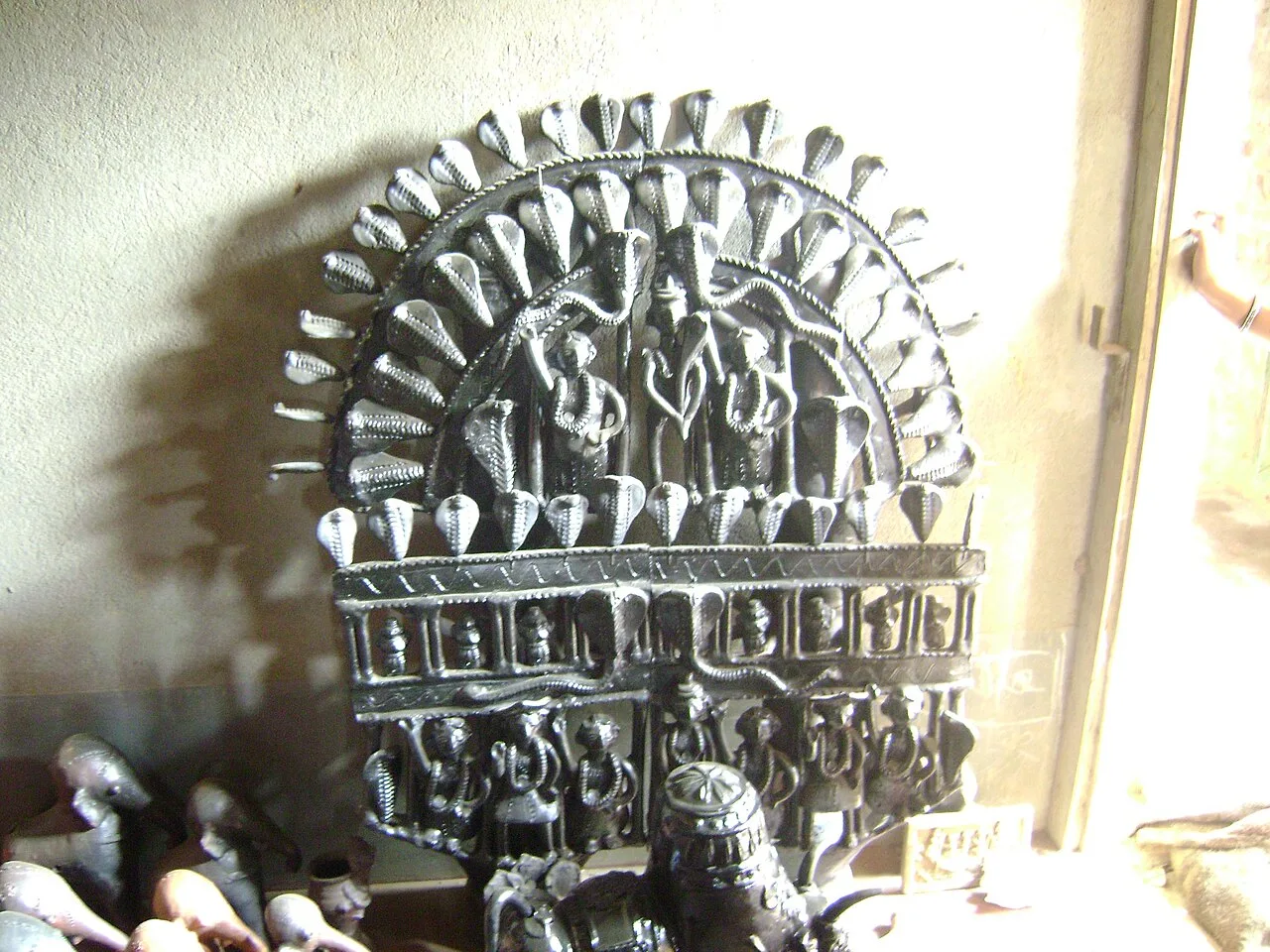
Panchmura
Panchmura is a gram panchayat in Bankura district, West Bengal, known for its terracotta Bankura horse, a folk artefact regarded as India’s national symbol for handicrafts.
Key facts · verified by Ghumoopedia editors
- Type of place
- Community & living culture
- Best time to visit
- October to March for the plains and coast; March to May and October to December for the Darjeeling hills
- Nearest railway station
- Bishnupur · about 20 km (straight line)
- Nearest airport
- Durgapur (Kazi Nazrul Islam) Airport · about 75 km (straight line)
- Verified
- 21 Nov 2026
Plan a trip from Panchmura — a day-by-day route through places nearby.
Panchmura is a gram panchayat within the Taldangra intermediate panchayat. It is located in Khatra subdivision, in Bankura district, West Bengal. Bishnupur lies 21 km (13 mi) away, providing a point of reference for Panchmura’s location. Panchmura is closely associated with the terracotta Bankura horse. This folk artefact is recognised as the national symbol for Indian handicrafts, and it is the main reason visitors know the place. The horse links Panchmura’s name with a traditional craft object. West Bengal stretches from the Himalayan tea gardens of Darjeeling to the mangrove delta of the Sundarbans, with Kolkata's colonial architecture, the terracotta temples of Bishnupur, Tagore's Santiniketan and the Nawabi heritage of Murshidabad. The plains are hot and humid from March to June, receive heavy monsoon rain from June to September and are pleasant from November to February; the Darjeeling hills are cool year-round and cold in winter, and the coast and Sundarbans can be hit by cyclones in May and October–November. The usual best time to visit is October to March for the plains and coast; March to May and October to December for the Darjeeling hills. For official information, see West Bengal Tourism at https://wbtourism.gov.in.
Why it matters
Panchmura is a village and gram panchayat in Bankura district, known particularly for its handmade terracotta craft. Its best-known product, the Bankura horse, is a stylised clay figure made by local artisans and widely used as an emblem of Indian handicrafts. The craft is registered as a Geographical Indication under the name Bankura Panchmura Terracotta Craft; this recognition identifies its regional association but does not make the village itself a protected monument. Craft-making remains part of local working life, rather than a display confined to a museum. Visitors can learn about the process by arranging a respectful visit with artisans or a cooperative, subject to local availability.
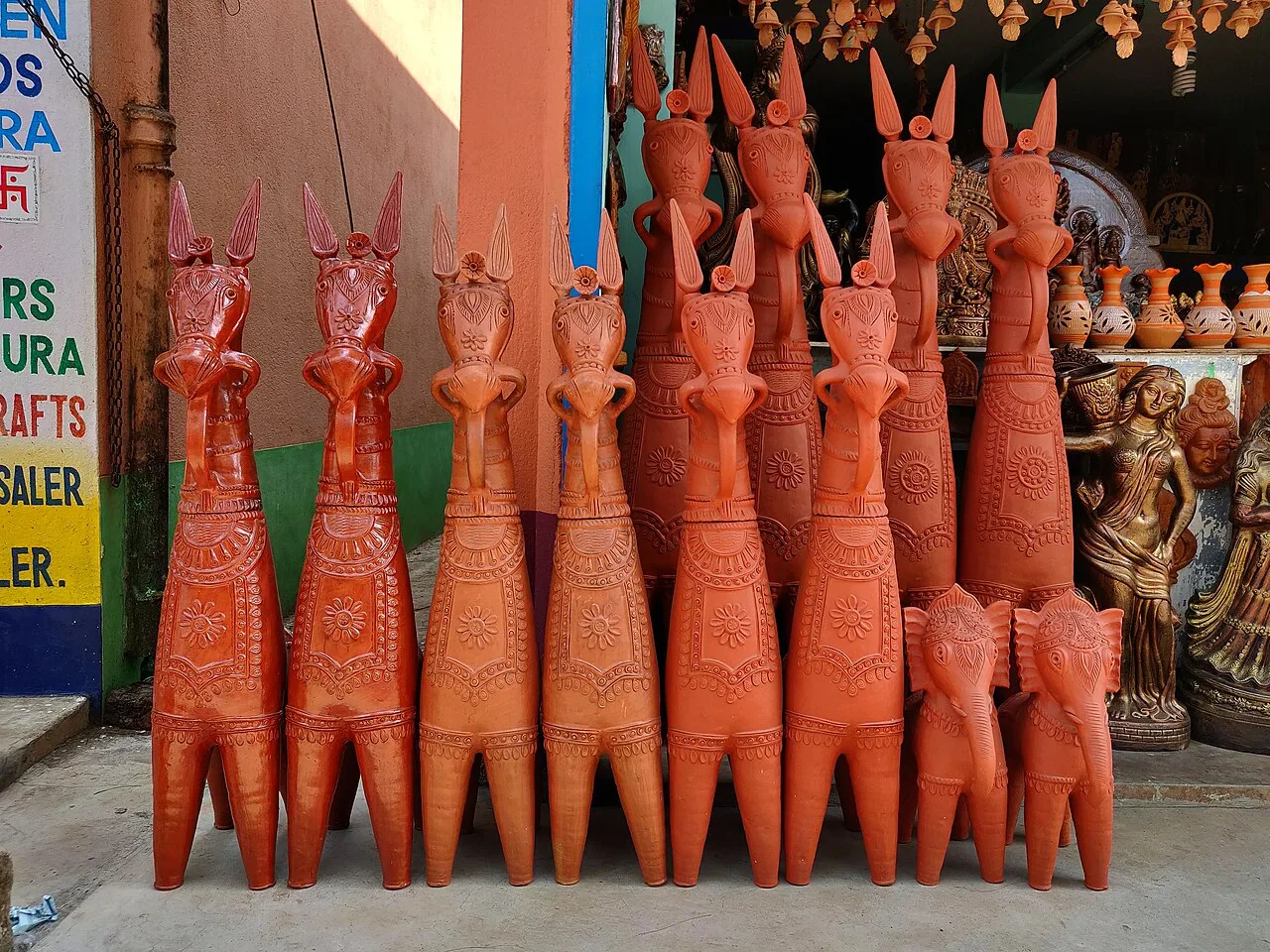
Panchmura’s identity is closely tied to generations of terracotta makers. The craft is traditionally associated with potter-artisan families, including people from the Kumbhakar community, who developed skills in preparing clay, shaping figures and firing them in kilns. The precise beginnings of the village’s horse-making tradition are not firmly documented, so claims of a single founder or exact starting date should be treated cautiously. Terracotta figures from this part of Bankura have served both decorative and ritual purposes. The tall, stylised horse became the craft’s most recognisable form, alongside elephants, human figures and other objects. Artisans pass techniques through family and community practice, adapting size, finish and output to buyers’ needs. In more recent decades, craft organisations, exhibitions and direct sales have helped bring Panchmura work to a wider audience. The Bankura Panchmura Terracotta Craft’s Geographical Indication registration formalised its regional identity, while demand from fairs and urban markets continues to influence production. This is a living craft tradition, not a monument with a documented building or restoration history.
Origin stories & folklore
There is no single well-documented founding legend for Panchmura’s craft. According to local and regional tradition, terracotta horses are sometimes offered to village deities, including Dharma Thakur, as expressions of devotion or fulfilment of a vow. The horse is understood as a symbolic offering; practices vary between communities and households. Such accounts help explain why a familiar craft object can carry meanings beyond decoration, but they should not be taken as a definitive history of when or how the Panchmura tradition began. Visitors should ask before photographing or discussing a ritual object in a private or sacred setting, and should follow the guidance of the people who maintain the practice.
The heart of a visit to Panchmura is meeting the artisans at work. Ask to see each stage of the work, from raw material to finishing; most families work at home or in small courtyard workshops, and a single piece can take hours or days. Many households and cooperative societies welcome visitors who show genuine interest, but this is a working village, not a museum: ask before entering a home or workshop, keep visits short during busy hours, and accept that some families may be away at fairs or markets. Buying directly from the maker or a registered cooperative is the best way to support the craft. Where a product carries a Geographical Indication (GI) tag or a handloom mark, ask for it; prices for handmade work reflect the time and skill involved, so bargain gently, if at all. Some workshops offer short hands-on sessions — ask locally rather than expecting a fixed schedule.
Suggested itineraries
Half day: Arrive and orient yourself (about 20 minutes); visit one or two workshops by prior arrangement (1–2 hours); browse a cooperative or local craft outlet if open (about 30 minutes); take a break and depart. Full day: Begin with an arranged workshop visit (1–2 hours); allow time for a relaxed lunch nearby (about 1 hour); meet another maker or browse craft displays (about 1 hour); spend the remaining time walking through public village lanes and shopping, with breaks. Gentler option: Arrange a vehicle drop near one accessible workshop, keep the visit to a single stop, and rest between activities; confirm the approach and seating with the host beforehand.
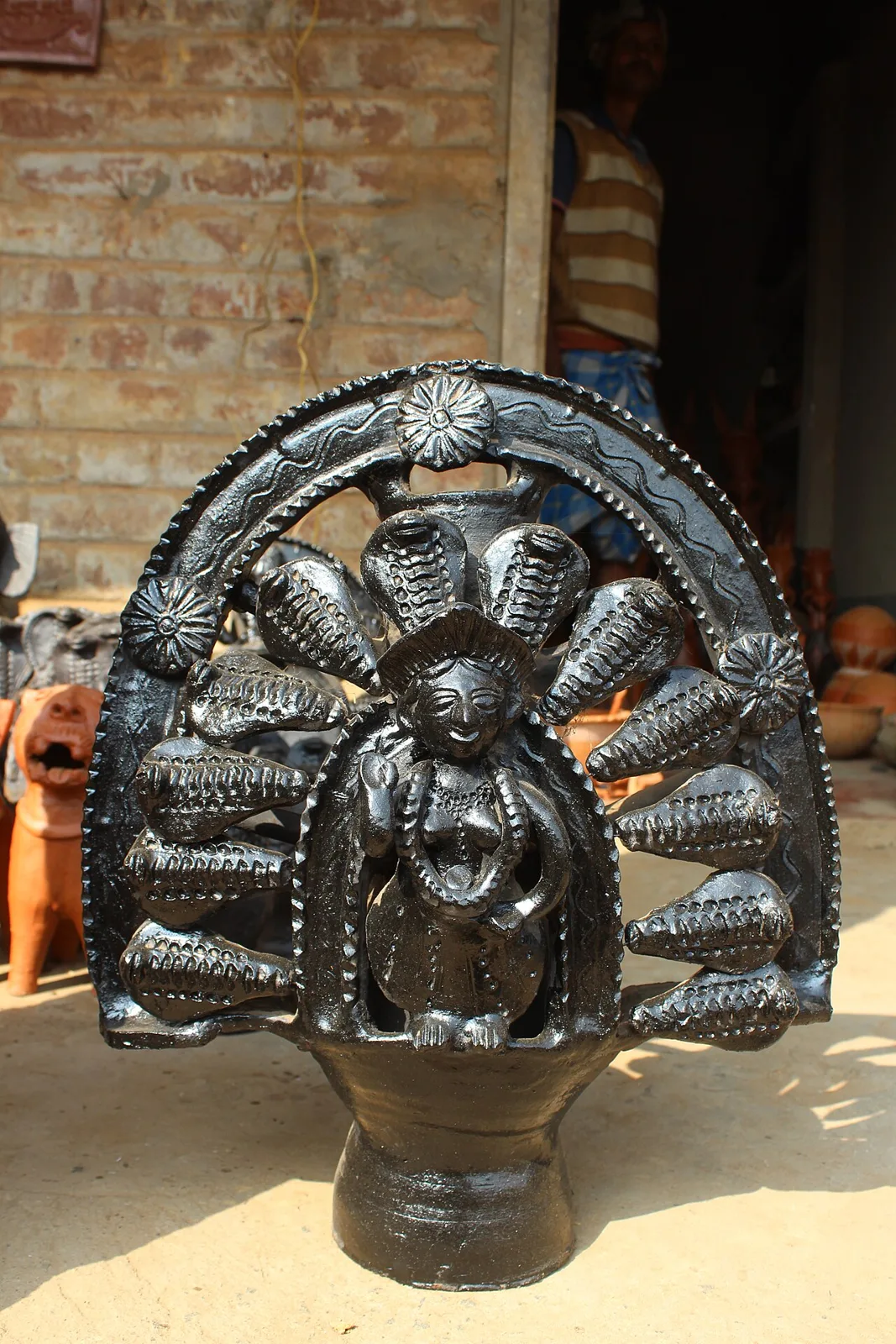
Panchmura’s most visible cultural tradition is the making of terracotta objects in family homes and small workshops. The work involves preparing clay, shaping and detailing pieces, drying them and firing them; methods and designs can differ between makers. Bengali is widely spoken, alongside local speech forms of the region. Jhumur and other folk forms belong to the wider cultural landscape of Bankura, though performances are not guaranteed in the village. Everyday clothing is contemporary and varied, with no visitor dress code specific to the craft. Courteous conversation, asking permission before entering a workspace and buying directly when possible are good ways to engage with local life.
Local communities
Terracotta production is associated with artisan households, traditionally including members of the Kumbhakar potter community. Skills are often passed within families, while individual makers may specialise in shaping, decoration or firing. Some artisans sell independently; others may work with cooperatives, traders or fair organisers. Agriculture and other village livelihoods also form part of local life, so not every household is involved in craft-making or available to visitors. Treat artisans as working hosts rather than performers: ask whether a visit is convenient, do not assume a demonstration is free, and respect a family’s choice not to receive guests.
Festivals & events
Durga Puja, celebrated in autumn, is observed across the region and can bring busier roads and local gatherings. Bengali New Year and other seasonal observances may also shape village activity. Bankura’s wider fair and festival calendar includes craft events and markets, but their schedules and locations can vary from year to year; check locally before planning around one. Nearby Bishnupur is known for its Rash Mela, generally held in the autumn, which can draw substantial crowds. During festivals, transport and accommodation in nearby towns may be busier, and artisans may be away selling at fairs or occupied with orders.
Village food in West Bengal is home cooking: macher jhol (fish curry), shorshe ilish (hilsa in mustard), kosha mangsho, luchi with alur dom, kathi rolls and phuchka in Kolkata, mishti doi, rosogolla and sandesh; in the Darjeeling hills, momos, thukpa, shaphaley and first-flush Darjeeling tea. Panchmura itself may have only tea stalls and small eateries, so ask your host or guide where to eat, or arrange a home-cooked meal in advance — it is often the highlight of a village visit. Carry water and a snack if you plan to spend the whole day, and eat your main meal in the nearest town if no local option is open.
Shopping & local experiences
Look for handmade terracotta horses, elephants, figures and decorative objects, with designs and finishes varying by artisan. Buying directly from the maker or a registered cooperative helps support the craft; ask who made an item and whether any applicable GI identification accompanies it. Handmade pieces take time and can be fragile, so discuss packing and carrying before purchase. Prices reflect labour and skill; bargain gently, if at all. Local shops and fairs may offer other Bankura crafts. Food options are modest and variable, so ask locally what is available rather than expecting a particular dish or restaurant.
Panchmura lies in Bankura’s inland countryside, in a landscape of village settlements, cultivated fields and the red, lateritic soils characteristic of parts of the district. Seasonal ponds and small water bodies may be present around the countryside, but water levels and access change through the year. The wider region includes patches of woodland and dry deciduous vegetation, with trees such as sal and seasonal flowering plants in suitable areas. Birdlife varies with habitat and season; visitors may notice common countryside birds, but sightings are never assured. The monsoon greens the landscape, while summer can be hot and dry. Stay on public paths and do not enter fields or wooded land without permission.
October to March for the plains and coast; March to May and October to December for the Darjeeling hills
The nearest principal railway station by straight-line distance is Bishnupur, roughly 20 km away. The nearest operating airport by straight-line distance is Durgapur (Kazi Nazrul Islam) Airport, roughly 75 km away. These figures are calculated from map coordinates — actual road distance is longer. Howrah, Sealdah and Kolkata stations and Kolkata airport serve the south; New Jalpaiguri station and Bagdogra airport near Siliguri are the gateways to the Darjeeling hills and the Dooars. Panchmura is a village, so the last stretch is by road: West Bengal Transport Corporation, North Bengal State Transport and South Bengal State Transport buses, private buses and shared jeeps in the hills reach the nearest town, and from there a shared auto, local bus or reserved taxi covers the final few kilometres. Village roads can be narrow and unpaved; a taxi hired for the day from the nearest town is the simplest way to combine Panchmura with nearby sights and get back before dark. When comparing train, bus and flight, count the complete door-to-door time: a flight saves the most time only if the onward road transfer is short, while an overnight train can save a hotel night. Book your return before you leave, because seats fill quickly on weekends, festivals and holidays. Current train numbers, timings, return services and fares are not listed here; check IRCTC and NTES for trains and the airline's own schedule for flights. No permit is needed for Indian citizens to visit West Bengal. Entry to the Sundarbans Tiger Reserve needs a forest permit, usually arranged through a registered boat operator or the forest office at Sajnekhali or Canning; trekking in Singalila National Park (Sandakphu) needs an entry permit and a registered guide from Maneybhanjan. Durga Puja in October brings huge crowds to Kolkata, so book transport and stays well ahead.
Confirm onward and return timings on IRCTC / NTES, the state bus operator or your airline before travel. A dash means current timings or fares have not been verified.
Getting around
Most visitors reach Panchmura by road from Bishnupur or another nearby town, using a reserved taxi, local vehicle or shared transport when available. Ask locally about the best point to arrange the final leg, since services and vehicle availability can vary. Within the village, walking is often the simplest way to reach workshops, but confirm directions with residents rather than entering courtyards uninvited. Parking may be informal and limited near homes or workspaces; avoid blocking narrow roads. There are no visitor boat services to plan around.
Hours, tickets & permissions
Panchmura is a living village, not a ticketed monument with a single public entrance. There is usually no general entry ticket for walking through public areas, but workshops are private working spaces and require the maker’s permission. A cooperative, exhibition or organised demonstration may have its own admission or photography rules. Confirm current access arrangements, hours and any fees directly with the workshop, cooperative or event organiser before travelling. Follow any local restrictions, and do not assume that an artisan will be available on arrival.
Facilities
Facilities are village-scale and can be limited. Small shops or eateries may be available, but visitors should check locally for food, drinking water and toilet access rather than rely on a particular facility. Workshops are private premises and may not have visitor amenities. Parking is generally informal; avoid obstructing homes or work areas. ATMs and a broader choice of services are more likely in a nearby town such as Bishnupur. Guides are not necessarily stationed in Panchmura, so arrange a local contact or workshop visit in advance where possible.
Accessibility
The village has ordinary lanes and working courtyards rather than a purpose-built visitor route. Surfaces may be uneven, dusty or muddy after rain, and some workshop entrances can involve a raised threshold or cramped space. Walking distances depend on which makers are available and where they work; there may be little shade between stops. Wheelchair and stroller access cannot be assumed, and accessible toilets may not be available. Older visitors or anyone with limited mobility may find it easier to arrange a vehicle close to a host’s home, visit one workshop, and take seated breaks. Ask the host about the approach before setting out.
No permit is needed for Indian citizens to visit West Bengal. Entry to the Sundarbans Tiger Reserve needs a forest permit, usually arranged through a registered boat operator or the forest office at Sajnekhali or Canning; trekking in Singalila National Park (Sandakphu) needs an entry permit and a registered guide from Maneybhanjan. Durga Puja in October brings huge crowds to Kolkata, so book transport and stays well ahead. Carry a photo ID, some cash (card and UPI acceptance varies in villages) and a charged phone with offline maps; save the emergency number 112 and your host's contact. Heat in summer and heavy rain in the monsoon are the main weather risks; carry water, avoid midday sun and allow extra time when village roads flood. Respect local customs: dress modestly, remove footwear where asked, and always ask before photographing people, homes or rituals.
Visitor rules
Ask before entering a home, courtyard or workshop, and follow the host’s instructions about where to stand. Wear practical clothing and closed or sturdy footwear if walking on uneven lanes. Do not touch unfinished pieces, tools or kilns unless invited. Keep noise low, avoid blocking work, and do not leave litter; carry plastic waste out if no bin is available. Photography may be limited by individual makers, especially around private spaces or rituals, so seek permission first. There is no reason to enter restricted or private areas without an invitation.
Photography
Soft morning or late-afternoon light can bring out the texture and earthy colour of finished terracotta, while a workshop visit may offer useful process details if the artisan agrees. Ask before photographing people, homes, work in progress or religious objects; some makers may prefer not to be photographed. Keep equipment out of the way and do not handle pieces for a picture without permission. Drone use can raise privacy, safety and local-rule concerns, so do not fly one without confirming applicable permissions. Be especially discreet during worship or other private activity.
Most visitors see Panchmura on a day trip from the nearest town, which has the widest choice of hotels. A few villages have homestays or heritage stays; otherwise base yourself in the district town and hire a taxi for the day. Confirm the booking and the exact location before you travel, because village addresses can be hard to find.
Bishnupur is a natural companion visit, with its historic terracotta temple architecture, including Rasmancha, Jor Bangla Temple and Madanmohan Temple. These are separate sites from Panchmura’s working craft village; check local access conditions before visiting. The Dalmadal Cannon is another well-known Bishnupur landmark. Elsewhere in Bankura district, Susunia Hill and Biharinath Hill offer different countryside and landscape experiences, but require separate road planning. Mukutmanipur, known for its dam and reservoir setting, can also be considered as a longer regional excursion. Confirm current routes and conditions locally, and avoid trying to fit distant stops into a short craft visit.
For couples, Panchmura is a chance to slow down: spend an unhurried morning with the makers, choose a piece together directly from the family that made it, share a home-cooked meal and keep the afternoon free. Stay in a nearby homestay or heritage property to make it a quiet overnight escape.
Q: How much time should I set aside for Panchmura? A: A half day can cover an arranged workshop visit and a little browsing; a full day allows a slower pace and more than one artisan visit. Q: When is a good season to visit? A: October to March is generally more comfortable for the plains. Summers can be hot, and monsoon weather may affect road and walking conditions. Q: Is there an entry ticket for the village or workshops? A: The village is not a ticketed monument, but workshops are private spaces. Ask permission and confirm any arrangements or charges with the host. Q: Is Panchmura suitable for children or elderly visitors? A: It can be, with supervision and a flexible plan. Lanes and workshop floors may be uneven, so arrange a short visit and breaks where needed. Q: Can I stay in Panchmura? A: Accommodation options in the village may be limited. Visitors commonly check for lodging in nearby towns such as Bishnupur and confirm availability before travel.
Be the first to share photos, stories, advice or a helpful contact for Panchmura.
Loading…