
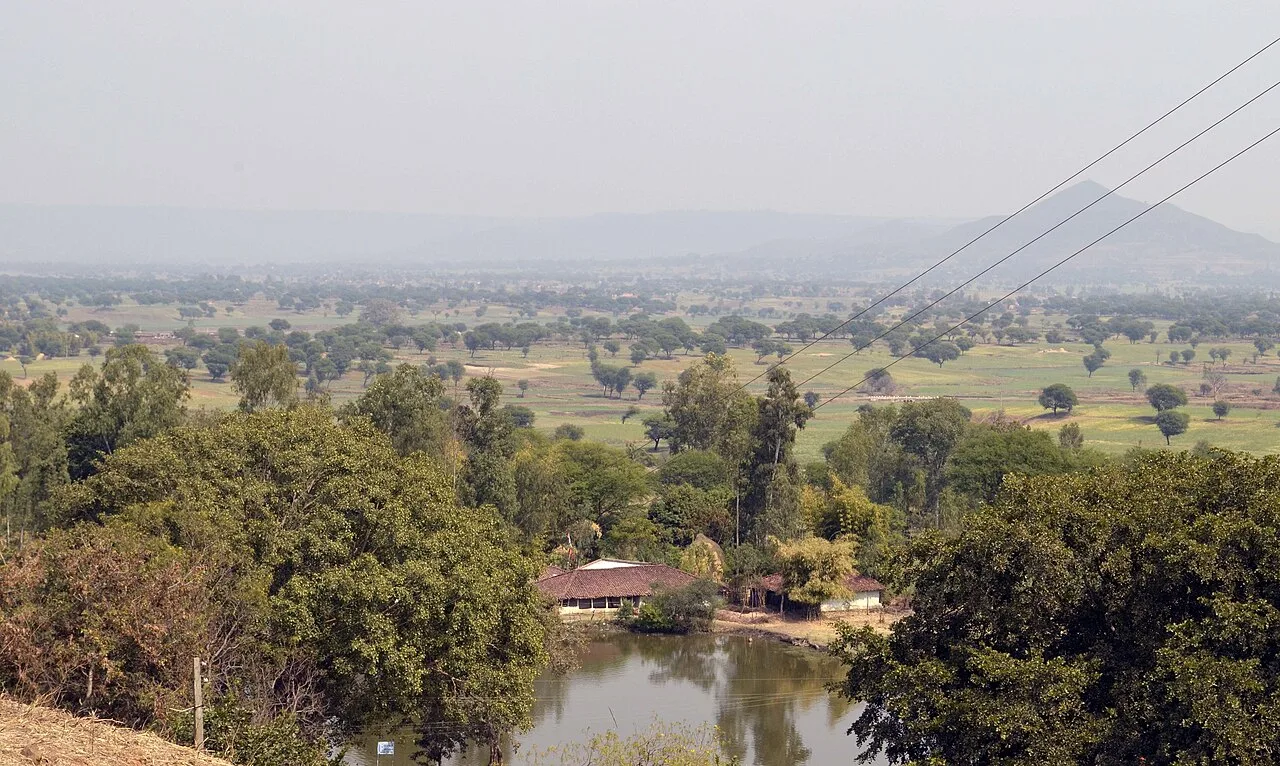
Patangarh (Gond Art Village)
Patangarh, in Madhya Pradesh’s Dindori district, is a Gond village associated with painter Jangarh Singh Shyam and Pardhan Gond artists. Visitors are drawn by its connection to the art known as Gond painting.
Key facts · verified by Ghumoopedia editors
- Type of place
- Community & living culture
- Best time to visit
- October to March
- Verified
- 21 Nov 2026
Within Madhya Pradesh’s Dindori district is the Gond settlement of Patangarh. The painter Jangarh Singh Shyam also came from the village. Many Pardhan Gond artists have roots in Patangarh. Their work is known as Gond painting, connecting the village with both an individual painter and a wider group of artists. These links are the reason the place is of interest to travellers: Patangarh is associated with Jangarh Singh Shyam and with the Pardhan Gond artists whose work carries the Gond painting name. Its significance in this context rests on those associations. Madhya Pradesh holds three UNESCO World Heritage Sites — the temples of Khajuraho, the Buddhist stupas of Sanchi and the Bhimbetka rock shelters — plus the forts and palaces of Gwalior, Orchha and Mandu, the marble gorges of Bhedaghat, the pilgrim towns of Ujjain and Omkareshwar, and some of India's best tiger country in Kanha, Bandhavgarh, Pench and Satpura. The state has very hot summers from March to June (often above 42°C in the north and west), a monsoon from late June to September that greens the forests but closes the tiger reserves' core zones, and a cool, pleasant winter from November to February — the best season for almost everything. The usual best time to visit is October to March. For official information, see Madhya Pradesh Tourism at https://www.mptourism.com.
Why it matters
Patangarh is a Gond village in Dindori district, closely associated with the development and recognition of contemporary Pardhan Gond painting. It is the home village of Jangarh Singh Shyam, whose work brought wider attention to this artistic tradition, and of other artists whose paintings are often described as Gond art or Jangarh Kalam. The village matters as a living community and place of artistic practice, not simply as a gallery or monument. Its importance is regional and cultural: visitors can learn about art and daily life directly from residents when visits are arranged respectfully. No UNESCO listing or ASI-protected monument status for Patangarh is verified; ask locally about access and any community heritage space.
Patangarh is a Gond village in present-day Dindori district, in a region with long-standing Adivasi communities and rural livelihoods. Detailed written histories of the village itself, including a reliably documented founding date or named builders, are not readily established; its history is best approached through community accounts rather than an invented chronology. The village became widely known through the life and work of Jangarh Singh Shyam, born in Patangarh in 1960. In the early 1980s, artist Jagdish Swaminathan invited him to work in Bhopal, where the Bharat Bhavan arts centre was developing. Jangarh adapted images and visual ideas rooted in his experience into a distinctive contemporary painting practice. His success brought new attention to Pardhan Gond artists and encouraged other artists from Patangarh and the region to work and exhibit beyond their home communities. The name Jangarh Kalam is sometimes used for this evolving body of work; it should not be mistaken for a single unchanging style shared by every artist. Jangarh died in 2001. Today, artistic practice and village life continue, while the wider art market and exhibition world have changed how some works are made, shown and sold.
Origin stories & folklore
Visitors may hear family histories, village memories or stories connected with particular places; these are best understood as local accounts and should be shared only with the consent of the people telling them. Gond painting can include animals, plants, human figures and imaginative beings, but interpretations differ between artists and works. A painted creature should not automatically be treated as a sacred figure or as evidence of one universal Gond myth. If a host or artist explains a story behind an image, listen to their framing and ask before recording or repeating it. Some beliefs, sites and ceremonial knowledge may be private.
Spend time in Patangarh at the community's pace: walk the village lanes with a local guide or host, learn about traditional houses, farming, weaving and food, and visit any community museum or heritage centre. Ask your host which places are open to visitors — some sacred groves, shrines and ceremonies are not — and follow their lead. Buying textiles, baskets or other handmade goods directly from the makers, staying in a community homestay and eating locally cooked meals are the best ways for your visit to benefit the village.
Suggested itineraries
Half day: Meet your host; take a gentle village-lane walk; visit an artist or community space if invited; finish with a locally prepared meal or tea (about 3–4 hours). Full day: Begin with a hosted village walk; spend time with an artist or learn about daily livelihoods; pause for lunch; visit any locally approved heritage space; leave time for conversation and a direct craft purchase (about 6–8 hours). Gentler option: Arrange a vehicle drop close to the host’s home or workshop, keep walking to a short, level stretch, and take seated breaks; confirm access in advance.
Patangarh’s cultural life brings together village routines and the work of Pardhan Gond artists. Painting is a notable contemporary practice, with artists developing individual approaches rather than following one fixed template. Farming, food preparation and other household or community activities shape everyday life; visitors should ask a host what is appropriate to observe. Music, dance, clothing and language can vary by family, occasion and generation, so it is better not to expect a staged performance or a single uniform tradition. Gondi and Hindi may be used in the area, though language ability varies. A local host can help with introductions and explain customs in context.
Local communities
Patangarh is a Gond village and is particularly associated with Pardhan Gond artists. The Pardhan community has historically held distinct roles within Gond society, but individual identities and livelihoods are diverse and should not be reduced to a single description. Residents may combine artistic work with farming, household responsibilities, wage work and other local livelihoods. Not every resident is an artist, and not every artist works in the same way. Visitors can support local people by arranging visits through a willing host, buying directly from makers when available, and asking permission before entering homes, workshops or community spaces.
Festivals & events
Festival observances are shaped by families and local practice; schedules and public access can vary from year to year. Regional Hindu festivals such as Diwali and Dussehra may be observed, while community and seasonal gatherings may also take place. Ask a local host whether any event is open to visitors rather than assuming that a ceremony is a public attraction. Nearby towns may hold larger seasonal fairs, but current details should be checked locally. During a village gathering, roads and shared spaces may be busier than usual; keep clear of processions and ceremonies unless invited.
Village food in Madhya Pradesh is home cooking: poha with jalebi for breakfast, bhutte ka kees, dal bafla and dal baati, Indore's sarafa night-market snacks, Bhopal's seekh kebabs and biryani, mawa-bati and gajak sweets, and mahua-based tribal dishes in forest districts. Patangarh itself may have only tea stalls and small eateries, so ask your host or guide where to eat, or arrange a home-cooked meal in advance — it is often the highlight of a village visit. Carry water and a snack if you plan to spend the whole day, and eat your main meal in the nearest town if no local option is open.
Shopping & local experiences
When artists are available and willing to sell, buying paintings directly from their makers is a way to support local creative work. Ask about the artist, materials, care and permission before photographing a work; prices and availability are set locally and are not listed here. Handmade goods may not be on display every day, so arrange a visit in advance rather than expecting a permanent shop. In nearby towns, look for locally made crafts and seasonal produce, but check their origin before describing an item as village-made. A hosted meal can also offer a respectful introduction to local food traditions.
Patangarh lies in the rural landscape of Dindori district, where village settlements, cultivated land and wooded areas form a varied setting. The appearance of the surroundings changes with the seasons: monsoon rains generally green the landscape, while dry months can bring dusty paths and exposed fields. Local trees, crops and wildlife depend on the specific route and season, so a village walk is not a guaranteed wildlife excursion. Birds may be noticed around fields and settlement edges, but sightings vary. Ask before walking into farmland, wooded areas or places used by residents. Do not assume that a grove, water source or uncultivated patch is open for recreation; some places may have community or sacred significance.
October to March
These figures are calculated from map coordinates — actual road distance is longer. Bhopal, Indore, Jabalpur and Gwalior are the main rail and air gateways; Khajuraho has its own airport and station, Jhansi (UP) serves Orchha and Datia, and Pipariya is the railhead for Pachmarhi. Patangarh is a village, so the last stretch is by road: Madhya Pradesh State Road Transport Corporation buses, private sleeper coaches between the big cities, and shared jeeps and autos in smaller towns reach the nearest town, and from there a shared auto, local bus or reserved taxi covers the final few kilometres. Village roads can be narrow and unpaved; a taxi hired for the day from the nearest town is the simplest way to combine Patangarh with nearby sights and get back before dark. When comparing train, bus and flight, count the complete door-to-door time: a flight saves the most time only if the onward road transfer is short, while an overnight train can save a hotel night. Book your return before you leave, because seats fill quickly on weekends, festivals and holidays. Current train numbers, timings, return services and fares are not listed here; check IRCTC and NTES for trains and the airline's own schedule for flights. No permit is needed to visit Madhya Pradesh. Tiger safaris in Kanha, Bandhavgarh, Pench, Satpura and Panna must be booked in advance on the official MP Forest online portal — zones and gates sell out weeks ahead in peak season, and the core zones are closed during the monsoon (roughly July to mid-October). Boating and angling in the National Chambal Sanctuary also need forest-department bookings.
Getting around
Plan to reach the wider Dindori area first, then confirm the final road journey to Patangarh with your host. Local buses and shared vehicles may serve towns in the region; a reserved taxi can be more practical for the final leg and a return journey. Inside the village, walking is usually the most considerate way to get around, subject to local guidance. Roads may be narrow or unpaved, and parking should be arranged without blocking homes or farm access.
Hours, tickets & permissions
Patangarh is a living village, not a conventional monument with verified public opening hours. Arrange a visit in advance with a local host, artist or community contact, and confirm which homes, workshops or heritage spaces are open. Ask about any visitor registration, ID request, photography conditions or contribution expected for a hosted activity. Confirm current access arrangements and any applicable fees locally before travelling; do not enter private or restricted places without permission.
Facilities
Facilities in the village should not be assumed. Toilets, drinking water, food, parking and a guide may be available through a host, but arrangements vary and should be confirmed before arrival. Carry drinking water and essential medicines, and ask whether a meal can be arranged rather than expecting a restaurant. Dindori town is the more practical place to check for general services, cash access and supplies, though availability can change. Mobile coverage and payment options may be inconsistent in rural areas. Leave enough time for the return journey and do not rely on finding an ATM or public toilet at the village.
Accessibility
Village lanes and approaches may be uneven, narrow or unpaved, with limited shade and possible mud during the monsoon. A visit may involve walking between homes or activity spaces, and step-free routes, ramps and accessible toilets are not verified. Wheelchair and stroller access therefore cannot be guaranteed. Older visitors or anyone with limited mobility may find a short visit arranged around one accessible host location more comfortable than a full village walk. Discuss mobility needs with the host beforehand, ask about vehicle access and resting places, and avoid fields or rough paths unless they are suitable for your group.
No permit is needed to visit Madhya Pradesh. Tiger safaris in Kanha, Bandhavgarh, Pench, Satpura and Panna must be booked in advance on the official MP Forest online portal — zones and gates sell out weeks ahead in peak season, and the core zones are closed during the monsoon (roughly July to mid-October). Boating and angling in the National Chambal Sanctuary also need forest-department bookings. Carry a photo ID, some cash (card and UPI acceptance varies in villages) and a charged phone with offline maps; save the emergency number 112 and your host's contact. Heat in summer and heavy rain in the monsoon are the main weather risks; carry water, avoid midday sun and allow extra time when village roads flood. Respect local customs: dress modestly, remove footwear where asked, and always ask before photographing people, homes or rituals.
Visitor rules
Treat Patangarh as a lived-in village, not an open-air exhibit. Arrange visits with a host, ask before entering homes, workshops or courtyards, and follow guidance about places that are private or restricted. Wear practical, modest clothing and sturdy footwear suited to rural paths. Ask before photographing people, artwork, interiors or ceremonies; respect any refusal or no-camera request. Avoid littering and single-use plastic where possible, and do not disturb crops, animals or community spaces. Keep noise low and do not touch or handle artworks without the maker’s permission.
Photography
Soft morning or late-afternoon light can suit village scenes and artwork, but the best setting depends on the host and the day. Ask permission before photographing residents, children, homes, paintings or work in progress; agree whether images may be shared online or used commercially. Some ceremonies, private spaces or artworks may be off limits. Do not assume that a camera is welcome simply because a visit has been arranged. Drone use may be subject to aviation rules and local restrictions, and can intrude on residents; do not fly without checking both legal requirements and community consent.
Most visitors see Patangarh on a day trip from the nearest town, which has the widest choice of hotels. Community homestays, where available, are the best way to experience village life — book through a known operator or the village's own contact, confirm what is included, and expect simple rooms and shared meals. Confirm the booking and the exact location before you travel, because village addresses can be hard to find.
Dindori town is the regional centre to consider for supplies and onward travel. Ghughua Fossil National Park, also known as the National Fossil Park, is a notable district attraction for visitors interested in fossil-bearing geological heritage; confirm its current access arrangements before setting out. Amarkantak, a major pilgrimage and natural destination in the wider region, can be considered as a separate excursion, but it is not a village-side stop and requires route planning. Check road conditions and realistic travel time locally before combining destinations, and avoid assuming that public transport connects them conveniently.
For couples, Patangarh is a chance to slow down: walk the lanes in the soft morning light, share a home-cooked meal and keep the afternoon free. Stay in a nearby homestay or heritage property to make it a quiet overnight escape.
Q: How much time should I allow for Patangarh? A: Allow at least a half day for a hosted visit; a full day leaves time for conversation and a slower pace. Q: When is the best season to visit? A: October to March is generally the more comfortable period in Madhya Pradesh. Confirm road and local conditions before travelling. Q: Is there an entry ticket or can I arrive without notice? A: No general ticket information is verified. Arrange access with a local host and confirm any current conditions in advance. Q: Is Patangarh suitable for children or elderly visitors? A: It can be, with a short hosted visit and suitable transport, but paths may be uneven and facilities limited. Discuss mobility needs beforehand. Q: Where can I stay nearby? A: Ask your host about community accommodation or check lodging availability in Dindori before travel.
Be the first to share photos, stories, advice or a helpful contact for Patangarh (Gond Art Village).
Loading…