
Sarthebari
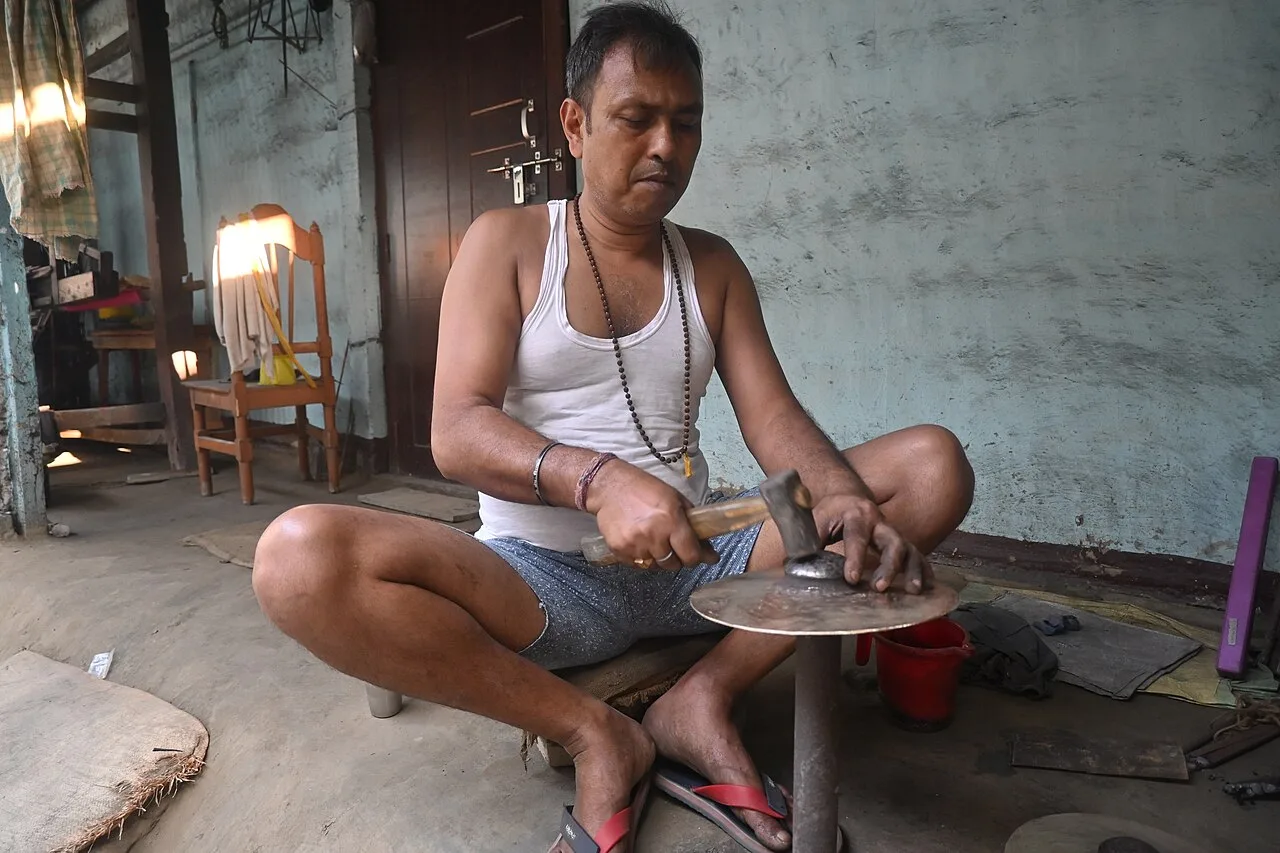
Sarthebari is a settlement in Assam’s Barpeta district, described as both a village and a town with a town area committee. Visitors are drawn by its bell-metal craft.
Key facts · verified by Ghumoopedia editors
- Type of place
- Community & living culture
- Best time to visit
- October to April
- Nearest railway station
- Barpeta Road · about 25 km (straight line)
- Verified
- 21 Nov 2026
Plan a trip from Sarthebari — a day-by-day route through places nearby.
Sarthebari, pronounced /ˌsɑːθəˈbɑːrɪ/, is in Barpeta district in Assam. It is described as a village as well as a town, and has a town area committee. The settlement is known for Sarthebari bell-metal craft, ranked as Assam’s second-largest handicraft after bamboo craft. This craft is a reason for visitors to take an interest in the place and its local identity. Nearby villages include Amrikhowa, Panchagram, Byaskuchi, Panagaortop, Namsala, Gomura and Karakuchi. Assam’s Vaishnavite satras, Ahom heritage, Bihu festivals and silk-weaving traditions shape everyday life well beyond the major monuments. The Brahmaputra plains are hot and humid from April to September, with heavy monsoon rain and seasonal floods. Winters are mild and pleasant, with morning fog along the river. The usual best time to visit is October to April. For official information, see Assam Tourism at https://tourism.assam.gov.in.
Why it matters
Sarthebari is a town and town area committee in Barpeta district, western Assam. Its importance is especially local and regional: it is known for bell-metal work, made by artisans in household workshops and associated with the area’s craft economy. The craft gives visitors a way to encounter skilled making as part of everyday life rather than as a display confined to a museum. Sarthebari is also connected to nearby villages including Amrikhowa, Panchagram, Byaskuchi, Panagaortop, Namsala, Gomura and Karakuchi. The craft is widely described as one of Assam’s significant handicrafts, alongside bamboo work. No UNESCO listing or ASI-protected monument status for Sarthebari itself is established here; check official sources for current recognition details.
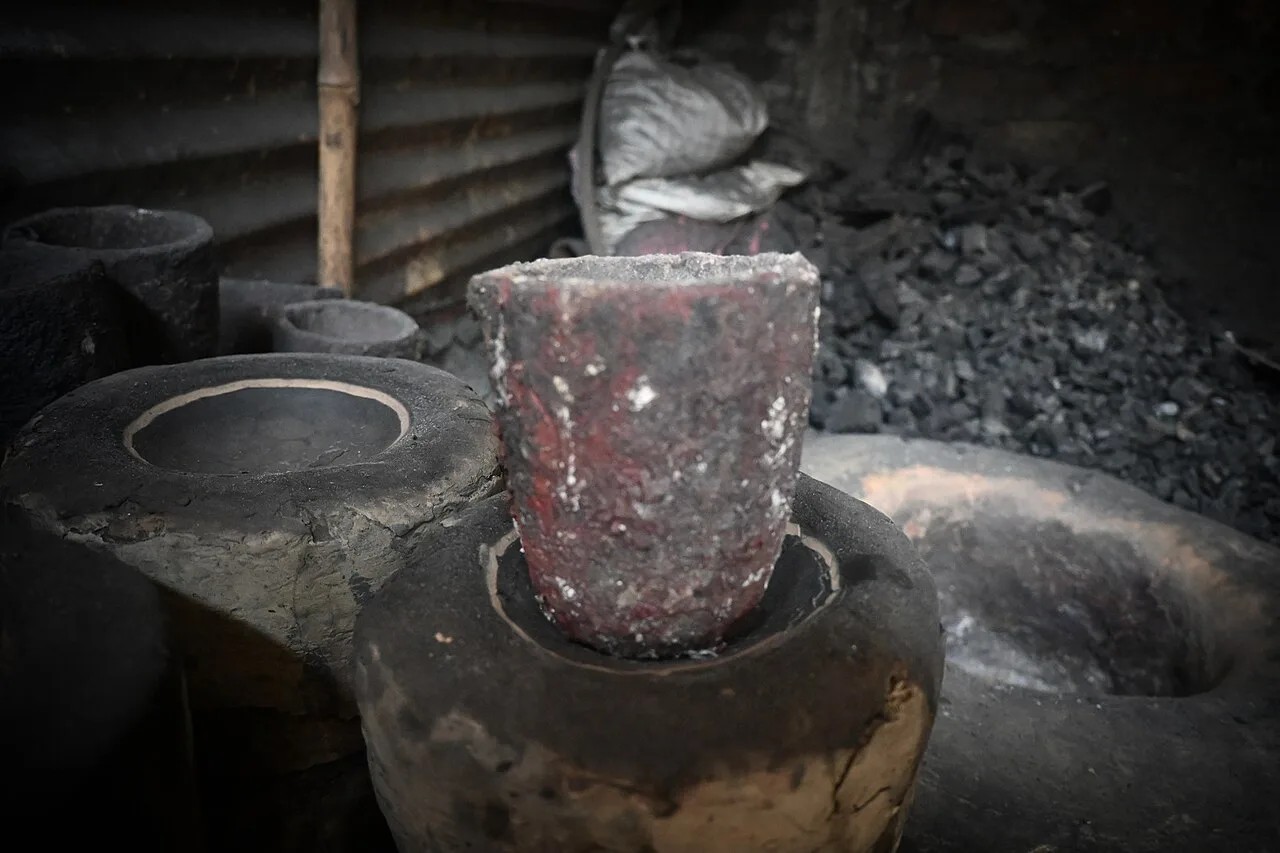
The settlement is in Barpeta district, an area where Assamese Vaishnavite institutions, agriculture and local markets have shaped community life over time. Sarthebari’s best-known heritage is its bell-metal craft, maintained through practical knowledge passed among artisan households. Making is not simply a finished-product trade: it involves preparing metal, forming and shaping it, and finishing vessels and other objects. The particular tools and methods can vary by workshop, so visitors should ask artisans to explain their own practice rather than assume that every family works identically. The craft remains part of the living economy, with production taking place in homes and small courtyard workshops, as well as through cooperative societies. Work is carried out for household use, local sale and wider markets. This continuity has also brought change: makers respond to buyers’ preferences, market access and the availability of materials while retaining skilled handwork. Sarthebari is a lived-in settlement, not a conserved historic complex, and there is no single monument restoration narrative that defines its history. For detailed dates, named artisan lineages or records of cooperatives, consult local makers and district or state cultural sources.
Origin stories & folklore
As in many craft communities, visitors may hear local accounts about how a workshop, family practice or particular object began. Treat such stories as oral tradition or family memory rather than verified historical fact, and ask the person sharing them how they understand the story. The making itself can carry meanings of skill, continuity and livelihood for artisan families, but visitors should not assume that every object has a ritual purpose or that there is one shared belief about the craft. Listening respectfully is preferable to presenting an unverified tale as the town’s definitive origin story.
The heart of a visit to Sarthebari is meeting the artisans at work. Ask to see each stage of the work, from raw material to finishing; most families work at home or in small courtyard workshops, and a single piece can take hours or days. Many households and cooperative societies welcome visitors who show genuine interest, but this is a working village, not a museum: ask before entering a home or workshop, keep visits short during busy hours, and accept that some families may be away at fairs or markets. Buying directly from the maker or a registered cooperative is the best way to support the craft. Where a product carries a Geographical Indication (GI) tag or a handloom mark, ask for it; prices for handmade work reflect the time and skill involved, so bargain gently, if at all. Some workshops offer short hands-on sessions — ask locally rather than expecting a fixed schedule.
Suggested itineraries
Half day: Arrive and orient yourself in the settlement; visit one workshop by prior local arrangement; allow time to watch a stage of the work and speak with the maker; browse cooperative or maker-sold items; depart. Full day: Begin with a locally arranged workshop visit; take a break for a meal nearby; visit another willing maker or cooperative; spend time in the local market; continue to Barpeta town if transport and time allow. Gentler option: Arrange a vehicle close to one accessible workshop, keep the visit seated and brief, and skip market walks or additional stops.
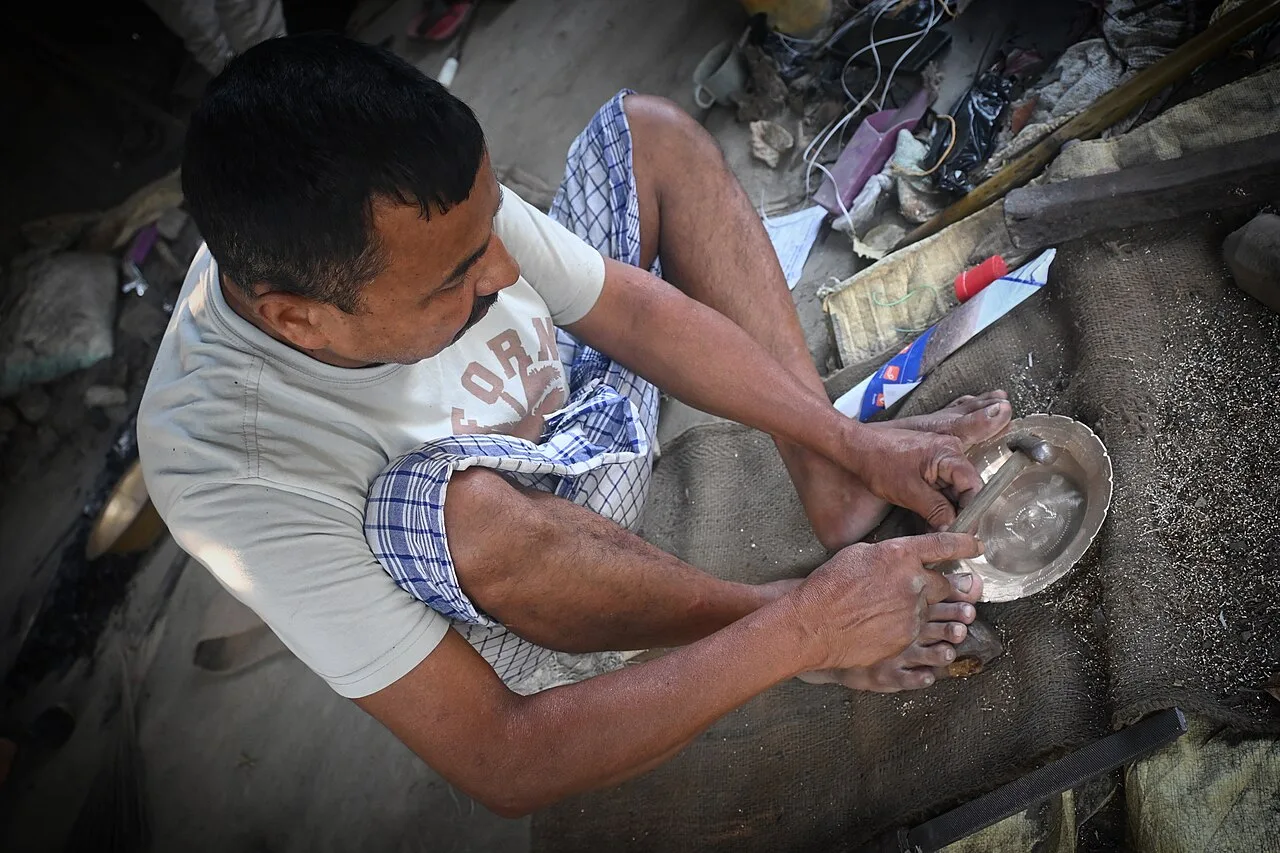
Everyday culture in Sarthebari is closely connected with artisan work, household life, local exchange and the agricultural rhythms of Barpeta district. Assamese is widely used in the region; other languages may also be heard, so visitors can ask politely what language a host prefers. Assam’s Bihu celebrations bring seasonal music and dance into community life, while devotional singing and Vaishnavite traditions are part of the wider Barpeta cultural landscape. Dress is generally practical and contemporary, with traditional clothing also worn for festivals and religious occasions. A workshop visit is an opportunity to learn from makers, not a staged performance: ask before entering, avoid interrupting concentrated work and follow the household’s lead.
Local communities
Sarthebari’s bell-metal artisans and their families are central to the town’s public identity and local livelihoods. Much of the work takes place in household or courtyard workshops, and some makers are connected with cooperative societies. The wider settlement and nearby villages include people engaged in agriculture, trading, transport, services and other occupations. Community life is not limited to craft production, and not every household is an artisan household. Visitors should avoid treating makers as attractions or assuming that family knowledge is available for public viewing. Ask permission before observing, buying or photographing, and respect a decision not to host a visit.
Festivals & events
Bihu is celebrated across Assam and is a lively part of the region’s seasonal calendar: Rongali Bihu is associated with spring, Bhogali Bihu with the winter harvest season, and Kongali Bihu with autumn. Barpeta town is known for Vaishnavite religious celebrations, including Doul Utsav around the spring festival period. These are regional occasions rather than a guaranteed event schedule for Sarthebari itself. Local fairs and market activity may also affect workshop availability. Festival periods can bring larger crowds, busier roads and more demand for local transport; confirm current celebrations and access arrangements locally before planning a visit.
Village food in Assam is home cooking: masor tenga (a tangy fish curry), khar, duck with ash gourd, pitha rice cakes, aloo pitika and, of course, Assam tea. Sarthebari itself may have only tea stalls and small eateries, so ask your host or guide where to eat, or arrange a home-cooked meal in advance — it is often the highlight of a village visit. Carry water and a snack if you plan to spend the whole day, and eat your main meal in the nearest town if no local option is open.
Shopping & local experiences
Bell-metal objects are the principal craft items to look for, with pieces and designs varying by maker. Buying directly from an artisan or a registered cooperative is a practical way to support local work. Ask who made an item, how it was produced and how it should be cared for; do not assume that every object carries a certification or mark. Handmade prices reflect time and skill, so bargain gently, if at all. Local shops or markets may also offer everyday goods and regional snacks, but selection varies. Ask before photographing products or workshops, and request a receipt when available.
Sarthebari lies in the Brahmaputra plains of Assam, in a largely settled rural landscape shaped by fields, village roads and seasonal rain. The wider region experiences a humid monsoon, and heavy rainfall can affect road conditions and bring seasonal flooding in low-lying areas. Agricultural plots, homestead trees and small water channels form much of the everyday scenery around the settlement. Birdlife may be noticed around fields and water, but sightings vary by season and location; this is not a designated wildlife-viewing stop. Visitors should not expect forest trails or a managed nature reserve within the town. During the wet season, check local conditions and avoid entering flooded or muddy areas without advice.
October to April
The nearest principal railway station by straight-line distance is Barpeta Road, roughly 25 km away. The nearest operating airport by straight-line distance is Lokpriya Gopinath Bordoloi International Airport, Guwahati, roughly 45 km away. These figures are calculated from map coordinates — actual road distance is longer. undefined Sarthebari is a village, so the last stretch is by road: Assam State Transport Corporation (ASTC) and private Volvo/sleeper coaches reach the nearest town, and from there a shared auto, local bus or reserved taxi covers the final few kilometres. Village roads can be narrow and unpaved; a taxi hired for the day from the nearest town is the simplest way to combine Sarthebari with nearby sights and get back before dark. When comparing train, bus and flight, count the complete door-to-door time: a flight saves the most time only if the onward road transfer is short, while an overnight train can save a hotel night. Book your return before you leave, because seats fill quickly on weekends, festivals and holidays. Current train numbers, timings, return services and fares are not listed here; check IRCTC and NTES for trains and the airline's own schedule for flights. No Inner Line Permit is needed to visit Assam.
Confirm onward and return timings on IRCTC / NTES, the state bus operator or your airline before travel. A dash means current timings or fares have not been verified.
Getting around
On arrival, local buses, shared autos and reserved taxis may be used for the last road leg from a nearby town; availability can vary, so arrange a return ride before setting out. Roads within the settlement may be narrow, and some workshop visits involve short walks from the vehicle. Walking is useful for nearby lanes, but ask locally for directions and avoid blocking household entrances or work areas. A taxi hired for the day can make it easier to combine Sarthebari with other places in Barpeta district and return before dark. Confirm the road condition and pickup point with your driver.
Hours, tickets & permissions
Sarthebari is a lived-in town rather than a ticketed attraction with one central entrance. Workshops and cooperative societies set their own visiting arrangements, and a family may be busy, away or unable to receive visitors. There is no general visitor permit known to be required for an ordinary town visit, but private homes and workspaces are not public-access areas. Ask before entering and confirm any local entry rules, fees or photography conditions directly with the host or managing organization. Check current hours and charges locally rather than relying on assumed schedules.
Facilities
Facilities are those of a working town, not a purpose-built visitor centre. Food, small shops and basic services may be available locally, while a wider choice is more likely in a nearby town; check before relying on a particular option. Public toilets, drinking-water points, visitor information desks and formal guides may not be consistently available. Carry drinking water and any personal essentials, and ask your driver or host about suitable facilities. Parking is informal and space near homes or workshops can be limited. ATMs and more extensive services are best confirmed in Barpeta or another larger nearby town.
Accessibility
The settlement is generally approached by road, but workshop lanes may be narrow, uneven or partly unpaved, especially after rain. Visiting a maker can involve walking from a vehicle and standing or sitting in a household work area; steps and thresholds may be present. Do not assume ramps, accessible toilets or step-free entrances. Wheelchair and stroller access will depend on the particular lane and host’s workspace, so explain needs before arranging a visit. Older visitors may find a reserved vehicle, short visit and seated demonstration more comfortable. Shade and seating are not guaranteed outdoors; plan breaks and avoid slippery ground.
No Inner Line Permit is needed to visit Assam. Carry a photo ID, some cash (card and UPI acceptance varies in villages) and a charged phone with offline maps; save the emergency number 112 and your host's contact. Heat in summer and heavy rain in the monsoon are the main weather risks; carry water, avoid midday sun and allow extra time when village roads flood. Respect local customs: dress modestly, remove footwear where asked, and always ask before photographing people, homes or rituals.
Visitor rules
Sarthebari is a working community: ask permission before entering any home, courtyard, workshop or cooperative space. Follow the host’s instructions, keep clear of tools and hot or sharp materials, and do not touch unfinished work unless invited. Wear practical footwear for uneven lanes and dress respectfully when visiting religious places nearby. Keep voices and behaviour considerate, avoid blocking roads or doorways, and take litter away rather than leaving plastic behind. Some families may decline visitors or photography; accept this without pressure. Confirm locally whether any specific workshop or event has additional rules.
Photography
Soft morning or late-afternoon light can suit views of lanes and workshop exteriors, but the best conditions depend on weather and the host’s schedule. Always ask before photographing artisans, family members, homes, tools or work in progress; consent to a visit does not automatically include consent to take pictures. Some makers may prefer that particular methods or unfinished pieces not be photographed. Keep equipment out of the way in small workspaces and avoid flash if it distracts people. Drone use can raise privacy and aviation-rule concerns; do not fly one without the required permissions and clear local consent.
Most visitors see Sarthebari on a day trip from the nearest town, which has the widest choice of hotels. A few villages have homestays or heritage stays; otherwise base yourself in the district town and hire a taxi for the day. Confirm the booking and the exact location before you travel, because village addresses can be hard to find.
Barpeta town is the main nearby cultural centre to consider combining with a Sarthebari visit. Barpeta Satra is a significant Vaishnavite institution known for its religious and cultural life; visitors should check local access and etiquette before going. Barpeta Road is a useful nearby town for transport connections and services. The surrounding villages named in local descriptions include Amrikhowa, Panchagram, Byaskuchi, Panagaortop, Namsala, Gomura and Karakuchi, though they are primarily lived-in settlements rather than guaranteed visitor attractions. Check road conditions and allow enough time for the return journey when planning multiple stops.
For couples, Sarthebari is a chance to slow down: spend an unhurried morning with the makers, choose a piece together directly from the family that made it, share a home-cooked meal and keep the afternoon free. Stay in a nearby homestay or heritage property to make it a quiet overnight escape.
Q: How much time should I allow for Sarthebari? A: A half-day can suit one arranged workshop visit; allow a full day if combining the craft with Barpeta or additional local stops. Q: When is a good season to visit? A: October to April is generally more comfortable; monsoon rain can make rural roads difficult, so check conditions locally. Q: Is there an entry ticket for the town or workshops? A: There is no single town entry point; individual workshops set their own visiting arrangements, so ask before arriving. Q: Can children or elderly visitors take part? A: Yes, if the host agrees. Keep children away from tools and hot materials; older visitors may prefer a short, seated visit arranged close to vehicle access. Q: Where can I stay nearby? A: Check accommodation availability in Barpeta or Barpeta Road in advance; do not assume that Sarthebari workshops provide homestays.
Be the first to share photos, stories, advice or a helpful contact for Sarthebari.
Loading…