
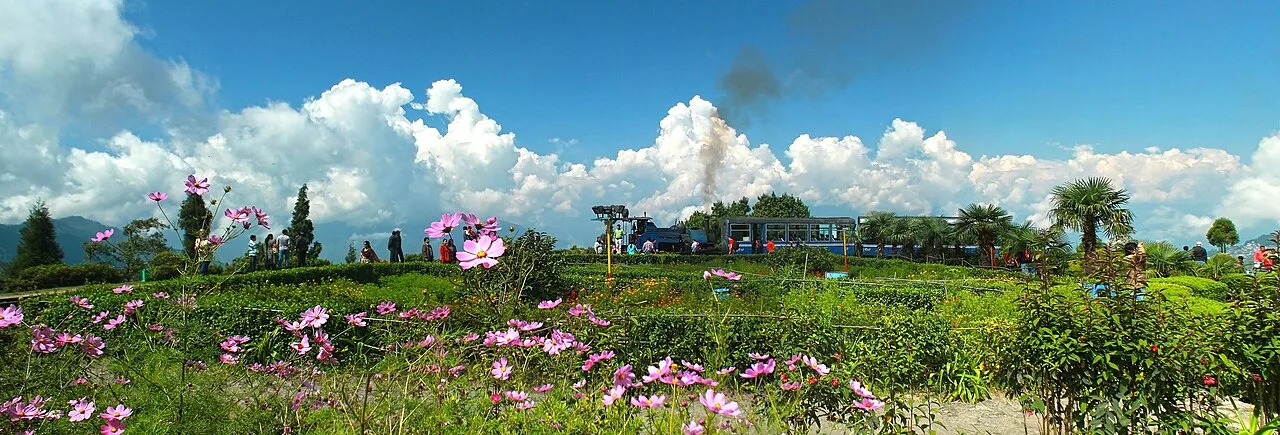
Batasia Loop
Batasia Loop is a railway feature in Darjeeling district, West Bengal, where the Darjeeling Himalayan Railway winds around a small hill. Visitors come to see its unusual track layout.
Key facts · verified by Ghumoopedia editors
- Type of place
- Natural attraction
- Best time to visit
- October to March for the plains and coast; March to May and October to December for the Darjeeling hills
- Nearest railway station
- Darjeeling (toy train) · about 5 km (straight line)
- Nearest airport
- Bagdogra Airport (Siliguri) · about 40 km (straight line)
- Verified
- 21 Nov 2026
Plan a trip from Batasia Loop — a day-by-day route through places nearby.
Located in Darjeeling district in West Bengal, Batasia Loop forms part of the Darjeeling Himalayan Railway. Its curved route helps trains manage the climb by reducing the steepness of the ascent. Here, the railway circles a small hill, crossing above its earlier path as it rises from the lower slope to the summit. This arrangement allows the line to gain height over a longer distance. The loop was commissioned in 1919. Its combination of a hillside setting and a distinctive railway design makes it a notable feature of the route. West Bengal stretches from the Himalayan tea gardens of Darjeeling to the mangrove delta of the Sundarbans, with Kolkata's colonial architecture, the terracotta temples of Bishnupur, Tagore's Santiniketan and the Nawabi heritage of Murshidabad. The plains are hot and humid from March to June, receive heavy monsoon rain from June to September and are pleasant from November to February; the Darjeeling hills are cool year-round and cold in winter, and the coast and Sundarbans can be hit by cyclones in May and October–November. The usual best time to visit is October to March for the plains and coast; March to May and October to December for the Darjeeling hills. Timings, fees and access arrangements must be confirmed locally. For official information, see West Bengal Tourism at https://wbtourism.gov.in.
Why it matters
Batasia Loop is an engineering feature of the Darjeeling Himalayan Railway (DHR), designed to help the narrow-gauge train gain height on the steep Himalayan route. The track curves around a small hill and passes above itself, easing the railway’s ascent. The DHR is part of the UNESCO World Heritage-listed property Mountain Railways of India; UNESCO recognition applies to the railway, not necessarily to Batasia Loop as a separate site. The loop is also a viewpoint and landscaped public attraction, with a memorial honouring Gorkha soldiers. For Darjeeling, it connects railway heritage with the region’s mountain scenery and remains a familiar stop for visitors travelling between town and Ghoom.
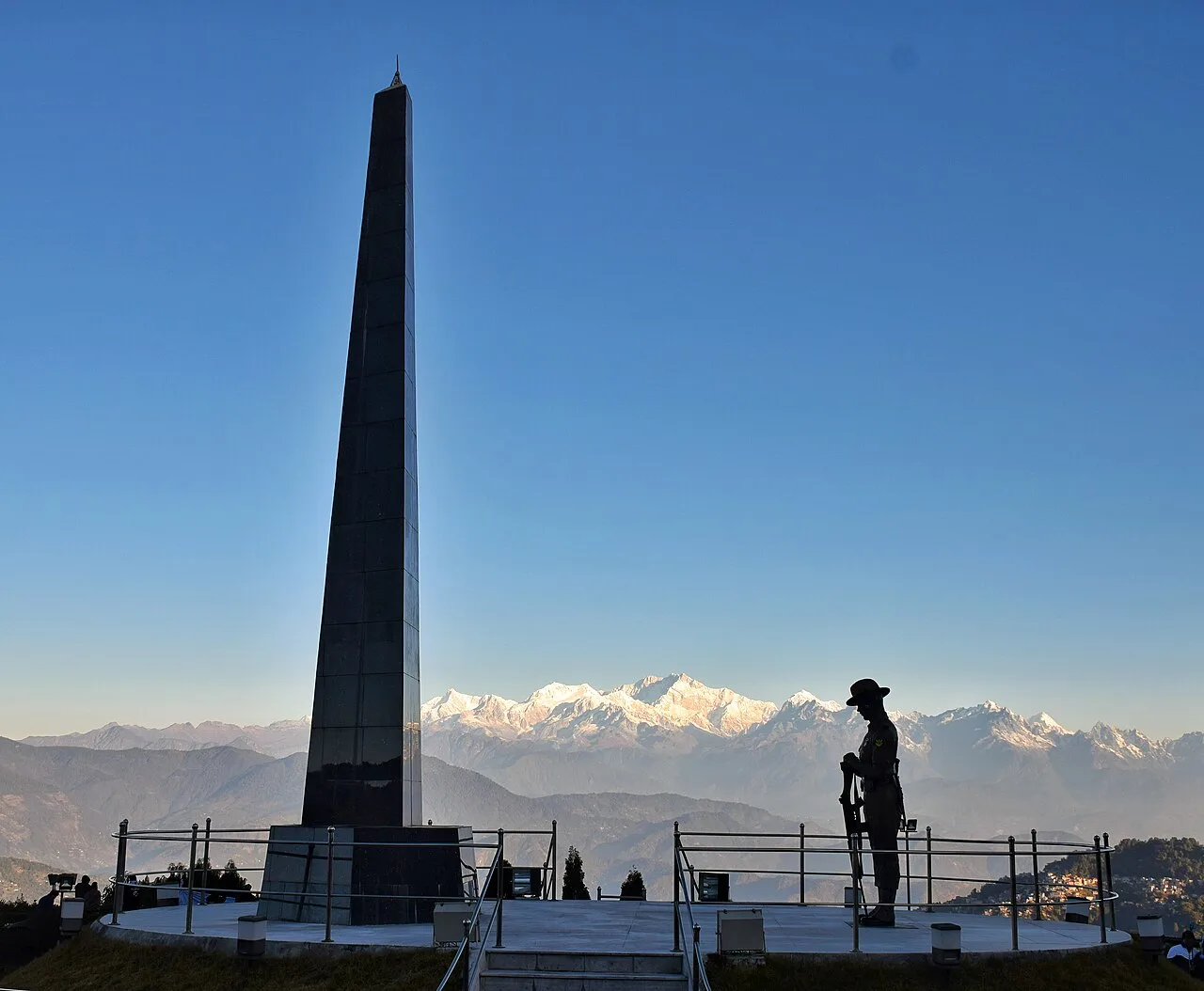
The Darjeeling Himalayan Railway was built under the auspices of the Darjeeling Himalayan Railway Company to connect the hill station with the plains. Its steep gradients required engineering solutions that could gain height while keeping the narrow-gauge line workable. Batasia Loop was commissioned in 1919. Here the line winds around a small hill, crossing above its lower section to reduce the severity of the climb. The loop is an example of the route’s adaptations to difficult Himalayan terrain, rather than a natural landform. The DHR later became internationally recognised as part of Mountain Railways of India, inscribed on UNESCO’s World Heritage List in 1999; this recognition is for the railway property and its heritage, not a separate UNESCO designation for the loop alone. A Gorkha War Memorial was established at Batasia and inaugurated in 1995, adding a commemorative purpose to the site. The railway has experienced changes in service and periods of disruption over its history, while heritage tourism has kept its engineering and scenic character in public view. Check with the railway or site authority for current train operations and access arrangements.
Origin stories & folklore
No well-documented origin legend specific to Batasia Loop is widely established. Its circular route can invite imaginative stories, but the loop is a railway engineering work, commissioned in 1919 to help the Darjeeling Himalayan Railway manage the climb. Visitors may hear personal recollections or local explanations about the railway and its mountain journeys; these should be understood as oral memories or individual accounts, not as a verified founding tale. The nearby Gorkha War Memorial carries its own commemorative meaning for many visitors. Ask respectfully before recording people sharing personal or community histories, and distinguish those accounts from the documented railway history.
Explore Batasia Loop slowly and read the interpretation boards, use the official audio guide where available or hire an authorised guide to understand its history. Check opening days, ticket counters and camera rules in advance; many monuments and museums close on one weekday and on some public holidays. Early morning gives softer light, cooler air and smaller crowds. A comfortable itinerary is one main visit in the morning, a local meal at midday and a short nearby stop before an afternoon return. Use the district list on this site to find other places in Darjeeling, but check the route and its condition before combining stops. If a festival is on — such as Durga Puja, Kali Puja or the Poush Mela at Santiniketan — roads and stays can be busy, and the experience can be unforgettable. Leave no litter: many sites are protected by the communities around them.
Suggested itineraries
Half day: Travel from Darjeeling to Batasia (allow time for the hill road); spend about 45–90 minutes viewing the loop, garden and memorial; continue to Ghoom if conditions and transport permit. Full day: Visit Batasia in the morning; continue to Ghoom Monastery; return towards Darjeeling for lunch; spend the afternoon at the Himalayan Mountaineering Institute and Padmaja Naidu Himalayan Zoological Park, checking opening arrangements in advance. Gentler option: Arrange a drop-off near the site, take a slow visit with seated breaks, and return by pre-arranged vehicle rather than combining several stops.
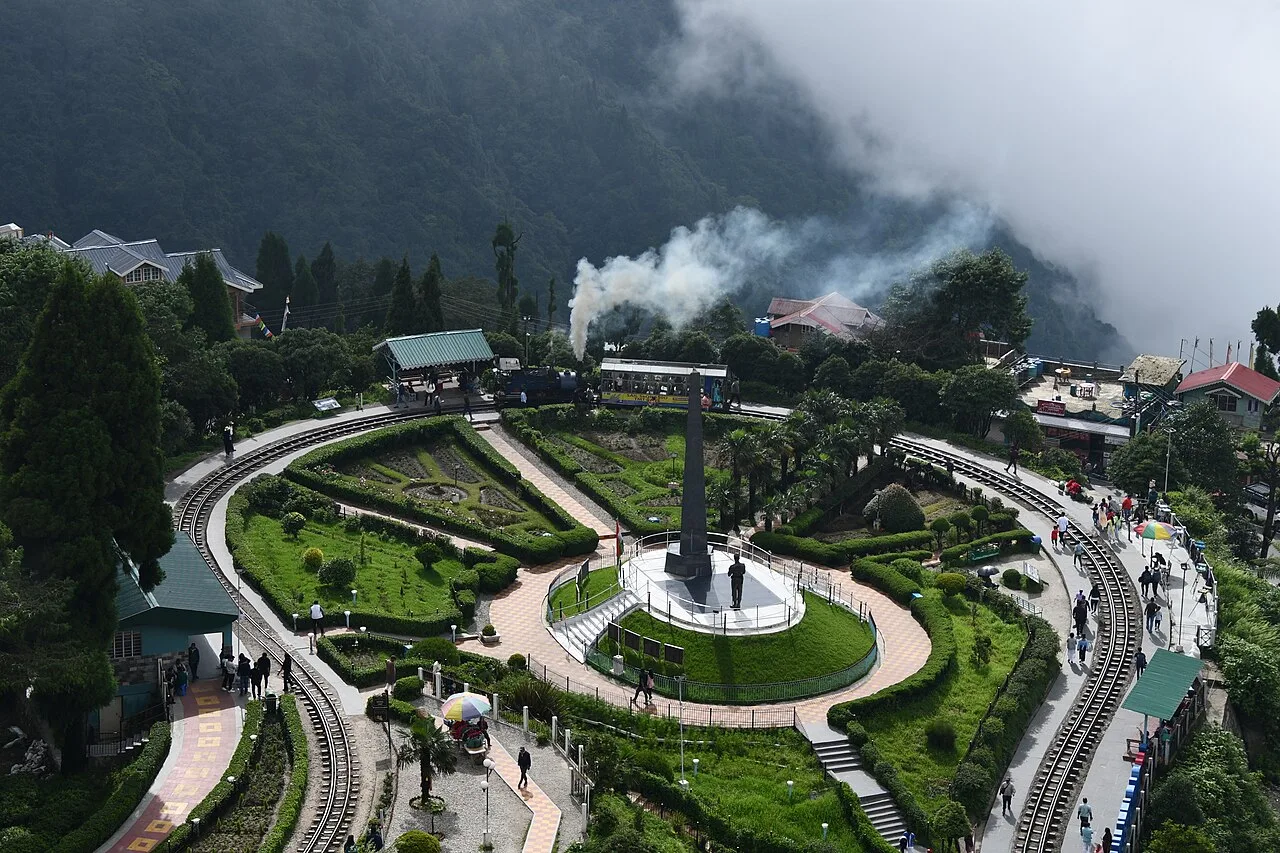
Batasia brings together railway heritage, mountain sightseeing and remembrance at the Gorkha War Memorial. In Darjeeling, Nepali is widely spoken alongside Bengali, Hindi and English; local conversations and visitor services may use several languages. The wider hill region is home to varied communities and traditions, including Nepali-speaking Gorkha communities, Lepcha and Bhutia people. Music, dance, food and clothing differ across communities and occasions, so there is no single tradition that represents everyone. Visitors can experience everyday hill-town life nearby through markets and eateries. At the memorial, behave quietly and follow any posted guidance, especially when others are paying their respects.
Local communities
The loop is part of the Darjeeling Himalayan Railway landscape and is connected to railway workers, visitors and residents of the surrounding hill towns. Darjeeling district is home to Nepali-speaking Gorkha communities as well as Lepcha, Bhutia and other communities; people’s identities and livelihoods are diverse. Tourism, hospitality, transport, trade, education and public services support many local households, while tea growing and other work are important across the wider district. The Gorkha War Memorial gives the site a commemorative role for people connected with Gorkha service. Engage local guides and vendors respectfully, and ask before photographing individuals.
Festivals & events
Batasia Loop is not known primarily as the venue for a large annual festival. In Darjeeling and nearby hill communities, Dashain and Tihar are important autumn-season celebrations, while Losar and Buddha Jayanti are observed by some Buddhist communities at different times of the year. Durga Puja is also celebrated in the wider region. Events and observances vary between communities and locations; check local listings rather than assuming a particular programme at the loop. Festival periods can bring more visitors, busy roads and tighter availability of accommodation and transport around Darjeeling.
Local food in West Bengal includes macher jhol (fish curry), shorshe ilish (hilsa in mustard), kosha mangsho, luchi with alur dom, kathi rolls and phuchka in Kolkata, mishti doi, rosogolla and sandesh; in the Darjeeling hills, momos, thukpa, shaphaley and first-flush Darjeeling tea. Ask what is fresh that day; many small eateries cook a limited daily menu. Vegetarian travellers eat well across the state, and most towns also have fish and meat dishes. Remote sites may have no restaurant at all. Carry water and snacks, eat a proper breakfast before long drives, and ask your accommodation for a packed lunch if you are heading out early. Try a home-cooked or local thali meal when you can — it is often the best food on the route. Choose busy, clean places, drink sealed or filtered water, and carry your packaging back with you.
Shopping & local experiences
Batasia itself is not a major shopping district. Visitors may find small souvenir or refreshment sellers nearby, depending on the day and season; check locally and buy respectfully from local vendors. Darjeeling town has a broader range of shops and markets, where visitors can look for locally made textiles, handicrafts, tea and everyday hill-town goods. Darjeeling tea is a familiar regional purchase, but check its origin and packaging if provenance matters to you. Nearby eateries offer opportunities to try local and regional dishes; choose busy, well-kept establishments and avoid leaving litter.
Batasia sits on a landscaped hill in the cool, steep terrain around Darjeeling. Its open setting offers views across the surrounding hills and, when clouds and visibility permit, towards the high Himalayan ranges. The site is a maintained garden rather than an extensive area of natural forest, with planted flowers, lawns and ornamental vegetation that can change with the season and upkeep. The surrounding district includes forests, tea-growing slopes and varied mountain habitats, but wildlife sightings are never guaranteed at this built-up visitor stop. Common urban and hill birds may be seen or heard in the area. Weather can change quickly, and mist may obscure the views; keep to paths and avoid disturbing plants or wildlife.
October to March for the plains and coast; March to May and October to December for the Darjeeling hills
The nearest principal railway station by straight-line distance is Darjeeling (toy train), roughly 5 km away. The nearest operating airport by straight-line distance is Bagdogra Airport (Siliguri), roughly 40 km away. These figures are calculated from map coordinates — actual road distance is longer, and hill roads are slow. Howrah, Sealdah and Kolkata stations and Kolkata airport serve the south; New Jalpaiguri station and Bagdogra airport near Siliguri are the gateways to the Darjeeling hills and the Dooars. For the final leg, West Bengal Transport Corporation, North Bengal State Transport and South Bengal State Transport buses, private buses and shared jeeps in the hills link district towns. A private taxi gives more flexibility for remote sites. When comparing train, bus and flight, count the complete door-to-door time: a flight saves the most time only if the onward road transfer is short, while an overnight train can save a hotel night. Book your return before you leave, because seats fill quickly on weekends, festivals and holidays. Current train numbers, timings, return services and fares are not listed here; check IRCTC and NTES for trains and the airline's own schedule for flights. No permit is needed for Indian citizens to visit West Bengal. Entry to the Sundarbans Tiger Reserve needs a forest permit, usually arranged through a registered boat operator or the forest office at Sajnekhali or Canning; trekking in Singalila National Park (Sandakphu) needs an entry permit and a registered guide from Maneybhanjan. Durga Puja in October brings huge crowds to Kolkata, so book transport and stays well ahead.
Confirm onward and return timings on IRCTC / NTES, the state bus operator or your airline before travel. A dash means current timings or fares have not been verified.
Getting around
From central Darjeeling, visitors commonly travel to Batasia by local taxi or shared vehicle, or include it on a wider hill excursion. The narrow-gauge Darjeeling Himalayan Railway passes through the loop, but whether a particular service stops there depends on current operations; verify with the railway. Roads can be congested and slow, especially in busy visitor periods. Walking is possible for some travellers, but the hill setting and road conditions make it important to assess the route first. Check locally for parking and vehicle access, and agree the return arrangement with a driver before setting out.
Hours, tickets & permissions
Entry arrangements, ticketing and access to the garden or memorial may change, and railway access or train stops are separate matters. Check current opening arrangements, fees, any camera rules and public-holiday restrictions with the site manager or relevant railway authority before travelling. Permits are not generally a feature of an ordinary visit, but follow posted rules and staff instructions. Carry identification if required by your onward transport or accommodation, rather than assuming the loop itself has an ID check. Confirm current hours and fees locally; none are stated here.
Facilities
The site is developed for visitors and usually has landscaped paths, viewpoints and a memorial area. Toilets, drinking water, refreshments, seating, parking and guide services may be available nearby or vary with current operations, so check locally rather than relying on them. Darjeeling town offers a wider choice of food, shops, cash facilities and accommodation than the loop itself. Carry water and any essential medication, particularly if continuing to other hill attractions. Railway ticketing and site-entry arrangements may be distinct; confirm which facilities are operating on the day of your visit.
Accessibility
Batasia is on sloping hill terrain, and the landscaped route may include uneven surfaces, gradients or steps. The walking distance within the site is not extensive, but the incline and changing weather can make it tiring. Shade and sheltered seating may be limited, so plan rests and bring suitable clothing. Do not assume that wheelchair-accessible paths, ramps or accessible toilets are available; contact the relevant authority before visiting if access needs are important. Strollers may be difficult to manoeuvre on sloped or uneven paths. Older visitors may find a slow pace, assistance and a vehicle drop-off helpful.
No permit is needed for Indian citizens to visit West Bengal. Entry to the Sundarbans Tiger Reserve needs a forest permit, usually arranged through a registered boat operator or the forest office at Sajnekhali or Canning; trekking in Singalila National Park (Sandakphu) needs an entry permit and a registered guide from Maneybhanjan. Durga Puja in October brings huge crowds to Kolkata, so book transport and stays well ahead. Carry a photo ID at all times and save the emergency number 112 and your accommodation's contact offline. The hills are cool, damp and foggy; carry warm layers, and expect landslides and road closures in the monsoon. Watch your belongings in crowds and on public transport, and follow posted instructions.
Photography
Early morning often brings softer light and fewer visitors, though mist can hide distant views at any time. The curved railway line, garden and mountain backdrop provide different compositions; stay in public areas and well clear of tracks. Personal photography is commonly part of a visit, but check posted rules for restrictions or any camera fee. Do not use a drone without confirming current aviation rules and obtaining any required permissions. Ask before photographing people, railway staff or memorial observances, and keep clear of visitors who are paying their respects.
Choose a stay by the full journey to Batasia Loop, not just the district name. Darjeeling, Kalimpong and Kurseong offer hotels and family homestays; in smaller hill villages, homestays are the main option and should be booked ahead. In the hills, check heating, hot water and power backup, and expect cold nights from November to February. Book in advance for weekends, festivals and the peak season (October to March for the plains and coast; March to May and October to December for the Darjeeling hills). Confirm the exact location, meals included, check-in time and cancellation terms in writing. Avoid sending money to unverified contacts or touts at stations. Carry some cash, as card and digital payments can be unreliable in remote areas.
Ghoom Monastery, also known as Yiga Choeling Monastery, is a nearby cultural stop, and the Darjeeling Himalayan Railway route links the area with the wider hill-town heritage. In Darjeeling town, visitors can consider the Himalayan Mountaineering Institute and Padmaja Naidu Himalayan Zoological Park, subject to their current entry arrangements. The Peace Pagoda is another established town attraction. Tiger Hill is a well-known viewpoint outside the town centre, but travel conditions and visibility affect whether it is a practical addition. Check road conditions and opening arrangements before combining stops.
For couples, Batasia Loop rewards a slow pace: arrive early for soft light and fewer crowds, share a local meal and keep the evening free. A toy-train ride in the Darjeeling hills, a boat on the Hooghly at sunset or an evening of adda over tea in Kolkata makes the trip memorable. Public displays of affection can be frowned upon in conservative communities and at religious sites, so be discreet. Keep a buffer in your itinerary, because weather and road conditions can delay plans.
Q: How much time should I allow for Batasia Loop? A: Many visitors spend roughly 45–90 minutes on site, with extra time needed for travel, photographs or a railway journey. Q: When is a good season to visit? A: March to May and October to December are commonly favoured for the Darjeeling hills; weather and visibility can still vary. Q: Is there an entry fee, and do I need a train ticket? A: Entry and railway travel may have separate arrangements. Confirm current fees, rules and train operations with the relevant authority. Q: Is the site suitable for children and elderly visitors? A: It can suit visitors who manage sloping or uneven paths, but supervision, a slow pace and rest breaks are sensible. Q: Can I stay near Batasia Loop? A: Darjeeling has accommodation options and is a practical base; check location, access and availability before booking.
Be the first to share photos, stories, advice or a helpful contact for Batasia Loop.
Loading…