
Ghumoopedia — Explore, Discover, Experience
Sign in

Cultural · Karnataka

Mysuru Dasara

Mysuru Palace and city

Dates

Last verified 17 November 2026. Confirmed: announced by organisers or government. Provisional: from a published almanac, not yet announced. Seasonal: no date announced.

The complete guide

Mysuru Dasara: everything to know before you go

Also known as
Nada Habba (State Festival of Karnataka), Navarathri Dasara, Vijayadashami
State & District
Karnataka; Mysuru District (Mysuru City)
When
Ashvin month (September–October); 10 days ending on Vijayadashami
Duration
10 Days
Faith & Community
Hinduism (Shakta, Shaiva, & Vaishnava); Royal Wadiyar tradition & Statewide participation
Type
Royal State Festival, Cultural Pageant, Religious Celebration, Torchlight Parade
Entry
Public venues free; Mysuru Palace grounds, Gold Cards, & Exhibition require passes/tickets
Best for
Royal pageantry, Illuminated Palace views, Jamboo Savari elephant procession, Torchlight Parade

Overview

Mysuru Dasara, celebrated officially as the 'Nada Habba' or State Festival of Karnataka, is one of India's most grand and spectacle-filled royal traditions. Spanning ten radiant days during the Hindu month of Ashvin (September–October), the festival transforms the heritage city of Mysuru into an open-air cultural arena of unmitigated splendor. The festival commemorates the mythical victory of Goddess Chamundeshwari (a manifestation of Durga) over the buffalo-demon Mahishasura—from whom the city of Mysuru derives its ancient name, Mahishuru. Rooted in the imperial grandiosity of the 14th-century Vijayanagara Empire, Mysuru Dasara was adopted by the Wadiyar Dynasty of Mysore in 1610 under Raja Wadiyar I at Srirangapatna, and later shifted to the majestic Mysuru Palace.

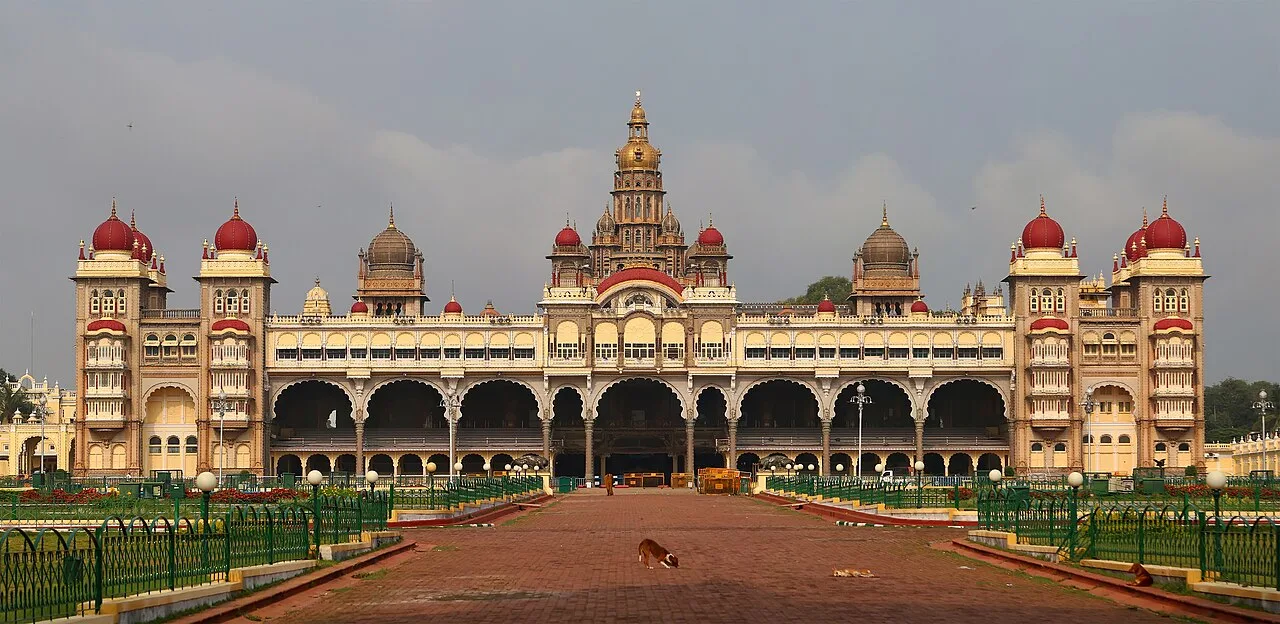
The hallmark of Mysuru Dasara is the fusion of deep religious sanctity, living royal heritage, and vibrant public arts. For ten nights, the sprawling Amba Vilas Palace (Mysuru Palace) is illuminated by nearly 100,000 incandescent light bulbs, casting a golden ethereal glow that draws hundreds of thousands of visitors from across the world. The grand culmination on Vijayadashami features the world-renowned 'Jamboo Savari'—a majestic procession led by a royal elephant carrying the 750-kilogram golden idol of Goddess Chamundeshwari inside a solid gold idol-howdah (Chinna da Ambari), followed by military bands, traditional folk dance troupes (Kamsale, Dollu Kunitha, Veeragase), and ornate tableaux representing every district of Karnataka. The festivities conclude at Bannimantap with a spectacular nocturnal Torchlight Parade (Panju Kavayatthu) and equestrian acrobatics.
Origins and legend

The mythological narrative of Mysuru Dasara centers upon the triumph of divine feminine power (Shakti) over chaotic demonic forces. According to the Skanda Purana and regional folklore, the demon king Mahishasura obtained a boon of invincibility, causing havoc across the cosmic realms. The gods, led by Brahma, Vishnu, and Shiva, pooled their divine radiance to create Goddess Chamundeshwari. Armed with divine weapons bestowed by all deities, the goddess waged a ferocious ten-day war atop the Chamundi Hills overlooking Mysuru, finally decapitating Mahishasura on the tenth day—Vijayadashami. To this day, the presiding deity of Mysuru is Goddess Chamundeshwari, whose temple cresting Chamundi Hill serves as the primary sanctuary during Navarathri.

Historically, the celebration traces back directly to the Vijayanagara Empire (1336–1565 AD), where Persian ambassador Abdur Razzaq and Portuguese travelers Domingo Paes and Fernão Nuniz documented the magnificent 'Mahanavami' festival at Hampi. After the fall of Vijayanagara, Raja Wadiyar I revived this imperial tradition in 1610 at Srirangapatna by issuing a royal decree that Navarathri should be celebrated with state solemnity. When the capital moved to Mysuru, the Wadiyar rulers built the tradition into an essential civic and spiritual duty. Even after India's independence and the abolition of royal titles, the Government of Karnataka declared Mysuru Dasara as the official 'Nada Habba', preserving the royal family's ceremonial involvement alongside democratic state sponsorship.

How it is celebrated

Mysuru Dasara unfolds as a multi-layered celebration blending palace rituals, temple rituals, and massive public cultural events. The festival commences atop Chamundi Hill with special pooja offered to Goddess Chamundeshwari by a distinguished literary or cultural personality alongside state dignitaries. Inside the Mysuru Palace, the titular head of the Wadiyar royal family observes traditional private Navarathri rituals, including the ceremonial mounting of the historic Gem-Studded Golden Throne (Ratna Simhasana), holding the Private Durbar (Khasgi Durbar), and worshipping the royal arms (Ayudha Pooja).

Concurrently, the entire city of Mysuru turns into a cultural festival. Key venues such as the Kalamandira, Jaganmohan Palace, Town Hall, and Kuppanna Park host non-stop classical Carnatic music concerts, Hindustani recitals, classical Bharatanatyam performances, drama festivals, flower shows (Pushpa Phalavastradarsana), food festivals (Aahara Mela), and wrestling competitions (Gusti Mela). At night, main avenues including Sayyaji Rao Road and Devaraj Urs Road are blanketed in intricate LED illumination displays spanning dozens of kilometers.

The Cultural Days

The ten days of Mysuru Dasara showcase an unparalleled variety of performing arts and traditional heritage:

Palace Music & Dance: Every evening, as the Palace lights switch on, the main forecourt of Mysuru Palace hosts legendary musicians, classical vocalists, instrumentalists, and dance troupes performing against the illuminated facade.

Yuva Dasara: Organized at Maharaja's College Grounds, Yuva Dasara is dedicated to the modern youth, featuring contemporary music concerts, fusion bands, playback singers, and energetic dance performances that attract massive student crowds.

Gusti Mela (Traditional Wrestling): Held at the Devaraja Urs Boarding School Maidan, traditional wrestlers (Pahlwans) from across Karnataka and neighboring states compete in mud-pit wrestling matches, maintaining a centuries-old patronage of physical culture.

Dasara Exhibition: Held at the Doddakere Maidan opposite the Palace, the exhibition features government department stalls, consumer expos, amusement rides, and handicraft bazaars, remaining open for over two months.

Food Festival (Aahara Mela): Set up at Scout Headquarters Grounds, offering authentic Karnataka culinary specialties, including Karavali seafood, Malnad dishes, North Karnataka Jowar Roti thalis, and traditional sweets.

The Pilgrimage Days

While Dasara is a grand spectacle, its spiritual core revolves around deep Shakta devotion:

Chamundi Hill Pilgrimage: Devotees trek up the 1,000 stone steps of Chamundi Hill to seek blessings of Goddess Chamundeshwari. Special Alankaram (decoration) is performed on the idol each day representing nine forms of Durga.

Ayudha Pooja (9th Day): On Mahanavami, tools, vehicles, weapons, machinery, and instruments are cleaned, decorated with marigold garlands, and worshipped. In the palace, royal swords, chariots, and armored vehicles undergo sacred rites.

Vijayadashami Worship: The tenth day marks the ritual worshipping of the sacred Banni tree (Prosopis cineraria), symbolizing victory, divine protection, and the weapons hidden by Pandavas during exile.

Food and flavours

The culinary ecosystem of Mysuru Dasara is iconic, headlined by the world-famous Mysore Pak—a melt-in-the-mouth sweet crafted from pure ghee, gram flour (besan), and sugar, originally created in the royal kitchens of King Krishnaraja Wadiyar IV by chef Kakasura Madappa. During Navarathri, sweet shops across the city work round-the-clock to produce fresh Mysore Pak, along with Chiroti (flaky layered pastry dusted with powdered sugar and soaked in warm cardamom almond milk) and Pheni.

During Aahara Mela, visitors feast on traditional Maddur Vada, Mysore Masala Dosa smeared with spicy red garlic chutney and dollops of white butter, Bisi Bele Bath garnished with fried cashews, Rava Idli, and regional delicacies like Jolada Rotti with Ennegai (stuffed brinjal), Akki Rotti, and Kodagu Pandhi Curry (for non-vegetarian stalls). Festival feasts served on plantain leaves during home celebrations feature Kosambari (split Bengal gram salad), Curd Rice, Payasam, and Ambode (crispy lentil fritters).

Music, dance, art and dress

The visual and auditory landscape of Mysuru Dasara is defined by traditional South Indian classical and folk arts. The procession on Vijayadashami features dynamic folk dance forms: Dollu Kunitha (high-energy drum dance featuring massive drums slung over shoulders), Kamsale (rhythmic cymbal dance performed by devotees of Lord Male Mahadeshwara), Veeragase (intense, martial dance dedicated to Lord Shiva), Goravana Kunitha (flute and drum dance by worshippers of Lord Mailara Linga dressed in bear-skin caps), and Somana Kunitha (mask dance).

The traditional dress code for festival-goers during palace events leans heavily toward traditional attire. Men wear crisp silk Dhotis (Panche) with silk shirts or traditional Kanchipuram shirts paired with Mysore Peta (ornate royal turbans trimmed with gold lace), while women wear luxurious Mysore Silk sarees, Kanjivaram silks, or traditional Langa Voni (half-sarees) adorned with jasmine flowers (Gajra) and gold jewelry.

Where to experience it

The primary hub of Mysuru Dasara is Mysuru City, located approximately 145 km from Bengaluru:

Mysuru Palace Forecourt: The central venue for evening palace illumination, classical music recitals, and the departure point of the Jamboo Savari.

Chamundi Hill Temple: The spiritual epicenter for morning prayers, divine view of the city, and traditional temple rituals.

Sayyaji Rao Road: The primary 3-kilometer procession route for the Vijayadashami Jamboo Savari, lined with grandstands and public spectator galleries.

Bannimantap Parade Grounds: The venue for the grand finale Torchlight Parade, featuring laser shows, motorcycle stunts by military teams, and equestrian drills.

Visitor guide

Getting There

Mysuru is connected via the 10-lane Bengaluru-Mysuru Expressway (2 hours by road). Frequent superfast trains including the Shatabdi Express and Vande Bharat Express connect Bengaluru Railway Station to Mysuru Junction. Mysuru Airport (Mandakoli) operates domestic flights connecting major Indian cities, while Kempegowda International Airport Bengaluru (170 km) is the primary international gateway.

Where to Stay

Accommodations range from heritage luxury palace hotels (Lalitha Mahal Palace Hotel, Grand Mercure) to budget hotels near the railway station and KSRTC bus stand. Hotel rooms book out 3–4 months in advance for Dasara; advance booking is imperative.

What to Wear & Pack

Wear comfortable cotton or light silk clothing for daytime sightseeing and traditional Indian attire for evening palace events. Carry comfortable walking shoes for procession viewing, sun protection (hats, sunglasses), and light evening wear as October nights can turn pleasant.

Etiquette

Maintain decorum during temple visits at Chamundi Hill (remove footwear, dress modestly). Respect security barricades along the Jamboo Savari procession route and comply with instructions from Mysuru Police.

Safety & Comfort

Dasara attracts over a million visitors on Vijayadashami. Utilize official 'Gold Passes' or reserved grandstand seating for hassle-free Jamboo Savari viewing. Keep hydrated, stay aware of personal belongings in crowded bazaars, and utilize designated park-and-ride shuttle buses.

Today and tomorrow

In the 21st century, Mysuru Dasara has successfully transformed into a global tourism driver while maintaining its historic identity. The Karnataka Tourism Department has integrated modern elements like 'Air Shows' over Bannimantap, 'Dasara Heliride' (helicopter city tours), 'Heritage Walks' through colonial Mysuru, and eco-friendly waste management initiatives. Modern digital ticketing, live-streaming of palace durbars, and dedicated app-guided heritage routes ensure that tech-savvy travelers can experience traditional royal pageantry with contemporary convenience.

Nearby

Places to see around the festival