Ghumoopedia — Explore, Discover, Experience
Sign in

Fair & Mela · Rajasthan

Pushkar Fair

Pushkar

Dates

Last verified 17 November 2026. Confirmed: announced by organisers or government. Provisional: from a published almanac, not yet announced. Seasonal: no date announced.

The complete guide

Pushkar Fair: everything to know before you go

Also known as
Pushkar Mela, Kartik Mela, Pushkar ka Mela
State and district
Rajasthan, Ajmer district (town of Pushkar)
When
Around Kartik Purnima (October–November).
Duration
About 8 days of fair; the final 5 days are the pilgrimage peak
Faith and community
Hindu pilgrimage plus livestock trading by Rajasthani herding and farming communities
Type
Religious fair, livestock market, cultural festival
Entry
Free to the fairground
Best for
Photographers, culture lovers, pilgrims, families

Overview

Every year, as the winter light turns gold, a small desert town beside a sacred lake fills with tens of thousands of camels, horses and cattle, and tens of thousands of people who have come to trade, pray, perform or simply watch. The Pushkar Camel Fair is two festivals braided together. By day, it is a vast livestock market where herders bargain over sleek, ornamented animals. By evening, it becomes a carnival of folk music, games and sunset rituals. Underneath both runs a deeper current: Pushkar is among the most sacred places in Hinduism, and the fair ends with a holy bath in the lake on the full-moon night of Kartik.

For a first-time visitor, the fair is overwhelming in the best way: colour, dust, drumbeats, smoke from cooking fires and the sound of bells on camels' necks. For devout visitors, it is a pilgrimage that many families have made for generations.
Origins and legend

Tradition says that Pushkar was created when the creator-god Brahma let a lotus flower fall from his hand. Where the petals landed, a lake appeared. Brahma then chose the spot for a great yajna (fire sacrifice). According to the tale, his consort Savitri was delayed, so Brahma married another woman, Gayatri, to complete the ritual in time. Savitri arrived, found Gayatri seated beside him and cursed Brahma, saying he would be worshipped only at Pushkar. This is why the Brahma Temple in Pushkar is one of the very few temples in India dedicated to him. Savitri's own shrine stands on a hill above the town.

The lake itself is believed to be so holy that a dip here during Kartik Purnima washes away sins, a belief that has drawn pilgrims for many centuries. Pilgrims have long gathered at such sites at fixed times of the year, and traders naturally followed the crowds. The livestock fair grew around the pilgrimage, with herders from across Rajasthan, Gujarat, Haryana and beyond bringing animals to sell. The exact age of the fair is hard to pin down, but it is generally described as a centuries-old gathering that has become Rajasthan's signature festival.

How it is celebrated

The fair unfolds in two broad phases that follow the moon.

The trading days. In the first days, the fairground on the edge of town is a sea of animals and tents. Camels are washed, clipped in patterns, painted with henna-like designs and decked in bells, tassels and embroidered cloth. Buyers inspect teeth, gait and health. Horses are shown off in paces and parades. Herders sit around small fires drinking tea, and deals are sealed with a handshake and a nod.

The cultural days. As the trading winds down, the programme shifts to competitions and shows. Visitors can expect camel races and camel decoration contests, a longest-moustache competition, turban-tying, folk dances such as Kalbelia and Ghoomar, puppet shows, kite and tug-of-war contests, and matka (pot-breaking) games. Hot-air balloon rides are commonly offered during the fair. Cultural evenings feature Rajasthani musicians, folk singers and fire dancers.

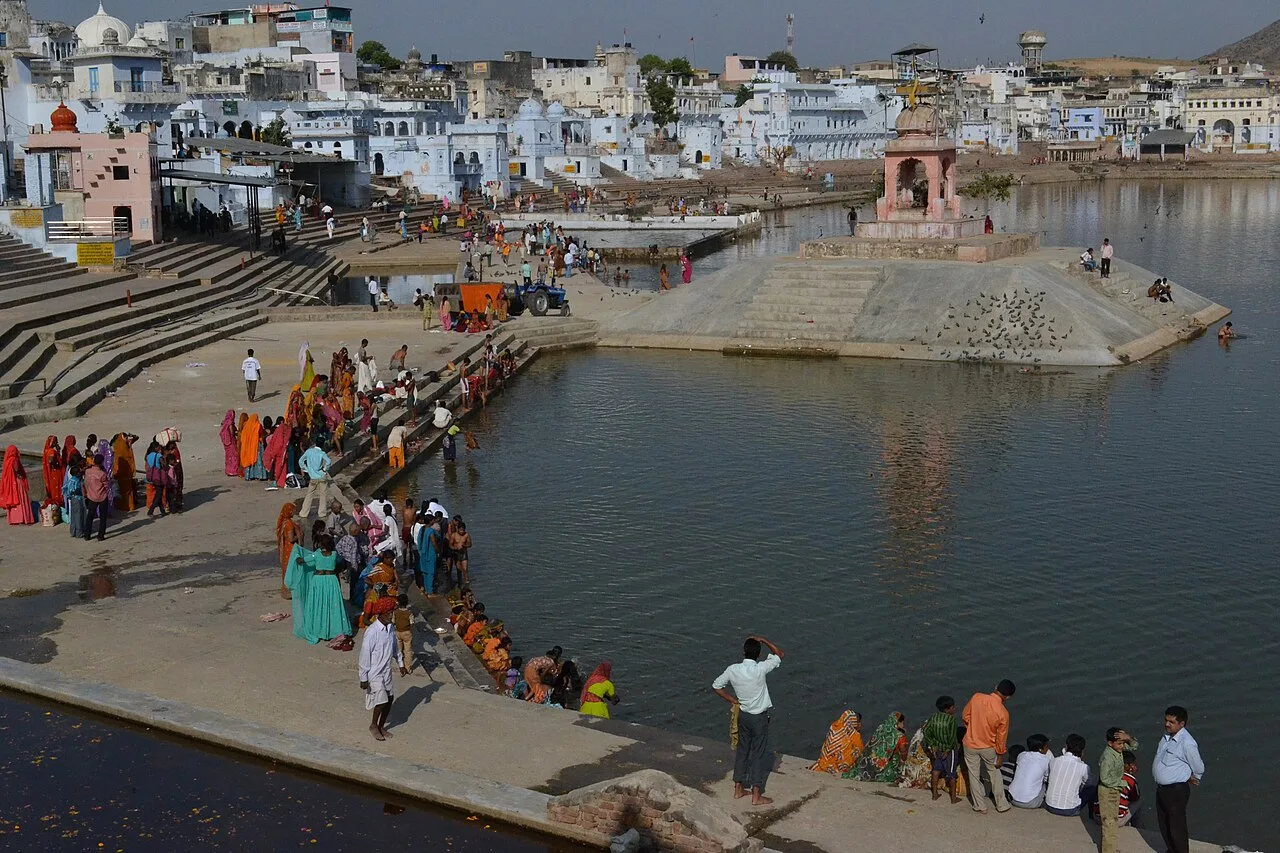
The pilgrimage days. In the final days, the mood becomes devotional. Pilgrims gather on Pushkar's 52 ghats (bathing steps) before dawn. On Kartik Purnima, crowds enter the water for the holy dip. In the evening, thousands of lamps are set afloat on the lake while priests perform the Maha Aarti, and the town glows. After the dip, the fair empties quickly; stallholders pack up and the camels begin the long walk home.

Food and flavours

Pushkar is a strictly vegetarian town, and alcohol and eggs are not available within its limits, so food during the fair is fresh, vegetarian and rich. Look for:

  • Dal baati churma: baked wheat balls with lentils and sweet crumbled churma.
  • Pyaaz kachori and mirchi vada: fried snacks, best eaten hot in the morning.
  • Malpua: Pushkar's famous syrupy pancake, often topped with rabri.
  • Lassi and masala chai: sold from stalls throughout the fairground.
  • Thali meals: Rajasthani thalis with gatte ki sabzi, kadhi, ker sangri and bajra rotis.

Street food is cooked in the open and fast; choose busy stalls and drink bottled water.

Music, dance, art and dress

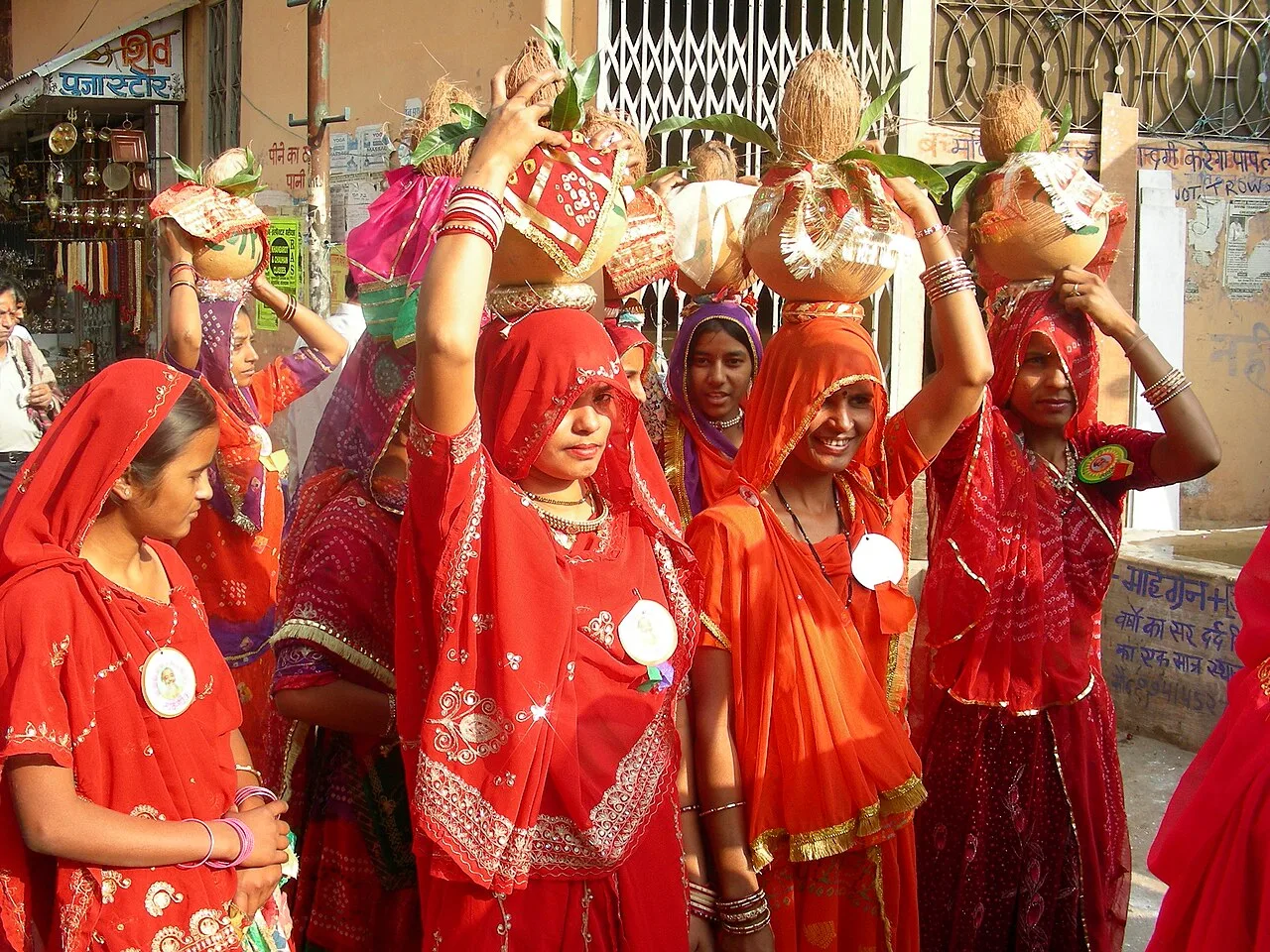
The fair is a showcase of Rajasthani folk culture. Langa and Manganiyar musicians from the Thar play the sarangi, kamaicha, dholak and khartal. Kalbelia dancers, whose swaying style comes from snake-charming communities, perform in swirling black skirts. Women wear bright ghagras and odhnis and heavy silver jewellery; men wear brightly coloured turbans (safas) tied in styles that mark region and community. The market lanes sell leather juttis, silver jewellery, block-printed textiles, mirror-work bags and camel-leather goods. The decorated camels, with embroidered saddles and patterns shaved into their coats, are living art.

Where to experience it

  • The fairground (mela maidan): on the edge of Pushkar in Ajmer district. Go at dawn for livestock and at sunset for the light.
  • Pushkar Lake and ghats: for the Kartik Purnima bath and the evening aarti. Gau Ghat and Brahma Ghat are especially busy.
  • Brahma Temple: the rare shrine to the creator-god; expect long queues during the fair.
  • Savitri Temple: reached by a hill climb or a ropeway, for views over the lake and fairground at sunrise or sunset.
  • Main Bazaar: the town's shopping street, lively until late during fair week.
  • Ajmer (about 14 km away): home to the Ajmer Sharif Dargah, which makes a good addition to the trip.

Visitor guide

  • Getting there. Ajmer is the nearest major railhead, around 14 km from Pushkar, with frequent buses and taxis. The nearest large airport is Jaipur, around 145 km by road; Kishangarh airport is closer but has limited flights. Delhi to Ajmer is a comfortable train journey.
  • Where to stay. Fair week turns Pushkar into a dormitory, and the better rooms are booked months in advance. Options range from budget guesthouses to heritage hotels and luxury tent camps near the fairground. Staying in Ajmer is a practical fallback, but long daily commutes in dust and traffic wear you down.
  • What to wear and pack. Days are warm and nights can be cold, so layer. Carry a scarf for dust, sunscreen, a torch, a refillable bottle and sturdy shoes. At the lake ghats, footwear is removed, and leather items are discouraged.
  • Etiquette. Ask before photographing herders, priests and especially women. Do not touch the animals without permission. Be careful with unsolicited "priests" who hand you flowers at the lake and then ask for large donations; politely decline, or agree a modest amount first.
  • Safety and comfort. Expect heavy crowds, pickpockets and traffic. Keep valuables close, agree taxi fares in advance and plan for early starts. The holy dip itself can be crowded and slippery; families with elderly or very young members should go early.

Today and tomorrow

Camel numbers in India have fallen sharply over recent decades as mechanised transport, shrinking grazing land and restrictions on camel movement have changed herders' livelihoods. Rajasthan's camel-protection law of 2015 limits the sale of camels for slaughter and their transport out of the state, and the fair has seen fewer animals in some years. At the same time, the fair has grown as a tourism event, with organised cultural programmes, balloon rides and luxury camps. Conservation groups, herders' associations and the state tourism board are working to keep the camel economy alive, by promoting camel milk, wool, crafts and eco-tourism. Visitors can help by choosing responsible operators, avoiding rides that look overworked and buying directly from herder cooperatives.

Nearby

Places to see around the festival