
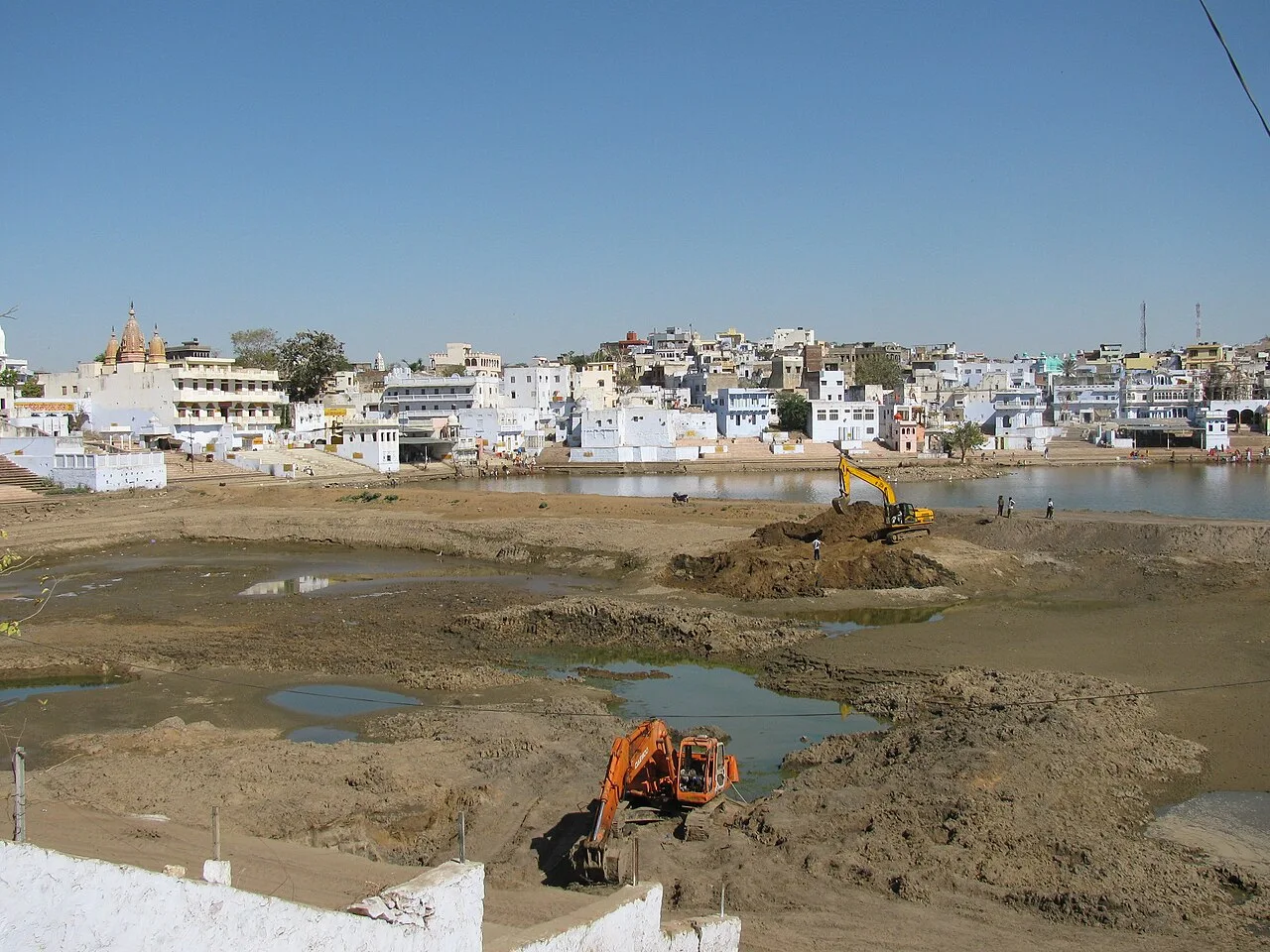
Pushkar Lake
Pushkar Lake, also called Pushkar Sarovar, is a sacred lake in Rajasthan’s Ajmer district. Pilgrims come to bathe at its ghats, especially around Kartik Poornima, when the Pushkar Fair takes place.
Key facts · verified by Ghumoopedia editors
- Type of place
- Natural attraction
- Best time to visit
- October to March
- Nearest railway station
- Ajmer Junction · about 10 km (straight line)
- Verified
- 21 Nov 2026
Plan a trip from Pushkar Lake — a day-by-day route through places nearby.
The lake lies in Pushkar, a town close to Ajmer city. Hindu religious writings call it Tirtha-Guru, associating it with the foremost rank among pilgrimage places connected with water. Tradition links the lake to Brahma, the creator deity in Hinduism, and Pushkar contains his most prominent temple. Coins from the fourth century BC bear references to the lake. Fifty-two ghats, or flights of steps leading down to the water, border the lake. Many devotees gather to bathe, with especially large numbers arriving for Kartik Poornima in October or November, during the Pushkar Fair. According to belief, bathing here can remove sin and help cure skin diseases. More than 500 Hindu temples are found in the surrounding precincts. Tourism, deforestation and pollution in the area have damaged the lake’s condition. Its water quality and level have declined, and the fish population has suffered. Government conservation efforts include clearing silt and weeds, treating the water, planting trees and running public-awareness programmes. Rajasthan is the land of Rajput forts and palaces, painted havelis, desert folk music, puppetry and colourful fairs such as the Pushkar camel fair. Rajasthan is very hot from April to June — often above 45 °C in the desert — with a short monsoon in July–September. Winter days are pleasant and nights are cold, especially in the Thar Desert. Mount Abu is the state's only hill station and stays cooler. The usual best time to visit is October to March. Timings, fees and access arrangements must be confirmed locally. For official information, see Rajasthan Tourism at https://www.tourism.rajasthan.gov.in.
Why it matters
Pushkar Lake, also called Pushkar Sarovar, is a major Hindu pilgrimage site in Pushkar, Ajmer district. Hindu scriptures describe it as Tirtha-Guru, or the preceptor among pilgrimage places associated with water. Its religious importance is linked to Brahma, the creator deity, and to Pushkar’s prominent Brahma temple. The lake is encircled by 52 bathing ghats and more than 500 Hindu temples stand around its precincts, making it central to the town’s sacred landscape. Pilgrims visit throughout the year, with especially large gatherings during Kartik Poornima and the Pushkar Fair. The lake is locally and regionally important; no UNESCO World Heritage or national ASI designation is asserted here. Its water quality and levels have faced pressure from pollution, tourism and deforestation, prompting conservation work.
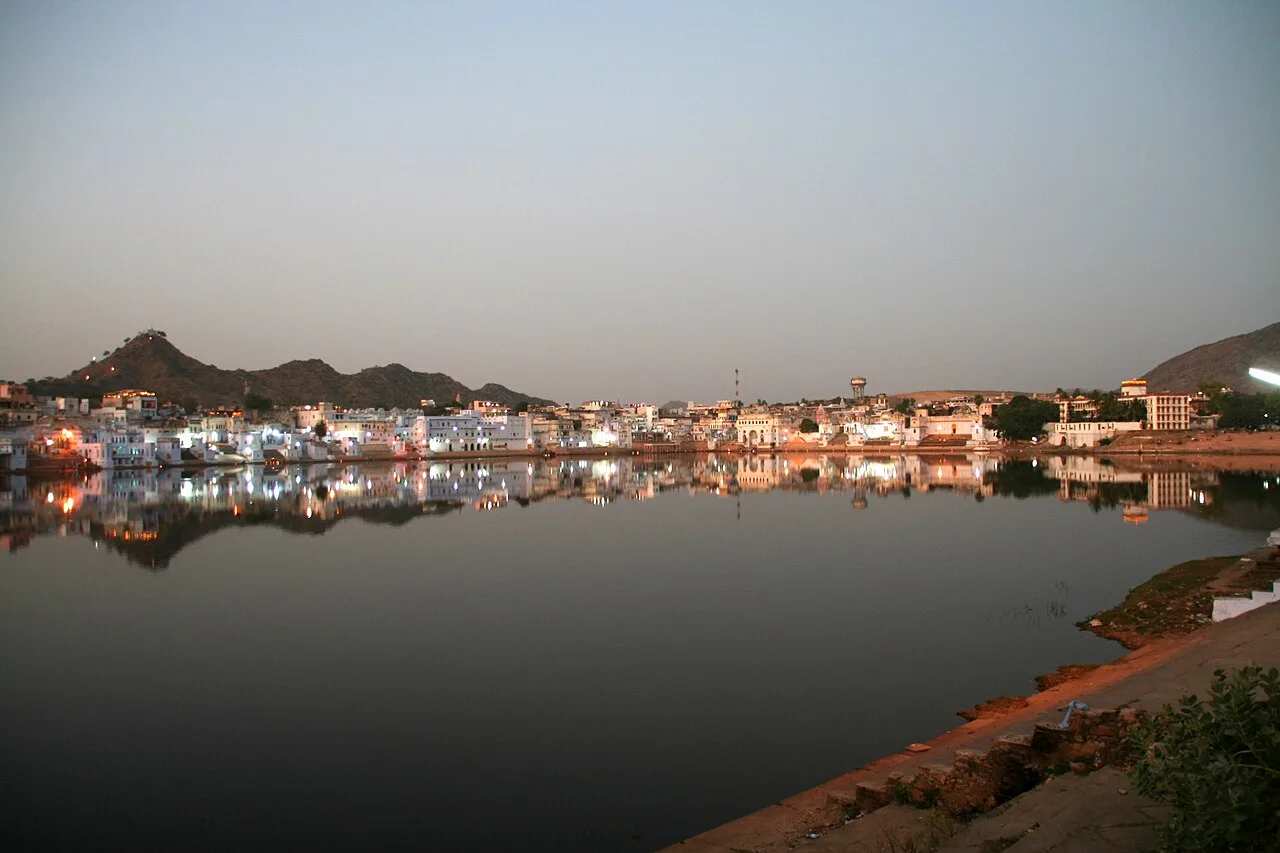
Pushkar Lake has a long history as a place of pilgrimage. Its name appears on coins dating as early as the 4th century BC, an indication of the settlement’s historical significance, though this alone does not establish the lake’s precise age or form at that time. Hindu texts and later traditions associate the water with Brahma and describe Pushkar as a foremost pilgrimage site. The lake’s 52 ghats and surrounding temples developed through religious patronage over many generations; individual ghats have been built, repaired or supported by different patrons, so no single builder accounts for the present complex. The town’s religious life has continued through changing political periods, and Pushkar became widely known beyond the region through its annual fair and pilgrimage gatherings. The water body and its edges have also changed with environmental conditions and human use. Tourism, deforestation and pollution have affected water quality, levels and fish populations. Conservation measures described for the lake include de-silting, de-weeding, water treatment, afforestation and public-awareness efforts. Visitors should treat the ghats as an active sacred landscape, not simply as historic architecture.
Origin stories & folklore
According to local Hindu tradition, Pushkar Lake is connected with Brahma, the creator deity. A widely told account says that a lotus associated with Brahma fell to earth at Pushkar, creating a sacred water body; versions of the story vary. The lake is consequently revered as a place where pilgrimage and ritual bathing bring spiritual merit. Hindu scriptures are said to call Pushkar Tirtha-Guru, a title expressing its special place among water-related pilgrimage sites. Many pilgrims believe that bathing here, particularly on auspicious occasions such as Kartik Poornima, can cleanse sins; some traditions also associate the water with relief from skin ailments. These are matters of religious belief, not medical claims. Visitors should observe local guidance around bathing and ritual areas.
Spend unhurried time at Pushkar Lake: walk the marked paths, use official viewpoints and ask locally whether a guide, entry ticket or permit is needed. Enjoy the water from safe points; take boats only from licensed operators and wear a life jacket where offered. Wildlife sightings are never guaranteed — patience and quiet improve your chances. A comfortable itinerary is one main visit in the morning, a local meal at midday and a short nearby stop before an afternoon return. Use the district list on this site to find other places in Ajmer, but check the route and its condition before combining stops. If a festival or fair is on, roads and stays can be busy — and the experience can be unforgettable. Leave no litter: many sites are protected by the communities around them.
Suggested itineraries
Half day: Walk from the town side to the lake precinct, pause at accessible viewpoints, observe the ghats respectfully, and visit a nearby temple if open; allow about 2–4 hours. Full day: Begin with a quiet morning visit to the lake, explore the surrounding temple and market lanes, take a relaxed midday meal, then choose a nearby viewpoint or temple before returning; allow most of the day, with transport time added. Gentler option: Choose one easy-to-reach viewpoint, rest often, and keep the visit short; ask locally about the least stepped route and vehicle access.

Pushkar’s daily life reflects its role as a pilgrimage town. Visitors encounter prayer, offerings and ritual bathing at the ghats, alongside the ordinary activity of market streets, cafés and guesthouses. Hindi and Rajasthani are widely used, and visitors may also hear other Indian languages during pilgrimage and fair periods. Rajasthani folk music and dance are part of the wider cultural life of the region and may be presented at events, especially around the fair; performances are not guaranteed at the lake itself. Modest clothing is considerate near worship and bathing areas. Follow posted instructions, remove footwear where requested, and ask before photographing people, ceremonies or private devotional moments.
Local communities
The lake is important to Hindu pilgrims and to local residents who maintain religious, social and working connections with its precincts. Priests and temple staff support worship, while cleaners and conservation workers help care for the public and sacred spaces. Pushkar’s wider economy includes shopkeepers, market traders, food vendors, guides, drivers, guesthouse staff and craftspeople, with activity increasing during pilgrimage seasons and the fair. Residents and local organisations also have a stake in the lake’s environmental condition. Visitors can support the town respectfully by using local services, following ghat rules and avoiding litter or interference with worship.
Festivals & events
The busiest religious period is around Kartik Poornima, usually in October or November, when pilgrims gather for ritual bathing and the Pushkar Fair takes place. The fair is associated with livestock trading, cultural events and market activity across the town, not only with the lake’s edge. Pushkar also sees Hindu observances and pilgrimage visits at other times of the year. During major gatherings, roads, accommodation and public spaces can be crowded, and access near ghats may be managed. Check local notices and allow extra time for moving around; avoid disrupting bathing or ceremonies.
Local food in Rajasthan includes dal baati churma, gatte ki sabzi, ker sangri, laal maas, pyaaz kachori, mirchi vada, ghewar, mawa kachori and chaach (spiced buttermilk). Ask what is fresh that day; many small eateries cook a limited daily menu. Vegetarian travellers eat very well across this region, and most towns also have non-vegetarian options. Remote sites may have no restaurant at all. Carry water and snacks, eat a proper breakfast before long drives, and ask your accommodation for a packed lunch if you are heading out early. Try a home-cooked or dhaba meal when you can — it is often the best food on the route. Choose busy, clean places and carry your packaging back with you.
Shopping & local experiences
Pushkar’s market lanes offer textiles, embroidered items, jewellery, devotional objects, souvenirs and other Rajasthani handicrafts. Browsing local shops can be a way to support small traders; compare workmanship and ask about materials rather than assuming an item is locally made. Food stalls and cafés in town provide opportunities to try regional dishes and local sweets, with options varying by establishment. Because Pushkar is a pilgrimage town, many visitors seek vegetarian food, but confirm ingredients and preparation directly. Avoid buying items made from wildlife or products of uncertain origin.
The lake is a human-used sacred water body set within the dry landscape of Ajmer district, with the town and the Aravalli hills forming its broader setting. Ghats, temples and buildings closely border much of the water, so this is not an undeveloped wetland or forest attraction. Water levels and quality can vary, and tourism, deforestation and pollution have been identified as pressures; conservation work has included de-silting, de-weeding, water treatment and afforestation. Fish populations have also been affected. Birds may be seen around the water or in the surrounding town, but sightings vary by season and conditions and should never be assumed. Quiet observation and keeping food and litter out of the water help reduce disturbance.
October to March
The nearest principal railway station by straight-line distance is Ajmer Junction, roughly 10 km away. The nearest operating airport by straight-line distance is Kishangarh Airport, Ajmer, roughly 30 km away. These figures are calculated from map coordinates — actual road distance is longer. Jaipur, Ajmer, Jodhpur, Udaipur and Kota are the main rail hubs, and Jaipur, Udaipur and Jodhpur have the most flights; Delhi is the usual gateway for the north-east of the state. For the final leg, Rajasthan State Road Transport Corporation (RSRTC) buses and private coaches link district towns; shared taxis usually leave early in the morning. A private taxi gives more flexibility for remote sites. When comparing train, bus and flight, count the complete door-to-door time: a flight saves the most time only if the onward road transfer is short, while an overnight train can save a hotel night. Book your return before you leave, because seats fill quickly on weekends, festivals and holidays. Current train numbers, timings, return services and fares are not listed here; check IRCTC and NTES for trains and the airline's own schedule for flights. No permit is needed to visit Rajasthan. Land close to the international border west of Jaisalmer and Barmer is restricted beyond certain points: places such as Tanot can be visited, but border outposts need Border Security Force permission. Forts and palaces charge entry and camera fees, and tiger-reserve safaris must be booked through the official forest department portal.
Confirm onward and return timings on IRCTC / NTES, the state bus operator or your airline before travel. A dash means current timings or fares have not been verified.
Getting around
Pushkar is compact enough for many visitors to explore the lake precinct on foot, though the ghats involve steps and some lanes can be busy. Auto-rickshaws and taxis can help with journeys between the bus stand, accommodation and places farther around town; ask locally about vehicle access near crowded or pedestrian areas. Local buses connect Pushkar with nearby towns, but routes and service arrangements should be checked on arrival. Parking may be limited near the lake, particularly during festivals. Do not assume that boats operate; if boating is available, use only an authorised operator and follow safety instructions.
Hours, tickets & permissions
The ghats and lake precinct are public religious spaces, but access arrangements can change during ceremonies, festivals, maintenance or crowd management. Some temples nearby may have their own entry customs, restrictions or photography rules; do not assume that every part of the precinct is open to all visitors. Tickets or permits are not established as a general requirement for viewing the lake, but confirm locally whether any current rules apply. Ask before taking photographs, follow signs and instructions from staff, and check current hours and fees with the relevant managing authority before travelling.
Facilities
Facilities vary around the lake and may be busier or harder to access during festivals. Toilets, drinking water, food and small shops are usually available somewhere in the town, but do not assume they are beside every ghat. Guesthouses, restaurants, ATMs and transport services can be found in Pushkar; check locally for current availability and card or cash arrangements. Parking and vehicle access close to the water may be restricted. Guides may be available in town, but agree on the scope of a visit and follow local religious instructions. Carry water and take all litter away from the lake edge.
Accessibility
The lake’s perimeter includes ghats with steps leading down to the water, and surrounding lanes may be uneven, narrow or crowded. A walk around the precinct can involve varied surfaces and distances; there is no basis to assume a continuous step-free route or accessible facilities at every point. Wheelchair users and visitors with strollers may be able to reach some town-side viewpoints, but access to the water’s edge is likely to be difficult. Older visitors should allow time for rests and avoid descending steps if they feel unsteady. Shade is uneven, so plan breaks and ask locally about vehicle access and the easiest approach.
No permit is needed to visit Rajasthan. Land close to the international border west of Jaisalmer and Barmer is restricted beyond certain points: places such as Tanot can be visited, but border outposts need Border Security Force permission. Forts and palaces charge entry and camera fees, and tiger-reserve safaris must be booked through the official forest department portal. Carry a photo ID at all times and save the emergency number 112 and your accommodation's contact offline. Heat in summer and fog in winter are the main weather risks; carry water and allow extra travel time on foggy December–January mornings. Stay on marked paths, keep away from cliff edges and fast water, and never approach wild animals. Follow local guidance if access changes.
Photography
Soft morning or late-afternoon light can suit views across the water, ghats and surrounding town. Use public viewpoints and avoid blocking paths or bathing areas. Photography is generally possible in public spaces, but rules may differ at temples and during ceremonies; ask before photographing worshippers, priests or anyone bathing. Respect signs and requests not to take pictures. Drone use may be restricted by aviation rules, local authorities or religious-site rules, so do not fly one without confirming permissions in advance. Keep equipment and tripods clear of steps and crowds.
Choose a stay by the full journey to Pushkar Lake, not just the district name. Heritage havelis, fort hotels, state tourism (RTDC) hotels and desert camps offer distinctive stays; check that a desert camp is licensed and has proper toilets. In summer, check air-conditioning or coolers; in December and January, check heating and hot water. Book in advance for weekends, festivals and the peak season (October to March). Confirm the exact location, meals included, check-in time and cancellation terms in writing. Avoid sending money to unverified contacts or touts at stations. Carry some cash, as card and digital payments can be unreliable in remote areas.
Within Pushkar, visitors can combine the lake with the Brahma Temple, the town’s market streets and other temples around the pilgrimage precinct. The Savitri Temple is another well-known place in Pushkar, reached separately from the lake area; check current access and conditions before going. In Ajmer, the Dargah Sharif and Ana Sagar Lake are established attractions, while Taragarh Fort is another historic site. These places require travel between towns or across the wider area, so check routes and road conditions before planning several stops in one day. Festival traffic can affect journeys.
For couples, Pushkar Lake rewards a slow pace: arrive early for soft light and fewer crowds, share a local meal and keep the evening free. A heritage hotel or a lakeside sunset makes the trip memorable. Public displays of affection can be frowned upon in conservative communities and at religious sites, so be discreet. Keep a buffer in your itinerary, because weather and traffic can delay plans.
Q: How much time should I allow for Pushkar Lake? A: A few hours is enough for a measured visit to the lake and nearby lanes; allow longer if you plan to explore temples, markets or other parts of Pushkar. Q: When is a good season to visit? A: October to March is generally the more comfortable season in Rajasthan. Kartik Poornima and the Pushkar Fair bring a distinctive atmosphere but also larger crowds. Q: Is there an entry ticket for the lake? A: A general lake-viewing ticket is not established here. Rules can change, and nearby temples may have separate customs, so confirm locally before visiting. Q: Is the lake suitable for children and older visitors? A: Families can visit, but supervise children closely near the water. Steps, uneven surfaces and crowds may make parts of the precinct challenging for older visitors or anyone with limited mobility. Q: Can I stay near Pushkar Lake? A: Pushkar has guesthouses and other accommodation in town, including options within reach of the lake. Check current availability and location, especially during the fair.
Be the first to share photos, stories, advice or a helpful contact for Pushkar Lake.
Loading…