
Ghumoopedia — Explore, Discover, Experience
Sign in

Fair & Mela · Haryana

Sheetla Mata Fair, Gurugram

Sheetla Mata Mandir, old Gurugram

Dates

Last verified 17 November 2026. Confirmed: announced by organisers or government. Provisional: from a published almanac, not yet announced. Seasonal: no date announced.

The complete guide

Sheetla Mata Fair, Gurugram: everything to know before you go

Also known as
Sheetla Mata Mela; Sheetla Mata Fair; Basoda (Sheetla Ashtami)
State and district
Haryana; Gurugram district (Sheetla Mata Mandir, old Gurugram)
When
March–April, around Sheetla Ashtami (the eighth day of the dark half of the month of Chaitra), a week or so after Holi
Duration
About a week, with the largest crowds on the Mondays of Chaitra and on Sheetla Ashtami
Faith and community
Hindu; devotees from Haryana, Delhi, Rajasthan, Uttar Pradesh and Punjab
Type
Pilgrimage fair
Entry
Free
Best for
A goddess shrine in a modern city, child blessing rituals, a large traditional fair, Chaitra devotion

Overview

Every spring, a few weeks after Holi, the old part of Gurugram, a city of glass towers and corporate offices, fills with pilgrims in a very different spirit. The Sheetla Mata Fair centres on the temple of Goddess Sheetla, the deity who is believed to protect children from diseases such as smallpox and chickenpox. Hundreds of thousands of devotees come from Haryana, Delhi and neighbouring states over about a week, with the biggest crowds on Mondays and on Sheetla Ashtami, bringing offerings of sweets, coconuts, red cloth and flowers. Many families bring newborn babies and young children for blessings, and some perform the first haircut ceremony here. Stalls selling toys, bangles, sweets and household items surround the temple, and a funfair adds to the festive mood. The contrast between the ancient shrine and the modern skyline makes this one of the most striking festivals in the Delhi region, and a reminder of how old traditions continue within a fast-changing city.
Origins and legend

Gurugram's name itself comes from the Mahabharata. According to tradition, the village was given by Yudhishthira, the eldest Pandava, to his teacher Dronacharya, the guru of the Pandavas and Kauravas, as a gift, and it came to be called Guru-gram, the village of the teacher. The temple of Sheetla Mata is linked to Dronacharya's wife, Kripi, who was the sister of the sage Kripacharya. When Dronacharya was killed in the Kurukshetra war, Kripi is said to have given up her life as a sati, and the local people came to revere her as a goddess, called Sheetla, the cool one, who soothes pain and fever. Her shrine, in a grove near the village, became a place of worship.

Sheetla is also a goddess known across India, shown holding a broom and a pot of cool water, riding a donkey, and invoked to protect against heat-related and infectious diseases, especially smallpox, measles and chickenpox. The Gurugram shrine is one of the best-known temples dedicated to her, and its fair is associated with the month of Chaitra, when the weather turns hot and such diseases were once common. The details of the story vary, and some local accounts give different names, but the faith of the devotees is consistent. The temple has been rebuilt and expanded over time, and today it is a large complex that continues to draw people from every walk of life.

How it is celebrated

The fair begins in the days after Holi, and by the first Monday of Chaitra the temple starts receiving large numbers of pilgrims. Devotees queue from early morning to enter the shrine, where they offer sweets, fruit, coconuts, red cloth (chunri), flowers and small amounts of money. Many perform a ritual for children, bathing them with water from the temple tank and applying vermilion. Some families hold the mundan (first haircut) ceremony here as a thanksgiving for a child's good health. On Sheetla Ashtami, the main day, large crowds gather before dawn, and the temple is decorated with flowers and lights. Many people eat only cold food on this day, prepared the night before. Around the temple, the fair is in full swing, with stalls, swings and food vendors. In the evening, bhajans and jagran (devotional vigils) are performed.

The cultural days

The cultural side of the Sheetla Mata Fair is rooted in devotion and village life. Throughout the week, devotional singers and groups perform bhajans and Mata ki bhetein (songs to the goddess), accompanied by harmonium, dholak and cymbals, often late into the night. Groups of devotees from different towns arrive singing, carrying flags and banners, and walking behind decorated vehicles. Folk performances, including Haryanvi ragini, may be staged at some venues. The fair also has the feel of a traditional market, with stalls selling toys, bangles, household goods, clothing and religious items such as pictures and chunris. Families treat the day as an outing, and children enjoy swings and rides. Because of the setting in a big city, you will see a striking mix of rural pilgrims and urban professionals, sharing the same lanes and the same devotion.

The pilgrimage days

The heart of the fair is the pilgrimage to the temple. Mondays in the month of Chaitra are considered especially auspicious for worship, and on these days the queues are longest. Devotees often come after a vow, offering sweets and red cloth in thanks for a child's recovery or birth, and many walk long distances barefoot. Rituals include circling the shrine, bathing children, tying threads, and offering water and prasad. On Sheetla Ashtami, many families observe Basoda, a custom in which no fresh cooking is done in the house, and food prepared the night before is eaten cold in honour of the goddess. The temple's priests perform special worship, and the area around the shrine is lit with lamps. Pilgrims also visit the temple tank and other small shrines in the complex, and they are given prasad before leaving.

Food and flavours

Food during the fair is shaped by the Basoda custom. On Sheetla Ashtami, families eat cold, stale-cooked food prepared the day before, including puri, halwa, kheer, meethe chawal (sweet rice), rabri, pakoras, kadhi, boiled potatoes and curd. Many take this food as an offering to the goddess, and it is shared among relatives and neighbours. At the temple, prasad usually consists of sweets such as laddu, peda or batasha (sugar drops) and coconut. The fair's stalls sell hot snacks and sweets, including jalebi, kachori, samosas, golgappe, chaat, gulab jamun and lassi, as well as sugarcane juice and cold drinks, which are welcome in the spring heat. Fruit, especially seasonal items such as watermelon and cucumber, is also sold. Because of the crowds and the heat, visitors should choose freshly prepared food, drink bottled water and carry some snacks, especially if they are visiting with children.

Music, dance, art and dress

The soundscape of the fair is devotional. The temple resounds with bells, conches and the chanting of the goddess's name, and outside, groups of singers perform bhajans and songs of the Mother with dholak, harmonium and cymbals. Processions of devotees from nearby towns come with drummers and flag-bearers, and the noise of the fair, with its calls of vendors and the music of rides, adds to the mood. Some groups perform folk dances such as ghoomar in celebration.

Red is the colour of the day, which is the colour of the goddess. Women wear red or orange sarees or salwar kameez, and many cover their heads with a chunri. Children are dressed in new clothes, often with a vermilion mark on the forehead. The goddess herself is shown in red, with silver ornaments, and the temple is decorated with garlands of marigold and red hibiscus. Stalls sell images of Sheetla Mata, coloured threads, brass lamps and bangles, and offer a chance to buy religious items and souvenirs.

Where to experience it

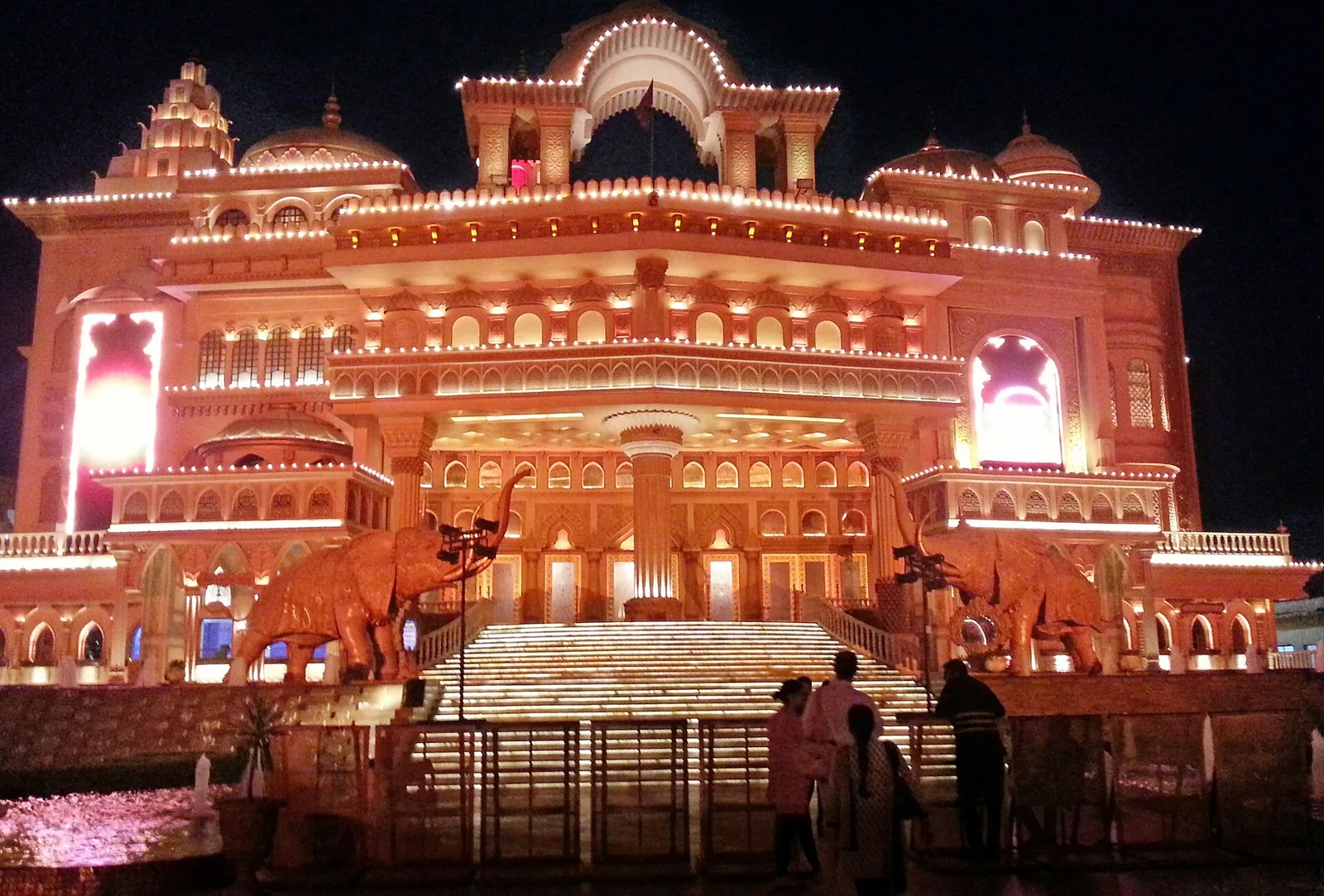
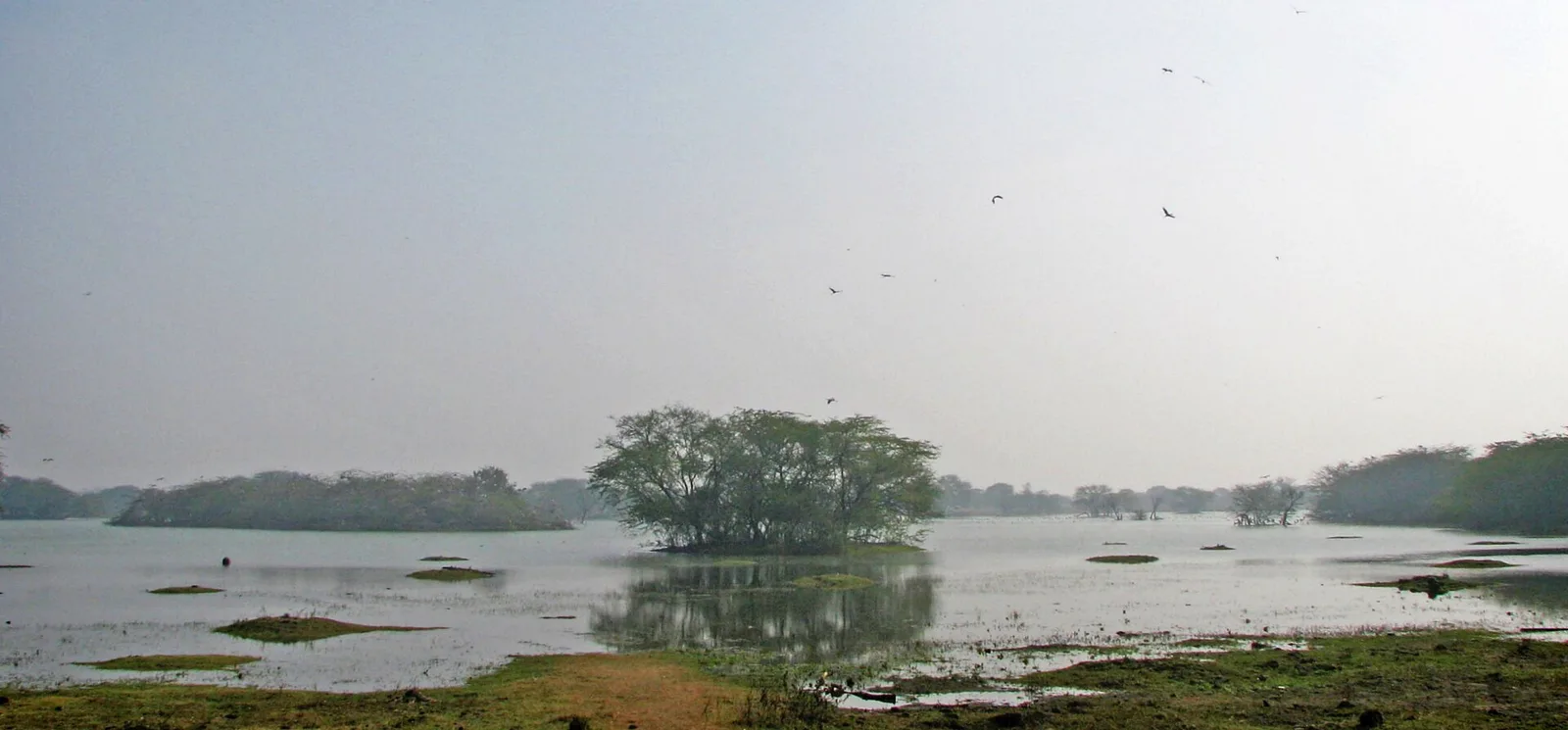
The fair is held at the Sheetla Mata Mandir in the old part of Gurugram, in a neighbourhood known for its narrow lanes and traditional shops, a short ride from the modern commercial districts. The temple complex has a main shrine, a tank and several smaller shrines, and the fair stalls spread out along the lanes around it. Because the area is crowded during the fair, roads are often closed to cars, and visitors walk from designated parking areas. Elsewhere in Gurugram district, you can visit Farrukhnagar, an old Mughal-era town with a stepwell, a mosque and the Sheesh Mahal, and Sultanpur National Park, a well-known bird sanctuary about 15 km away. Gurugram also has museums and parks, such as the Leisure Valley Park, and its shopping and dining districts offer a modern contrast to the temple fair.

Visitor guide

  • Getting there. Gurugram is about 30 km from central Delhi, and about 15 km from Delhi's Indira Gandhi International Airport. The Delhi Metro's Yellow Line serves Gurugram, with onward travel to the temple by auto-rickshaw, taxi or shuttle. Traffic is heavy on fair days, so allow extra time and check for diversions.
  • Where to stay. Gurugram and Delhi have hotels for every budget, and most visitors travel in for the day. Book early if you want to stay in the old town.
  • What to wear and pack. March and April are warm. Wear light, modest cotton clothes, bring a head covering, a hat, sunscreen and a bottle of water, and wear comfortable footwear that is easy to remove.
  • Etiquette. Remove shoes before entering the temple, dress modestly, and follow the instructions of the priests and volunteers. Avoid taking photographs inside the sanctum, and respect the queue.
  • Safety and comfort. The crowds on Mondays and Sheetla Ashtami are very large, so go early or on a weekday other than Monday. Keep valuables secure, hold children's hands and agree on a meeting point in case you are separated.

Today and tomorrow

The Sheetla Mata Fair has grown along with Gurugram, and the district administration and temple committee now manage traffic, security and sanitation on a large scale. The challenges include crowd control, heat, litter and the strain on a densely built area. At the same time, the fair has remained a deeply local event, and many families from long-established villages and from the new city take part together. Medical advances such as vaccination have changed how people think about the diseases for which the goddess was once invoked, but the temple's role as a place of blessing for children and families has continued, and the fair remains a living tradition.

Nearby

Places to see around the festival