
Amaravati Mahachaitya (Great Stupa)
Amaravati Mahachaitya is the remains of a major Buddhist stupa in Andhra Pradesh. Visitors come to see its archaeological remains and learn about its influential sculpture and history.
Key facts · verified by Ghumoopedia editors
- Type of place
- Heritage monument
- Best time to visit
- November to February; Araku and Horsley Hills are pleasant for much of the year
- Nearest railway station
- Vijayawada Junction · about 29 km (straight line)
- Nearest airport
- Vijayawada (Gannavaram) Airport · about 47 km (straight line)
- Verified
- 21 Nov 2026
Plan a trip from Amaravati Mahachaitya (Great Stupa) — a day-by-day route through places nearby.
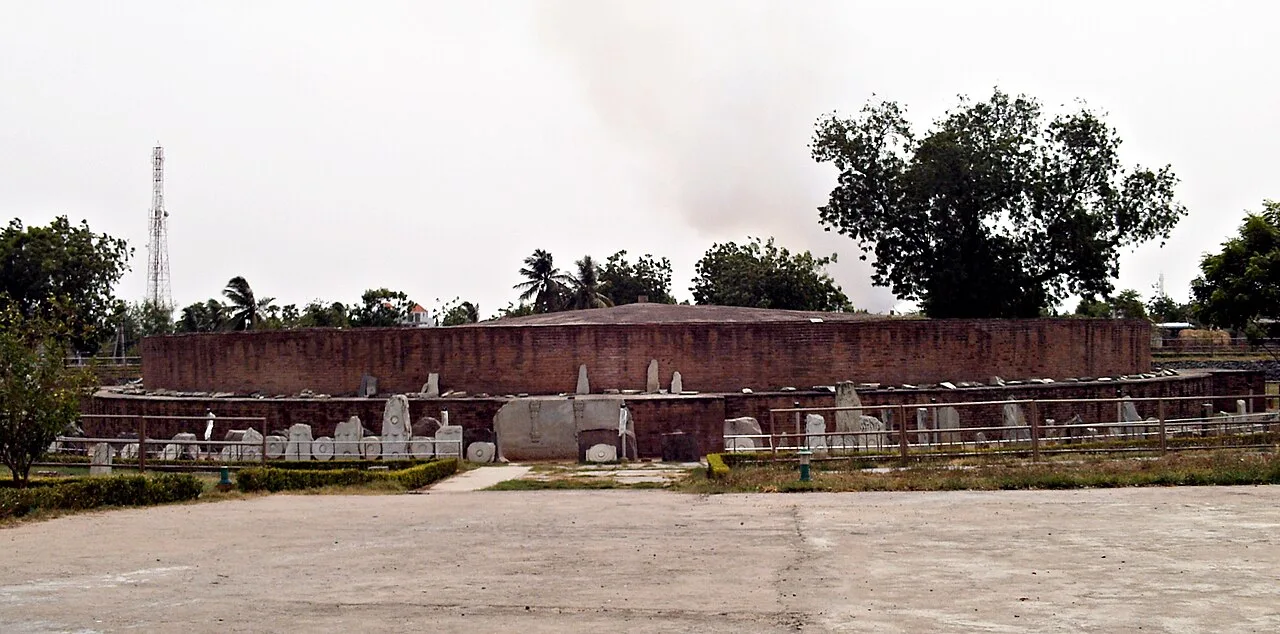
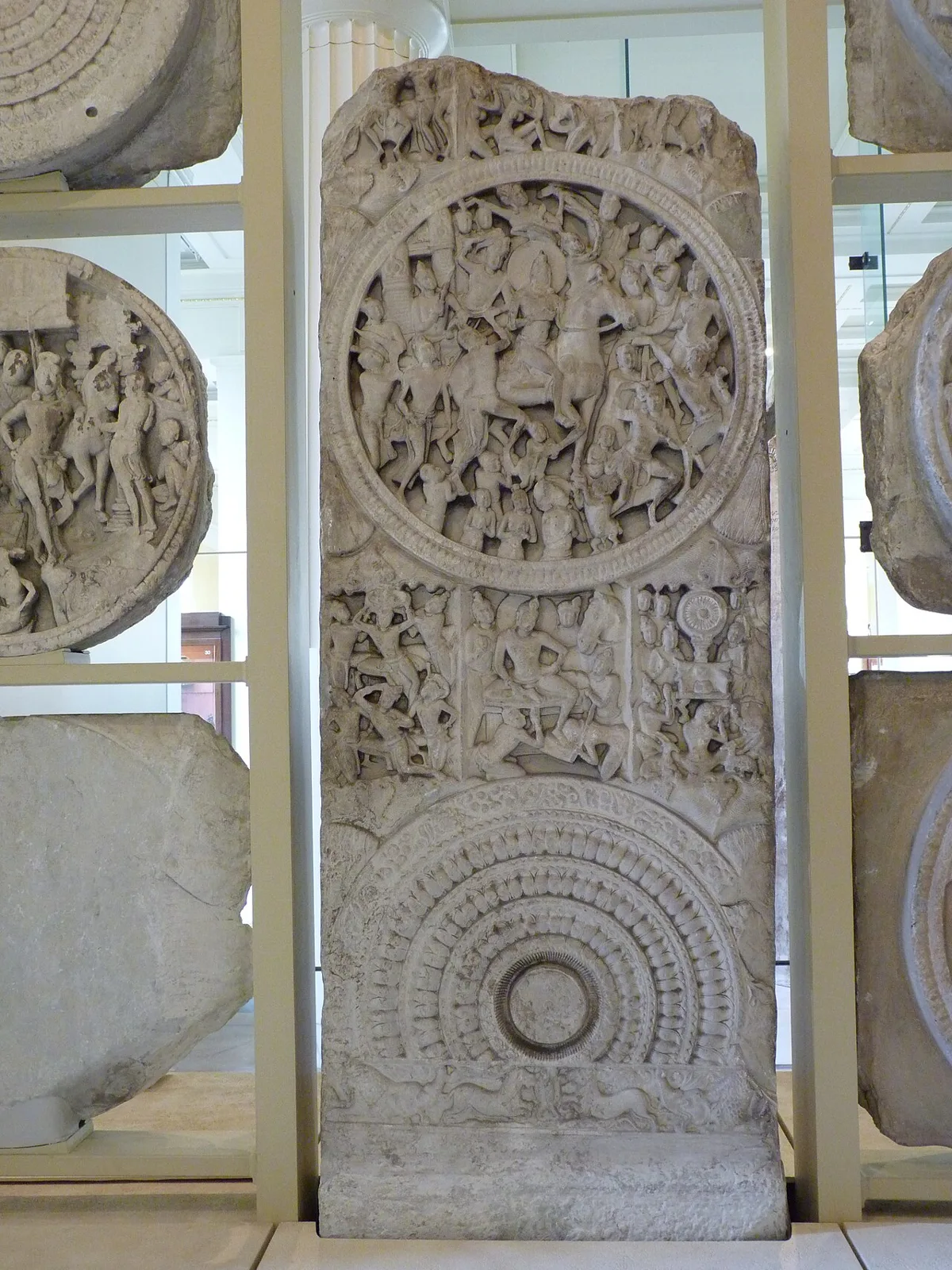
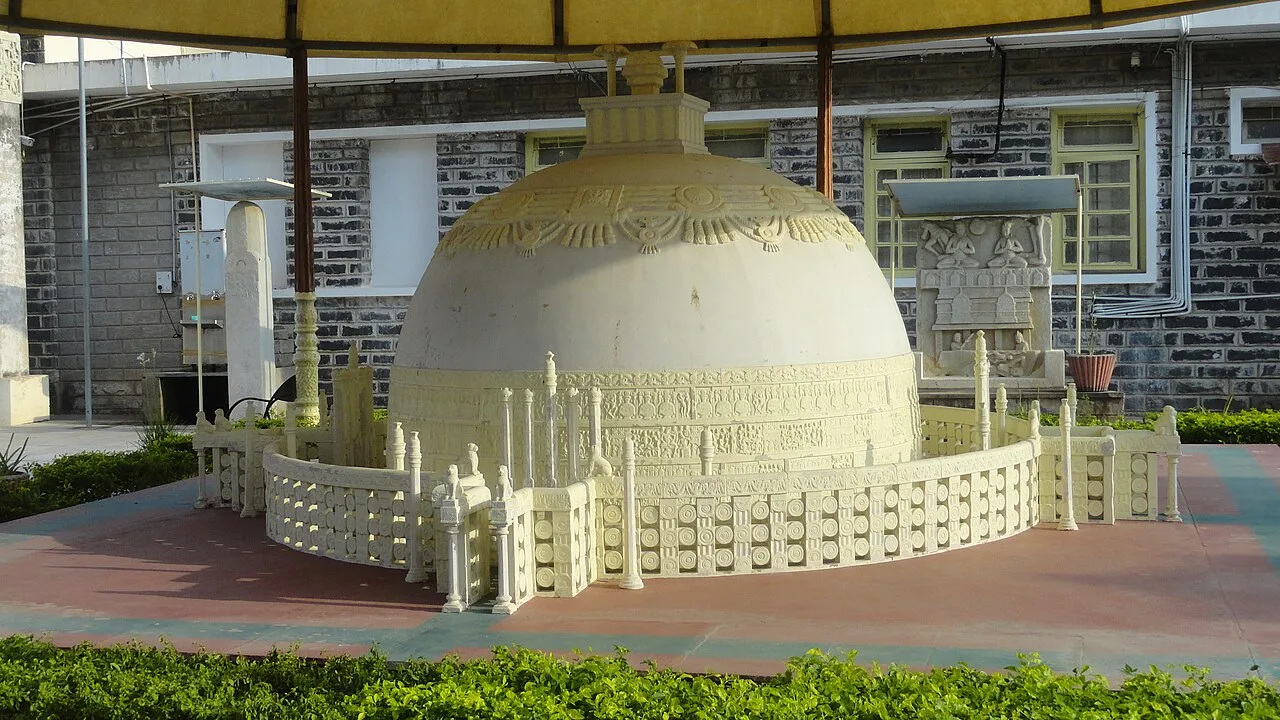
At Amaravathi village in Andhra Pradesh’s Palnadu district stand the remains of the Amaravati Mahachaitya, a Buddhist stupa constructed in successive stages, probably beginning in the third century BCE and continuing until about 250 CE. From roughly 50 CE, builders enlarged it and replaced earlier sculptural decoration with new work. The protected archaeological site includes the stupa and an archaeological museum. Surviving works are chiefly reliefs, and many have suffered substantial damage. No very large Buddha images remain among the known sculptures, although evidence indicates that such figures once existed. Works from the complex are now dispersed among museums in India and overseas. The largest holdings are at the Government Museum in Chennai, which also has friezes excavated at Goli; the Amaravati Archaeological Museum; and the British Museum in London. Other pieces are held in additional collections. Art historians place Amaravati among three leading traditions of ancient Indian art, with Mathura and Gandhara as the other two. The regional sculptural tradition, also called the Andhra style or school, appears at multiple sites in the area. Maritime commerce from India’s eastern coast helped spread its artistic influence through southern India, Sri Lanka and Southeast Asia. Carved panels also show the stupa itself in several forms. Their variations reflect, in part, successive building phases, and together they help reconstruct the structure’s former appearance. For a time, the monument was regarded as the foremost Buddhist structure in Asia and a pinnacle of early Indian art. Its reliefs, now held in collections across several countries, and their depictions of the stupa offer insight into its history and artistic legacy. Andhra Pradesh stretches from the beaches and harbour hills of Visakhapatnam through the lush Godavari–Krishna delta to the sacred hills of Tirumala and the granite gorge of Gandikota, with ancient Buddhist sites at Amaravati and Nagarjunakonda, the forts of Kondaveedu and Chandragiri and the cave systems of Belum and Borra. The coast is hot and humid from March to June, the southwest monsoon brings rain from June to September, and October to December can bring cyclones off the Bay of Bengal. The pleasant season is November to February; the Eastern Ghat hills around Araku stay cooler. The usual best time to visit is November to February; Araku and Horsley Hills are pleasant for much of the year. Timings, fees and access arrangements must be confirmed locally. For official information, see Andhra Pradesh Tourism at https://aptourism.gov.in.
Why it matters
Amaravati Mahachaitya is an important Buddhist monument and a major source for understanding early Buddhist art in the eastern Deccan. The stupa was built and enlarged over several centuries, and its sculptural tradition is recognised by art historians as one of the major schools of ancient Indian sculpture, alongside Mathura and Gandhara. Amaravati-style art also influenced artistic traditions in South India, Sri Lanka and parts of Southeast Asia, connections associated in part with maritime trade. The Archaeological Survey of India protects the site, which includes the stupa remains and an archaeological museum. Many of the finest reliefs removed from the monument are now held in museums in India and abroad. The site is not a UNESCO World Heritage property.
The Amaravati stupa was probably founded in the third century BCE and developed in successive building phases until about 250 CE. Its growth took place during periods of expanding Buddhist patronage in the Andhra region, including the era of the Satavahanas; the monument was enlarged and its sculptural decoration renewed from around the first century CE. The surviving reliefs suggest sustained work by local artists and patrons, although the details of individual commissions are not always known. The monument was already ruined when it attracted antiquarian attention. In 1797, Colin Mackenzie documented the remains, and later excavations and collecting removed many sculptured slabs and architectural pieces. These objects were dispersed among museums in India and overseas, and some are damaged or separated from their original context. The stupa site is now protected by the Archaeological Survey of India, and the local Archaeological Museum displays finds and material relating to the monument. The present remains offer only a partial view of a structure that changed substantially over time.
Origin stories & folklore
Buddhist stupas are traditionally understood as sacred monuments associated with the Buddha, his teachings or revered relics. Local accounts may describe Amaravati as a place of great sanctity, but visitors should distinguish such beliefs from what archaeological evidence can establish: no specific relic at this stupa should be assumed to have been identified. The monument’s carved panels themselves include representations of Buddhist sacred narratives and symbols, which have encouraged devotional and imaginative readings over generations. The nearby Amaralingeswara temple has its own Hindu traditions and is part of the wider sacred landscape. These stories enrich a visit, but they are distinct from the monument’s documented archaeological history.
Architecture & design
The Mahachaitya was a large brick stupa, originally faced and richly embellished with pale limestone sculpture. Its central mound, or dome, rose above a decorated drum and was traditionally crowned by a harmika and umbrella-like finial. A path around the monument allowed worshippers to circumambulate it. Stone railings and gateways marked and framed the sacred space; sculpted panels also depicted stupas, offering visual clues to the monument’s changing appearance. The carving is celebrated for lively figures, detailed clothing and ornaments, foliage, animals, narrative scenes and Buddhist symbols. Early Buddhist art often conveyed the Buddha through signs such as the wheel, footprints or an empty throne rather than a human image; later sculpture includes iconic Buddha figures. The surviving site is fragmentary, so the original height, finish and complete arrangement cannot be experienced in place. Interpretive displays and museum objects help explain its construction and successive phases.
Important objects & sculptures
Look for the surviving limestone reliefs and architectural fragments at the Archaeological Museum, including narrative panels, rail fragments, figures, animals and auspicious Buddhist symbols. The carvings show the skill and detail associated with the Amaravati school. Some panels portray stupas, offering a useful comparison with the monument’s remains. Important Amaravati sculptures are also held by the Government Museum in Chennai and the British Museum in London, among other collections; they are not all on view at the site. The surviving reliefs are incomplete and some are damaged, so museum labels and site interpretation can help visitors understand their original setting.
Explore Amaravati Mahachaitya (Great Stupa) slowly and read the interpretation boards, use the official audio guide where available or hire an authorised guide to understand its history. Check opening days, ticket counters and camera rules in advance; many monuments and museums close on one weekday and on some public holidays. Early morning gives softer light, cooler air and smaller crowds. A comfortable itinerary is one main visit in the morning, a local meal at midday and a short nearby stop before an afternoon return. Use the district list on this site to find other places in Guntur, but check the route and its condition before combining stops. If a festival is on — such as the Tirumala Brahmotsavam, the Godavari and Krishna Pushkarams, Sankranti or the Visakha Utsav — roads and stays can be busy, and the experience can be unforgettable. Leave no litter: many sites are protected by the communities around them.
Suggested itineraries
Half day: Spend 1–2 hours exploring the stupa remains and interpretation, then allow about an hour for the Archaeological Museum; finish with a nearby meal. Full day: Visit the stupa and museum in the morning, take a relaxed local lunch, then visit Amaralingeswara temple and the Dhyana Buddha statue, allowing time for road transfers. Gentler option: Focus on the museum and the easiest accessible viewpoints of the site, take frequent rests, and skip any uneven or longer walking sections.
Amaravathi lies in a Telugu-speaking part of Andhra Pradesh, where local life includes Hindu worship, village markets and regional food traditions. The nearby Amaralingeswara temple remains an active place of worship, while the Buddhist monument draws pilgrims, students and visitors interested in archaeology and Buddhist heritage. The site itself is primarily an archaeological destination rather than a venue for regular performances. Visitors may encounter Telugu in everyday interactions, alongside English at some visitor-facing services. Dress modestly, avoid disturbing worshippers at active religious sites and follow any instructions from staff or local communities.
Festivals & events
The stupa does not have a reliably documented annual festival calendar for visitors, so check locally before planning around an event. Nearby Amaralingeswara temple has Hindu observances, including celebrations associated with Maha Shivaratri, which generally falls in February or March; temple activity and crowds can increase during major observances. Sankranti, usually celebrated in January, is widely observed across Andhra Pradesh and can affect travel and accommodation availability. Buddhist visitors may mark occasions such as Buddha Purnima, but celebrations at this particular site should not be assumed. Confirm local arrangements before travelling, as event schedules and crowd levels vary.
Local food in Andhra Pradesh includes Andhra meals on a banana leaf with fiery gongura and avakaya pickles, pesarattu with upma, pulihora, Rayalaseema ragi sangati, fresh seafood along the coast, bandar laddu and pootharekulu sweets, and Tirupati laddu prasadam. Ask what is fresh that day; many small eateries cook a limited daily menu. Andhra food is famously spicy — ask for 'medium' if you are unsure, and cool down with curd rice. In Tirupati and other temple towns the food is strictly vegetarian. Remote sites may have no restaurant at all. Carry water and snacks, eat a proper breakfast before long drives, and ask your accommodation for a packed lunch if you are heading out early. Try a home-cooked or local thali meal when you can — it is often the best food on the route. Choose busy, clean places, drink sealed or filtered water, and carry your packaging back with you.
Shopping & local experiences
Shopping immediately around the protected monument may be limited. In Amaravathi or larger nearby towns, look for everyday local goods, small devotional items and regional snacks, while checking that any purported antiquities are not protected cultural objects. Andhra meals and snacks are a worthwhile part of the visit; ask locally about seasonal or vegetarian choices. Museum publications, where available, can make useful souvenirs and help explain the site’s history. Avoid buying archaeological fragments or objects presented as genuine heritage material.
November to February; Araku and Horsley Hills are pleasant for much of the year
The nearest principal railway station by straight-line distance is Vijayawada Junction, roughly 29 km away. The nearest operating airport by straight-line distance is Vijayawada (Gannavaram) Airport, roughly 47 km away. These figures are calculated from map coordinates — actual road distance is longer. Visakhapatnam, Vijayawada and Tirupati are the main rail and air gateways; Rajahmundry serves the Godavari districts, and Renigunta is the railhead for Tirumala. APSRTC buses connect the district towns, and shared autos cover the last stretch to most temples and beaches; for Papikondalu and Araku, book the packaged boat or road trip from Rajahmundry or Visakhapatnam. When comparing train, bus and flight, count the complete door-to-door time: a flight saves the most time only if the onward road transfer is short, while an overnight train can save a hotel night. Book your return before you leave, because seats fill quickly on weekends, festivals and holidays. Current train numbers, timings, return services and fares are not listed here; check IRCTC and NTES for trains and the airline's own schedule for flights. No permit is needed to visit Andhra Pradesh. For Tirumala, book darshan in advance on the official TTD website — Special Entry Darshan tickets sell out weeks ahead, and the free sarva darshan queue can take many hours; the TTD dress code (dhoti or kurta-pyjama for men, saree or salwar for women) is enforced inside the temple. Forest areas such as Papikondalu and Maredumilli may need forest-department entry permission, and boats on the Godavari are run by licensed operators.
Confirm onward and return timings on IRCTC / NTES, the state bus operator or your airline before travel. A dash means current timings or fares have not been verified.
Getting around
The site is near Amaravathi village and is commonly reached by road from Vijayawada or nearby district towns. Local buses may serve the broader area, while autos and hired taxis can be useful for the final leg; availability can vary, so arrange a return ride in advance if needed. Walking is practical within the archaeological grounds, though surfaces may be uneven and exposed. Check locally for parking arrangements and any restrictions near the protected site. There is no need for a boat to visit the stupa; river excursions elsewhere in the region require separate planning.
Hours, tickets & permissions
Entry arrangements, ticketing, photography permissions and access to the museum may differ from those for the outdoor monument. Some protected sites and museums close on a weekly day or public holidays, so confirm current opening days and hours before setting out. Ask the Archaeological Survey of India or the local site authority about current fees, camera rules, permitted equipment and any group or guide requirements. Follow notices at the entrance, stay within visitor areas and do not touch or climb on archaeological remains.
Facilities
The Archaeological Museum provides an indoor place to view finds and interpretation, subject to its current access arrangements. Toilets, drinking water, shaded seating, food stalls and guide services may be limited or variable; check locally rather than relying on them. Carry water, particularly in warm weather, and plan meals in Amaravathi or a larger nearby town. Parking may be available near the site, but confirm on arrival. ATMs and a wider choice of shops, food and accommodation are more likely in larger towns than immediately beside the monument.
Accessibility
The archaeological grounds include open, exposed areas and may have uneven paths, loose surfaces or level changes. Walking distances between the remains, displays and museum can add up, and shade may be limited, so allow time for rests and carry water. Do not assume that every section has step-free access, ramps or accessible toilets; confirm arrangements with the site authority before visiting. Wheelchair and stroller access may be restricted by ground conditions. Older visitors or anyone with limited mobility may find a short visit focused on the museum and the nearest stable viewpoints more manageable.
No permit is needed to visit Andhra Pradesh. For Tirumala, book darshan in advance on the official TTD website — Special Entry Darshan tickets sell out weeks ahead, and the free sarva darshan queue can take many hours; the TTD dress code (dhoti or kurta-pyjama for men, saree or salwar for women) is enforced inside the temple. Forest areas such as Papikondalu and Maredumilli may need forest-department entry permission, and boats on the Godavari are run by licensed operators. Carry a photo ID at all times and save the emergency number 112 and your accommodation's contact offline. Heat in summer and heavy rain in the monsoon are the main weather risks; carry water, avoid midday sun and allow extra time when roads flood. Watch your belongings in crowds and on public transport, and follow posted instructions.
Photography
Early morning or late afternoon generally gives softer light on the limestone remains and is more comfortable for walking. Photograph from designated visitor areas and check current notices for restrictions, camera fees or limits inside the museum. Avoid touching carvings to frame a picture. Drone use over a protected monument may require permission and should not be attempted without confirming the rules with the relevant authorities. Be considerate when photographing staff, worshippers or other visitors, and ask permission before taking close portraits.
Choose a stay by the full journey to Amaravati Mahachaitya (Great Stupa), not just the district name. Visakhapatnam, Vijayawada and Tirupati offer the widest choice; Araku has AP Tourism resorts and tribal homestays, and Rajahmundry is the base for Godavari cruises. In summer, check air-conditioning; in the monsoon, check that the property is accessible if roads flood. Book in advance for weekends, festivals and the peak season (November to February; Araku and Horsley Hills are pleasant for much of the year). Confirm the exact location, meals included, check-in time and cancellation terms in writing. Avoid sending money to unverified contacts or touts at stations. Carry some cash, as card and digital payments can be unreliable in remote areas.
The Amaralingeswara Swamy temple is a prominent nearby religious site and can be combined with the stupa if you allow time for local travel. The Dhyana Buddha statue in the Amaravathi area offers another stop related to the region’s Buddhist heritage. Vijayawada provides further options, including the Prakasam Barrage and Undavalli Caves, though these are better treated as separate road visits rather than assumed to be within walking distance. Check routes and current access conditions before combining several places in one day.
For couples, Amaravati Mahachaitya (Great Stupa) rewards a slow pace: arrive early for soft light and fewer crowds, share a local meal and keep the evening free. A sunrise over the Araku valley, a Godavari cruise at dusk from Rajahmundry or a walk along Rushikonda beach makes the trip memorable. Public displays of affection can be frowned upon in conservative communities and at religious sites, so be discreet. Keep a buffer in your itinerary, because weather and road conditions can delay plans.
Q: How much time should I allow for a visit? A: Allow a few hours for the stupa remains and museum; add time for nearby temples or other stops. Q: When is the best season to visit? A: November to February is generally the most comfortable season in Andhra Pradesh; carry water and sun protection in warmer months. Q: Is there an entry fee, and do I need to book? A: Entry rules and fees can change. Confirm current requirements with the Archaeological Survey of India or the local site authority before travelling. Q: Is the site suitable for children and older visitors? A: It can be rewarding for families, but the open grounds may be uneven and exposed. Older visitors or those with limited mobility should plan a shorter route and rest breaks. Q: Where can I stay nearby? A: Accommodation is more readily found in larger nearby towns, particularly Vijayawada. Check availability and road connections before choosing a base.
Be the first to share photos, stories, advice or a helpful contact for Amaravati Mahachaitya (Great Stupa).
Loading…