
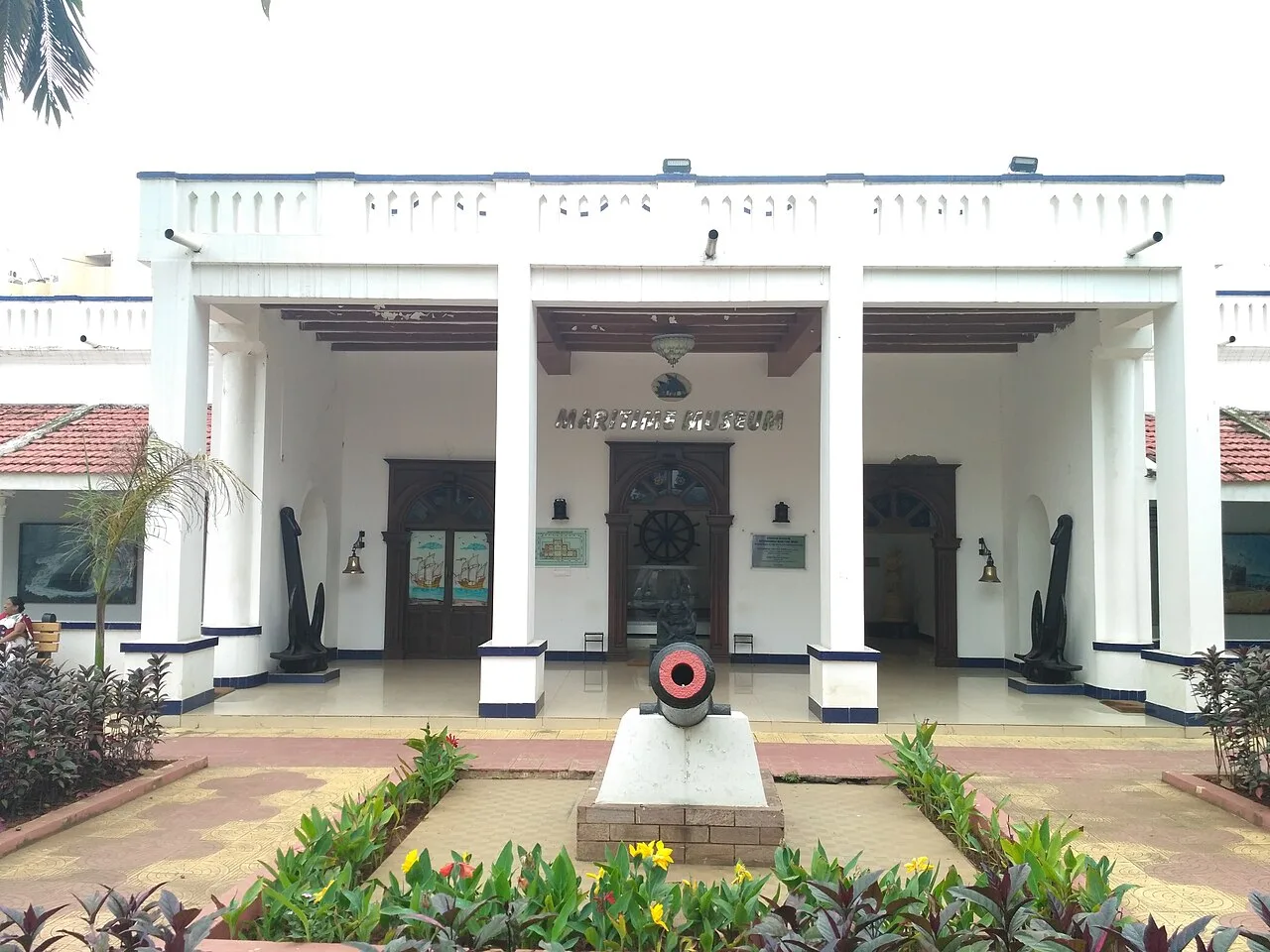
Visakha Museum
Visakha Museum, formally the Visakhapatnam Municipal Corporation Museum, is a museum in Visakhapatnam, Andhra Pradesh. Visitors can explore its collection of historical objects and artefacts linked to the Kalingandhra region.
Key facts · verified by Ghumoopedia editors
- Type of place
- Heritage monument
- Best time to visit
- November to February; Araku and Horsley Hills are pleasant for much of the year
- Nearest railway station
- Visakhapatnam Junction · about 5 km (straight line)
- Nearest airport
- Visakhapatnam Airport · about 12 km (straight line)
- Verified
- 21 Nov 2026
Plan a trip from Visakha Museum — a day-by-day route through places nearby.
Located in Visakhapatnam district, Andhra Pradesh, Visakha Museum is formally known as the Visakhapatnam Municipal Corporation Museum. Its collection comprises historical objects and artefacts associated with the Kalingandhra region, giving visitors an opportunity to learn about the area’s past. The museum is situated in the port city of Visakhapatnam. N. Janardhana Reddy, who was Andhra Pradesh’s Chief Minister at the time, inaugurated the museum on 8 October 1991. The Government of India owns the institution. Its regional collection is the central reason to visit, with historical material connected to Kalingandhra gathered under one roof. Andhra Pradesh stretches from the beaches and harbour hills of Visakhapatnam through the lush Godavari–Krishna delta to the sacred hills of Tirumala and the granite gorge of Gandikota, with ancient Buddhist sites at Amaravati and Nagarjunakonda, the forts of Kondaveedu and Chandragiri and the cave systems of Belum and Borra. The coast is hot and humid from March to June, the southwest monsoon brings rain from June to September, and October to December can bring cyclones off the Bay of Bengal. The pleasant season is November to February; the Eastern Ghat hills around Araku stay cooler. The usual best time to visit is November to February; Araku and Horsley Hills are pleasant for much of the year. Timings, fees and access arrangements must be confirmed locally. For official information, see Andhra Pradesh Tourism at https://aptourism.gov.in.
Why it matters
Visakha Museum, formally known as the Visakhapatnam Municipal Corporation Museum, preserves historical material associated with Visakhapatnam and the wider Kalingandhra region. Its importance is primarily regional: it offers visitors a place to encounter objects and accounts connected with the area’s past, complementing the city’s coastal and maritime attractions. The museum is a local cultural institution rather than a monument whose significance is established by a widely known national designation. The available guide records its inauguration by Andhra Pradesh Chief Minister N. Janardhana Reddy on 8 October 1991. No UNESCO listing or Archaeological Survey of India protection is established here; confirm the museum’s current administration and status with the relevant authority.
The museum’s documented public history begins with its inauguration on 8 October 1991 by N. Janardhana Reddy, then Chief Minister of Andhra Pradesh. Its full name, Visakhapatnam Municipal Corporation Museum, reflects its civic museum role, while its collections are described as covering historical treasures and artefacts from the Kalingandhra region. The date of inauguration should not be confused with the age of the objects displayed: individual items may come from different periods, and their dates and origins should be taken from the museum’s labels or catalogue. The available reference does not establish a detailed account of the institution’s founders, the acquisition history of particular collections, or a programme of major later restorations. Nor does it securely identify the building’s original construction date or builder. Some accounts may associate the premises with an older bungalow, but visitors should verify that attribution locally rather than treat it as settled history. The museum is described as owned by the Government of India, while its formal name refers to the municipal corporation; the current administrative arrangement is worth confirming with the managing authority.
Origin stories & folklore
No widely documented origin legend is known to explain the founding of Visakha Museum itself. The institution is a modern museum, inaugurated in 1991, rather than a shrine or ancient monument with a recorded foundation story. Visakhapatnam’s name and the region’s long history have inspired local explanations and religious traditions, but such stories should be distinguished from verified accounts of the museum’s creation. Visitors may encounter objects, labels or local guides that refer to regional beliefs and inherited memories. Treat these as cultural interpretations unless the museum provides a cited historical source; the available guide does not identify a particular legend as part of the museum’s official history.
Architecture & design
The museum is arranged as an indoor visitor attraction with displays that can be explored gallery by gallery. Some local descriptions may connect the premises with a bungalow, but its precise age and attribution should be checked with the museum rather than assumed. The building’s practical purpose today is to house and interpret collections relating to Visakhapatnam and Kalingandhra. Visitors can expect to move between interior display areas and read exhibit labels, though the number and arrangement of galleries may change. There is no confirmed account here of distinctive engineering features, a formal courtyard plan or surviving historic fabric. Look for any architectural interpretation provided on site, and distinguish original building features from later changes made for museum use.
Important objects & sculptures
Collection displays may change, so check the labels and ask staff which objects are currently on view. Take time to read provenance notes, dates and explanations rather than relying on an object’s appearance alone. Where sculptures, inscriptions, domestic objects, documents or other historical material are displayed, their interpretation depends on the information provided by the museum. Do not assume that every object originated in Visakhapatnam or belongs to a single period. Photography and close access may be restricted for selected exhibits; follow gallery notices and staff instructions.
Explore Visakha Museum slowly and read the interpretation boards, use the official audio guide where available or hire an authorised guide to understand its history. Check opening days, ticket counters and camera rules in advance; many monuments and museums close on one weekday and on some public holidays. Early morning gives softer light, cooler air and smaller crowds. A comfortable itinerary is one main visit in the morning, a local meal at midday and a short nearby stop before an afternoon return. Use the district list on this site to find other places in Visakhapatnam, but check the route and its condition before combining stops. If a festival is on — such as the Tirumala Brahmotsavam, the Godavari and Krishna Pushkarams, Sankranti or the Visakha Utsav — roads and stays can be busy, and the experience can be unforgettable. Leave no litter: many sites are protected by the communities around them.
Suggested itineraries
Half day: Spend 1–2 hours exploring the museum and reading the displays; take a meal break, then visit RK Beach or a nearby Beach Road attraction. Full day: Allow 1–2 hours at the museum, visit the Submarine Museum and another nearby waterfront attraction, then take a longer break for lunch and return to the city centre. Gentler option: Focus on a shorter museum visit, take seated rest breaks where available, and choose one nearby stop reachable by vehicle rather than walking between attractions.
Visakha Museum presents regional history within a living, multilingual coastal city. Telugu is widely spoken in Visakhapatnam, alongside other languages used by residents and visitors. The surrounding region’s cultural life includes Telugu literary and performance traditions, local music and dance, religious observances, coastal foodways and communities with distinct customs. The museum is a place to learn about the past, not a guarantee of live performances or demonstrations during a visit. Exhibits and interpretation may provide context for regional identities and changing ways of life. Visitors can show respect by following gallery rules, asking before photographing people, and treating religious or community objects with care. For cultural events, check current city listings rather than assuming they take place at the museum.
Festivals & events
The museum is not established as a regular festival venue. In Visakhapatnam, Sankranti in January and the city’s Visakha Utsav, when scheduled, can bring cultural programmes and increased activity to public spaces. Religious festivals and observances also take place at temples around the district, including at Simhachalam. Their timing varies by calendar and year. Major regional occasions can make roads, accommodation and popular attractions busier, even when the museum itself has no special programme. Check the museum and city event listings before planning around a festival, and allow extra time for local travel if celebrations are underway.
Local food in Andhra Pradesh includes Andhra meals on a banana leaf with fiery gongura and avakaya pickles, pesarattu with upma, pulihora, Rayalaseema ragi sangati, fresh seafood along the coast, bandar laddu and pootharekulu sweets, and Tirupati laddu prasadam. Ask what is fresh that day; many small eateries cook a limited daily menu. Andhra food is famously spicy — ask for 'medium' if you are unsure, and cool down with curd rice. In Tirupati and other temple towns the food is strictly vegetarian. Remote sites may have no restaurant at all. Carry water and snacks, eat a proper breakfast before long drives, and ask your accommodation for a packed lunch if you are heading out early. Try a home-cooked or local thali meal when you can — it is often the best food on the route. Choose busy, clean places, drink sealed or filtered water, and carry your packaging back with you.
Shopping & local experiences
Look for locally made handicrafts, textiles and regional food products in Visakhapatnam’s markets and established shops. Andhra handloom and Kalamkari items may be available, but check the material, origin and workmanship rather than assuming every product is locally made. Shops carrying crafts from tribal communities or the wider state may also be found in the city; ask about provenance and buy from responsible sellers. The museum may or may not have a souvenir counter, so confirm on arrival. For a food experience, seek local Andhra dishes and coastal seafood at a reputable restaurant, and mention dietary needs when ordering.
November to February; Araku and Horsley Hills are pleasant for much of the year
The nearest principal railway station by straight-line distance is Visakhapatnam Junction, roughly 5 km away. The nearest operating airport by straight-line distance is Visakhapatnam Airport, roughly 12 km away. These figures are calculated from map coordinates — actual road distance is longer. Visakhapatnam, Vijayawada and Tirupati are the main rail and air gateways; Rajahmundry serves the Godavari districts, and Renigunta is the railhead for Tirumala. APSRTC buses connect the district towns, and shared autos cover the last stretch to most temples and beaches; for Papikondalu and Araku, book the packaged boat or road trip from Rajahmundry or Visakhapatnam. When comparing train, bus and flight, count the complete door-to-door time: a flight saves the most time only if the onward road transfer is short, while an overnight train can save a hotel night. Book your return before you leave, because seats fill quickly on weekends, festivals and holidays. Current train numbers, timings, return services and fares are not listed here; check IRCTC and NTES for trains and the airline's own schedule for flights. No permit is needed to visit Andhra Pradesh. For Tirumala, book darshan in advance on the official TTD website — Special Entry Darshan tickets sell out weeks ahead, and the free sarva darshan queue can take many hours; the TTD dress code (dhoti or kurta-pyjama for men, saree or salwar for women) is enforced inside the temple. Forest areas such as Papikondalu and Maredumilli may need forest-department entry permission, and boats on the Godavari are run by licensed operators.
Confirm onward and return timings on IRCTC / NTES, the state bus operator or your airline before travel. A dash means current timings or fares have not been verified.
Getting around
Visakhapatnam Junction and Visakhapatnam Airport are the city’s principal rail and air gateways. From either, visitors can use local buses, auto-rickshaws or app-based and other taxis to reach the museum; confirm the destination with the driver, since the full museum name may be more familiar locally. Autos and taxis are useful for combining the museum with nearby Beach Road attractions. Walking may suit short connections, but coastal heat and traffic can make longer walks uncomfortable. Parking availability can vary, so check locally if arriving by private vehicle. For visits beyond the city, use district buses or arrange a suitable vehicle in advance.
Hours, tickets & permissions
Entry arrangements may include a ticket, rules for groups, and separate restrictions or charges for photography; policies can change. Carry identification if requested, and follow notices about bags, food, flash photography and the handling of exhibits. Do not assume that a general entry ticket covers every activity or special display. The available guide does not establish current opening days, hours, fees or holiday closures. Confirm these details, along with any accessibility arrangements, directly with the museum or its managing authority before setting out.
Facilities
Museum facilities can change. Toilets, drinking water, seating, a ticket counter and staff assistance may be available, but check locally rather than relying on any one service. Food options, shops and ATMs are more likely to be found in the surrounding city than inside the galleries. Guided interpretation or audio-guide availability is not guaranteed; ask the museum whether an authorised guide or audio guide is currently offered. Parking and accessible facilities should also be confirmed before arrival. Carry water for the journey, but follow gallery rules about bringing food and drink into display areas.
Accessibility
The museum visit involves moving through indoor galleries, and the amount of walking, seating and access between display areas may vary. The available information does not confirm step-free entrances, ramps, lifts, accessible toilets or wheelchair access throughout, so contact the museum before visiting if these are essential. Ask about entrance thresholds and whether staff can advise on a shorter route. Strollers may be inconvenient in narrow or crowded galleries; check local rules. Older visitors may prefer a slow visit with rest breaks and transport to the entrance. In warm or humid weather, plan for shade and water outside the building, as outdoor waiting areas may not be shaded.
No permit is needed to visit Andhra Pradesh. For Tirumala, book darshan in advance on the official TTD website — Special Entry Darshan tickets sell out weeks ahead, and the free sarva darshan queue can take many hours; the TTD dress code (dhoti or kurta-pyjama for men, saree or salwar for women) is enforced inside the temple. Forest areas such as Papikondalu and Maredumilli may need forest-department entry permission, and boats on the Godavari are run by licensed operators. Carry a photo ID at all times and save the emergency number 112 and your accommodation's contact offline. Heat in summer and heavy rain in the monsoon are the main weather risks; carry water, avoid midday sun and allow extra time when roads flood. Watch your belongings in crowds and on public transport, and follow posted instructions.
Photography
Ask at the entrance whether photography is allowed and whether any camera or flash restrictions apply; rules can differ between exhibits. Follow signs and staff directions, and avoid touching objects to frame a photograph. For outdoor views around the city, early or late daylight is generally softer than the harsh midday sun, but the museum’s indoor lighting is set for display rather than photography. Do not use a drone over the museum or nearby public areas without confirming applicable permissions and safety rules. Be considerate of other visitors, and seek consent before photographing people, ceremonies or religious activity.
Choose a stay by the full journey to Visakha Museum, not just the district name. Visakhapatnam, Vijayawada and Tirupati offer the widest choice; Araku has AP Tourism resorts and tribal homestays, and Rajahmundry is the base for Godavari cruises. In summer, check air-conditioning; in the monsoon, check that the property is accessible if roads flood. Book in advance for weekends, festivals and the peak season (November to February; Araku and Horsley Hills are pleasant for much of the year). Confirm the exact location, meals included, check-in time and cancellation terms in writing. Avoid sending money to unverified contacts or touts at stations. Carry some cash, as card and digital payments can be unreliable in remote areas.
The museum can be combined with attractions around Visakhapatnam’s waterfront. RK Beach is a familiar seafront stop, while the INS Kurusura Submarine Museum and TU-142 Aircraft Museum offer separate displays on maritime and aviation subjects. Kailasagiri provides a hilltop outing, and Simhachalam Temple is an important religious destination elsewhere in the district. These stops have different travel requirements, so check routes and current access before combining them in one day. Araku Valley and Borra Caves are longer excursions rather than quick museum add-ons; allow substantial travel time and verify road conditions or tour arrangements.
For couples, Visakha Museum rewards a slow pace: arrive early for soft light and fewer crowds, share a local meal and keep the evening free. A sunrise over the Araku valley, a Godavari cruise at dusk from Rajahmundry or a walk along Rushikonda beach makes the trip memorable. Public displays of affection can be frowned upon in conservative communities and at religious sites, so be discreet. Keep a buffer in your itinerary, because weather and road conditions can delay plans.
Q: How much time should I allow for Visakha Museum? A: Allow around one to two hours for a relaxed visit, depending on how many displays are open and how closely you read the interpretation. Q: When is a pleasant season to visit? A: November to February is generally the more comfortable season in coastal Andhra Pradesh; check local weather, especially during the monsoon and cyclone season. Q: Is there an entry fee, and do I need to book? A: Entry rules and any fees can change. Confirm current requirements, opening days and photography rules with the museum before travelling. Q: Is the museum suitable for children and elderly visitors? A: It can suit visitors who are comfortable with an indoor gallery visit. Ask in advance about seating, steps and access, and plan breaks for children and older visitors. Q: Where can I stay nearby? A: Visakhapatnam has accommodation options across the city. Choose a location convenient for your onward travel and confirm current availability before booking.
Be the first to share photos, stories, advice or a helpful contact for Visakha Museum.
Loading…