
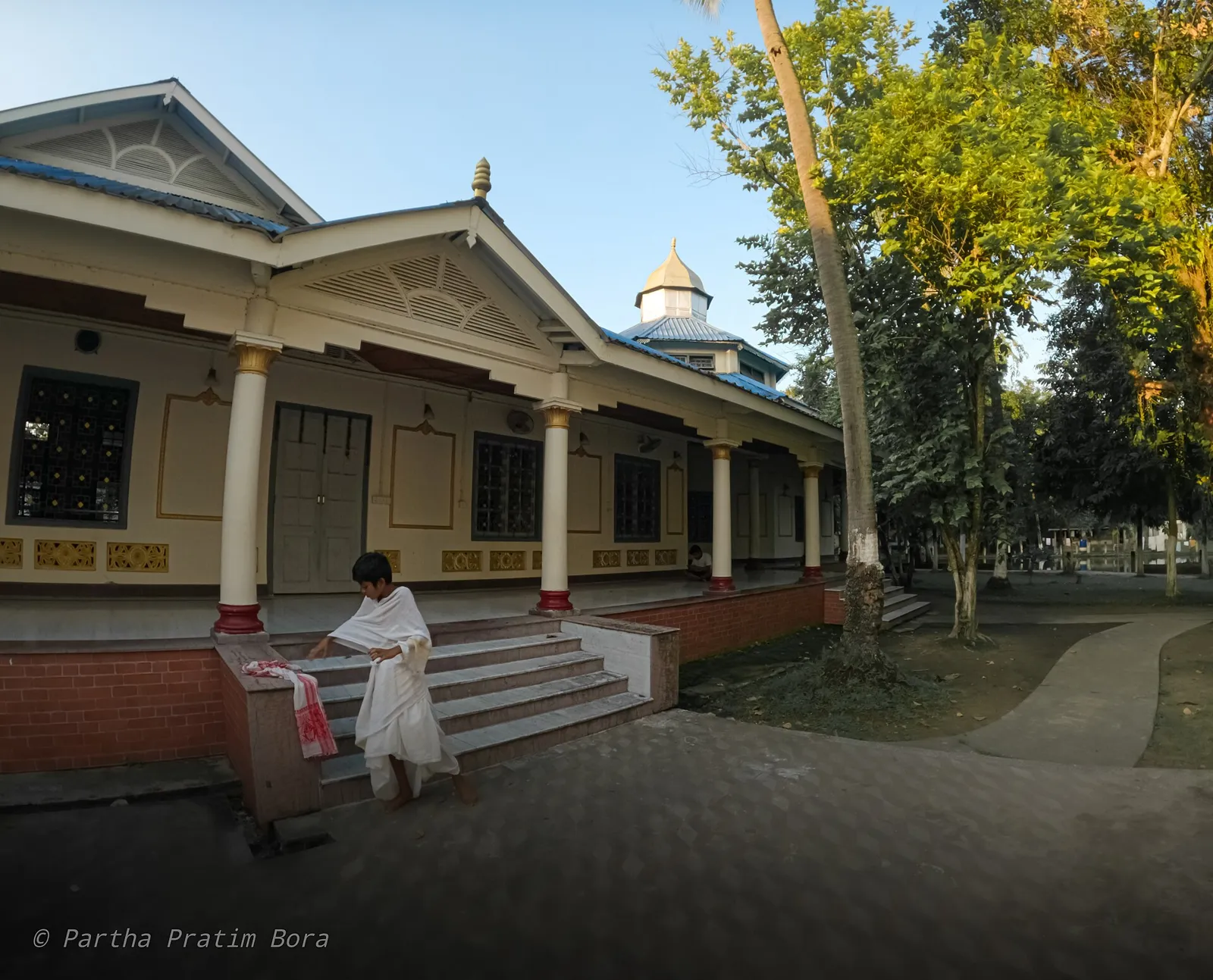
Bordowa Than
Bordowa Than, also called Batadrava Than, is a pilgrimage centre in Nagaon district, Assam, visited for its connection with Srimanta Sankardev and his birthplace.
Key facts · verified by Ghumoopedia editors
- Type of place
- Temple / pilgrimage site
- Best time to visit
- October to April
- Verified
- 21 Nov 2026
Bordowa Than, also known as Batadrava Than, is a pilgrimage destination in Nagaon district, Assam. It stands in Batadrava, where Srimanta Sankardev, the Assamese saint and social reformer, was born. Sankardev founded the Than in 1468, when he was 19. It is considered the first namghar, or than, to be built. Rituals at the site follow the norms of Purush Sanghati. The site covers 16 bigha and is about 16 km from Nagaon city. Pilgrims visit to see the religious institution established by Sankardev at his birthplace. Assam’s Vaishnavite satras, Ahom heritage, Bihu festivals and silk-weaving traditions shape everyday life well beyond the major monuments. The Brahmaputra plains are hot and humid from April to September, with heavy monsoon rain and seasonal floods. Winters are mild and pleasant, with morning fog along the river. The usual best time to visit is October to April. Days are short in Northeast India: the sun can set before 5 pm in winter, so plan to reach and leave Bordowa Than in daylight. Timings, fees and access arrangements must be confirmed locally. For official information, see Assam Tourism at https://tourism.assam.gov.in.
Why it matters
Bordowa Than, also known as Batadrava Than, is an important Vaishnavite pilgrimage site in Nagaon district, Assam. It stands at the birthplace of Srimanta Sankardev, the Assamese saint, poet and social reformer whose teachings shaped the region’s Ekasarana Naam Dharma tradition. The site is associated with a namghar, a community prayer hall, and is described as the first Than or namghar established by Sankardev. Its rituals follow the Purush Sanghati tradition. The Than is a place of worship and a centre of regional religious memory; the account identifies no UNESCO listing or ASI protection, so visitors should not assume either status.
Bordowa Than is traditionally associated with Srimanta Sankardev, who was born at Bordowa. Published accounts date the establishment of the Than to 1468, when Sankardev was 19, and describes it as the first namghar or Than he constructed. A namghar is a communal space for prayer, devotional singing and religious gatherings, and the institution became central to Assamese Vaishnavite life. The Than’s history is therefore connected not only with a single religious site but also with the spread of Sankardev’s teachings and community-based worship in Assam. The place has continued as a living pilgrimage centre, with rituals conducted according to Purush Sanghati norms. Its present precinct covers a reported 16 bigha. The available account does not give a detailed chronology of later rebuilding, patronage, or restoration, so specific phases and dates should not be inferred. As with many active religious sites, buildings and facilities may have been maintained or altered over time to serve worshippers. Visitors interested in the site’s documented institutional history can ask the managing authorities or consult local interpretive material.
Origin stories & folklore
Local religious memory centres on Sankardev’s connection to Bordowa, his birthplace, and the tradition that he established the Than there. The founding is often retold as an early expression of his vision for collective devotion: people could gather for prayer, singing and the hearing of sacred teachings in a shared space. This account belongs to the site’s devotional tradition; it is distinct from independently documented architectural history. Stories and interpretations may vary among devotees and local guides. Visitors can ask caretakers about the versions shared by the community and should treat them as living religious traditions rather than as claims that can all be historically verified.
Architecture & design
Bordowa Than is best understood as a living religious precinct centred on the Assamese namghar tradition. A namghar is generally a communal prayer hall arranged for congregational worship and devotional performance, rather than a temple designed solely around individual viewing of a sanctum. Published accounts give the precinct’s area as 16 bigha but does not provide a reliable architectural inventory, construction materials, measurements or a dated building plan. The present complex may include spaces serving worship and visitor movement, but details should be confirmed on site rather than assumed from the general namghar form. The emphasis is on shared devotion and ritual use.
Important objects & sculptures
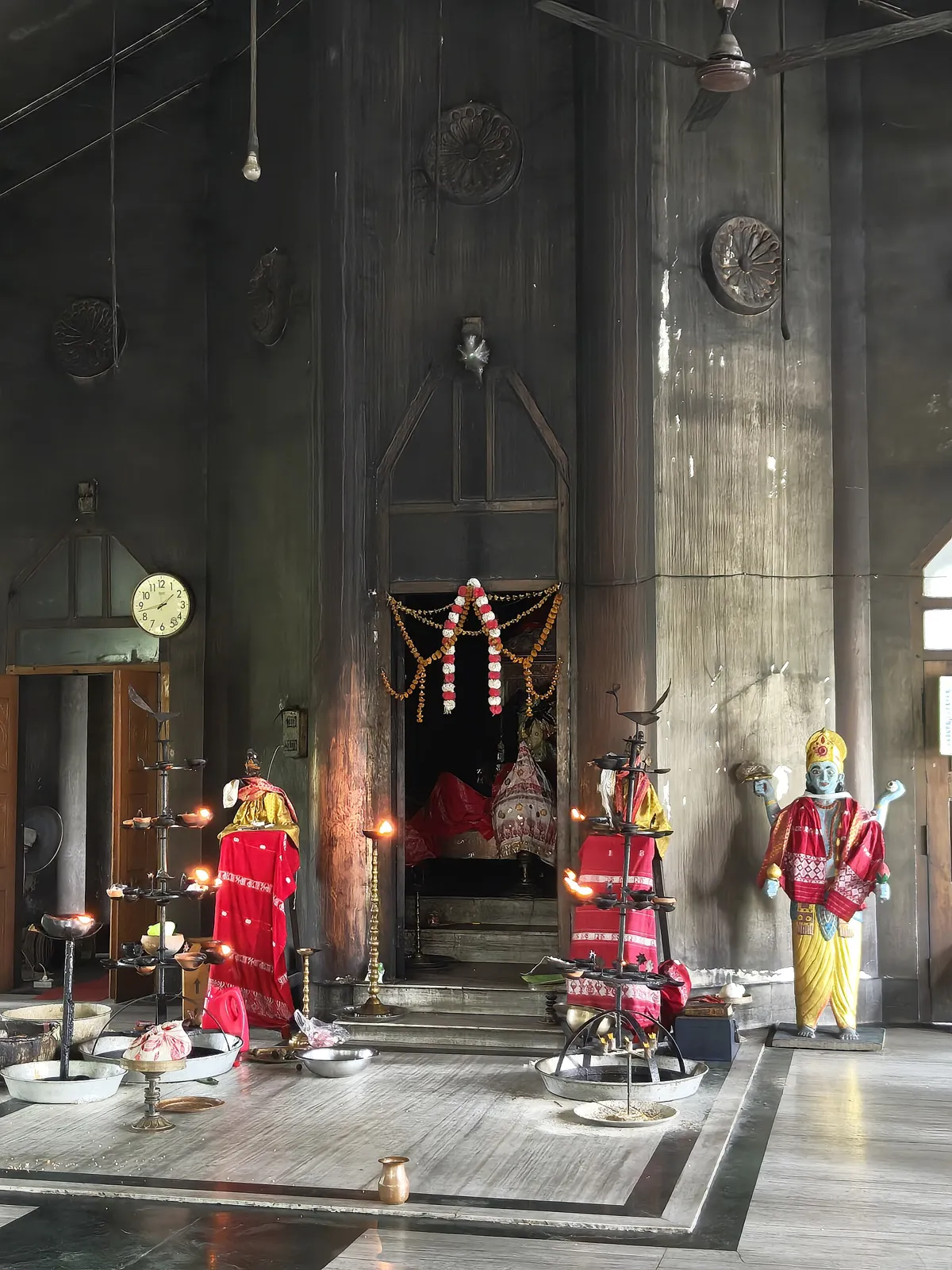
Visitors can look for the communal worship space and, where displayed, the sacred seat or religious texts used in devotional practice. Such objects may be part of active worship rather than exhibits, and their presence or access can vary. Ask a caretaker before approaching, photographing or interpreting any religious item. The significance of the Than is primarily associated with Sankardev, the namghar institution and continuing worship, so visitors should not expect a formal museum collection or assume that a particular idol or inscription is on view.
Religious significance
Bordowa Than is associated with the Vaishnavite devotional tradition established by Srimanta Sankardev and with Ekasarana Naam Dharma. Published accounts say that the Than’s rituals follow the norms of Purush Sanghati. Worship is centred on devotion, prayer and communal religious practice; namghars are traditionally places for congregational singing and the hearing of sacred teachings. For devotees, the site’s connection to Sankardev’s birthplace gives it particular spiritual and historical meaning. Practices may differ by occasion, and visitors should observe quietly, follow directions from caretakers and avoid entering areas reserved for worship or community use.
Visit Bordowa Than with time to observe daily rituals respectfully. Follow the posted rules on footwear, photography and dress, walk clockwise around Buddhist shrines and prayer wheels, and avoid interrupting worshippers. Ask caretakers which areas are open to visitors. A comfortable itinerary is one main visit in the morning, a local meal at midday and a short nearby stop before an afternoon return. Use the district list on this site to find other places in Nagaon, but check the actual road route and its condition before combining stops. If a festival is on, local roads and stays can be busy — and the experience can be unforgettable. Leave no litter: many sites in Assam are protected by the communities who own them.
Suggested itineraries
Half day: Travel from Nagaon to Bordowa Than; spend 1–2 hours observing the precinct and worship respectfully; pause for a local meal; return to Nagaon. Full day: Visit Bordowa Than in the morning; allow 2–3 hours for the site and a meal; continue to a confirmed nearby attraction in Nagaon district; return before dusk. Gentler option: Arrange a vehicle drop-off near the visitor entrance, spend time seated in an accessible public area if available, and keep the visit flexible; confirm paths and seating with the Than before travelling.
The Than belongs to a broader Assamese culture shaped by Vaishnavite satras and namghars. Devotional singing and recitation are important to this tradition, while Sankardev’s literary and religious legacy continues to influence Assamese performance and community life. Assamese is widely used in the region; other local languages may also be heard. Visitors may encounter worshippers in everyday dress as well as people wearing traditional Assamese clothing for religious or community occasions. Customs vary with the day and event. Ask before joining a gathering, and treat songs, prayers and other observances as worship rather than as performances staged for visitors.
Festivals & events
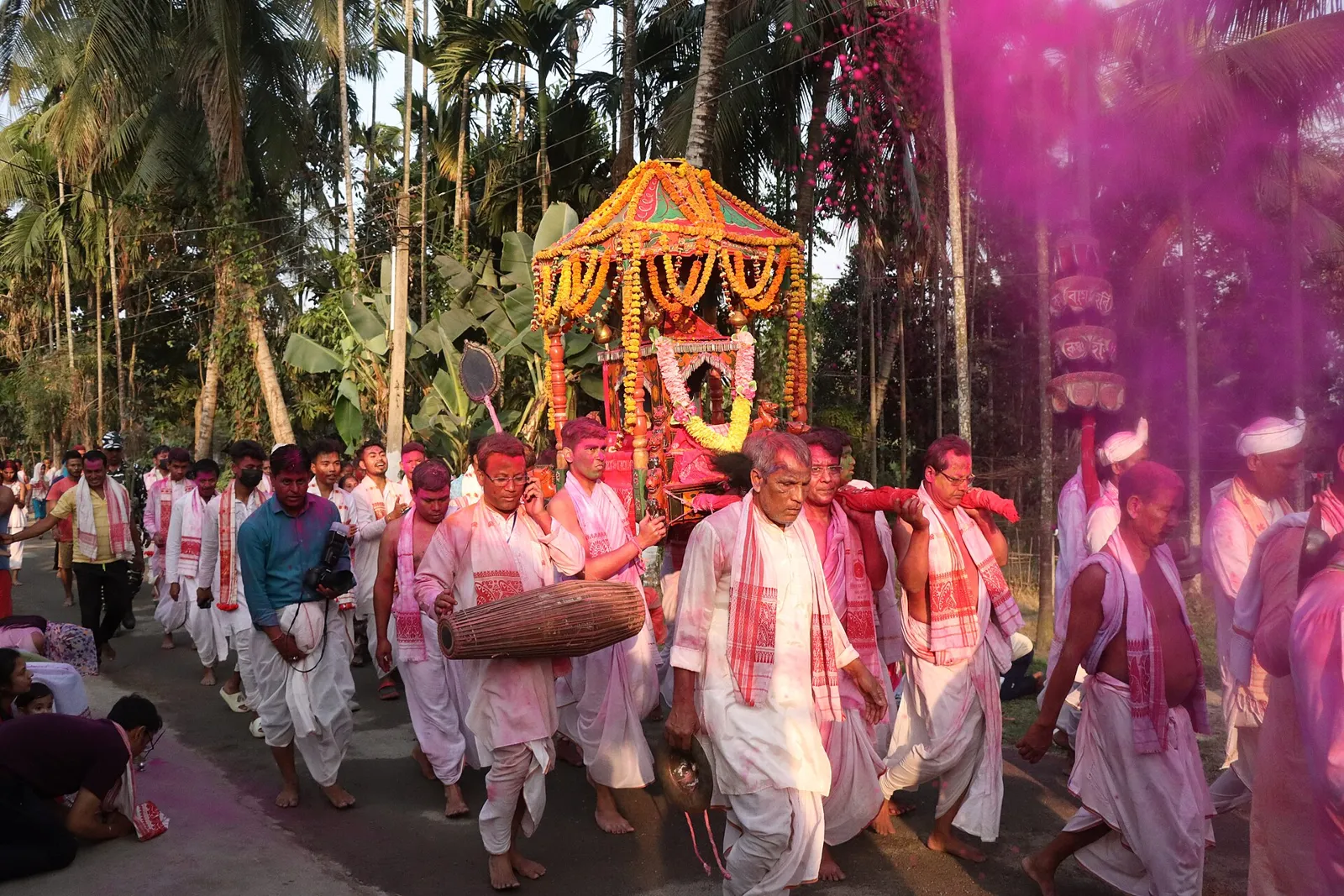
Religious observances connected with Sankardev and Vaishnavite practice may draw devotees to the Than, and local celebrations of Sankardev’s birth anniversary are associated with the broader Assamese calendar. Janmashtami and other Vaishnavite occasions may also be observed; arrangements vary from year to year, so confirm locally before planning around a particular event. Bihu is widely celebrated across Assam, though it is not necessarily a Than-specific festival. During major observances, the precinct and approach roads can be busier, and nearby accommodation may be in greater demand. Respect event arrangements and allow extra time for travel.
Local food in Assam includes masor tenga (a tangy fish curry), khar, duck with ash gourd, pitha rice cakes, aloo pitika and, of course, Assam tea. Ask what is fresh that day; many small eateries cook a limited daily menu. Pork, beef, fish and fermented ingredients are common in tribal cuisines, so vegetarian travellers should explain their needs clearly — rice, dal, vegetables and eggs are usually possible in towns. Remote sites may have no restaurant at all. Carry water and snacks, eat a proper breakfast before long drives, and ask your accommodation for a packed lunch if you are heading out early. If food or prasad is offered at the shrine, accept it according to local custom. Choose busy, clean places and carry your packaging back to town.
Shopping & local experiences
Visitors can look in Nagaon for everyday Assamese goods, local snacks and textiles, while availability of religious souvenirs at the Than itself should be confirmed locally. Assam is known more broadly for handwoven textiles, including eri and muga silk, but these are not guaranteed to be sold at Bordowa. Buy from local makers or reputable shops where possible, and ask about the material and place of origin. Avoid purchasing anything presented as an antiquity or removed from a religious site. Try local Assamese food in Nagaon, checking ingredients and service availability directly.
October to April
These figures are calculated from map coordinates, so actual road distance and travel time are longer. Guwahati is the main rail and air hub for the region, and most long-distance journeys connect through it. For the final leg, Assam State Transport Corporation (ASTC) and private Volvo/sleeper coaches link district towns; shared taxis usually leave early in the morning and depart only when full. A private taxi gives more flexibility for remote sites. When comparing train, bus and flight, count the complete door-to-door time: a flight saves the most time only if the onward road transfer is short, while an overnight train to Guwahati plus a road journey can save a hotel night. Book your return before you leave, because seats on shared vehicles and the few daily flights fill quickly. Current train numbers, timings, return services and fares are not listed here; check IRCTC and NTES for trains and the airline’s own schedule for flights. No Inner Line Permit is needed to visit Assam.
Getting around
Bordowa Than is at Batadrava, about 16 km from Nagaon city. From Nagaon, visitors can check locally for taxis, auto-rickshaws, shared vehicles or local bus connections serving the area; availability and routes can vary. A hired car or taxi offers more flexibility, particularly for a return journey or a visit combined with another stop. Confirm the drop-off point and return transport before setting out. Roads and local conditions may affect travel time. Walk within the precinct where practical, and use designated parking or drop-off areas if provided.
Hours, tickets & permissions
Entry arrangements can depend on worship, special observances and the areas open to visitors. Tickets, permits, camera charges, dress expectations and identification requirements should not be assumed; check with the Than’s managing authority before travelling. Visitors should confirm current opening arrangements and any applicable fees locally, as these may change. If a ceremony is underway, access to some spaces may be limited even when the precinct is open. Plan to arrive with enough time to ask about visitor access and follow instructions from caretakers.
Facilities
Facilities may include basic visitor amenities within or near the precinct, but toilets, drinking water, seating, food stalls and parking should be checked locally rather than assumed. Nagaon city is the more dependable place to plan meals, banking and other services; do not rely on an ATM or guide being available at the Than. During busy religious occasions, facilities may be crowded or operate differently. Carry drinking water and any personal necessities, and ask the managing authority about visitor assistance before arrival.
Accessibility
The Than occupies a substantial precinct, so visiting may involve walking between buildings and across open grounds. Surface conditions, shade, seating and the number of steps can vary, and the available source does not confirm ramps, lifts or step-free routes. Wheelchair users, visitors with strollers and people with limited mobility should contact the managing authority or ask locally about the entrance and paths in use. Elderly visitors may find a shorter visit with a vehicle drop-off and rest breaks more comfortable. Avoid assuming that every prayer area is accessible to visitors.
No Inner Line Permit is needed to visit Assam. Carry a photo ID at all times; checkpoints are common. Save the emergency number 112 and your accommodation’s contact offline. Heat, humidity and sudden downpours are the main weather risks; carry water and rain protection. Respect community rules, private property and posted instructions. Avoid long road journeys after dark and during heavy rain. Check official advisories for the region before travel, and follow local guidance if access changes.
Visitor rules
Follow signs and instructions from caretakers, and ask which parts of the Than are open to visitors. Dress modestly and remove footwear where requested. Keep a quiet, respectful manner during prayers, do not interrupt worshippers and do not enter restricted areas. Photography may be limited, especially around active worship or religious objects, so ask before taking pictures. Avoid littering and reduce single-use plastic; use bins if provided. Do not touch or move ritual objects, and seek permission before joining any community activity.
Photography
Soft morning light can be pleasant for exterior views, but the best conditions depend on weather and access. Photograph only from areas where visitors are permitted, and ask before taking pictures inside prayer spaces or of religious objects. Do not photograph worshippers, ceremonies or children without consent, and stop if requested by caretakers. Drone use may require permissions and may be restricted around religious gatherings or buildings; check applicable rules before bringing one. Avoid flash or any equipment that could disturb prayer.
Choose a stay by the full journey to Bordowa Than, not just the district name. Main towns in Nagaon usually offer hotels, state tourism lodges and homestays with better transport, meals and medical access, while village homestays offer a closer connection to local life. In the plains and valleys, check fans or air-conditioning and mosquito nets in summer. Book in advance for weekends, festival dates and the peak season (October to April). Confirm the exact location, meals included, check-in time and cancellation terms in writing. Many homestays accept payment on arrival; avoid sending money to unverified contacts. Mobile network and digital payments can be unreliable in remote areas, so carry some cash.
Nagaon city is the practical nearby town for meals, services and onward travel. Laokhowa Wildlife Sanctuary is another known destination in Nagaon district, but access and seasonal conditions should be checked with the relevant authorities before combining it with a Than visit. Puranigudam’s Mahamrityunjay Temple is also in Nagaon district and may be considered as a separate stop if current road access and opening arrangements suit your plans. Check the actual route and time required before combining destinations, and avoid relying on map distance alone.
For couples, Bordowa Than rewards a slow pace: arrive early for soft light and fewer crowds, share a local meal and keep the evening free. Public displays of affection can be frowned upon in conservative communities and at religious sites, so be discreet. A homestay can make the trip memorable — confirm privacy, hot water and transport back. Keep a buffer day in your itinerary, because weather and road closures can delay plans in Assam.
Q: How much time should I allow for Bordowa Than? A: Allow around one to two hours at the precinct, plus travel time from Nagaon; extend the visit if you wish to observe worship. Q: When is a suitable season to visit? A: October to April is generally a comfortable season in Assam. Monsoon conditions can bring heavy rain, so check local conditions before travelling. Q: Is there an entry ticket? A: Confirm with the Than’s managing authority before your visit. Q: Can children and elderly visitors visit? A: Yes, but the precinct may involve walking and uneven surfaces. Keep children supervised and check access needs, seating and drop-off arrangements locally. Q: Where can I stay nearby? A: Nagaon city is the practical base for accommodation and services. Confirm current lodging availability before travelling, especially during religious events.
Be the first to share photos, stories, advice or a helpful contact for Bordowa Than.
Loading…