
District · Assam
Nagaon
Nagaon offers a view of central Assam shaped by farming, wetlands and river country, with Nagaon town serving as a local market and transport centre.
Nagaon lies in central Assam’s Brahmaputra Valley, where paddy fields, wetlands and river channels shape a predominantly rural landscape. Nagaon town, on the Kolong River, is the district’s commercial and administrative centre, connecting surrounding villages and agricultural markets. The district holds an important place in Assam’s religious and cultural history through Bordowa, also called Batadrava, the birthplace of the fifteenth-century saint and reformer Srimanta Sankardev. Bordowa Than remains a significant pilgrimage centre associated with his Vaishnavite tradition. Beyond the town’s busy streets, the district’s character is rooted in farming, village life and devotional institutions, making it a place to explore Assam’s living cultural traditions.
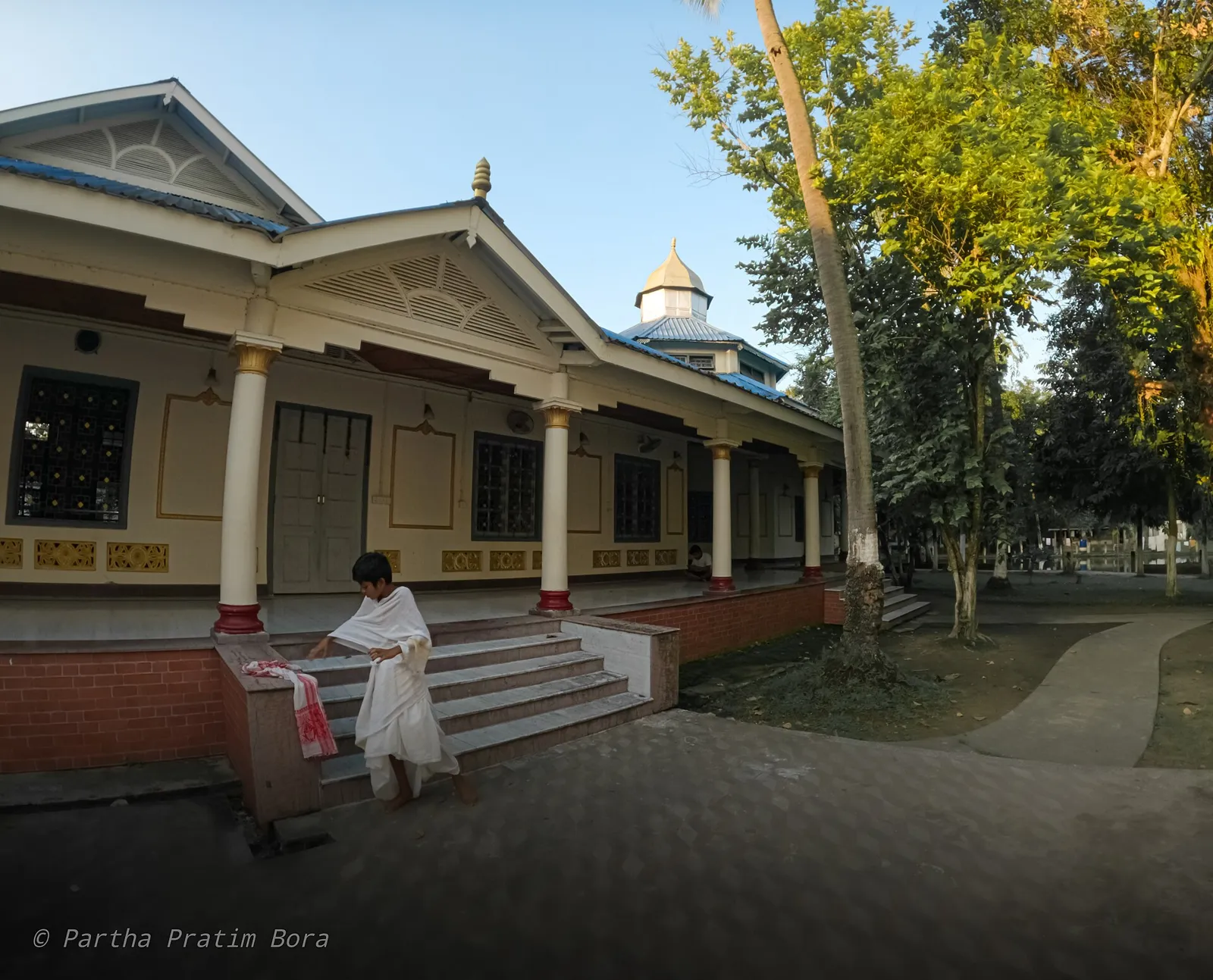
Nagaon offers a view of central Assam shaped by farming, wetlands and river country, with Nagaon town serving as a local market and transport centre. The district is best known for Bordowa Than, at Bordowa (also called Batadrava), associated with the birth of the fifteenth-century saint and reformer Srimanta Sankardev. The Than is an important centre of Assam’s Vaishnavite tradition and a place to encounter devotional practices that remain part of everyday cultural life. A visit can combine time at this pilgrimage site with a sense of the rural settlements and agricultural landscape around it; the district is less about a single urban sightseeing circuit than its living traditions and countryside.
The Nagaon region has been shaped by successive political powers in the Brahmaputra Valley, including the Ahom and Kachari kingdoms, whose influence shifted across central Assam over time. Its best-known historical association is with Srimanta Sankardev, born near Bordowa in the fifteenth century. His devotional movement, centred on worship of Vishnu and community practices such as prayer, music and drama, influenced religious life across Assam. Bordowa Than preserves this connection and remains an active pilgrimage centre. After the Treaty of Yandabo in 1826 brought Assam under British control, colonial administration reorganised the region. Nagaon district was established in 1832, with its headquarters at Nowgong, the name from which Nagaon is derived. Under British rule, the town developed as an administrative and commercial centre serving a largely rural hinterland. Agriculture, local markets and transport along the region’s river and road networks continued to shape the district. Administrative boundaries have changed over time, so older accounts of Nagaon may refer to areas that are no longer part of the present district.
Food in Nagaon shares much with the wider Assamese kitchen: rice, dal, seasonal vegetables and freshwater fish are everyday staples. Look for masor tenga, a light, tangy fish curry, and aloo pitika, mashed potato commonly seasoned with mustard oil, onion and chilli. Khar preparations and duck with ash gourd are also associated with Assamese cooking, though availability varies. Pitha rice cakes are especially linked with festive occasions such as Bihu, while Assam tea is an everyday companion. Small eateries may serve only a limited daily menu; vegetarian travellers should explain their requirements clearly.
Nagaon participates in Assam’s wider traditions of household weaving and bamboo-and-cane work. Handwoven gamochas and mekhela chadors belong to the region’s textile culture, with materials and motifs varying by community and maker. Bamboo and cane are used for baskets, household objects and fishing implements across rural Assam. Bordowa also connects the district with the artistic world of Assamese Vaishnavism, including devotional music, dance and bhaona theatre. These are living religious and performance traditions rather than simply souvenir crafts; ask locally about appropriate opportunities to see them.
Bihu is widely celebrated in Nagaon and across Assam: Rongali Bihu comes in spring, Bhogali Bihu in midwinter, and Kongali Bihu in autumn. At Bordowa Than, religious observances connected with Srimanta Sankardev and the Vaishnavite tradition may include prayer, music and devotional performance; celebrations around his birth anniversary are especially significant. Events can draw local visitors and pilgrims, making nearby transport and accommodation busier than usual. If travelling during a major festival, check local arrangements and confirm a room in advance.
Elsewhere in Assam
Nagaon is mostly a low-lying plain in the Brahmaputra Valley, with paddy fields, villages, wetlands and river channels. The Kolong River runs through Nagaon town and connects the district’s landscape to the wider Brahmaputra river system. Beels and seasonal watercourses can make some rural routes slower or less direct, particularly during the rains. The southern horizon rises toward hill country, while much of the settled district remains open agricultural land. Road travel is the main way to reach communities and sites such as Bordowa Than; conditions can vary with season and local flooding.
Nagaon has a humid climate with a warm summer, a pronounced monsoon and a generally cooler, drier winter. The rains usually build from late spring and continue through much of summer, sometimes affecting rural roads and low-lying areas. Winter, broadly from November to February, is often the most comfortable season for road journeys and outdoor visits; the post-monsoon months can also be pleasant. October to March is a practical period to plan a visit, while checking current conditions before travelling. Pack light clothing, a light layer for cooler evenings, comfortable walking shoes and rain protection if visiting near the monsoon. Insect repellent can be useful in rural and wetland areas.
Guwahati’s Lokpriya Gopinath Bordoloi International Airport is the main air gateway for travellers heading to Nagaon. Chaparmukh Junction is a useful railway access point within the district, while Guwahati offers broader long-distance connections. Nagaon is connected by major roads with Guwahati and other towns in Assam; ASTC and private buses serve intercity routes. Within the town, auto-rickshaws and other local vehicles cover short journeys. For Bordowa Than and rural destinations, enquire about local buses or arrange a taxi, allowing flexibility for the return trip. Check current services locally.
Nagaon town is the main local base, with road links to nearby settlements and connections toward Guwahati and other Assamese towns. Local buses and shared vehicles may serve some routes, but service frequency and return options can vary, especially for rural journeys. Auto-rickshaws and other local vehicles are useful for short trips within town. For Bordowa Than, a taxi or a locally arranged vehicle offers more flexibility than relying on an uncertain return service. Ask locally about current road conditions and transport availability. Boats are not a general substitute for road transport; use them only where a local service is operating and considered safe.
2 days: Bordowa Than; sleep in Nagaon town. 3 days: Bordowa Than; sleep in Nagaon town both nights.
Nagaon town is the most practical base for visiting Bordowa Than and travelling around the district, with the broadest choice of ordinary hotels and guesthouses. Smaller lodgings or homestays may be available outside town, but confirm their location, services and availability before relying on them. Pilgrim accommodation or dharamshala-style facilities may be associated with religious institutions; access and arrangements depend on the institution. Government lodging should not be assumed to be available. For a short visit, staying in town makes it easier to arrange local transport and meals.
Rain and local flooding can slow road journeys, so check conditions before travelling to rural areas, especially during the monsoon. Use drinking water from a reliable source and take usual precautions against insects in wetland and countryside settings. Roads outside town may be uneven or poorly lit, so avoid rushing after dark and arrange a dependable return ride. Mobile coverage and services can be less reliable in rural areas. At religious sites, follow local instructions and be considerate during services or festival crowds. If visiting a protected area, confirm access rules and any permit requirements with the relevant official authority; do not assume entry is unrestricted.
Q: How many days should I spend in Nagaon? A: Two days can allow time for Bordowa Than and a relaxed stay in Nagaon town. Add a day if you prefer slower travel or want more time in the surrounding countryside. Q: When is the best time to visit? A: October to March is generally a comfortable period for travel, with winter often especially pleasant. Check weather and road conditions before setting out. Q: Where is the best base? A: Nagaon town is the most practical base for accommodation, local services and arranging transport to Bordowa Than. Q: How do I get to Nagaon? A: Guwahati is the main air gateway, and Chaparmukh Junction is a useful rail access point. From there, continue by road; check current transport services locally. Q: Is Nagaon suitable for families or elderly travellers? A: Yes, with planning. Bordowa Than is a religious site, but surfaces, steps and facilities may vary; check access needs in advance and arrange a vehicle for the rural journey.
This page draws on our 1 destination guides for Nagaon and is updated as our team checks it.
Be the first to share photos, stories, advice or a helpful contact for Nagaon.
Loading…