
District · Assam
Charaideo
Charaideo offers a focused visit to an important centre of Ahom history in Upper Assam.
Charaideo district lies in Upper Assam, where the Brahmaputra valley’s settled plains meet low, wooded hills. Its best-known landmark is the Charaideo Maidams, royal burial mounds associated with the Ahom dynasty and set among hillocks near the historic town of Charaideo. The site marks the dynasty’s early capital, established by Ahom ruler Sukaphaa in the 13th century, and reflects distinctive burial practices and architecture. The Maidams became a UNESCO World Heritage property in 2024. The district’s character combines this deep Ahom history with the everyday life of a largely rural part of Assam, connected to nearby towns such as Sonari and Sivasagar.
Charaideo offers a focused visit to an important centre of Ahom history in Upper Assam. The district is best known for the Charaideo Maidams, royal burial mounds associated with the Ahom dynasty; the site was inscribed on the UNESCO World Heritage List in 2024. Charaideo was the dynasty’s first capital, and its landscape and heritage give travellers a way to explore the history of a kingdom that shaped Assam over several centuries. The district can also suit visitors seeking a quieter rural itinerary, though published attractions are limited and this index does not represent every local site.
The Ahom kingdom was founded by Sukaphaa, who entered the Brahmaputra valley in 1228. Charaideo became the dynasty’s first capital in the thirteenth century, and its royal burial ground remained significant even as political centres shifted elsewhere. The Maidams are earthen mounds built over burial chambers for Ahom royalty and other high-ranking people; their forms and contents reflect Ahom beliefs and traditions. Ahom rule continued for roughly six centuries. After Burmese invasions and the Treaty of Yandabo in 1826, the region came under British control and was incorporated into colonial Assam. The British administered the wider area through Sibsagar district. In 2015, Charaideo was constituted as a separate district, carved out of Sivasagar district. The modern district’s name and principal heritage site thus preserve a close connection to the early history of the Ahom state.
Food in Charaideo draws on wider Upper Assam and Assamese traditions. Rice is a staple, often served with masor tenga, a tangy fish curry, or khar, a dish prepared with an alkaline ingredient. Aloo pitika, mashed potato seasoned with herbs and mustard oil, is another familiar accompaniment. Pitha rice cakes and Assam tea are enjoyed across the region. Local and tribal cuisines may also include pork, duck, fish and fermented ingredients. Menus at small eateries can be limited and based on what is fresh that day; vegetarian travellers should state their requirements clearly, as rice, dal and vegetables are usually easier to find.
Charaideo is best known for its Ahom-era archaeological heritage rather than a widely documented craft unique to the district. Its wider Assamese setting has strong handloom traditions: eri and muga silk, cotton weaving, and garments such as the mekhela chador are part of the region’s textile culture. Bamboo and cane work are also practised in Assam, alongside metalwork traditions found in parts of the state. Availability varies from place to place, so visitors looking for locally made textiles or handicrafts can ask in nearby towns about current makers and markets.
Bihu is celebrated across Assam, including this region: Rongali Bihu in spring, Bhogali Bihu in winter and Kongali Bihu in autumn. The Ahom community also observes Me-Dam-Me-Phi, an ancestor-veneration festival usually held in January. Local celebrations may include gatherings, ceremonies and cultural programmes, though scale and arrangements vary by place and year. Events can make accommodation in Sonari busier, but the district has a relatively limited choice of rooms; check availability and arrange a stay ahead of prominent festival periods.
Elsewhere in Assam
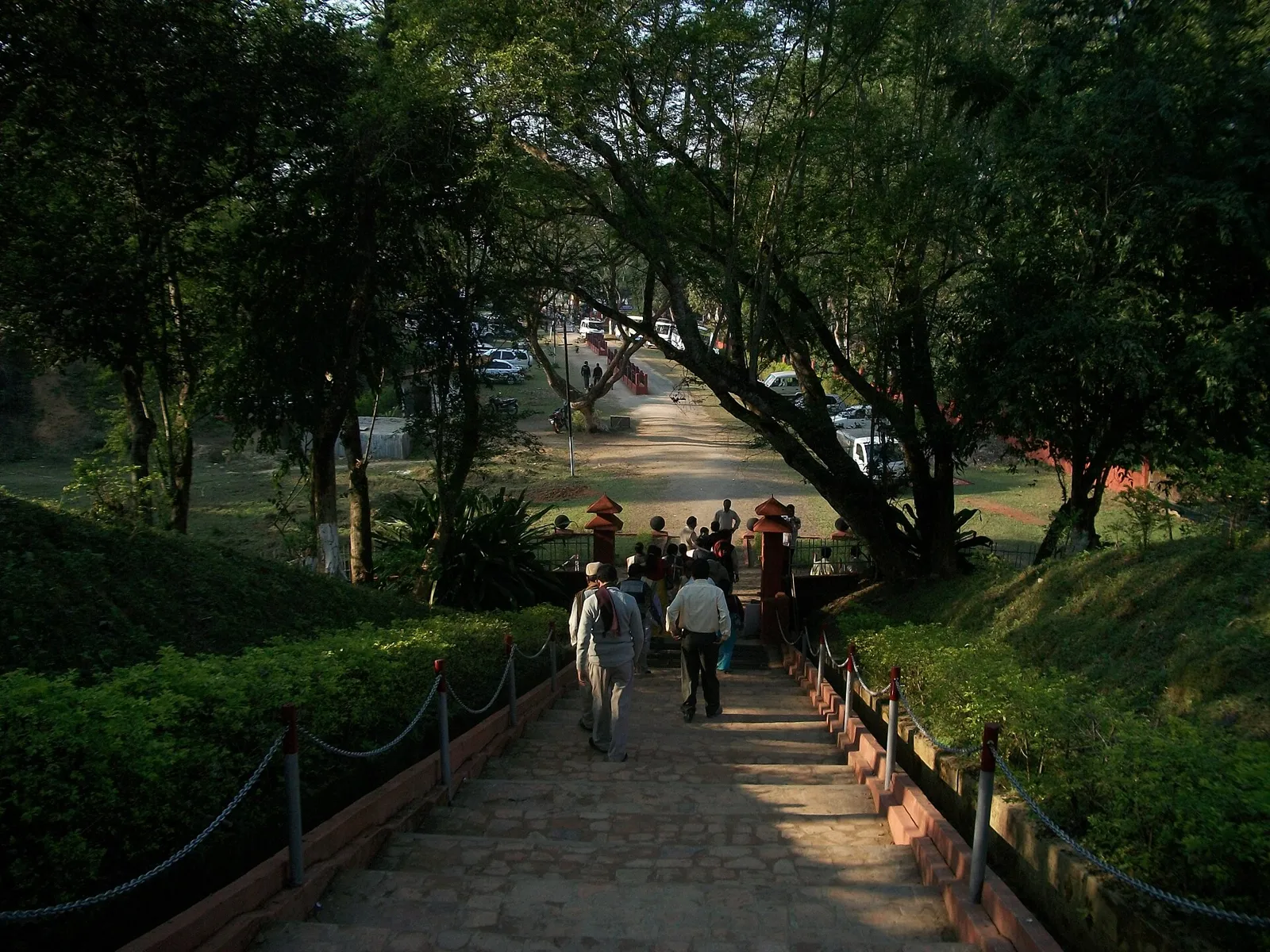
Charaideo lies in Upper Assam, where settled plains meet low, wooded foothill country. Tea gardens, cultivated land, village settlements and patches of forest form much of the surrounding landscape, with streams and rivers crossing the wider region. The terrain is generally manageable by road, but rural routes can be narrow and conditions vary with rain. The Maidams sit in a landscape of low mounds and greenery rather than a large urban setting, so a visit involves some walking outdoors. Allow extra travel time when going beyond the main town or during wet weather.
The district has warm, humid summers, a rainy monsoon season and cooler, generally drier winters. Monsoon rains, usually from around June into September, can make rural roads muddy and slow journeys. October to April is often the most comfortable period for sightseeing, with November to February especially pleasant for outdoor visits; conditions can still change. Carry light breathable clothing for warm days, a rain jacket or umbrella during the wet season, and a light layer for winter mornings and evenings. Comfortable shoes, sun protection and insect repellent are useful throughout the year.
Simaluguri Junction is the nearest principal railway station to the Charaideo area, while Dibrugarh Airport is the nearest operating airport. Road journeys connect the district with nearby Sivasagar and Sonari; onward access to the Maidams is by local roads. Distances and travel times can vary because routes do not follow straight lines, and long-distance visitors often connect through Guwahati. Taxis and shared vehicles may be available from nearby towns, but services can be limited around rural sites. Plan onward transport in advance, carry water and snacks, and check current services locally.
Road travel is the main way to move around Charaideo. Sonari is the district’s principal town and a practical point for arranging onward transport; buses and shared vehicles connect towns and larger settlements in the region, while autos and hired cars may be available for shorter or more flexible journeys. Simaluguri railway station, in neighbouring Sivasagar district, is a useful rail approach, followed by road travel. Services can be less frequent in rural areas, so arrange a return ride in advance where possible. Boats are not a usual means of reaching the listed attraction.
Sonari is the most practical base for visiting Charaideo and arranging local transport. It has modest hotels and guesthouses, though the choice is smaller than in larger regional centres. Homestays or official lodges may be available in the wider area, but availability and standards vary, so confirm directly before setting out. For a wider Upper Assam itinerary, travellers can also base themselves in a larger neighbouring town and visit Charaideo by road, but that adds travel time. Book ahead during festival periods.
The main visit is outdoors, so wear sturdy shoes and take care on uneven ground, especially after rain. Monsoon weather can delay road journeys; check local conditions and avoid rushing on narrow rural roads. Use treated or sealed drinking water and take ordinary precautions against insects and sun exposure. Mobile coverage and services can be patchy outside Sonari, so keep offline directions and confirm transport arrangements. Wildlife is not usually the focus of a visit to the listed site, but keep a respectful distance from animals encountered in rural areas. Check current site access and heritage rules with official sources; confirm any permit requirement officially before travel.
- Sivasagarabout 25 km
- Mon · Nagalandabout 37 km
- Jorhatabout 62 km
- Majuliabout 70 km
- Mokokchung · Nagalandabout 77 km
- Lower Siang · Arunachal Pradeshabout 81 km
- Tinsukiaabout 90 km
- Zunheboto · Nagalandabout 109 km
Straight-line distance between the centres of each district's destinations; road distance is longer.
Q: How many days should I spend in Charaideo district? A: Two days allow a visit to Charaideo at an unhurried pace; a third day gives more flexibility for local travel. Q: When is the best time to visit? A: October to April is generally most comfortable, with winter usually drier than the monsoon season. Q: What is the best base for visiting? A: Sonari is the most practical base for the listed attraction and local road transport. Q: How do I get to Charaideo? A: Travel by road via Sonari; Simaluguri is a useful rail approach, with onward travel by road. Q: Is the district suitable for families or elderly travellers? A: Yes, with planning. Arrange suitable road transport and consider that the heritage site involves outdoor walking over potentially uneven ground.
This page draws on our 1 destination guides for Charaideo and is updated as our team checks it.
Be the first to share photos, stories, advice or a helpful contact for Charaideo.
Loading…