
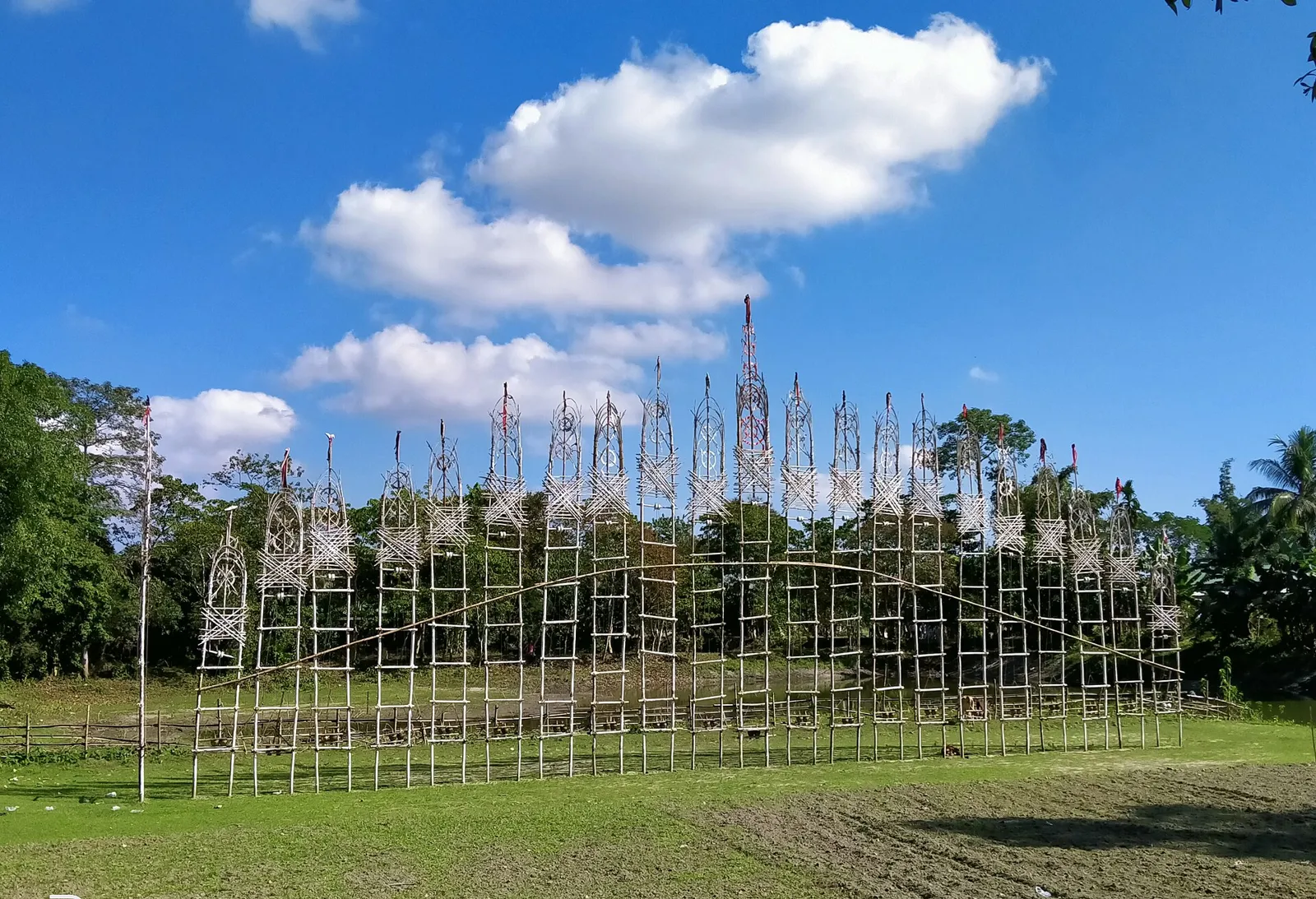
District · Assam
Majuli
Majuli is a river-island district in Assam, set in the Brahmaputra valley and reached by ferry from the Jorhat side.
Majuli, also spelled Majoli, is a large inhabited river island in the Brahmaputra in Assam. Its low-lying floodplain is shaped by seasonal floods, shifting channels and erosion; riverine fields, wetlands and villages give the district an open, rural character. Majuli is especially known for its satras, Vaishnavite monasteries that preserve devotional music, dance, theatre and community traditions associated with Srimanta Sankardev’s Ekasarana movement. Auniati and Kamalabari are among its prominent satras. The island is also home to Mishing and other communities, whose livelihoods and cultural life are closely connected to the river and agriculture. Its landscape and heritage are best experienced at an unhurried pace.
Majuli is a river-island district in Assam, set in the Brahmaputra valley and reached by ferry from the Jorhat side. Travellers come for its satras, which preserve traditions of the Assamese Neo-Vaishnavite movement through worship, music, dance, theatre and craft, as well as for the island’s riverine villages and Mising cultural heritage. A visit offers a slower, rural perspective on Assam alongside its religious and artistic life. Auniati Satra and Kamalabari Satra are among the district’s documented sacred sites. The published places in this index are a selection, not a complete record of local sites.
Majuli’s history is closely connected with the Brahmaputra valley and the development of Assamese Neo-Vaishnavism. In the 15th and 16th centuries, Srimanta Sankardeva and his disciple Madhavdeva helped establish the Ekasarana tradition, and satras became important centres of worship, learning and performance. Monasteries on the island developed distinctive religious and cultural roles, with patronage and political conditions changing over time. Majuli also lay within the wider sphere of the Ahom kingdom, which governed much of Assam from the 13th century until the early 19th century. After the Treaty of Yandabo in 1826, Assam came under British control. Colonial-era administration and later changes did not halt the Brahmaputra’s erosion, which has continually altered the island’s land and channels. Majuli was formed as a separate district from Jorhat district in 2016. Its present boundaries and settlements reflect both administrative decisions and the shifting river landscape.
3 destination guides · 2 on the map
Auniati Satra
Auniati Satra is a Vaishnavite monastery on Majuli, connected with the Ahom dynasty and Ekasarana Dharma. People visit to learn about its devotional life, festivals and traditions of theatre, music and dance.
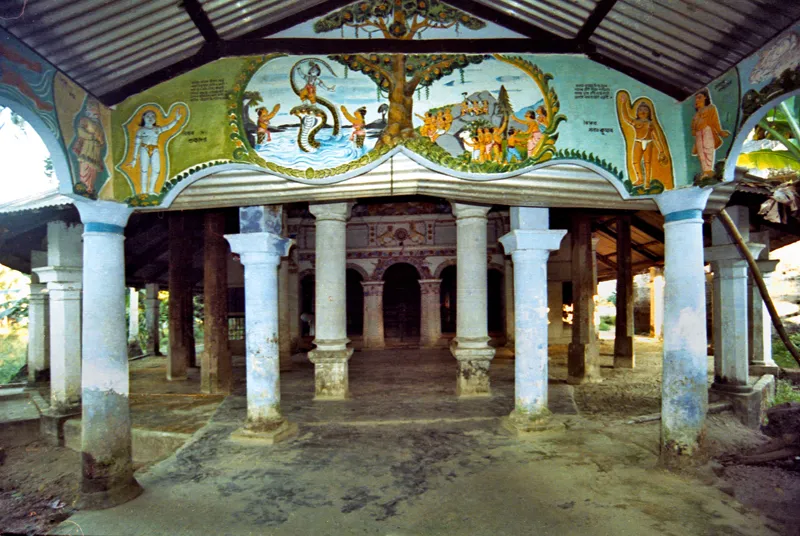
Kamalabari Satra
Kamalabari Satra, in Majuli district, Assam, is identified as a temple or sacred place. People visit for its religious significance.
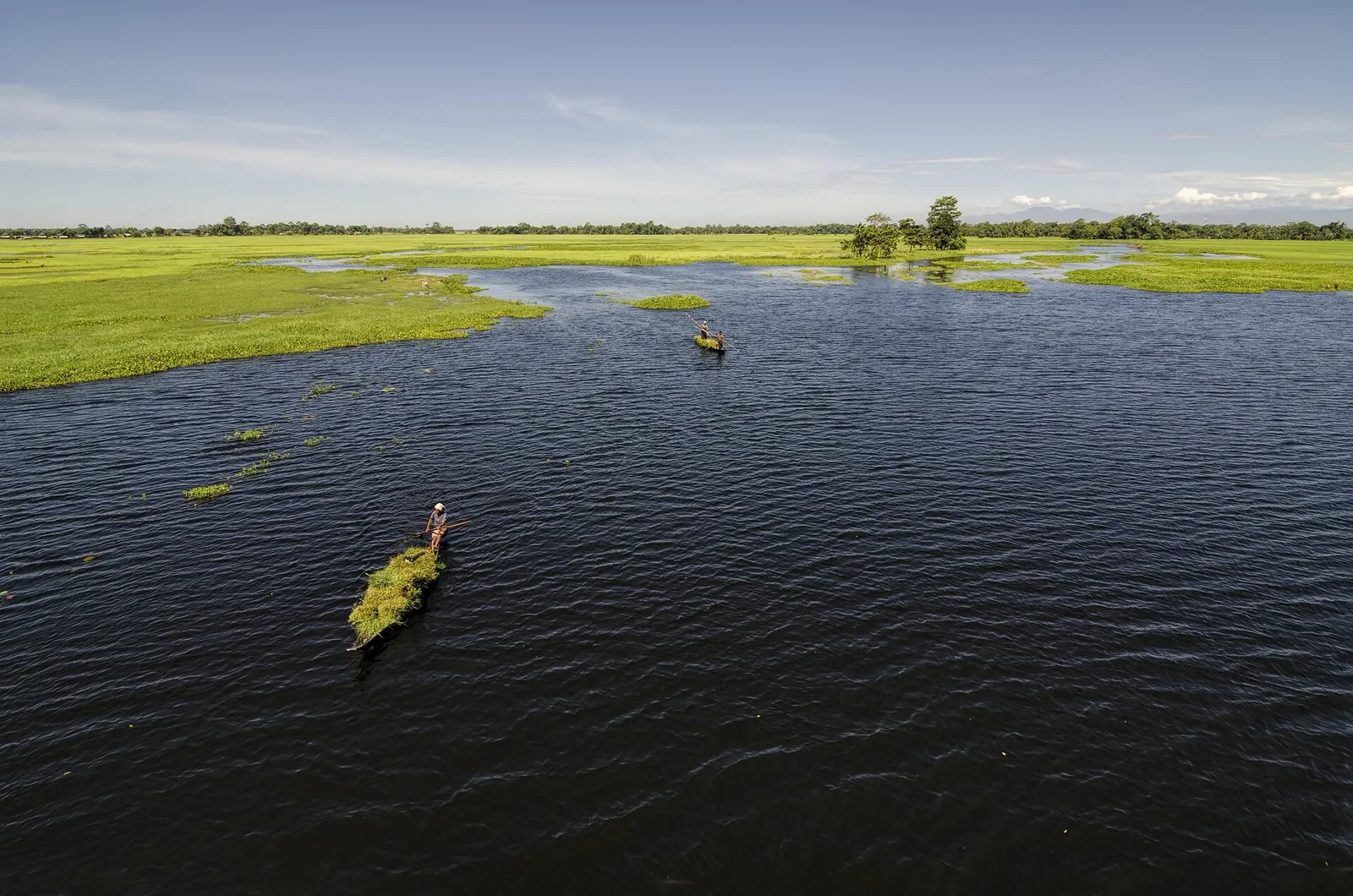
Majuli
Majuli is a river island in Assam, valued as a centre of Assamese neo-Vaishnavite culture and home to several tribal communities. Visitors reach it by ferry or boat from Jorhat.
In Majuli, as across Assam, rice is a staple, often served with fish, vegetables and simple accompaniments. Regional dishes include masor tenga, a tangy fish curry, khar, aloo pitika and duck with ash gourd; pitha rice cakes are a familiar treat. Some indigenous community cuisines also feature pork, fermented ingredients and locally available fish. Small eateries may prepare only a limited menu each day, so ask what is fresh. Vegetarian meals are often possible, but explain dietary requirements clearly. In remote areas, food options can be scarce, so carry water and snacks.
Majuli is known for its satra arts, including the making of masks used in bhaona, a form of devotional theatre; Samaguri Satra is particularly associated with this tradition. The island also has a pottery heritage, especially around Salmora, where traditional vessels are shaped by hand without a potter’s wheel. Mishing weaving is another important regional tradition, with textiles made for everyday and ceremonial use. Visitors may find demonstrations or craft products through local communities and satras, though availability varies.
Raas Mahotsav, usually held in November, is a major cultural event in Majuli, with performances depicting episodes from Krishna’s life and activities at satras. It can draw many visitors, so rooms and ferry connections may be busier than usual. The Mising community celebrates Ali-Aye-Ligang, generally in February or March, with music, dance and community gatherings; celebrations may also take place across the wider region. Satra observances and other local religious events occur through the year. Dates vary by local and religious calendars, so check current arrangements before travelling and book accommodation early if visiting during a large festival.
In this district
Majuli is a low-lying river island shaped by the Brahmaputra and its changing channels, sandbars and floodplain. Its landscape includes cultivated fields, wetlands, village settlements and areas of riverbank that can be vulnerable to erosion. There are no major hill ranges within the district. Water levels and seasonal flooding influence which routes are convenient, while ferries link the island with the mainland. Within Majuli, travel is mainly by road between villages and satras, but conditions can vary after rain or flooding. The river setting is central to both the district’s scenery and the practical planning of a visit.
Majuli has warm, humid summers, a pronounced monsoon season and comparatively cool, drier winters. The monsoon, generally spanning the middle part of the year, can bring heavy rain, high river levels, flooding and changes to ferry or road conditions. Winter, broadly from late autumn into early spring, is usually the most comfortable season for visiting satras and villages; October to March is a useful general window, with festival periods sometimes busier. Summer travel can feel hot and humid. Pack light, breathable clothing, a rain jacket or umbrella outside the drier months, sun protection, insect repellent and footwear suitable for wet or uneven ground. Check river and ferry conditions close to departure.
Jorhat Town is a commonly used railway station for reaching Majuli, and Jorhat Airport (Rowriah) is the nearest airport. From Jorhat, travel by road to Nimati Ghat, then take a ferry across the Brahmaputra; landing points and services can vary. On the island, local buses, shared vehicles and hired cars can help reach villages and satras, but services may be limited outside busier areas. River conditions and weather can affect crossings, so allow flexibility and check current services locally.
Access to Majuli involves a ferry crossing from Nimati Ghat on the Jorhat side; services and boarding arrangements can be affected by river conditions, so confirm locally before setting out. On the island, roads connect settlements and satras, and visitors commonly use hired vehicles, shared local transport or auto-rickshaws where available. Local buses may serve some routes, but coverage and frequency should not be assumed. Taxis or pre-arranged vehicles can make it easier to visit several sites in a day. Boats are essential for the mainland crossing, but are not a substitute for road transport between all island sights.
2 days: Majuli → Auniati Satra → Kamalabari Satra; sleep in Majuli on the night between the two days. 3 days: Majuli → Kamalabari Satra → Auniati Satra; sleep in Majuli on both nights.
Majuli is the practical base for visiting the district’s satras and villages, with stays generally found around its main settlements and ferry-accessible areas. Options include modest hotels, guesthouses and homestays; availability and comfort can vary, so confirm facilities before booking. Homestays can offer a closer look at village life, while a simple lodge or guesthouse may suit travellers seeking a more conventional room. Book ahead during Raas Mahotsav and other busy periods. For a short visit, staying on the island avoids making the mainland ferry crossing part of every sightseeing day.
River levels, flooding and bank erosion can affect roads, settlements and ferry operations; follow local advice and avoid approaching unstable river edges. Use established ferry services and check conditions before crossing, especially during the monsoon. Roads may be uneven or muddy after rain, and journeys can take longer than expected. Carry drinking water, use safe or treated water, and take insect protection. Medical services and mobile connectivity may be limited in some areas, so plan accordingly and keep essential medicines with you. Festival crowds can make transport and rooms busier. Check current local advisories before travel; no special permit requirement is assumed here.
- Jorhatabout 29 km
- Sivasagarabout 45 km
- Papum Pare · Arunachal Pradeshabout 56 km
- Charaideoabout 70 km
- Lower Subansiri · Arunachal Pradeshabout 71 km
- Mokokchung · Nagalandabout 81 km
- Golaghatabout 88 km
- Lower Siang · Arunachal Pradeshabout 93 km
Straight-line distance between the centres of each district's destinations; road distance is longer.
Q: How many days should I spend in Majuli? A: Two days can cover the listed satras at an unhurried pace; three days allow more time for village visits and changing river conditions. Q: When is the best time to visit? A: October to March is generally the most comfortable period, though festival months can be busier. Q: What is the best base for visiting the district? A: Stay on Majuli, in a settlement with convenient road access to the places you plan to visit. Q: How do I get to Majuli? A: Travel to the Jorhat area and take a ferry from Nimati Ghat; check current crossing arrangements before departure. Q: Is Majuli suitable for families or elderly travellers? A: It can suit families and mobile older travellers, but ferry boarding, uneven roads and limited services may require extra planning and assistance.
This page draws on our 3 destination guides for Majuli and is updated as our team checks it.
Be the first to share photos, stories, advice or a helpful contact for Majuli.
Loading…