
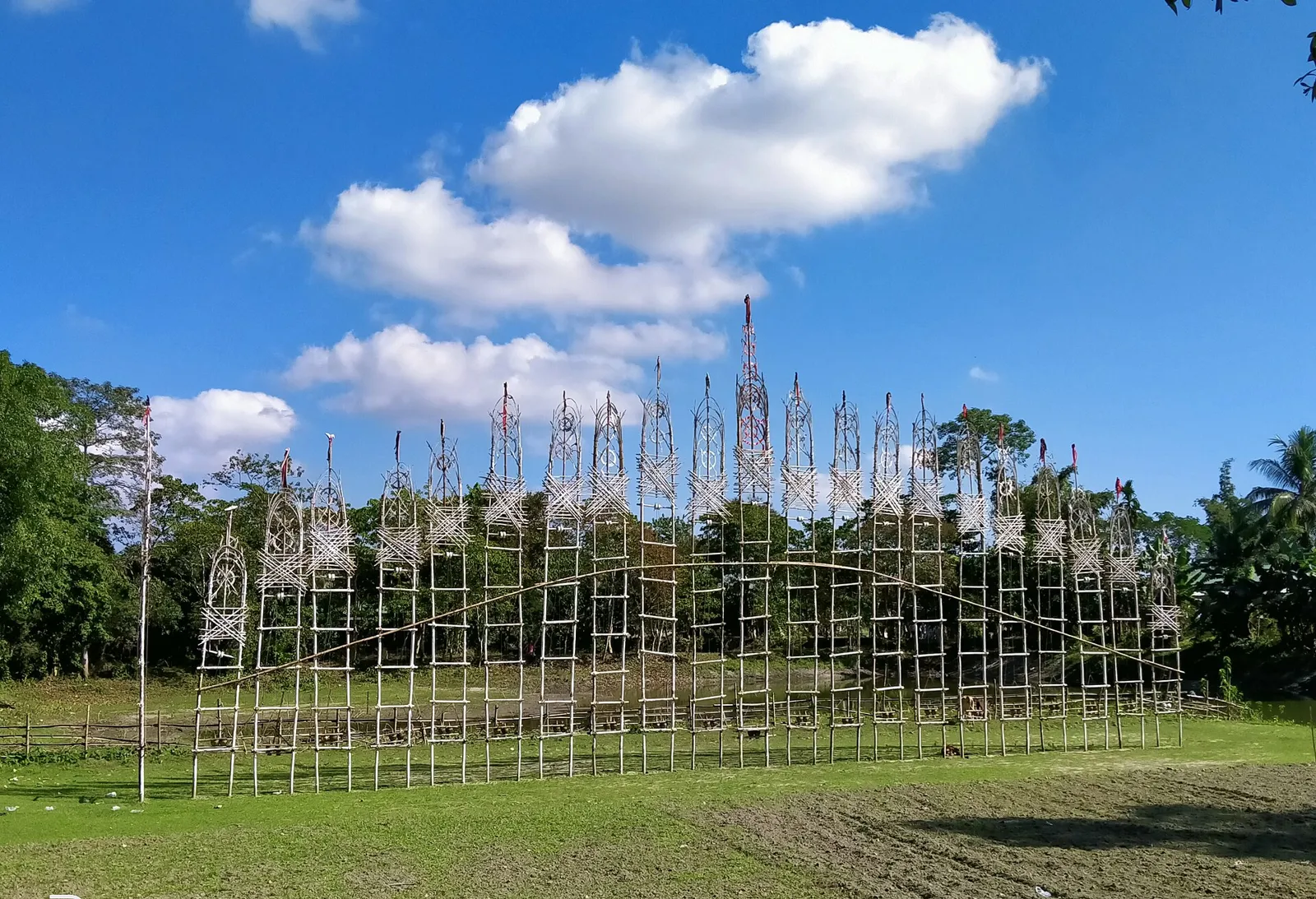
Auniati Satra
Auniati Satra is a Vaishnavite monastery on Majuli, connected with the Ahom dynasty and Ekasarana Dharma. People visit to learn about its devotional life, festivals and traditions of theatre, music and dance.
Key facts · verified by Ghumoopedia editors
- Type of place
- Temple / pilgrimage site
- Best time to visit
- October to April
- Nearest railway station
- Jorhat Town · about 20 km (straight line)
- Nearest airport
- Jorhat Airport (Rowriah) · about 25 km (straight line)
- Verified
- 21 Nov 2026
Plan a trip from Auniati Satra — a day-by-day route through places nearby.
On Majuli island, in Assam’s Majuli district, Auniati Satra belongs to the Brahma Sanghati branch of Ekasarana Dharma. This faith is part of a social, religious and cultural movement begun by Srimanta Sankaradeva, born in 1449 CE. Auniati is one of four royal monasteries associated with Ahom rule and was the first to receive royal patronage. The monastery’s foundation is generally dated to 1653 CE, under Ahom king Jayadhwaj Singha, though other views on its origins exist. Sri Sri Niranjana Deva Goswami is named as its first satradhikar, or head monk. Its udaseen Vaishnava monks observe celibacy and withdraw from worldly concerns to dedicate themselves to Krishna. In Ekasarana Dharma, Krishna is regarded as the highest deity and as Param Brahma, the ultimate reality. Of the four sari bostu, or principal elements—Deva, Naam, Guru and Bhokot—the divine, Deva, has special precedence at Auniati. Krishna is worshipped here as Govinda. Monks learn the teachings of Sankaradeva and other preceptors, as well as the practices of satriya life. Their instruction includes bhaona, a form of theatre, playing the khol and taal, and Sattriya dance. Observances include Paal Naam, Ras Lila, Janmashtami, the tithis of Sankaradeva and Madhavadeva, and Bihu. Assam’s Vaishnavite satras, Ahom heritage, Bihu festivals and silk-weaving traditions shape everyday life well beyond the major monuments. The Brahmaputra plains are hot and humid from April to September, with heavy monsoon rain and seasonal floods. Winters are mild and pleasant, with morning fog along the river. The usual best time to visit is October to April. Days are short in Northeast India: the sun can set before 5 pm in winter, so plan to reach and leave Auniati Satra in daylight. Timings, fees and access arrangements must be confirmed locally. For official information, see Assam Tourism at https://tourism.assam.gov.in.
Why it matters
Sri Sri Auniati Satra is a living Vaishnavite monastery on Majuli, the river island in Assam. It follows the Brahma Sanghati branch of Ekasarana Dharma, the religious and cultural movement associated with Srimanta Sankaradeva. Auniati is counted among the four raj satras, or royal satras, associated with the Ahom dynasty; accounts describe it as the first satra patronised by the Ahom kingdom. Its importance is religious as well as cultural: worship, monastic learning, music, dance and bhaona theatre continue to shape its life. These historical and community associations make it a significant place in Majuli and Assam. No UNESCO or Archaeological Survey of India designation is asserted here; check official sources for current protection status.
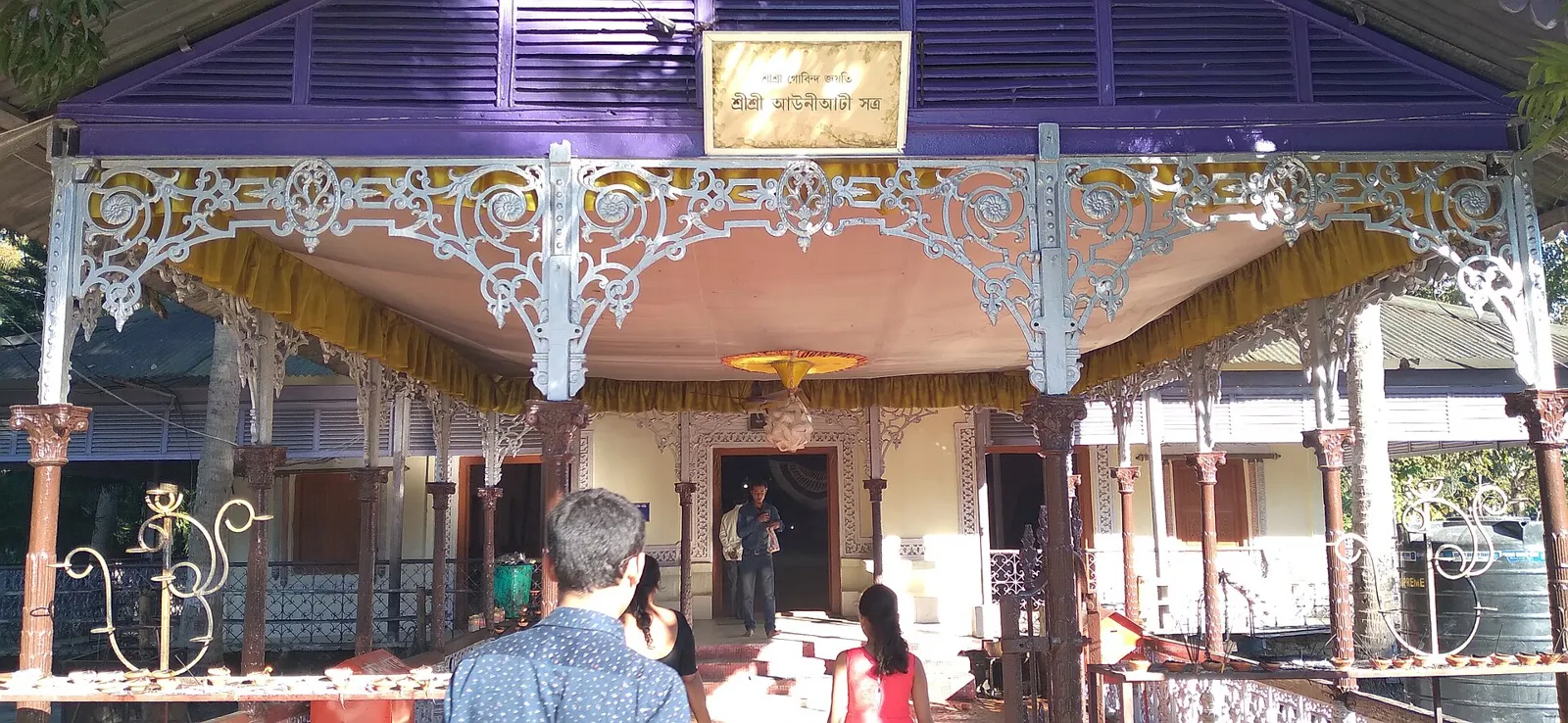
Auniati Satra is traditionally dated to 1653 CE. Accounts associate its establishment with Ahom king Jayadhwaj Singha, and name Sri Sri Niranjana Deva Goswami as its first satradhikar, or head monk. Different accounts exist about its early history, so these details are best treated as traditional rather than entirely settled. It became one of four royal satras connected with Ahom patronage and is described as the first satra patronised by the kingdom. Its religious lineage follows the Brahma Sanghati branch of Ekasarana Dharma, a movement initiated by Srimanta Sankaradeva in the fifteenth and sixteenth centuries and carried forward by later preceptors, including Madhavadeva. Auniati's monastic community has maintained devotional practice alongside teaching and performance traditions. Monks study Vaishnavite teachings and train in bhaona, the performance of devotional plays, as well as khol and taal playing and Sattriya dance. Satra life has continued through changing political and social periods, while festivals and worship remain central. Majuli's river environment has affected communities and settlements across the island; visitors should rely on current local information for details about the condition or history of particular buildings. Specific restoration dates are not included here because they require confirmation from authoritative records.
Origin stories & folklore
Auniati's early history is usually told through accounts of Ahom royal patronage and its founding monk, Niranjana Deva Goswami. Local and devotional retellings may connect the satra's establishment with the spread of Sankaradeva's teachings and the special place of Krishna worship in the community. Such narratives express religious memory and should not be confused with independently verified historical records. In the satra's tradition, Krishna is worshipped as Govinda and understood as the supreme reality. Visitors can ask monks or caretakers whether a particular story belongs to local oral tradition; accounts may vary, and it is respectful to listen without treating sacred narratives as spectacle.
Architecture & design
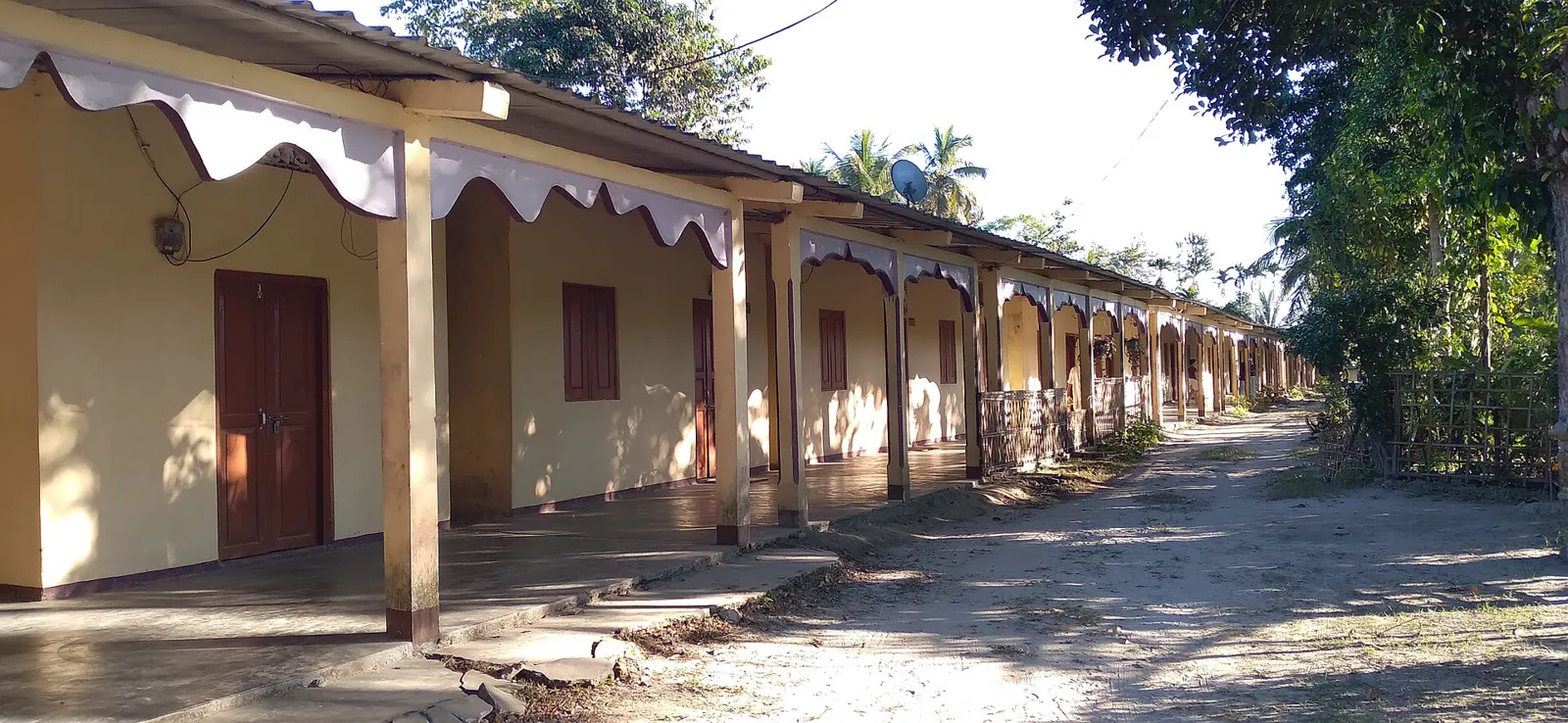
Auniati is a working satra rather than a monumental temple designed solely for visitors. Its spaces serve worship, monastic residence, teaching and community gatherings. As at other Assamese satras, the namghar, or prayer and congregational hall, is an important kind of space in the tradition; confirm with caretakers which halls and areas are open at Auniati. Visitors should expect a functional religious compound whose buildings and layout reflect ongoing use, rather than assume a single historic structure or fixed visitor route. Majuli's riverine setting and seasonal weather make local building upkeep an ongoing practical concern, but specific construction materials, engineering details and building dates should not be inferred without site documentation. Observe the arrangement of communal and devotional spaces from permitted areas, and follow any instructions about footwear or access. The buildings are best understood as part of a living institution, not just as architectural exhibits.
Important objects & sculptures
The central devotional focus at Auniati is Krishna, worshipped as Govinda; ask caretakers which images or sanctified spaces may be viewed. The satra's cultural collections and performance traditions may also be of interest, but displays and access can vary, and not every object is necessarily on public view. Look respectfully for features used in worship and for instruments associated with devotional performance, including the khol drum and taal cymbals, if these are displayed or being used. Avoid describing or photographing a sacred object as an exhibit without permission. Collections, manuscripts, ritual objects or other heritage items should not be assumed to be accessible; ask a monk or caretaker before entering a room or handling anything.
Religious significance
Auniati follows the Brahma Sanghati branch of Ekasarana Dharma, the Vaishnavite tradition initiated by Srimanta Sankaradeva. Krishna, worshipped here as Govinda, is regarded in this tradition as Param Brahma, the ultimate reality. The satra places particular emphasis on Deva among the four important elements known as sari bostu: Deva, Naam, Guru and Bhokot. Its monks are described as udaseen Vaishnavas, following celibate monastic lives devoted to Krishna and spiritual practice. Prayer and devotional observances form part of everyday life, while congregational worship and festivals bring communities together. Visitors are guests in an active religious institution: keep a respectful distance from worshippers, avoid interrupting rituals, and ask before entering spaces that appear private or restricted.
Visit Auniati Satra with time to observe daily rituals respectfully. Follow the posted rules on footwear, photography and dress, walk clockwise around Buddhist shrines and prayer wheels, and avoid interrupting worshippers. Ask caretakers which areas are open to visitors. A comfortable itinerary is one main visit in the morning, a local meal at midday and a short nearby stop before an afternoon return. Use the district list on this site to find other places in Majuli, but check the actual road route and its condition before combining stops. If a festival is on, local roads and stays can be busy — and the experience can be unforgettable. Leave no litter: many sites in Assam are protected by the communities who own them.
Suggested itineraries
Half day: Arrive in the morning; spend about 1–2 hours at Auniati observing only open areas; take a local meal; add one nearby stop if transport and conditions allow. Full day: Visit Auniati in the morning; pause for a local meal; spend the afternoon at another Majuli satra or cultural site, allowing time for travel and a daylight return. Gentler option: Arrange a vehicle close to the site entrance, rest between short walks, and visit one accessible public area at a relaxed pace; ask ahead about steps and seating.
Auniati is a centre of living satra culture, where religious learning is accompanied by performance and music. Monks train in bhaona, devotional theatre, and in playing instruments such as the khol and taal; Sattriya dance is also part of the training described by the satra's tradition. Assamese Vaishnavite practices shape the community's devotional life, while Majuli's wider cultural landscape includes varied island communities and traditions. Visitors may encounter Assamese in local interactions, though languages spoken can vary. Dress modestly and treat rehearsals, worship and community activity as living practice rather than staged entertainment. Ask before watching a closed session or photographing performers.
Festivals & events
The satra observes Paal Naam, Ras Lila and Janmashtami, as well as commemorations associated with Srimanta Sankaradeva and Madhavadeva. Bihu is also celebrated in the broader local calendar. Janmashtami and Ras Lila are associated with Krishna devotion, while the commemorative observances honour influential Vaishnavite teachers. Festival seasons can bring additional worshippers, visitors and activity, and accommodation or local transport on Majuli may be busier than usual. The timing of observances follows the religious calendar and can vary from year to year. Confirm locally which events are open to visitors and whether any access arrangements change during a gathering.
Local food in Assam includes masor tenga (a tangy fish curry), khar, duck with ash gourd, pitha rice cakes, aloo pitika and, of course, Assam tea. Ask what is fresh that day; many small eateries cook a limited daily menu. Pork, beef, fish and fermented ingredients are common in tribal cuisines, so vegetarian travellers should explain their needs clearly — rice, dal, vegetables and eggs are usually possible in towns. Remote sites may have no restaurant at all. Carry water and snacks, eat a proper breakfast before long drives, and ask your accommodation for a packed lunch if you are heading out early. If food or prasad is offered at the shrine, accept it according to local custom. Choose busy, clean places and carry your packaging back to town.
Shopping & local experiences
Majuli is known for cultural craft traditions, and visitors may find locally made textiles or handcrafts in village markets and community workshops. Samaguri Satra is associated with mask-making, but the availability of masks for purchase and workshop access should be checked locally. Look for work sold by its makers or community groups, and ask before photographing a workshop. Local food can also be part of a visit; options vary by settlement. Carry purchases carefully and avoid buying objects presented as sacred or historic unless their provenance is clear. Choose reusable bags and minimise packaging.
October to April
The nearest principal railway station by straight-line distance is Jorhat Town, roughly 20 km away. The nearest operating airport by straight-line distance is Jorhat Airport (Rowriah), roughly 25 km away. These figures are calculated from map coordinates, so actual road distance and travel time are longer. Guwahati is the main rail and air hub for the region, and most long-distance journeys connect through it. For the final leg, Assam State Transport Corporation (ASTC) and private Volvo/sleeper coaches link district towns; shared taxis usually leave early in the morning and depart only when full. A private taxi gives more flexibility for remote sites. When comparing train, bus and flight, count the complete door-to-door time: a flight saves the most time only if the onward road transfer is short, while an overnight train to Guwahati plus a road journey can save a hotel night. Book your return before you leave, because seats on shared vehicles and the few daily flights fill quickly. Current train numbers, timings, return services and fares are not listed here; check IRCTC and NTES for trains and the airline’s own schedule for flights. No Inner Line Permit is needed to visit Assam.
Confirm onward and return timings on IRCTC / NTES, the state bus operator or your airline before travel. A dash means current timings or fares have not been verified.
Getting around
Majuli is reached by road and ferry connections from the Jorhat side; check current ferry operations and conditions before setting out, since river and weather conditions can affect travel. Once on the island, visitors commonly rely on local taxis, shared vehicles or other locally available transport to reach satras and villages. Availability may be limited, so agree on a return plan before leaving a busier area. Walking can work within a site or for short nearby distances, but ask locally about road conditions and distances before combining stops. Confirm parking and vehicle access at Auniati with local staff.
Hours, tickets & permissions
Entry arrangements depend on the satra's daily religious activity and the areas open to visitors. There may be local rules about footwear, dress, photography, access to prayer spaces or participation in an event; do not assume that every part of the compound is open. Ask a monk or caretaker before entering buildings, and follow any posted instructions. Confirm current visiting hours, any entry requirements and any applicable fees directly with the satra or a reliable local source before travelling, as arrangements can change, particularly during festivals.
Facilities
Facilities at the satra and nearby may be basic and can change. Toilets, drinking water, places to eat and parking should be checked locally rather than assumed to be available within the compound. Food options may be easier to find in nearby settlements than at the site itself. Do not rely on an ATM, visitor desk or formal guide service on site; plan cash and other essentials before travelling across the island. Ask caretakers whether someone can explain the satra's traditions, and carry water and any personal supplies you need.
Accessibility
Auniati is a working religious compound, and visitor routes may include uneven ground, thresholds or steps. The amount of walking, shade and seating available can vary by area and season; ask locally about the route before entering. Wheelchair and stroller access should not be assumed, and there may not be step-free access to prayer or indoor spaces. Older visitors or anyone with limited mobility may find a shorter visit with a vehicle drop-off and rest breaks more comfortable. During wet weather, ground conditions can be difficult. Check current access arrangements with the satra, and avoid entering areas that are not clearly open to visitors.
No Inner Line Permit is needed to visit Assam. Carry a photo ID at all times; checkpoints are common. Save the emergency number 112 and your accommodation’s contact offline. Heat, humidity and sudden downpours are the main weather risks; carry water and rain protection. Respect community rules, private property and posted instructions. Avoid long road journeys after dark and during heavy rain. Check official advisories for the region before travel, and follow local guidance if access changes.
Visitor rules
Dress modestly and behave quietly around worshippers. Follow local instructions about removing footwear, and ask before entering a prayer hall, monastic residence or other restricted area. Do not interrupt rituals, touch sacred objects or handle instruments without permission. Photography may be limited, particularly during worship or inside devotional spaces; check with a caretaker first. Use marked bins if available and take litter away rather than leaving it behind. Avoid single-use plastic where possible, and respect any posted rules or community requests. Children should remain with their accompanying adults.
Photography
Soft morning or late-afternoon light can suit exterior views, but avoid staying so long that you miss the daylight return. Photograph only from areas open to visitors and ask before taking pictures inside buildings, of sacred images, or of monks, worshippers and performers. A caretaker's permission should take precedence over assumptions about what is allowed. Do not use flash if it could disturb prayer or performance. Drone use may be restricted by aviation rules and local sensitivities; obtain the required permissions and confirm with the satra before considering it. Never obstruct a ritual for a photograph.
Choose a stay by the full journey to Auniati Satra, not just the district name. Main towns in Majuli usually offer hotels, state tourism lodges and homestays with better transport, meals and medical access, while village homestays offer a closer connection to local life. In the plains and valleys, check fans or air-conditioning and mosquito nets in summer. Book in advance for weekends, festival dates and the peak season (October to April). Confirm the exact location, meals included, check-in time and cancellation terms in writing. Many homestays accept payment on arrival; avoid sending money to unverified contacts. Mobile network and digital payments can be unreliable in remote areas, so carry some cash.
Other satras on Majuli that visitors may consider are Kamalabari Satra, Dakhinpat Satra and Garamur Satra; Samaguri Satra is known for its mask-making tradition. These are separate stops, so check road conditions, local access and travel time before planning a circuit. Majuli's villages and river-island landscape offer additional cultural context, but visit community spaces only with appropriate respect and permission. The order of stops depends on transport and current conditions. Ask locally which sites are open and whether a festival or community event will affect access.
For couples, Auniati Satra rewards a slow pace: arrive early for soft light and fewer crowds, share a local meal and keep the evening free. Public displays of affection can be frowned upon in conservative communities and at religious sites, so be discreet. A homestay can make the trip memorable — confirm privacy, hot water and transport back. Keep a buffer day in your itinerary, because weather and road closures can delay plans in Assam.
Q: How much time should I allow for Auniati Satra? A: Allow a relaxed visit of around one to two hours, then add time for travel and any nearby stop. Q: When is a good season to visit? A: October to April is generally the more comfortable season for travel in the region; check local conditions, especially around the monsoon. Q: Is there an entry fee or do I need permission? A: Entry arrangements can change. Confirm any fee or permission requirement with the satra, and follow local rules about open areas. Q: Can children and elderly visitors visit? A: Yes, with supervision and a pace suited to the group. Uneven ground or steps may make some areas difficult; ask about access before arriving. Q: Can I stay nearby? A: Majuli has visitor accommodation, but availability and location vary. Check current options and transport arrangements before booking.
Be the first to share photos, stories, advice or a helpful contact for Auniati Satra.
Loading…