
Majuli
Majuli is a river island in Assam, valued as a centre of Assamese neo-Vaishnavite culture and home to several tribal communities. Visitors reach it by ferry or boat from Jorhat.
Key facts · verified by Ghumoopedia editors
- Type of place
- Natural attraction
- Best time to visit
- October to April
- Nearest railway station
- Jorhat Town · about 25 km (straight line)
- Nearest airport
- Jorhat Airport (Rowriah) · about 30 km (straight line)
- Verified
- 21 Nov 2026
Plan a trip from Majuli — a day-by-day route through places nearby.
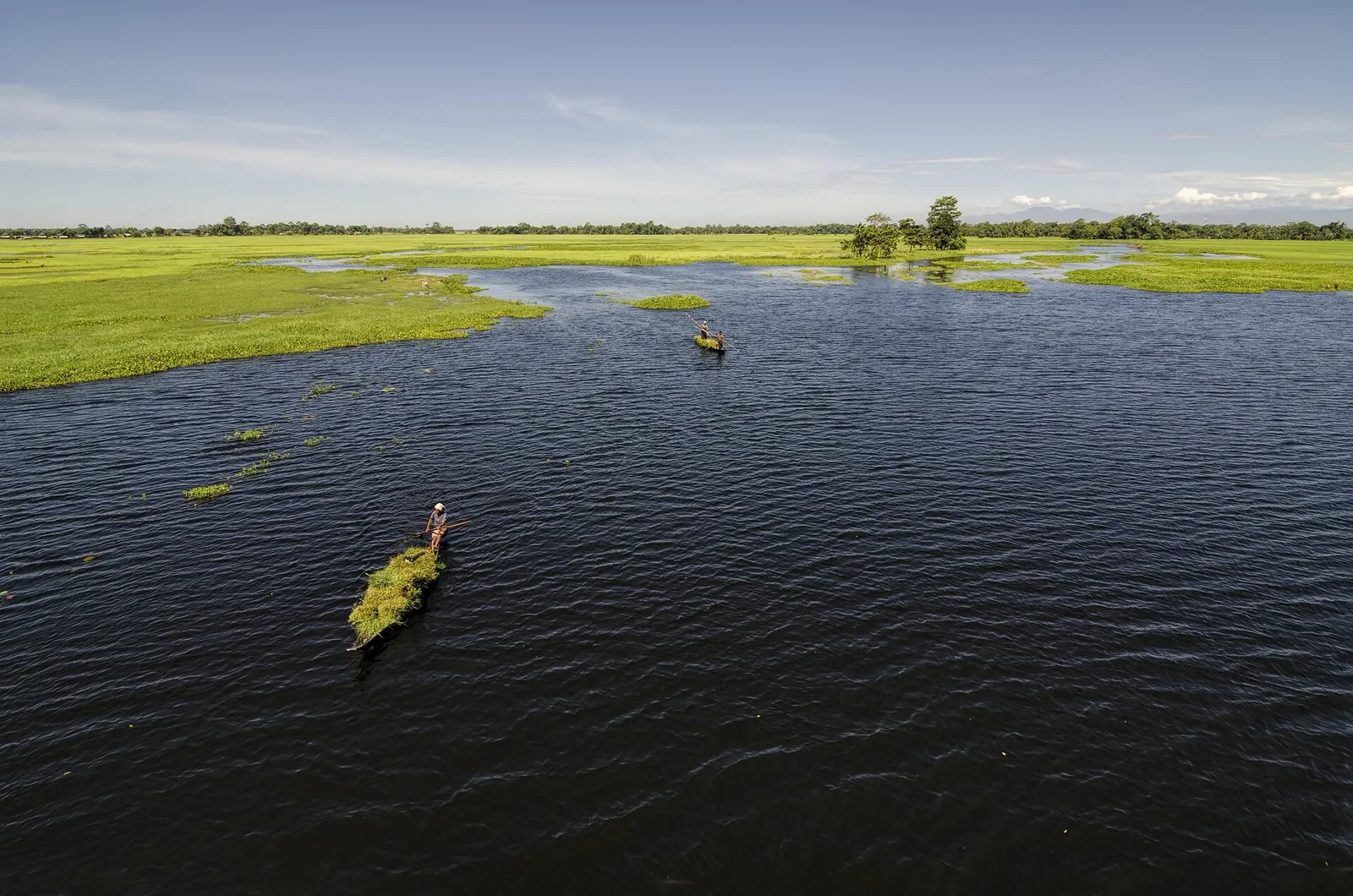
Majuli, within the Assam district that bears its name, ranks as the state’s most extensive river island. The Brahmaputra forms its southern and eastern limits; the Subansiri lies to the west, and a branch of the Brahmaputra marks its northern boundary. These waterways define the island’s position. People of the Mising, Deori and Sonowal Kachari tribes live there, and the island is a centre of Assamese neo-Vaishnavite culture. Ferries and boats provide access from Jorhat, roughly 250 kilometres north-east of Guwahati. India made Majuli its first island district in 2016. UNESCO’s Tentative List has included it since March 2004, as a cultural entry in the process of nominating places for World Heritage recognition. Assam’s Vaishnavite satras, Ahom heritage, Bihu festivals and silk-weaving traditions shape everyday life well beyond the major monuments. The Brahmaputra plains are hot and humid from April to September, with heavy monsoon rain and seasonal floods. Winters are mild and pleasant, with morning fog along the river. The usual best time to visit is October to April. Days are short in Northeast India: the sun can set before 5 pm in winter, so plan to reach and leave Majuli in daylight. Timings, fees and access arrangements must be confirmed locally. For official information, see Assam Tourism at https://tourism.assam.gov.in.
Why it matters
Majuli, also spelled Majoli, is a large inhabited river island in Assam, shaped by the Brahmaputra and its channels. It is an important centre of Assamese neo-Vaishnavite culture, with satras—monastic institutions that preserve devotional practice, performance and craft traditions. The island is also home to Mising, Deori and Sonowal Kachari communities, whose distinct cultural lives are part of its significance. Majuli became a district in 2016; published accounts identify it as the first island in India to receive district status. UNESCO has included Majuli on its Tentative List since March 2004 in the Cultural category. This is a nomination-stage listing, not World Heritage inscription.
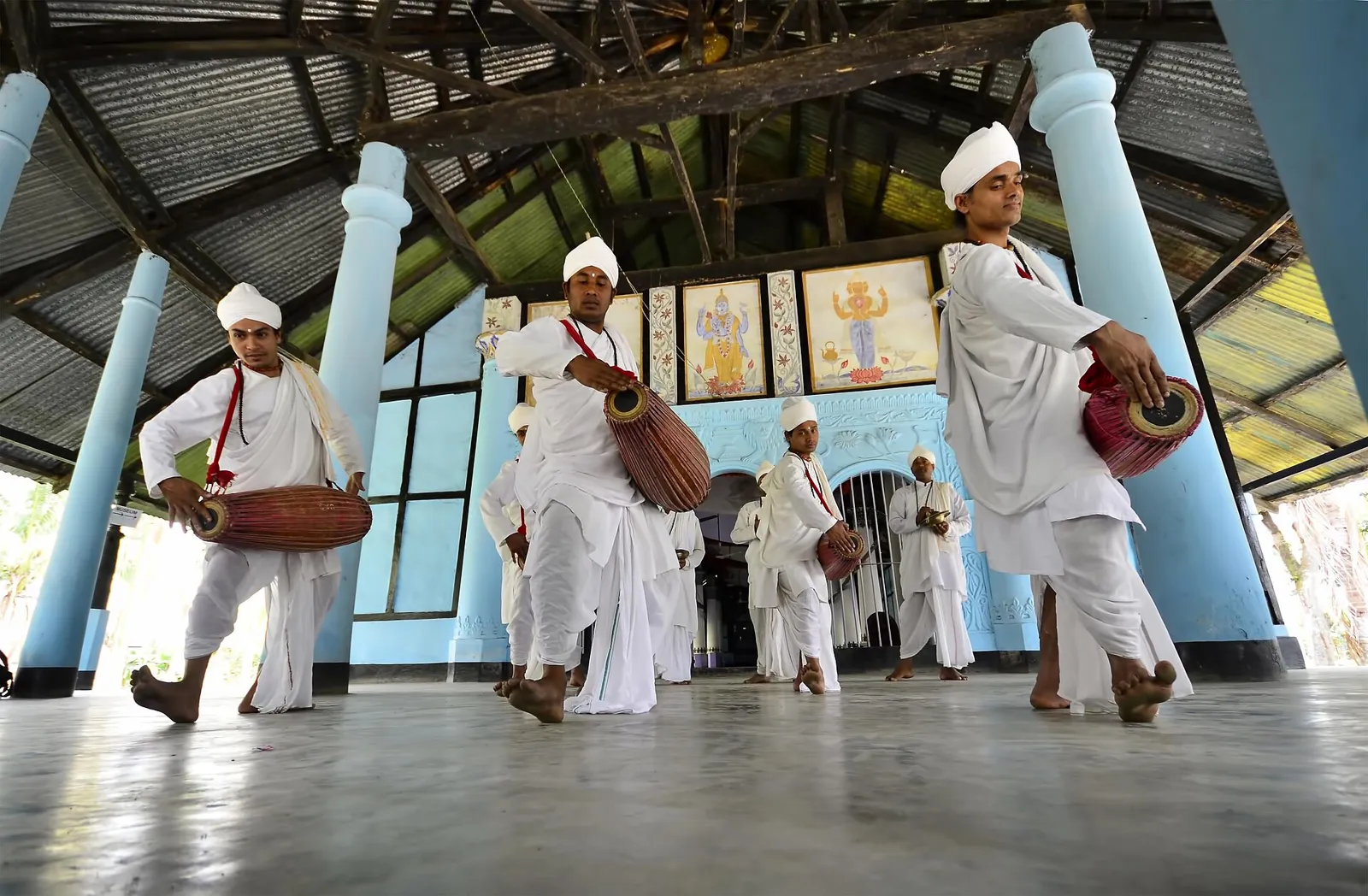
Majuli's landscape has been continually reshaped by the Brahmaputra, its tributaries and shifting channels. Floods and erosion have altered shorelines and affected settlements, farmland and religious institutions; some satras have moved or changed location over time. The island's cultural history is closely connected with the neo-Vaishnavite movement associated with Assamese saint and reformer Srimanta Sankardev and his disciple Madhavdev. Their teachings inspired satras, which became centres for worship, learning, music, dance and theatrical performance. Satras were established across the region over several centuries, with important Majuli institutions developing particularly during the early modern period; dates differ among institutions and should be checked with each satra. Majuli's communities and cultural life have continued through periods of environmental change, including recurring floods and riverbank erosion. In 2016, Majuli was made a district of Assam. The island has been on UNESCO's Tentative List for cultural heritage since 2004, but has not been inscribed as a World Heritage Site. Its history is therefore both cultural and environmental: religious institutions endure alongside a river landscape that is never fixed.
Origin stories & folklore
Majuli's changing river landscape has inspired local stories about land appearing, disappearing and being reshaped by the Brahmaputra. Such accounts are part of oral memory rather than a single verified origin story, and versions may differ between villages. Vaishnavite devotional traditions also tell stories associated with Krishna and the teachings of Sankardev and Madhavdev; episodes from these traditions are sometimes brought to life through religious performance. These narratives help explain the island's cultural identity, but they should not be treated as historical accounts of how the island formed. Visitors can ask local hosts about stories they are comfortable sharing, while respecting that some religious knowledge and practices are not intended for public explanation or photography.
Spend unhurried time at Majuli: walk the marked paths, use official viewpoints and ask locally whether a guide, entry ticket or permit is needed. Admire the water from safe points rather than climbing wet rocks or swimming in unknown currents. Wildlife sightings are never guaranteed — patience and quiet improve your chances. A comfortable itinerary is one main visit in the morning, a local meal at midday and a short nearby stop before an afternoon return. Use the district list on this site to find other places in Majuli, but check the actual road route and its condition before combining stops. If a festival is on, local roads and stays can be busy — and the experience can be unforgettable. Leave no litter: many sites in Assam are protected by the communities who own them.
Suggested itineraries
Half day: Visit one satra such as Kamalabari or Auniati, allow time to explore respectfully, then stop for a local meal and a nearby village or river viewpoint; keep the return journey in daylight. Full day: Start with a satra visit, continue to Samaguri to learn about mask-making if open to visitors, pause for lunch, then visit another nearby cultural site or a safe river viewpoint; allow for changing road and ferry conditions. Gentler option: Choose one accessible site close to your accommodation, arrange vehicle transport between stops, take seated breaks and skip uneven paths or riverbanks.
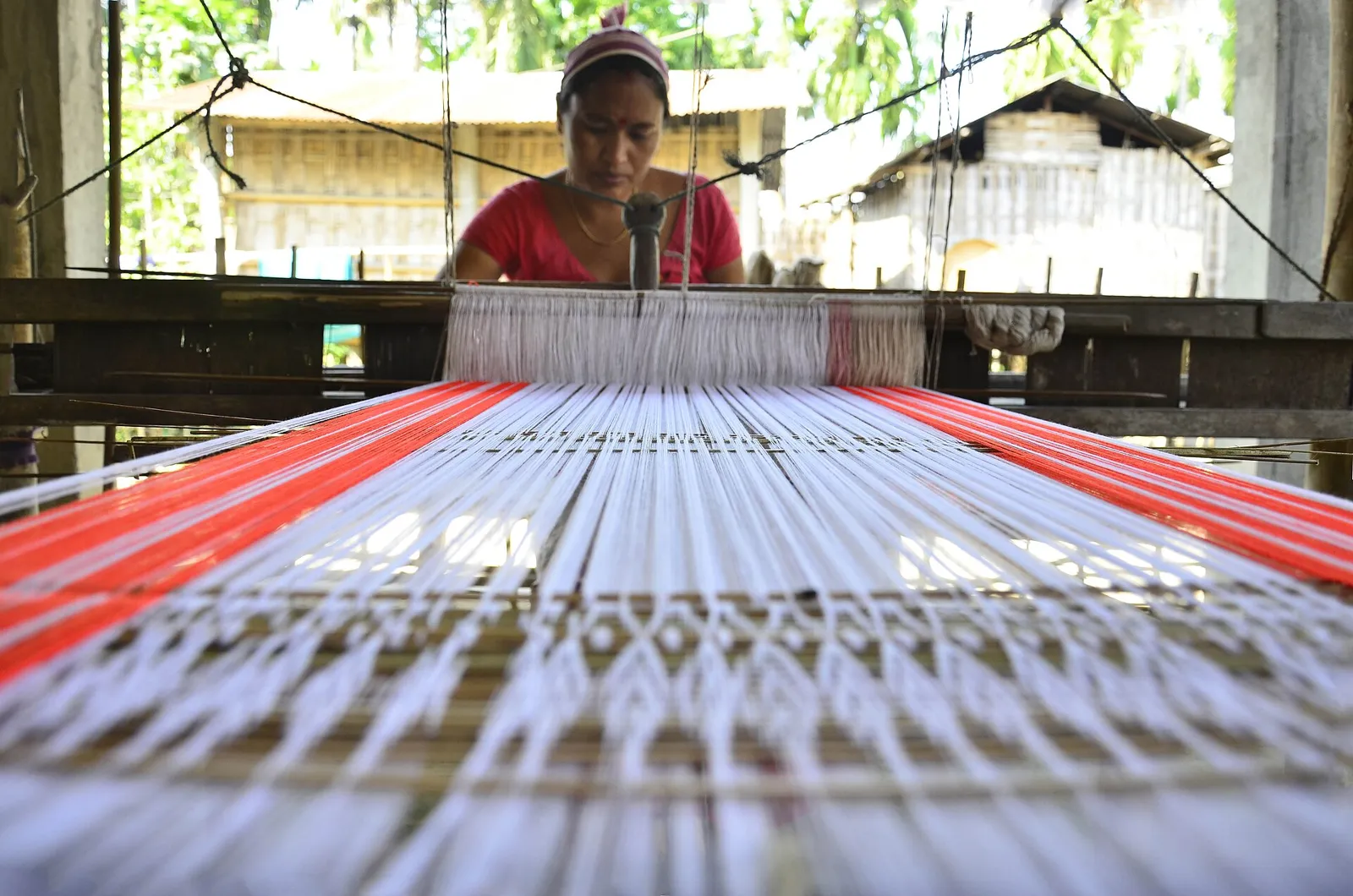
Majuli's cultural life brings together Assamese neo-Vaishnavite traditions and the practices of its Indigenous communities. Satras preserve devotional singing and music, including gayan-bayan, and forms of dance and theatre such as Sattriya and bhaona. Mising weaving, distinctive textiles and community celebrations are also visible parts of local life. Assamese is widely used, alongside Mising, Deori and other languages spoken by residents. Customs vary between communities and institutions, so visitors should follow local guidance at religious sites, dress considerately and ask before photographing people or ceremonies. Cultural activities are living practices, not performances guaranteed for visitors.
Local communities
Majuli is home to Mising, Deori and Sonowal Kachari communities, as well as other residents of Assam. Livelihoods include farming, fishing, weaving, livestock rearing, craftwork and work connected with local services and visitors; what people do varies by household and season. Mising weaving is especially visible in household and community life, while satras are important religious and cultural institutions for many Assamese Vaishnavites. Flooding and erosion can affect homes, fields and access to services. Visitors should treat villages as lived-in places, seek permission before entering private property or taking portraits, and avoid assuming that one community's customs represent everyone on the island.
Festivals & events
Raas Mahotsav, commonly held during the autumn or early-winter season, is a major cultural event on Majuli, with devotional performances and activities associated with Krishna. Ali-Aye-Ligang, celebrated by Mising communities around February or March, marks the beginning of the agricultural cycle. Bihu celebrations, especially the spring observance in April, are part of the wider Assamese calendar and may be marked locally. Practices and event arrangements vary from year to year and between villages. Festival periods can bring larger crowds, busy ferry and road connections, and limited accommodation, so visitors should check locally and arrange stays in advance. Attend respectfully and ask before photographing ceremonies.
Local food in Assam includes masor tenga (a tangy fish curry), khar, duck with ash gourd, pitha rice cakes, aloo pitika and, of course, Assam tea. Ask what is fresh that day; many small eateries cook a limited daily menu. Pork, beef, fish and fermented ingredients are common in tribal cuisines, so vegetarian travellers should explain their needs clearly — rice, dal, vegetables and eggs are usually possible in towns. Remote sites may have no restaurant at all. Carry water and snacks, eat a proper breakfast before long drives, and ask your accommodation for a packed lunch if you are heading out early. Try a homestay-cooked meal when you can — it is often the best local food. Choose busy, clean places and carry your packaging back to town.
Shopping & local experiences
Look for locally made textiles, including Mising woven garments and household items, and traditional masks associated with Majuli's craft practice. Availability varies, and purchases are best made directly from makers or reputable local sellers when possible. Ask before entering a workshop or photographing artisans at work. Small shops and markets may offer local produce and everyday goods, but selection can be limited outside larger settlements. Trying Assamese or Mising-influenced home-style food at a local eatery or through an accommodation host can be a meaningful part of a visit; ask about ingredients and meal availability in advance.
Majuli is a low-lying river landscape of channels, sandbars, wetlands and floodplain fields, bordered by the Brahmaputra, the Subansiri and connected channels. Its outline and waterways change with seasonal floods, sediment movement and erosion. Wetlands and beels support aquatic life and provide habitat for resident and migratory birds; sightings depend on season, water conditions and disturbance, and are never guaranteed. Cultivated land, grasses, bamboo and trees occur across the island, alongside village groves and river-edge vegetation. The monsoon brings heavy rain and high water, while winter mornings can be foggy. Stay away from unstable banks and fast-moving water, follow local advice on flood conditions, and do not enter wetlands or private land without permission.
October to April
The nearest principal railway station by straight-line distance is Jorhat Town, roughly 25 km away. The nearest operating airport by straight-line distance is Jorhat Airport (Rowriah), roughly 30 km away. These figures are calculated from map coordinates, so actual road distance and travel time are longer. Guwahati is the main rail and air hub for the region, and most long-distance journeys connect through it. For the final leg, Assam State Transport Corporation (ASTC) and private Volvo/sleeper coaches link district towns; shared taxis usually leave early in the morning and depart only when full. A private taxi gives more flexibility for remote sites. When comparing train, bus and flight, count the complete door-to-door time: a flight saves the most time only if the onward road transfer is short, while an overnight train to Guwahati plus a road journey can save a hotel night. Book your return before you leave, because seats on shared vehicles and the few daily flights fill quickly. Current train numbers, timings, return services and fares are not listed here; check IRCTC and NTES for trains and the airline’s own schedule for flights. No Inner Line Permit is needed to visit Assam.
Confirm onward and return timings on IRCTC / NTES, the state bus operator or your airline before travel. A dash means current timings or fares have not been verified.
Getting around
Ferries and boats provide the main connection between Majuli and the mainland; services and landing arrangements can change with river conditions, so confirm locally before travel. On the island, hired cars, taxis and shared local vehicles can help connect villages and satras. Auto-rickshaws or local buses may be available in some areas, but coverage can be limited; do not rely on finding transport at every stop. Walking works for short visits within a village or site, while bicycles may be an option where available and conditions are suitable. Ask about safe parking and return transport before leaving a ferry landing or your accommodation.
Hours, tickets & permissions
Majuli is an inhabited island rather than a single gated attraction, so access rules depend on the place you visit. Satras and other institutions may have their own visiting arrangements, restricted areas, photography rules, or requests for respectful dress. A ticket or permission may be required at some sites, while others may be open without a formal entry process. Confirm current opening arrangements, any fees and applicable rules with the individual site or managing authority before setting out. Ferry services and access can also be affected by river and weather conditions.
Facilities
Facilities vary between villages and individual sites. Larger satras and ferry areas may have basic visitor amenities, and food is usually easier to find near settlements than at quiet riverside locations. Toilets, drinking water, parking and guides may be available at some places, but should not be assumed at every stop. Carry drinking water and any essentials you need for the day, and ask your host about suitable meal options and accessible facilities. ATMs and other services are limited compared with larger towns, so check locally and plan ahead before travelling around the island.
Accessibility
Majuli is mostly low-lying, but paths and roads can be uneven, muddy or affected by rain and flooding. Visits may involve walking through village lanes or across open grounds; surfaces and distances vary by site. Shade and seating are not guaranteed, and some satras or riverside areas may have steps, thresholds or unpaved approaches. Wheelchair and stroller access should be checked directly with each venue rather than assumed. Older visitors or anyone with limited mobility may find it easier to arrange vehicle transport, visit one site at a time and avoid slippery banks. Ferry boarding and changing river conditions may also present access challenges.
No Inner Line Permit is needed to visit Assam. Carry a photo ID at all times; checkpoints are common. Save the emergency number 112 and your accommodation’s contact offline. Heat, humidity and sudden downpours are the main weather risks; carry water and rain protection. Stay on marked paths, keep away from cliff edges and fast water, and never approach wild animals. Avoid long road journeys after dark and during heavy rain. Check official advisories for the region before travel, and follow local guidance if access changes.
Photography
Soft morning or late-afternoon light can suit river views and village scenes, though fog, clouds and water levels affect conditions. Use established, safe viewpoints and avoid approaching unstable banks for a better composition. Photography rules differ between satras and other institutions; ask before taking pictures indoors, during worship or at performances. Always seek consent before photographing residents, especially children, and respect requests not to take images. Drone use may be restricted by local, institutional or aviation rules; check permissions with the relevant authorities before bringing or flying one.
Choose a stay by the full journey to Majuli, not just the district name. Main towns in Majuli usually offer hotels, state tourism lodges and homestays with better transport, meals and medical access, while village homestays offer a closer connection to local life. In the plains and valleys, check fans or air-conditioning and mosquito nets in summer. Book in advance for weekends, festival dates and the peak season (October to April). Confirm the exact location, meals included, check-in time and cancellation terms in writing. Many homestays accept payment on arrival; avoid sending money to unverified contacts. Mobile network and digital payments can be unreliable in remote areas, so carry some cash.
Within Majuli, visitors can consider Kamalabari Satra, Auniati Satra, Dakhinpat Satra and Garamur Satra, each with its own character and visitor arrangements. Samaguri is known for its mask-making tradition, though demonstrations or access should be confirmed locally. These places are spread across the island, so check actual road conditions and allow time for travel rather than assuming they are close together. Jorhat is the principal mainland town commonly used for the journey to Majuli and can be combined with a separate visit, but ferry and onward travel arrangements need to be planned as part of the route.
For couples, Majuli rewards a slow pace: arrive early for soft light and fewer crowds, share a local meal and keep the evening free. Public displays of affection can be frowned upon in conservative communities and at religious sites, so be discreet. A homestay can make the trip memorable — confirm privacy, hot water and transport back. Keep a buffer day in your itinerary, because weather and road closures can delay plans in Assam.
Q: How much time should I allow for Majuli? A: A half-day can cover one main stop, but a full day allows more time for travel between sites. Staying longer makes the journey less rushed. Q: When is a good season to visit? A: October to April is generally the preferred period. Check river, weather and ferry conditions before travelling. Q: Is there one entry ticket for the island? A: Majuli is not a single gated attraction. Individual satras or sites may have their own entry rules or fees, so confirm locally. Q: Is Majuli suitable for children and older visitors? A: It can be, with planning. Choose fewer stops, arrange transport and take care around uneven paths, ferry boarding and riverbanks. Q: Where can I stay nearby? A: Accommodation is available on Majuli and in Jorhat, but choices and availability vary. Check locally and arrange a stay ahead of festival periods.
Be the first to share photos, stories, advice or a helpful contact for Majuli.
Loading…