
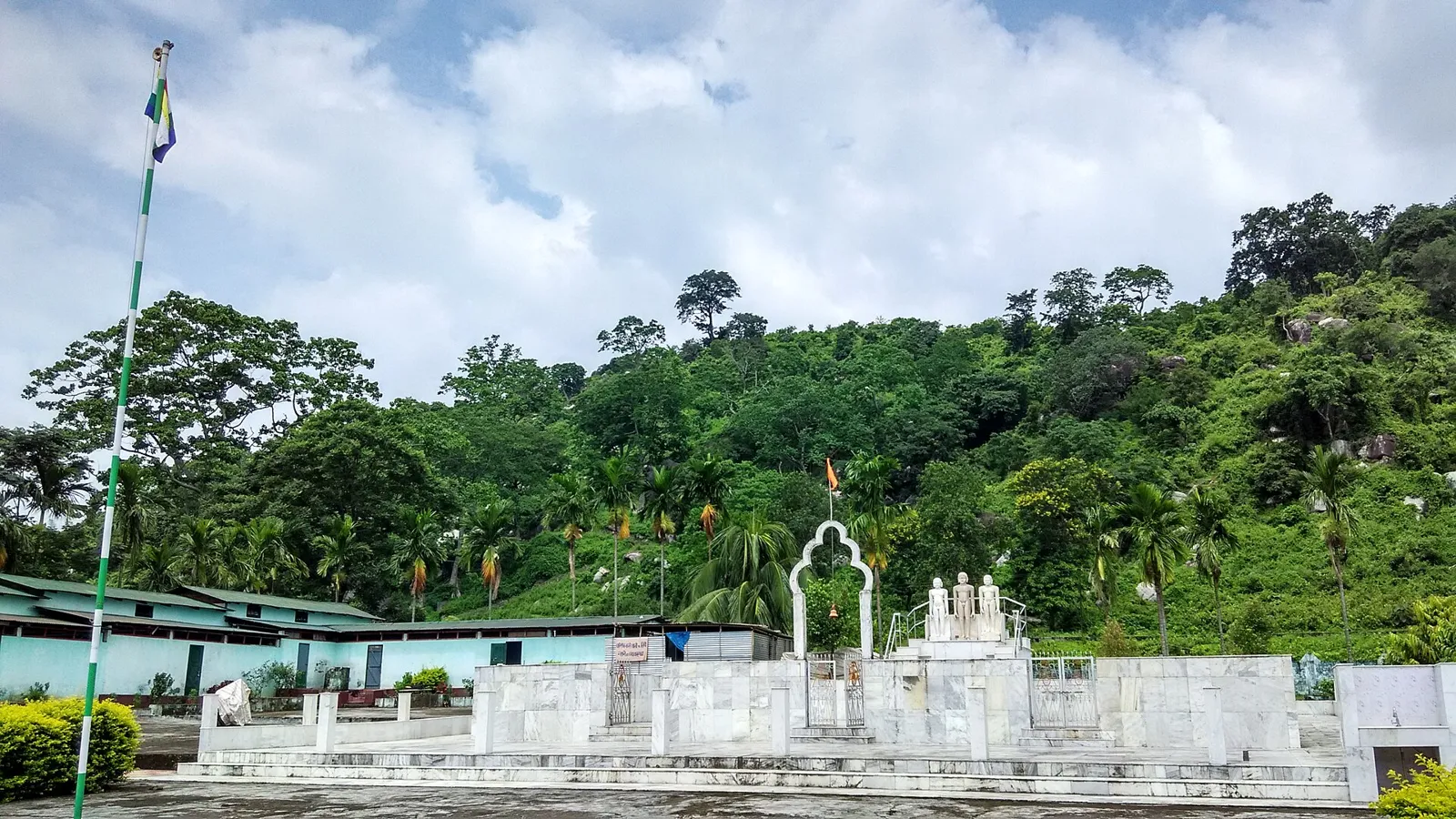
Sri Surya Pahar
Sri Surya Pahar is an archaeological landscape in Assam, marked by remains associated with Hinduism, Buddhism and Jainism. Visitors come to see its scattered lingas, stupas, figures and evidence of an ancient settlement.
Key facts · verified by Ghumoopedia editors
- Type of place
- Heritage monument
- Best time to visit
- October to April
- Nearest railway station
- Goalpara Town · about 10 km (straight line)
- Verified
- 21 Nov 2026
Plan a trip from Sri Surya Pahar — a day-by-day route through places nearby.
In Goalpara district, Sri Surya Pahar lies roughly 13 kilometres southeast of Goalpara and 132 kilometres northwest of Guwahati; Goalpara is the closest city. Across about one square kilometre of hilly ground are carved lingas, small votive stupas and images linked to Hindu, Buddhist and Jain traditions. The remains extend across seven hills, with Shiva lingas especially numerous. Their distribution over the slopes and at the hills’ base reflects centuries of neglect and theft. A local tradition says that Vyasa carved 99,999 lingas here to create a second Kashi, which was believed to have 100,000. The site was once regarded as a major place of pilgrimage in the region. No historical record establishes how many lingas were originally present, and the total number of surviving lingas, images and other remains has not been scientifically counted. Even so, hundreds of lingas, ranging from small to large, can still be seen across the area. Archaeological work carried out a few years ago brought to light several lingas and the remains of houses. These discoveries supported the view that a settled community flourished around Sri Surya Pahar centuries ago. The houses’ carefully planned forms and skilfully made bricks prompted some archaeologists to suggest that further excavation could reshape understanding of ancient Assam and India. Some scholars have also drawn on the Chinese traveller Huen Tsang’s accounts to argue that Sri Surya Pahar, rather than Guwahati, was the ancient region of Pragjyotishpur, also known as the Pragjyotisha Kingdom. Assam’s Vaishnavite satras, Ahom heritage, Bihu festivals and silk-weaving traditions shape everyday life well beyond the major monuments. The Brahmaputra plains are hot and humid from April to September, with heavy monsoon rain and seasonal floods. Winters are mild and pleasant, with morning fog along the river. The usual best time to visit is October to April. Days are short in Northeast India: the sun can set before 5 pm in winter, so plan to reach and leave Sri Surya Pahar in daylight. Timings, fees and access arrangements must be confirmed locally. For official information, see Assam Tourism at https://tourism.assam.gov.in.
Why it matters
Sri Surya Pahar is a major archaeological landscape in Goalpara district, about 13 kilometres southeast of Goalpara town. Across its hills and foothills, remains associated with Hindu, Buddhist and Jain traditions occur within the same broad site, making it important for understanding the religious diversity of Assam’s past. Rock-cut Shiva lingas, votive stupas, sculptures and traces of settlement contribute to its regional archaeological value. It is also a significant local heritage place, although comparatively little known to visitors beyond Assam. No UNESCO World Heritage designation is claimed here; visitors should check with the relevant heritage authority for current information about its protection and management status.
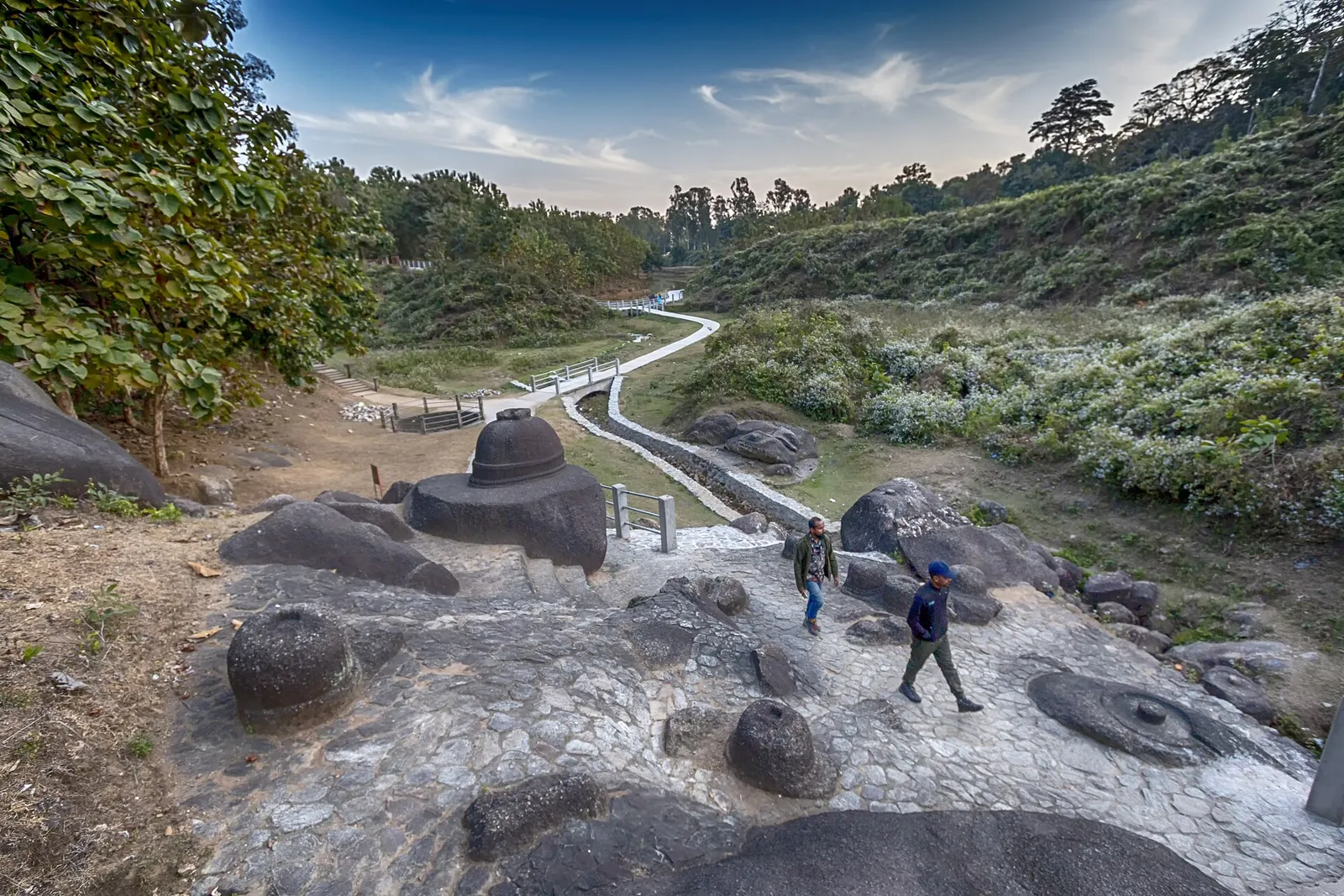
The surviving remains show that Sri Surya Pahar was used as a religious and settlement landscape over an extended period, but the available evidence does not establish a single founding date or a complete sequence of its builders. The site contains Hindu, Buddhist and Jain material, including numerous Shiva lingas, votive stupas and sculptural remains. Their presence points to the coexistence, or successive use, of different religious traditions in the region. The site’s precise chronology and the communities responsible for each feature remain subjects for archaeological study. Local accounts describe the hills as a once-important pilgrimage centre. Archaeological work has also brought to light additional lingas and remains interpreted as houses, strengthening the view that activity here extended beyond isolated shrines. The number of lingas and other relics has not been comprehensively established by scientific counting. Long periods of neglect and reported pilferage have affected the remains. Claims linking Sri Surya Pahar to the ancient capital of Pragjyotishpur have been proposed by some writers, including through interpretations of Chinese traveller Xuanzang’s accounts, but this identification is not settled history. Visitors should treat the site as an important archaeological landscape whose full history is still being investigated.
Origin stories & folklore
According to local tradition, the sage Vyasa engraved 99,999 Shiva lingas at Sri Surya Pahar so that it might become a second Kashi, which was believed to have 100,000 lingas. The story explains the remarkable concentration of lingas across the hills, but it is a religious legend rather than a verified count or archaeological account. Hundreds of lingas of different sizes can still be seen, while the original number, if there was one, is unknown. Some accounts also associate the area with ancient Pragjyotishpur. That identification is a debated interpretation, not an established local fact, and should be distinguished from the site’s documented archaeological remains.
Architecture & design
Sri Surya Pahar is an open archaeological landscape rather than a single enclosed monument. Remains are scattered over a hilly area of about one kilometre, including features on and around seven hills. The most distinctive elements are rock-cut Shiva lingas, cut directly into natural rock, alongside separate lingas, votive stupas and sculptural fragments. The combination reflects more than one religious tradition and suggests repeated use of the terrain rather than a single unified building plan. Stone and rock are central to what survives; excavated house remains and artfully made bricks point to settlement structures as well. The hill setting, exposed rock and dispersed finds shape how visitors encounter the site: paths and open ground connect individual features, rather than galleries or a formal temple complex containing everything. The surviving evidence does not support confident claims about a single architectural style, a complete original layout or the engineering methods used throughout. Look for changes in scale and carving, and allow time to notice features at ground level as well as those set into rock.
Important objects & sculptures
Look for the many Shiva lingas, ranging from small forms to larger examples cut into or placed among the rocks. Votive stupas and sculptural remains are also important, reflecting the site’s Buddhist and broader religious associations. The objects and carvings are distributed across the landscape, so some are easy to miss when following only the main route. Excavations have reportedly uncovered additional lingas and remains interpreted as houses. There is no reliable complete count of the site’s lingas or relics. Do not touch, climb on, move or collect objects; their position and context are part of their archaeological value.
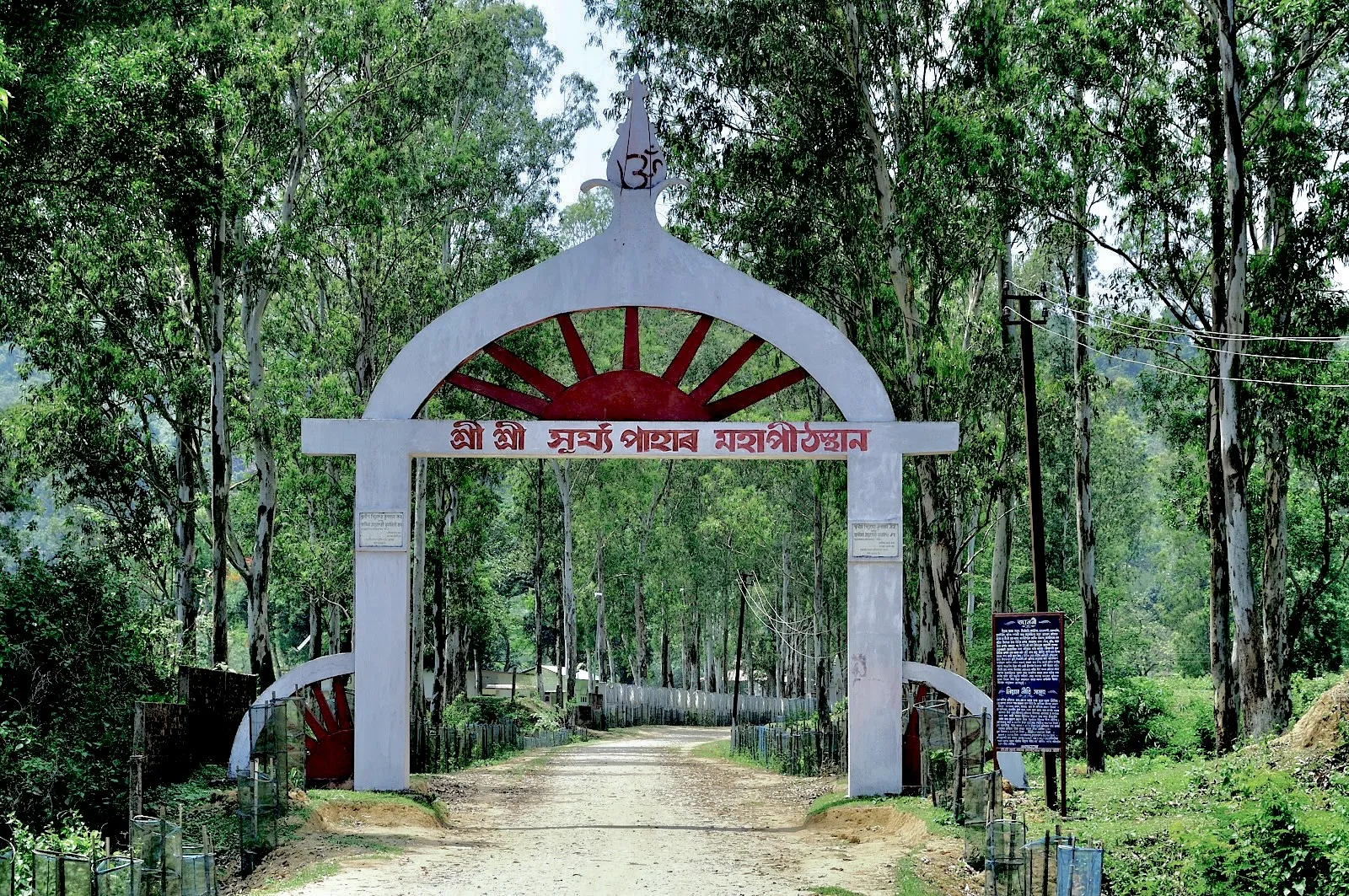
Explore Sri Surya Pahar slowly and read the interpretation boards or hire an authorised guide to understand its history. Check opening days and ticket counters in advance, as many monuments and museums close on one weekday and on public holidays. A comfortable itinerary is one main visit in the morning, a local meal at midday and a short nearby stop before an afternoon return. Use the district list on this site to find other places in Goalpara, but check the actual road route and its condition before combining stops. If a festival is on, local roads and stays can be busy — and the experience can be unforgettable. Leave no litter: many sites in Assam are protected by the communities who own them.
Suggested itineraries
Half day: Reach the site from Goalpara, spend about 2–3 hours walking among the hills and remains, then return to town for a meal. Full day: Visit Sri Surya Pahar in the morning for about 3 hours, pause for lunch in or near Goalpara, then choose a short nearby stop such as Tukreswari Temple if road conditions and time allow. Gentler option: Ask locally about the closest vehicle drop-off, focus on the more accessible features near the entrance, and take frequent rests rather than attempting the full hill walk.
Sri Surya Pahar sits within a living cultural region shaped by Assamese and Goalpariya traditions, alongside the diverse communities of Goalpara district. Assamese and Goalpariya speech are heard locally, with other languages also used in the district. Bihu music and dance are prominent in Assamese cultural life, while local customs, food and religious practice vary between communities. The archaeological site itself brings together remains associated with Hindu, Buddhist and Jain traditions, but visitors should not assume that every feature is currently used for worship. Dress modestly, ask before photographing people, and follow any instructions from site staff or local worshippers.
Festivals & events
There is no widely documented annual festival specific to the archaeological site that visitors should plan around. In the surrounding region, Bihu is celebrated at different points of the agricultural year, with Rongali Bihu in spring especially associated with music, dance and community gatherings. Religious observances at local temples may also bring additional visitors, though schedules and scale can vary. Festival periods can make roads, transport and accommodation busier, so check locally before travelling. Be considerate around any active worship and do not assume that a public celebration grants access to protected archaeological features.
Local food in Assam includes masor tenga (a tangy fish curry), khar, duck with ash gourd, pitha rice cakes, aloo pitika and, of course, Assam tea. Ask what is fresh that day; many small eateries cook a limited daily menu. Pork, beef, fish and fermented ingredients are common in tribal cuisines, so vegetarian travellers should explain their needs clearly — rice, dal, vegetables and eggs are usually possible in towns. Remote sites may have no restaurant at all. Carry water and snacks, eat a proper breakfast before long drives, and ask your accommodation for a packed lunch if you are heading out early. Try a homestay-cooked meal when you can — it is often the best local food. Choose busy, clean places and carry your packaging back to town.
Shopping & local experiences
Goalpara town is the practical place to look for everyday supplies, local snacks and small market purchases before or after visiting the site. Assam’s wider craft traditions include handloom textiles and woven products, though availability and local production vary; ask sellers about the maker and origin rather than assuming an item is made nearby. You may find regional food and seasonal produce in town markets. There may be few or no dedicated souvenir stalls at the archaeological site. Do not buy antiquities, carved fragments or objects presented as archaeological finds.
October to April
The nearest principal railway station by straight-line distance is Goalpara Town, roughly 10 km away. The nearest operating airport by straight-line distance is Lokpriya Gopinath Bordoloi International Airport, Guwahati, roughly 90 km away. These figures are calculated from map coordinates, so actual road distance and travel time are longer. Guwahati is the main rail and air hub for the region, and most long-distance journeys connect through it. For the final leg, Assam State Transport Corporation (ASTC) and private Volvo/sleeper coaches link district towns; shared taxis usually leave early in the morning and depart only when full. A private taxi gives more flexibility for remote sites. When comparing train, bus and flight, count the complete door-to-door time: a flight saves the most time only if the onward road transfer is short, while an overnight train to Guwahati plus a road journey can save a hotel night. Book your return before you leave, because seats on shared vehicles and the few daily flights fill quickly. Current train numbers, timings, return services and fares are not listed here; check IRCTC and NTES for trains and the airline’s own schedule for flights. No Inner Line Permit is needed to visit Assam.
Confirm onward and return timings on IRCTC / NTES, the state bus operator or your airline before travel. A dash means current timings or fares have not been verified.
Getting around
Goalpara town is the practical starting point for the final journey to Sri Surya Pahar. Autos or local shared vehicles may be available for parts of the route, but availability can vary; ask locally about the best drop-off point and return options before leaving town. A private taxi offers more flexibility, particularly if you want to combine nearby stops. There is no need for boats to reach the site. Once there, expect to explore on foot over uneven ground rather than relying on transport between individual remains. Check locally about vehicle access and parking.
Hours, tickets & permissions
Entry arrangements, opening days, ticketing and access to particular parts of the site can change. Confirm current visiting hours and any fees with the managing authority before setting out. Ask whether photography, guided visits or group access require separate permission; do not assume that cameras or commercial filming are automatically permitted. Carry identification if requested by the authority, and follow posted notices and staff directions. The site is spread outdoors, so plan your visit in daylight and allow enough time to walk between features.
Facilities
Facilities at the archaeological site may be limited. Check locally for toilets, drinking water, parking, interpretation boards and the availability of an authorised guide; do not rely on every service being open or staffed. Goalpara town is the more dependable place to look for meals, shops, cash services and other visitor needs. Carry water and any essential supplies from town, and take rubbish away if bins are unavailable. Mobile connectivity and nearby services can vary across the rural approach.
Accessibility
The site covers hilly, uneven ground, with rock surfaces and dispersed remains that require walking. Some features may involve slopes or steps, and distances between points can make a full circuit tiring. Shade may be limited in exposed areas, so bring water and sun protection. The terrain is not reliably suitable for wheelchairs or strollers, and there is no basis to assume ramps or accessible toilets are available. Older visitors or anyone with limited mobility may prefer to visit selected features near the easiest access point, with a companion, and check conditions locally before arrival.
No Inner Line Permit is needed to visit Assam. Carry a photo ID at all times; checkpoints are common. Save the emergency number 112 and your accommodation’s contact offline. Heat, humidity and sudden downpours are the main weather risks; carry water and rain protection. Respect community rules, private property and posted instructions. Avoid long road journeys after dark and during heavy rain. Check official advisories for the region before travel, and follow local guidance if access changes.
Photography
Soft morning or late-afternoon light can bring out the texture of the rock and carvings; avoid rushing between scattered features to find compositions. Photography rules can change, so check signs or ask site staff before using a camera, tripod or commercial equipment. Drone use may require permission and should not be attempted without confirming current rules. Keep a respectful distance from worshippers, avoid interrupting rituals, and ask before photographing people. Do not climb on, touch or rearrange archaeological objects for a photograph.
Choose a stay by the full journey to Sri Surya Pahar, not just the district name. Main towns in Goalpara usually offer hotels, state tourism lodges and homestays with better transport, meals and medical access, while village homestays offer a closer connection to local life. In the plains and valleys, check fans or air-conditioning and mosquito nets in summer. Book in advance for weekends, festival dates and the peak season (October to April). Confirm the exact location, meals included, check-in time and cancellation terms in writing. Many homestays accept payment on arrival; avoid sending money to unverified contacts. Mobile network and digital payments can be unreliable in remote areas, so carry some cash.
Goalpara town is the main nearby service centre and a useful place to arrange transport or a meal. Tukreswari Temple, in Goalpara district, is another religious destination that may be combined with Sri Surya Pahar if road conditions and available time permit. The hills and Brahmaputra landscape around the district offer a broader sense of the region, but not every viewpoint has formal visitor facilities. Check routes locally before adding stops, as map distance alone may not reflect actual road time. Avoid planning too many sites into one short visit.
For couples, Sri Surya Pahar rewards a slow pace: arrive early for soft light and fewer crowds, share a local meal and keep the evening free. Public displays of affection can be frowned upon in conservative communities and at religious sites, so be discreet. A homestay can make the trip memorable — confirm privacy, hot water and transport back. Keep a buffer day in your itinerary, because weather and road closures can delay plans in Assam.
Q: How much time should I allow for Sri Surya Pahar? A: Allow about half a day for the site, with additional time if you want a slow walk or a nearby stop. Q: When is a good season to visit? A: October to April is generally the more comfortable period; check local weather and road conditions, especially during the monsoon. Q: Is there an entry fee, and do I need to book? A: Rules and fees can change. Confirm current entry and booking requirements with the managing authority before travelling. Q: Can children and older visitors explore the site? A: Children can visit with supervision, but the uneven, hilly terrain may be tiring or difficult for some older visitors and people with limited mobility. Q: Where should I stay nearby? A: Goalpara town is the nearest practical base for local services; check current accommodation availability before your trip.
Be the first to share photos, stories, advice or a helpful contact for Sri Surya Pahar.
Loading…