
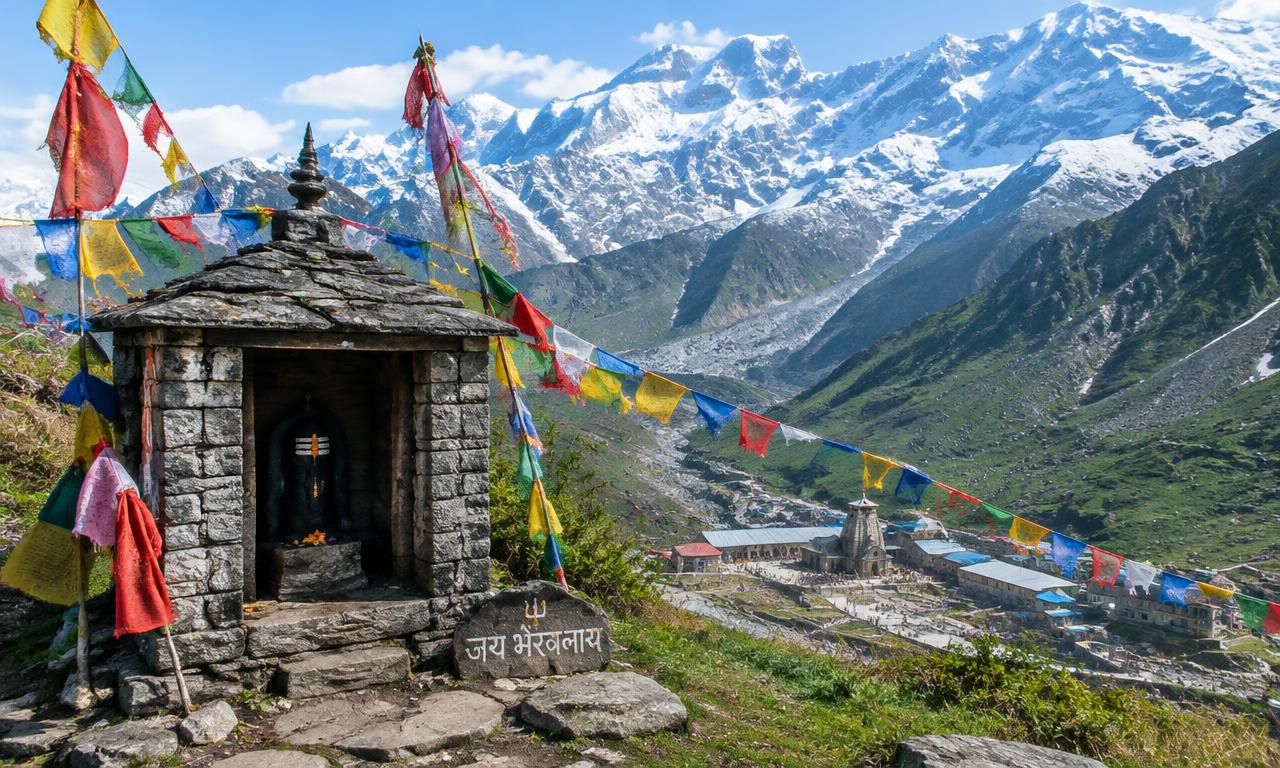
Bhairavnath Temple
Bhairavnath Temple is a hill shrine above Kedarnath in Uttarakhand’s Rudraprayag district. Visitors come to honour Bhairav, regarded as Kedarnath’s protector, and see the temple area and Himalayan hills from above.
Key facts · verified by Ghumoopedia editors
- Type of place
- Temple / pilgrimage site
- Best time to visit
- May–June, September–October
- Altitude
- 3,650 m
- Verified
- 21 Nov 2026
Plan a trip from Bhairavnath Temple — a day-by-day route through places nearby.
Located on high ground near Kedarnath, the shrine is in Rudraprayag district, Uttarakhand. Its setting looks out across the temple settlement and the surrounding mountain slopes, offering a quieter spiritual visit. The temple is dedicated to Bhairav, a fierce form of Shiva. Tradition identifies him as the guardian of Kedarnath, giving the shrine a close connection with the main temple. This protective role is particularly associated with winter. At that time, the main Kedarnath temple shuts and much of the settlement becomes nearly empty. The visit is best treated as a short but physically demanding extension to a Kedarnath pilgrimage, rather than an effortless viewpoint stroll. Kedarnath itself lies at approximately 3,580 metres, and the additional uphill walk can feel considerably harder than its distance suggests. Expect an exposed mountain setting, uneven footing and rapidly changing weather rather than extensive visitor facilities. Most travellers visit during Kedarnath’s pilgrimage season, generally between spring and autumn, with exact opening dates and access conditions varying annually. Snow, heavy rain or local restrictions can prevent access even when the broader yatra is operating. Allow time to rest after reaching Kedarnath before deciding whether to climb. The main rewards are the shrine’s devotional atmosphere, perspectives on the valley and a little distance from the busier temple precinct.
Why it matters
Bhairavnath Temple is a small but meaningful part of the Kedarnath pilgrimage landscape in Rudraprayag district, Uttarakhand. Dedicated to Bhairav, a fierce form of Shiva, it is regarded in local tradition as the guardian of Kedarnath and is associated especially with the winter period, when the main temple closes and the settlement largely empties. Its hillside position gives worshippers and visitors a quieter place for prayer and a view across the temple valley. The shrine’s importance is primarily local and religious rather than architectural or administrative. No UNESCO listing or Archaeological Survey of India protection is confirmed here; visitors should check with local authorities for current management information.
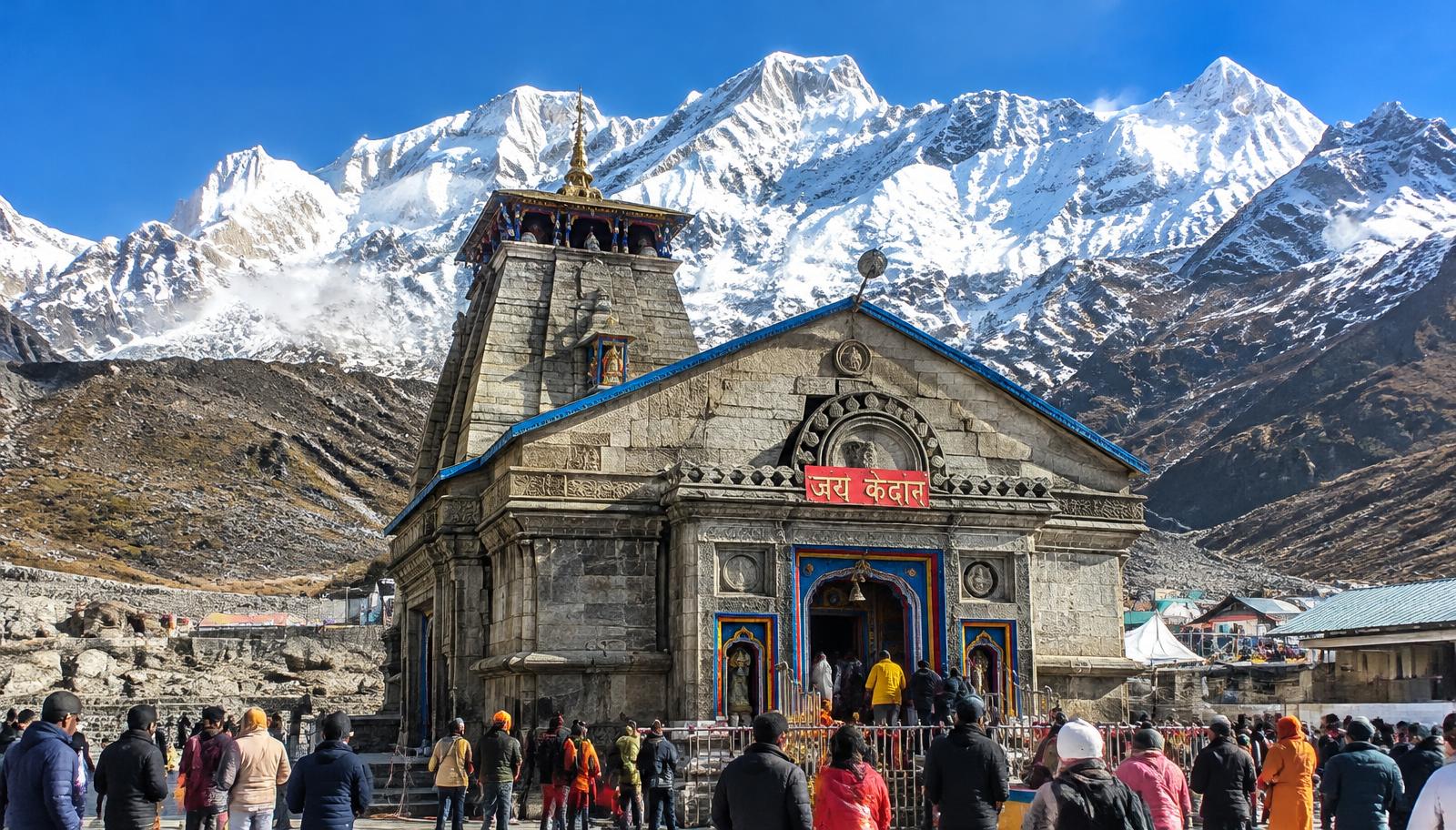
A precise foundation date, named builder or detailed construction history for Bhairavnath Temple is not well established in the commonly available accounts of Kedarnath. The shrine is best understood within the long-standing pilgrimage tradition of the Kedarnath region, where smaller places of worship serve the needs of pilgrims as well as local religious life. Its association with Bhairav as Kedarnath’s guardian is preserved through local belief and customary practice, rather than a securely documented founding record. The main Kedarnath temple has a much broader historical and pilgrimage profile, but that history should not be automatically assigned to this separate hillside shrine. The area has experienced the challenges common to high Himalayan settlements, including severe weather, snow, landslides and changing access. Conditions and visitor access can therefore change over time. No specific restoration campaign, patronage record or inscriptional chronology for Bhairavnath Temple is confirmed here. For details about current upkeep, seasonal opening or local custodianship, ask the temple’s attendants or the relevant local administration.
Origin stories & folklore
According to local tradition, Bhairav protects Kedarnath and its sacred precinct, with his guardianship especially associated with the period when the main temple closes for winter. Bhairav is understood in Hindu belief as a fierce manifestation of Shiva, and the shrine’s position above the settlement reinforces its role as a watchful presence over the valley. Accounts may differ in how they describe the guardian’s duties or the origin of the shrine. These are living religious traditions, not claims that can be verified as historical events. Visitors can ask local attendants about versions of the story while recognising that beliefs and explanations may vary between families and communities.
Architecture & design
Bhairavnath Temple is a compact hillside shrine in a high-altitude Himalayan setting, rather than a large temple complex. Its simple scale suits its role as a devotional stop above Kedarnath. The building is commonly approached on foot from the main temple area, with the route rising over uneven ground. Local stone construction is characteristic of shrines in the region, though visitors should not assume that every visible element is original or that the structure has a documented architectural date. The worship space is centred on the deity, with limited room for visitors to gather; the surrounding landscape forms an important part of the experience. There is no confirmed evidence here of an extensive sculptural programme, formal courtyard or elaborate visitor facilities. Snow, rain and exposure to mountain weather affect both the shrine and its approach, so access and the condition of the path may vary by season.
Important objects & sculptures
The central focus is the shrine’s sacred representation of Bhairav, worshipped as Kedarnath’s guardian. Its precise form and the way it is presented may depend on seasonal arrangements and local ritual practice; follow the guidance of the priest or caretaker rather than approaching or handling sacred objects. Visitors may notice the modest stonework and offerings placed by worshippers, but the shrine is not known as a museum collection or as a site with a widely documented set of inscriptions. Do not assume that objects are available for close viewing or photography. If an attendant is present, a respectful question may help explain the deity’s local significance.
Religious significance
The shrine is dedicated to Bhairav, a fierce manifestation of Shiva in Hindu tradition. Worshippers regard Bhairav as the guardian of Kedarnath, and the temple’s hillside location makes it a devotional extension of a visit to the main Kedarnath shrine. Some devotees associate his protective role particularly with winter, when the main temple closes and the settlement becomes largely unoccupied. Prayer, offerings and brief acts of worship may take place, but ritual arrangements vary with the season, weather and presence of attendants. Visitors should ask locally before making an offering and follow instructions about footwear and access. The shrine is a place of active belief, so quiet conduct and consideration for worshippers matter more than treating it only as a viewpoint.
Visit the shrine respectfully, following the priest’s or caretaker’s guidance about offerings, footwear and photography. Ritual activity and access can vary with the season and weather; do not assume a fixed daily schedule or that a priest will always be present. Pause at a safe point along the approach to appreciate Kedarnath below and the scale of the surrounding mountains. Earlier daylight hours often provide a better margin for weather changes, although clear views are never guaranteed. Stay on the established path rather than scrambling onto rocks for a photograph. Combine the visit with unhurried darshan at Kedarnath, allowing for queues and enough recovery time between activities. If you arrived exhausted from Gaurikund, postpone the climb rather than squeezing it into the same afternoon. Spend a few quiet minutes observing the landscape or learning about Bhairav’s guardian role from local attendants. Carry any offering wrappers and other rubbish back down; avoid disturbing worshippers or wildlife.
Suggested itineraries
Half day: Rest after reaching Kedarnath; visit the main temple when appropriate; walk uphill to Bhairavnath Temple at an easy pace; spend time at the shrine and return by the established path. Allow several hours, including breaks and changing conditions. Full day: Start with a relaxed morning in Kedarnath; visit the main temple and nearby settlement; take a substantial rest; walk to Bhairavnath Temple in daylight; return with time to recover and prepare for the next stage of the pilgrimage. Gentler option: If the climb feels too demanding, remain near the main temple precinct, rest, and enjoy the valley views from an accessible, locally approved spot instead.
The shrine is part of the living pilgrimage culture of Kedarnath, where visitors, local workers, priests and attendants share a demanding high-altitude setting. Hindi and Garhwali are commonly heard in the wider region; pilgrims may also speak many other Indian languages. Customs often include prayer, offerings and respectful removal of footwear where requested. Dress tends to be practical for cold, changeable mountain weather, while modest clothing is appropriate at a place of worship. The atmosphere is generally quieter than around the main temple, though this depends on the yatra season and conditions. There is no fixed performance programme known at the shrine; ritual activity is shaped by local practice and the flow of pilgrims.
Festivals & events
The busiest period generally follows Kedarnath’s pilgrimage season, between spring and autumn, with exact opening and closing arrangements varying each year. Hindu observances associated with Shiva may be marked by pilgrims or local worshippers, but their form at this shrine can vary. During busy yatra periods, paths and the main temple precinct may be crowded; weather or local restrictions can also affect access to the hillside shrine.
Plan to eat in Kedarnath’s main settlement before or after the climb; do not rely on food or drinking water being available at the hillside shrine. Seasonal eateries commonly serve simple vegetarian meals such as dal, rice, roti, khichdi and tea. Menus, hygiene standards, prices and opening hours vary, so inspect the place and confirm the bill beforehand. Carry drinking water and a small snack. Choose freshly cooked food, avoid a heavy meal immediately before climbing, and take all packaging back with you.
Shopping & local experiences
Shopping options are limited and seasonal in the high-altitude settlement. During the pilgrimage period, visitors may find basic provisions, simple religious offerings, prasad and small devotional souvenirs near the main temple area. Practical items for cold or wet conditions may also be sold, but selection and availability vary. This is not a major craft-market destination, so avoid assuming that particular handicrafts are locally made. Food stalls may offer basic refreshments when operating; carry any packaging back with you and use local businesses respectfully. Larger shopping choices are more likely in towns along the approach route.
May–June, September–October
Reach Sonprayag by road via the Rudraprayag–Guptkashi corridor, then use the locally permitted transport arrangement to Gaurikund. Traffic controls, shuttle availability and road conditions change, so confirm arrangements before departure. From Gaurikund, Kedarnath involves a substantial mountain trek, commonly described as roughly 16–18 kilometres depending on the current route and endpoints. Registered pony or porter services may be available; verify official rates and operating rules locally. Helicopter services operate seasonally from designated helipads, subject to weather and availability. Book only through the officially authorised channel and check current registration requirements. From Kedarnath’s main temple area, ask for the Bhairavnath path. It is a short uphill walk, often quoted around half a kilometre, but confirm the usable route locally. Allow roughly 30–60 minutes return, longer for rest or worship.
Getting around
There is no regular vehicle ride to the shrine described here: visitors reach it on foot from Kedarnath’s main temple area, following the locally indicated uphill path. Ask an attendant or local official to confirm the route and whether it is open before starting. Within Kedarnath, movement is on foot over uneven ground; allow time to rest and account for altitude. To reach the settlement, travellers commonly go by road to Sonprayag, use the locally permitted arrangements to Gaurikund, then trek to Kedarnath; seasonal helicopter services operate from designated helipads when available. Road controls and transport arrangements change, so verify them locally.
Hours, tickets & permissions
Access is seasonal and may depend on weather, snow, path conditions, pilgrimage arrangements and local restrictions. There may not be a separate ticket or permit process for this short walk, but do not assume access is unrestricted. Camera rules, offerings and entry into the worship area are subject to local guidance. Carry identification required for your wider Kedarnath journey and comply with current yatra registration procedures. Confirm current access arrangements, opening status and any applicable fees with the managing authority or local attendants before setting out; no fixed daily schedule is stated here.
Facilities
Facilities at the shrine itself are limited, and visitors should not expect a staffed information desk, reliable drinking-water point or extensive seating. Basic services such as food stalls, accommodation and toilets may be available in the Kedarnath settlement during the pilgrimage season, but availability can change with weather and operations. Carry water and personal essentials, and check locally where toilets are open. ATMs and extensive medical services should not be assumed at the shrine or in the settlement. Parking is not available beside the hillside temple; road transport ends well before the Kedarnath walk. Ask local attendants about guidance and current conditions.
Accessibility
The approach is uphill and physically demanding despite being a short extension from Kedarnath. The path is in an exposed mountain setting and may have uneven footing, steps or slippery sections; conditions can change with rain, snow and maintenance. Altitude can make exertion feel harder, particularly for anyone who has just completed the trek from Gaurikund. Shade and places to rest may be limited. The route is not suitable for wheelchairs or strollers, and may be difficult for older visitors or people with heart, lung, balance or mobility concerns. Consider skipping the climb if fatigued, and seek local advice before setting out.
Altitude is the main concern: avoid the extra climb if you have headache, nausea, dizziness or unusual fatigue. Worsening symptoms, breathlessness at rest or confusion require urgent medical attention and assisted descent when safe. Locate Kedarnath’s medical facilities before heading uphill. Wear grippy shoes and carry warm layers, rain protection, water and a charged phone. Snow, ice, wet stone and loose ground can make the path hazardous. Turn back for thunder, poor visibility or official closure. Avoid walking after dark. Mobile coverage may fail; tell someone your plan and verify weather and path conditions locally.
Visitor rules
Follow the priest’s or caretaker’s directions about footwear, offerings and entry into the worship area. Dress modestly and behave quietly, especially when people are praying. Stay on the established path and away from restricted or unsafe edges; do not climb onto rocks for a view. Carry wrappers and rubbish back down, and avoid single-use plastic where possible. Do not touch or move sacred objects without permission. Photography may be restricted during worship or inside the shrine, so ask first. Respect local closures and weather-related instructions, and do not disturb wildlife or other visitors.
Photography
The hillside approach can offer views across Kedarnath and the surrounding slopes, but visibility depends on cloud, rain and season. Earlier daylight generally leaves more margin for changing weather; clear views are never guaranteed. Photograph from stable points on the established path rather than scrambling for a better angle. Ask before photographing inside the shrine, sacred objects, priests or worshippers, and stop if requested. Drone use may be restricted by aviation rules, local administration or pilgrimage security; do not fly one without checking current permissions. Keep photography discreet during prayer.
Stay in Kedarnath if you want to visit without rushing between the long approach trek and the descent. Seasonal guesthouses, lodges, camps and accommodation managed by pilgrimage organisations may operate, but availability and facilities vary considerably. Reserve through a reliable provider and reconfirm before travelling. Ask specifically about bedding, blankets, toilets, hot water, electricity and cancellation terms; mountain accommodation can be basic. There is no dependable overnight accommodation at Bhairavnath Temple itself. Lower-altitude stays around Guptkashi or Sonprayag require a much more demanding onward journey to Kedarnath.
Kedarnath Temple is the principal pilgrimage site in the settlement and is the natural companion to a visit to Bhairavnath Temple. The surrounding Kedarnath settlement offers views of the high Himalayan landscape, though weather can obscure them. Gaurikund is an important starting point for the traditional trek, while Sonprayag is a key road-access point for onward arrangements. Guptkashi, in the wider Rudraprayag district, is another established pilgrimage stop on the approach corridor. These places are not all suitable for a casual same-day visit from Kedarnath; plan around road access, trekking effort, weather and current yatra controls.
Build the visit around the slower partner’s pace, especially after the climb to Kedarnath. A relaxed morning after adequate rest is preferable to rushing uphill for sunset and returning in darkness. Choose a safe stopping place for photographs without blocking the path or intruding on worship. For an overnight stay, confirm that your booking provides a private room rather than shared accommodation, along with bedding and toilet arrangements. Keep plans flexible if either person develops altitude symptoms.
Q: How much time should I allow for Bhairavnath Temple? A: Allow several hours for the uphill walk, time at the shrine, rest breaks and the return, especially at altitude. Q: When is the best season to visit? A: The usual pilgrimage period is between spring and autumn, but access depends on the year’s opening arrangements, weather and local conditions. Q: Is there an entry ticket or separate permit? A: Requirements can change. Confirm current access rules and any fees with the managing authority or local attendants. Q: Can children or elderly visitors make the climb? A: The path is uphill and uneven, and altitude adds strain. Decide according to fitness and conditions; anyone unsure should skip the climb or seek local advice. Q: Where can I stay nearby? A: Seasonal accommodation may be available in Kedarnath, with more options in towns along the approach such as Guptkashi. Check current operations before travel.
Be the first to share photos, stories, advice or a helpful contact for Bhairavnath Temple.
Loading…