
Kesaria stupa
Kesariya Stupa is a Buddhist monument in Bihar’s East Champaran district, at Kesariya near Mehsi. Visitors come to see the structure, whose construction began in the third century BCE.
Key facts · verified by Ghumoopedia editors
- Type of place
- Temple / pilgrimage site
- Best time to visit
- October to March
- Nearest railway station
- Bapudham Motihari · about 35 km (straight line)
- Verified
- 21 Nov 2026
Plan a trip from Kesaria stupa — a day-by-day route through places nearby.
The Kesariya Stupa stands in Kesariya, within Bihar’s East Champaran district. The nearby town of Mehsi is close to the site, and Patna is about 110 kilometres away. These locations place the monument in the eastern part of Bihar. Construction of the Buddhist structure began in the third century BCE. Its circumference is nearly 400 feet (120 metres), and it reaches approximately 104 feet (32 metres) in height. These measurements describe the monument’s breadth and vertical extent. Bihar is the heart of ancient Magadha — the land of the Buddha's enlightenment, the Mahavihara of Nalanda, the Mauryan capital Pataliputra, Jain tirthankara Mahavira and the Maithili and Bhojpuri cultures. Bihar has very hot summers from April to June, a monsoon from June to September that can flood low-lying areas, and cool, pleasant winters from November to February with foggy mornings in December and January. The usual best time to visit is October to March. Timings, fees and access arrangements must be confirmed locally. For official information, see Bihar Tourism at https://tourism.bihar.gov.in.
Why it matters
Kesariya Stupa is an important Buddhist archaeological site in East Champaran district, Bihar, near Kesaria and Mehsi. It represents the region’s long connection with Buddhism and is associated in Buddhist tradition with the Buddha’s final journey from Vaishali. The Archaeological Survey of India (ASI) protects the monument as an archaeological site; it is not a UNESCO World Heritage Site. Its brick structure, successive terraces and substantial scale make it a notable destination for pilgrims and visitors interested in early Buddhist history. For local communities, it is also a landmark and a place of religious remembrance. The site is part of Bihar’s wider Buddhist heritage, which includes places linked with the Buddha’s life and teaching.
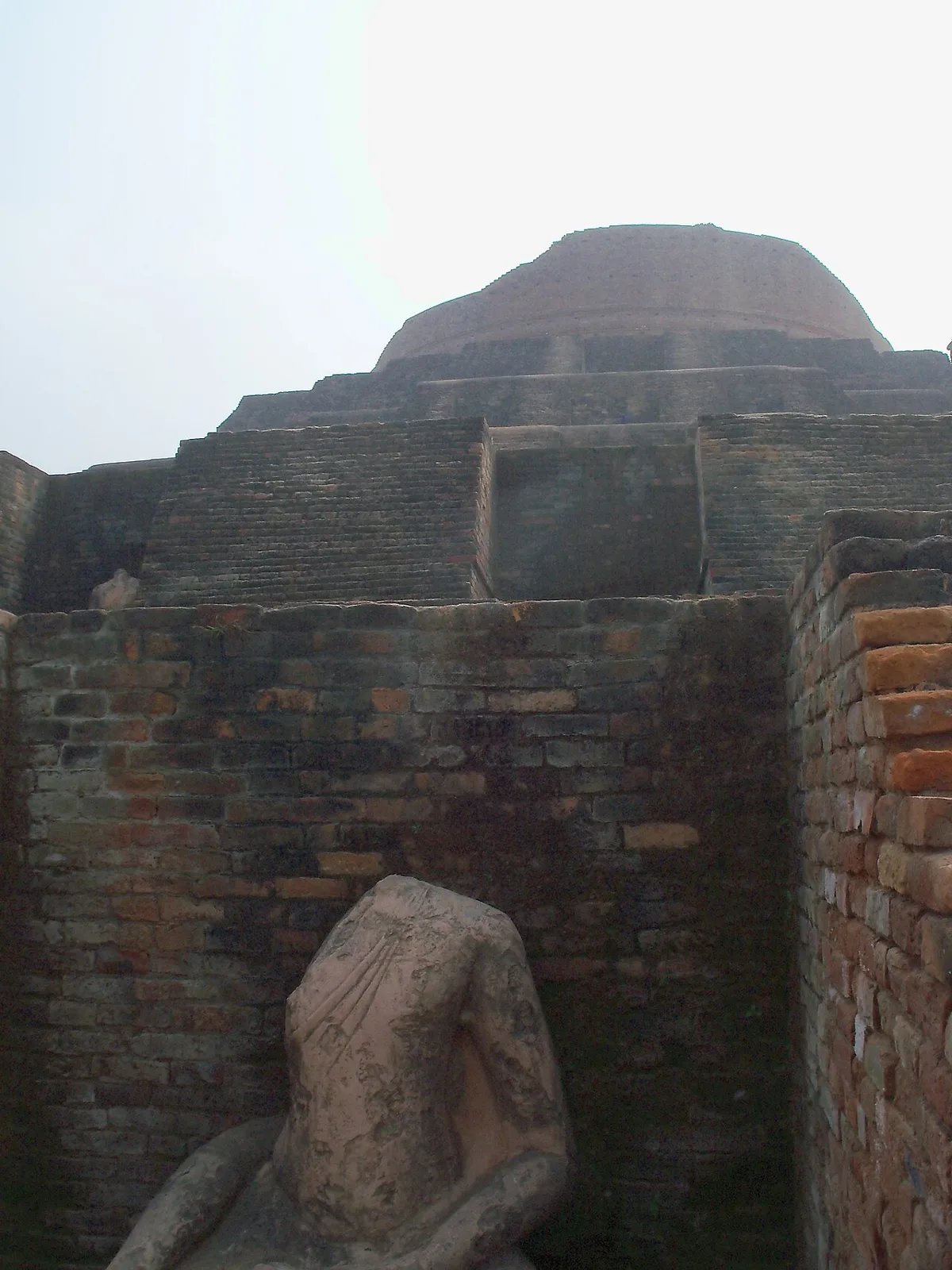
Construction at the Kesariya site is traditionally dated to the 3rd century BCE, but the visible monument reflects building and enlargement over more than one period. No securely established record identifies a single builder. Its origins are associated with Buddhist communities and with the region’s early links to the Buddha and the Licchavis of Vaishali. Archaeological interpretation generally describes the stupa as having developed through successive phases, with later additions changing its height and form; parts of the surviving brickwork are attributed to later ancient periods. The structure was eventually left exposed to weather, vegetation and gradual deterioration. Its scale and remains became better documented through modern archaeological investigation. Excavations by the Archaeological Survey of India in 1998 brought renewed attention to the monument and revealed more of its terraced layout and brick construction. The site is now protected and managed as an archaeological monument. Published descriptions give the stupa a circumference of almost 400 feet (about 120 metres) and a height of about 104 feet (about 32 metres); measurements and visible condition may vary with the basis of measurement and conservation work. Visitors should treat traditional associations and archaeological conclusions as distinct kinds of evidence.
Origin stories & folklore
According to a Buddhist tradition associated with Kesariya, the Buddha stopped here while leaving Vaishali on his final journey. The Licchavis, who wished to accompany him, were said to have been asked to return; some tellings connect the place with the Buddha giving them his alms bowl as a parting gift. The stupa is popularly linked with their remembrance of that farewell. Accounts differ, and the story is a religious tradition rather than a detail established by the surviving structure alone. Visitors may encounter versions of this narrative locally or in guide explanations. It offers a meaningful way to understand the site’s devotional importance, while archaeological dating and textual traditions should not be treated as identical evidence.
Architecture & design
Kesariya is a large brick Buddhist stupa built around a central mound, with a series of receding terraces that give the structure its stepped, layered profile. Descriptions commonly identify six terrace levels, arranged around the circular monument. Its surviving fabric is principally brick, with weathering and damage visible across exposed surfaces. Recesses or niches on the terraces contain traces of devotional imagery, including Buddha figures. The repeated horizontal bands and rising mass are characteristic of a stupa designed for circumambulation as well as remembrance, although visitors should follow any restrictions on access to the structure. The monument’s present appearance represents successive construction and alteration rather than a single building campaign. Published guide figures give a circumference of nearly 400 feet (120 metres) and a height of about 104 feet (32 metres). The broad base, layered brickwork and substantial scale are its most striking features; conservation barriers and erosion may affect which details can be seen closely.
Important objects & sculptures
The main object of interest is the stupa itself: its extensive brick terraces, stepped outline and surviving niches. Visitors may be able to see damaged or weathered Buddha images and sculptural traces set into the monument, though visibility and access can change with conservation work. These figures are part of the site’s Buddhist devotional character. The monument’s exposed brickwork also offers clues to its construction and later phases, but it should not be climbed, touched or scraped. Kesariya is an archaeological site, not a conventional museum with a guaranteed gallery collection or display of portable objects. Interpretation boards, where present, can help explain what is visible; ask an authorised guide or site staff before drawing conclusions about particular carvings or remains.
Religious significance
Kesariya is a Buddhist stupa, a form of monument associated with remembrance, veneration and the presence of sacred history. Buddhist tradition connects the place with the Buddha’s departure from Vaishali and his farewell to the Licchavis, though accounts of this episode are religious narratives rather than inscriptions that establish every detail. Buddhist visitors may come to reflect, pay respects or walk around the monument where access is permitted. The site is also visited by people interested in the Buddha’s life and the history of Buddhism in Bihar. It is an archaeological monument as well as a place of religious significance, so visitors should be considerate of anyone praying or observing quietly. There may not be regular formal services or facilities for worship; check locally if planning a devotional visit.
Explore Kesaria stupa slowly and read the interpretation boards, use the official audio guide where available or hire an authorised guide to understand its history. Check opening days, ticket counters and camera rules in advance; many monuments and museums close on one weekday and on some public holidays. Early morning gives softer light, cooler air and smaller crowds. A comfortable itinerary is one main visit in the morning, a local meal at midday and a short nearby stop before an afternoon return. Use the district list on this site to find other places in East Champaran, but check the route and its condition before combining stops. If a festival or fair is on — such as Chhath or the Sonepur fair — roads and stays can be busy, and the experience can be unforgettable. Leave no litter: many sites are protected by the communities around them.
Suggested itineraries
Half day: Arrive in the morning; spend 1–2 hours viewing the stupa, reading interpretation material and taking a quiet walk around accessible areas; pause in Kesariya or Mehsi for a meal before returning. Full day: Visit Kesariya Stupa in the morning; take a midday break in a nearby town; continue to Motihari for the Gandhi Sangrahalaya if travel conditions and opening arrangements suit; return with daylight where possible. Gentler option: Allow extra time at the stupa, remain on the easiest accessible paths, take seated rests and skip additional stops.
The stupa stands within the lived landscape of East Champaran, where village life, agriculture and regional travel shape the visitor experience. Hindi and Bhojpuri are widely used in the area; other languages may also be spoken. Local customs generally call for respectful conduct at religious and archaeological places, including keeping noise low and not disturbing worshippers. Visitors may encounter guides and residents who share Buddhist traditions, local history or stories connected with the monument, but interpretations can vary. The site is not known as a regular venue for staged music or dance performances. A visit can be paired with a meal or market stop in a nearby town, offering a modest glimpse of everyday regional food and commerce rather than a curated cultural programme.
Festivals & events
Buddha Purnima, usually observed in spring, is an important Buddhist occasion and may draw visitors to Buddhist sites in Bihar; confirm locally whether any gathering or programme is planned at Kesariya. Chhath, generally celebrated in autumn and sometimes again in spring, is a major regional festival across Bihar, though it should not be assumed to be an event at the stupa itself. Local fairs and religious observances may also take place in nearby towns. Festival travel can mean busier roads, fuller accommodation and more activity around markets or worship areas. Check local announcements and be prepared to keep the monument’s archaeological rules and other visitors’ needs in mind.
Local food in Bihar includes litti chokha, sattu paratha, khaja (a layered sweet from Silao), tilkut and anarsa from Gaya, makhana (fox nuts) from the Mithila region, chana ghugni, malpua and thekua. Ask what is fresh that day; many small eateries cook a limited daily menu. Vegetarian travellers eat very well across this region, and most towns also have non-vegetarian options. Remote sites may have no restaurant at all. Carry water and snacks, eat a proper breakfast before long drives, and ask your accommodation for a packed lunch if you are heading out early. Try a home-cooked or dhaba meal when you can — it is often the best food on the route. Choose busy, clean places, drink sealed or filtered water, and carry your packaging back with you.
Shopping & local experiences
Kesariya is not primarily a shopping destination, and visitors should not expect a large crafts market beside the stupa. Nearby towns may have small shops selling everyday goods, snacks and locally prepared food. In Motihari or other district markets, look for regional produce and simple Bihar-made items, while checking where goods come from rather than assuming a particular craft is local to Kesariya. Try a meal or tea at a nearby town if time permits. Buy souvenirs from legitimate vendors, avoid items made from archaeological material, and carry reusable bags where practical.
October to March
The nearest principal railway station by straight-line distance is Bapudham Motihari, roughly 35 km away. The nearest operating airport by straight-line distance is Jay Prakash Narayan Airport, Patna, roughly 85 km away. These figures are calculated from map coordinates — actual road distance is longer. Patna Junction, Rajendra Nagar Terminal and Gaya Junction are the main rail gateways, and Patna and Gaya have airports; Varanasi airport serves the west of the state. For the final leg, Bihar State Road Transport Corporation (BSRTC) buses, private coaches and shared jeeps and autos link district towns; shared jeeps usually leave early in the morning. A private taxi gives more flexibility for remote sites. When comparing train, bus and flight, count the complete door-to-door time: a flight saves the most time only if the onward road transfer is short, while an overnight train can save a hotel night. Book your return before you leave, because seats fill quickly on weekends, festivals and holidays. Current train numbers, timings, return services and fares are not listed here; check IRCTC and NTES for trains and the airline's own schedule for flights. No permit is needed to visit Bihar. Buddhist circuit sites such as Bodh Gaya, Rajgir, Nalanda and Vaishali welcome visitors of all backgrounds; dress modestly at temples, monasteries and dargahs. The Sonepur fair, Chhath Puja and the Rajgir Mahotsav draw very large crowds, so book transport and stays well ahead.
Confirm onward and return timings on IRCTC / NTES, the state bus operator or your airline before travel. A dash means current timings or fares have not been verified.
Getting around
Kesariya is reached by road from nearby district towns, including Mehsi and Motihari. On arrival, local buses, shared jeeps and autos may serve the area, but services can be limited or irregular; confirm the final leg locally. A pre-arranged taxi or private vehicle offers more flexibility, especially for a return journey or a visit combined with other sites. Ask the driver about a suitable drop-off and parking point, since arrangements can vary. The monument can be explored on foot, but expect walking over uneven ground and follow any barriers. Carry water and plan your return transport before beginning the visit.
Hours, tickets & permissions
Entry arrangements, opening days, ticket requirements and camera permissions can change. The monument is protected by the Archaeological Survey of India, but visitors should confirm the current hours, fees and access conditions with the managing authority or locally before setting out. Carry identification if requested, and follow any posted rules about bags, photography or restricted areas. Do not rely on third-party listings for current details. If travelling on a public holiday or during a local event, check whether access arrangements differ.
Facilities
Facilities at the monument may be basic and can change. Toilets, drinking water, shade, seating, food stalls and parking are not guaranteed at the site, so check locally and carry water and essentials. Nearby towns are more likely to offer meals, shops and basic services. Guides or interpretation may be available, but confirm that a guide is authorised and agree on the scope of the visit before starting. ATMs and medical services should not be assumed to be close to the monument. Visitors with specific needs should make arrangements in advance rather than relying on on-site provision.
Accessibility
The monument’s grounds include uneven outdoor surfaces, and the stupa’s terraced form involves steps or raised levels; access to every part may be restricted. Walking distances and conditions depend on the permitted route, and shade may be limited, particularly in hot weather. Wheelchair and stroller access should not be assumed, and the higher terraces are unlikely to suit visitors who cannot manage steps. Older visitors or anyone with limited mobility may prefer to view the structure from accessible ground-level areas, take frequent rests and visit in cooler weather. Contact the managing authority or ask locally about current paths, barriers and assistance before travelling.
No permit is needed to visit Bihar. Buddhist circuit sites such as Bodh Gaya, Rajgir, Nalanda and Vaishali welcome visitors of all backgrounds; dress modestly at temples, monasteries and dargahs. The Sonepur fair, Chhath Puja and the Rajgir Mahotsav draw very large crowds, so book transport and stays well ahead. Carry a photo ID at all times and save the emergency number 112 and your accommodation's contact offline. Heat in summer and fog in winter are the main weather risks; carry water and allow extra travel time on foggy December–January mornings. Respect community rules, private property and posted instructions. Follow local guidance if access changes.
Visitor rules
Follow all signs and directions from site staff, and keep to authorised paths and viewing areas. Do not climb the stupa, remove or touch archaeological material, mark brickwork, or enter fenced-off sections. Dress respectfully, particularly if people are praying, and keep voices low. Avoid littering and reduce single-use plastic; take rubbish away if bins are unavailable. Do not assume that every area permits photography or that food and large bags are allowed. Ask before photographing people, guides or worshippers, and respect any request for privacy.
Photography
Early morning often offers softer light, cooler conditions and fewer visitors; late afternoon can also give the brick terraces gentle light, depending on weather and access. Ground-level views help show the stupa’s broad, layered form. Photography is commonly possible at archaeological sites, but check current signs and rules for restrictions or any camera permissions. Do not climb for a viewpoint or cross barriers to frame a picture. Drone use may require permissions and may be prohibited; confirm with the managing authority before bringing or flying one. Ask permission before photographing worshippers or local residents.
Choose a stay by the full journey to Kesaria stupa, not just the district name. Patna, Gaya and Bodh Gaya offer the widest choice, from pilgrim dharamshalas to international hotels; monastery guesthouses in Bodh Gaya are good value. In summer, check air-conditioning or coolers; in December and January, check hot water. Book in advance for weekends, festivals and the peak season (October to March). Confirm the exact location, meals included, check-in time and cancellation terms in writing. Avoid sending money to unverified contacts or touts at stations. Carry some cash, as card and digital payments can be unreliable in remote areas.
Motihari, the East Champaran district headquarters, offers the Gandhi Sangrahalaya, associated with the Champaran Satyagraha and Mahatma Gandhi’s work in the region. Areraj is another district stop, known for the Someshwar Nath Mahadev Temple. These visits can be combined only if road conditions, time and opening arrangements allow; check the route before planning a circuit. Mehsi is a nearby town useful for local services and onward travel. Distances by road may differ considerably from map estimates, so avoid planning a tight schedule around several stops.
For couples, Kesaria stupa rewards a slow pace: arrive early for soft light and fewer crowds, share a local meal and keep the evening free. Sunset on the Ganga at a Patna ghat or an evening under the Bodhi tree's descendant at Bodh Gaya is quietly memorable. Public displays of affection can be frowned upon in conservative communities and at religious sites, so be discreet. Keep a buffer in your itinerary, because weather and road conditions can delay plans.
Q: How much time should I allow for Kesariya Stupa? A: Allow a few hours for the monument and interpretation, with extra time for travel and a break in a nearby town. Q: When is the best season to visit? A: October to March is generally more comfortable; summer can be very hot and monsoon rain may affect travel. Q: Is entry free, and what are the current hours? A: Fees and hours can change. Confirm current entry arrangements with the managing authority before travelling. Q: Is the site suitable for children and elderly visitors? A: Ground-level viewing may suit many visitors, but uneven surfaces and steps can make some areas difficult. Supervise children and plan rests. Q: Where can I stay nearby? A: Check accommodation options in Motihari or other nearby towns, and confirm availability and transport before your visit.
Be the first to share photos, stories, advice or a helpful contact for Kesaria stupa.
Loading…