
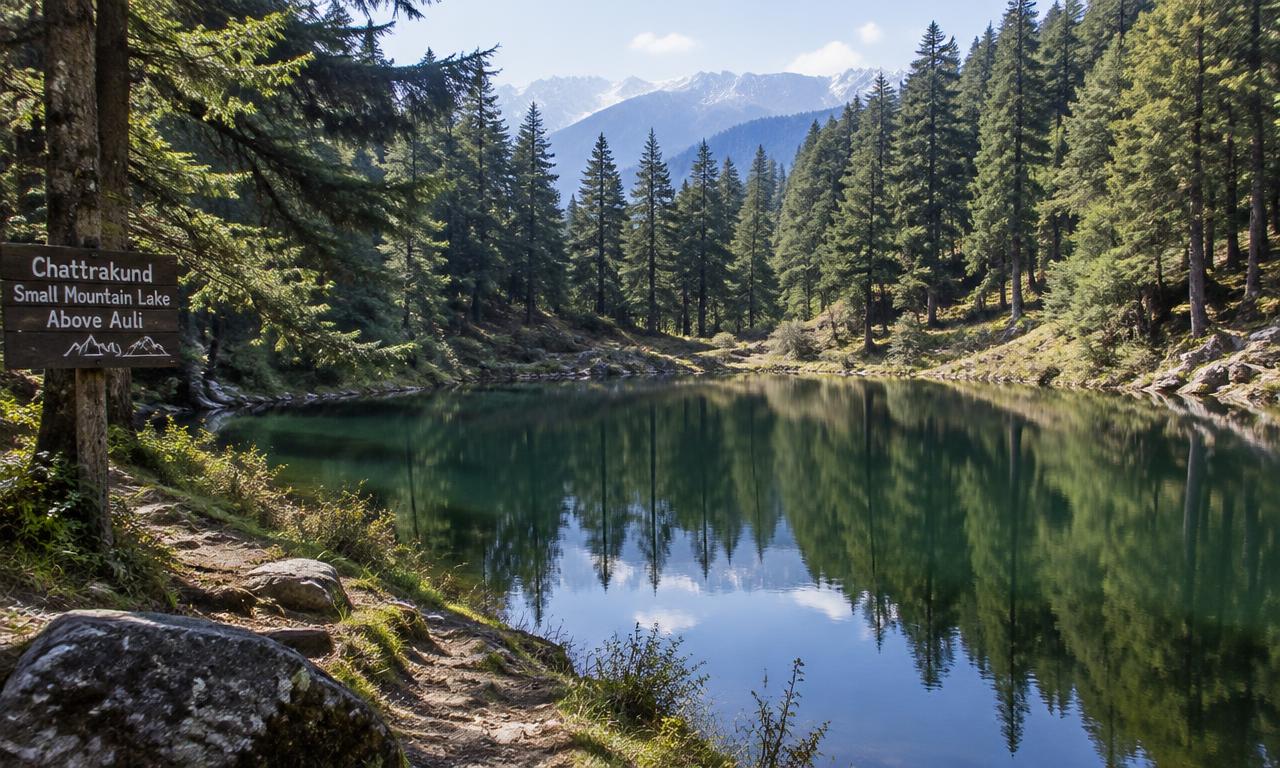
Chattrakund
Chattrakund is a small freshwater lake in the forest beyond Gorson Bugyal, near Auli in Uttarakhand. Visitors come for a quiet walk among the trees and the lake’s still-water reflections.
Key facts · verified by Ghumoopedia editors
- Type of place
- Natural attraction
- Best time to visit
- May–June, September–October
- Altitude
- 3,200 m
- Verified
- 21 Nov 2026
Plan a trip from Chattrakund — a day-by-day route through places nearby.
Set in wooded hills near Auli, Chattrakund offers a sheltered setting away from the open ski slopes. It is a modest natural stop, not a developed sightseeing attraction, and the forest gives the lake a more enclosed feel. Reaching the lake is part of the visit: the approach is a walk through trees. The woodland surroundings, mountain air and reflections across the calm water are the main features of the excursion. The lake is commonly described as roughly four kilometres from Auli, but walking distance and difficulty depend on your starting point and the route currently usable. Ask your accommodation or a local guide to identify the correct trail before leaving. Do not assume there will be signboards, shops, toilets or reliable mobile reception at the destination. Late spring and autumn can offer pleasant walking conditions, while summer weather remains changeable. Monsoon rain can make trails slippery, and winter snow may conceal the route or make access unsuitable without experienced support. Conditions matter more than the calendar. Allow an unhurried half-day, carry your own essentials and treat Chattrakund as a low-impact nature outing, not a swimming or boating destination.
Why it matters
Chattrakund is a small freshwater lake in the forested hills near Auli, valued chiefly as a quiet nature outing rather than a developed visitor attraction. Its sheltered woodland setting contrasts with Auli’s open slopes, and the walk through the trees is an important part of the experience. The lake is of local interest to walkers and visitors staying around Auli and Joshimath, but it should not be treated as a guaranteed or fully serviced sightseeing stop. It is a natural feature, not a built monument; no UNESCO or Archaeological Survey of India designation is known. Trail conditions and access can change with weather, snow and local arrangements.
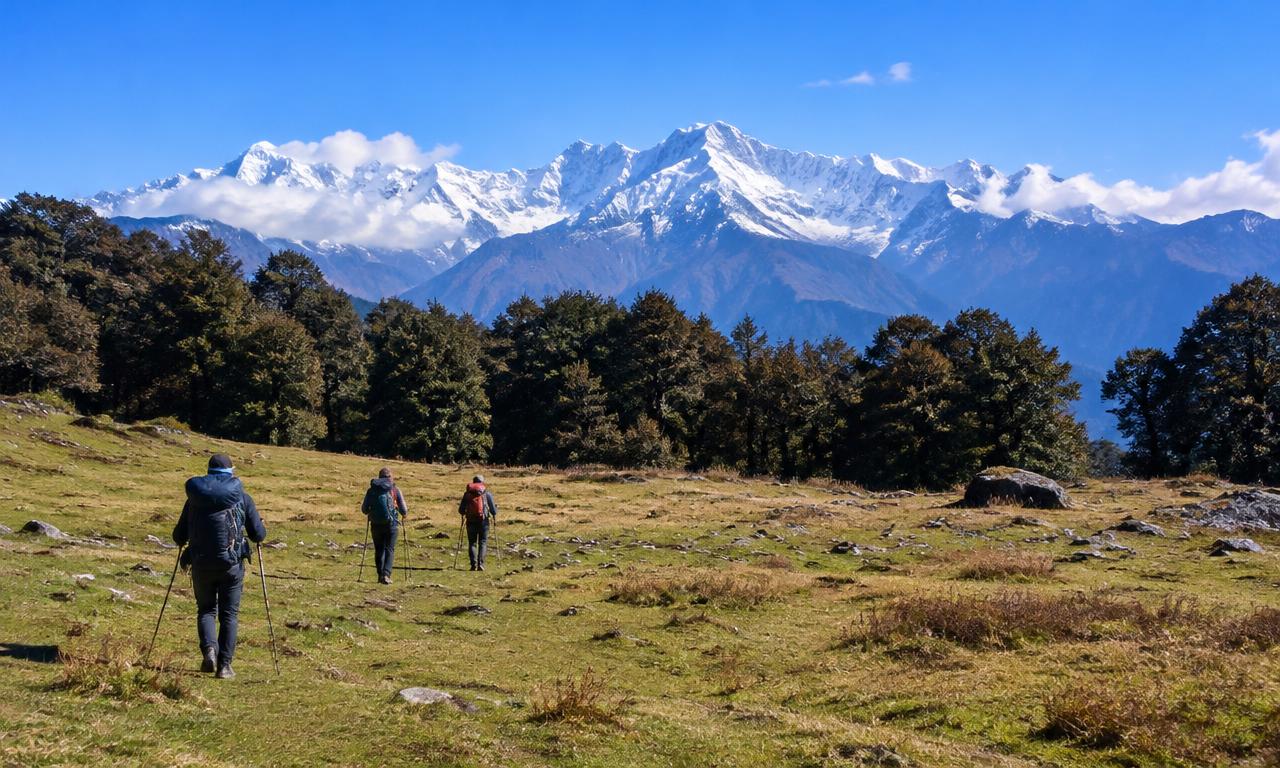
Chattrakund is a natural lake, and reliable published accounts do not establish a date of origin, a builder or a major historical event associated specifically with it. It is generally described as a small freshwater body in the forested hills beyond Gorson Bugyal, near Auli. The surrounding landscape has long been part of the wider Garhwal Himalayan region, where settlements, seasonal movement and livelihoods have been shaped by steep terrain and changing weather, but specific historic uses of this lake should not be assumed without local evidence. The area’s visitor profile has changed as Auli developed as a winter-sports and mountain-tourism destination and as access from Joshimath became more familiar to travellers. Chattrakund remains a walking excursion rather than a built attraction: there is no established record of a designed promenade, visitor centre or major restoration project at the lake. Paths and access arrangements may change over time, and a route mentioned in an older account may not be usable in current conditions. Ask locally about the present trail rather than relying on historic descriptions or online route assumptions.
Origin stories & folklore
No widely documented origin legend for Chattrakund is established in dependable visitor information. As with many small Himalayan water bodies, local stories or beliefs may connect a lake with the surrounding landscape, but such accounts can vary between tellers and should not be presented as verified history. Visitors who hear a story from a resident or guide can ask how it is understood locally and whether it is appropriate to share. The lake is best approached respectfully as a quiet natural place; do not assume it is a ritual site or that any particular practice takes place there.
- Walk through the forest at a relaxed pace, stopping to notice changes in vegetation and light. Arrange a local guide if the route is unfamiliar, poorly marked or affected by snow. Ask whether the proposed walk is a direct return trip or includes a longer loop. - Photograph the lake from firm ground without trampling shoreline plants. Earlier daylight often makes a more comfortable walking window, but check the forecast rather than assuming mornings will be clear. - Spend time watching birds and listening to the forest. Binoculars are useful; avoid loud music, feeding wildlife or approaching animals for photographs. - Carry a simple packed snack and take a quiet break away from the water’s edge. Bring every wrapper and food scrap back with you. - Combine the outing with time around Auli’s viewpoints only if weather, daylight and energy permit. Treat Gorson Bugyal as an additional excursion requiring a separate time and route assessment, not an automatic extension.
Suggested itineraries
Half day: Confirm the trail and weather with a host or guide; walk to Chattrakund at an unhurried pace (allow a few hours for the return, depending on the trail); pause for nature observation and return before conditions or daylight change. Full day: Check conditions first; take the Chattrakund walk and return (allow a half-day, route-dependent); rest and have a meal in Auli or Joshimath; add an Auli viewpoint or another short walk only if daylight, weather and energy permit. Treat Gorson Bugyal as a separate route assessment, not an automatic extension. Gentler option: Skip the forest trail and enjoy an accessible viewpoint or a short, locally confirmed walk around Auli, with rests as needed.
The wider Auli–Joshimath area is part of Garhwal, where Garhwali and Hindi are commonly heard; other languages may be spoken by residents and visitors. Everyday cultural life is shaped by mountain conditions, seasonal work, pilgrimage and tourism. Garhwali music, community celebrations and regional clothing may be encountered in nearby settlements, but Chattrakund itself is not a performance venue or established cultural centre. Visitors should ask before photographing people, homes or ceremonies, and should follow local guidance on conduct. Keep the lakeside quiet and leave plants, stones and other natural features undisturbed.
Local communities
Residents of Joshimath and surrounding settlements, including Garhwali communities, are connected to the wider area through hospitality, transport, guiding, trade and other tourism work. Agriculture, animal husbandry and seasonal livelihoods also form part of life in the Chamoli region, though activities vary by settlement and household. Some Bhotia communities live in the broader district; do not assume a particular community has a specific connection to the lake. Local guides and hosts can help visitors understand current access and conditions. Ask permission before photographing people or entering private land.
Festivals & events
There is no widely established festival held at Chattrakund itself. In the broader region, religious observances and community festivals take place in nearby towns and villages, with timing varying by local calendar. Joshimath is also part of the wider pilgrimage region, and visitor numbers can rise during the summer Badrinath pilgrimage season. The Nanda Devi Raj Jat is a significant regional pilgrimage held periodically, but it is not an event at the lake and its route and timing vary. Check locally before planning around a festival; busy roads and accommodation can affect travel.
Eat breakfast before starting and carry a packed lunch or substantial snacks; do not depend on a food stall at Chattrakund. Ask your accommodation for parathas, sandwiches or another easily carried meal. Bring sufficient drinking water and never assume the lake water is safe to drink untreated. Auli hotels and Joshimath eateries offer straightforward meals such as dal, rice, roti and vegetables. Ask about locally available Garhwali dishes. Confirm meal hours, packed-food availability and prices in advance, especially outside busy holiday periods.
Shopping & local experiences
Chattrakund has no dependable shopping facilities, so buy essentials before leaving Auli or Joshimath. In nearby markets, visitors may find everyday woollen clothing, snacks and locally produced foods, though availability changes by season and shop. Ask sellers about the origin of products rather than assuming an item is locally made. Carry reusable bags and avoid collecting plants, stones or other natural materials as souvenirs. A meal or hot drink in town can be a more practical way to experience regional food than carrying packaging into the forest.
Chattrakund is a small freshwater lake set among forested Himalayan slopes beyond Gorson Bugyal. Its still water can reflect surrounding trees and sky, while the walk passes through changing woodland and open patches. Vegetation and trail conditions vary with elevation, season and weather; do not pick plants or trample the shoreline. The wider area supports forest birds and other wildlife, but sightings are never guaranteed. Bring binoculars if interested in birdwatching, keep noise low and do not feed or approach animals. Monsoon rain can make paths slippery, while snow may obscure the trail in winter. Carry out all litter and food scraps.
May–June, September–October
Reach Joshimath, also called Jyotirmath, by road via the Rishikesh–Devprayag–Rudraprayag–Karnaprayag–Chamoli corridor. Dehradun’s Jolly Grant Airport and railway stations at Rishikesh or Haridwar are common gateways. The onward mountain journey takes much of a day or longer, depending on your starting point, traffic and road conditions; an overnight break can help. From Joshimath, arrange road transport to Auli when the road is open. Do not build your itinerary around the Joshimath–Auli ropeway without checking its current operating status locally. Auli’s chairlift is a separate service, not transport directly to Chattrakund. Continue on foot from an agreed trailhead. Confirm the route, walking time, guide charge and return pickup with your host before departure; fares and access arrangements change.
Getting around
Joshimath is the main nearby town for arranging onward road transport toward Auli. Local taxis or other arranged vehicles may be available, but confirm road access and a return pickup with your host before departure. The lake is reached on foot from an agreed trailhead; it is not served by a boat, and Auli’s chairlift does not provide transport directly to Chattrakund. Walking routes and starting points can vary, so ask a local guide to confirm the current trail. Parking, local buses and transport availability should be checked locally rather than assumed.
Hours, tickets & permissions
Chattrakund is a natural site, not a managed attraction with a reliably published daily schedule. Entry rules, forest access, temporary restrictions, permits or any applicable fees can depend on current local arrangements. Do not assume that the trail is open simply because Auli is accessible. Confirm access, any rules and current hours or fees with the relevant local authority, your accommodation or a guide before setting out. Carry identification as a practical precaution, and follow any instructions from forest or local officials.
Facilities
Do not expect facilities at the lake: toilets, drinking water, food stalls, bins, shelters and reliable mobile reception may be absent. Carry water, snacks, warm layers and any personal essentials, and take rubbish back with you. A guide can usually be arranged through a local host or accommodation, but check availability and the route in advance. Food, accommodation, vehicle arrangements and ATMs are more likely to be found in Auli or Joshimath; confirm what is open locally. Parking depends on the chosen trailhead and current access.
Accessibility
Reaching Chattrakund requires a forest walk, and the trail may be uneven, narrow, muddy, steep or snow-covered depending on route and conditions. The walking distance and difficulty depend on the starting point; confirm both locally rather than relying on a single estimate. There may be no steps, handrails, benches or maintained path at the lake. The route is not suitable for wheelchairs or most strollers, and may be difficult for visitors with limited mobility, balance concerns or reduced stamina. Older visitors should assess the walk with a local guide and allow for rest and a return journey. Shade and footing vary along the trail.
Check the weather and trail condition on the morning of your walk. Wear grippy footwear and carry warm layers, rain protection, water, snacks, essential medication and a charged phone with offline maps. Set a turnaround time that leaves ample daylight. Auli’s elevation can cause headache, nausea or unusual breathlessness; rest and descend if symptoms develop or worsen. Avoid icy lake edges, swimming and walking on frozen water. Share your route with your host. During heavy rain, snowfall or poor visibility, postpone rather than relying on an uncertain trail.
Photography
Soft daylight can bring out the lake’s reflections, but cloud and weather conditions change quickly, so do not assume a clear morning. Photograph from firm ground and avoid damaging shoreline plants or blocking the path. Personal photography is generally unobtrusive, but check locally for any restrictions. Drone use may be restricted by aviation rules or local authorities; confirm permissions before flying and do not disturb wildlife or other visitors. Ask consent before photographing residents, guides or any ceremony. Keep the setting quiet and carry out all litter.
Stay in Auli for convenient access to its walking areas, or in Joshimath for a wider range of everyday services and onward transport. Neither option means you can drive directly to the lake. Choose accommodation that can explain the current trail approach and arrange a knowledgeable guide. Before booking, check vehicle access, heating, hot water, meal service and cancellation terms. Snow can complicate arrival at hillside properties. Verify current room rates directly, and do not assume lakeside camping is permitted or supported.
Auli’s open slopes and viewpoints are the most obvious nearby complement, subject to weather and access. Gorson Bugyal is a separate meadow walk and should be assessed independently for route, conditions and daylight rather than added automatically to the lake outing. Joshimath, also called Jyotirmath, is the principal nearby town for supplies and onward travel; its Narsingh Temple is a local religious site. Badrinath is another well-known destination in Chamoli district, but it is a separate journey whose road access and seasonal conditions should be checked before combining it with a stay around Auli.
Choose a private guided walk if you want a relaxed outing without navigation worries. Carry a small picnic, a shared rubbish bag and separate warm layers; temperatures can change while you sit beside the lake. Plan photographs from established ground rather than precarious shoreline spots. Keep the return flexible for weather, but not so late that you finish in darkness. Confirm any hotel-arranged picnic or guide charges before setting off.
Q: How much time should I allow for Chattrakund? A: Allow an unhurried half-day, including the return walk. The time depends on your trailhead, pace and current conditions. Q: When is the best season to visit? A: Late spring and autumn can offer pleasant walking conditions. Monsoon rain may make trails slippery, and winter snow can obscure or close the route; check locally. Q: Is there an entry ticket or permit? A: Do not assume either is required or that access is unrestricted. Confirm current rules, fees and access with local authorities or a host. Q: Is the walk suitable for children or elderly visitors? A: It depends on fitness, footing and weather. The uneven forest trail may be challenging; assess it with a local guide and do not continue in unsafe conditions. Q: Where should I stay nearby? A: Auli and Joshimath are the usual bases for arranging accommodation and transport. Check current availability and road access before travelling.
Be the first to share photos, stories, advice or a helpful contact for Chattrakund.
Loading…