
Agrasen Ki Baoli
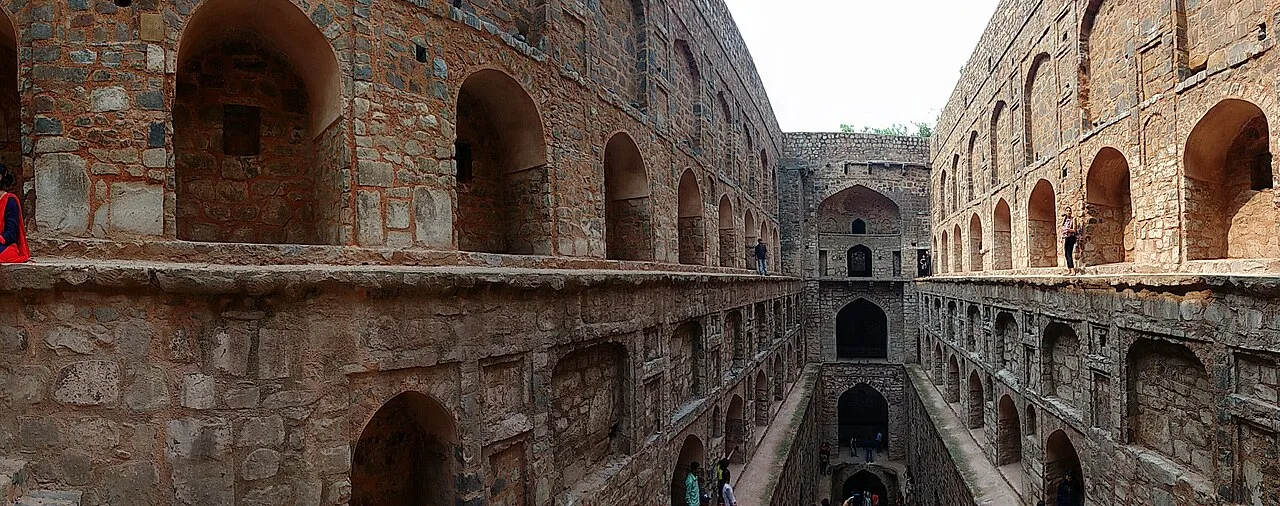
Agrasen Ki Baoli is a historic stepwell in New Delhi, measuring 60 metres by 15 metres. Visitors come to see the old structure, which is protected by the Archaeological Survey of India.
Key facts · verified by Ghumoopedia editors
- Type of place
- Heritage monument
- Best time to visit
- October to March (check air quality from November to January)
- Verified
- 21 Nov 2026
Plan a trip from Agrasen Ki Baoli — a day-by-day route through places nearby.
Agrasen Ki Baoli is in New Delhi, within the capital territory’s Delhi district. Set on Hailey Road, it is close to Connaught Place and Jantar Mantar. The historic well extends 60 metres in length and spans 15 metres. No known historical record names its builder. It is believed that members of the Aggarwal community first built it in honour of their ancestor, Agrasen. The design of the structure today points to a reconstruction in the 14th century, under either Tughlaq or Lodi rule in the Delhi Sultanate. The Archaeological Survey of India protects the baoli as a monument under the Ancient Monuments and Archaeological Sites and Remains Act, 1958. It welcomes visitors daily between 9 am and 5:30 pm. Delhi layers many historic cities — from the Delhi Sultanate and the Mughal capital to Lutyens' New Delhi — with Sufi shrines, gurdwaras, temples, busy markets and India's national monuments. Delhi has very hot summers from April to June, a humid monsoon from July to September and cold, foggy winters in December and January. Air quality is often very poor from late October to January. The usual best time to visit is October to March (check air quality from November to January). Timings, fees and access arrangements must be confirmed locally. For official information, see Delhi Tourism at https://delhitourism.gov.in.
Why it matters
Agrasen Ki Baoli is a historic stepwell in central New Delhi, valued as both a water-management structure and a surviving piece of the city’s layered past. Its long, descending stairway offers a tangible contrast to the surrounding offices and commercial streets near Connaught Place. The Archaeological Survey of India (ASI) recognises it as a protected monument under the Ancient Monuments and Archaeological Sites and Remains Act of 1958. Its association with Agrasen is part of local tradition rather than a claim established by surviving historical records. The baoli is one of Delhi’s best-known historic water structures, but it is not a UNESCO World Heritage Site. Visitors can encounter it as a compact heritage stop within a wider exploration of New Delhi.
No known historical record conclusively identifies the builder of Agrasen Ki Baoli or establishes its original construction date. According to a widely repeated tradition, members of the Aggarwal community built it in honour of their ancestor Agrasen. This account is important to the monument’s popular identity, but should not be treated as documented fact. The visible architectural form is generally thought to reflect rebuilding or substantial work during the Delhi Sultanate, possibly in the 14th century under the Tughlaq or Lodi period; the precise attribution remains uncertain. Stepwells provided access to stored water and were useful in a climate marked by hot, dry seasons and variable rainfall. Their flights of steps allowed people to reach water as its level changed, while the enclosed lower levels offered a cooler setting. Agrasen Ki Baoli continued to be known as a historic structure as New Delhi developed around it. The ASI now protects the monument under the 1958 law concerning ancient monuments and archaeological sites. The baoli’s present appearance reflects its historic masonry and later conservation, but detailed claims about particular restoration campaigns should be checked against ASI records.
Origin stories & folklore
According to local tradition, the stepwell was built by the Aggarwal community and dedicated to Agrasen, a revered figure associated with the community’s ancestry. The story helps explain the name Agrasen Ki Baoli, but no known historical record confirms the builder or proves this origin account. Agrasen is also linked in popular accounts to an ancient kingdom and values of community welfare; these are traditional narratives, not details visitors can verify from the structure alone. The baoli has also acquired modern ghost stories, sometimes describing its dark lower reaches as eerie or haunted. Such tales belong to urban folklore and should be understood as entertainment rather than evidence. Visitors can appreciate the atmosphere while treating the historic site respectfully and following current access rules.
Architecture & design
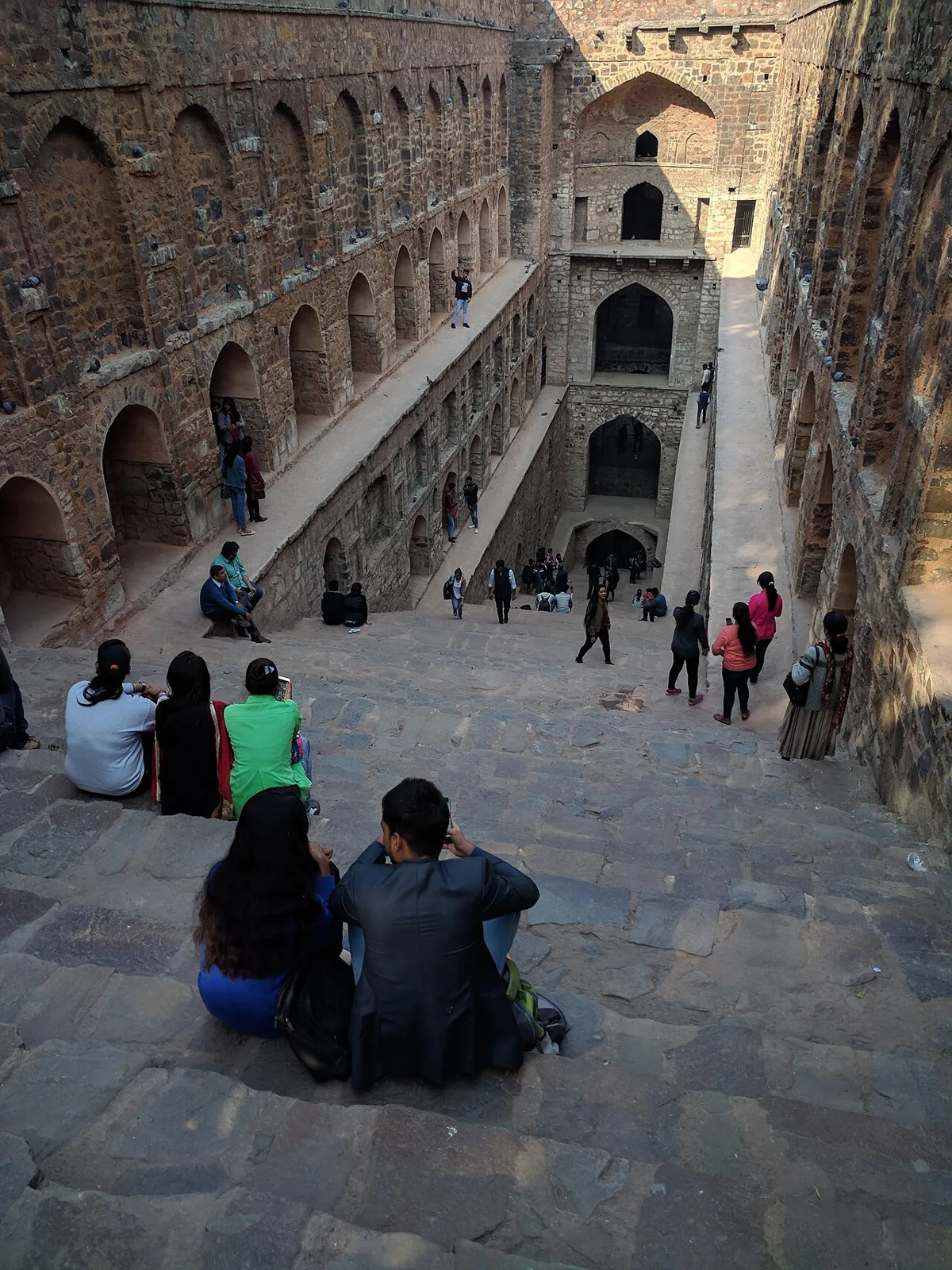
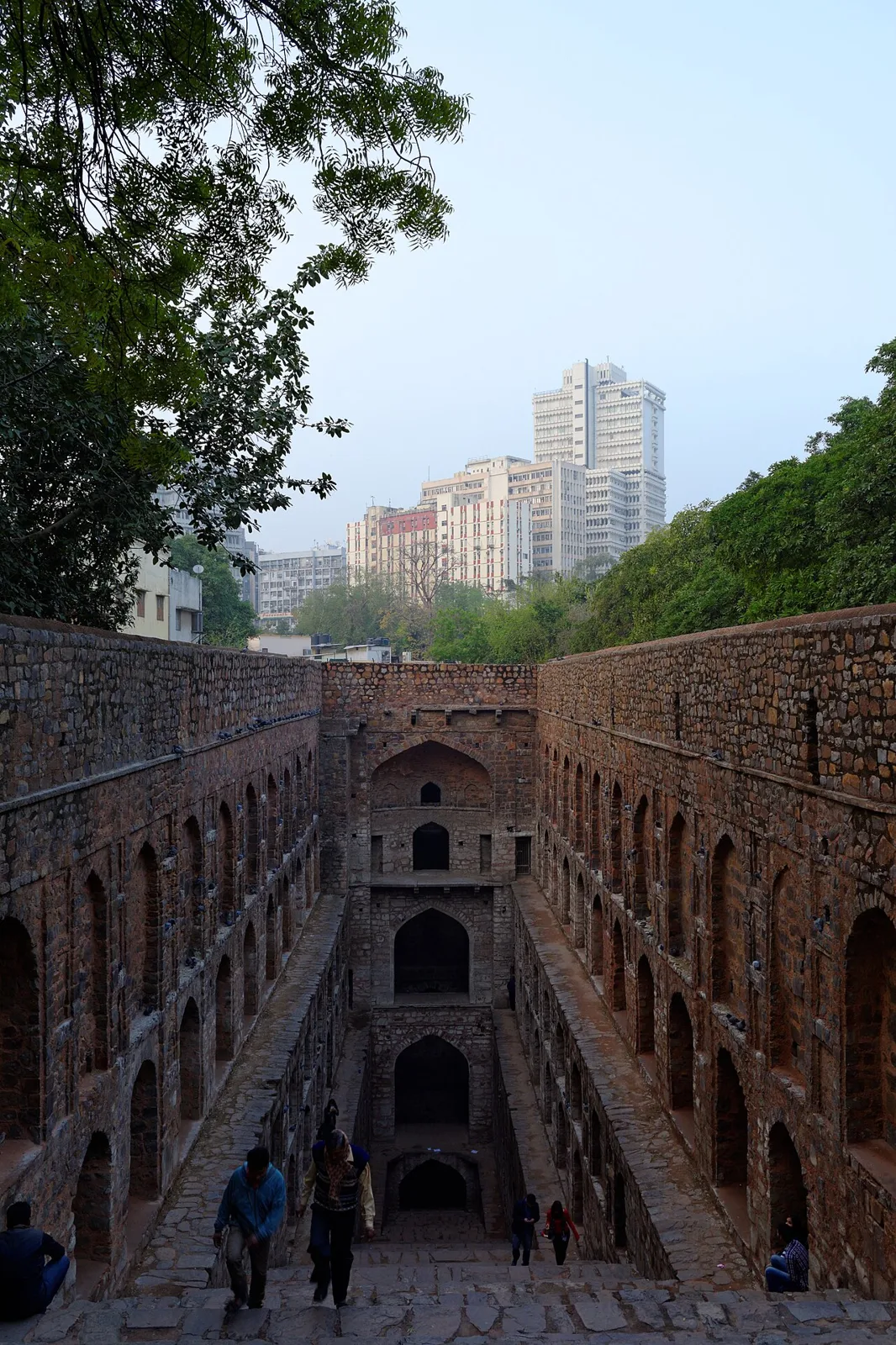
Agrasen Ki Baoli is a rectangular stepwell, about 60 metres long and 15 metres wide according to the site guide. Its design leads visitors down from street level through successive flights of steps towards the deep well at the far end. Repeated arched openings and recessed niches line the side walls, giving the descending passage a strong rhythm and framing views back towards the entrance. The structure combines practical water access with an enclosed, shaded architectural space. The visible masonry and arches are commonly associated with the Sultanate-era form of the monument, although the exact date and patron remain uncertain. The stairs made it possible to approach the water at different levels as it rose or fell; the lower parts could become inaccessible or partly submerged depending on conditions. The baoli’s strong geometry, long perspective and changes in light are among its most striking features. Take care on the steps and observe any barriers, as the lower structure is not simply an open public walkway.
Important objects & sculptures
Agrasen Ki Baoli is primarily an architectural monument rather than a museum collection. Visitors should look closely at the repeating arched bays, recessed wall niches, stonework and the long stairway descending towards the well. These features reveal how the structure was organised around access to water and how its enclosed form changes the quality of light and sound. Do not expect a large display of idols, sculptures or movable artefacts on site. Any inscriptions or interpretive material may be limited, and what is visible can change with conservation work or access restrictions. Read any official boards present, and avoid touching, marking or climbing on the masonry. The structure itself is the principal object of interest.
Explore Agrasen Ki Baoli slowly and read the interpretation boards, use the official audio guide where available or hire an authorised guide to understand its history. Check opening days, ticket counters and camera rules in advance; many monuments and museums close on one weekday and on some public holidays. Early morning gives softer light, cooler air and smaller crowds. A comfortable itinerary is one main visit in the morning, a local meal at midday and a short nearby stop before an afternoon return. Use the district list on this site to find other places in New Delhi, but check the route and its condition before combining stops. If a festival or fair is on, roads and stays can be busy — and the experience can be unforgettable. Leave no litter: many sites are protected by the communities around them.
Suggested itineraries
Half day: Spend about 45–90 minutes exploring Agrasen Ki Baoli and reading any interpretation; take a short break nearby, then walk or travel to Connaught Place for a meal and a relaxed look around. Full day: Allow about 1–1.5 hours at Agrasen Ki Baoli, then visit Jantar Mantar; take a midday meal in Connaught Place, followed by India Gate and the National Museum, checking each venue’s access arrangements beforehand. Gentler option: View the baoli from the upper level and take only the steps that feel comfortable; rest between sections, then choose a nearby café or a short cab ride to one additional stop.
Agrasen Ki Baoli is a protected historic site within a busy, modern part of Delhi, rather than a regular venue for living religious ceremonies or performances. Visitors share the space with local residents, office workers, school groups and domestic and international travellers. Hindi and English are widely useful in the surrounding area; other languages, including Punjabi and Urdu, are part of Delhi’s broader urban life. The site’s popular identity draws on the tradition connecting it with Agrasen and the Aggarwal community, while its stepwell form recalls older systems of water access. There is no special dress code known for ordinary visits, but modest, comfortable clothing and suitable footwear are practical. Keep voices considerate, do not litter, and follow posted directions so that the monument remains welcoming and protected.
Festivals & events
No regular festival or fair is known to be hosted inside Agrasen Ki Baoli. Delhi’s wider calendar includes major celebrations such as Diwali, Holi and Eid, with events and public programmes at venues elsewhere in the city; the season and location vary. National occasions and large city events can bring road closures, security checks or heavier traffic around central Delhi. During festival periods, markets and restaurants may be busier than usual. Check local event notices and transport updates before planning a visit, and do not assume that celebrations take place at the baoli itself.
Local food in Delhi includes chaat, stuffed parathas and jalebi in Chandni Chowk, chole bhature, kebabs and Mughlai dishes around Jama Masjid, butter chicken, momos and kulfi. Ask what is fresh that day; many small eateries cook a limited daily menu. Vegetarian travellers eat very well across this region, and most towns also have non-vegetarian options. Street food is part of the Delhi experience: pick busy stalls with fast turnover, prefer freshly cooked items and drink sealed or filtered water. Try a home-cooked or dhaba meal when you can — it is often the best food on the route. Choose busy, clean places and carry your packaging back with you.
Shopping & local experiences
Connaught Place is the most convenient nearby area for cafés, restaurants, bookshops and general shopping. Janpath is known for a mix of clothing, accessories and handicraft stalls, though stock and trading conditions vary; bargain respectfully and check the quality of goods. Visitors looking for a memento can choose books or locally made crafts from established shops rather than buying anything presented as an archaeological artefact. Delhi’s food options range from quick snacks to full meals, with plenty of choice around central areas. Carry reusable water where practical and avoid leaving packaging at heritage sites.
October to March (check air quality from November to January)
Within Delhi, the Delhi Metro is usually the quickest and cheapest way to reach Agrasen Ki Baoli; find the nearest station on the official DMRC website or app, and use an app-based auto, e-rickshaw or cab for the last stretch. Road traffic is heavy at peak hours, so allow extra time and avoid driving yourself in Old Delhi lanes. Long-distance trains use New Delhi, Old Delhi, Hazrat Nizamuddin and Anand Vihar terminals, and flights use Indira Gandhi International Airport. The nearest of these railway terminals is New Delhi, roughly 5 km away in a straight line. Indira Gandhi International Airport, Delhi is roughly 15 km away in a straight line. When comparing train, bus and flight, count the complete door-to-door time: a flight saves the most time only if the onward road transfer is short, while an overnight train can save a hotel night. Book your return before you leave, because seats fill quickly on weekends, festivals and holidays. Current train numbers, timings, return services and fares are not listed here; check IRCTC and NTES for trains and the airline's own schedule for flights. No permit is needed to visit Delhi. Many monuments are protected by the Archaeological Survey of India and need an entry ticket, often cheaper when bought online; the Red Fort and several museums close on Mondays. Security checks are routine at metro stations and major sites.
Confirm onward and return timings on IRCTC / NTES, the state bus operator or your airline before travel. A dash means current timings or fares have not been verified.
Getting around
Use the Delhi Metro to reach the central New Delhi area, checking the official DMRC map or app for the most convenient station and current service information. Autos, app-based taxis and cabs can cover the last stretch, though traffic and restricted stopping points may affect drop-off. Local buses serve central Delhi, but routes are best checked through current local information. The baoli is in an urban setting, so nearby streets can be walked where pavements and crossings allow. Parking may be limited or inconvenient; consider being dropped off rather than driving yourself.
Hours, tickets & permissions
Entry arrangements can change and may include a ticket requirement, security checks, restrictions on equipment or temporary closures for conservation and public events. Camera rules and permission for commercial photography may differ from ordinary visitor photography. Dress and identity requirements are not generally a defining feature of a visit, but follow notices at the entrance. Confirm current opening days, hours, fees and access conditions with the managing authority or official Delhi Tourism information before setting out; do not rely solely on older online listings.
Facilities
Facilities within the monument may be limited. Toilets, drinking water, food outlets, ATMs and seating are more likely to be found in the surrounding central-city area than throughout the baoli itself; check locally rather than counting on a particular service. Nearby Connaught Place offers a wider choice of cafés, restaurants and shops. Parking is not guaranteed at the entrance. Guided interpretation may be available through official material or authorised guides, but availability can vary. Carry water, take any litter with you and check on-site notices before entering.
Accessibility
The historic layout involves descending flights of steps, and surfaces may be uneven or steep. Reaching the lower levels requires using the stairs; there is no basis to assume that the whole monument is wheelchair- or stroller-accessible. A less mobile visitor may still be able to appreciate the upper entrance and views, subject to current conditions, but should not expect step-free access throughout. Shade increases within the structure, while the approach and upper areas can be exposed to sun. Older visitors should take their time, use secure footwear and avoid descending if the steps feel unsafe.
No permit is needed to visit Delhi. Many monuments are protected by the Archaeological Survey of India and need an entry ticket, often cheaper when bought online; the Red Fort and several museums close on Mondays. Security checks are routine at metro stations and major sites. Carry a photo ID at all times and save the emergency number 112 and your accommodation's contact offline. Summer heat and winter smog are the main health risks: drink plenty of water, check the air-quality index and wear a good mask on poor-air days. Watch your belongings in crowded markets and metro coaches. Respect community rules, private property and posted instructions. Follow local guidance if access changes.
Photography
The descending stairway, repeating arches and contrasts between bright upper levels and shaded lower sections make strong subjects. Earlier in the day, light is often softer and visitor numbers may be lower, though conditions vary by season. Ordinary personal photography is commonly undertaken at heritage sites, but check current notices for camera restrictions, fees or limits on tripods and commercial work. Do not use a drone without the required permissions and confirmation that flight is lawful in the area. Avoid blocking passageways or photographing people intrusively.
Choose a stay by the full journey to Agrasen Ki Baoli, not just the district name. Central areas such as Connaught Place, Paharganj and Karol Bagh, or areas near your metro line, save time; check the exact location and how far the hotel is from the nearest metro station. In summer, check air-conditioning or coolers; in December and January, check heating and hot water. Book in advance for weekends, festivals and the peak season (October to March (check air quality from November to January)). Confirm the exact location, meals included, check-in time and cancellation terms in writing. Avoid sending money to unverified contacts or touts at stations. Carry some cash, as card and digital payments can be unreliable in remote areas.
Jantar Mantar, the historic astronomical observatory, is a natural nearby pairing for a heritage-focused visit; check its own entry arrangements. Connaught Place offers central-city streets, shops and places to eat. Gurudwara Bangla Sahib is a major Sikh place of worship in New Delhi, where visitors should follow its entry and conduct guidance. India Gate and the National Museum can be added to a longer day, subject to current access and travel conditions. These sites are in the wider central New Delhi area, but traffic and walking distances vary, so check a map before combining them.
For couples, Agrasen Ki Baoli rewards a slow pace: arrive early for soft light and fewer crowds, share a local meal and keep the evening free. Evenings at a garden, heritage site or a rooftop café near the monuments make a good end to the day. Public displays of affection can be frowned upon in conservative communities and at religious sites, so be discreet. Keep a buffer in your itinerary, because weather and traffic can delay plans.
Q: How much time should I allow for Agrasen Ki Baoli? A: Many visitors spend around an hour exploring the structure, with extra time for photographs or a nearby stop. Q: When is the best season to visit? A: October to March is generally more comfortable, but check air quality, especially from November to January. Q: Is there an entry fee, and do I need to check before visiting? A: Entry rules and fees can change. Confirm current arrangements and access conditions with the managing authority before travelling. Q: Is the baoli suitable for children and elderly visitors? A: It can be an interesting visit, but the steep stairways and uneven surfaces require care. The lower levels may not suit everyone. Q: Where can I stay nearby? A: Central New Delhi and Connaught Place have a range of accommodation. Compare location, access and current reviews, and allow for city traffic.
Be the first to share photos, stories, advice or a helpful contact for Agrasen Ki Baoli.
Loading…