
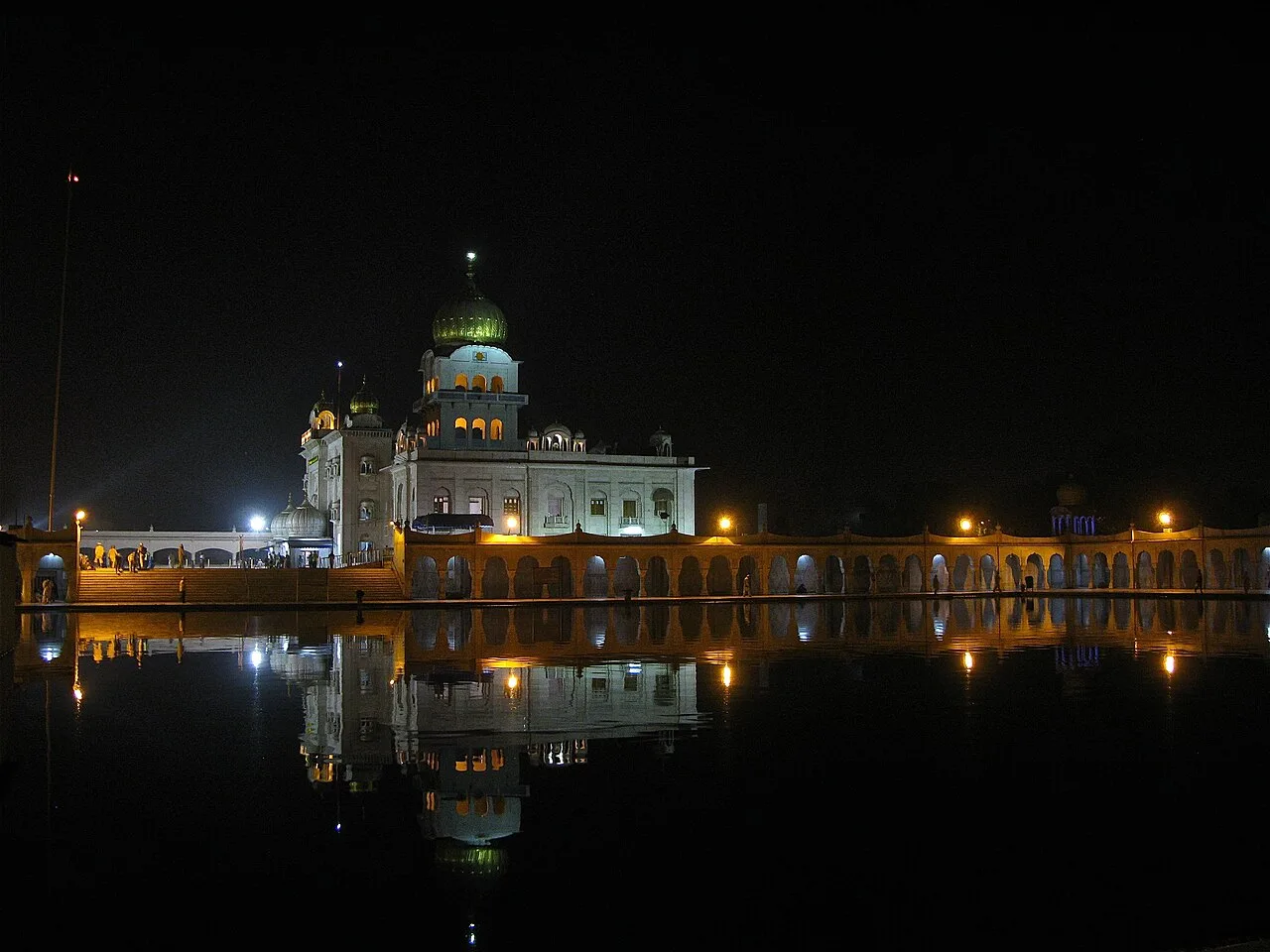
Gurdwara Bangla Sahib
This Sikh place of worship in Delhi draws visitors for its connection to Guru Har Krishan and the Sarovar, a sacred pond within the complex.
Key facts · verified by Ghumoopedia editors
- Type of place
- Temple / pilgrimage site
- Best time to visit
- October to March (check air quality from November to January)
- Verified
- 21 Nov 2026
Plan a trip from Gurdwara Bangla Sahib — a day-by-day route through places nearby.
Set in New Delhi district, within India's capital territory, Bangla Sahib is a Sikh place of worship. Its history is linked to Guru Har Krishan, the eighth Sikh Guru. A sacred pond, known as the Sarovar, is part of the complex. The property was first a bungalow owned by Raja Jai Singh I of Amber. In 1783, Sikh general Sardar Baghel Singh rebuilt the site as a small shrine. That year, nine Sikh shrines in Delhi were also reconstructed. The gurdwara stands near Connaught Place, along Baba Kharak Singh Marg. A golden dome and a tall flagpole are among its recognisable features. Delhi layers many historic cities — from the Delhi Sultanate and the Mughal capital to Lutyens' New Delhi — with Sufi shrines, gurdwaras, temples, busy markets and India's national monuments. Delhi has very hot summers from April to June, a humid monsoon from July to September and cold, foggy winters in December and January. Air quality is often very poor from late October to January. The usual best time to visit is October to March (check air quality from November to January). Timings, fees and access arrangements must be confirmed locally. For official information, see Delhi Tourism at https://delhitourism.gov.in.
Why it matters
Gurdwara Bangla Sahib is one of Delhi’s best-known Sikh places of worship and a destination for both local devotees and visitors from elsewhere in India and abroad. Its importance is closely associated with the eighth Sikh Guru, Guru Har Krishan, and with the Sarovar, the sacred pool in the complex. For worshippers, it is a place for prayer, remembrance and community service; visitors also encounter Sikh practices such as the communal langar. The gurdwara is part of Delhi’s living religious landscape, alongside historic mosques, temples and other Sikh shrines. It is administered by the Delhi Sikh Gurdwara Management Committee. No UNESCO or ASI-protected status is asserted here; check official sources for current heritage designations.
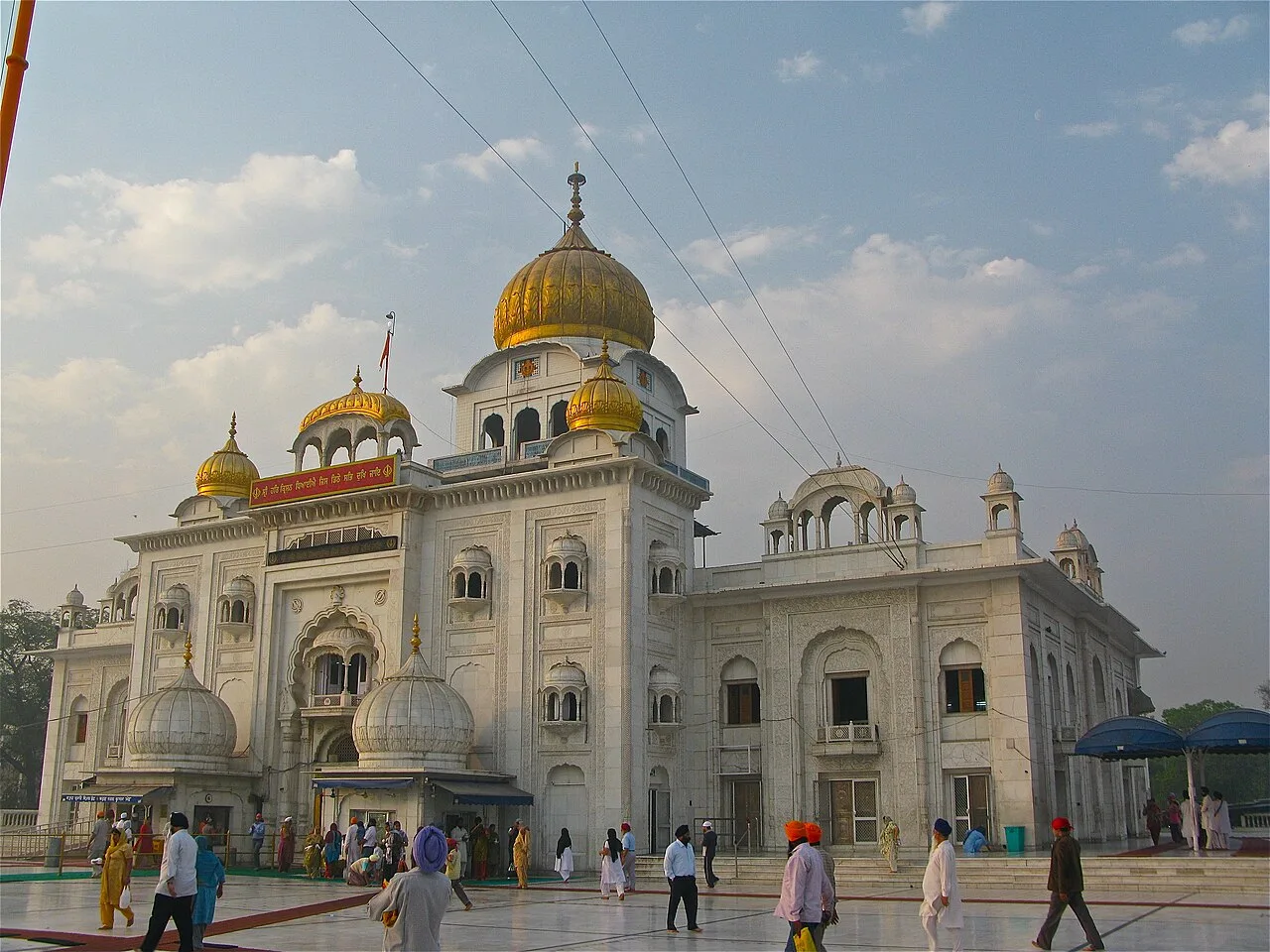
The site is traditionally identified as the bungalow of Raja Jai Singh I of Amber, a nobleman in the Mughal era. Sikh tradition connects the residence with Guru Har Krishan, the eighth Sikh Guru, who is believed to have stayed there during a visit to Delhi in the seventeenth century. The site became associated with his memory and with the Sarovar. Sikh general Sardar Baghel Singh established a small shrine here in 1783, during a period when he helped rebuild or establish several Sikh shrines in Delhi. The modest shrine developed into a larger gurdwara as Sikh worship and the surrounding city changed. The complex has been renovated and expanded over time; its present appearance includes a prominent domed prayer building, the pool and facilities for the congregation. The site remains an active place of worship rather than solely a historic monument. Accounts of its early history combine documented context with Sikh tradition, so details of Guru Har Krishan’s stay and the origins of the pool are best understood in that context.
Origin stories & folklore
According to Sikh tradition, Guru Har Krishan stayed at Raja Jai Singh’s bungalow during an epidemic in Delhi. The Guru is remembered for offering comfort and assistance to people suffering from illness, including by providing water. Local belief connects the Sarovar with this account, and some devotees regard its water as blessed. These stories are part of the gurdwara’s devotional significance, rather than a claim of medical healing. The name “Bangla Sahib” recalls the bungalow associated with the Guru. Visitors can learn about these traditions from Sikh caretakers or interpretive material, while bearing in mind that retellings may differ in detail.
Architecture & design
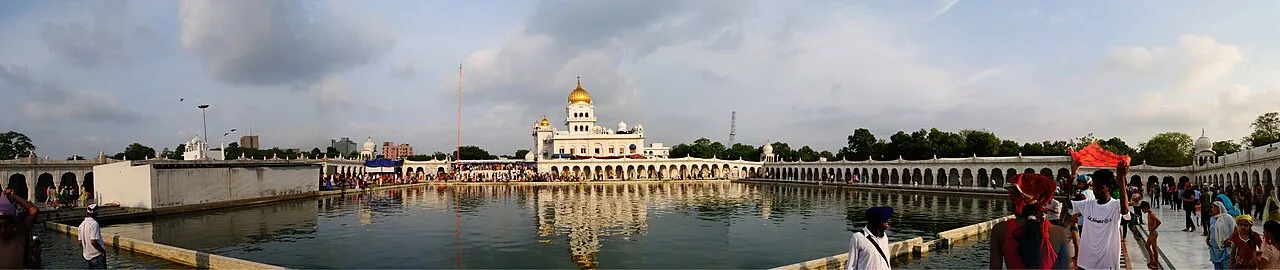
The gurdwara is a working Sikh complex rather than a single isolated shrine. Its most recognisable features include a gleaming white exterior, gilded domes and the tall Nishan Sahib flagpole. The prayer hall forms the spiritual focus; the Sarovar occupies a prominent place within the grounds, with paths and built spaces arranged around the pool. The complex has been enlarged and renewed over time, so its appearance reflects both devotional needs and successive building work rather than one original design scheme. Marble and other finished stone surfaces are visible in parts of the complex, alongside painted and decorated elements. The dome and flagpole make the site easy to identify from nearby streets. Visitors should follow signs and staff guidance: access to particular rooms or circulation areas may change during worship, maintenance or large gatherings.
Important objects & sculptures
The central sacred focus is the Guru Granth Sahib, the Sikh scripture, which is respectfully installed and attended in the prayer hall. The Nishan Sahib, the Sikh flag on its tall mast, is another prominent feature of the complex and a symbol of Sikh presence and service. The Sarovar is itself a significant element of the site, though it is not an object to handle or treat as a display. Look also for the domed shrine building and the devotional furnishings arranged for worship. The gurdwara is an active religious institution, not primarily a museum; do not assume that historic artefacts, inscriptions or collections are on public display. Ask staff before entering any area that appears restricted.
Religious significance
Gurdwara Bangla Sahib belongs to the Sikh tradition and is associated especially with Guru Har Krishan, the eighth of the ten human Sikh Gurus. Worship centres on the Guru Granth Sahib, regarded by Sikhs as the living Guru, and includes prayer, hymn singing and attentive listening to scripture. Visitors may encounter kirtan, the singing of sacred hymns, and the practice of bowing respectfully before the scripture. The Sarovar has devotional importance, and the community’s service tradition is visible in the shared langar, a meal offered to visitors without distinction. Practices and access can vary with the service or occasion. Non-Sikh visitors are generally welcome, provided they follow the gurdwara’s etiquette and instructions.
Visit Gurdwara Bangla Sahib with time to observe daily prayers and rituals respectfully. Follow the posted rules on footwear, photography, head covering and dress, and avoid interrupting worshippers. Ask caretakers which areas are open to visitors, and beware of unofficial 'guides' asking for donations. A comfortable itinerary is one main visit in the morning, a local meal at midday and a short nearby stop before an afternoon return. Use the district list on this site to find other places in New Delhi, but check the route and its condition before combining stops. If a festival or fair is on, roads and stays can be busy — and the experience can be unforgettable. Leave no litter: many sites are protected by the communities around them.
Suggested itineraries
Half day: Visit the gurdwara and Sarovar respectfully (about 1–2 hours); have langar or a nearby meal (about 45–60 minutes); take a short walk through Connaught Place (about 1 hour). Full day: Begin at Bangla Sahib (about 2 hours); visit Jantar Mantar (about 1–2 hours); pause for lunch in Connaught Place; continue to India Gate and nearby central landmarks (about 2–3 hours), allowing for travel and breaks. Gentler option: Spend time in the prayer hall and at an accessible viewpoint of the Sarovar, take seated rest breaks, and skip additional stops if walking or crowds become tiring.
The gurdwara is part of a living community, where worship, music and service take place alongside visitor visits. Kirtan, or the singing of Sikh hymns, is an important part of devotional life. Langar reflects the Sikh principles of sharing and service: visitors may be invited to eat with others, following local arrangements and customs. People commonly cover their heads and remove their shoes before entering prayer areas. Punjabi and Hindi are widely heard in the wider area, alongside other languages used by Delhi’s diverse residents and visitors. The atmosphere can shift from quiet prayer to busy communal activity, especially during services and religious occasions. Observe rather than interrupt, and ask before photographing people.
Festivals & events
Gurpurabs, which commemorate Sikh Gurus, are important occasions at Bangla Sahib. Guru Nanak Gurpurab, usually in autumn, draws large congregations and may include extended prayer, hymn singing and community service. Observances connected with Guru Har Krishan are also meaningful at this gurdwara. Vaisakhi, generally in April, is another major Sikh celebration, though programme details vary. The Sikh calendar is lunisolar, so observance dates change from year to year. On major occasions, expect larger crowds, queues and busier roads around the complex; plan extra time and follow event-specific directions from organisers.
Local food in Delhi includes chaat, stuffed parathas and jalebi in Chandni Chowk, chole bhature, kebabs and Mughlai dishes around Jama Masjid, butter chicken, momos and kulfi. Ask what is fresh that day; many small eateries cook a limited daily menu. Vegetarian travellers eat very well across this region, and most towns also have non-vegetarian options. Street food is part of the Delhi experience: pick busy stalls with fast turnover, prefer freshly cooked items and drink sealed or filtered water. If prasad or langar is offered, accept it according to local custom. Choose busy, clean places and carry your packaging back with you.
Shopping & local experiences
For general shopping, Connaught Place offers established shops, cafés and everyday services, while Janpath Market is known for a mix of clothing, accessories and small goods. Stalls and selection vary, so check item quality and agree terms before buying. Visitors seeking Sikh books, devotional items or modest souvenirs should ask whether an authorised shop or counter is operating at the gurdwara rather than assuming one is available. Langar is a communal meal, not a commercial food experience; receive and eat it respectfully according to local practice. Keep purchases and packaging with you and dispose of waste responsibly.
October to March (check air quality from November to January)
Within Delhi, the Delhi Metro is usually the quickest and cheapest way to reach Gurdwara Bangla Sahib; find the nearest station on the official DMRC website or app, and use an app-based auto, e-rickshaw or cab for the last stretch. Road traffic is heavy at peak hours, so allow extra time and avoid driving yourself in Old Delhi lanes. Long-distance trains use New Delhi, Old Delhi, Hazrat Nizamuddin and Anand Vihar terminals, and flights use Indira Gandhi International Airport. The nearest of these railway terminals is New Delhi, roughly 5 km away in a straight line. Indira Gandhi International Airport, Delhi is roughly 15 km away in a straight line. When comparing train, bus and flight, count the complete door-to-door time: a flight saves the most time only if the onward road transfer is short, while an overnight train can save a hotel night. Book your return before you leave, because seats fill quickly on weekends, festivals and holidays. Current train numbers, timings, return services and fares are not listed here; check IRCTC and NTES for trains and the airline's own schedule for flights. No permit is needed to visit Delhi. Many monuments are protected by the Archaeological Survey of India and need an entry ticket, often cheaper when bought online; the Red Fort and several museums close on Mondays. Security checks are routine at metro stations and major sites.
Confirm onward and return timings on IRCTC / NTES, the state bus operator or your airline before travel. A dash means current timings or fares have not been verified.
Getting around
The gurdwara is in central New Delhi, near Connaught Place on Baba Kharak Singh Marg. Delhi Metro stations serving Connaught Place and the surrounding central area can be used for the approach; check the official DMRC map for the most suitable station and any service changes. Autos, e-rickshaws and app-based taxis can cover the last stretch, but traffic may slow road journeys. City buses also serve central Delhi; confirm routes locally. Walking is practical from nearby central attractions, though crossings and busy roads require care. Parking in the area may be limited, so public transport or a drop-off is often more convenient.
Hours, tickets & permissions
Entry arrangements can depend on the area being visited, current worship, maintenance and special events. The prayer spaces are religious areas, so visitors should follow staff directions and any posted restrictions. A ticket is generally not required for ordinary worship visits, but confirm current entry arrangements and any fees for specific services or facilities with the managing authority, the Delhi Sikh Gurdwara Management Committee. Check current access information locally before travelling, especially during festivals or large gatherings. No fixed hours are stated here.
Facilities
Facilities commonly associated with a large active gurdwara include shoe-storage arrangements, head coverings for visitors who need them, drinking water and access to langar, subject to current arrangements. Toilets may be available; check locally for their location and accessibility. The complex can be busy, and facilities or entry points may change during services and events. Shops, cafés, ATMs and other services are available in the wider Connaught Place area, but availability and opening arrangements vary. Parking and guided visitor services should not be assumed; ask the gurdwara staff or check locally rather than accepting unsolicited offers.
Accessibility
The complex includes substantial walking between entrances, the prayer space and areas around the Sarovar. Some routes may be level, but steps, thresholds, crowds or temporary barriers can make movement difficult; do not assume every area is wheelchair-accessible. A wheelchair user, stroller user or visitor with limited mobility should ask staff about the clearest route and current access before entering. The grounds are largely open to the sky, so shade and seating may vary by location and crowd levels. Elderly visitors may find it helpful to visit at a quieter time, move slowly and arrange a nearby drop-off. Check locally for accessible toilets and assistance.
No permit is needed to visit Delhi. Many monuments are protected by the Archaeological Survey of India and need an entry ticket, often cheaper when bought online; the Red Fort and several museums close on Mondays. Security checks are routine at metro stations and major sites. Carry a photo ID at all times and save the emergency number 112 and your accommodation's contact offline. Summer heat and winter smog are the main health risks: drink plenty of water, check the air-quality index and wear a good mask on poor-air days. Watch your belongings in crowded markets and metro coaches. Respect community rules, private property and posted instructions. Follow local guidance if access changes.
Visitor rules
Cover your head before entering the prayer area; a scarf or other suitable covering is generally acceptable, and head coverings may be available at the site. Remove footwear where directed and follow signs for shoe storage. Wear modest clothing and keep shoulders and legs appropriately covered. Maintain a quiet, respectful manner, avoid interrupting prayer, and do not enter restricted spaces. Follow staff instructions about the Sarovar and any rules on touching or entering the water. Dispose of waste properly and avoid bringing or leaving plastic where prohibited. Ask before making donations, and use official donation arrangements rather than responding to pressure from unofficial guides.
Photography
Photography rules can differ between the exterior, the Sarovar area and the prayer hall. Ask staff and check posted signs before taking pictures; photography may be restricted during worship or in particular indoor spaces. If permitted, exterior views are often clearest in soft morning or late-afternoon light, but avoid blocking paths or congregational activity. Do not photograph worshippers, children or staff closely without their consent. Drones should not be flown without all required permissions; restrictions may apply around religious sites and central Delhi. When uncertain, put the camera away and follow the instructions of caretakers.
Choose a stay by the full journey to Gurdwara Bangla Sahib, not just the district name. Central areas such as Connaught Place, Paharganj and Karol Bagh, or areas near your metro line, save time; check the exact location and how far the hotel is from the nearest metro station. In summer, check air-conditioning or coolers; in December and January, check heating and hot water. Book in advance for weekends, festivals and the peak season (October to March (check air quality from November to January)). Confirm the exact location, meals included, check-in time and cancellation terms in writing. Avoid sending money to unverified contacts or touts at stations. Carry some cash, as card and digital payments can be unreliable in remote areas.
Connaught Place is close by, with its historic circular market, shops and cafés. Jantar Mantar, the eighteenth-century astronomical observatory, is another central Delhi attraction that can be paired with a visit after checking its current access arrangements. India Gate and the surrounding ceremonial avenues are further central-city stops, best reached by road or a longer walk. The National Museum offers a broad collection of Indian art and history. Visitors interested in Sikh heritage may also consider Gurdwara Rakab Ganj Sahib, another important Delhi gurdwara. Traffic and event closures can affect routes, so check the day’s conditions before planning several stops.
For couples, Gurdwara Bangla Sahib rewards a slow pace: arrive early for soft light and fewer crowds, share a local meal and keep the evening free. Evenings at a garden, heritage site or a rooftop café near the monuments make a good end to the day. Public displays of affection can be frowned upon in conservative communities and at religious sites, so be discreet. Keep a buffer in your itinerary, because weather and traffic can delay plans.
Q: How much time should I allow for a visit? A: Allow roughly one to two hours for a respectful visit, with more time if you plan to attend prayers, have langar or visit during a busy occasion. Q: When is a good season to visit? A: October to March is generally more comfortable in Delhi, but winter air quality can be poor; check conditions before travelling. Q: Is entry allowed for non-Sikh visitors? A: Visitors of all backgrounds are generally welcome, subject to worship-area etiquette, posted rules and any temporary restrictions. Q: Can children and elderly visitors come? A: Yes. Keep children close and quiet in prayer areas; elderly visitors should allow time for walking, crowds and rest breaks, and check access needs locally. Q: Where should I stay nearby? A: Connaught Place and central New Delhi have a range of accommodation and transport links; compare location, access and current reviews before booking.
Be the first to share photos, stories, advice or a helpful contact for Gurdwara Bangla Sahib.
Loading…