
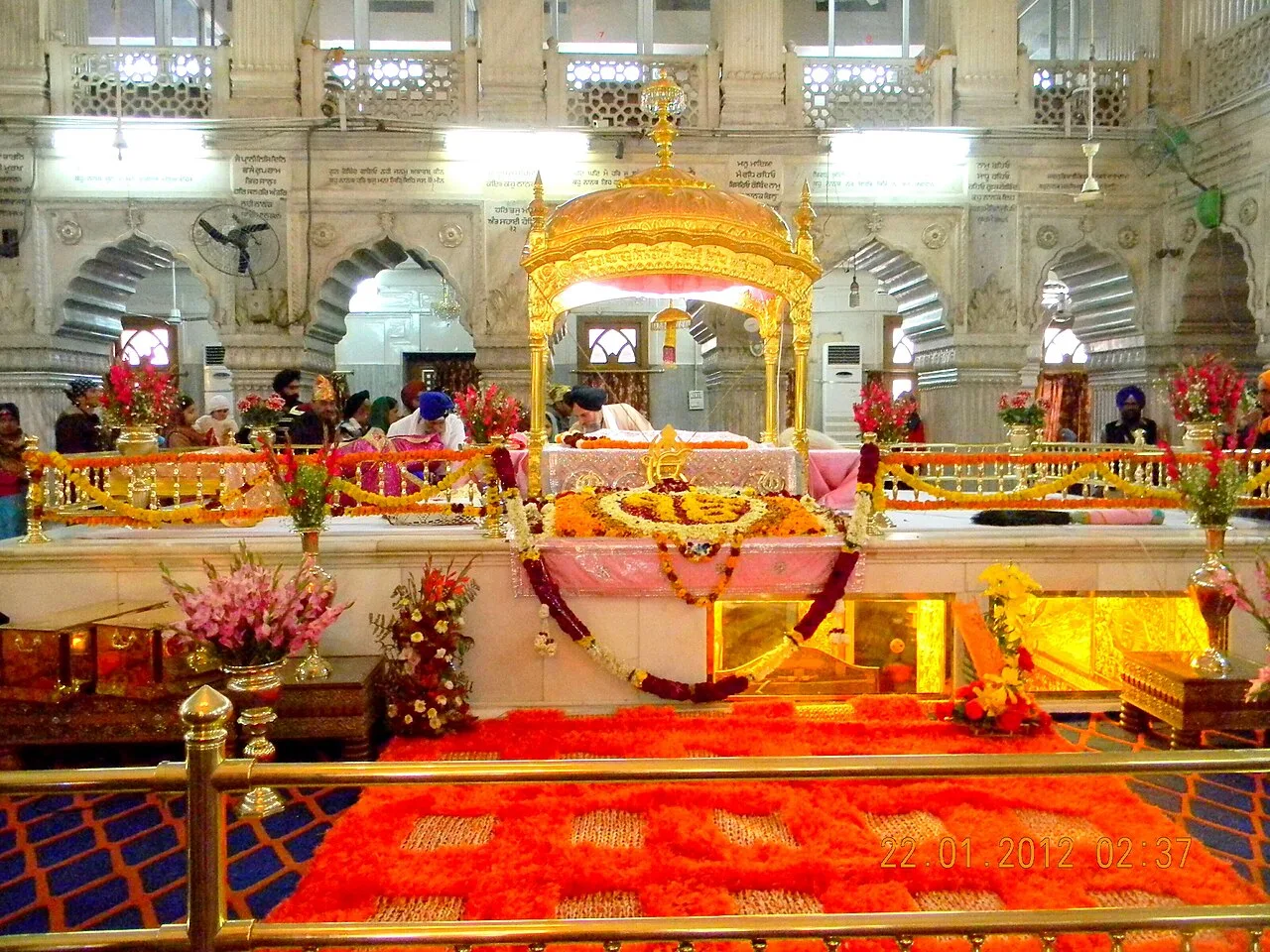
Gurdwara Sis Ganj Sahib
Gurdwara Sis Ganj Sahib is a historic Sikh shrine in Old Delhi, commemorating Guru Tegh Bahadur’s martyrdom. Visitors come to pay respects at the place associated with his execution.
Key facts · verified by Ghumoopedia editors
- Type of place
- Temple / pilgrimage site
- Best time to visit
- October to March (check air quality from November to January)
- Verified
- 21 Nov 2026
Plan a trip from Gurdwara Sis Ganj Sahib — a day-by-day route through places nearby.
In Chandni Chowk, Old Delhi, this Sikh place of worship commemorates Guru Tegh Bahadur, the ninth Sikh Guru. It stands at the location where Mughal ruler Aurangzeb ordered his execution on 11 November 1675. The shrine is among Delhi’s nine historic gurdwaras and is in the Central Delhi district of the capital territory. Baghel Singh established a modest memorial here in 1783. The site had earlier held the Mughal kotwali, which served as a police post and prison. The present structure may have been enlarged either after the 1857 Indian Rebellion or following the Partition of India; the timing is uncertain. The British demolished the kotwali after the rebellion. The British handed the land to Sikhs after the Maharaja of Patiala and other Sikh troops aided them against Mughal forces, providing ammunition and soldiers. Rai Bahadur Narain Singh, a contractor who built most roads in Lutyens’ New Delhi under British rule, created the current building. Since 1979, an Indian Army Sikh regiment has saluted the gurdwara before saluting the president during the Republic Day parade. This is the sole instance of a regiment saluting twice at that parade. Delhi layers many historic cities — from the Delhi Sultanate and the Mughal capital to Lutyens' New Delhi — with Sufi shrines, gurdwaras, temples, busy markets and India's national monuments. Delhi has very hot summers from April to June, a humid monsoon from July to September and cold, foggy winters in December and January. Air quality is often very poor from late October to January. The usual best time to visit is October to March (check air quality from November to January). Timings, fees and access arrangements must be confirmed locally. For official information, see Delhi Tourism at https://delhitourism.gov.in.
Why it matters
Gurdwara Sis Ganj Sahib is one of Delhi’s nine historical gurdwaras and an active Sikh place of worship in the Chandni Chowk area of Old Delhi. It commemorates the place associated with the martyrdom of Guru Tegh Bahadur, the ninth Sikh Guru, in 1675, giving it particular importance to Sikh communities in Delhi and across India. Its location amid the historic market streets also makes it part of the city’s layered religious and urban heritage. The guide account reports that a Sikh regiment has saluted the gurdwara during the Republic Day parade since 1979; this is a ceremonial association, not an official heritage designation. No UNESCO or ASI status is asserted here.
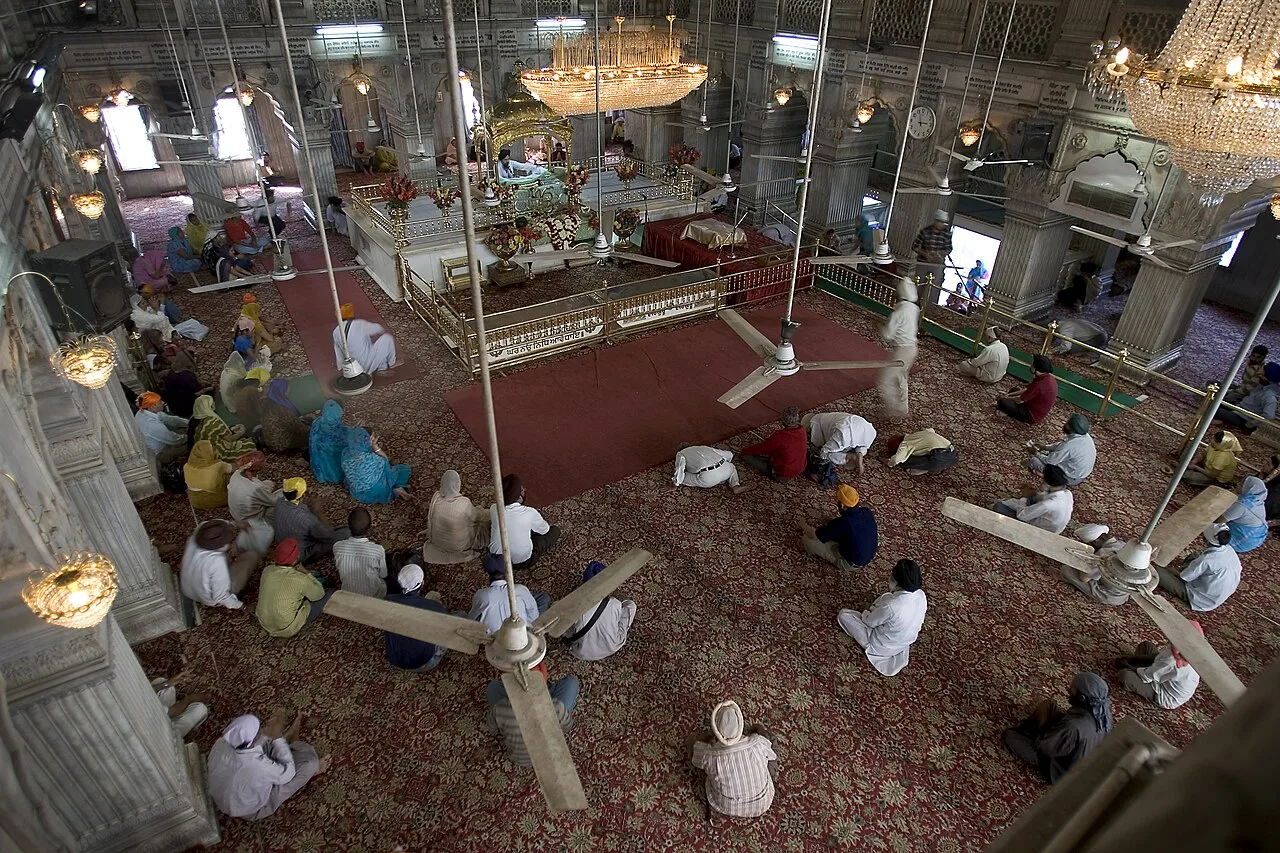
The site is associated with the execution of Guru Tegh Bahadur on the orders of Mughal emperor Aurangzeb in 1675. Sikh tradition remembers the Guru’s death as a sacrifice for religious freedom. Before a shrine stood here, the Mughal Kotwali, a police station and jail, occupied the location. According to the existing guide account, Sikh leader Baghel Singh first established a small shrine in 1783 to commemorate the martyrdom site. The shrine’s later growth took place amid major changes in Delhi. The Kotwali was demolished by the British after the Indian Rebellion of 1857, and the land was given to the Sikhs, according to that account; details of the transfer and subsequent building phases should be treated as attributed history. The present structure is associated with Rai Bahadur Narain Singh, a contractor involved in work on Lutyens’ New Delhi. The exact date and stages of its construction or expansion are not established here. The gurdwara has continued as a place of worship and remembrance, with its historic setting now embedded in the busy commercial streets of Chandni Chowk.
Origin stories & folklore
According to Sikh tradition, Guru Tegh Bahadur accepted martyrdom rather than abandon the principle of freedom of belief. Accounts of the events remember his companions’ courage and the danger faced by those who sought to recover and honour his remains. The gurdwara marks the place associated with his beheading, and the story gives the site profound meaning for worshippers. Local or devotional accounts may also identify particular features at the complex with episodes from the Guru’s final days. Such identifications are matters of religious memory and should not be presented as independently verified archaeological evidence. Visitors can ask a caretaker about the gurdwara’s own account, while allowing worship and prayer to continue undisturbed.
Architecture & design
The present gurdwara is a later building than the small shrine traditionally dated to 1783. Its form reflects the needs of a functioning Sikh place of worship within the dense historic fabric of Chandni Chowk, rather than a detached monument with extensive grounds. Visitors enter a prayer space where the Guru Granth Sahib is treated with reverence; the congregation gathers to listen to readings and hymns. Sikh architectural features may include domed roof forms and a Nishan Sahib, the community flag, though access and visibility of particular areas can vary. The existing guide associates the current building with contractor Rai Bahadur Narain Singh but does not establish a precise construction date, materials schedule or engineering history. Observe the building’s devotional spaces and circulation quietly, and follow signs or caretakers’ directions rather than entering areas reserved for worship or service.
Important objects & sculptures
The central sacred presence is the Guru Granth Sahib, the Sikh scripture, which is installed and treated with deep respect in the prayer hall. The congregation’s focus is on the scripture, recitation and devotional music rather than on an array of idols. The gurdwara’s principal object of remembrance is the historic site itself: the place associated with Guru Tegh Bahadur’s martyrdom. Devotional accounts may point to features linked with the events surrounding his death, but their identification and visitor access should be confirmed with the gurdwara’s caretakers. Look for notices explaining the site’s history and any displayed memorial material, if available. Do not touch sacred furnishings, offerings or objects unless invited to do so.
Religious significance
Gurdwara Sis Ganj Sahib belongs to the Sikh tradition and commemorates Guru Tegh Bahadur, the ninth Sikh Guru. For worshippers, the site honours his martyrdom and his defence of the right to practise one’s faith. Sikh worship commonly centres on the Guru Granth Sahib, prayer, readings and the singing of devotional hymns, or kirtan. Visitors of any background may be welcomed, but should follow the gurdwara’s instructions and enter with a respectful attitude. Langar, the communal kitchen and meal tradition found at Sikh gurdwaras, expresses service and equality; ask locally whether and where it is being served during your visit. The shrine is an active place of devotion, not simply a historic attraction, so allow worshippers space and avoid interrupting ceremonies.
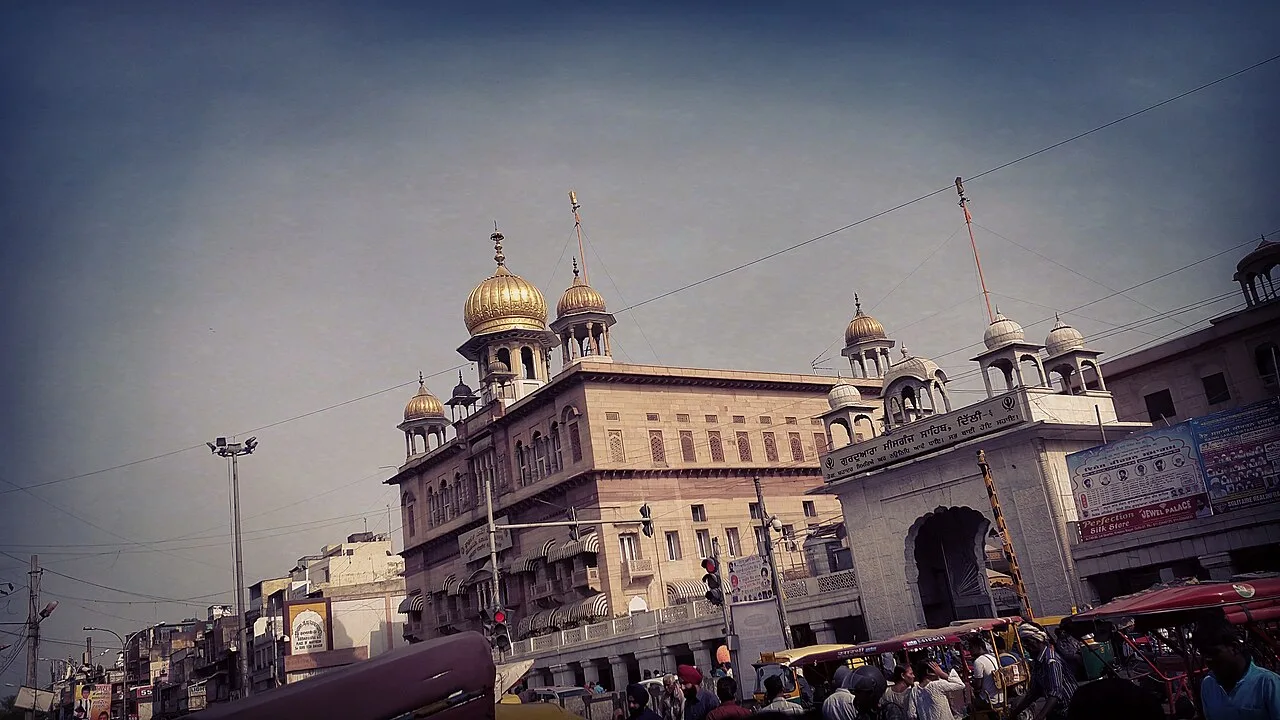
Visit Gurdwara Sis Ganj Sahib with time to observe daily prayers and rituals respectfully. Follow the posted rules on footwear, photography, head covering and dress, and avoid interrupting worshippers. Ask caretakers which areas are open to visitors, and beware of unofficial 'guides' asking for donations. A comfortable itinerary is one main visit in the morning, a local meal at midday and a short nearby stop before an afternoon return. Use the district list on this site to find other places in Central Delhi, but check the route and its condition before combining stops. If a festival or fair is on, roads and stays can be busy — and the experience can be unforgettable. Leave no litter: many sites are protected by the communities around them.
Suggested itineraries
Half day: Visit Gurdwara Sis Ganj Sahib and spend about 1–2 hours observing the prayer space respectfully; take a meal nearby; allow about 1–2 hours for a short walk through Chandni Chowk. Full day: Begin at Gurdwara Sis Ganj Sahib (about 1–2 hours); explore Chandni Chowk and its food streets (2–3 hours); visit the Red Fort (allow 2–3 hours, subject to access); finish with Jama Masjid or a quieter rest stop nearby. Gentler option: Arrange a drop-off as close as local traffic permits, visit the gurdwara at an unhurried pace, and choose a nearby meal or rest stop instead of combining several crowded attractions.
The gurdwara is part of the living Sikh community of Delhi, as well as a place visited by pilgrims and travellers exploring Old Delhi. Prayer, scripture readings, kirtan and the practice of seva, or voluntary service, shape its daily religious life. Visitors may encounter worshippers speaking Punjabi, Hindi or other languages; language and activities vary with the congregation. Head covering is customary inside Sikh prayer spaces, and many gurdwaras provide cloth coverings for visitors, though availability should be checked locally. The surrounding Chandni Chowk streets add a busy market atmosphere, but the gurdwara’s interior calls for quiet and consideration. Ask before joining communal activities or taking part in service.
Festivals & events
Guru Tegh Bahadur’s martyrdom observance is an especially meaningful occasion at the gurdwara and usually falls in November, though the religious calendar and local programme determine the date. Sikh festivals such as Vaisakhi in spring and Guru Nanak Gurpurab, usually in autumn, may also bring prayers, kirtan and increased congregational activity. Programmes can vary from year to year, so confirm locally rather than relying on a fixed schedule. On major observances, the prayer spaces and approach roads in Chandni Chowk can be crowded, and traffic may be slower. Allow extra time, follow crowd directions and avoid blocking entrances or processions.
Local food in Delhi includes chaat, stuffed parathas and jalebi in Chandni Chowk, chole bhature, kebabs and Mughlai dishes around Jama Masjid, butter chicken, momos and kulfi. Ask what is fresh that day; many small eateries cook a limited daily menu. Vegetarian travellers eat very well across this region, and most towns also have non-vegetarian options. Street food is part of the Delhi experience: pick busy stalls with fast turnover, prefer freshly cooked items and drink sealed or filtered water. If prasad or langar is offered, accept it according to local custom. Choose busy, clean places and carry your packaging back with you.
Shopping & local experiences
Chandni Chowk is known for its dense bazaar streets, with shops selling textiles, clothing, jewellery, household goods and religious items. What is available varies by lane and shop, and the market can be crowded. Visitors may look for Sikh devotional material or a simple head covering, but should buy from established shops and avoid treating religious objects as casual curiosities. The area also offers a wide range of Old Delhi foods and sweets; choose a busy, reputable vendor and consider dietary needs. Keep belongings secure, ask before photographing vendors, and leave time to navigate the market without blocking shopfronts.
October to March (check air quality from November to January)
Within Delhi, the Delhi Metro is usually the quickest and cheapest way to reach Gurdwara Sis Ganj Sahib; find the nearest station on the official DMRC website or app, and use an app-based auto, e-rickshaw or cab for the last stretch. Road traffic is heavy at peak hours, so allow extra time and avoid driving yourself in Old Delhi lanes. Long-distance trains use New Delhi, Old Delhi, Hazrat Nizamuddin and Anand Vihar terminals, and flights use Indira Gandhi International Airport. The nearest of these railway terminals is Old Delhi (Delhi Junction), roughly 5 km away in a straight line. Indira Gandhi International Airport, Delhi is roughly 15 km away in a straight line. When comparing train, bus and flight, count the complete door-to-door time: a flight saves the most time only if the onward road transfer is short, while an overnight train can save a hotel night. Book your return before you leave, because seats fill quickly on weekends, festivals and holidays. Current train numbers, timings, return services and fares are not listed here; check IRCTC and NTES for trains and the airline's own schedule for flights. No permit is needed to visit Delhi. Many monuments are protected by the Archaeological Survey of India and need an entry ticket, often cheaper when bought online; the Red Fort and several museums close on Mondays. Security checks are routine at metro stations and major sites.
Confirm onward and return timings on IRCTC / NTES, the state bus operator or your airline before travel. A dash means current timings or fares have not been verified.
Getting around
Chandni Chowk is a dense, busy part of Old Delhi. The Delhi Metro is usually a practical way to reach the area; Chandni Chowk station may be useful, but check the current exit and walking route on the DMRC website or app. For the last stretch, app-based taxis, autos and e-rickshaws can help, although vehicle access through narrow lanes may be limited. Walking is often necessary near the gurdwara, so allow time for crowds and uneven or obstructed stretches. Local buses serve parts of Delhi, but routes and stops should be checked before setting out. Parking is constrained in the old market area; avoid driving into the lanes if possible.
Hours, tickets & permissions
Entry is generally for worship and respectful visits, but access to particular rooms or areas may depend on services and local arrangements. Visitors should follow any posted instructions on footwear, head covering, photography and conduct. Do not assume that every part of the complex is open to sightseeing, or that photography is allowed throughout. There may be no standard sightseeing ticketing process, but any current entry requirements, fees for optional services or access restrictions should be confirmed with the gurdwara’s managing authority. Check current visiting arrangements before travelling, especially on festival days.
Facilities
As an active gurdwara, the site usually has devotional spaces and may offer drinking water, shoe storage and access to communal food or langar, depending on arrangements that day. Ask a caretaker about toilets, accessible areas and whether a meal is being served. Facilities can be busy during prayers and festivals. Chandni Chowk has food shops, small eateries, cash machines and other services, but their locations and opening status vary. Dedicated visitor parking and formal guided tours should not be assumed; check locally. Be cautious about unsolicited offers of guiding or donation collection.
Accessibility
The gurdwara sits in the crowded, older street network of Chandni Chowk, where footpaths and approaches may be narrow, uneven or obstructed by pedestrians and street activity. A companion may be helpful for wheelchair users, people with limited mobility and families using strollers. Seating and places to pause may be available within the complex, but should be checked locally. The surrounding lanes can be tiring for elderly visitors, particularly in heat or dense crowds. Plan a short approach and allow extra time.
No permit is needed to visit Delhi. Many monuments are protected by the Archaeological Survey of India and need an entry ticket, often cheaper when bought online; the Red Fort and several museums close on Mondays. Security checks are routine at metro stations and major sites. Carry a photo ID at all times and save the emergency number 112 and your accommodation's contact offline. Summer heat and winter smog are the main health risks: drink plenty of water, check the air-quality index and wear a good mask on poor-air days. Watch your belongings in crowded markets and metro coaches. Respect community rules, private property and posted instructions. Follow local guidance if access changes.
Visitor rules
Cover your head inside the gurdwara and remove your shoes where instructed; follow signs and staff directions about where footwear should be left. Wear clothing that covers the body respectfully, and keep voices low in prayer areas. Do not interrupt worship, touch sacred objects or enter restricted rooms without permission. Ask before photographing people or ceremonies, and obey any photography restrictions. Dispose of rubbish properly and avoid bringing or leaving plastic where prohibited. Do not block entrances, disturb the congregation or treat communal service as a photo opportunity. Give donations only through channels identified by the gurdwara, not in response to pressure from unofficial solicitors.
Photography
Photography rules can differ between the exterior, prayer hall and active services, so check posted notices or ask a caretaker before taking pictures. A respectful exterior view may be easiest when light is softer and the lane is less crowded, but there is no guaranteed quiet viewpoint in Chandni Chowk. Do not photograph worshippers, scripture or ceremonies without permission, and put the camera away if asked. Avoid flash where it could disturb prayer. Drone use over this dense historic area may be restricted by aviation and security rules; do not fly one without checking current permissions. Prioritise worship and privacy over photographs.
Choose a stay by the full journey to Gurdwara Sis Ganj Sahib, not just the district name. Central areas such as Connaught Place, Paharganj and Karol Bagh, or areas near your metro line, save time; check the exact location and how far the hotel is from the nearest metro station. In summer, check air-conditioning or coolers; in December and January, check heating and hot water. Book in advance for weekends, festivals and the peak season (October to March (check air quality from November to January)). Confirm the exact location, meals included, check-in time and cancellation terms in writing. Avoid sending money to unverified contacts or touts at stations. Carry some cash, as card and digital payments can be unreliable in remote areas.
The gurdwara is in Chandni Chowk, whose historic market streets can be explored on foot where crowd conditions allow. The Red Fort and Jama Masjid are well-known nearby Old Delhi landmarks and can be considered for a combined visit, subject to opening arrangements and the time needed to move through the area. Fatehpuri Masjid stands at the western end of Chandni Chowk. These sites are active religious or heritage places, so check their current access rules separately. Travel between them can take longer than a map suggests because of crowds, road restrictions and narrow lanes. Choose one nearby stop rather than overloading a short visit.
For couples, Gurdwara Sis Ganj Sahib rewards a slow pace: arrive early for soft light and fewer crowds, share a local meal and keep the evening free. Evenings at a garden, heritage site or a rooftop café near the monuments make a good end to the day. Public displays of affection can be frowned upon in conservative communities and at religious sites, so be discreet. Keep a buffer in your itinerary, because weather and traffic can delay plans.
Q: How much time should I allow for a visit? A: Allow about one to two hours for a respectful visit, with extra time for prayers, crowds or a nearby market walk. Q: When is a good season to visit? A: October to March is generally more comfortable in Delhi, but check winter air quality and expect crowds on Sikh observances. Q: Is entry permitted for non-Sikh visitors? A: Visitors are generally welcome to enter respectfully; follow the gurdwara’s rules and ask about any restricted areas. Q: Can children or elderly visitors come? A: Yes, but the surrounding lanes can be crowded and tiring. Keep children close and plan pauses or a shorter visit for older visitors. Q: Where can I stay nearby? A: Central Delhi and other parts of Delhi offer accommodation; choose based on your onward route and check current access to the Old Delhi area.
Be the first to share photos, stories, advice or a helpful contact for Gurdwara Sis Ganj Sahib.
Loading…