
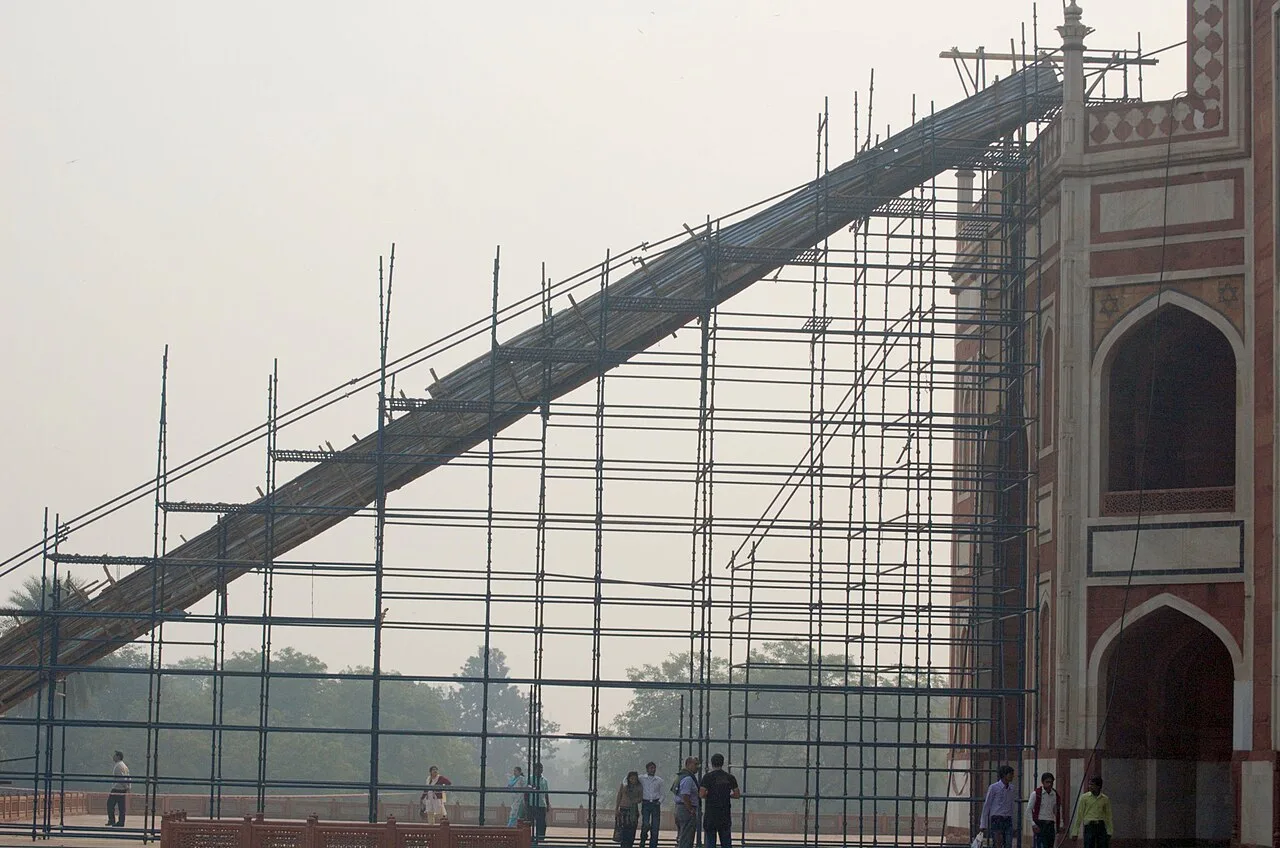
Humayun's tomb
Humayun’s Tomb is a Mughal-era mausoleum in Delhi, commissioned by Empress Bega Begum. Visitors come to see its garden plan, historic monuments and influential Mughal architecture.
Key facts · verified by Ghumoopedia editors
- Type of place
- Heritage monument
- Best time to visit
- October to March (check air quality from November to January)
- Verified
- 21 Nov 2026
Plan a trip from Humayun's tomb — a day-by-day route through places nearby.
In Delhi’s South East district, in the Nizamuddin East neighbourhood, stands the mausoleum of Mughal ruler Humayun, also called Maqbara-i Humayun in Persian. His first wife and principal consort, Empress Bega Begum, ordered its construction in 1558 and sponsored the project. She selected the Persian designers Mirak Mirza Ghiyas and his son Sayyid Muhammad herself. The site lies near Dina-panah, the citadel known as Purana Qila (Old Fort), founded by Humayun in 1538. It became the subcontinent’s earliest garden mausoleum and the first building there to employ red sandstone on this scale. Recognised by UNESCO as a World Heritage Site in 1993, the complex later received extensive restoration work, which is now complete. The approach from the western gateway passes several smaller monuments before reaching the central enclosure. Among them is the tomb of Isa Khan Niazi, built in 1547, twenty years before Humayun’s. Niazi was an Afghan noble in the court of Sher Shah Suri of the Sur Empire and fought against the Mughals. His funerary complex thus predates the imperial monument and forms part of the wider historic setting. Within the principal mausoleum are the graves of Humayun, Bega Begum and Hajji Begum, along with Dara Shikoh, Humayun’s great-great-grandson and a son of Emperor Shah Jahan. The chambers also hold the graves of later Mughal rulers Jahandar Shah, Farrukhsiyar, Rafi Ul-Darjat, Rafi Ud-Daulat, Muhammad Kam Bakhsh and Alamgir II, as well as many others. The design marked a major development in Mughal building. Its Charbagh garden, shaped by Persian traditions and then new to India, helped establish a model for later Mughal architecture. Delhi layers many historic cities — from the Delhi Sultanate and the Mughal capital to Lutyens' New Delhi — with Sufi shrines, gurdwaras, temples, busy markets and India's national monuments. Delhi has very hot summers from April to June, a humid monsoon from July to September and cold, foggy winters in December and January. Air quality is often very poor from late October to January. The usual best time to visit is October to March (check air quality from November to January). Timings, fees and access arrangements must be confirmed locally. For official information, see Delhi Tourism at https://delhitourism.gov.in.
Why it matters
Humayun’s Tomb is a major Mughal-era monument in Nizamuddin East, South East Delhi, and an important landmark in the history of Indian garden tombs. Commissioned by Empress Bega Begum, it brought Persian-influenced garden planning and monumental architecture into a form that later Mughal buildings developed further. The Archaeological Survey of India (ASI) protects and maintains the monument, while conservation work has also involved the Aga Khan Trust for Culture. UNESCO inscribed the tomb on the World Heritage List in 1993. The larger precinct includes other historic structures, so the visit offers a view of several layers of Delhi’s architectural and political history, not only the emperor’s mausoleum.
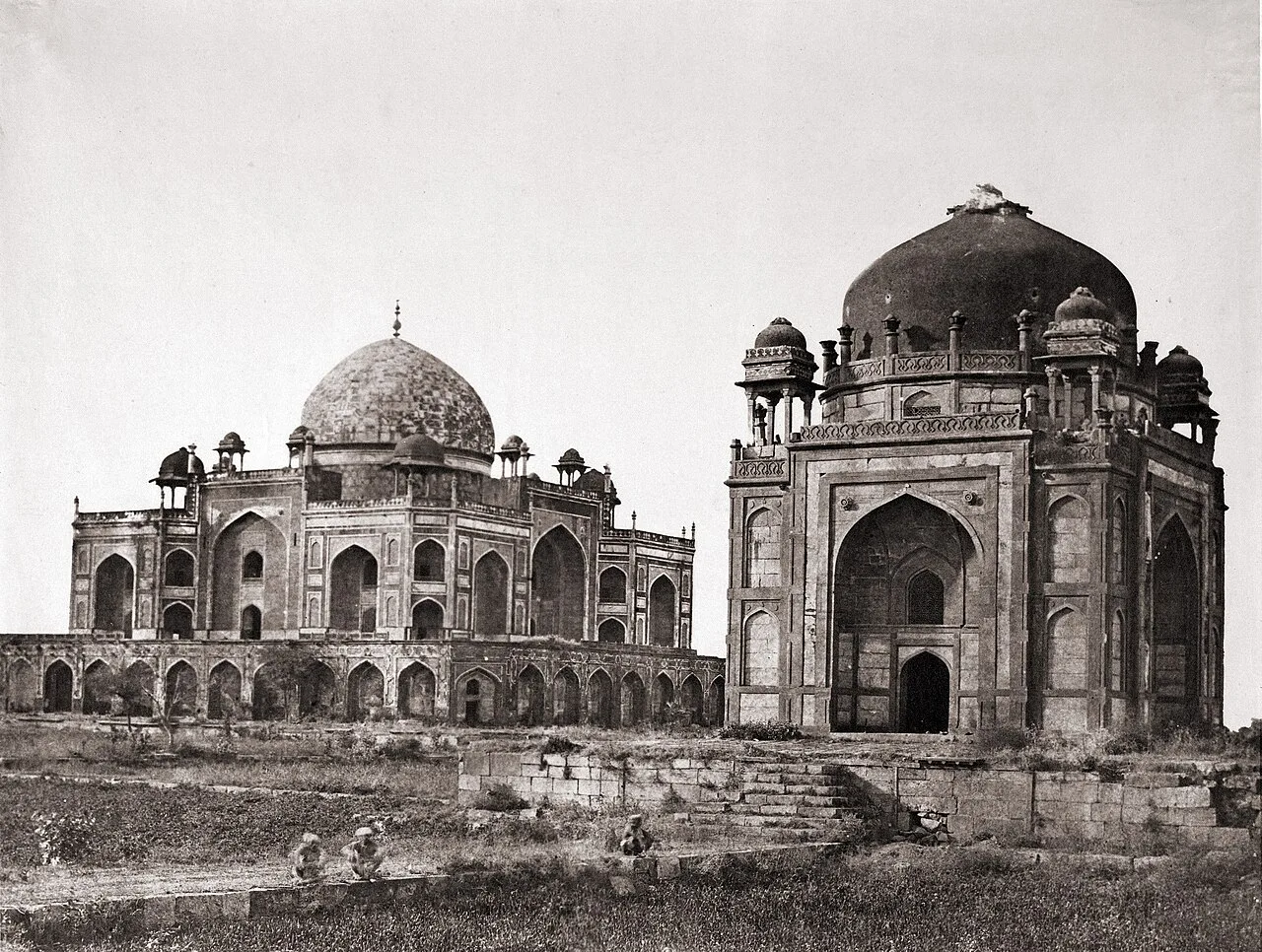
Humayun, the second Mughal emperor, died in 1556. His first wife and chief consort, Empress Bega Begum, commissioned his tomb in 1558. Persian architects Mirak Mirza Ghiyas and his son, Sayyid Muhammad, were chosen to design it. The complex was built in the Mughal period, in the area of Nizamuddin East and near the site of Humayun’s earlier citadel, Dinapanah, now associated with Purana Qila. The tomb is commonly described as the Indian subcontinent’s first major garden-tomb and as an early large-scale use of red sandstone in a Mughal monument. Its design helped establish a model for later imperial architecture. The surrounding precinct developed over time and includes tombs and other structures from different periods, among them Isa Khan Niazi’s tomb, built before Humayun’s mausoleum. The main tomb also contains the graves of members of the Mughal family, including Bega Begum and, according to the established identification, Dara Shikoh. The monument was inscribed as a UNESCO World Heritage Site in 1993. A major conservation programme involving ASI and the Aga Khan Trust for Culture restored the tomb and gardens; the programme’s main works concluded in 2013.
Origin stories & folklore
There is no single well-established legend that explains the tomb’s origin: its commission by Bega Begum and its Mughal-era construction are part of the historical record. One popular local identification concerns the small domed building in the precinct known as Nai-ka-Gumbad, or the Barber’s Tomb. Tradition says it is the burial place of a royal barber, but the identity of the person buried there has not been firmly established. Visitors may also hear stories linking the monument to Humayun’s dramatic death after a fall at his library; that account belongs to the history of his death, not to a proven origin story for this tomb. Treat such tales as tradition rather than confirmed fact.
Architecture & design
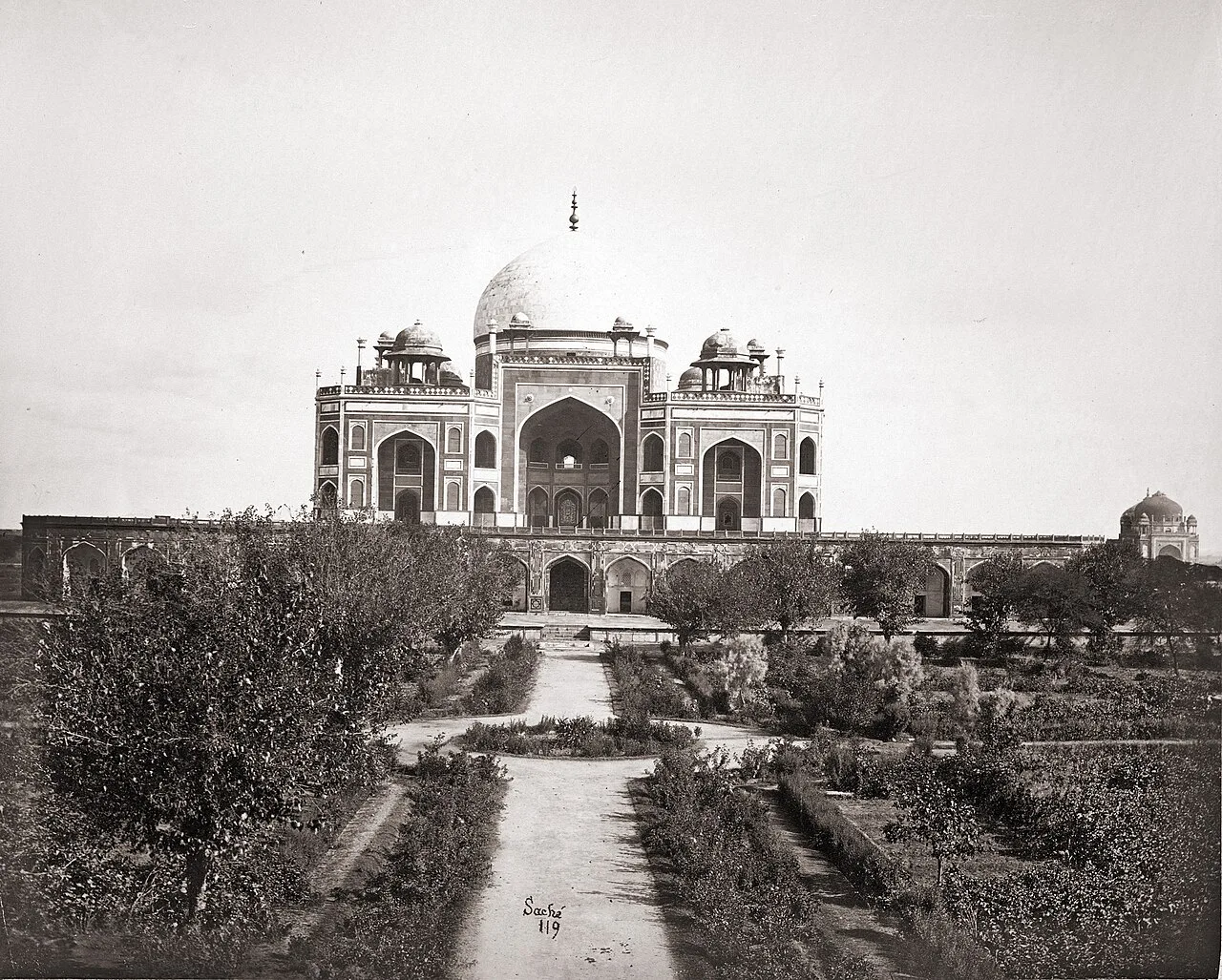
The tomb combines Persian and Timurid influences with features developed in India. Its plan is set within a four-part charbagh garden, with pathways and water channels dividing the grounds into ordered sections. At the centre, the mausoleum stands on a high platform and is built largely of red sandstone, contrasted with white and black marble details. The monumental arched entrances lead into a symmetrical arrangement of chambers around a central domed space. The double dome rises above the main chamber, while smaller domed kiosks, or chhatris, shape the roofline. Geometric planning, arched recesses and the contrast of stone colours give the building its distinctive appearance. The garden’s channels and paths form part of the design, though water may not be flowing in every channel when you visit.
Important objects & sculptures
Look for the central cenotaph, the carved stone screens that filter light into the chambers, and the patterns formed by red sandstone and pale marble. The cenotaph marks Humayun’s burial place, while the actual grave is below ground; other cenotaphs and graves relate to members of the Mughal family. Architectural details include geometric stonework, decorative borders and Persian and Arabic inscriptions in parts of the complex. The precinct is not primarily a museum collection, so its most notable features are built into the tombs and gateways. Interpretation boards, where available, can help explain the people and structures represented.
Explore Humayun's tomb slowly and read the interpretation boards, use the official audio guide where available or hire an authorised guide to understand its history. Check opening days, ticket counters and camera rules in advance; many monuments and museums close on one weekday and on some public holidays. Early morning gives softer light, cooler air and smaller crowds. A comfortable itinerary is one main visit in the morning, a local meal at midday and a short nearby stop before an afternoon return. Use the district list on this site to find other places in South East Delhi, but check the route and its condition before combining stops. If a festival or fair is on, roads and stays can be busy — and the experience can be unforgettable. Leave no litter: many sites are protected by the communities around them.
Suggested itineraries
Half day: Main tomb and garden (2–3 hours), including a slow circuit of the gateways and nearby structures; pause for a meal in the Nizamuddin area. Full day: Humayun’s Tomb precinct (2–3 hours), Sunder Nursery (1–2 hours), lunch nearby, then Nizamuddin Dargah or Purana Qila (allow time for travel and local conditions). Gentler option: Spend 1–2 hours around the main tomb and accessible garden paths, take seated breaks, and skip the longer circuit if the heat, crowds or walking distance become tiring.
The monument is a protected historic site rather than a venue for regular performances or worship. Visitors come to walk the garden, study Mughal architecture and learn about the people buried in the complex. The nearby Nizamuddin neighbourhood has a living Sufi tradition centred on the shrine of Hazrat Nizamuddin Auliya, where devotional music is associated with gatherings; this is a separate site and practice, not a performance at the tomb. Hindi, Urdu, Punjabi and English are commonly heard in Delhi. Keep voices low inside the mausoleum, dress comfortably and respectfully, and follow posted guidance around graves and protected structures.
Festivals & events
No major recurring festival is reliably held within the tomb grounds. Nearby, the annual Urs at the Nizamuddin Dargah commemorates the Sufi saint and follows the Islamic lunar calendar, so its date shifts from year to year. The dargah also draws visitors for devotional gatherings and qawwali on regular occasions. These events can make the surrounding lanes busy, especially around the shrine, and may affect road access and waiting times. Check locally for current event arrangements, and avoid assuming that a festival at the dargah includes activities at Humayun’s Tomb.
Local food in Delhi includes chaat, stuffed parathas and jalebi in Chandni Chowk, chole bhature, kebabs and Mughlai dishes around Jama Masjid, butter chicken, momos and kulfi. Ask what is fresh that day; many small eateries cook a limited daily menu. Vegetarian travellers eat very well across this region, and most towns also have non-vegetarian options. Street food is part of the Delhi experience: pick busy stalls with fast turnover, prefer freshly cooked items and drink sealed or filtered water. Try a home-cooked or dhaba meal when you can — it is often the best food on the route. Choose busy, clean places and carry your packaging back with you.
Shopping & local experiences
Shopping is not a major part of the protected monument visit, and visitors should not expect a large market inside the grounds. Small shops and food outlets can be found in the surrounding Nizamuddin area; look for snacks and everyday items rather than assuming a particular craft selection. For a broader choice of Indian handicrafts and regional products, consider Dilli Haat after checking travel time and current arrangements. Buy souvenirs from reputable sellers, avoid items made from protected materials, and take litter away from the monument and garden.
October to March (check air quality from November to January)
Within Delhi, the Delhi Metro is usually the quickest and cheapest way to reach Humayun's tomb; find the nearest station on the official DMRC website or app, and use an app-based auto, e-rickshaw or cab for the last stretch. Road traffic is heavy at peak hours, so allow extra time and avoid driving yourself in Old Delhi lanes. Long-distance trains use New Delhi, Old Delhi, Hazrat Nizamuddin and Anand Vihar terminals, and flights use Indira Gandhi International Airport. The nearest of these railway terminals is Hazrat Nizamuddin, roughly 5 km away in a straight line. Indira Gandhi International Airport, Delhi is roughly 15 km away in a straight line. When comparing train, bus and flight, count the complete door-to-door time: a flight saves the most time only if the onward road transfer is short, while an overnight train can save a hotel night. Book your return before you leave, because seats fill quickly on weekends, festivals and holidays. Current train numbers, timings, return services and fares are not listed here; check IRCTC and NTES for trains and the airline's own schedule for flights. No permit is needed to visit Delhi. Many monuments are protected by the Archaeological Survey of India and need an entry ticket, often cheaper when bought online; the Red Fort and several museums close on Mondays. Security checks are routine at metro stations and major sites.
Confirm onward and return timings on IRCTC / NTES, the state bus operator or your airline before travel. A dash means current timings or fares have not been verified.
Getting around
Within Delhi, the Metro is often a practical way to reach the area; check the current Delhi Metro route and choose a suitable last-mile connection. Auto-rickshaws, app-based taxis and e-rickshaws can take visitors from nearby stations or main roads toward the entrance. Local buses serve parts of the surrounding area, though the final walk and traffic conditions vary. Once inside, the precinct is best explored on foot along its paths. Vehicle access and parking near the monument can be constrained, so check locally and allow extra time rather than relying on a drop-off at the gate.
Hours, tickets & permissions
Entry is subject to the monument’s current opening days, ticketing arrangements and security procedures. Fees and rules can change, so confirm current hours and charges through the Archaeological Survey of India or its official booking channels before travelling. Photography may be allowed under site rules, while commercial filming or special equipment may require permission. Keep any ticket or booking confirmation available for checks. Carry identification if needed for a concession or booking verification, and follow notices about restricted areas, bags and visitor conduct.
Facilities
Facilities can vary, so check locally on arrival. The monument usually has visitor information and basic conveniences, and toilets may be available within or near the visitor area. Carry drinking water, particularly in hot weather; food options are more dependable in the surrounding neighbourhood than inside the protected precinct. Authorised guides may be available, but confirm their credentials and arrangements before beginning a tour. Parking, seating, ATMs and accessible services should not be assumed at the entrance; plan to use nearby neighbourhood facilities where needed.
Accessibility
The visit involves substantial walking through a large garden precinct, with paths that may be uneven in places. The mausoleum is raised above ground level and includes steps, so access to every interior area may be difficult for wheelchair users and visitors with limited mobility. Do not assume that ramps, lifts or step-free routes are available throughout. Strollers can be useful on smoother paths but may be awkward on rougher sections and at steps. Shade and places to rest are limited along some routes; older visitors may prefer a shorter visit, comfortable footwear, water and frequent breaks.
No permit is needed to visit Delhi. Many monuments are protected by the Archaeological Survey of India and need an entry ticket, often cheaper when bought online; the Red Fort and several museums close on Mondays. Security checks are routine at metro stations and major sites. Carry a photo ID at all times and save the emergency number 112 and your accommodation's contact offline. Summer heat and winter smog are the main health risks: drink plenty of water, check the air-quality index and wear a good mask on poor-air days. Watch your belongings in crowded markets and metro coaches. Respect community rules, private property and posted instructions. Follow local guidance if access changes.
Photography
Early morning often offers softer light, cooler conditions and fewer visitors; the sandstone and garden paths can also photograph well in later daylight. The central tomb, gateways and long garden axes provide clear viewpoints, but avoid blocking paths or disturbing other visitors. Personal photography is generally permitted subject to posted rules; check before using tripods, commercial equipment or other specialised gear. Do not fly a drone without explicit permission and confirmation of applicable restrictions. Be considerate around graves and people praying or visiting nearby religious sites.
Choose a stay by the full journey to Humayun's tomb, not just the district name. Central areas such as Connaught Place, Paharganj and Karol Bagh, or areas near your metro line, save time; check the exact location and how far the hotel is from the nearest metro station. In summer, check air-conditioning or coolers; in December and January, check heating and hot water. Book in advance for weekends, festivals and the peak season (October to March (check air quality from November to January)). Confirm the exact location, meals included, check-in time and cancellation terms in writing. Avoid sending money to unverified contacts or touts at stations. Carry some cash, as card and digital payments can be unreliable in remote areas.
Sunder Nursery lies beside the tomb precinct and is a useful garden stop to combine with a visit, subject to its separate entry rules. The Nizamuddin Dargah is nearby and offers a contrasting view of Delhi’s living Sufi heritage; check local customs and access arrangements before visiting. Purana Qila and the National Zoological Park are other established attractions in the wider area, but allow for road traffic and separate entry arrangements. The Isa Khan Niazi tomb and other historic structures are within the Humayun’s Tomb complex itself, so include time for them before leaving the site.
For couples, Humayun's tomb rewards a slow pace: arrive early for soft light and fewer crowds, share a local meal and keep the evening free. Evenings at a garden, heritage site or a rooftop café near the monuments make a good end to the day. Public displays of affection can be frowned upon in conservative communities and at religious sites, so be discreet. Keep a buffer in your itinerary, because weather and traffic can delay plans.
Q: How much time should I allow for Humayun’s Tomb? A: Allow around two to three hours for the main tomb, garden and nearby structures; add time for a nearby attraction. Q: When is a comfortable season to visit? A: October to March is generally more comfortable than Delhi’s hot summer and humid monsoon. Check air quality, especially from November to January. Q: Do I need a ticket, and can rules change? A: Entry is subject to current ticketing and visitor rules. Confirm the latest details with the Archaeological Survey of India before your visit. Q: Is the site suitable for children and older visitors? A: Families can explore the grounds, but there is considerable walking and some steps. Plan rests, carry water and choose a shorter route if needed. Q: Where should I stay nearby? A: Look for accommodation in Nizamuddin, central Delhi or South Delhi according to your transport needs, and check current reviews and access before booking.
Be the first to share photos, stories, advice or a helpful contact for Humayun's tomb.
Loading…