
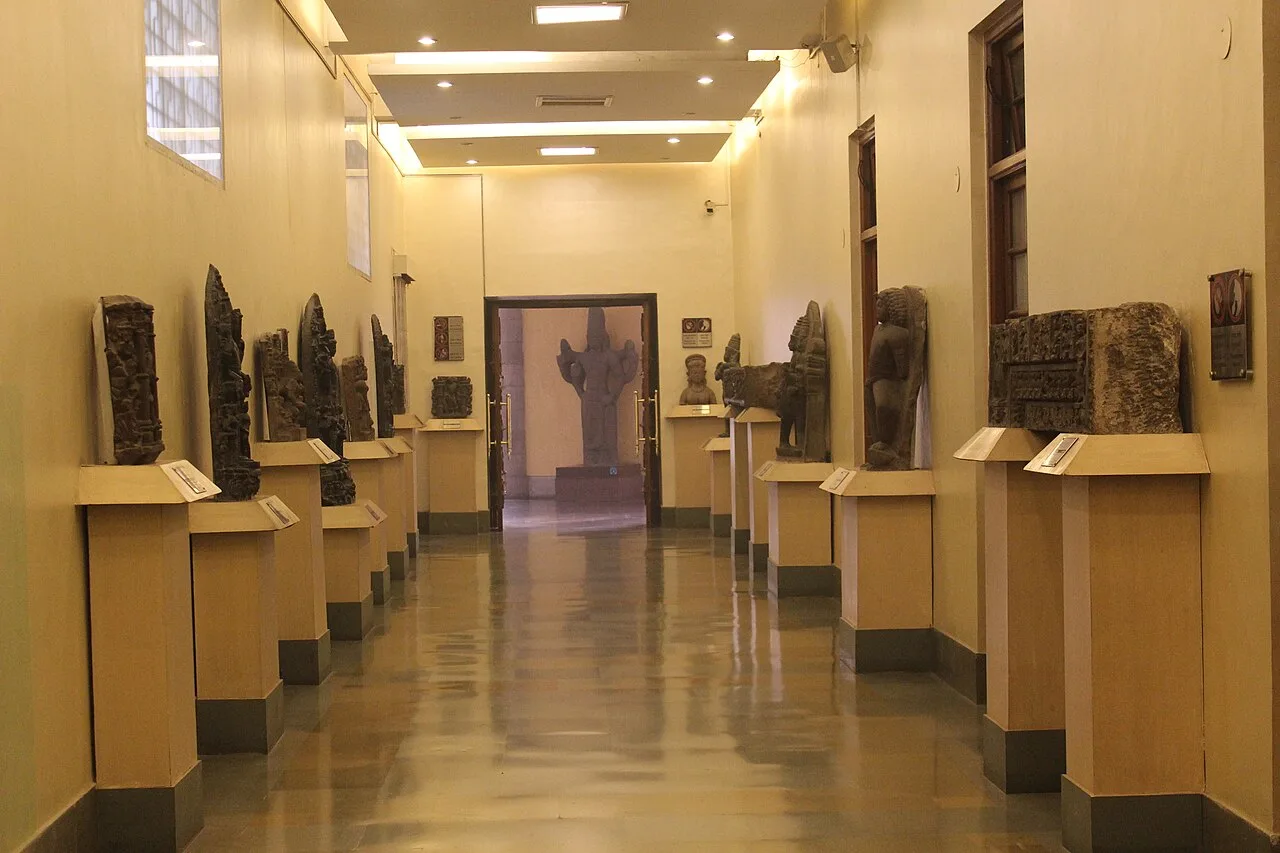
National Museum of India
New Delhi’s National Museum of India displays collections from prehistoric objects to modern art. Visitors can explore Indian and international works representing more than 5,000 years.
Key facts · verified by Ghumoopedia editors
- Type of place
- Heritage monument
- Best time to visit
- October to March (check air quality from November to January)
- Verified
- 21 Nov 2026
Plan a trip from National Museum of India — a day-by-day route through places nearby.
Set on Janpath in New Delhi, within Delhi, India’s capital territory, the National Museum of India dates to 1949. Its holdings range from prehistoric objects to modern art, giving visitors a view of artistic and material culture across many periods. The range includes historical artefacts and later artistic creations. Around 200,000 works are held here, mostly Indian, with some originating abroad. Together, the collections cover more than 5,000 years. The museum is administered by the Ministry of Culture, Government of India. Plans for the institution were drawn up by the Gwyer Committee, established by the Government of India in 1946. The first floor houses the National Museum Institute of History of Art, Conservation and Museology. Established in 1983, it became a university in 1989. It runs master’s and doctoral programmes in art history, conservation and museology. Delhi layers many historic cities — from the Delhi Sultanate and the Mughal capital to Lutyens' New Delhi — with Sufi shrines, gurdwaras, temples, busy markets and India's national monuments. Delhi has very hot summers from April to June, a humid monsoon from July to September and cold, foggy winters in December and January. Air quality is often very poor from late October to January. The usual best time to visit is October to March (check air quality from November to January). Timings, fees and access arrangements must be confirmed locally. For official information, see Delhi Tourism at https://delhitourism.gov.in.
Why it matters
The National Museum of India is a major public institution for the study and display of India’s artistic and material heritage. Located on Janpath in New Delhi, it brings together objects from many regions and periods, from prehistoric cultures to modern art. The museum’s own overview describes a collection of around 200,000 works, mostly Indian, spanning more than 5,000 years. It was established in 1949 and functions under the Ministry of Culture, Government of India. Its galleries offer visitors an introduction to archaeology, sculpture, painting, textiles, arms, manuscripts and other fields. The National Museum Institute, based within the museum, also teaches art history, conservation and museology. It is a national institution, not a temple or an ASI-protected monument.
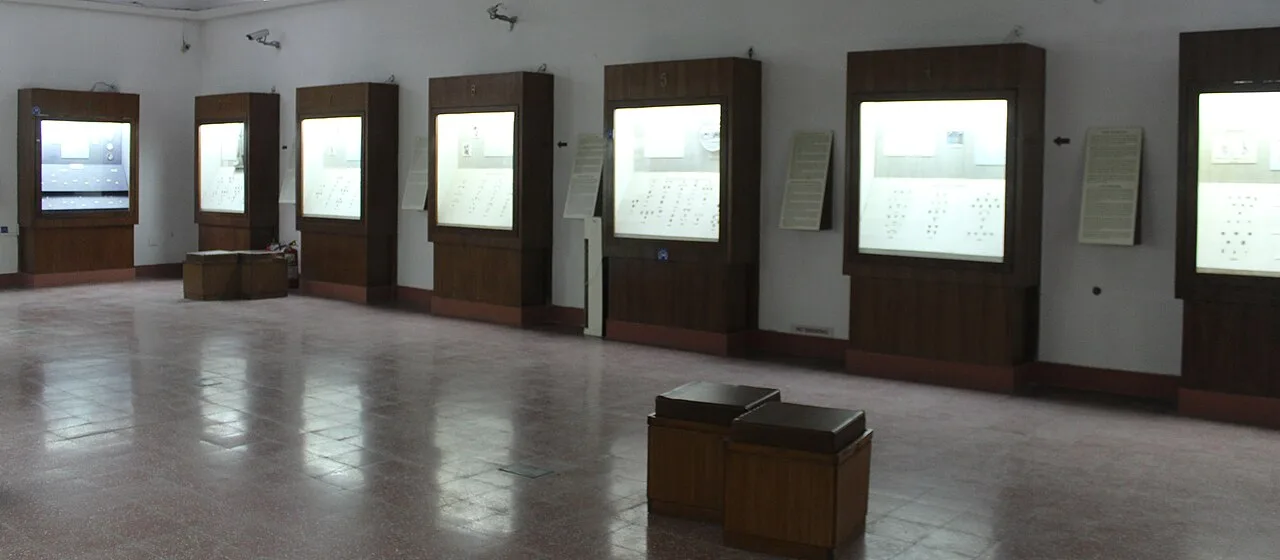
The museum’s origins lie in a major exhibition of Indian art and antiquities shown in London in 1947–48. After the exhibition returned to India, a selection was displayed at Rashtrapati Bhavan in New Delhi. That presentation helped establish the case for a permanent national collection, and the National Museum was formally established in 1949. A government-appointed Gwyer Committee had prepared a blueprint for the institution in 1946. The museum later moved to its purpose-built premises on Janpath; its foundation stone was laid in 1955, and the first phase of the building opened to visitors in 1960. Further development expanded the museum’s galleries and facilities. Its collections grew through archaeological discoveries, institutional transfers, donations and acquisitions, bringing together material from different parts of India as well as some objects of foreign origin. In 1983, the National Museum Institute of History of Art, Conservation and Museology was established on the museum’s first floor. It became a university in 1989 and offers postgraduate and doctoral study. Today the museum remains under the Ministry of Culture, with conservation, research, interpretation and public display among its continuing roles.
Origin stories & folklore
There is no widely established local legend about the National Museum’s origin: it is a modern public institution rather than an ancient shrine, palace or sacred site. Its story is documented through exhibitions, government records and the history of its collections. The objects displayed inside, however, may relate to religious traditions, royal histories and community memories. Interpretations of a sculpture, ritual object or historical figure can differ across communities and periods. Treat these as cultural histories and beliefs associated with the objects, not as a single legend belonging to the museum building. Gallery labels and museum publications are the best guides to the evidence and context.
Architecture & design
The National Museum is a large, purpose-built public museum on Janpath, designed for the display and study of collections rather than as a historic palace or temple. Its institutional architecture is modern, with galleries arranged across multiple levels and spaces for exhibitions, education and research. The building developed in phases: its first section opened in 1960, with later expansion adding further gallery and institutional space. Inside, visitors move through galleries organised by collection or theme, allowing objects from different periods and regions to be viewed in context. Display cases, controlled lighting and protective barriers help safeguard paintings, manuscripts, textiles and archaeological material. The building also houses the National Museum Institute. Gallery layouts and access between levels can change, so check current visitor information before planning a route through the museum.
Important objects & sculptures
Look for the Harappan collection, which includes the celebrated bronze Dancing Girl from Mohenjo-daro, the so-called Priest-King sculpture and examples of seals and pottery. The museum’s galleries also include sculpture from different periods, miniature paintings, manuscripts, coins, arms and armour, textiles, decorative arts and archaeological finds. Some displays explore Central Asian material and objects from outside India. Collections may be rotated, and individual objects can be away for conservation or loan, so a particular piece may not always be on view. Read the labels for provenance and context: familiar names such as “Priest-King” are conventional descriptions, not necessarily verified identities.
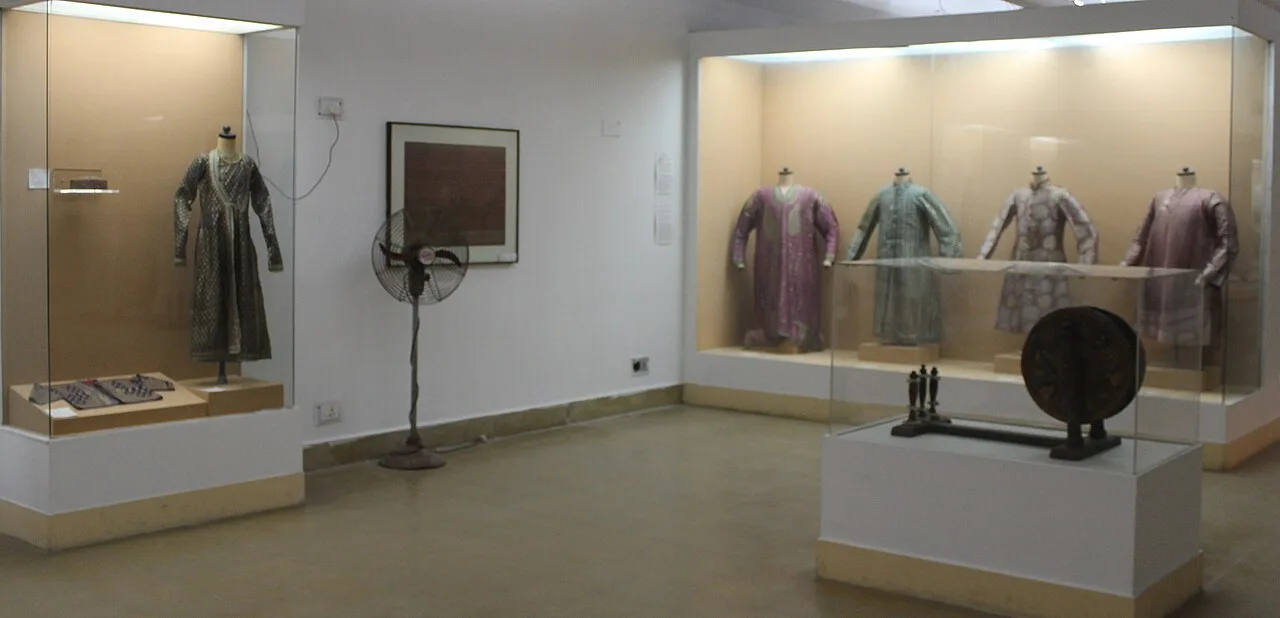
Explore National Museum of India slowly and read the interpretation boards, use the official audio guide where available or hire an authorised guide to understand its history. Check opening days, ticket counters and camera rules in advance; many monuments and museums close on one weekday and on some public holidays. Early morning gives softer light, cooler air and smaller crowds. A comfortable itinerary is one main visit in the morning, a local meal at midday and a short nearby stop before an afternoon return. Use the district list on this site to find other places in New Delhi, but check the route and its condition before combining stops. If a festival or fair is on, roads and stays can be busy — and the experience can be unforgettable. Leave no litter: many sites are protected by the communities around them.
Suggested itineraries
Half day: Allow about 3–4 hours for the main galleries, pausing at the Harappan collection and a few sections that match your interests; take a break before leaving. Full day: Spend about 4–5 hours in the museum with a meal break, then visit India Gate and walk or drive along the nearby ceremonial avenues if conditions allow. Gentler option: Choose a small number of galleries, sit and rest between sections, and arrange a taxi or drop-off near the entrance; confirm seating and step-free access with the museum beforehand.
The museum presents the cultural diversity of India through objects associated with regional arts, religious traditions, courtly life, trade and everyday work. Its galleries can introduce visitors to traditions of sculpture, painting, textiles, metalwork and manuscript-making, though these are historical displays rather than a live performance programme. Around the museum, New Delhi’s public life is multilingual and shaped by people from across India. Visitors may hear Hindi, English and many regional languages. Inside, a quiet, considerate manner helps everyone view the collections; avoid touching objects or blocking displays. For deeper context, use gallery interpretation or check whether an authorised guide or audio guide is available.
Festivals & events
The museum is not primarily a festival ground, and programmes or special exhibitions vary by year. Across New Delhi, Diwali and Dussehra usually bring seasonal celebrations in autumn, while Holi is widely marked in spring; Eid, Gurpurab and Christmas are also observed by communities around the city. Republic Day events in January take place along the nearby ceremonial avenues and can affect traffic and access in central Delhi. The India International Trade Fair is generally held at Bharat Mandapam in the autumn, although dates and arrangements vary. Expect busier roads and accommodation around major city events, and check whether museum access is affected before travelling.
Local food in Delhi includes chaat, stuffed parathas and jalebi in Chandni Chowk, chole bhature, kebabs and Mughlai dishes around Jama Masjid, butter chicken, momos and kulfi. Ask what is fresh that day; many small eateries cook a limited daily menu. Vegetarian travellers eat very well across this region, and most towns also have non-vegetarian options. Street food is part of the Delhi experience: pick busy stalls with fast turnover, prefer freshly cooked items and drink sealed or filtered water. Try a home-cooked or dhaba meal when you can — it is often the best food on the route. Choose busy, clean places and carry your packaging back with you.
Shopping & local experiences
The museum shop, if open, may offer books, catalogues and educational souvenirs connected with its collections; check what is currently available. For a wider selection of crafts, textiles, books and gifts, central Delhi markets and shops around Connaught Place are options, though product origins and quality vary. Dilli Haat is another place to explore regional crafts and food stalls, with offerings that can change. Try Delhi’s varied street food or regional restaurants, choosing clean, busy establishments and checking ingredients if you have dietary needs. Avoid buying antiquities or objects presented as archaeological finds.
October to March (check air quality from November to January)
Within Delhi, the Delhi Metro is usually the quickest and cheapest way to reach National Museum of India; find the nearest station on the official DMRC website or app, and use an app-based auto, e-rickshaw or cab for the last stretch. Road traffic is heavy at peak hours, so allow extra time and avoid driving yourself in Old Delhi lanes. Long-distance trains use New Delhi, Old Delhi, Hazrat Nizamuddin and Anand Vihar terminals, and flights use Indira Gandhi International Airport. The nearest of these railway terminals is New Delhi, roughly 5 km away in a straight line. Indira Gandhi International Airport, Delhi is roughly 15 km away in a straight line. When comparing train, bus and flight, count the complete door-to-door time: a flight saves the most time only if the onward road transfer is short, while an overnight train can save a hotel night. Book your return before you leave, because seats fill quickly on weekends, festivals and holidays. Current train numbers, timings, return services and fares are not listed here; check IRCTC and NTES for trains and the airline's own schedule for flights. No permit is needed to visit Delhi. Many monuments are protected by the Archaeological Survey of India and need an entry ticket, often cheaper when bought online; the Red Fort and several museums close on Mondays. Security checks are routine at metro stations and major sites.
Confirm onward and return timings on IRCTC / NTES, the state bus operator or your airline before travel. A dash means current timings or fares have not been verified.
Getting around
Delhi Metro is usually a practical way to reach the museum; check the Delhi Metro Rail Corporation map or app for a suitable station and any service changes. Autos, app-based taxis and other cabs can bring visitors to the Janpath entrance area, although central Delhi traffic may slow road journeys. Local buses serve parts of the city, but routes and stops should be checked for your starting point. The surrounding central avenues are walkable in places, but crossings, heat and traffic make short journeys less comfortable than they appear on a map. Check locally whether visitor parking is available before driving.
Hours, tickets & permissions
Entry generally requires a valid ticket or other admission arrangement, and rules may differ for children, students, groups or special exhibitions. Visitors may be asked to follow security screening and restrictions on bags or items brought inside. Photography, flash, tripods and access to particular galleries may be subject to separate rules. Dress requirements are not generally associated with this museum, but follow any instructions issued by staff. Confirm current opening days, hours, fees, ticketing and entry conditions with the National Museum or the Ministry of Culture before setting out.
Facilities
The museum usually provides visitor services such as ticketing, information and toilets, but availability and access can vary by area or during maintenance. Check locally for drinking-water points, seating, a café or other food options, cloakroom arrangements and accessible facilities. Food choices nearby are more varied than inside the galleries, so plan a meal break outside if needed. Guided interpretation or an audio guide may be available, but arrangements can change. ATMs and shops are found in central Delhi, though they may not be immediately beside the entrance. Confirm parking and bag-storage rules before arrival.
Accessibility
A museum visit can involve substantial indoor walking, standing and moving between galleries on different levels. The building’s exact step-free routes, lift availability, accessible toilets and wheelchair arrangements should be confirmed directly with the museum before visiting; do not assume every gallery is equally accessible. Strollers may be useful for young children, but check whether they are permitted in all spaces. Seating and shade can be limited along the approach and inside some galleries. Older visitors or anyone with limited mobility may find it more comfortable to select a few galleries, take regular breaks and use a taxi for the final approach. Delhi’s heat, rain and uneven pavements can also affect the journey.
No permit is needed to visit Delhi. Many monuments are protected by the Archaeological Survey of India and need an entry ticket, often cheaper when bought online; the Red Fort and several museums close on Mondays. Security checks are routine at metro stations and major sites. Carry a photo ID at all times and save the emergency number 112 and your accommodation's contact offline. Summer heat and winter smog are the main health risks: drink plenty of water, check the air-quality index and wear a good mask on poor-air days. Watch your belongings in crowded markets and metro coaches. Respect community rules, private property and posted instructions. Follow local guidance if access changes.
Photography
Light inside galleries is controlled to protect collections, so outdoor views and the entrance area are generally better for photographs than dim display spaces. Photography rules can differ by gallery and exhibition; check notices and ask staff before taking pictures. Flash, tripods or other equipment may be restricted, and some objects may not be photographed at all. Do not use a drone over the museum or central government precinct without the required permissions and confirmation that flying is lawful. Avoid obstructing other visitors, and ask before photographing people, especially children or anyone engaged in a private moment.
Choose a stay by the full journey to National Museum of India, not just the district name. Central areas such as Connaught Place, Paharganj and Karol Bagh, or areas near your metro line, save time; check the exact location and how far the hotel is from the nearest metro station. In summer, check air-conditioning or coolers; in December and January, check heating and hot water. Book in advance for weekends, festivals and the peak season (October to March (check air quality from November to January)). Confirm the exact location, meals included, check-in time and cancellation terms in writing. Avoid sending money to unverified contacts or touts at stations. Carry some cash, as card and digital payments can be unreliable in remote areas.
Nearby central Delhi sights that can be combined with a museum visit include India Gate, Kartavya Path and the National Gallery of Modern Art. Jantar Mantar and Connaught Place are also within the wider central area. Gurudwara Bangla Sahib offers a different kind of cultural visit; observe its visitor customs and head-covering guidance. Rashtrapati Bhavan is in the vicinity, but access is controlled and visits require checking current arrangements in advance. These stops are best chosen according to your available time, mobility and traffic conditions rather than treated as a single walking circuit.
For couples, National Museum of India rewards a slow pace: arrive early for soft light and fewer crowds, share a local meal and keep the evening free. Evenings at a garden, heritage site or a rooftop café near the monuments make a good end to the day. Public displays of affection can be frowned upon in conservative communities and at religious sites, so be discreet. Keep a buffer in your itinerary, because weather and traffic can delay plans.
Q: How much time should I allow for the National Museum? A: Allow at least a few hours for selected galleries; a more thorough visit can take much of the day. Q: When is a good season to visit? A: October to March is generally more comfortable in Delhi, but check air quality, especially from November to January. Q: Do I need to arrange entry in advance? A: Entry rules and ticketing can change; check the museum’s current official information before travelling. Q: Is the museum suitable for children and older visitors? A: It can suit both, but the galleries involve walking and standing. Plan breaks and confirm accessibility arrangements if needed. Q: Where can I stay nearby? A: Central Delhi, including the Connaught Place area, has a range of accommodation; compare location, transport and current availability before booking.
Be the first to share photos, stories, advice or a helpful contact for National Museum of India.
Loading…