
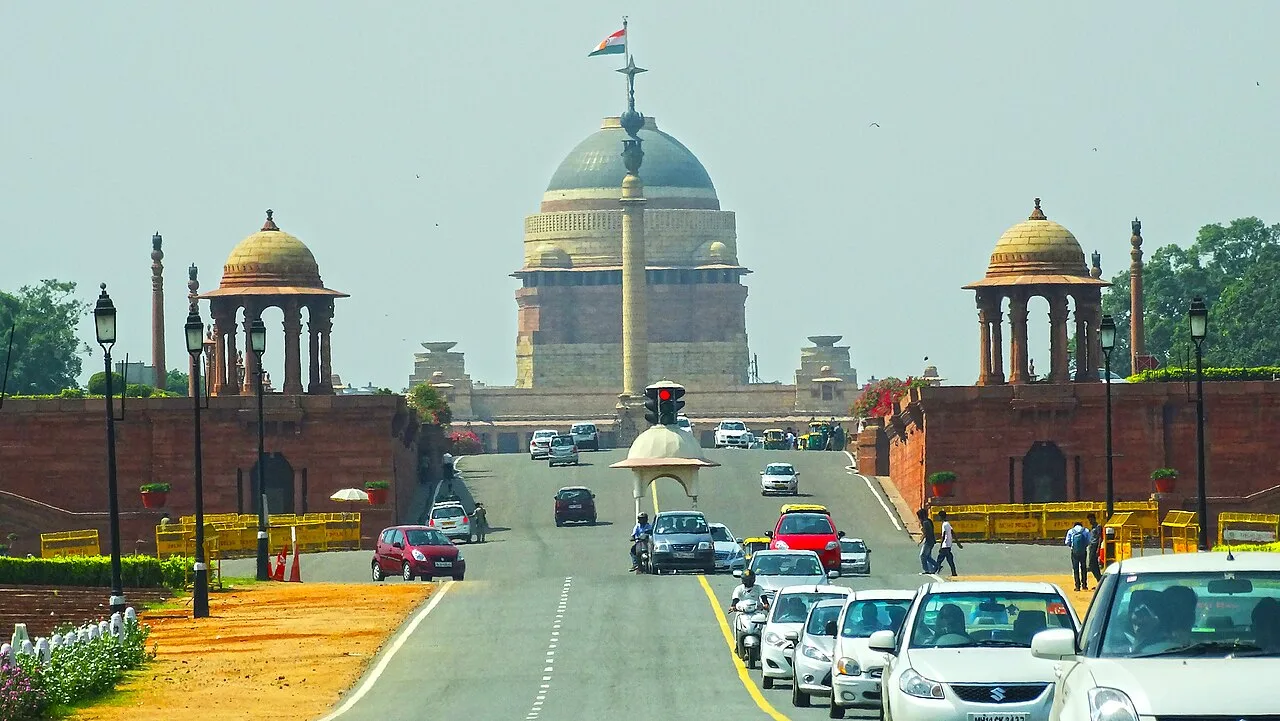
Rashtrapati Bhavan
Rashtrapati Bhavan is the President of India’s residence in New Delhi. Visitors come to see its architecture and grounds, and to explore its role in the country’s government.
Key facts · verified by Ghumoopedia editors
- Type of place
- Natural attraction
- Best time to visit
- October to March (check air quality from November to January)
- Verified
- 21 Nov 2026
Plan a trip from Rashtrapati Bhavan — a day-by-day route through places nearby.
On Raisina Hill in New Delhi’s New Delhi district, Rashtrapati Bhavan stands at the western end of Rajpath. It is the official home of India’s President. Edwin Lutyens and Herbert Baker designed the building in the Delhi Order, drawing on Indo-Saracenic architecture. Construction began in 1912 and ended in 1929. First called Viceroy’s House, it housed the Viceroy of India from 1931 until independence. Between 1947 and 1950, the building was called Government House and housed the Governor General of India. When India became a republic in 1950, it took the name Rashtrapati Bhavan and became the President’s residence. The H-shaped main building has four floors and a basement, with 340 rooms. Its corridors extend for 2.50 kilometres, and its floor area is 200,000 square metres (2,200,000 sq ft). The rooms include presidential living quarters, reception halls, guest rooms and offices, bringing residential, reception and working spaces together in one building. The presidential estate covers 320 acres (130 hectares). Its gardens and open spaces sit alongside residences for staff and security personnel, stables, offices and utility facilities. The main building has more than 200,000 square metres (2,200,000 sq ft) of usable floor area. By total floor area, it is the world’s largest official residence for a head of state, followed by Brunei’s Istana Nurul Iman and Italy’s Quirinal Palace. The President also has residences elsewhere in India: Rashtrapati Niketan in Dehradun, Rashtrapati Nilayam in Hyderabad and Rashtrapati Niwas in Shimla. Delhi layers many historic cities — from the Delhi Sultanate and the Mughal capital to Lutyens' New Delhi — with Sufi shrines, gurdwaras, temples, busy markets and India's national monuments. Delhi has very hot summers from April to June, a humid monsoon from July to September and cold, foggy winters in December and January. Air quality is often very poor from late October to January. The usual best time to visit is October to March (check air quality from November to January). Timings, fees and access arrangements must be confirmed locally. For official information, see Delhi Tourism at https://delhitourism.gov.in.
Why it matters
Rashtrapati Bhavan is the official residence and workplace of the President of India and an important setting for state ceremonies, diplomatic receptions and constitutional life. It stands on Raisina Hill at the western end of the ceremonial avenue now known as Kartavya Path, in New Delhi. The building and its grounds express the plan for the British-built imperial capital, later adapted as the seat of the Republic. Its architecture combines European design with Indian forms and motifs. The President’s Estate also includes gardens, offices and staff and security facilities. Public access is limited to designated visits and depends on current arrangements.
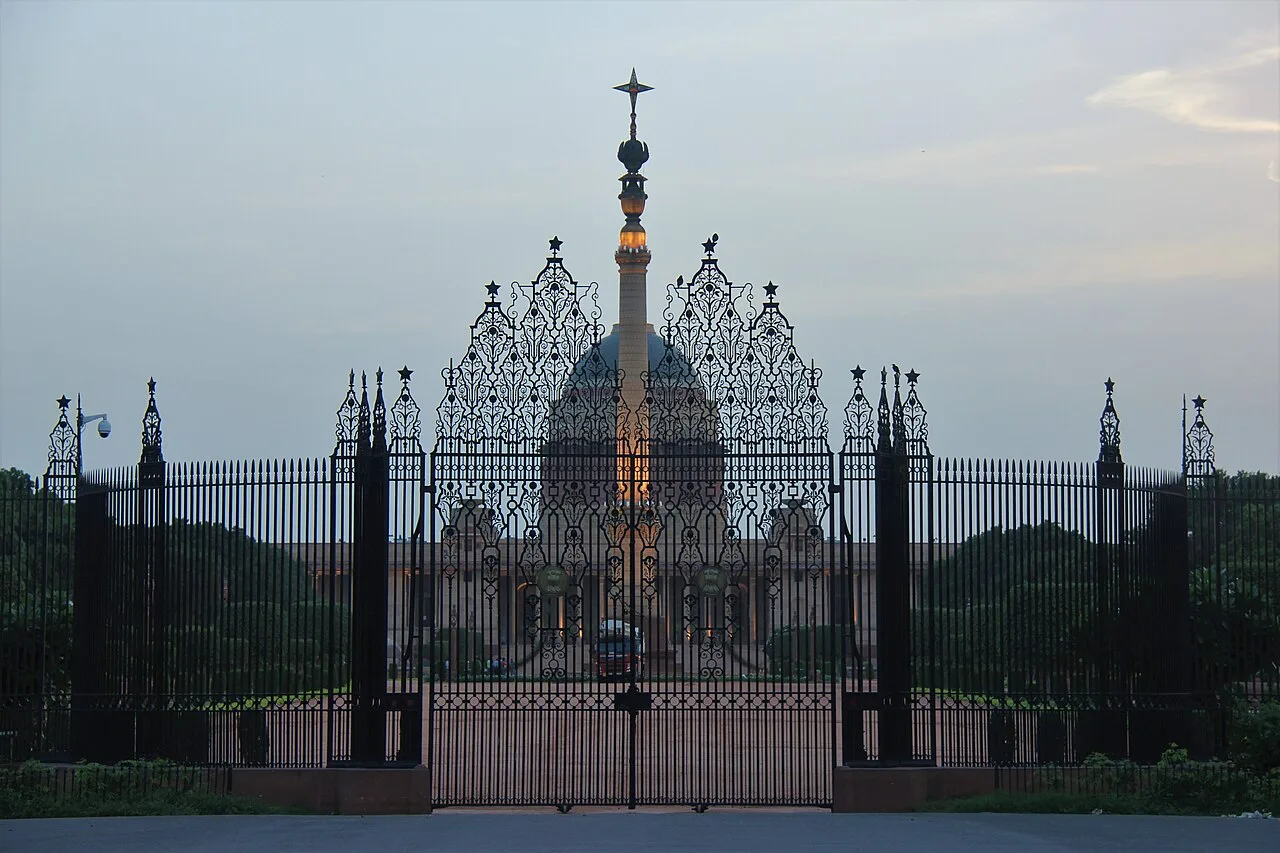
The building was commissioned as the residence of the British viceroy during the creation of New Delhi as India’s new imperial capital. Designed by Edwin Lutyens, with Herbert Baker also involved in the capital’s architectural plan, it was begun in 1912 and completed in 1929. The Viceroy’s House was occupied from 1931, when the new capital was formally inaugurated. Its design brings together a monumental European plan and Indian architectural elements, including domes, chhatris and other details associated with the Delhi Order. After independence in 1947, it became Government House, the residence of the Governor-General. When India became a republic in 1950, the building became the President’s official residence and took the name Rashtrapati Bhavan. The complex has continued to serve residential, administrative and ceremonial purposes. Its main building contains reception spaces, offices and private residential rooms, while the wider estate includes gardens and support facilities. The gardens, once commonly called the Mughal Gardens, were given the name Amrit Udyan in 2023. Maintenance and conservation continue as part of the care of an active government complex.
Origin stories & folklore
There is no widely established local legend about Rashtrapati Bhavan’s origins comparable to the sacred or folkloric stories associated with older shrines and historic settlements. Visitors may hear the building described as a symbol of the transfer from imperial rule to a republic, but that is a historical interpretation rather than a legend. Its best-known stories are grounded in documented political change: the Viceroy’s House became Government House after independence, then the President’s residence when India became a republic. Treating those changes as history, rather than embellishing them with unverified tales, helps preserve the site’s significance without confusing fact and folklore.
Explore Rashtrapati Bhavan slowly and read the interpretation boards, use the official audio guide where available or hire an authorised guide to understand its history. Check opening days, ticket counters and camera rules in advance; many monuments and museums close on one weekday and on some public holidays. Early morning gives softer light, cooler air and smaller crowds. A comfortable itinerary is one main visit in the morning, a local meal at midday and a short nearby stop before an afternoon return. Use the district list on this site to find other places in New Delhi, but check the route and its condition before combining stops. If a festival or fair is on, roads and stays can be busy — and the experience can be unforgettable. Leave no litter: many sites are protected by the communities around them.
Suggested itineraries
Half day: Complete a pre-booked Rashtrapati Bhavan visitor circuit (about 2–3 hours), then walk or ride to India Gate and the National War Memorial (about 1–2 hours). Full day: Visit Rashtrapati Bhavan and its gardens if open (about 2–3 hours), take a meal break, then see the National Museum and India Gate area (about 3–4 hours); allow extra time for security and travel. Gentler option: Choose the shortest available visitor circuit, arrange drop-off as close as permitted, and rest between stops; confirm step-free access and seating in advance.
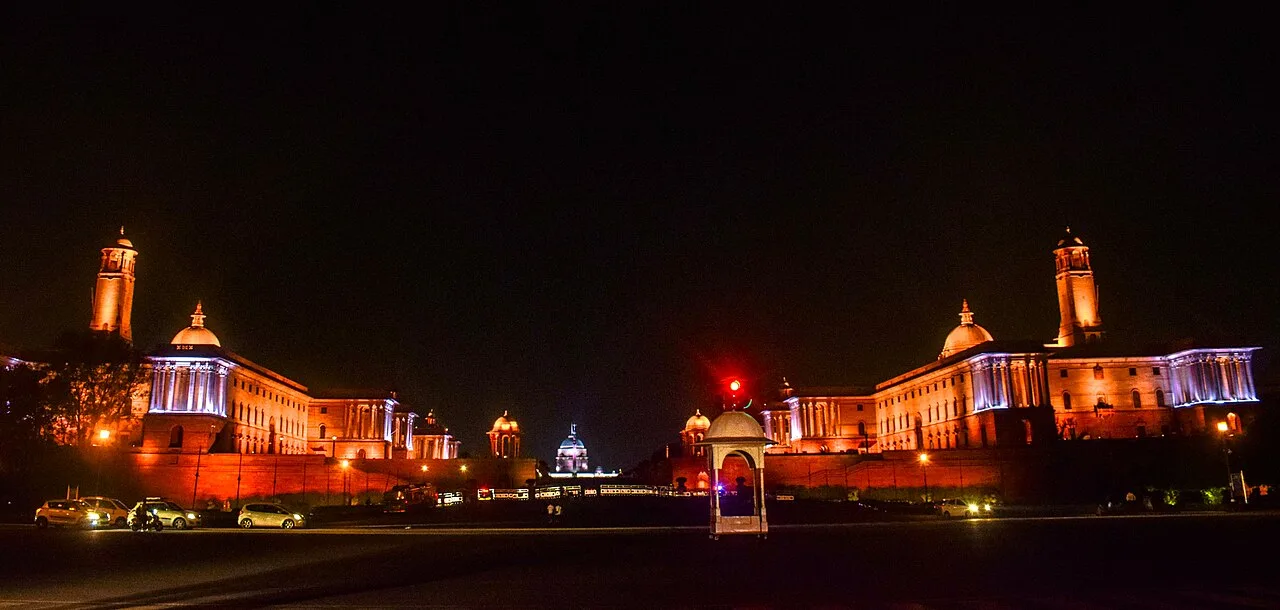
Rashtrapati Bhavan remains a working national institution, so its living culture is shaped by official ceremonies, state visits, receptions and the formal routines of the President’s office. Military bands and ceremonial music are part of public events in the surrounding Central Vista, though access and event schedules vary. Hindi and English are widely used in official and visitor-facing settings; Delhi’s wider linguistic life also includes Punjabi, Urdu and many other Indian languages. The gardens bring a quieter seasonal dimension, with public visits offered under specific arrangements. Visitors should follow security staff instructions, dress respectfully for a formal public institution and avoid treating restricted areas or official proceedings as photo opportunities.
Local communities
The estate is connected to the President, government staff, security personnel, gardeners, maintenance workers and other employees whose work keeps this active complex running. It also serves visiting dignitaries, official guests and members of the public admitted through designated visitor programmes. Beyond the estate, the surrounding New Delhi area is home to civil servants, office workers, residents, vendors and people who travel in for government, cultural and tourism activities. These communities have different roles and levels of access; most of the grounds are not an everyday public park. Follow posted boundaries and staff directions, and do not photograph workers or security operations without permission.
Festivals & events
Rashtrapati Bhavan is associated with national occasions and formal ceremonies rather than a regular public fair calendar. Republic Day in January and Independence Day in August bring major events across the capital, with ceremonies and road restrictions affecting the Central Vista; access to the estate itself is controlled. The gardens have also been opened to visitors seasonally under public garden programmes, commonly associated with late winter, but the programme and arrangements can change. Beating Retreat takes place nearby at Vijay Chowk in January and can draw large crowds to the wider area. Check official announcements before planning a visit around a national event or garden opening.
Local food in Delhi includes chaat, stuffed parathas and jalebi in Chandni Chowk, chole bhature, kebabs and Mughlai dishes around Jama Masjid, butter chicken, momos and kulfi. Ask what is fresh that day; many small eateries cook a limited daily menu. Vegetarian travellers eat very well across this region, and most towns also have non-vegetarian options. Street food is part of the Delhi experience: pick busy stalls with fast turnover, prefer freshly cooked items and drink sealed or filtered water. Try a home-cooked or dhaba meal when you can — it is often the best food on the route. Choose busy, clean places and carry your packaging back with you.
Shopping & local experiences
There are no ordinary public market streets inside the secured estate. For books, crafts, textiles and souvenirs, visitors can explore established shopping areas such as Janpath and Connaught Place, checking current shop access and hours locally. Dilli Haat is another Delhi venue for regional crafts and food, though it requires a separate trip. Look for locally made items and regional products rather than assuming a particular souvenir is officially sold at Rashtrapati Bhavan. Nearby cafés and restaurants offer a range of Indian and international food; choose a meal stop according to your route and dietary needs.
Rashtrapati Bhavan is a designed urban estate, not a natural wilderness attraction. Its extensive grounds include formal gardens, lawns, planted avenues and open spaces within the larger presidential estate. Amrit Udyan is known for ornamental planting and garden layouts; the broader grounds also have trees and landscaped areas. The gardens’ appearance changes with the season and with maintenance, and some sections may be closed during official use or outside public opening periods. Delhi’s common urban birds may be present, but sightings are never assured and visitors should not approach or feed wildlife. The site’s value for nature is chiefly its managed green space within the capital, rather than native forest or a protected habitat. Stay on permitted paths and leave plants undisturbed.
October to March (check air quality from November to January)
Within Delhi, the Delhi Metro is usually the quickest and cheapest way to reach Rashtrapati Bhavan; find the nearest station on the official DMRC website or app, and use an app-based auto, e-rickshaw or cab for the last stretch. Road traffic is heavy at peak hours, so allow extra time and avoid driving yourself in Old Delhi lanes. Long-distance trains use New Delhi, Old Delhi, Hazrat Nizamuddin and Anand Vihar terminals, and flights use Indira Gandhi International Airport. The nearest of these railway terminals is New Delhi, roughly 5 km away in a straight line. Indira Gandhi International Airport, Delhi is roughly 10 km away in a straight line. When comparing train, bus and flight, count the complete door-to-door time: a flight saves the most time only if the onward road transfer is short, while an overnight train can save a hotel night. Book your return before you leave, because seats fill quickly on weekends, festivals and holidays. Current train numbers, timings, return services and fares are not listed here; check IRCTC and NTES for trains and the airline's own schedule for flights. No permit is needed to visit Delhi. Many monuments are protected by the Archaeological Survey of India and need an entry ticket, often cheaper when bought online; the Red Fort and several museums close on Mondays. Security checks are routine at metro stations and major sites.
Confirm onward and return timings on IRCTC / NTES, the state bus operator or your airline before travel. A dash means current timings or fares have not been verified.
Getting around
Within Delhi, the Metro is usually a practical way to approach the Central Vista, followed by an app-based cab, taxi or auto-rickshaw for the last stretch where roads and security arrangements permit. Local buses and autos serve the broader New Delhi area, but routes may be diverted during ceremonies or security closures. Walking is possible between nearby landmarks, though crossings, traffic and checkpoints can make routes less direct than they appear. Parking near the complex may be restricted or unavailable to visitors, so check current instructions and avoid relying on a private car. Follow official signs to the designated visitor entrance rather than approaching restricted gates.
Hours, tickets & permissions
Entry is controlled and generally limited to designated visitor circuits, garden openings or official events. Advance registration or tickets may be required, and visitors should expect identity checks and security screening. Rules for cameras, bags, food and access to particular buildings or gardens can differ by visit type; some areas may be closed without notice for official duties. Dress requirements may apply to specific programmes. Confirm current opening arrangements, entry conditions and fees directly with the Rashtrapati Bhavan visitor information or managing authority before setting out; do not assume that the estate is open as a public park.
Facilities
Facilities depend on the visitor circuit and what is open on the day. Designated visitor areas may provide visitor assistance and basic amenities, but do not assume that toilets, drinking water, seating or food outlets are available throughout the estate. Food and other services are easier to find in the surrounding New Delhi area. Guided interpretation or audio guidance may be offered for some visits; check the current official visitor information. Parking is restricted, and nearby ATMs and shops are outside the secured complex. Carry only permitted items and confirm the rules before travelling.
Accessibility
The estate is large, and a visit can involve substantial walking between security points, buildings and landscaped grounds. Routes may include steps, changes in surface or long outdoor stretches; shade and seating are not assured along every route. Wheelchair and stroller access can vary by circuit, and lifts or step-free routes should not be assumed. Contact the visitor authority beforehand to ask which route is suitable and whether assistance can be arranged. Older visitors may prefer one short visit rather than combining several distant stops. In hot, wet or foggy weather, allow extra time and plan rest breaks.
No permit is needed to visit Delhi. Many monuments are protected by the Archaeological Survey of India and need an entry ticket, often cheaper when bought online; the Red Fort and several museums close on Mondays. Security checks are routine at metro stations and major sites. Carry a photo ID at all times and save the emergency number 112 and your accommodation's contact offline. Summer heat and winter smog are the main health risks: drink plenty of water, check the air-quality index and wear a good mask on poor-air days. Watch your belongings in crowded markets and metro coaches. Respect community rules, private property and posted instructions. Follow local guidance if access changes.
Photography
Outdoor light is often gentler earlier in the day, while the building’s broad façade can be easier to appreciate when the sun is not directly overhead. Permitted viewpoints and photo rules depend on the visitor circuit. Photography may be restricted inside buildings, near security installations or during official events; follow signs and staff instructions rather than assuming cameras are allowed everywhere. Do not use a drone without explicit legal and site permission. Ask before photographing staff or other visitors, and avoid obstructing paths or ceremonies while taking pictures.
Choose a stay by the full journey to Rashtrapati Bhavan, not just the district name. Central areas such as Connaught Place, Paharganj and Karol Bagh, or areas near your metro line, save time; check the exact location and how far the hotel is from the nearest metro station. In summer, check air-conditioning or coolers; in December and January, check heating and hot water. Book in advance for weekends, festivals and the peak season (October to March (check air quality from November to January)). Confirm the exact location, meals included, check-in time and cancellation terms in writing. Avoid sending money to unverified contacts or touts at stations. Carry some cash, as card and digital payments can be unreliable in remote areas.
Nearby Central Vista landmarks include India Gate, the National War Memorial and Kartavya Path; access and road crossings can change during official events. The National Museum and the National Gallery of Modern Art offer indoor cultural visits in the wider New Delhi area. Jantar Mantar and Gurudwara Bangla Sahib are other established city attractions that can be considered for a separate stop, subject to route and traffic conditions. Parliament House is close in the capital district, but it is a working institution with restricted access, not an ordinary walk-in attraction. Check current entry rules for each place before combining visits.
For couples, Rashtrapati Bhavan rewards a slow pace: arrive early for soft light and fewer crowds, share a local meal and keep the evening free. Evenings at a garden, heritage site or a rooftop café near the monuments make a good end to the day. Public displays of affection can be frowned upon in conservative communities and at religious sites, so be discreet. Keep a buffer in your itinerary, because weather and traffic can delay plans.
Q: How much time should I allow for a visit? A: Allow a few hours for a designated visitor circuit, with extra time for security, travel and any garden visit. Q: When is the best season to visit? A: October to March is generally more comfortable in Delhi; check air quality in winter and confirm seasonal garden access. Q: Can I enter Rashtrapati Bhavan without booking? A: Access is controlled and may require advance registration or a ticket. Confirm current rules with the official visitor authority. Q: Is the visit suitable for children and elderly visitors? A: It can be, but expect security checks and walking. Ask about the route, steps, seating and accessibility before booking. Q: Where can I stay nearby? A: New Delhi and Connaught Place have a range of accommodation; choose based on your budget, mobility needs and onward transport.
Be the first to share photos, stories, advice or a helpful contact for Rashtrapati Bhavan.
Loading…