
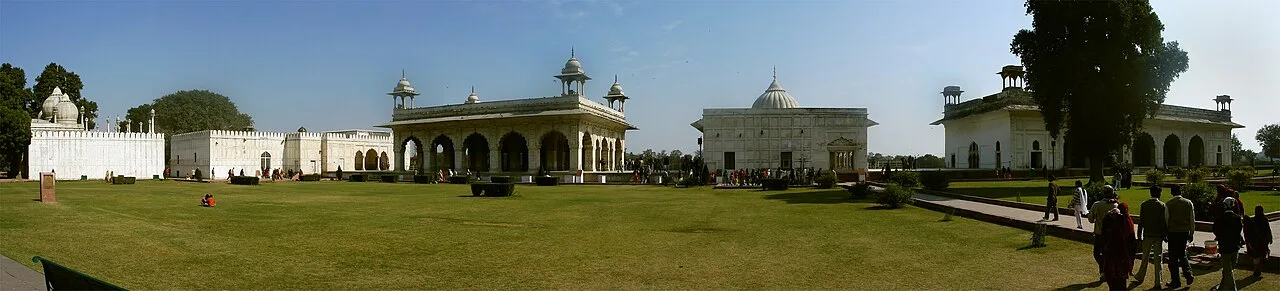
Red Fort
The Red Fort is a Mughal citadel in Delhi that served as an imperial residence. Visitors explore its architecture and history, and its ramparts host the annual Independence Day flag-raising ceremony.
Key facts · verified by Ghumoopedia editors
- Type of place
- Heritage monument
- Best time to visit
- October to March (check air quality from November to January)
- Verified
- 21 Nov 2026
Plan a trip from Red Fort — a day-by-day route through places nearby.
Set in Delhi’s Central district, the Red Fort is a Mughal citadel in the historic Old Delhi quarter. Delhi is the capital territory of India. Shah Jahan commissioned the complex on 12 May 1639, after choosing Delhi rather than Agra for the empire’s new capital. It became the principal residence of Mughal rulers. Ustad Ahmad Lahori, whose work also includes the Taj Mahal, is credited with its design. The fort’s original red-and-white decoration and architecture reflect Shah Jahan’s era. Persian and Indian traditions come together in the design. In 1739, Nadir Shah of the Afsharid Empire invaded and looted the fort, removing its jewels and artworks. After the Indian Rebellion of 1857, British forces demolished many marble buildings, though most of the defensive walls survived. The British later used the site as a military garrison. On 15 August 1947, Jawaharlal Nehru, India’s first prime minister, raised the national flag above Lahori Gate, the fort’s main entrance. Since then, the prime minister has hoisted the tricolour there each Independence Day and delivered an address from the ramparts, broadcast nationwide. UNESCO recognised the Red Fort Complex as a World Heritage Site in 2007. Delhi layers many historic cities — from the Delhi Sultanate and the Mughal capital to Lutyens' New Delhi — with Sufi shrines, gurdwaras, temples, busy markets and India's national monuments. Delhi has very hot summers from April to June, a humid monsoon from July to September and cold, foggy winters in December and January. Air quality is often very poor from late October to January. The usual best time to visit is October to March (check air quality from November to January). Timings, fees and access arrangements must be confirmed locally. For official information, see Delhi Tourism at https://delhitourism.gov.in.
Why it matters
The Red Fort is a major Mughal monument in Old Delhi and a national symbol of India’s independence. It served as the principal residence of Mughal emperors after Shah Jahan shifted his capital to Delhi. Since 15 August 1947, the Prime Minister’s Independence Day flag-hoisting and address from the fort’s ramparts have connected the site with national public life. UNESCO inscribed the Red Fort Complex, which includes the fort and Salimgarh Fort, as a World Heritage Site in 2007. The Archaeological Survey of India (ASI) manages the monument. Its surviving buildings and defensive walls provide an important record of Mughal court life, architecture and later colonial-era changes.
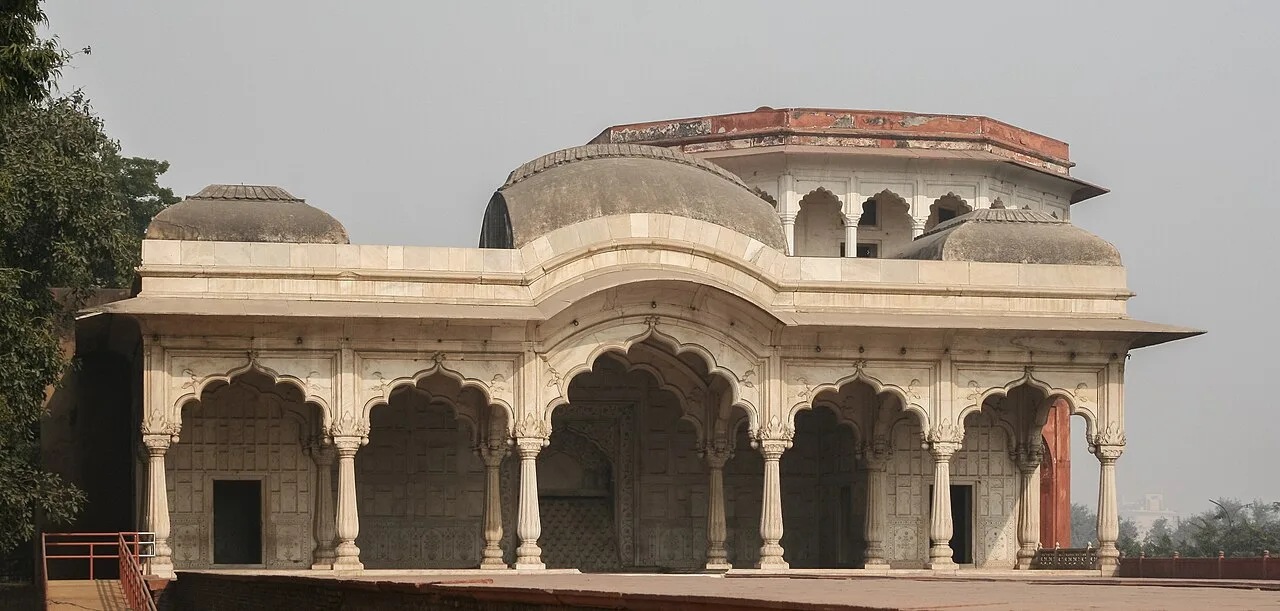
Emperor Shah Jahan commissioned the Red Fort in 1639, after deciding to move the Mughal capital from Agra to Delhi. Construction continued through the following years, and the fort became the principal residence of the Mughal emperors. Its original decoration used red and white, and its design is attributed to Ustad Ahmad Lahori, also associated with the Taj Mahal. The court complex combined administrative, ceremonial and residential spaces. In 1739, forces led by Nadir Shah of the Afsharid Empire invaded Delhi and plundered the fort, taking artwork and valuable objects. Mughal authority weakened further in the decades that followed. After the Indian Rebellion of 1857, the British took control, demolished many marble buildings and used the fort as a military garrison; much of its defensive wall survived. In 1945–46, trials of Indian National Army officers at the fort drew wide public attention. On 15 August 1947, Jawaharlal Nehru raised the Indian flag above Lahori Gate. The annual Independence Day ceremony continues this association. Conservation and visitor arrangements are now overseen by the ASI.
Origin stories & folklore
Stories about hidden treasure and secret passages are sometimes repeated in popular accounts of the Red Fort and Old Delhi. These belong to local lore rather than established history: the fort was plundered in 1739, but claims about particular hidden caches or tunnels should not be treated as verified facts. The fort’s dramatic scale and layered history have also encouraged tales of royal intrigue and concealed escape routes. Visitors can enjoy such stories as part of the place’s folklore while distinguishing them from documented evidence. For historical context, rely on interpretation at the monument and reputable historical sources rather than attempting to find restricted or inaccessible areas.
Architecture & design
The Red Fort is a walled Mughal palace-fort whose plan combines defensive enclosure with an elaborate court and residential precinct. Its long red sandstone walls give the monument its name, while marble, carved stone, painted decoration and inlay appear in palace buildings. Lahori Gate is the principal entrance; Delhi Gate is another major gateway. Within the complex, the Diwan-i-Aam served public audiences and the Diwan-i-Khas hosted more select court gatherings. The Rang Mahal and other palace structures formed part of the imperial residential zone. The design blends Persianate and Indian forms, with arcades, domes, pavilions, screens and formal gardens. Water channels, including the Nahr-i-Bihisht, or “Stream of Paradise,” once linked elements of the palace layout. Later damage and alteration mean that not every original feature survives. The fort’s scale, gateways and remaining buildings still show how security, ceremony and daily court life were arranged together.
Important objects & sculptures
Look for the fort’s carved stone details, marble screens, floral inlay and surviving decorative work in palace buildings. The Diwan-i-Khas is associated with the celebrated Persian inscription often translated as “If there is a paradise on earth, it is this, it is this, it is this”; its setting helps explain the court’s use of poetry and display. The historic Peacock Throne is not on view here, having been taken away after Nadir Shah’s invasion. Museum displays within the complex may include objects and interpretation related to Mughal rule, the 1857 uprising and the independence movement, but exhibits and access can change. Check locally which galleries are open during your visit.
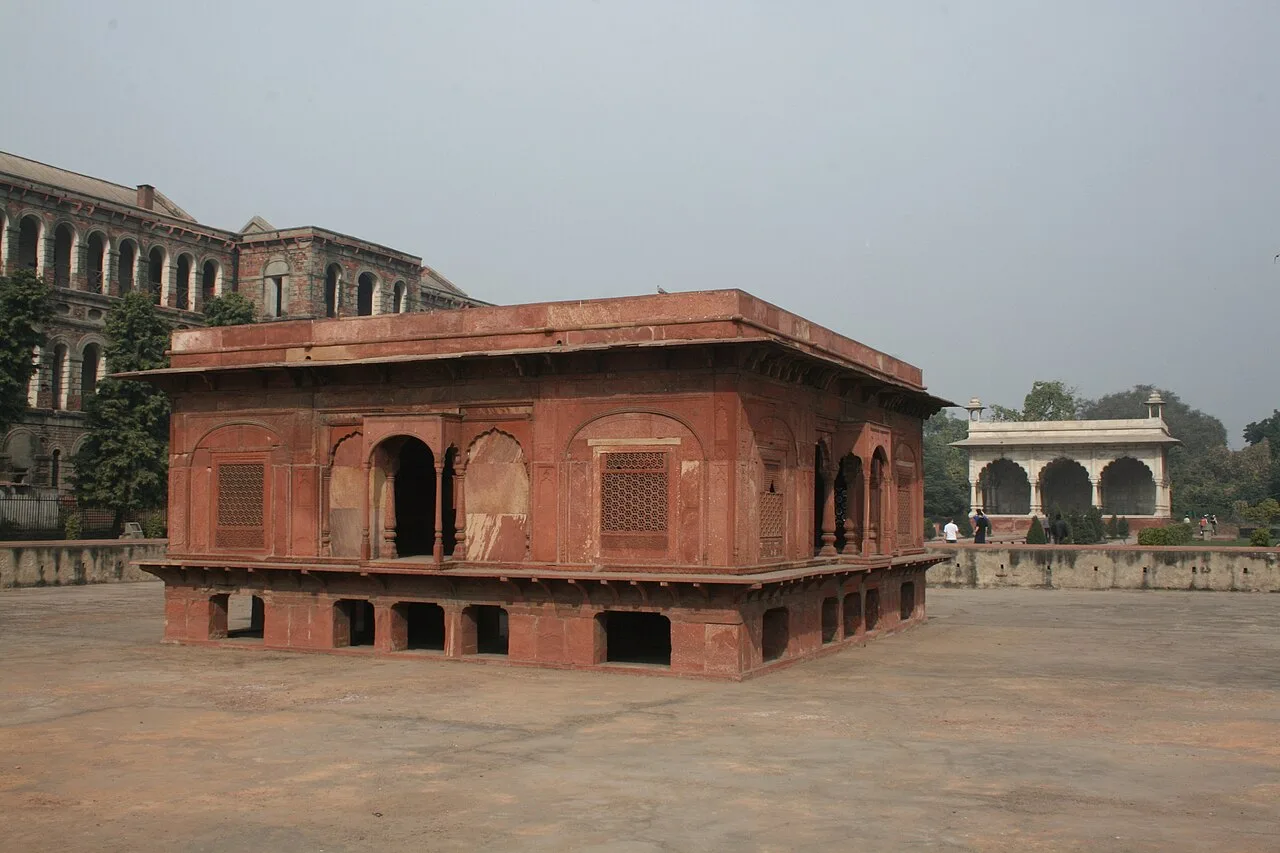
Explore Red Fort slowly and read the interpretation boards, use the official audio guide where available or hire an authorised guide to understand its history. Check opening days, ticket counters and camera rules in advance; many monuments and museums close on one weekday and on some public holidays. Early morning gives softer light, cooler air and smaller crowds. A comfortable itinerary is one main visit in the morning, a local meal at midday and a short nearby stop before an afternoon return. Use the district list on this site to find other places in Central Delhi, but check the route and its condition before combining stops. If a festival or fair is on, roads and stays can be busy — and the experience can be unforgettable. Leave no litter: many sites are protected by the communities around them.
Suggested itineraries
Half day: Allow about 2–3 hours to enter through Lahori Gate, explore the main courtyards and palace buildings, read the interpretation and take a rest; add a nearby Old Delhi meal if time permits. Full day: Spend about 3 hours at the fort in the morning, have lunch nearby, then allow 2–3 hours for Chandni Chowk and a short visit to Jama Masjid or another nearby landmark; keep time for traffic and breaks. Gentler option: Focus on the principal accessible routes and a few key buildings, take seated rests, and arrange a short nearby stop by cab rather than walking through the busy market lanes.
The fort remains part of Delhi’s living civic life, most visibly through the Independence Day ceremony and the Prime Minister’s address from its ramparts. Around it, Old Delhi’s neighbourhoods bring together Urdu- and Hindi-speaking communities, traders, worshippers and visitors, with Punjabi and many other languages also heard in the capital. Nearby lanes sustain long-standing food, craft and market traditions. The monument itself is a protected heritage site rather than a venue for unrestricted performances or worship, so visitors should follow posted rules and staff instructions. Respectful behaviour, modest consideration of others’ space and care for historic surfaces help preserve the site for everyone.
Festivals & events
The most prominent annual public observance at the fort is India’s Independence Day ceremony in August. It involves heightened security, crowd controls and possible changes to visitor access; check official announcements before planning a visit around it. Ramadan and Eid bring a distinctive atmosphere to nearby Old Delhi, especially around Jama Masjid and the surrounding food streets, while Diwali is widely celebrated across the city. These nearby observances can make roads, markets and transport busier than usual. Festival arrangements and access rules vary from year to year, so confirm locally and allow extra time.
Local food in Delhi includes chaat, stuffed parathas and jalebi in Chandni Chowk, chole bhature, kebabs and Mughlai dishes around Jama Masjid, butter chicken, momos and kulfi. Ask what is fresh that day; many small eateries cook a limited daily menu. Vegetarian travellers eat very well across this region, and most towns also have non-vegetarian options. Street food is part of the Delhi experience: pick busy stalls with fast turnover, prefer freshly cooked items and drink sealed or filtered water. Try a home-cooked or dhaba meal when you can — it is often the best food on the route. Choose busy, clean places and carry your packaging back with you.
Shopping & local experiences
Chandni Chowk and the surrounding Old Delhi lanes offer textiles, jewellery, household goods, sweets and traditional snacks. The market is crowded and busy, so keep valuables secure, check product details before buying and allow time for walking. Souvenir options near major monuments may include postcards, books and small decorative items; choose locally made goods where possible and avoid buying anything presented as an antiquity. Food stalls and established eateries nearby offer a taste of the area’s varied cuisine. Follow food-safety judgement, especially in hot weather, and dispose of litter responsibly.
October to March (check air quality from November to January)
Within Delhi, the Delhi Metro is usually the quickest and cheapest way to reach Red Fort; find the nearest station on the official DMRC website or app, and use an app-based auto, e-rickshaw or cab for the last stretch. Road traffic is heavy at peak hours, so allow extra time and avoid driving yourself in Old Delhi lanes. Long-distance trains use New Delhi, Old Delhi, Hazrat Nizamuddin and Anand Vihar terminals, and flights use Indira Gandhi International Airport. The nearest of these railway terminals is Old Delhi (Delhi Junction), roughly 5 km away in a straight line. Indira Gandhi International Airport, Delhi is roughly 20 km away in a straight line. When comparing train, bus and flight, count the complete door-to-door time: a flight saves the most time only if the onward road transfer is short, while an overnight train can save a hotel night. Book your return before you leave, because seats fill quickly on weekends, festivals and holidays. Current train numbers, timings, return services and fares are not listed here; check IRCTC and NTES for trains and the airline's own schedule for flights. No permit is needed to visit Delhi. Many monuments are protected by the Archaeological Survey of India and need an entry ticket, often cheaper when bought online; the Red Fort and several museums close on Mondays. Security checks are routine at metro stations and major sites.
Confirm onward and return timings on IRCTC / NTES, the state bus operator or your airline before travel. A dash means current timings or fares have not been verified.
Getting around
The Lal Qila station on Delhi Metro’s Violet Line is a practical approach, and the Old Delhi area can also be reached by city bus, auto-rickshaw, e-rickshaw or taxi. For the last stretch, walking may be easier than driving through congested lanes, though crowds and uneven pavements can slow progress. App-based cabs can drop visitors near accessible road approaches, subject to traffic controls. Parking is limited and may be affected by security arrangements, so do not assume a space will be available. Check current road diversions and metro routes before travel.
Hours, tickets & permissions
Entry generally requires a valid ticket, and some galleries or areas may have separate access rules. Security screening applies; restrictions on bags, equipment and photography can change. Carry identification if requested by current security guidance, and follow signs about permitted items and visitor conduct. There is no special dress requirement stated here, but comfortable, respectful clothing is sensible. Confirm current opening days, hours, fees, ticketing arrangements and any closures with the Archaeological Survey of India or the official visitor information before setting out.
Facilities
Facilities within the complex can include toilets, drinking-water points, security screening and visitor information, but availability and access may vary by area; check locally on arrival. Food choices are more dependable in the surrounding Old Delhi neighbourhood than inside the monument, so plan accordingly and carry water where permitted. Authorised guides or audio-guide services may be available, but confirm current arrangements at the entrance. ATMs, shops and places to eat can be found in the wider area. Parking and accessible amenities should not be assumed, particularly during major events or security restrictions.
Accessibility
A visit involves substantial walking through a large historic compound, with hard surfaces, uneven sections and possible steps at buildings or thresholds. Shade is limited on some routes, and heat, crowds and standing during security checks can make the visit tiring. Wheelchair and stroller access may be restricted by historic surfaces, steps and route conditions; do not assume that ramps or lifts are available throughout. Older visitors or anyone with limited mobility may prefer a shorter route, frequent rests and assistance from a companion. Ask staff about current accessible entry and facilities before visiting, as conditions can change.
No permit is needed to visit Delhi. Many monuments are protected by the Archaeological Survey of India and need an entry ticket, often cheaper when bought online; the Red Fort and several museums close on Mondays. Security checks are routine at metro stations and major sites. Carry a photo ID at all times and save the emergency number 112 and your accommodation's contact offline. Summer heat and winter smog are the main health risks: drink plenty of water, check the air-quality index and wear a good mask on poor-air days. Watch your belongings in crowded markets and metro coaches. Respect community rules, private property and posted instructions. Follow local guidance if access changes.
Photography
Early morning usually offers softer light, cooler conditions and fewer visitors, while the red sandstone walls can be striking in warm late-afternoon light. Courtyards and gateways provide broad views, but stay within visitor routes and keep clear of security areas. Photography rules may differ between outdoor spaces, museums and special events; check signs and staff guidance before using a camera. Do not fly a drone unless current authorities explicitly permit it. Avoid intrusive photographs of visitors, ceremonies or worshippers, and never touch or climb historic structures for a picture.
Choose a stay by the full journey to Red Fort, not just the district name. Central areas such as Connaught Place, Paharganj and Karol Bagh, or areas near your metro line, save time; check the exact location and how far the hotel is from the nearest metro station. In summer, check air-conditioning or coolers; in December and January, check heating and hot water. Book in advance for weekends, festivals and the peak season (October to March (check air quality from November to January)). Confirm the exact location, meals included, check-in time and cancellation terms in writing. Avoid sending money to unverified contacts or touts at stations. Carry some cash, as card and digital payments can be unreliable in remote areas.
Chandni Chowk, the historic market district, lies close to the fort and is known for its busy lanes and food shops. Jama Masjid, one of Delhi’s major historic mosques, is also nearby; check its visitor guidance and be mindful of prayer times. Gurudwara Sis Ganj Sahib and Digambar Jain Lal Mandir are other notable places in the Old Delhi area. Salimgarh Fort forms part of the UNESCO-inscribed Red Fort Complex, though access arrangements may differ. Raj Ghat, the memorial to Mahatma Gandhi, is another Delhi landmark that can be combined by road if you have more time.
For couples, Red Fort rewards a slow pace: arrive early for soft light and fewer crowds, share a local meal and keep the evening free. Evenings at a garden, heritage site or a rooftop café near the monuments make a good end to the day. Public displays of affection can be frowned upon in conservative communities and at religious sites, so be discreet. Keep a buffer in your itinerary, because weather and traffic can delay plans.
Q: How much time should I allow for the Red Fort? A: Allow about 2–3 hours for a focused visit; a longer stay gives time for museums and a nearby Old Delhi stop. Q: When is a good season to visit? A: October to March is generally more comfortable than the hot summer, but check air quality from November to January. Q: Do I need a ticket, and should I check before going? A: Entry is ticketed; confirm current fees, hours, opening days and security rules with the ASI before your visit. Q: Is the fort suitable for children and older visitors? A: Families can visit, but expect walking, crowds and some uneven or stepped areas. Plan breaks and a shorter route if needed. Q: Where can I stay nearby? A: Old Delhi and other central parts of Delhi have accommodation options; compare access, traffic and your onward transport needs before booking.
Be the first to share photos, stories, advice or a helpful contact for Red Fort.
Loading…