
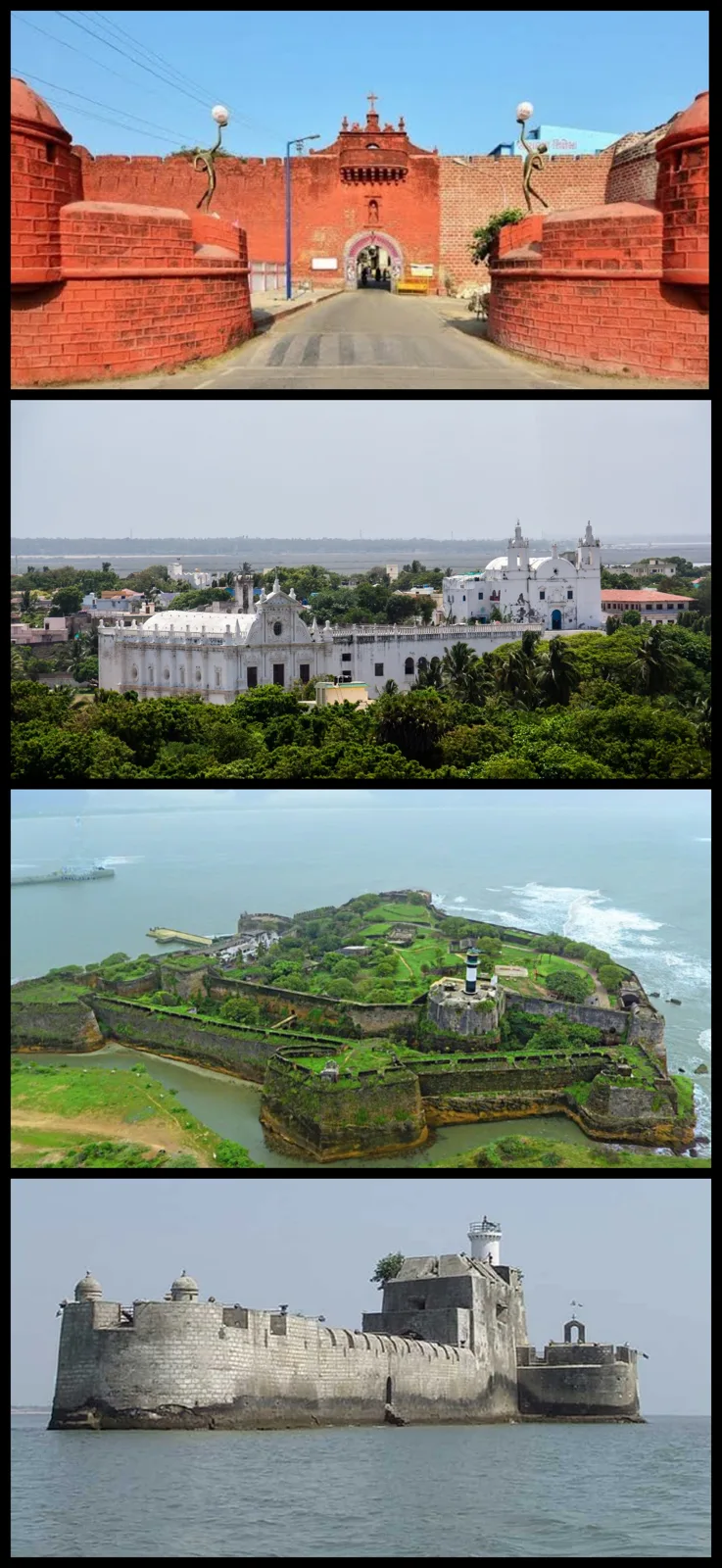
Diu town
Diu is a medieval fortified town on Diu Island, known for its fort, old Portuguese cathedral and fishing-town character. Visitors come to explore its historic landmarks.
Key facts · verified by Ghumoopedia editors
- Type of place
- Heritage monument
- Best time to visit
- October to March; August to October for green forests in Dadra and Nagar Haveli
- Nearest railway station
- Veraval Junction · about 68 km (straight line)
- Nearest airport
- Diu Airport · about 7 km (straight line)
- Verified
- 21 Nov 2026
Plan a trip from Diu town — a day-by-day route through places nearby.
Diu is a historic fortified settlement in Diu district, within the Union Territory of Dadra and Nagar Haveli and Daman and Diu. It stands at the eastern extremity of Diu Island. The district ranks tenth among India's least-populated districts. Fishing is part of local life, while the fortifications and old Portuguese cathedral are notable landmarks. These historic structures give visitors a focus for exploring the town's past. Diu was among 100 Indian cities seeking funding through Narendra Modi's Smart Cities Mission. It competed with 20 other cities for one of the final 10 places in the national contest. In April 2018, reports said Diu had become India's first city to operate entirely on renewable energy during daylight hours. This union territory joins three separate areas: Daman and Diu, two former Portuguese coastal enclaves with forts, churches and quiet beaches, and Dadra and Nagar Haveli, a forested inland region of Warli and Kokna tribal villages around Silvassa, the Madhuban reservoir and the Damanganga river. The coast is hot and humid from March to June; the southwest monsoon from June to September brings heavy rain and rough seas; October to February is warm, dry and pleasant. Dadra and Nagar Haveli is greenest just after the monsoon. The usual best time to visit is October to March; August to October for green forests in Dadra and Nagar Haveli. Timings, fees and access arrangements must be confirmed locally. For official information, see Dadra and Nagar Haveli and Daman and Diu Tourism at https://tourism.dddgov.in.
Why it matters
Diu is a historic coastal town whose fort and churches preserve evidence of Portuguese rule and the region’s earlier importance as a maritime frontier. The town lies at the eastern end of Diu Island, in the union territory of Dadra and Nagar Haveli and Daman and Diu, and remains a fishing and administrative centre. Diu Fort is its most prominent heritage landmark; St Paul’s Church and the former St Thomas Church, now a museum, add to the town’s historic character. These places are significant to the history of Portuguese presence on India’s western coast. No UNESCO World Heritage designation for Diu town is asserted here; check current listings and local heritage information for official status.
Diu’s island position and sheltered coastal setting made it a point of strategic and commercial interest before Portuguese rule. In the early sixteenth century, the Portuguese sought control of the town and its harbour as part of their wider contest for influence along the western Indian coast. Following an agreement with Sultan Bahadur Shah of Gujarat in 1535, they began building Diu Fort; construction and strengthening continued over subsequent years. The fort guarded the settlement and approaches from the sea, and Diu became an important Portuguese possession. Portuguese rule lasted until 1961, when Diu came under Indian administration. It was administered with Daman as a union territory and, in 2020, became part of the merged union territory of Dadra and Nagar Haveli and Daman and Diu. The town’s historic fabric reflects these successive periods: the fort’s military works, churches, older streets and harbour-side life sit alongside a contemporary fishing town. Buildings and public spaces have experienced changes and repairs over time. Details of individual conservation works vary, so visitors seeking restoration records should consult the relevant heritage or local administration authorities.
Origin stories & folklore
There is no single, well-documented founding legend for Diu town that can be confidently presented as historical fact. The name is sometimes explained through the Sanskrit word dvipa, meaning island, but this is an interpretation rather than a confirmed origin story. Local religious tradition is more visible at nearby Gangeshwar Mahadev Temple, where five lingas by the sea are associated with the Pandavas, the heroes of the Mahabharata, and their period of exile. Treat this as a living belief, not an archaeological account. Stories told by residents and fishing families may vary; visitors can ask respectfully, while avoiding presenting a local account as a verified event.
Architecture & design
Diu’s best-known architectural feature is its Portuguese-era sea fort, built on the island’s coast with heavy defensive walls, bastions and seaward views. Its position and substantial masonry reflect the need to protect the harbour and control approaches from the water. Within the town, narrow streets and older buildings reveal a layered settlement rather than a single planned monument. Churches show Portuguese Catholic influence in their façades, interiors and religious fittings; St Paul’s is especially noted for its richly ornamented church interior. The former St Thomas Church has been adapted as a museum. Local buildings also use practical coastal forms and materials suited to heat, salt air and monsoon weather. Visitors should distinguish the surviving historic fabric from later repairs and alterations; not every old-looking structure is necessarily from the Portuguese period.
Important objects & sculptures
Look for the fort’s old cannon and military fittings, as well as the stonework and defensive details that help explain its former role. Inside St Paul’s Church, carved and decorative religious fittings are among the features worth observing; be mindful that it remains a place of worship. The former St Thomas Church houses a museum collection that includes sculptures, stone inscriptions and other historical material associated with the region. Displays and access arrangements can change, and not every object is necessarily on view at all times. Avoid touching carvings, inscriptions or displayed objects, and follow any instructions from caretakers or museum staff.
Use Diu town as a base to understand local life: walk through the market, look for local crafts such as Warli paintings, bamboo and tribal crafts from Silvassa, and Portuguese-era tilework and lace in Diu, and ask your host about nearby viewpoints and short excursions. Always ask before photographing people, homes or ceremonies. A comfortable itinerary is one main visit in the morning, a local meal at midday and a short nearby stop before an afternoon return. Visit forts and churches in the morning and spend sunset on a beach; in Diu, a scooter makes it easy to cover the forts, caves and beaches in a day. Use the district list on this site to find other places in Diu, but check the route and its condition before combining stops. If a festival is on — such as Christmas and the feasts of the Portuguese-era churches, the Tarpa tribal festival in Silvassa, Navratri garba or Diwali — transport and stays can be busy, and the experience can be unforgettable. Keep beaches clean and do not leave bottles or plastic behind.
Suggested itineraries
Half day: Walk through the old town (about 45 minutes), visit Diu Fort (1.5–2 hours), then see St Paul’s Church or the St Thomas Church Museum (about 45–60 minutes, subject to access). Full day: Start at Diu Fort (2 hours), continue to St Paul’s Church and the St Thomas Church Museum (1.5–2 hours combined), take a meal break, then visit Naida Caves and finish at a nearby beach (allow 2–3 hours including travel). Gentler option: Choose one main site, use a taxi between stops, take seated breaks and finish with a short, level stretch along an accessible public area; confirm surfaces and entry conditions locally.
Diu’s everyday life combines coastal Gujarati and Kathiawari influences with a visible Portuguese-era Catholic heritage. Fishing remains part of the town’s identity, while markets and neighbourhood streets provide a glimpse of local routines. Gujarati is widely used; Hindi and other languages may also be heard, and language use varies between residents and visitors. Catholic churches continue to serve local communities, while Hindu religious sites and customs are also part of the wider district’s life. Food traditions draw on the coast and Gujarat, with seafood available alongside familiar regional vegetarian dishes. Ask before photographing residents, homes, religious observances or fishing work, and dress and behave respectfully at places of worship.
Festivals & events
Christmas and church feast days are important for Diu’s Catholic community and may bring services, decorations and increased activity around churches. Hindu festivals such as Navratri and Diwali are also observed in the town and district, with celebrations varying by neighbourhood. The wider union territory has distinct cultural traditions, including tribal festivals in Dadra and Nagar Haveli, but these are not necessarily held in Diu town. Festival dates follow religious calendars and change from year to year. Accommodation and local transport can be busier during popular celebrations, so check local announcements and make arrangements in advance.
Local food in Dadra and Nagar Haveli and Daman and Diu includes fresh seafood, Portuguese-influenced dishes such as sorpotel and vindaloo, Gujarati thalis and snacks, and in Silvassa, tribal Warli and Kokna dishes made with local rice, millet and forest greens. Ask what is fresh that day; many small eateries cook a limited daily menu. Daman and Diu are known for seafood shacks near the beaches; Silvassa has Gujarati and North Indian vegetarian restaurants. Remote sites may have no restaurant at all. Carry water and snacks, eat a proper breakfast before long journeys, and ask your accommodation for a packed lunch if you are heading out early. Try a home-cooked or local meal when you can — it is often the best food on the route. Choose busy, clean places, drink sealed or filtered water, and carry your packaging back with you.
Shopping & local experiences
Browse Diu’s local markets for everyday goods, snacks and regional food products rather than assuming there is a dedicated heritage craft market. Gujarati and Kathiawari flavours, including seafood where available, are part of the local food experience. Warli paintings and bamboo or tribal crafts are more closely associated with communities in Dadra and Nagar Haveli, including around Silvassa, and may not be readily available in Diu; ask about their origin and buy from a reliable seller. Portuguese-era tilework and lace are heritage features, not guaranteed contemporary souvenirs. Avoid buying old architectural fragments or antiquities.
October to March; August to October for green forests in Dadra and Nagar Haveli
The nearest principal railway station by straight-line distance is Veraval Junction, roughly 68 km away. The nearest operating airport by straight-line distance is Diu Airport, roughly 7 km away. These figures are calculated from map coordinates — actual road distance is longer. Vapi station on the Mumbai–Ahmedabad line is the gateway for Daman (about 12 km) and Silvassa (about 18 km); Surat and Mumbai airports have the widest choice of flights. Diu is on a separate island off the Saurashtra coast, with a small airport, the nearest railheads at Veraval and Una, and buses from Ahmedabad and Rajkot. For the final leg, local buses, autos and taxis, with rented scooters and bicycles popular in Diu cover the local area. A private taxi gives more flexibility for spread-out sights. When comparing train, bus and flight, count the complete door-to-door time: a flight saves the most time only if the onward transfer is short, while an overnight train can save a hotel night. For Daman and Silvassa, a fast train to Vapi is usually quicker than flying, since the station is a short drive away. For Diu, flying to Diu airport saves a long road journey, while trains only go as far as Veraval. Book your return before you leave, because seats fill quickly on weekends, festivals and holidays. Current train numbers, timings, return services, ferry departures and fares are not listed here; check IRCTC and NTES for trains, the airline's own schedule for flights and the official operator for ships and ferries. No permit is needed. Daman and Diu allow the sale of alcohol, unlike the surrounding state of Gujarat, which has prohibition — carrying liquor back into Gujarat is an offence, and police check vehicles at the border. Drinking on beaches and in public places is restricted.
Confirm onward and return timings on IRCTC / NTES, the state bus operator or your airline before travel. A dash means current timings or fares have not been verified.
Getting around
The historic town is manageable on foot, though distances between separate sights and the coastal areas make local transport useful. Auto-rickshaws and taxis can usually be found for point-to-point trips; rented scooters and bicycles are popular ways to explore Diu, subject to availability and road conditions. Local buses may serve some routes, but check locally for current coverage. Ask about parking before stopping near busy heritage sites, and avoid blocking narrow streets. Boats are not a necessary way to get around the town, and visitors should use only locally authorised services where available.
Hours, tickets & permissions
Diu town’s streets and public areas do not have one shared entry system, while the fort, churches and museum may each follow separate visitor rules. Tickets, permits, camera restrictions, dress expectations and access to active worship spaces can vary or change. Do not assume every interior is open simply because the surrounding area is accessible. Confirm current hours, fees and entry conditions with the relevant site staff or managing authority before setting out; official tourism information is available through Dadra and Nagar Haveli and Daman and Diu Tourism.
Facilities
Facilities vary between the town’s public areas and individual heritage sites. Toilets, drinking water, food outlets and parking may be available nearby, but should not be assumed within every monument. Diu town has shops, restaurants, accommodation and cash facilities; availability of ATMs and card payment can vary. Guides may be available locally, though visitors should confirm credentials and arrangements before starting a tour. Carry water in warm weather and take rubbish with you. Check locally for the location and condition of toilets, drinking-water points and any visitor services at the specific site.
Accessibility
Access can be challenging for visitors with limited mobility. The fort and older parts of town have uneven surfaces, sloping paths, steps and stretches without shade; exploring the full site can involve considerable walking. Historic churches and museum spaces may also have steps or narrow entrances. Wheelchair and stroller access should not be assumed, and there is no guarantee of ramps or lifts. Elderly visitors may find it easier to visit one site at a time, travel between locations by taxi and rest frequently. Ask site staff about the current route and surface conditions before entering.
No permit is needed. Daman and Diu allow the sale of alcohol, unlike the surrounding state of Gujarat, which has prohibition — carrying liquor back into Gujarat is an offence, and police check vehicles at the border. Drinking on beaches and in public places is restricted. Carry a photo ID at all times and save the emergency number 112 and your accommodation's contact offline. The sea can be rough, especially from June to September: swim only at lifeguarded beaches and follow red-flag warnings; Daman's beaches have strong tides and dark, muddy water. Watch your belongings in crowds and on public transport, and follow posted instructions.
Photography
Early morning and late afternoon often give softer light on the fort’s stonework and coastal views. The fort walls and open viewpoints provide good scenes, but follow barriers and posted restrictions. Photography in public areas is generally possible, while churches, the museum or particular displays may have their own rules; ask before photographing indoors. Do not use a drone without checking current aviation rules and any site-specific permissions. Seek consent before photographing people, homes, worship or fishing activity, and avoid disrupting ceremonies.
Choose a stay by the full journey to Diu town, not just the district name. Daman's Devka and Jampore beaches and Diu's Nagoa beach have resorts and mid-range hotels; Silvassa has business hotels and forest resorts around Khanvel and Dudhni. Weekends are busy with visitors from Gujarat and Mumbai. In the hot months, check air-conditioning; in the monsoon, check that the property is reachable if roads flood or ferries are cancelled. Book in advance for weekends, festivals and the peak season (October to March; August to October for green forests in Dadra and Nagar Haveli). Confirm the exact location, meals included, check-in time and cancellation terms in writing. Avoid sending money to unverified contacts or touts at stations, airports and jetties. Carry some cash, as card and digital payments can be unreliable in remote areas.
Within Diu district, Diu Fort, St Paul’s Church and the St Thomas Church Museum make a natural heritage circuit. Naida Caves are another notable stop near the town. Gangeshwar Mahadev Temple, with its coastal setting, offers a religious and cultural visit, while INS Khukri Memorial and Jallandhar Beach can be combined with a town outing. Nagoa Beach is a popular coastal excursion on Diu Island. Roads, site access and sea conditions can affect plans, so check locally before combining several places in one day.
For couples, Diu town rewards a slow pace: arrive early for soft light and fewer crowds, share a local meal and keep the evening free. A sunset at Diu Fort, a walk through Moti Daman's fortified quarter, a quiet beach morning at Nagoa or boating on Dudhni lake makes the trip memorable. Public displays of affection can be frowned upon in conservative communities and at religious sites, so be discreet. Keep a buffer in your itinerary, because weather and transport can delay plans.
Q: How much time should I allow for Diu town? A: A half day can cover one main heritage site and a church or museum; a full day allows time for additional sights and a beach stop. Q: When is a comfortable season to visit? A: October to March is generally the more pleasant period. The monsoon brings rain and rougher coastal conditions. Q: Is entry to the fort and churches free? A: Entry arrangements vary by site and can change. Confirm current rules and fees with the site or managing authority. Q: Can children and elderly visitors explore the heritage sites? A: Yes, but uneven ground, steps, heat and walking distances can be tiring. Plan breaks and check access before visiting. Q: Can I stay near Diu town? A: Accommodation is available in and around Diu town, with options varying by season and demand. Reserve ahead during busy holidays and festivals.
Be the first to share photos, stories, advice or a helpful contact for Diu town.
Loading…