
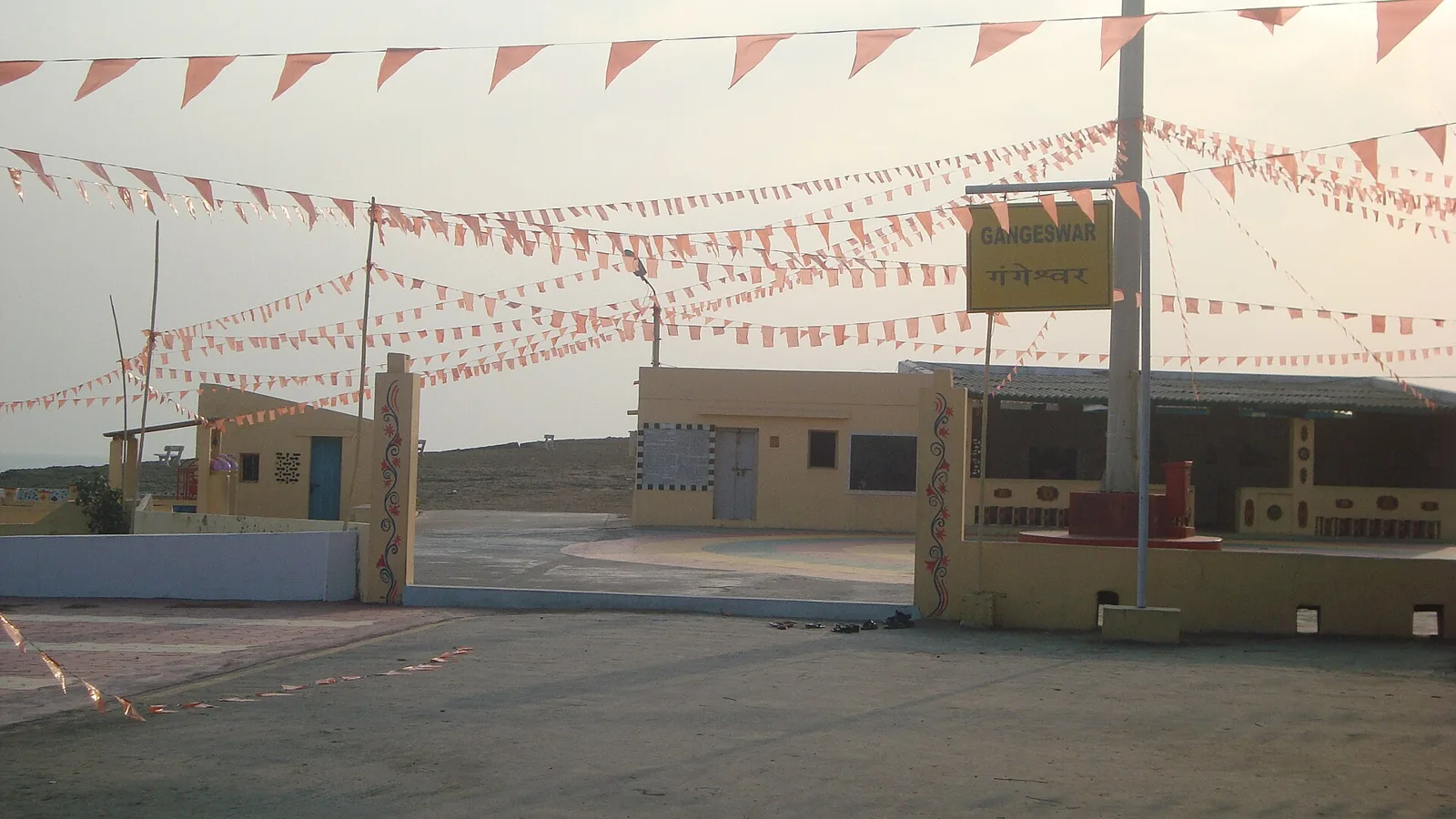
Gangeshwar Mahadev Temple
This Hindu shrine to Shiva sits among rocks on the coast near Fudam village in Diu. Visitors come to see its five lingas, revealed at low tide.
Key facts · verified by Ghumoopedia editors
- Type of place
- Temple / pilgrimage site
- Best time to visit
- October to March; August to October for green forests in Dadra and Nagar Haveli
- Nearest railway station
- Veraval Junction · about 65 km (straight line)
- Nearest airport
- Diu Airport · about 4 km (straight line)
- Verified
- 21 Nov 2026
Plan a trip from Gangeshwar Mahadev Temple — a day-by-day route through places nearby.
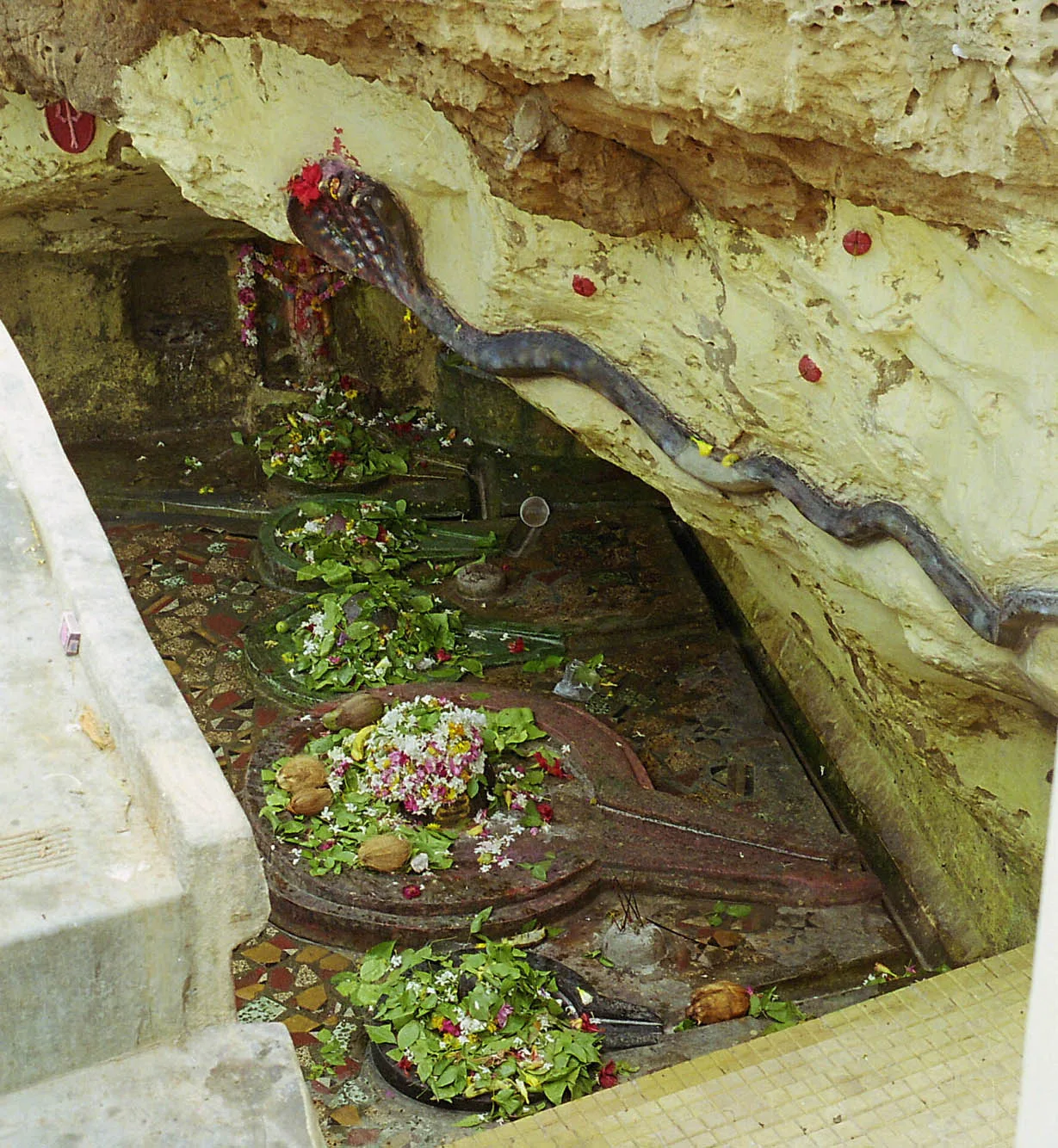
Gangeshwar Mahadev Temple stands beside the shore at Fudam village, around 3 km from Diu, within Diu district of Dadra and Nagar Haveli and Daman and Diu. It is a Hindu place of worship dedicated to Shiva, also called Mahadeva, and its setting among coastal rocks gives it the character of a cave shrine overlooking the Arabian Sea. On entering the rocky cave, visitors encounter figures of Ganesha, Vishnu and Lakshmi. Beyond them are five Shiva lingas of varying sizes, positioned amid seawater. A carving of Sheshnag appears on the rock above, facing towards the lingas. The water level determines when the lingas can be seen: during high tide they are usually covered, while at low tide they become visible. The temple is also called the Seashore Temple, a name reflecting the lingas’ position beside the sea. Its setting and the sight of the lingas emerging as the tide recedes are central reasons people come here. This union territory joins three separate areas: Daman and Diu, two former Portuguese coastal enclaves with forts, churches and quiet beaches, and Dadra and Nagar Haveli, a forested inland region of Warli and Kokna tribal villages around Silvassa, the Madhuban reservoir and the Damanganga river. The coast is hot and humid from March to June; the southwest monsoon from June to September brings heavy rain and rough seas; October to February is warm, dry and pleasant. Dadra and Nagar Haveli is greenest just after the monsoon. The usual best time to visit is October to March; August to October for green forests in Dadra and Nagar Haveli. Timings, fees and access arrangements must be confirmed locally. For official information, see Dadra and Nagar Haveli and Daman and Diu Tourism at https://tourism.dddgov.in.
Why it matters
Gangeshwar Mahadev Temple is a coastal Hindu shrine dedicated to Shiva, on the shore at Fudam village, about 3 km from Diu town. Its five Shiva lingas, set among rocks and reached by seawater at high tide, make the relationship between worship and the changing seascape central to the visit. The temple is a locally important place of worship and a distinctive stop on Diu’s religious and coastal routes. Visitors also encounter images of Ganesha, Vishnu and Lakshmi. The available guide does not identify the temple as a UNESCO World Heritage Site or an ASI-protected monument; check with local authorities for its current administrative status.
The shrine is associated with Fudam village, on the coast near Diu, and remains a place of Hindu worship. Its setting among shoreline rocks has shaped how people experience it: the five lingas are generally submerged during high tide and may be visible when the water recedes. This tidal cycle is a prominent feature of the temple today, rather than evidence for a particular building period. Local tradition connects the lingas with the Pandavas, but this is a sacred origin story, not a verified historical record. Diu’s wider history includes Portuguese rule, yet a specific Portuguese-period alteration or documented restoration of this temple should not be assumed without local or archival evidence. The temple is sometimes called the Seashore Temple because its Shiva lingas stand at the water’s edge. For a fuller chronology, visitors can ask the temple caretakers or consult locally held records.
Origin stories & folklore
According to local tradition, the five lingas at Gangeshwar are associated with the five Pandava brothers of the Mahabharata. The story is commonly told as a connection between the Pandavas’ travels and the worship of Shiva at this coastal site. This belief gives the group of lingas a meaning beyond their number and setting, but it should be understood as religious tradition rather than established archaeological history. The sea’s repeated covering and revealing of the lingas is also part of the place’s distinctive devotional experience. Visitors should observe the shrine respectfully and avoid treating the legend as a claim that has been independently verified.
Architecture & design
Gangeshwar is a small cave-style shrine set among rocks on the seashore at Fudam. Its form is closely tied to the natural coastal setting: visitors enter a rocky recess, while the five Shiva lingas lie at the water’s edge and are commonly submerged at high tide. The visible arrangement therefore changes with the sea. The shrine also contains images of Ganesha, Vishnu and Lakshmi. Above the lingas, a carving of Sheshanaga is described as looking toward the Shiva lingas. The available information does not establish a formal architectural style, construction date or specific building material, so these should not be inferred from the setting alone. The cave and rock formation are the defining features, rather than a large constructed temple complex. Wet, uneven stone and changing water levels are important practical aspects of the site’s layout.
Important objects & sculptures
Look for the five Shiva lingas among the shoreline rocks; their visibility depends on the tide, and they are generally submerged at high water. A carving of Sheshanaga above the rocks is described as looking toward the lingas. Inside the cave-style shrine, visitors may see images of Lord Ganesha, Lord Vishnu and Goddess Lakshmi. These sacred images and the lingas are objects of worship, not simply displays, so avoid touching them unless invited by temple staff. The available guide does not identify inscriptions, a museum collection or a documented group of dated antiquities at the site.
Religious significance
The temple is dedicated to Shiva, also known as Mahadeva, and is an active place of Hindu worship. Devotees visit to offer prayers and observe rituals at the shrine; the lingas are its central sacred focus. The five lingas set at the sea’s edge give worship here a distinctive relationship to the tides, since they may be hidden beneath seawater and visible again as it recedes. Images of Ganesha, Vishnu and Lakshmi are also present in the cave-style shrine. Local tradition associates the five lingas with the Pandavas. Visitors who are not taking part in worship are welcome to observe quietly, follow instructions from caretakers and give worshippers space during prayers.
Visit Gangeshwar Mahadev Temple with time to observe daily prayers and rituals respectfully. Follow the posted rules on footwear, photography, phones and dress — some temples have dress codes and separate queues on festival days. A comfortable itinerary is one main visit in the morning, a local meal at midday and a short nearby stop before an afternoon return. Visit forts and churches in the morning and spend sunset on a beach; in Diu, a scooter makes it easy to cover the forts, caves and beaches in a day. Use the district list on this site to find other places in Diu, but check the route and its condition before combining stops. If a festival is on — such as Christmas and the feasts of the Portuguese-era churches, the Tarpa tribal festival in Silvassa, Navratri garba or Diwali — transport and stays can be busy, and the experience can be unforgettable. Keep beaches clean and do not leave bottles or plastic behind.
Suggested itineraries
Half day: Travel from Diu town to Gangeshwar; allow time to observe the shrine and tide conditions respectfully; return via a short stop in Diu town or at a nearby beach. Full day: Visit Gangeshwar in the morning; have a meal in Diu; explore Diu Fort and St Paul’s Church; finish with a coastal stop such as Nagoa Beach, checking travel conditions between places. Gentler option: Arrange a vehicle close to the temple approach, spend a short time at an accessible viewing point, and skip the rocky shoreline if the surface or tide makes walking difficult.
Gangeshwar is part of the living religious landscape of Diu, where residents and visitors come to pray at a coastal Shiva shrine. Worshippers may offer prayers and observe rituals; visitors should follow local guidance rather than assume that every practice is open to participation. Gujarati and Hindi are commonly encountered in the wider region, though languages spoken by individual worshippers vary. The temple is a place of worship rather than a staged cultural venue, and no regular music or dance programme is confirmed by the available information. The surrounding coastal setting and the tide-shaped visibility of the lingas form an important part of the visitor experience. Modest, respectful conduct is appropriate.
Festivals & events
Shivaratri is an important festival for Shiva devotees and may bring additional worshippers to the temple; confirm locally whether special observances are planned. Festival periods can mean more visitors, limited space near the shrine and busier local transport. If travelling on a religious occasion, ask temple caretakers or local tourism sources about arrangements, access and any temporary restrictions. Do not assume fixed dates or a published event schedule.
Local food in Dadra and Nagar Haveli and Daman and Diu includes fresh seafood, Portuguese-influenced dishes such as sorpotel and vindaloo, Gujarati thalis and snacks, and in Silvassa, tribal Warli and Kokna dishes made with local rice, millet and forest greens. Ask what is fresh that day; many small eateries cook a limited daily menu. Daman and Diu are known for seafood shacks near the beaches; Silvassa has Gujarati and North Indian vegetarian restaurants. Remote sites may have no restaurant at all. Carry water and snacks, eat a proper breakfast before long journeys, and ask your accommodation for a packed lunch if you are heading out early. If prasad or a blessing is offered, accept it according to local custom. Choose busy, clean places, drink sealed or filtered water, and carry your packaging back with you.
Shopping & local experiences
Diu town is the most practical place to look for everyday supplies and locally sold souvenirs. Visitors may find regional handicrafts, small keepsakes and packaged local foods in shops or markets, though selection varies. Ask sellers about the origin of crafts rather than assuming an item is locally made. Seafood and Gujarati-style food are part of the wider coastal dining experience; choose established eateries and check what is available on the day. Avoid buying shells or other natural material taken from beaches.
October to March; August to October for green forests in Dadra and Nagar Haveli
The nearest principal railway station by straight-line distance is Veraval Junction, roughly 65 km away. The nearest operating airport by straight-line distance is Diu Airport, roughly 4 km away. These figures are calculated from map coordinates — actual road distance is longer. Vapi station on the Mumbai–Ahmedabad line is the gateway for Daman (about 12 km) and Silvassa (about 18 km); Surat and Mumbai airports have the widest choice of flights. Diu is on a separate island off the Saurashtra coast, with a small airport, the nearest railheads at Veraval and Una, and buses from Ahmedabad and Rajkot. For the final leg, local buses, autos and taxis, with rented scooters and bicycles popular in Diu cover the local area. A private taxi gives more flexibility for spread-out sights. When comparing train, bus and flight, count the complete door-to-door time: a flight saves the most time only if the onward transfer is short, while an overnight train can save a hotel night. For Daman and Silvassa, a fast train to Vapi is usually quicker than flying, since the station is a short drive away. For Diu, flying to Diu airport saves a long road journey, while trains only go as far as Veraval. Book your return before you leave, because seats fill quickly on weekends, festivals and holidays. Current train numbers, timings, return services, ferry departures and fares are not listed here; check IRCTC and NTES for trains, the airline's own schedule for flights and the official operator for ships and ferries. No permit is needed. Daman and Diu allow the sale of alcohol, unlike the surrounding state of Gujarat, which has prohibition — carrying liquor back into Gujarat is an offence, and police check vehicles at the border. Drinking on beaches and in public places is restricted.
Confirm onward and return timings on IRCTC / NTES, the state bus operator or your airline before travel. A dash means current timings or fares have not been verified.
Getting around
From Diu town, local autos and taxis can take visitors toward Fudam and the temple; rented scooters and bicycles are also used for getting around Diu. Local buses may serve parts of the area, but check the route and service locally. The final approach may involve walking over uneven ground and rocks, especially near the shore. Ask the driver where it is safe and permitted to stop, and check local parking arrangements rather than blocking access. There is no need to approach the lingas by boat; do not enter the sea to reach them.
Hours, tickets & permissions
Entry arrangements, access to the cave and any rules for footwear, photography or offerings may be set by temple caretakers and can change during festivals or other busy periods. No dependable current opening schedule or fee information is confirmed here. Tide conditions can also affect whether the lingas are visible and how close visitors can safely approach. Before travelling, confirm current hours, entry requirements and any fees with the temple caretakers or the local managing authority. Follow posted notices on arrival.
Facilities
Facilities at the temple itself may be limited. Small shops or vendors may be present around busy periods, but availability can vary. Guides are not guaranteed; temple caretakers may be able to explain basic visitor etiquette. Carry water, take rubbish away and avoid relying on the site for an ATM or medical services. Confirm any access arrangements before setting out.
Accessibility
The shore-side setting includes uneven rock and potentially wet, slippery surfaces. Reaching the cave or getting close to the lingas may involve steps or an irregular approach; the exact condition can vary with tides and weather. Shade may be limited outside the rocky recess, and walking distances depend on where a vehicle can safely stop. Wheelchair and stroller access should not be assumed, and the shoreline may be difficult for older visitors or anyone with balance or mobility concerns. Consider viewing from a safer point, visit with a companion if needed, and ask locally about current access before travelling.
No permit is needed. Daman and Diu allow the sale of alcohol, unlike the surrounding state of Gujarat, which has prohibition — carrying liquor back into Gujarat is an offence, and police check vehicles at the border. Drinking on beaches and in public places is restricted. Carry a photo ID at all times and save the emergency number 112 and your accommodation's contact offline. The sea can be rough, especially from June to September: swim only at lifeguarded beaches and follow red-flag warnings; Daman's beaches have strong tides and dark, muddy water. Watch your belongings in crowds and on public transport, and follow posted instructions.
Visitor rules
Treat Gangeshwar as an active place of worship. Wear modest clothing and follow any posted dress or entry guidance; remove footwear where requested. Keep voices low, give worshippers space and do not touch sacred objects unless a caretaker permits it. Stay within safe, permitted areas and do not climb on rocks or enter the water to reach the lingas. Follow notices on photography and mobile phones. Take plastic and other rubbish away, and comply with any temporary restrictions during rituals, high tides or festivals.
Photography
The rocky shore and sea can be attractive in soft morning or late-afternoon light, but conditions and safe viewpoints change with the tide. Ask before photographing inside the shrine, sacred images, worshippers or rituals, and follow any posted camera restrictions. Do not use flash if it disturbs prayer. Drone use may be restricted by local rules or safety conditions; confirm permissions before flying and do not assume it is allowed. Keep a safe distance from wet rocks and the water while composing photographs.
Choose a stay by the full journey to Gangeshwar Mahadev Temple, not just the district name. Daman's Devka and Jampore beaches and Diu's Nagoa beach have resorts and mid-range hotels; Silvassa has business hotels and forest resorts around Khanvel and Dudhni. Weekends are busy with visitors from Gujarat and Mumbai. In the hot months, check air-conditioning; in the monsoon, check that the property is reachable if roads flood or ferries are cancelled. Book in advance for weekends, festivals and the peak season (October to March; August to October for green forests in Dadra and Nagar Haveli). Confirm the exact location, meals included, check-in time and cancellation terms in writing. Avoid sending money to unverified contacts or touts at stations, airports and jetties. Carry some cash, as card and digital payments can be unreliable in remote areas.
Diu Fort and St Paul’s Church are established historic sights in Diu town and can be combined with a temple visit. Naida Caves offer another rocky landscape near Diu, while Nagoa Beach is a well-known coastal stop. The INS Khukri Memorial is another place visitors may consider in Diu. These sites are spread out, so check routes and conditions before planning several stops in one day. Allow time for the temple’s tide-dependent setting and avoid rushing between visits.
For couples, Gangeshwar Mahadev Temple rewards a slow pace: arrive early for soft light and fewer crowds, share a local meal and keep the evening free. A sunset at Diu Fort, a walk through Moti Daman's fortified quarter, a quiet beach morning at Nagoa or boating on Dudhni lake makes the trip memorable. Public displays of affection can be frowned upon in conservative communities and at religious sites, so be discreet. Keep a buffer in your itinerary, because weather and transport can delay plans.
Q: How much time should I allow for Gangeshwar Mahadev Temple? A: Allow time for the journey from Diu, a respectful visit and checking whether the lingas are visible; the shoreline visit can be brief, but access depends on conditions. Q: When is a good season to visit? A: October to March is generally a pleasant period for Diu. Check weather and sea conditions before visiting the shore. Q: Is there an entry fee? A: Check with temple caretakers or the local managing authority before travelling. Q: Can children and older visitors visit? A: Yes, but the rocky, sometimes slippery approach may be difficult. Keep children close and consider a safer viewing point if walking is a concern. Q: Where can I stay nearby? A: Diu town has visitor accommodation and is a practical base for the temple and other local sights. Confirm availability directly, especially around festivals and holidays.
Be the first to share photos, stories, advice or a helpful contact for Gangeshwar Mahadev Temple.
Loading…