
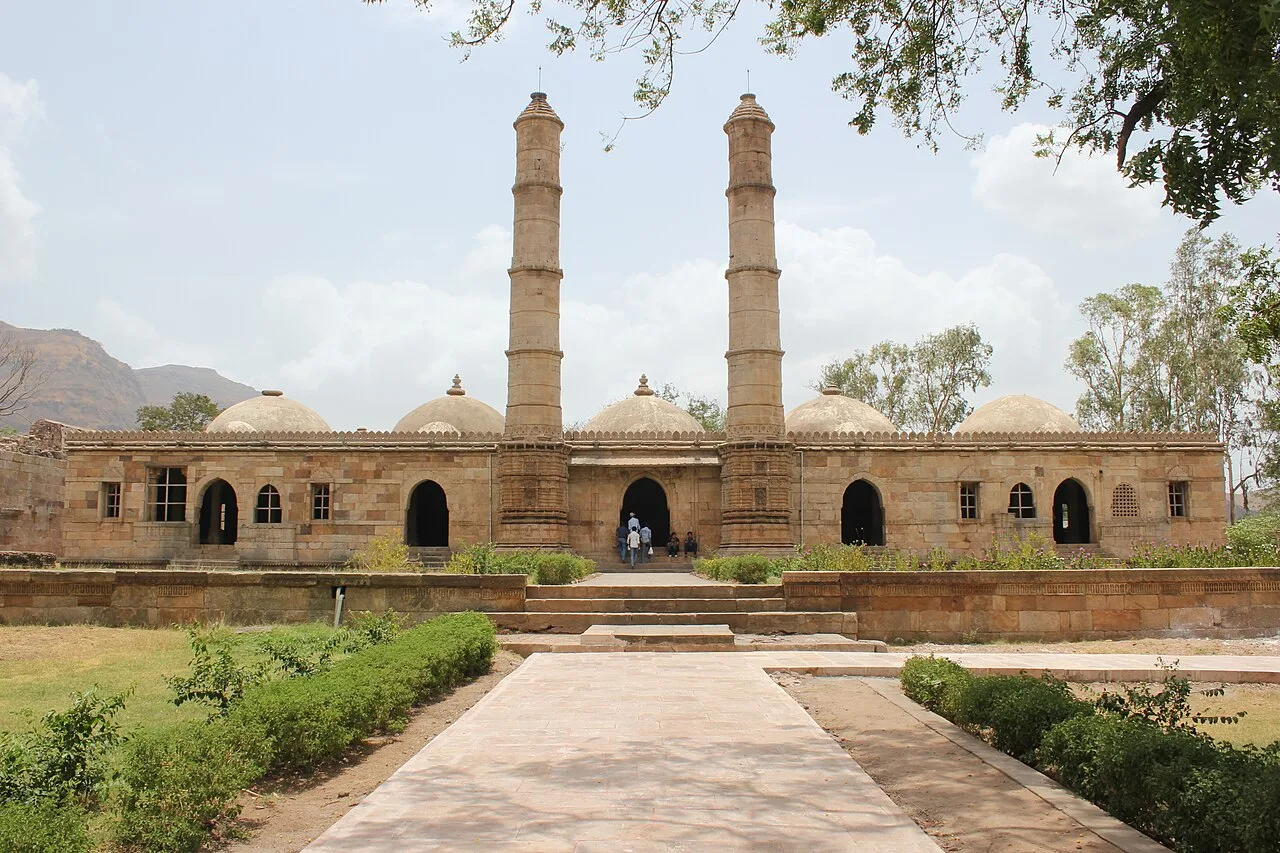
Champaner-Pavagadh Archaeological Park
This archaeological park in Gujarat’s Panchmahal district preserves Champaner, Pavagadh’s hill fortress and monuments from several periods. Visitors explore its historic architecture and visit the Kalika Mata Temple.
Key facts · verified by Ghumoopedia editors
- Type of place
- Heritage monument
- Best time to visit
- November to February
- Nearest railway station
- Godhra Junction · about 35 km (straight line)
- Nearest airport
- Vadodara Airport · about 35 km (straight line)
- Verified
- 21 Nov 2026
Plan a trip from Champaner-Pavagadh Archaeological Park — a day-by-day route through places nearby.
In Panchmahal district, Gujarat, the park centres on the historic city of Champaner and the hills of Pavagadh. Vanraj Chavda, the most prominent ruler of the Chavda dynasty, founded the city in the eighth century. He named it for his friend and commander Champa, later known as Champaraj. Fortifications and bastions extend from Pavagadh towards Champaner. The area preserves Chalcolithic remains, a hill stronghold linked to an early Hindu capital, and remnants of Gujarat’s sixteenth-century capital. Its heritage includes palaces, gateways, arches, mosques, tombs, temples and residential areas, as well as agricultural structures and water systems such as stepwells and tanks. The monuments span the eighth to the fourteenth centuries. The Kalika Mata Temple stands atop Pavagadh Hill, at a height of 800 metres, and draws Hindu pilgrims throughout the year. The park records the architectural and cultural transition between Hindu and Muslim traditions in the late fifteenth and early sixteenth centuries. Its early Islamic, pre-Mughal city remains largely unchanged. The site was added to UNESCO’s World Heritage List in 2004. Gujarat combines Harappan cities at Dholavira and Lothal, the stepwells and Sultanate mosques of Ahmedabad and Patan, the Jain hills of Palitana and Girnar, Gandhi's Sabarmati Ashram, the Asiatic lions of Gir and the white salt desert and craft villages of Kutch. Gujarat is very hot from March to June (Kutch and north Gujarat often exceed 42°C), receives monsoon rain from late June to September, heaviest in the south and the Dangs, and is pleasant and dry from November to February with cold desert nights in Kutch. The usual best time to visit is November to February. Timings, fees and access arrangements must be confirmed locally. For official information, see Gujarat Tourism at https://www.gujarattourism.com.
Why it matters
Champaner-Pavagadh Archaeological Park is a UNESCO World Heritage Site in Panchmahal district, Gujarat, inscribed in 2004. UNESCO recognises the park for its archaeological and architectural record, which brings together remains from different periods and preserves evidence of the transition between Hindu and Muslim cultures in western India. The landscape links Pavagadh Hill and its fortifications with the historic city of Champaner below. Its monuments include temples, mosques, tombs, gates, residences and water systems, alongside archaeological remains and places of continuing religious importance. The Kalika Mata Temple remains an active Hindu pilgrimage destination. The park is also important to Gujarat’s regional history as the setting of a former state capital.
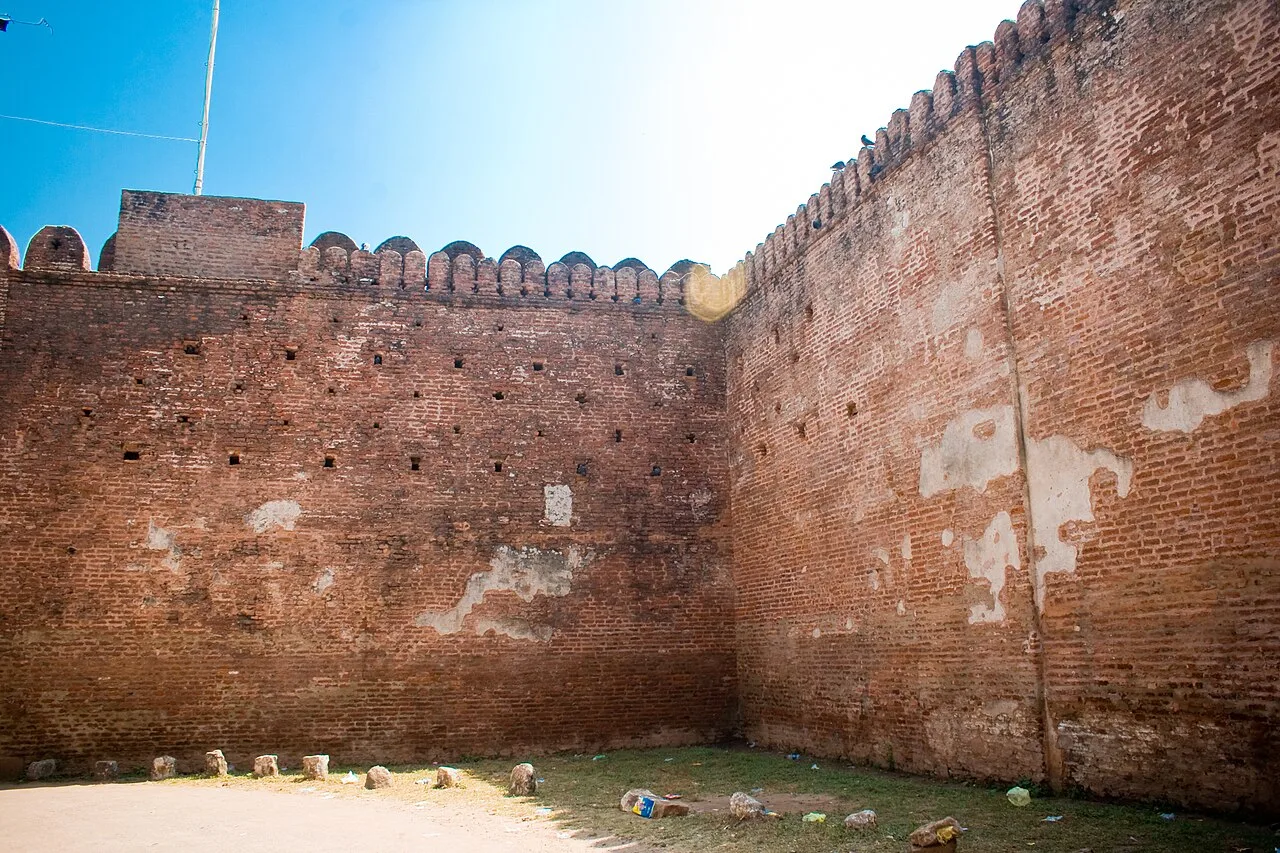
The park preserves traces of human activity from several periods, including Chalcolithic remains. Champaner’s foundation is traditionally attributed to Vanraj Chavda, a ruler of the Chavda dynasty, in the eighth century. According to the account in the existing guide, he named the city after his friend and general Champa, also known as Champaraj. Pavagadh developed as a fortified hill centre, while settlements and religious sites grew across the surrounding landscape. A major change came in the late fifteenth century, when Sultan Mahmud Begada captured Champaner and developed it as a capital. Many of the city’s surviving Islamic monuments are associated with this period. The park’s buildings and urban remains show the meeting of Hindu and Islamic architectural traditions, particularly in the late fifteenth and early sixteenth centuries. Champaner’s prominence declined after the capital was captured by the Mughal emperor Humayun in the sixteenth century, and the historic city was not rebuilt on the same scale. The hill continued to draw worshippers to Kalika Mata Temple. Today, the protected landscape includes archaeological remains and monuments from multiple periods. UNESCO inscribed the park in 2004; visitors should check current conservation and access arrangements with the managing authority.
Origin stories & folklore
Local tradition connects Champaner’s name with Champa, the friend and general of Vanraj Chavda; this is an origin story rather than a detail visitors can verify from the surviving buildings alone. Pavagadh’s name and the hill’s dramatic form have also inspired local explanations and folklore, which vary in how they are told. Kalika Mata Temple is a place of Hindu worship, and devotees understand the goddess through religious traditions associated with Kali and Shakti. Stories about the goddess and the sacred hill are part of the living pilgrimage culture, not archaeological evidence. Visitors can listen respectfully to local accounts, while keeping a distinction between community belief, documented history and the interpretations presented at the monuments.
Architecture & design
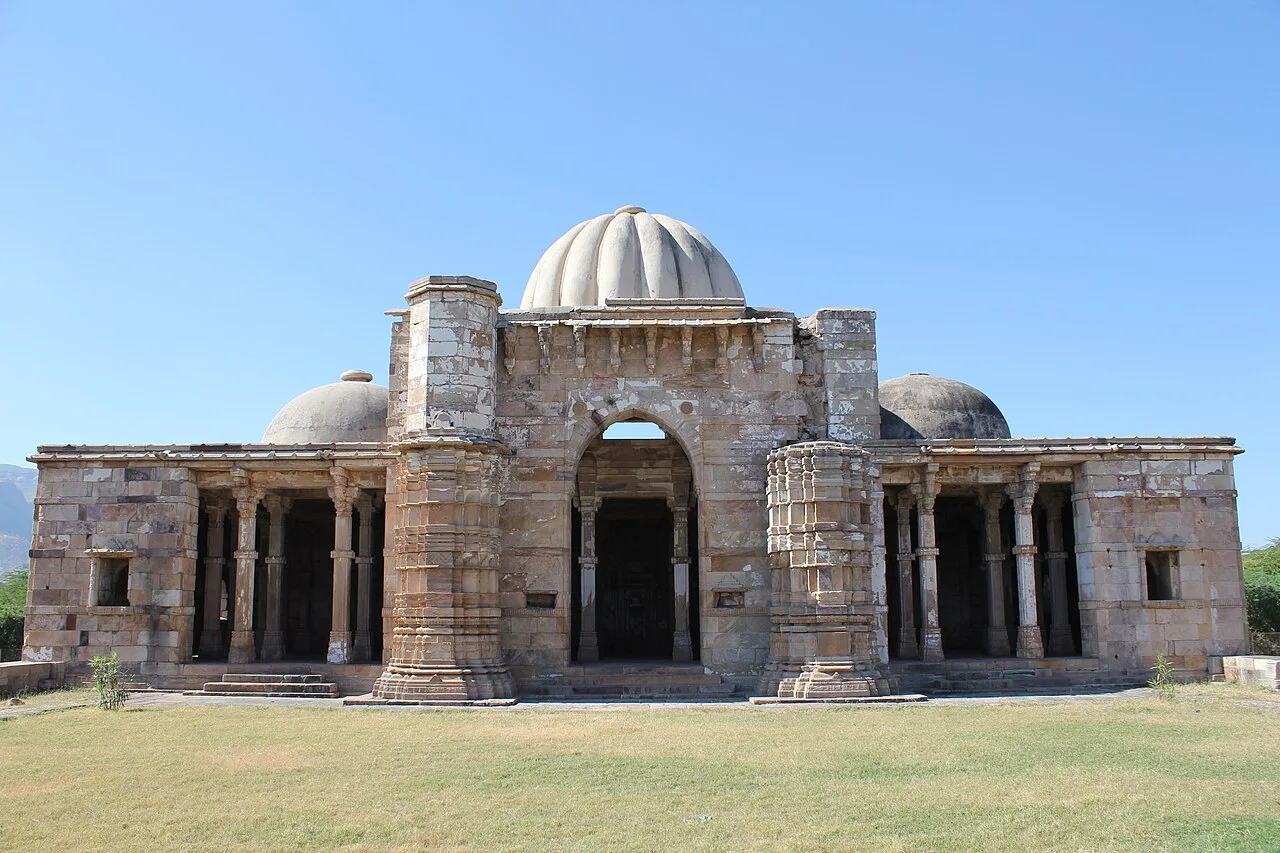
The park is a broad cultural landscape rather than a single building: fortifications run from Pavagadh Hill towards Champaner, where monumental, religious and residential remains are spread across the historic city. The hill’s steep terrain shaped the placement of defensive walls, gates and bastions. Below, the street and building remains record the form of a former capital. The monuments include Hindu temples, Islamic mosques and tombs, palaces, entrance arches, houses, stepwells, tanks and other water installations. Many structures use locally available stone and masonry. Champaner’s mosques are notable for combining Islamic planning and features such as prayer halls and mihrabs with detailed carved ornament and forms associated with regional building traditions. Jalis, columns, brackets, domes and arches are among the details to look for where access permits. Kalika Mata Temple occupies the summit area of Pavagadh Hill, about 800 metres above sea level. The different structures should be understood as parts of a changing settlement, not as one uniform architectural style.
Important objects & sculptures
Look closely at the carved stonework of the mosques, including columns, brackets, arches and pierced stone screens where these are accessible. The Jami Masjid is particularly known for its richly worked architectural details and the way local decorative forms appear within an Islamic religious building. Prayer niches and inscriptions, where visible, help explain how the structures were used; do not touch or climb on carved surfaces. Across the park, surviving gateways, fortifications, tombs, temple remains and water structures are also significant evidence. At Kalika Mata Temple, visitors encounter an active place of worship rather than a museum collection, and access to images or ritual areas may be restricted. The park’s value lies largely in its buildings, landscape and archaeological remains; it is not necessary to expect a single central gallery of portable objects.
Explore Champaner-Pavagadh Archaeological Park slowly and read the interpretation boards, use the official audio guide where available or hire an authorised guide to understand its history. Check opening days, ticket counters and camera rules in advance; many monuments and museums close on one weekday and on some public holidays. Early morning gives softer light, cooler air and smaller crowds. A comfortable itinerary is one main visit in the morning, a local meal at midday and a short nearby stop before an afternoon return. Use the district list on this site to find other places in Panchmahal, but check the route and its condition before combining stops. If a festival is on — such as Navratri garba, the Rann Utsav or Uttarayan kite flying — roads and stays can be busy, and the experience can be unforgettable. Leave no litter: many sites are protected by the communities around them.
Suggested itineraries
Half day: Choose either the Champaner monuments or the Pavagadh temple area; allow about 3–4 hours for the approach, visit and unhurried exploration. Full day: Start with Champaner’s principal mosque and nearby historic remains (about 3 hours), pause for a meal, then visit Pavagadh and Kalika Mata Temple (about 3–4 hours, depending on access and walking). Gentler option: Focus on one accessible cluster near the vehicle drop-off, take frequent rests and skip the steep or uneven sections; confirm access conditions in advance.
Champaner-Pavagadh is both a heritage landscape and a living pilgrimage destination. Worship at Kalika Mata Temple continues throughout the year, and visitors may encounter devotional offerings, prayer and processions. The surrounding Panchmahal region has communities with varied local traditions; Gujarati and Hindi are widely useful, alongside languages and speech forms used by local and tribal communities. Music, devotional singing and regional dance traditions are part of life in Gujarat, with garba especially prominent during Navratri. Rathwa Pithora painting is a recognised tradition in parts of the wider region, though it should not be assumed to be displayed or sold at the park itself. Dress modestly at places of worship, follow posted instructions, and ask before photographing people, ceremonies or religious spaces.
Festivals & events
Navratri, usually in the autumn, is a major period for worship of the goddess and can bring increased pilgrimage activity to Kalika Mata Temple. The temple also receives devotees at other times of year, so busy conditions are possible beyond festival dates. Religious observances and local fairs may vary from year to year; confirm arrangements locally before planning around one. Navratri garba is celebrated across Gujarat, but organised dance events should not be assumed to take place within the archaeological park. Festival traffic can affect access to the hill and nearby roads, while accommodation and local services may be busier. Allow extra time, follow crowd-management directions and respect worshippers’ space.
Local food in Gujarat includes dhokla, khandvi, thepla, fafda-jalebi, undhiyu in winter, the Gujarati thali, Kutchi dabeli, Surti locho and ponk, kadhi-khichdi, and sweets such as mohanthal and shrikhand; much of Gujarat's food is vegetarian and lightly sweet. Ask what is fresh that day; many small eateries cook a limited daily menu. Vegetarian travellers eat superbly here; non-vegetarian food is available in cities but limited in pilgrimage towns such as Palitana, Dwarka and Ambaji, where it may be banned. Remote sites may have no restaurant at all. Carry water and snacks, eat a proper breakfast before long drives, and ask your accommodation for a packed lunch if you are heading out early. Try a home-cooked or local thali meal when you can — it is often the best food on the route. Choose busy, clean places, drink sealed or filtered water, and carry your packaging back with you.
Shopping & local experiences
There may be small stalls or local vendors near busy access points, but do not assume a particular craft market is open at the park. In the wider Panchmahal region, look for locally made crafts and, where available from responsible sellers, Rathwa Pithora paintings. Ask about the artist and the work’s origin rather than treating sacred or community art as a generic souvenir. Nearby towns are better places to seek everyday shopping and regional food. Try Gujarati snacks or a local meal at an established eatery, and carry reusable water containers where practical. Avoid buying anything described as an archaeological artefact.
November to February
The nearest principal railway station by straight-line distance is Godhra Junction, roughly 35 km away. The nearest operating airport by straight-line distance is Vadodara Airport, roughly 35 km away. These figures are calculated from map coordinates — actual road distance is longer. Ahmedabad, Vadodara, Surat and Rajkot are the main rail and air gateways; Bhuj serves Kutch, and Veraval, Junagadh, Dwarka and Porbandar serve Saurashtra. For the final leg, Gujarat State Road Transport Corporation (GSRTC) buses, private sleeper coaches and shared chhakdas and autos in rural areas link district towns. A private taxi gives more flexibility for remote sites. When comparing train, bus and flight, count the complete door-to-door time: a flight saves the most time only if the onward road transfer is short, while an overnight train can save a hotel night. Book your return before you leave, because seats fill quickly on weekends, festivals and holidays. Current train numbers, timings, return services and fares are not listed here; check IRCTC and NTES for trains and the airline's own schedule for flights. No permit is needed to visit Gujarat. Gujarat is a dry state: alcohol sale and consumption are prohibited except with a liquor permit, which visitors from outside the state can apply for at authorised hotel liquor shops with ID — never carry alcohol across the state border without one. Lion safaris in Gir and entry to parts of the Rann of Kutch near the border need advance online booking or a permit, and the White Rann around Dhordo is busiest during the Rann Utsav (roughly November to February).
Confirm onward and return timings on IRCTC / NTES, the state bus operator or your airline before travel. A dash means current timings or fares have not been verified.
Getting around
The monuments are spread between Champaner and Pavagadh, so reaching the park is only part of the journey. On arrival, taxis or locally available autos can help connect the town, monument entrances and hill access points; availability may vary, so agree on a pickup plan. Walking is needed within many archaeological areas, often over uneven ground. Local buses may serve nearby towns, but do not rely on them for convenient movement between scattered sites without checking locally. Parking may be available near principal access areas, though capacity and restrictions can change, especially during pilgrimages and festivals.
Hours, tickets & permissions
Entry arrangements can differ between the archaeological monuments, the hill and the active temple. Some monuments may require a ticket or have separate access rules; camera permissions and restrictions can also vary by site. Dress or conduct requirements may apply at religious areas, and identification may be requested under current regulations. Check opening days, current hours, fees, ticket counters, holiday closures and camera rules with the Archaeological Survey of India or the relevant managing authority before travel. Temple access arrangements should be checked separately.
Facilities
Facilities vary across the large park, and services may be more limited at individual monuments than in nearby towns. Toilets, drinking water, food stalls or small eateries and parking are usually easiest to find near principal access points, but availability and condition should be checked locally. Carry water and any essential supplies rather than assuming shops will be open at every stop. Authorised guides may be available; an official audio guide may also be offered where operating. ATMs and broader services are more likely in nearby towns than beside remote remains.
Accessibility
The park covers a wide, uneven landscape with slopes, steps, stone surfaces and substantial walking between some monuments. Pavagadh’s hill route is particularly demanding for visitors with limited mobility, and shade can be sparse on exposed stretches. Wheelchair and stroller access is likely to be difficult at many historic structures; do not assume ramps, lifts or step-free routes. Older visitors and anyone with a health condition should consider visiting a small, manageable section, taking frequent rests and travelling with assistance. Ask locally about current vehicle access and any operating hill transport before setting out.
No permit is needed to visit Gujarat. Gujarat is a dry state: alcohol sale and consumption are prohibited except with a liquor permit, which visitors from outside the state can apply for at authorised hotel liquor shops with ID — never carry alcohol across the state border without one. Lion safaris in Gir and entry to parts of the Rann of Kutch near the border need advance online booking or a permit, and the White Rann around Dhordo is busiest during the Rann Utsav (roughly November to February). Carry a photo ID at all times and save the emergency number 112 and your accommodation's contact offline. Heat in summer and heavy rain in the monsoon are the main weather risks; carry water, avoid midday sun and allow extra time when roads flood. Watch your belongings in crowds and on public transport, and follow posted instructions.
Photography
Early morning generally offers softer light, cooler conditions and fewer visitors; later light can also suit stone details. Photograph from paths and public visitor areas, and follow signs or staff instructions at each monument and temple. Camera rules may differ between archaeological structures and active religious spaces, so confirm locally before using specialised equipment. Do not use a drone without checking applicable permissions and restrictions. Ask before photographing worshippers, residents or ceremonies, and avoid interrupting prayer or blocking narrow paths for a photograph.
Choose a stay by the full journey to Champaner-Pavagadh Archaeological Park, not just the district name. Ahmedabad, Vadodara, Rajkot and Bhuj offer the widest choice; pilgrim towns have dharamshalas and trust guesthouses, and Gir has resorts near Sasan Gir. In summer, check air-conditioning; in the monsoon, check that the property is accessible if roads flood. Book in advance for weekends, festivals and the peak season (November to February). Confirm the exact location, meals included, check-in time and cancellation terms in writing. Avoid sending money to unverified contacts or touts at stations. Carry some cash, as card and digital payments can be unreliable in remote areas.
Within the park, Champaner’s historic monuments and Pavagadh Hill with Kalika Mata Temple are the main places to combine, allowing time for the travel and walking between them. Godhra is a nearby district town and can be useful for services or as part of a wider Panchmahal visit. Jambughoda Wildlife Sanctuary, also in Panchmahal district, is another possible regional excursion, but it is a separate nature destination and should not be added without checking road conditions and time. Vadodara offers major cultural sights, including Laxmi Vilas Palace and the Baroda Museum and Picture Gallery, for travellers extending their Gujarat itinerary.
For couples, Champaner-Pavagadh Archaeological Park rewards a slow pace: arrive early for soft light and fewer crowds, share a local meal and keep the evening free. A full-moon night on the White Rann, sunset at Shivrajpur or an evening on the Sabarmati Riverfront makes the trip memorable. Public displays of affection can be frowned upon in conservative communities and at religious sites, so be discreet. Keep a buffer in your itinerary, because weather and road conditions can delay plans.
Q: How much time should I allow for a visit? A: A half day can cover one main area, while seeing both Champaner and Pavagadh comfortably can take most of a day. Q: When is the best season to visit? A: November to February is generally the most comfortable period in Gujarat; check local weather and hill conditions before travelling. Q: Is entry ticketed? A: Rules can differ among monuments and the temple. Confirm current tickets, fees, opening days and camera rules with the relevant authority. Q: Is the site suitable for children and elderly visitors? A: Some sections involve uneven ground, steps and slopes. Choose a short route, bring water and plan rests; the hill can be strenuous. Q: Where can I stay nearby? A: Check accommodation availability in nearby towns such as Godhra or Vadodara, and confirm the onward road journey before booking.
Be the first to share photos, stories, advice or a helpful contact for Champaner-Pavagadh Archaeological Park.
Loading…