
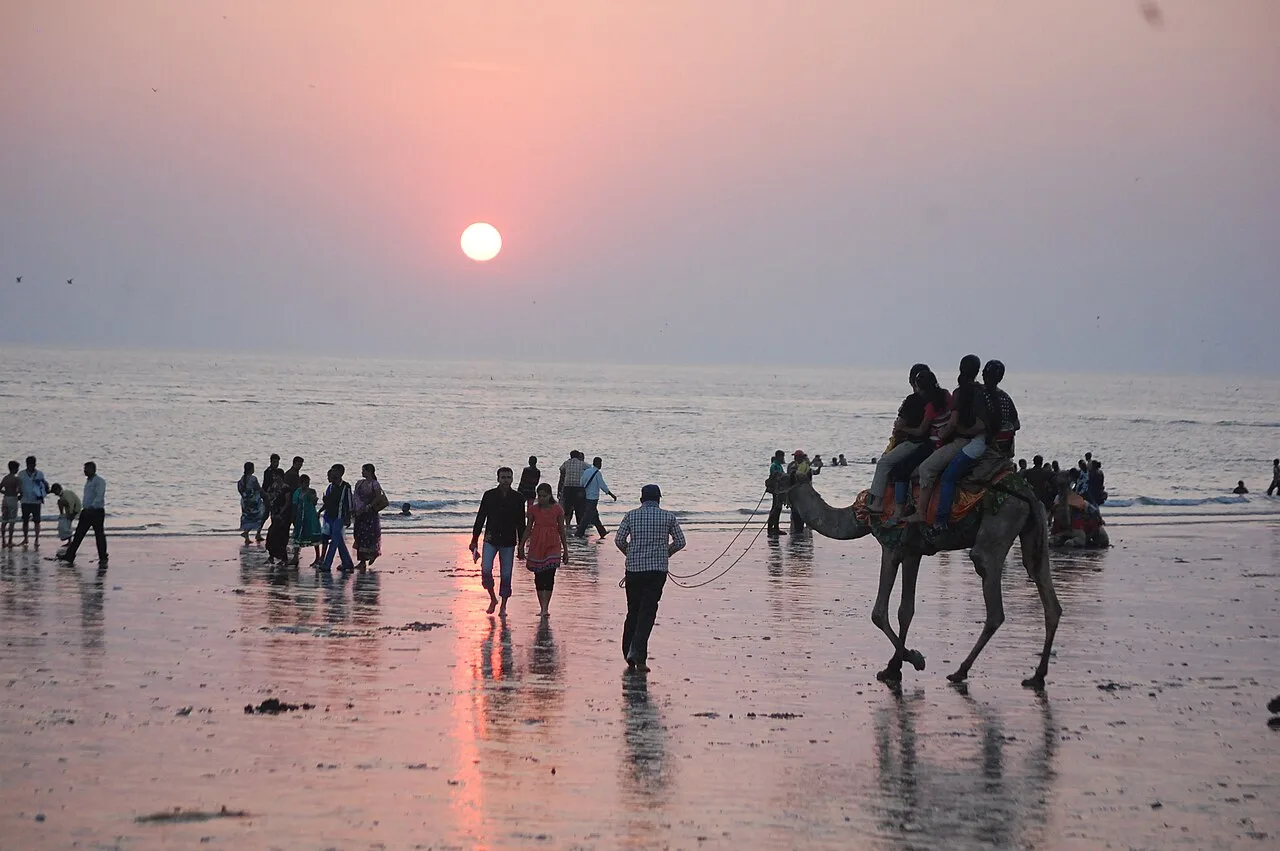
Mandvi
Mandvi is a coastal municipal town in Gujarat’s Kachchh district, drawing visitors for its beach, remains of old fortifications and centuries-old shipbuilding tradition.
Key facts · verified by Ghumoopedia editors
- Type of place
- Natural attraction
- Best time to visit
- November to February
- Nearest railway station
- Okha · about 50 km (straight line)
- Nearest airport
- Bhuj Airport · about 60 km (straight line)
- Verified
- 21 Nov 2026
Plan a trip from Mandvi — a day-by-day route through places nearby.
Mandvi lies in Kachchh (Kutch), Gujarat, and is a municipal town by the sea. It was once an important regional port and served as a summer retreat for the Maharao, ruler of the Cutch State. The port was constructed in 1580, and the town has a shipbuilding tradition dating back 400 years. In the past, a fort wall enclosed the old settlement. Parts of this boundary can still be seen, recalling the fortifications that once surrounded Mandvi. Gujarat combines Harappan cities at Dholavira and Lothal, the stepwells and Sultanate mosques of Ahmedabad and Patan, the Jain hills of Palitana and Girnar, Gandhi's Sabarmati Ashram, the Asiatic lions of Gir and the white salt desert and craft villages of Kutch. Gujarat is very hot from March to June (Kutch and north Gujarat often exceed 42°C), receives monsoon rain from late June to September, heaviest in the south and the Dangs, and is pleasant and dry from November to February with cold desert nights in Kutch. The usual best time to visit is November to February. Timings, fees and access arrangements must be confirmed locally. For official information, see Gujarat Tourism at https://www.gujarattourism.com.
Why it matters
Mandvi is a coastal town in Kutch district, Gujarat, where the Arabian Sea, a historic port and a continuing wooden-shipbuilding tradition meet. It was once an important port for the region and served as a summer retreat for the Maharao of the former Cutch State. The surviving sections of the old fort wall and the town’s maritime heritage give Mandvi a distinct place in Kutch’s history. For visitors, the beach is the main natural draw, while the shipyards and nearby historic sites add context to a coastal visit. Mandvi is not presented here as a UNESCO site or an officially protected natural area; check local notices for any current restrictions.
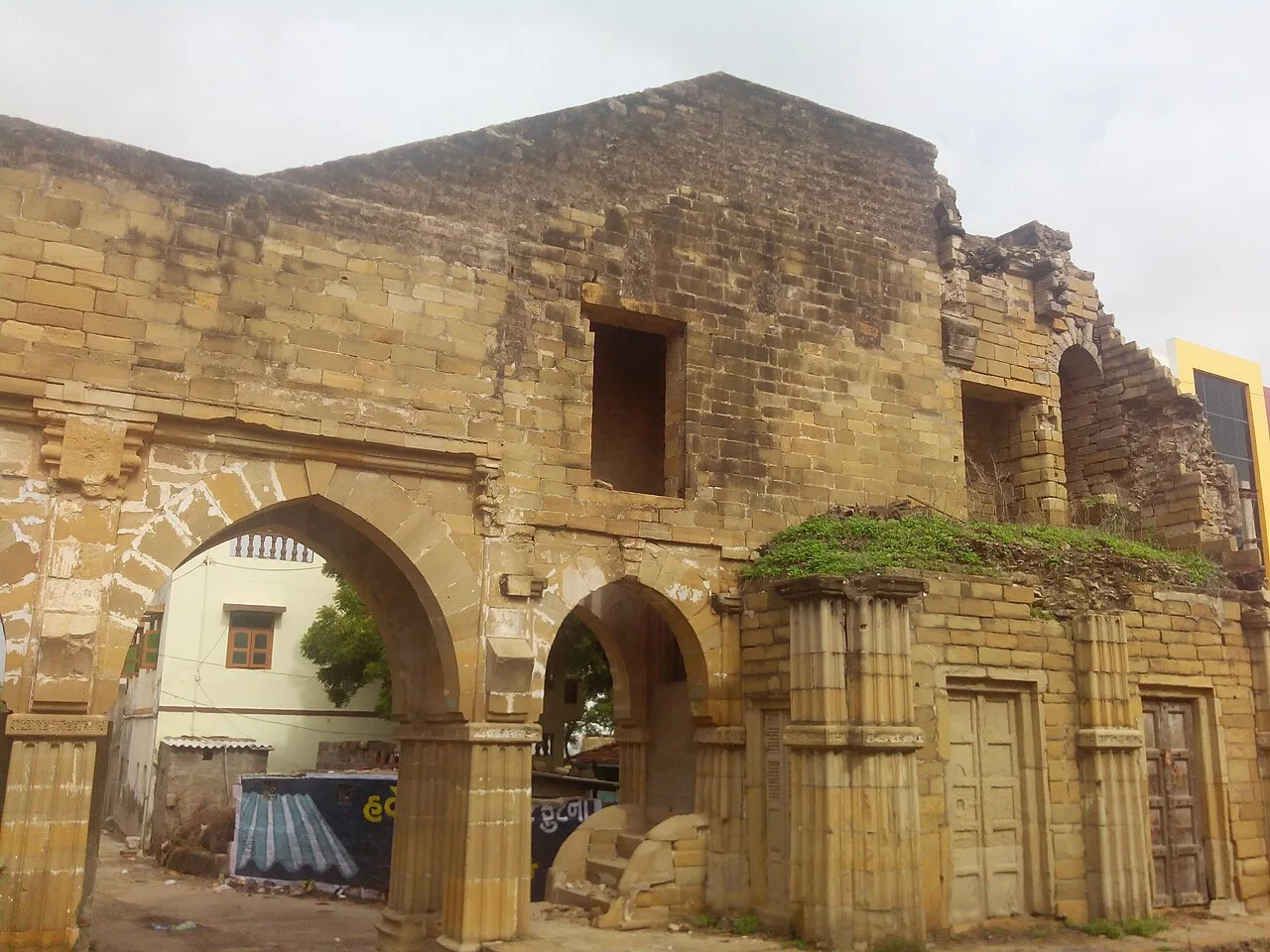
Mandvi grew as a port town on Kutch’s Arabian Sea coast. The port is recorded as having been built in 1580, during the period when the rulers of Kutch were developing maritime trade. The town became a significant regional harbour and was also used as a summer retreat by the Maharao of the Cutch State. Its historic core was enclosed by a fort wall; surviving sections still recall the town’s former defensive boundary, though the wall is not intact throughout. Mandvi is also associated with a wooden shipbuilding industry traditionally described as about 400 years old. Generations of local craftsmen built vessels, including sailing ships, using skills passed through workshops and families. The harbour’s role changed as transport and trade patterns shifted and larger ports and modern shipping became more prominent, but boatbuilding has remained part of Mandvi’s identity. The town is now a municipality within Kutch district, and its beach, historic architecture and maritime workshops attract visitors. For details about the condition or management of particular historic structures, confirm locally; not every old wall or building is necessarily restored or open to visitors.
Origin stories & folklore
There is no single, well-documented founding legend of Mandvi that can be presented as established history. Local maritime stories and family memories often centre on the sea: journeys made by sailors, the fortunes of trading vessels and the skills of shipwrights. Such accounts help explain the pride attached to Mandvi’s port and boatbuilding heritage, but details can vary between tellers and families. Visitors may hear these stories in conversation around the harbour or workshops; they are oral tradition, not verified records of particular events. Ask before recording personal stories, and avoid treating one person’s account as representative of every community in the town.
Enjoy Mandvi early in the morning or at sunset, when the sand is cooler and the light is best. Swim only where lifeguards are posted and the beach is marked safe — rip currents are strong, especially in the monsoon, when swimming is often banned. Try local seafood at busy stalls and ask about tide times before walking out on rocks or sandbars. A comfortable itinerary is one main visit in the morning, a local meal at midday and a short nearby stop before an afternoon return. Use the district list on this site to find other places in Kutch, but check the route and its condition before combining stops. If a festival is on — such as Navratri garba, the Rann Utsav or Uttarayan kite flying — roads and stays can be busy, and the experience can be unforgettable. Leave no litter: many sites are protected by the communities around them.
Suggested itineraries
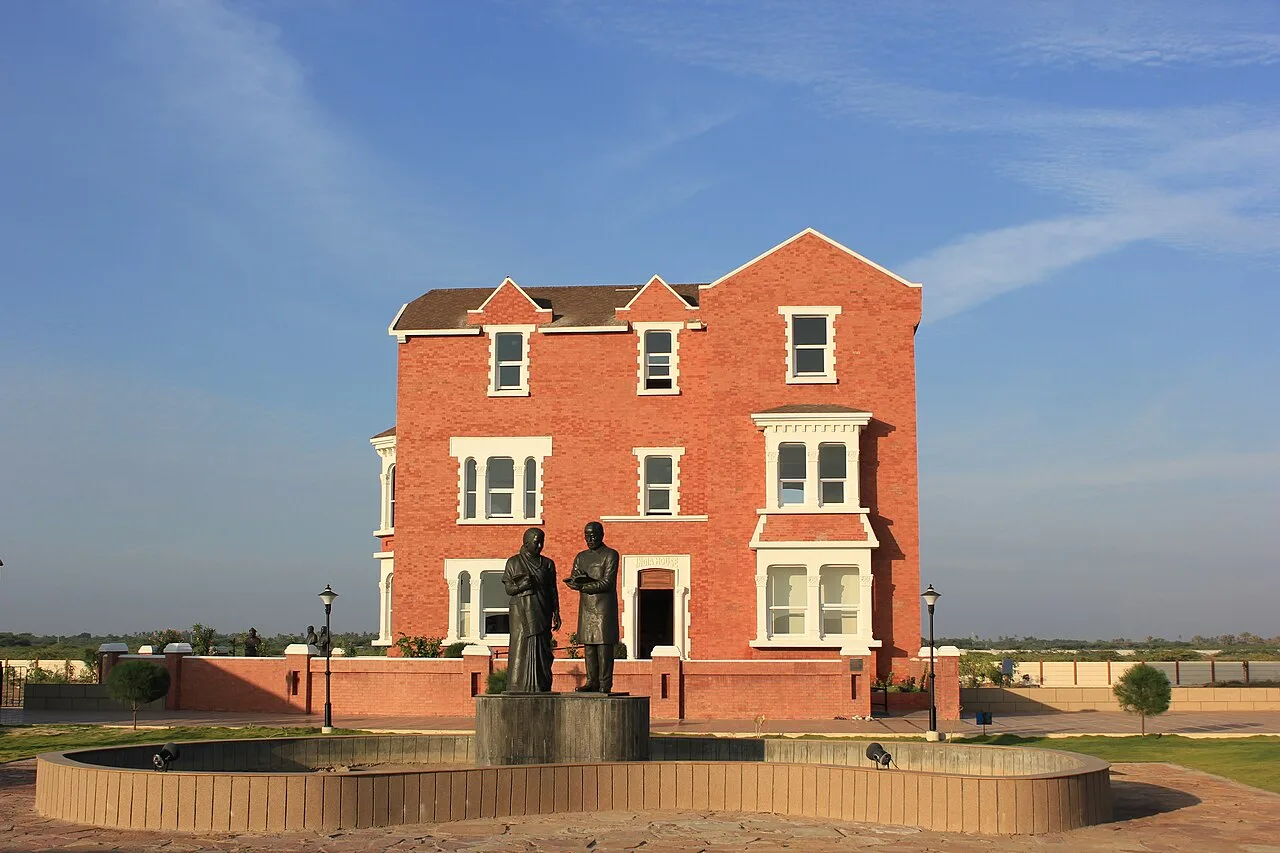
Half day: Beach walk and coastal views (about 1–2 hours), visit a working shipbuilding area if access is permitted (about 1 hour), then have a local meal. Full day: Start at the beach (about 1–2 hours), visit the shipbuilding area and old fort-wall remains (about 1–2 hours), take a meal break, then see Vijay Vilas Palace or the Shyamji Krishna Varma Memorial if open and accessible. Gentler option: Choose one accessible beach viewpoint, spend a short time by the shore, and use a taxi between stops to limit walking.
Mandvi’s coastal identity is visible in its beach life, fishing activity and wooden boat workshops. Gujarati and Kutchi are widely used in the region, and Hindi is also understood in many visitor-facing settings. Local food reflects Kutch and the coast, with seafood available alongside Gujarati dishes; ask about ingredients and preparation if you have dietary needs. Navratri garba, folk music and seasonal kite flying are part of the wider regional cultural calendar. Dress is generally informal, though modest clothing is considerate when visiting places of worship or residential neighbourhoods. The town’s daily rhythms are shaped by work, weather and the sea, rather than by tourism alone.
Local communities
Mandvi’s coastal life connects fishing households, boatbuilders, traders, shopkeepers and tourism workers. Kharva communities are associated with seafaring and fishing in parts of Gujarat, though livelihoods and identities vary and should not be assumed for every local family. Shipbuilding knowledge is maintained by skilled craftspeople and workshop teams, whose work is both an occupation and an important part of the town’s heritage. Nearby Kutch communities also sustain craft, livestock and agricultural livelihoods. Visitors can support local businesses respectfully by asking permission before photographing workers, vessels or private workspaces, and by following any workshop safety instructions.
Festivals & events
Navratri, usually in autumn, brings garba celebrations across Gujarat, including Kutch; local events and crowd levels vary. Uttarayan, the kite festival in January, is widely celebrated in the state and can bring busy streets and family gatherings. Diwali and Eid are observed by local communities, with dates changing according to the calendar. The seasonal Rann Utsav takes place elsewhere in Kutch and may increase demand for transport and accommodation across the district, but it is not a Mandvi beach festival. Check local announcements before travelling: event schedules vary, and roads or stays can be busier during holiday periods.
Local food in Gujarat includes dhokla, khandvi, thepla, fafda-jalebi, undhiyu in winter, the Gujarati thali, Kutchi dabeli, Surti locho and ponk, kadhi-khichdi, and sweets such as mohanthal and shrikhand; much of Gujarat's food is vegetarian and lightly sweet. Ask what is fresh that day; many small eateries cook a limited daily menu. Vegetarian travellers eat superbly here; non-vegetarian food is available in cities but limited in pilgrimage towns such as Palitana, Dwarka and Ambaji, where it may be banned. Remote sites may have no restaurant at all. Carry water and snacks, eat a proper breakfast before long drives, and ask your accommodation for a packed lunch if you are heading out early. Try a home-cooked or local thali meal when you can — it is often the best food on the route. Choose busy, clean places, drink sealed or filtered water, and carry your packaging back with you.
Shopping & local experiences
Look for Kutch handicrafts in Mandvi’s shops and markets, including embroidered textiles, printed fabrics, leather goods and other locally made items; confirm the maker and origin rather than assuming every product is made nearby. The town’s maritime workshops are places to learn about wooden boatbuilding, not necessarily retail shops, so ask before expecting souvenirs or entering work areas. Local eateries and markets offer opportunities to sample regional food, including seafood where available. Carry reusable bags, bargain politely where customary, and avoid buying products made from protected wildlife or marine materials.
Mandvi’s natural setting is a sandy shore on the Arabian Sea, with changing tides and open coastal views. Conditions on the beach can vary with season, weather and currents; rip currents may be dangerous, especially during the monsoon, and swimming restrictions should be followed. The nearby Rukmavati river and coastal waters form part of the wider landscape, while the surrounding Kutch region includes dry scrub and salt-affected terrain. Shorebirds and other coastal birds may be seen, but sightings depend on season and conditions and are never guaranteed. Keep clear of nesting or resting wildlife, do not disturb tidal pools, and take all litter away. Avoid walking onto rocks or sandbars without checking tide and safety information locally.
November to February
The nearest principal railway station by straight-line distance is Okha, roughly 50 km away. The nearest operating airport by straight-line distance is Bhuj Airport, roughly 60 km away. These figures are calculated from map coordinates — actual road distance is longer. Ahmedabad, Vadodara, Surat and Rajkot are the main rail and air gateways; Bhuj serves Kutch, and Veraval, Junagadh, Dwarka and Porbandar serve Saurashtra. For the final leg, Gujarat State Road Transport Corporation (GSRTC) buses, private sleeper coaches and shared chhakdas and autos in rural areas link district towns. A private taxi gives more flexibility for remote sites. When comparing train, bus and flight, count the complete door-to-door time: a flight saves the most time only if the onward road transfer is short, while an overnight train can save a hotel night. Book your return before you leave, because seats fill quickly on weekends, festivals and holidays. Current train numbers, timings, return services and fares are not listed here; check IRCTC and NTES for trains and the airline's own schedule for flights. No permit is needed to visit Gujarat. Gujarat is a dry state: alcohol sale and consumption are prohibited except with a liquor permit, which visitors from outside the state can apply for at authorised hotel liquor shops with ID — never carry alcohol across the state border without one. Lion safaris in Gir and entry to parts of the Rann of Kutch near the border need advance online booking or a permit, and the White Rann around Dhordo is busiest during the Rann Utsav (roughly November to February).
Confirm onward and return timings on IRCTC / NTES, the state bus operator or your airline before travel. A dash means current timings or fares have not been verified.
Getting around
Autos and taxis can usually be arranged in Mandvi for moving between the beach, town centre, harbour area and nearby attractions; confirm the route with the driver before leaving. Walking works for short town visits, but beach sand, heat and uneven surfaces can make longer walks tiring. Local buses and shared vehicles may connect Mandvi with other towns, though services and stops should be checked locally. Parking availability can vary near busy beach access points, especially during holidays. Boats are not a general substitute for road transport, and visitors should use only authorised operators and follow local safety advice.
Hours, tickets & permissions
Beach access may be informal, but particular sections, facilities or activities can have local rules, seasonal restrictions or separate management. The historic sites and private properties nearby may have their own entry conditions; do not assume that access to a beach includes access to a palace, workshop or enclosed area. Follow safety notices, lifeguard directions and any swimming or vehicle restrictions. Confirm current opening arrangements, entry requirements and fees with the relevant site manager or local authority before setting out. Carry identification if a local operator or facility requires it, and ask before using cameras inside private premises.
Facilities
Food stalls and small eateries are usually found in or around visitor areas, but their availability can vary by season and time of day. Toilets, drinking water and shaded seating may be limited at the beach, so check locally and carry water, especially in hot weather. Parking is commonly sought near popular access points, but spaces are not guaranteed. ATMs, shops and other services are more likely in town than directly on the sand. Guided visits to workshops or historic sites may need prior arrangement; ask permission before entering private premises.
Accessibility
The beach is mostly sand, which can be difficult for wheelchairs, strollers and anyone with limited balance or stamina. Access routes may be uneven, and the distance from parking or drop-off points to the water can vary. Shade on the open shore is limited, so plan for sun and heat. Historic remains and workshop areas may have steps, rough ground or narrow passages, and accessible facilities should not be assumed. Older visitors and families with young children may find a short visit to a firm-surface viewpoint more comfortable than walking along the shoreline. Check access conditions locally before travelling.
No permit is needed to visit Gujarat. Gujarat is a dry state: alcohol sale and consumption are prohibited except with a liquor permit, which visitors from outside the state can apply for at authorised hotel liquor shops with ID — never carry alcohol across the state border without one. Lion safaris in Gir and entry to parts of the Rann of Kutch near the border need advance online booking or a permit, and the White Rann around Dhordo is busiest during the Rann Utsav (roughly November to February). Carry a photo ID at all times and save the emergency number 112 and your accommodation's contact offline. Coastal weather can turn quickly: follow lifeguard flags and cyclone warnings, and keep away from the water in rough seas. Stay on marked paths, keep away from cliff edges and fast water, and never approach wild animals.
Photography
Early morning and sunset often provide softer light on the beach and sea; conditions change with cloud, tide and season. The shoreline and public views of the old fort wall can make useful subjects, while shipyards offer a look at Mandvi’s maritime character. Ask permission before photographing workers, boats under construction, private property or identifiable people. Follow signs and site rules, particularly at enclosed historic or religious places. Drone use may be restricted by aviation rules or local authorities; check current permissions before flying and never operate near people, aircraft or wildlife.
Choose a stay by the full journey to Mandvi, not just the district name. Ahmedabad, Vadodara, Rajkot and Bhuj offer the widest choice; pilgrim towns have dharamshalas and trust guesthouses, and Gir has resorts near Sasan Gir. In summer, check air-conditioning; in the monsoon, check that the property is accessible if roads flood. Book in advance for weekends, festivals and the peak season (November to February). Confirm the exact location, meals included, check-in time and cancellation terms in writing. Avoid sending money to unverified contacts or touts at stations. Carry some cash, as card and digital payments can be unreliable in remote areas.
Within Mandvi, Vijay Vilas Palace is a notable historic stop, while the Shyamji Krishna Varma Memorial offers a connection to the freedom movement. The town’s wooden shipbuilding yards are another point of interest, but access depends on the workshop and should be requested in advance. Mandvi’s old fort-wall remains can be viewed where accessible; they are not necessarily a continuous visitor route. Bhuj, the main regional centre, has additional heritage and museum visits and can be included in a longer Kutch itinerary. Check road conditions and opening arrangements before combining these stops.
For couples, Mandvi rewards a slow pace: arrive early for soft light and fewer crowds, share a local meal and keep the evening free. A full-moon night on the White Rann, sunset at Shivrajpur or an evening on the Sabarmati Riverfront makes the trip memorable. Public displays of affection can be frowned upon in conservative communities and at religious sites, so be discreet. Keep a buffer in your itinerary, because weather and road conditions can delay plans.
Q: How much time should I allow for Mandvi? A: A half day can cover the beach and one nearby stop; allow a full day if you want to include several sites at a relaxed pace. Q: When is the best season to visit? A: November to February is generally the most comfortable period in Gujarat. Check local sea and weather conditions before beach activities. Q: Is there an entry ticket for the beach? A: Beach access arrangements can vary by area and season. Confirm any current rules or fees locally, and check separate requirements for nearby properties. Q: Is Mandvi suitable for children or elderly visitors? A: It can be, but sand, heat, uneven ground and strong currents require care. Keep children close to the waterline and follow safety notices; choose short, firm-surface visits if mobility is limited. Q: Can I stay near Mandvi? A: Accommodation is available in and around town, with options varying by season. Check current availability and access arrangements before travelling, particularly during holidays.
Be the first to share photos, stories, advice or a helpful contact for Mandvi.
Loading…